
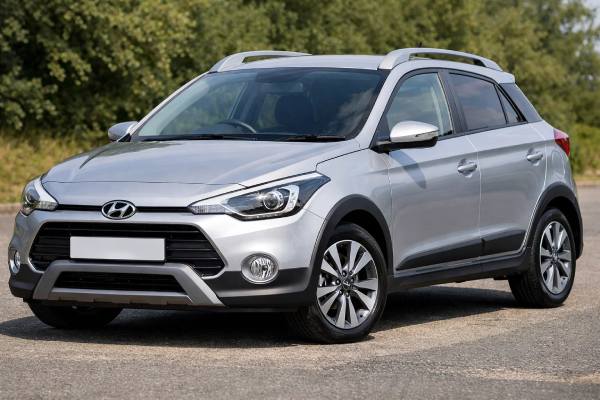
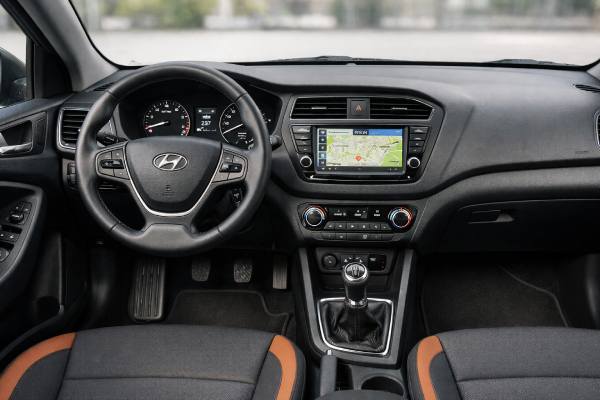
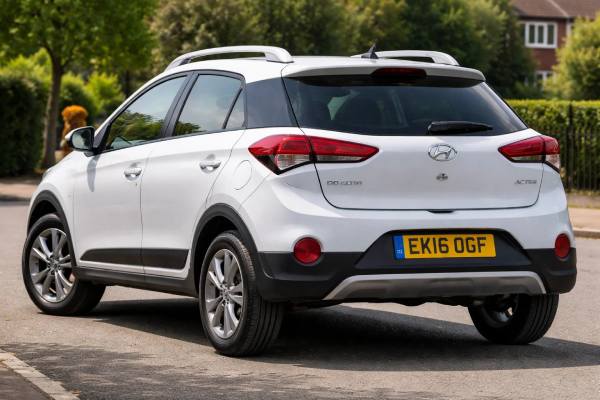
The Hyundai i20 Active GB with the 1.0 T-GDi 100 hp engine is one of the more sensible small cross-style hatchbacks from the late 2010s. It takes the regular GB-generation i20’s roomy cabin, useful 326-litre boot, and mature road manners, then adds extra ride height, tougher styling, and a turbocharged three-cylinder petrol engine with far more mid-range punch than the older naturally aspirated units. The result is a car that feels more versatile than its size suggests. It is still easy to park and cheap to run, but it is no longer limited to short urban work. With 172 Nm, a light body, and low official fuel use, the i20 Active 1.0 T-GDi can handle commuting, weekend trips, and family second-car duty without feeling underpowered. The big ownership question today is condition, not concept. This guide covers the 2016–2018 Hyundai i20 Active 1.0 T-GDi 100 hp in detail, including specs, safety, reliability, maintenance, driving impressions, and buyer advice.
Owner Snapshot
- The 1.0 T-GDi gives the i20 Active a much stronger real-world engine than the older 1.25 petrol, especially in the mid-range.
- The Active body keeps a useful 326-litre boot, a 2,570 mm wheelbase, and 160 mm ground clearance for everyday flexibility.
- It looks crossover-like, but it keeps front-wheel drive and hatchback running costs instead of becoming heavy or complicated.
- The main ownership caveat is turbo direct-injection age, so oil quality, short-trip history, and cooling-system condition matter more than low mileage alone.
- Hyundai’s published service schedule starts with a first service at 15,000 km, then every 20,000 km or yearly, but many careful owners shorten the oil interval.
Section overview
- Hyundai i20 Active in focus
- Hyundai i20 Active figures and hardware
- Hyundai i20 Active trims and protection
- Known faults and campaign checks
- Service routine and buyer filters
- Daily driving and fuel reality
- Rival context and verdict
Hyundai i20 Active in focus
The i20 Active is best understood as a crossover-flavored version of the GB-generation i20 rather than as a separate SUV. That distinction matters. Hyundai did not turn the i20 into a heavy, tall, all-wheel-drive model. Instead, it kept the basic supermini formula intact and improved it in a few carefully chosen ways: slightly more ground clearance, protective body cladding, a taller-feeling stance, and a trim strategy that made the car look tougher without upsetting its everyday usefulness.
That approach works particularly well with the 1.0 T-GDi 100 hp petrol engine. Earlier small i20s often relied on naturally aspirated engines that were dependable but not especially flexible. The 1.0 T-GDi changes the character. With 172 Nm available from 1,500 to 4,000 rpm, it feels stronger in normal traffic than a simple 100 hp number suggests. That makes the Active easier to drive on hills, better on slip roads, and more relaxed on fast A-roads or motorways than the old entry-level petrols.
The platform helps too. The Active uses the larger GB-generation i20 body, which is a meaningful step up from the older PB car. At 4,065 mm long and with a 2,570 mm wheelbase, it still fits easily into tight parking spaces, yet it offers the kind of rear-seat and boot usability people expect from a sensible family hatchback. The 326-litre luggage capacity is especially useful because the Active’s styling suggests a compromise, but the practical reality is better than that.
The raised stance also changes the ownership feel. It is easier to step into than a low supermini, the extra ride height helps on broken urban roads, and the tougher bumpers and cladding can make the car feel less vulnerable in daily use. But it is still important to be realistic: the i20 Active is not an off-roader. It has front-wheel drive only, no serious underbody protection, and no low-range or terrain hardware. The benefit is not genuine rough-terrain ability. The benefit is a more versatile everyday hatchback with a bit more clearance and a more confident visual stance.
Where the i20 Active makes the most sense is in mixed use. It suits owners who want one small car to handle urban driving, occasional long trips, family errands, and poor road surfaces without feeling too basic. It also appeals to buyers who like the crossover look but do not want the higher cost, weight, or fuel use of a larger SUV.
Its main weakness today is not the design. It is the fact that this is now an older turbo direct-injection petrol. Good ones are very appealing. Neglected ones can become expensive through skipped oil services, tired cooling parts, carbon-related drivability issues, and general age-related wear. So the smart way to judge the i20 Active 1.0 T-GDi is not by the style package, but by how well the individual car has been maintained.
Hyundai i20 Active figures and hardware
The tables below focus on the Hyundai i20 Active GB with the 1.0 T-GDi 100 hp engine sold between 2016 and 2018. Some details vary by year, trim, wheel package, and transmission, so exact parts and towing data should always be verified by VIN.
Powertrain and efficiency
| Item | Hyundai i20 Active (GB) 1.0 T-GDi 100 hp |
|---|---|
| Code | Kappa 1.0 T-GDi |
| Engine layout and cylinders | Transverse I-3, DOHC, 4 valves per cylinder |
| Displacement | 1.0 L (998 cc) |
| Bore × stroke | 71.0 × 84.0 mm (2.80 × 3.31 in) |
| Induction | Single-scroll turbocharged, intercooled |
| Fuel system | Gasoline direct injection |
| Compression ratio | 10.0:1 |
| Max power | 100 hp (74 kW) @ 4,500 rpm |
| Max torque | 172 Nm (127 lb-ft) @ 1,500–4,000 rpm |
| Timing drive | Chain |
| Rated efficiency | About 4.5–5.2 L/100 km (46–52 mpg US / 54–63 mpg UK), year and trim dependent |
| Real-world highway @ 120 km/h | Typically about 5.8–6.6 L/100 km, depending on tyres, wind, and load |
The engine is one of the car’s biggest advantages. It is small and efficient, but it does not feel weak in daily use because the torque arrives early and stays available across a wide rev band.
Transmission, driveline, and chassis
| Item | Hyundai i20 Active (GB) 1.0 T-GDi 100 hp |
|---|---|
| Transmission | 5-speed manual on earlier 100 hp cars; 7-speed DCT optional on some later markets |
| Drive type | Front-wheel drive |
| Differential | Open |
| Front suspension | MacPherson strut with anti-roll bar |
| Rear suspension | Coupled torsion beam |
| Steering | Electrically assisted rack-and-pinion |
| Steering ratio | 15.6:1 |
| Steering turns lock-to-lock | 2.7 |
| Brakes | Front ventilated discs / rear discs |
| Brake diameter | Front varies by year and spec, typically about 256–280 mm; rear about 262 mm |
| Most common tyre sizes | 185/65 R15, 195/55 R16, or 205/45 R17 depending on trim |
| Ground clearance | 160 mm (6.3 in) |
For a small crossover-style hatchback, the hardware remains refreshingly simple. There is no AWD system, no off-road transfer case, and no complicated suspension layout. That helps keep ownership straightforward.
Dimensions, weights, and practical data
| Item | Hyundai i20 Active (GB) 1.0 T-GDi 100 hp |
|---|---|
| Length | 4,065 mm (160.0 in) |
| Width | 1,760 mm (69.3 in) without mirrors |
| Width incl. mirrors | 1,980 mm (78.0 in) |
| Height | 1,529 mm (60.2 in) |
| Wheelbase | 2,570 mm (101.2 in) |
| Turning circle | 10.2 m (33.5 ft) |
| Kerb weight | About 1,085–1,181 kg DIN, trim dependent |
| GVWR | About 1,610 kg (3,549 lb) |
| Payload | About 354–450 kg (780–992 lb), trim dependent |
| Fuel tank | 50 L (13.2 US gal / 11.0 UK gal) |
| Cargo volume | 326 L (11.5 ft³) seats up / 1,042 L (36.8 ft³) seats folded, VDA |
| Roof load | 70 kg (154 lb) |
The boot is a strong point. It is large enough to make the Active feel like a real all-rounder, not just a taller city car.
Performance, towing, and service capacities
| Item | Hyundai i20 Active (GB) 1.0 T-GDi 100 hp |
|---|---|
| 0–100 km/h | About 10.9 s |
| Top speed | About 176 km/h (109 mph) |
| Braked towing | Up to 1,000 kg (2,205 lb) with manual gearbox in many markets |
| Unbraked towing | 450 kg (992 lb) |
| Nose weight | 75 kg (165 lb) |
| Fluid or spec | Value |
|---|---|
| Engine oil | About 3.6–3.9 L (3.8–4.1 US qt) incl. filter, depending on year/spec |
| Coolant | About 4.3 L (4.5 US qt) |
| Manual transmission oil | About 1.6–1.7 L (1.7–1.8 US qt) |
| A/C refrigerant | About 470 ± 25 g |
| A/C compressor oil | About 110 g PAG oil |
| Wheel lug nut torque | 88–107 Nm (65–79 lb-ft) |
| Safety item | Value |
|---|---|
| Euro NCAP | 4 stars, based on the GB-generation i20 2015 test basis |
| Adult occupant | 85% |
| Child occupant | 73% |
| Pedestrian / VRU | 79% |
| Safety assist | 64% |
| IIHS | Not applicable for this model and market context |
| ADAS | ESC, VSM, HAC standard in many markets; city AEB and lane-departure warning available only on some later higher trims |
Those figures show the car’s real identity clearly: compact outside, practical inside, and much stronger on torque and flexibility than a basic small hatchback.
Hyundai i20 Active trims and protection
The i20 Active was positioned as a more adventurous-looking version of the regular i20, but Hyundai did not make it a gimmick. Most markets offered it in sensible trim steps that ranged from usable mid-spec cars to better-equipped versions with the comfort and convenience features most owners actually value. That is important because the best used i20 Active is usually not the cheapest one and not the most loaded one. It is often the middle-spec example with the right engine, sound history, and no evidence of cosmetic neglect.
In broad terms, lower and mid trims typically included the Active-specific exterior treatment, roof rails, raised stance, body cladding, front and rear fog or daytime-running-light details depending on market, heated electric mirrors, air conditioning, trip computer, steering-wheel controls, and practical seat and wheel packages. Higher versions added nicer lighting units, alloy wheels, cruise control, rear parking sensors, automatic climate control, and in some markets more advanced safety equipment or infotainment upgrades. The 1.0 T-GDi 100 hp often appeared in better-specified trims because it was a more desirable engine choice than the base petrol.
Mechanically, the trim differences matter less than the year-to-year changes. Early 100 hp cars were commonly paired with the five-speed manual. Later updates in some markets introduced the 7-speed dual-clutch option, plus newer emissions-control detail on late cars. If you are shopping the 2016–2018 range, this matters. The manual is the simpler ownership proposition. The DCT can be attractive, but it needs a more careful road test at low speed and in stop-start traffic.
Wheel size also changes the feel of the car. Fifteen-inch versions usually ride more sweetly and cost less to re-tyre. Sixteen- and 17-inch cars look better, but they can make the suspension feel firmer over sharp edges and will expose worn bushes, cheap tyres, or weak dampers more clearly. On an older car, the most attractive-looking wheel package is not always the nicest ownership choice.
Safety equipment is one of the i20 Active’s better selling points. Hyundai built the GB generation around a stronger shell than the old PB car and gave it a solid basic safety package. In most markets that meant six airbags, ESC, Vehicle Stability Management, Hill Start Assist, tyre-pressure monitoring, and a body structure designed with high-strength steel in key areas. That foundation is more important than the crossover styling because it is what makes the Active feel like a serious small family car rather than a dressed-up city hatch.
The Euro NCAP result is best read with context. The closely related GB i20 earned four stars in 2015. That was respectable, but it also reflected the period’s increasing focus on active crash-avoidance technology. The car’s passive safety was decent, yet the lack of widespread AEB held back the overall score. On later i20 Active markets, some higher trims did add city emergency braking and lane-departure warning, but those features were not universal across the range.
That leads to the key used-buying rule: check equipment individually. Do not assume every i20 Active has the same lights, cruise control, parking sensors, lane warning, or emergency braking just because the cars look similar. Verify by VIN, trim sheet, or the actual dashboard switches and sensors. On the used market, that extra effort often explains why one seemingly identical Active is meaningfully better value than another.
Known faults and campaign checks
The i20 Active 1.0 T-GDi is not a notoriously fragile car, but it is a small turbo direct-injection petrol, and that type of engine has its own ownership logic. A well-kept example can be very satisfying. A poorly maintained one can turn into a chain of medium-cost repairs that quickly cancel out the car’s value advantage.
Common, usually low-to-medium cost issues
- Ignition and plug-related drivability faults: Symptoms include hesitation, occasional misfire under load, rough idle, or a mild loss of response. The usual causes are worn spark plugs, tired coil packs, or neglected service intervals.
- Turbo hose and boost leak issues: Flat performance, hissing, or inconsistent low-rpm pull can point to a split hose, weak clamp, or minor charge-air leak rather than a major turbo failure.
- Battery and stop-start sensitivity: Weak batteries can create strange behavior with stop-start operation, warning lights, or inconsistent electronics, especially on cars used for repeated short trips.
- Brake corrosion: Like many lightly used small cars, rear brakes can seize or wear unevenly if the car spends too much time on gentle urban mileage.
Occasional, medium-cost issues
- Cooling-system seepage: Thermostat housings, hose joints, and plastic coolant components can age badly. A sweet smell after a drive, stained joints, or repeated low coolant warnings should be taken seriously.
- Carbon build-up over time: As a direct-injection petrol, the 1.0 T-GDi does not wash intake valves with fuel in the same way a port-injected engine does. Cars used mainly for cold running and short trips may show roughness or reduced smoothness as mileage rises.
- Clutch wear on manual cars: High bite point, judder, or slip under full load are common used-car findings rather than unusual defects.
Less common but more expensive risks
- Timing-chain noise linked to poor oil history: The engine uses a chain, not a belt, which is helpful, but poor oil discipline can still affect chain and tensioner life. Persistent cold-start rattle should not be ignored.
- Turbo wear after long oil intervals: The turbocharger is usually reliable when oil services are sensible, but neglected cars can develop bearing wear, whistle, or oil seepage.
- DCT concerns on late optional dual-clutch cars: If you are considering a later 7-DCT example, check carefully for low-speed shudder, delayed response, or poor shift quality when warm.
Software and calibration history also matter more than many owners realize. Dealer-level updates can influence idle behavior, stop-start smoothness, throttle response, or fault sensitivity. That does not mean the car needs constant reflashing. It means a documented dealer or specialist history is worth more on a turbo small car than on a very simple naturally aspirated engine.
On recalls and service campaigns, the correct approach is simple: verify by VIN through Hyundai’s official recall and service-campaign system and ask for dealer records. That check matters not only for safety. It can also reveal whether the car stayed in the official network long enough to receive relevant updates or campaign work.
The overall reliability picture is positive if the fundamentals are right. The 1.0 T-GDi is enjoyable and efficient, but it is not the kind of engine that forgives stretched oil intervals, cheap fuel, or a life of nothing but short cold trips. If a seller describes the car as “only used around town” and has patchy service records, that is not a strength. It is a warning.
Service routine and buyer filters
The i20 Active 1.0 T-GDi responds well to disciplined maintenance. Hyundai’s published schedule starts with a first service at 15,000 km and then moves to 20,000 km or yearly intervals in normal use. That is workable under ideal conditions. On a used turbo direct-injection petrol, many careful owners prefer a shorter oil interval, especially if the car sees short trips or frequent cold starts.
Practical maintenance schedule
| Item | Practical interval |
|---|---|
| Engine oil and filter | Every 10,000–15,000 km or 12 months |
| Official baseline service | First at 15,000 km, then every 20,000 km or yearly |
| Engine air filter | Inspect annually; replace around 30,000–40,000 km, sooner in dust |
| Cabin air filter | Every 15,000–20,000 km or 12 months |
| Spark plugs | About every 30,000–45,000 km depending on plug type and usage |
| Coolant | Inspect every service; replace by official schedule for the exact car |
| Brake fluid | Every 24 months |
| Manual gearbox oil | Inspect for leaks and shift quality; refresh if engagement degrades |
| DCT fluid and checks | Follow official schedule precisely on cars fitted with 7-DCT |
| Auxiliary belt and hoses | Inspect every annual service |
| Tyres and alignment | Rotate and inspect regularly; align if pull or uneven wear appears |
| 12 V battery | Test yearly once age passes about 4 years |
| Timing components | Inspect for chain noise, poor oil history, or timing-correlation faults |
The key takeaway is simple: this engine likes clean oil. Because the turbocharger and chain drive depend on good lubrication, the cheapest preventative maintenance you can do is an annual oil and filter service with the correct specification oil.
Useful working capacities are about 3.6–3.9 L of engine oil with filter, about 4.3 L of coolant, and about 1.6–1.7 L of manual gearbox oil. Wheel-lug torque is 88–107 Nm. Those figures are especially handy when reading old invoices because they tell you whether the servicing sounds credible or generic.
Used-buyer checklist
- Start the engine cold and listen for chain rattle, uneven idle, or a whistle that does not sound normal.
- Drive the car from low rpm in a higher gear and make sure boost arrives smoothly without flat spots.
- Check for coolant smell, dried residue around hose joints, or signs of repeated top-ups.
- Test the clutch for bite-point height, judder, and slip under full load.
- On later DCT cars, check for hesitation, shudder, or rough engagement in traffic.
- Inspect tyres carefully for mixed brands or uneven wear that might suggest cheap maintenance or poor alignment.
- Check rear-brake condition, especially if the car seems to have lived an easy urban life.
- Test every electrical item, including parking sensors, climate controls, lights, and infotainment.
- Verify service history, recall completion, and the pattern of oil changes.
As a buyer, the strongest cars are usually mid-spec manual examples with annual servicing, good tyres, and evidence that they were used for more than very short trips. The weakest cars are often the bargain-looking urban examples with low mileage, old oil, and vague history. With this engine, “low mileage” is not automatically the same thing as “good.”
Long-term durability is good when the basics are respected. That is the i20 Active’s real advantage. It is modern enough to feel lively and efficient, but still simple enough to reward careful maintenance without turning into a complicated ownership burden.
Daily driving and fuel reality
The i20 Active 1.0 T-GDi is one of those cars that feels better on the road than the headline numbers first suggest. Officially, 0–100 km/h takes about 10.9 seconds and top speed is around 176 km/h. Those figures are respectable rather than exciting. But what really defines the driving experience is the torque. With 172 Nm from low revs, the Active feels more flexible and much less strained than Hyundai’s older small naturally aspirated petrols.
In town, that means the car is easy to drive smoothly. You do not need to thrash it away from junctions, and you do not have to downshift constantly to keep it feeling alert. The raised stance also suits city use. Visibility is good, the step-in height feels natural, and the car seems a little more relaxed over poor surfaces than a lower, firmer supermini on large wheels.
On faster roads, the engine’s broad torque band is the real advantage. The i20 Active is not a hot hatch, but it is perfectly capable of motorway work. At 100–120 km/h it feels settled, and the turbo petrol gives it enough reserve for overtakes without making the driver feel busy all the time. Earlier five-speed manual cars can sound a little busier than six-speed rivals at cruising speed, but the engine still feels more grown-up than the base 1.25 petrol alternatives.
The chassis is honest rather than playful. Steering is light and accurate enough, but it does not have the sharp feedback of a Ford Fiesta. The suspension is tuned for everyday comfort and control, not for aggressive cornering. That actually suits the car well. The Active is meant to be an all-round daily hatch with extra versatility, not a sport model. On broken urban roads and mixed secondary routes, the setup makes sense.
Wheel size matters. Cars on 15-inch tyres usually ride best and keep tyre costs down. Sixteen- and 17-inch examples can look more appealing, but they tend to make the suspension feel firmer and increase road noise. In used form, tyre quality often changes the verdict more than wheel diameter alone.
Noise, vibration, and harshness are typical for a small turbo three-cylinder. At idle, there is a little thrum compared with a four-cylinder petrol, but it is not intrusive. Once moving, the engine generally feels smooth enough, and it is quieter under load than many small diesels. Wind and tyre noise build at motorway speed, but the Active still feels more substantial than many older B-segment hatchbacks.
Real-world fuel use is one of the car’s stronger qualities. In mixed driving, healthy manual cars often return around 5.6–6.5 L/100 km. A steady highway run can sit in the high-5s or low-6s depending on speed, tyres, load, and weather. Short-trip urban use will raise the number, especially in cold weather, but the turbo engine still tends to be more efficient in real life than its performance level suggests.
The overall driving verdict is clear. The i20 Active 1.0 T-GDi is not just a styling package. It is a genuinely useful small car with enough torque and versatility to feel like a proper one-car solution for many owners.
Rival context and verdict
The i20 Active arrived in a market full of small cross-style hatchbacks and compact crossovers. Its natural rivals included the Renault Captur TCe 90, Dacia Sandero Stepway TCe 90, Volkswagen CrossPolo 1.0 TSI 95, later Ford Fiesta Active 1.0 EcoBoost 100, and, depending on budget, cars like the Kia Rio X-Line or Suzuki Vitara at the edge of the segment. Each of those cars offered something useful. The Hyundai’s job was to win by balance.
Against the Renault Captur, the i20 Active often looks a little less fashionable inside and out, but it counters with a simpler, more conservative ownership feel. The Captur can feel more overtly crossover-like, while the Hyundai feels more like a well-packaged hatchback with crossover benefits. That difference matters once the cars are older and buyers care more about condition than showroom image.
Against the Dacia Sandero Stepway, the Hyundai usually feels more mature, more refined, and better finished. The Dacia often wins on value and honest simplicity, but the i20 Active tends to feel like the more complete car. Against the Volkswagen CrossPolo or similar VW-group alternatives, the Hyundai may not match the cabin image, yet it often makes a stronger case on value and equipment-per-euro.
The Ford Fiesta Active deserves mention because it is the sharper car to drive. If steering feel and chassis liveliness matter most, the Ford usually wins. The Hyundai answers with a calmer, more comfort-first balance and a very usable cabin. That makes it easier to recommend to a broad range of owners, even if it will not charm an enthusiastic driver in the same way.
The i20 Active also compares well with Hyundai’s own non-Active i20. The regular i20 is the more straightforward and often slightly cheaper option. The Active gives you extra ground clearance, a different seating feel, and a more versatile visual package without introducing SUV-level weight or cost. For some buyers, that difference is worth paying for. For others, the regular i20 is enough. The key point is that the Active does not throw away the standard i20’s practicality to get its style.
So where does that leave the i20 Active 1.0 T-GDi 100 today? In a very sensible position. It is not the most rugged crossover, because it is not trying to be one. It is not the sharpest driver’s car, either. But it offers a rare combination of useful torque, compact dimensions, good packaging, manageable running costs, and a bit more ride-height confidence than a normal supermini.
Buy it if you want a small hatchback that feels modern enough, practical enough, and just a little tougher-looking without becoming a heavy SUV. Skip it if you mainly want the sharpest handling in the class or if you are only interested in the lowest possible servicing complexity. For many buyers, though, the i20 Active gets the balance exactly right.
References
- Hyundai i20 Active | Technische Daten Benziner | Stand: 5.2017 2017 (Technical Data)
- Hyundai i20 Active | Technische Daten | Stand: 11.2018 2018 (Technical Data)
- Εγχειρίδια Κατόχου – Hyundai Ελλάς ΑΒΕΕ 2026 (Owner’s Manual portal)
- Hyundai i20 – Euro NCAP Results 2015 2015 (Safety Rating)
- Home | Hyundai Recalls & Service Campaigns 2026 (Recall Database)
Disclaimer
This article is for informational purposes only and is not a substitute for professional diagnosis, repair, or vehicle-specific technical advice. Specifications, torque values, service intervals, procedures, emissions equipment, and fitted features can vary by VIN, market, trim, and production date, so always verify critical details against official service documentation for the exact vehicle.
If this guide helped you, please consider sharing it on Facebook, X, or another social platform to support our work.