
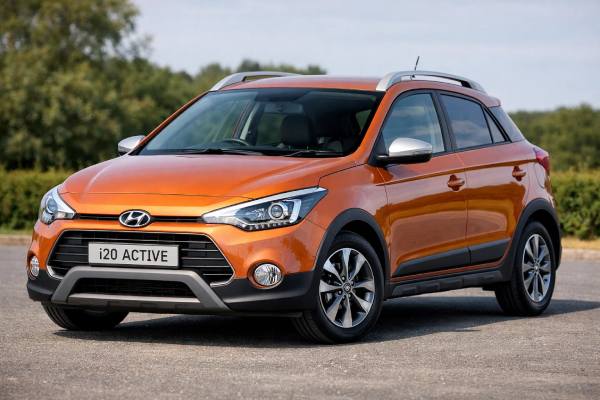
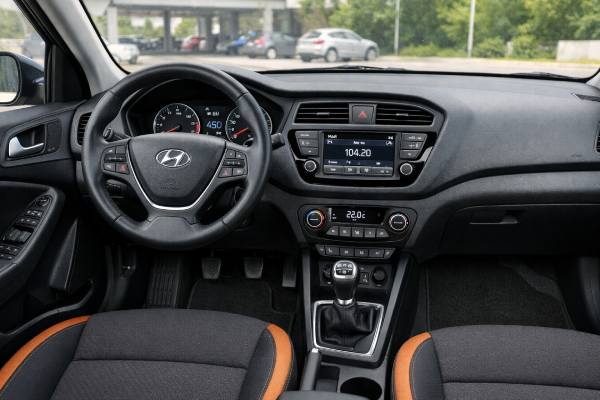
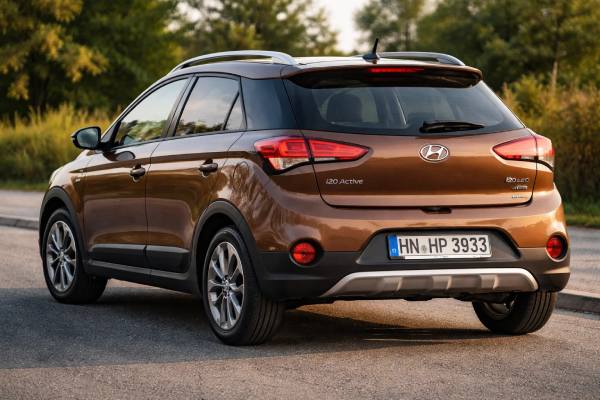
The Hyundai i20 Active GB is the crossover-flavored version of the second-generation i20, and the 1.4-litre 100 hp petrol model sits in a useful middle ground. It offers more ground clearance, tougher styling, and a slightly more adventurous look than the regular hatchback, but underneath it remains a simple front-wheel-drive supermini with a naturally aspirated four-cylinder engine. That is a large part of its appeal today. It avoids the extra complexity of turbocharging, keeps servicing straightforward, and still delivers enough real-world performance for mixed daily use. The i20 Active is not an off-roader, and the raised stance does not transform it into a rugged SUV. What it does offer is a more versatile and upright-feeling small car with good cabin space, honest controls, and manageable ownership costs. For used buyers who want a compact crossover look without crossover-sized running bills, the 1.4 100 hp version is one of the most sensible ways into the range.
Core Points
- The 1.4 petrol combines simple naturally aspirated engineering with a useful 6-speed manual gearbox.
- Extra ride height and crossover styling make it more flexible on rough urban roads than the regular i20 hatch.
- Cabin space, visibility, and a 326 L boot keep it practical for daily family use.
- Neglected cars can need suspension work, tyres, brakes, clutch, and overdue fluid service before they feel right again.
- Hyundai listed first maintenance at 15,000 km, then every 20,000 km or annually on some European schedules.
Guide contents
- Hyundai i20 Active GB Profile
- Hyundai i20 Active GB Specs
- Hyundai i20 Active GB Equipment
- Common Issues and Service History
- Maintenance Plan and Buying Advice
- Road Behavior and Efficiency
- Active Versus Its Rivals
Hyundai i20 Active GB Profile
The Hyundai i20 Active was created to give the regular GB-generation i20 hatchback a more rugged identity without changing its core purpose. Hyundai raised the ride height by 20 mm, added roof rails, revised the bumpers, and gave the car a more crossover-like stance. Those changes were enough to make the Active feel distinct in the showroom, but the engineering underneath stayed close to the standard i20 formula: front-wheel drive, transverse engine, simple suspension, and compact B-segment dimensions.
That is the right starting point for understanding the 1.4 100 hp petrol version. This is not a soft-roader pretending to be a proper SUV, and it is not the sporty flagship of the lineup either. It is the version for buyers who want the higher seating feel and tougher styling of the Active body without the extra drivetrain complexity of Hyundai’s later turbocharged options. The naturally aspirated 1.4-litre petrol engine is simple, linear in response, and easier for many long-term owners to understand and maintain.
There is also a market nuance worth knowing. The title range of 2016–2018 works broadly for continental European availability, but this exact 1.4 100 hp Active was not sold in the same way in every market for the entire period. In the UK, Hyundai’s 2016 lineup change replaced the 1.4 petrol manual in the i20 range with the newer 1.0 T-GDi 100 PS, and the i20 Active there became closely tied to that turbo engine. In some continental European markets, however, the 1.4 petrol remained available into 2018. For used buyers, that means VIN and market specification matter more than assumptions based on a generic model name.
As a concept, the i20 Active works because the underlying GB i20 was already a strong small hatchback. The second-generation i20 improved interior room, refinement, and ride quality over the old PB car, and the Active used those strengths rather than replacing them. It kept the generous wheelbase, practical hatchback packaging, and relatively mature road manners, then added a little more visual confidence and a small increase in ground clearance.
The result is a car that feels more versatile than a standard supermini without becoming significantly harder to own. For drivers dealing with poor roads, speed humps, rural lanes, and rough urban surfaces, the Active makes everyday sense. It is also easier to recommend as a used buy than many fashion-led small crossovers because it stays close to the proven i20 recipe. The important part is not the plastic cladding or the rails on the roof. It is the combination of simple petrol power, good cabin room, and reasonable long-term running costs.
Hyundai i20 Active GB Specs
The 1.4-litre petrol i20 Active uses a straightforward powertrain and a lightly modified version of the standard i20 chassis package. The raised suspension and revised body dimensions are the key technical differences, while the engine remains a naturally aspirated multi-point-injection four-cylinder. Official Hyundai technical documents for the Active provide the strongest confirmed details for the 1.4 petrol in continental European form.
| Powertrain and efficiency | Figure |
|---|---|
| Code | Kappa 1.4 MPI |
| Engine layout and cylinders | Inline 4, DOHC, 4 valves per cylinder |
| Bore × stroke | 72.0 × 84.0 mm (2.83 × 3.31 in) |
| Displacement | 1.4 L (1368 cc) |
| Induction | Naturally aspirated |
| Fuel system | Electronically controlled multi-point injection |
| Compression ratio | 10.5:1 |
| Max power | 100 hp (74 kW) @ 6000 rpm |
| Max torque | 134 Nm (99 lb-ft) @ 3500 rpm |
| Timing drive | Chain |
| Rated combined efficiency | 5.9 L/100 km (39.9 mpg US / 47.9 mpg UK) |
| Real-world highway @ 120 km/h | Usually about 6.7–7.5 L/100 km depending on tyres, load, route, and weather |
| Transmission and driveline | Figure |
|---|---|
| Transmission | 6-speed manual |
| Drive type | Front-wheel drive |
| Differential | Open |
| Chassis and dimensions | Figure |
|---|---|
| Suspension, front | MacPherson strut with dampers, coil springs, stabilizer |
| Suspension, rear | Coupled torsion-beam axle with dampers and coil springs |
| Steering | Electric rack-and-pinion; ratio 15.6:1 |
| Brakes | Front discs, rear drums on many trims |
| Wheels and tyres | Common sizes 185/65 R15, 195/55 R16, or 205/45 R17 depending on trim |
| Ground clearance | 160 mm (6.3 in) |
| Length | 4065 mm (160.0 in) |
| Width | 1760 mm (69.3 in) without mirrors |
| Height | 1529 mm (60.2 in) |
| Wheelbase | 2570 mm (101.2 in) |
| Turning circle | 10.2 m (33.5 ft) |
| Kerb weight | About 1050–1195 kg depending on trim |
| GVWR | 1620 kg (3571 lb) |
| Fuel tank | 50 L (13.2 US gal / 11.0 UK gal) |
| Cargo volume | 326–1042 L (11.5–36.8 ft³), VDA |
| Performance and capability | Figure |
|---|---|
| 0–100 km/h | 11.6 s |
| Top speed | 184 km/h (114 mph) |
| Braked towing capacity | 1000 kg (2205 lb) |
| Unbraked towing capacity | 450 kg (992 lb) |
| Payload | About 425–590 kg depending on trim |
| Fluids and service capacities | Figure |
|---|---|
| Engine oil | About 3.6 L with filter; use market-approved Hyundai spec oil and viscosity |
| Coolant | Verify exact capacity by VIN and market; official quick-sheet values vary by document format |
| Manual transmission fluid | About 1.6 L |
| A/C refrigerant | Type and charge depend on build and market; confirm on under-bonnet label |
| Key torque spec | Wheel nuts 88–107 Nm (65–79 lb-ft) |
| Safety and driver assistance | Figure |
|---|---|
| Euro NCAP | 4 stars in 2015 standard test configuration for the i20 line |
| Adult occupant | 85% |
| Child occupant | 73% |
| Vulnerable road users | 79% |
| Safety assist | 64% |
| ADAS suite | ESC common; lane departure warning, speed-limit information, and AEB depended on trim or pack in some markets |
These figures show why the 1.4 Active makes sense. It is not fast enough to feel sporty in modern terms, but the 6-speed manual gives it a broader useful range than the smaller 1.25 engines, and the raised ride height helps it cope with rougher roads without losing the compact agility expected from an i20.
Hyundai i20 Active GB Equipment
The i20 Active sits between a conventional hatchback and a style-led small crossover, and its trim structure reflects that. Hyundai positioned it as a more adventurous version of the i20 rather than a stripped-down utility model, so even the base versions usually came with visible equipment differences beyond the ride-height increase. The exact names varied by market, but trims such as Pure, Select, Comfort, Trend, Style, or similar regional equivalents are common in European documentation.
The body-specific features are part of the identity. Unique bumpers, roof rails, extra cladding, revised side details, and the taller stance make the Active easy to distinguish from the normal hatchback. Those changes are not simply cosmetic. The increased ground clearance is helpful on rough streets, broken surfaces, and high speed humps, while the taller stance changes the visual balance of the car and gives it a more upright attitude.
Wheel and tyre combinations play a meaningful role in how the car feels. Entry versions on 15-inch wheels and 185/65 tyres tend to ride better and cost less to maintain. Mid and higher trims often use 16-inch or 17-inch wheels, which improve visual presence and sharpen steering response slightly, but increase tyre cost and can make the ride firmer. On a 100 hp naturally aspirated petrol, the smaller or mid-sized wheel packages often make more practical sense than the biggest ones.
The 1.4 engine itself is part of the trim story because it was positioned as the stronger naturally aspirated petrol choice in relevant markets. Hyundai’s own pricing and specification material described it as the lead-in petrol engine in some European Active lineups and highlighted the standard 6-speed manual as an advantage. That helps explain why the 1.4 Active usually feels like a better all-rounder than a basic trim-plus-engine combination would suggest. It is not just a body kit on a weak powertrain.
Safety equipment needs careful reading because the 2015 Euro NCAP result for the i20 line was influenced by how active-safety technology was distributed. In standard form the i20 scored four stars, with strong adult protection but a more modest safety-assist score under the test protocol. Depending on market and trim, the Active could include ESC, vehicle stability management, hill-start assist, tyre-pressure monitoring, lane departure warning, rear parking sensors, and in some markets higher-pack equipment such as AEB. But buyers should not assume every car has the same systems.
That point matters in the used market because sellers often describe all Actives as if they share identical safety and convenience features. They do not. Check the exact wheel size, infotainment specification, parking aids, climate controls, and driver-assistance functions on the car itself. For many owners, the best-used example is not the highest trim but the one with the right balance of equipment, a sensible tyre package, and a clear maintenance history. On this model, working air conditioning and strong service records matter more than an impressive brochure list.
Common Issues and Service History
The Hyundai i20 Active 1.4 has a reassuringly ordinary reliability profile. That is not a criticism. In used-car terms, ordinary is often good. The naturally aspirated engine avoids turbo-specific concerns, the chassis is simple, and the Active-specific suspension lift does not introduce major mechanical complexity. Most trouble points are therefore familiar age-and-use issues rather than model-defining failures.
A useful way to understand the pattern is by frequency and cost:
- Common, low to medium cost: front drop links, suspension bushes, tired dampers, brake wear, tyre wear from poor alignment, and weak batteries.
- Common, medium cost: clutch wear, wheel bearings, thermostat issues, air-conditioning weakness, and minor exhaust corrosion.
- Occasional, medium cost: ignition-coil or spark-plug misfire, electric steering complaints, door-lock issues, window switches, and engine mount wear.
- Occasional, high cost: catalytic-converter damage after prolonged misfire use, overheating-related engine stress, major corrosion repair, and poor-quality crash repair correction.
- Rare but important: unresolved service campaigns, water ingress after bad body repair, and vehicles with hidden accident history.
The engine itself is generally strong when serviced correctly. Because it is naturally aspirated and uses multi-point injection, it avoids many of the headaches associated with small turbo direct-injection engines. Throttle response stays predictable, and long-term maintenance is easier to understand. The chain-driven timing system also removes the need for a routine timing-belt change. Still, that does not mean owners can ignore oil quality or service intervals. Chain wear, tensioner noise, and timing-correlation faults can still appear if the car has had poor oil care.
Cooling health should also be taken seriously. Small petrol hatchbacks are often run on a budget, and that can mean missed coolant changes and delayed thermostat replacement. A used buyer should look carefully for signs of past overheating, unexplained coolant loss, or a seller who is vague about prior cooling work. The same caution applies to ignition faults. A slightly rough idle can be a straightforward coil or plug issue, but letting misfires continue can damage the catalytic converter and quickly raise repair costs.
The Active body style adds a few practical checks of its own. Because owners may use these cars on rougher roads, inspect the underside, lower bumpers, wheel-arch liners, and suspension carefully. The higher ground clearance is helpful, but it can encourage owners to treat the car more roughly than a normal supermini. That can show up in tired dampers, impacts to underbody panels, and wear in the suspension mounts.
Service history matters more than trim level on this model. The best cars are the ones with consistent oil changes, clear evidence of brake and tyre care, and proof that minor faults were fixed early. A tired i20 Active usually does not fail in one dramatic way. It just feels loose, noisy, and older than it should. That is why a proper cold start, a longer road test, and an underbody inspection tell you more than a polished exterior ever will.
Maintenance Plan and Buying Advice
The i20 Active 1.4 rewards consistent maintenance because its engineering is simple and predictable. This is one of the best reasons to buy the model today. It does not require unusual specialist care, but it responds well to owners who stay on top of routine service rather than waiting for warning signs. Because the car is now firmly in used territory, catching up on neglected maintenance is often more expensive than paying more for a better example in the first place.
A practical maintenance schedule starts with engine oil. Hyundai’s European technical data for this engine lists the first service at 15,000 km and then every 20,000 km or annually. On an older used example, many careful owners prefer not to stretch those intervals, especially if the service history is incomplete or the car sees a lot of short trips. That is sensible for chain life, engine cleanliness, and general peace of mind.
| Item | Practical interval |
|---|---|
| Engine oil and filter | First at 15,000 km, then every 20,000 km or 12 months maximum |
| Engine air filter | Inspect at every service and replace by condition |
| Cabin air filter | Inspect annually and usually replace every 12 months |
| Spark plugs | Replace by official schedule and plug type; inspect sooner if running quality changes |
| Coolant | Replace by time and mileage schedule, not just after a fault |
| Auxiliary belts | Inspect regularly with age and mileage |
| Brake fluid | Every 2 years is sensible |
| Brake pads, shoes, discs, drums | Inspect at every service |
| Manual gearbox oil | Check for leaks and refresh on age and mileage if history is missing |
| Tyre rotation | Around every 12,000 km |
| Battery test | Annually after about year four |
| Timing chain | No routine replacement interval, but inspect if noisy or if timing faults appear |
| Core fluids and values | Figure |
|---|---|
| Engine oil capacity | About 3.6 L |
| Gearbox oil capacity | About 1.6 L |
| Wheel nut torque | 88–107 Nm |
| Fuel tank | 50 L |
A buyer’s checklist for this model should focus on condition rather than marketing:
- Start the engine cold and listen for chain rattle, misfire, or unstable idle.
- Make sure the engine pulls cleanly through the rev range with no hesitation.
- Check the clutch for slip and note whether the bite point feels too high.
- Listen for front-end knocks over rough roads from links, bushes, or dampers.
- Inspect tyres for uneven wear, cheap replacements, or mismatched brands.
- Confirm air conditioning, steering assist, and all electrics work correctly.
- Look underneath for rust, leaks, and scrape damage to lower trim or panels.
- Verify service history for oil, brakes, plugs, coolant, and tyres.
- Check that the car’s equipment matches the trim description.
- Confirm campaign and recall status by VIN.
The best versions to seek are normally mid-grade or higher-grade cars with sensible wheels, sound service history, and no signs of cooling or ignition neglect. The ones to avoid are the cheapest cars with vague maintenance claims, warning-light stories, obvious alignment problems, or sellers who dismiss suspension noise as normal. Long-term durability is good when the baseline condition is right. That is why buying carefully matters more than buying cheaply.
Road Behavior and Efficiency
On the road, the i20 Active 1.4 feels like what it is: a raised supermini with a simple petrol engine and honest manners. That means it is not especially fast, but it is also rarely difficult or annoying to drive. The 1.4’s naturally aspirated character gives it smooth, linear throttle response, and the 6-speed manual makes it more flexible than the smaller 1.25 engines found elsewhere in the range.
In urban driving, the Active makes a strong case for itself. The extra ride height is useful on rough surfaces and steep ramps, the steering is light enough for easy parking, and the engine responds cleanly from low speed without turbo lag or abrupt boost. Visibility is good, the seating position feels slightly more upright than the normal hatch, and the car generally comes across as relaxed rather than sporty. That suits its intended role.
The main difference from the regular i20 hatch is not dramatic body roll or a radically altered feel. The Active still behaves like a B-segment hatchback underneath. But the taller stance and soft crossover positioning give it a slightly calmer, slower-to-react personality in corners. It does not encourage aggressive driving, yet it remains secure and predictable. For most owners, that is a fair trade for the higher ground clearance and easier everyday usability.
Refinement is respectable for the class. The naturally aspirated four-cylinder is smoother than Hyundai’s small diesels and avoids the low-speed buzz that can affect three-cylinder engines. At motorway speed, wind and road noise still rise as expected in a small hatchback, but the 6-speed gearbox helps keep the engine from feeling overworked. That matters because one of the hidden strengths of the 1.4 Active is that it feels more grown-up at speed than the power figure alone might suggest.
Performance numbers back that up. A 0–100 km/h time of 11.6 seconds and a 184 km/h top speed are healthy results for a crossover-styled supermini of this type. More importantly, the engine feels willing enough in normal mixed driving. It is not a strong overtaking car compared with turbo rivals, but it is clearly more comfortable on open roads than the base petrol options.
Fuel economy is decent rather than exceptional. Official combined consumption of 5.9 L/100 km is realistic only in favorable use, but real-world mixed driving still tends to be reasonable for a naturally aspirated 1.4 petrol. In everyday conditions, many owners should expect numbers in the mid-6 to low-7 L/100 km range depending on route, tyres, weather, and load. At a steady 120 km/h cruise, expect a result closer to the upper-6 to mid-7 range. That is not class-leading, but it is acceptable given the engine size, higher stance, and uncomplicated design.
The overall verdict behind the wheel is simple. The i20 Active 1.4 is not bought for excitement. It is bought because it offers a raised, practical small car experience with low-drama controls and enough power to feel complete.
Active Versus Its Rivals
The Hyundai i20 Active 1.4 competes with a wide mix of small crossover-style hatchbacks and high-riding superminis. Its natural rivals include versions of the Dacia Sandero Stepway, Fiat Panda Cross or City Cross, Toyota Yaris with crossover-leaning trim, Suzuki SX4 S-Cross at the lower end of the size overlap, and style-led B-segment models such as the Renault Captur or Peugeot 2008 in their simpler petrol forms. Not all of those cars are exact like-for-like matches, but they compete for the same kind of buyer: someone who wants a small car with extra visual toughness and everyday practicality.
The Hyundai’s biggest strength is that it stays close to a normal hatchback underneath. That makes it easier to understand and often cheaper to own over time than more complicated small crossovers. The 1.4 naturally aspirated engine is also a clear advantage for buyers who do not want a turbocharged petrol. It gives away some low-end shove and fuel economy to modern downsized rivals, but it may feel like the safer long-term choice for people who prioritize simplicity.
Compared with the regular i20 hatch, the Active trades a little agility and fuel efficiency for the extra ground clearance, tougher styling, and slightly more versatile daily-use feel. Compared with the 1.0 T-GDi Active where sold, the 1.4 gives away punch and often efficiency, but wins on mechanical simplicity. That is an important distinction in the used market, where many buyers are deliberately trying to avoid turbo-related long-term unknowns.
Its weaknesses are clear. It is still only front-wheel drive, so the crossover styling should not be mistaken for serious off-road ability. The rear drums fitted to many trims are adequate rather than exciting. The 1.4 petrol is willing enough, but not especially strong when heavily loaded or asked to overtake quickly. And because these cars are now old enough to be chosen mainly on price, the condition gap between good and bad examples is large.
Still, the overall case is strong. The Hyundai i20 Active GB 1.4 100 hp is one of those cars that makes more sense the longer you think about it. It offers crossover style without crossover excess, practical space without bulk, and simple petrol ownership without feeling too basic. For buyers who want an easygoing small car with a slightly tougher edge and no major mechanical complications, it remains a convincing used choice. Its advantages are clarity, practicality, and balance. Its risks are mostly the risks of any aging supermini: neglect, poor tyres, missed services, and the temptation to buy the cheapest one instead of the right one.
References
- Hyundai Owners Manuals | Hyundai Motor UK 2026 (Owner’s Manual)
- Hyundai Motor UK reveals pricing of 2016 i20 line-up 2016 (Manufacturer release)
- Hyundai i20 Active | Technische Daten | Stand: 11.2018 2018 (Technical Data)
- Hyundai i20 – Euro NCAP Results 2015 2015 (Safety Rating)
- Home | Hyundai Recalls & Service Campaigns 2026 (Recall Database)
Disclaimer
This article is for informational purposes only and is not a substitute for professional diagnosis or repair. Specifications, torque values, intervals, procedures, and fitted equipment vary by VIN, market, build date, and equipment level, so always verify them against the official service documentation and parts information for the exact vehicle.
If this guide helped you, please consider sharing it on Facebook, X, or another social platform to support our work.