
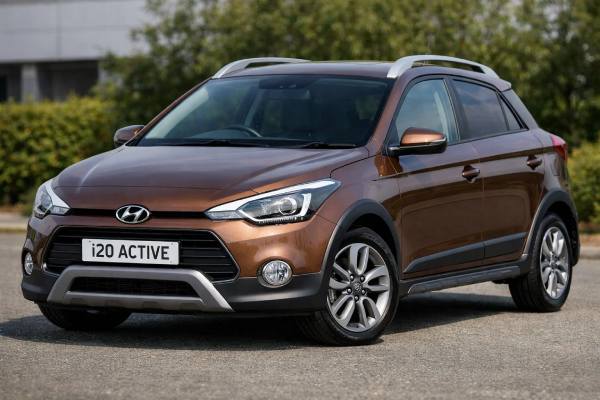
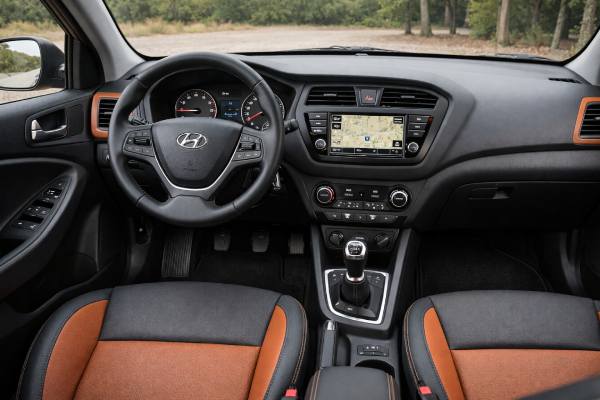
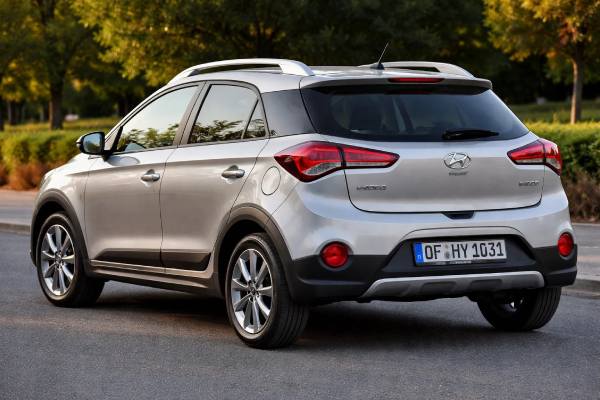
The Hyundai i20 Active GB 1.0 T-GDi 120 hp sits in an interesting corner of the used-car market. It looks like a light crossover, but underneath it is still a supermini-based hatchback with front-wheel drive, compact dimensions, and everyday running costs that stay much closer to a normal i20 than to a larger SUV. That makes it appealing if you want a slightly raised seating position, extra body cladding, and a tougher look without giving up easy parking or a sensible fuel bill. The 1.0-litre turbocharged three-cylinder engine is the key difference. With 120 hp and 172 Nm, it gives the Active far more flexibility than the older naturally aspirated petrol options. It feels stronger in the mid-range, more relaxed on hills, and more capable at motorway speed. The trade-off is complexity. Turbocharging, direct injection, and DCT availability in some markets mean service history matters more than styling, trim, or mileage alone.
Quick Overview
- The 1.0 T-GDi 120 hp engine gives the i20 Active genuinely useful mid-range performance.
- The raised ride height and crossover trim improve rough-road confidence without making the car bulky.
- Boot space, rear-seat room, and overall usability are strong for a small hatch-based crossover.
- Poor servicing can lead to turbo, ignition, or dual-clutch drivability complaints on neglected cars.
- A practical service baseline is engine oil and filter every 10,000-15,000 km or 12 months.
Jump to sections
- Hyundai i20 Active GB in Real Use
- Hyundai i20 Active GB Specification Breakdown
- Hyundai i20 Active GB Trims and Safety Tech
- Reliability Trends and Known Weak Points
- Maintenance Schedule and Smart Buying
- Driving Impressions and True Running Costs
- How the i20 Active GB Stacks Up
Hyundai i20 Active GB in Real Use
The i20 Active is best understood as a mildly ruggedized i20 rather than a true SUV. Hyundai raised the body, added cladding, roof rails, and model-specific trim, and gave it a more adventurous look, but the car remains compact, light, and easy to manage. That is a strength. The Active does not pretend to be an off-roader, yet it delivers several real-world advantages over a standard supermini. You sit a little higher, rough urban roads feel less threatening, and the extra ground clearance helps on steep ramps, broken pavement, or winter debris.
The 1.0 T-GDi 120 hp engine is what makes this version especially attractive. The standard i20 can feel merely adequate with smaller naturally aspirated engines, but the 120 hp turbo unit changes the character. It delivers a much stronger middle range, so the car feels more confident when merging, overtaking, or climbing. It is still not a performance model, but it is one of the few i20 Active variants that feels genuinely lively when driven with purpose.
Ownership, however, depends heavily on how the car was treated. This engine is more advanced than the old 1.2 or 1.4 MPI units. It uses direct injection, turbocharging, and a more demanding heat and lubrication environment. In some markets the 120 hp Active also appeared with Hyundai’s seven-speed dual-clutch transmission, which improves everyday ease but adds another system that must behave correctly when warm and cold. That does not make the car fragile, but it does mean maintenance history matters more than on the simpler petrol models.
The chassis suits the concept well. Hyundai tuned the GB-generation i20 toward stability and comfort, and the Active builds on that with extra ride height. It is not sporty, yet it is composed, easy to place, and more mature-feeling than many small crossovers of the same period. The cabin also helps the case. Space is good for the class, the boot is genuinely useful, and overall visibility remains strong.
For used buyers, the i20 Active 1.0 T-GDi works best as an all-round daily driver: small enough for city life, efficient enough for commuting, and comfortable enough for longer trips. The right car feels like a smart compromise. The wrong one, especially with patchy oil history or unresolved transmission issues, can become an expensive lesson.
Hyundai i20 Active GB Specification Breakdown
Exact figures vary by market, gearbox, wheel size, and emissions update, but the 2016–2018 Hyundai i20 Active GB 1.0 T-GDi 120 hp followed a consistent technical theme across Europe. The tables below summarize the key data most buyers actually need.
Powertrain and efficiency
| Item | Hyundai i20 Active GB 1.0 T-GDi 120 |
|---|---|
| Code | Kappa 1.0 T-GDi family |
| Engine layout and cylinders | Inline-3, DOHC, 12-valve |
| Cylinders | 3 |
| Valves per cylinder | 4 |
| Bore × stroke | 71.0 × 84.0 mm (2.80 × 3.31 in) |
| Displacement | 1.0 L (998 cc) |
| Induction | Single-scroll turbocharger with intercooler |
| Fuel system | Gasoline direct injection |
| Compression ratio | 10.0:1 |
| Max power | 120 hp (88 kW) @ 6,000 rpm |
| Max torque | 172 Nm (127 lb-ft) @ 1,500-4,000 rpm |
| Timing drive | Chain |
| Rated efficiency | Roughly 5.1-5.3 L/100 km depending on market and gearbox |
| Real-world highway @ 120 km/h | About 6.0-6.8 L/100 km |
Transmission and driveline
| Item | Hyundai i20 Active GB 1.0 T-GDi 120 |
|---|---|
| Transmission | 6-speed manual or 7-speed dual-clutch automatic, market-dependent |
| Transmission code | Common Hyundai 7DCT family on DCT-equipped cars |
| Drive type | FWD |
| Differential | Open |
Chassis and dimensions
| Item | Hyundai i20 Active GB 1.0 T-GDi 120 |
|---|---|
| Suspension front | MacPherson strut with coil springs and anti-roll bar |
| Suspension rear | Coupled torsion beam / link axle layout |
| Steering | Electric power-assisted rack and pinion |
| Steering ratio | 13.9:1 |
| Brakes front | 256 mm (10.1 in) ventilated discs |
| Brakes rear | 262 mm (10.3 in) solid discs |
| Most popular tyre sizes | 185/65 R15, 195/55 R16, 205/45 R17 |
| Ground clearance | 160 mm (6.3 in) |
| Length | 4,065 mm (160.0 in) |
| Width | 1,760 mm (69.3 in) without mirrors |
| Height | 1,529 mm (60.2 in) |
| Wheelbase | 2,570 mm (101.2 in) |
| Turning circle | 10.2 m (33.5 ft) |
| Kerb weight | Roughly 1,130-1,240 kg (2,491-2,734 lb), trim and gearbox dependent |
| GVWR | About 1,650 kg (3,638 lb) |
| Fuel tank | 50 L (13.2 US gal / 11.0 UK gal) |
| Cargo volume | 326 L (11.5 ft³) seats up / 1,042 L (36.8 ft³) seats folded, VDA |
Performance and capacities
| Item | Hyundai i20 Active GB 1.0 T-GDi 120 |
|---|---|
| 0–100 km/h (0–62 mph) | About 10.4 s manual / about 10.7 s DCT |
| Top speed | About 183 km/h (114 mph) manual / about 184 km/h (114 mph) DCT |
| Braking distance 100–0 km/h | Typically high-30 m to low-40 m range on quality tyres |
| Towing capacity | 800-1,000 kg (1,764-2,205 lb) braked, market and gearbox dependent |
| Unbraked towing | 450 kg (992 lb) |
| Engine oil | About 3.9 L (4.1 US qt) including filter |
| Coolant | About 4.3 L (4.5 US qt) |
| Gearbox oil | About 1.7 L manual / about 1.9 L DCT service fill reference |
| Service interval | First at 15,000 km, then every 20,000 km or 12 months |
Safety and driver assistance
| Item | Hyundai i20 Active GB |
|---|---|
| Euro NCAP | 4 stars |
| Adult occupant | 85% |
| Child occupant | 73% |
| Vulnerable road user | 79% |
| Safety assist | 64% |
| IIHS | Not applicable |
| ADAS | Optional lane keep assist and city emergency braking on some later-market cars; no broad modern suite |
Hyundai i20 Active GB Trims and Safety Tech
The i20 Active was marketed as a more adventurous, better-equipped branch of the standard i20 line, but trim naming still varied by country. That means one market’s “Style” car can differ meaningfully from another market’s “Premium” or “Trend” car. The safest way to assess an Active is by its actual equipment, wheel package, and gearbox, not by the badge on an advert.
The basic Active package was easy to spot. It added unique bumpers, side cladding, roof rails, crossover-style detailing, and increased ride height compared with the ordinary five-door i20. That gave it a tougher look without adding real SUV complexity. Higher trims then layered on larger wheels, upgraded seat trim, better infotainment, parking sensors, reversing camera, climate control, and in some markets heated seats or steering wheel.
The 1.0 T-GDi 120 hp version sat toward the stronger end of the range. It mattered because the extra power and torque made the Active feel more coherent. Heavier cladding and taller stance can make low-output engines feel slower than they are, but the 120 hp turbo unit offsets that well. Depending on market, the dual-clutch automatic also became part of the package, and that can be useful for buyers prioritizing urban convenience.
Quick identifiers worth checking on a used car include:
- 16-inch or 17-inch alloy wheels instead of the base 15-inch setup
- projector lamps or upgraded daytime running lights
- parking sensors and rear camera
- multifunction steering wheel and larger infotainment screen
- lane assist or city brake function in later, better-equipped cars
- heated seats or steering wheel on upper trims in colder markets
Safety is a nuanced area. The GB-generation i20 scored four stars in 2015 Euro NCAP testing. That is respectable, but it is not equal to a newer five-star small car with broader standard driver assistance. The i20 Active’s real strength lies in good structural basics and a sound list of restraint and stability features.
Typical safety equipment included:
- front, side, and curtain airbags
- ABS with brake assist
- ESC and vehicle stability management
- hill-start assist
- ISOFIX child-seat points
- tyre-pressure monitoring in some markets
ADAS availability was limited and trim-sensitive. Some later cars offered active lane keep assistance and city emergency braking, but these were not universal and do not amount to a modern full safety suite. There was no widespread fitment of adaptive cruise control, blind-spot monitoring, rear cross-traffic alert, or traffic-sign recognition in the way buyers now expect. That means buyers should treat any advertised assist features as a bonus, not as a guaranteed part of the model.
Reliability Trends and Known Weak Points
The i20 Active 1.0 T-GDi 120 is usually a decent used buy, but it is more condition-sensitive than Hyundai’s older naturally aspirated petrol cars. The engine is efficient and punchy, yet it depends on correct oil, clean fuel delivery, sound ignition components, and sensible warm-up habits. Add the possible DCT gearbox, and it becomes a car where service history is central to the purchase decision.
Common issues, low-to-medium cost
- Ignition misfire: Worn spark plugs and aging coils can cause rough idle, weak boost response, or engine warning lights. This often shows up earlier on turbo direct-injection engines than on older low-output MPI motors.
- Battery and stop-start complaints: Weak 12 V batteries can trigger poor stop-start performance, warning lights, and erratic electronics.
- Suspension wear: Front drop links, bushes, and top mounts can start knocking over rough roads, especially on larger wheels.
- Tyre sensitivity: Cheap or mismatched tyres hurt refinement and steering feel more than many owners expect.
Occasional issues, medium cost
- Turbo plumbing or boost-control faults: Split hoses, sticky actuators, or sensor problems can mimic major turbo failure, so diagnosis matters before parts are replaced.
- DCT drivability complaints: Hesitation when hot, shudder in slow traffic, or rough low-speed take-up can point to clutch wear, calibration issues, or poor adaptation. Not every DCT behaves badly, but a test drive in traffic is essential.
- Carbon build-up over time: As a direct-injection petrol engine, it does not wash intake valves with fuel. Short-trip use and poor service habits can make the problem worse as mileage rises.
- Air-conditioning problems: Condenser damage and slow refrigerant leaks become more common with age.
Less common but high-cost concerns
- Turbocharger wear after poor oil history
- Persistent DCT clutch or mechatronic trouble on neglected automatic cars
- Cooling-system leaks that go unnoticed until drivability changes
- Crash-repair issues hidden behind crossover cladding
Software matters too. Some drivability complaints on modern small turbo cars are improved by official updates to engine or gearbox calibration. It is worth asking whether the car was dealer-serviced recently enough to receive updates where applicable.
Before buying, request:
- Full service history with oil grade evidence
- Proof of recall or service-campaign check by VIN
- Cold start and hot restart demonstration
- Smooth DCT operation in crawling traffic if automatic
- Fault-code scan, not just a dashboard-light check
This is not a fragile car, but it is a car that reacts badly to neglect. A well-kept one can be very satisfying. A cheap, under-serviced example can become costly.
Maintenance Schedule and Smart Buying
The safest approach with the 1.0 T-GDi 120 is preventive maintenance. Official intervals can be longer than what many specialists consider ideal for long-term ownership, especially on a small turbo direct-injection engine. Buyers planning to keep the car should service it more conservatively than the minimum schedule.
Practical maintenance schedule
| Item | Practical interval |
|---|---|
| Engine oil and filter | Every 10,000-15,000 km or 12 months |
| Engine air filter | Every 30,000 km, sooner in dusty conditions |
| Cabin air filter | Every 20,000 km or 24 months |
| Spark plugs | About 40,000-50,000 km |
| Coolant | Around 5 years or 100,000 km, then inspect more frequently |
| Brake fluid | Every 2 years |
| Manual gearbox oil | Refresh around 60,000-90,000 km |
| DCT fluid and service checks | Follow market guidance, but inspect behaviour well before 100,000 km |
| Serpentine belt and auxiliaries | Inspect every service |
| Hoses and boost pipes | Inspect annually |
| Brake pads and discs | Inspect every service |
| Tyre rotation | Every 10,000 km |
| Alignment | Check annually or when tyre wear appears |
| 12 V battery | Test yearly from year 4 onward |
| Timing chain | No fixed interval; inspect by symptom, noise, or fault code |
| Intake and fuel-system cleanliness | Inspect and address on symptom or higher mileage |
Fluid and service notes
- Use the exact oil specification approved for this turbo petrol engine.
- Do not stretch oil changes if the car sees short trips or hard use.
- Replace spark plugs on time; turbo engines often become coil-sensitive when plugs age.
- Treat DCT behaviour as a service item, not something to ignore until it becomes severe.
- Coolant and brake fluid are time-based, not just mileage-based, needs.
Buyer’s checklist
- Check for smooth, quiet cold start.
- Watch for misfire, hunting idle, or flat response under load.
- Inspect service invoices, not just stamps.
- Test the gearbox in stop-start traffic and during repeated parking manoeuvres.
- Look at tyres carefully; the wrong tyres can hide or amplify chassis issues.
- Check under the body cladding and wheel-arch edges for poor repair.
- Confirm all cameras, parking sensors, and infotainment functions work.
Best examples to seek
- Full service history from new
- Good tyres from quality brands
- Stock, unmodified cars
- DCT cars with clearly smooth low-speed behaviour
Examples to avoid
- Cars with patchy oil history
- Shuddering DCT cars sold as “they all do that”
- Cars with repeated engine-light history
- Cars with suspicious panel alignment or hidden front-end repair
A properly maintained i20 Active 1.0 T-GDi can age well. A neglected one quickly loses its value advantage.
Driving Impressions and True Running Costs
On the road, the i20 Active 1.0 T-GDi 120 feels more mature than its numbers suggest. The crossover styling can make people expect softness and sluggishness, but the engine gives the car useful punch. Step-off is good, the torque comes in early, and normal overtakes need less planning than in the weaker petrol versions. It is not a sports model, yet it never feels underpowered in ordinary use.
Around town, the raised suspension and lighter steering work in the car’s favour. Visibility is good, broken surfaces are handled with more ease than in some lower-riding rivals, and the upright body shape makes parking simple. The car’s small footprint remains one of its best qualities. Unlike many small SUVs, it still feels like a compact hatch when threading through traffic or squeezing into tight spaces.
On faster roads, the 120 hp engine makes the Active feel properly usable. It cruises more easily than the 100 hp version when loaded, and the mid-range torque helps on inclines. The manual gearbox is generally the more satisfying choice if you like predictability. The DCT is more convenient in traffic, but it can feel hesitant at crawling speed, and some drivers never warm to that.
Ride quality is tuned toward comfort, not agility. The i20 Active is stable and forgiving, but the taller suspension and crossover tyres reduce the sense of sharpness you might find in a Fiesta or Ibiza. Steering feedback is modest. Braking feel is normally dependable if tyres and rear brakes are healthy.
Real-world economy is usually respectable rather than miraculous:
- City: about 6.8-8.0 L/100 km
- Highway: about 5.3-6.3 L/100 km
- Mixed: about 5.9-6.9 L/100 km
That translates to roughly:
- City: 29-35 mpg US / 35-42 mpg UK
- Highway: 37-44 mpg US / 45-53 mpg UK
- Mixed: 34-40 mpg US / 41-48 mpg UK
Cold weather, traffic, short trips, and cheap fuel can worsen those figures. DCT cars may use slightly more in town. Buyers should also remember that crossover tyres and bigger wheels can nudge economy downward.
Overall, the Active’s driving personality is easygoing but not dull. Its real strength is that it feels more capable than the average style-led small crossover.
How the i20 Active GB Stacks Up
The i20 Active 1.0 T-GDi 120 works best when judged against other hatchback-based crossovers and high-riding superminis, not against full SUVs. In that space, it makes a very solid case.
Against a Ford Fiesta Active or regular Fiesta EcoBoost, the Hyundai usually loses on steering feel and outright fun. The Ford is the better driver’s car. The Hyundai often counters with a roomier cabin, simpler ergonomics, and a calmer ride.
Against a Volkswagen Polo-based crossover alternative or a regular Polo, the Hyundai often offers stronger value for money and a more distinctive body style for the same budget. The VW may feel more polished in some areas, but it is often pricier as a used buy.
Against a Toyota Yaris with similar output, the Hyundai usually brings more torque-rich performance and a more spacious feel. The Toyota often answers with a reputation for lower long-term mechanical drama, especially if you compare it with a naturally aspirated engine rather than a turbo petrol.
Against a Kia Rio X-Line-style alternative, the contest is very close. Both cars appeal through practical size, solid equipment, and relatively honest engineering. The choice often comes down to local parts pricing, service history, and which car was maintained better.
Where the i20 Active GB stands out:
- stronger mid-range performance than many small crossover-look rivals
- useful 160 mm ground clearance without SUV bulk
- practical cabin and boot
- good comfort in daily use
- sensible used pricing for the equipment level
Where it gives ground:
- not as simple as Hyundai’s older MPI petrols
- DCT versions demand careful testing
- no all-wheel drive
- ADAS offering is limited by modern standards
For buyers who want a small, slightly tougher-looking hatch that still behaves like an easy everyday car, the i20 Active 1.0 T-GDi 120 is a smart option. Its appeal rests on balance: enough performance, enough practicality, and enough character without drifting into unnecessary complication.
References
- Hyundai i20 Active Technische Daten 2018 (Official Technical Guide)
- Hyundai i20 – Euro NCAP Results 2015 2015 (Safety Rating)
- Home | Hyundai Recalls & Service Campaigns 2026 (Recall Database)
- Hyundai Motor UK reveals pricing of 2016 i20 line-up 2016 (Official Pricing and Model Update)
- Hyundai Owners manuals | Hyundai Motor UK 2026 (Owner’s Manual)
Disclaimer
This article is for informational purposes only and is not a substitute for professional diagnosis, repair, or model-specific technical advice. Specifications, torque values, service intervals, capacities, fluids, and procedures can vary by VIN, market, gearbox, trim, and equipment. Always verify the exact data for the vehicle against official service documentation before carrying out maintenance or repair work.
If this guide helped you, please consider sharing it on Facebook, X, or another social platform to support our work.