
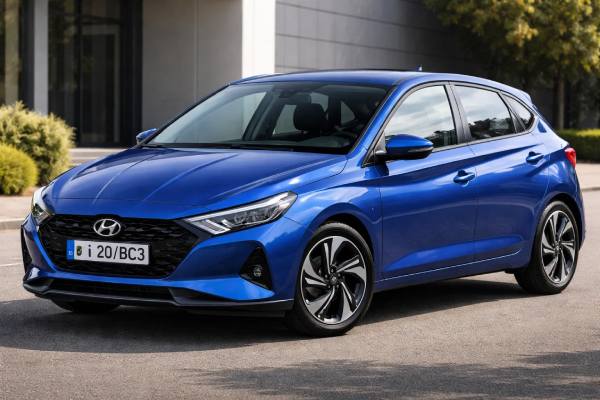
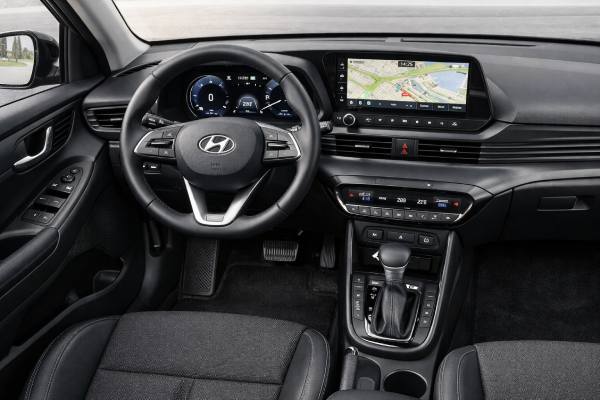
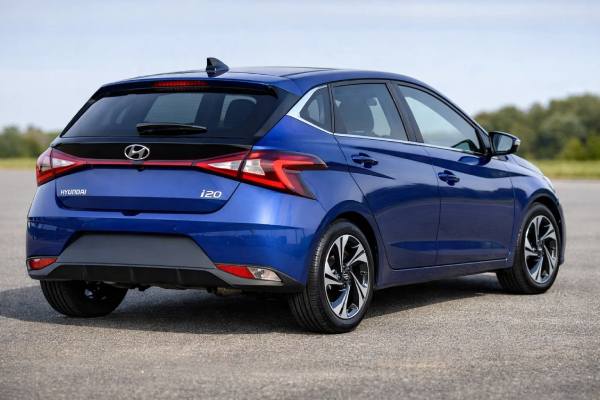
The BC3-generation Hyundai i20 1.0 T-GDi 100 hp is one of the most rounded modern superminis Hyundai has built. It combines a much more mature platform than the old i20 with a compact turbocharged three-cylinder engine that gives the car enough torque to feel lively in real traffic, not just on paper. For most owners, that is the key appeal. It is small enough for city use, spacious enough to work as a proper everyday hatchback, and efficient enough to stay affordable on fuel. The trade-off is that this is no longer an old-school simple small car. Turbocharging, direct injection, mild-hybrid hardware on many European versions, and optional dual-clutch transmission mean maintenance quality matters much more than badge or trim alone. The best examples are genuinely impressive. The wrong ones can develop drivability or transmission complaints that are expensive to sort. In used form, service history and exact specification matter as much as mileage.
Core Points
- The 1.0 T-GDi 100 hp gives the BC3 i20 strong everyday torque and much better flexibility than older naturally aspirated versions.
- Cabin space, boot volume, and general refinement are strong for the supermini class.
- The chassis feels mature and stable, especially on faster roads.
- Mild-hybrid and dual-clutch versions need careful inspection because poor servicing can turn a good car into a costly one.
- A sensible ownership baseline is engine oil and filter every 10,000 to 15,000 km or 12 months.
Contents and shortcuts
- Hyundai i20 BC3 Daily Case
- Hyundai i20 BC3 Data and Hardware
- Hyundai i20 BC3 Trim and Safety Map
- Reliability Watchpoints and Campaigns
- Maintenance Plan and Buying Advice
- Driving Character and Fuel Use
- Rival Snapshot and Verdict
Hyundai i20 BC3 Daily Case
The BC3 i20 marked a real step forward for the model line. Compared with earlier i20 generations, it looks sharper, feels lower and wider on the road, and offers a much more modern cabin. More importantly, it behaves like a proper all-round supermini rather than a budget-first small hatch. That matters in daily use. It is still easy to park and easy to thread through city traffic, but it no longer feels outclassed on the highway or flimsy on rough roads.
The 1.0 T-GDi 100 hp engine is central to that improvement. In older i20s, small petrol engines could feel underpowered once the car was loaded or pushed outside town. In the BC3, the 100 hp turbo unit gives the car a stronger middle range and a more adult feel. The numbers do not look dramatic, but the torque arrives early, so the car feels more energetic than a naturally aspirated 100 hp engine would. That helps in everyday overtakes, hill work, and steady motorway cruising.
From an ownership perspective, this version makes sense for buyers who want one car to do everything. It is large enough inside for young families, commuting, and longer weekend runs, yet compact enough to remain cheap to park, easy to live with, and reasonable on fuel. The 352-litre boot is especially useful in this class, and rear-seat space is better than many rivals expect.
The caution is that this is no longer a very simple supermini. Depending on year and market, the 100 hp car could be a plain turbo petrol with a six-speed manual, or a 48-volt mild-hybrid version with Hyundai’s intelligent manual transmission or a seven-speed dual-clutch automatic. Those variations matter because they change the ownership risk profile. The basic engine is generally solid when maintained correctly, but turbo heat, direct injection, and transmission calibration make the car less tolerant of neglect than older Hyundai small cars.
In used form, the i20 BC3 1.0 T-GDi works best when bought as a carefully documented car rather than a bargain. A full service record, correct oil history, smooth gearbox behaviour, healthy tyres, and a clean body matter more than whether the car has the biggest screen or the fanciest wheels. When those basics are right, the i20 is one of the smarter small-car buys in this era.
Hyundai i20 BC3 Data and Hardware
The 2020–2023 Hyundai i20 BC3 1.0 T-GDi 100 hp was sold in more than one configuration across Europe. Early cars could be conventional turbo petrol manuals, while many later or higher-spec versions used Hyundai’s 48-volt mild-hybrid system with either a six-speed intelligent manual or a seven-speed dual-clutch transmission. The figures below reflect the common European-market 100 hp setup and note where variation matters.
Powertrain and efficiency
| Item | Hyundai i20 BC3 1.0 T-GDi 100 |
|---|---|
| Code | Kappa 1.0 T-GDi family |
| Engine layout and cylinders | Inline-3, DOHC, 12-valve |
| Cylinders | 3 |
| Valves per cylinder | 4 |
| Bore × stroke | 71.0 × 84.0 mm (2.80 × 3.31 in) |
| Displacement | 1.0 L (998 cc) |
| Induction | Turbocharged |
| Fuel system | Gasoline direct injection |
| Compression ratio | 10.5:1 |
| Max power | 100 hp (73.5 kW) @ 4,500–6,000 rpm |
| Max torque | 172 Nm (127 lb-ft) @ 1,500–4,000 rpm |
| Timing drive | Chain |
| Motor, where fitted | 48 V belt starter-generator mild-hybrid system, single front-axle assist, Li-ion polymer |
| Rated efficiency | About 5.1 L/100 km for iMT manual and 5.1–5.3 L/100 km for 7DCT, trim-dependent |
| Real-world highway @ 120 km/h | About 5.8–6.8 L/100 km |
Transmission and driveline
| Item | Hyundai i20 BC3 1.0 T-GDi 100 |
|---|---|
| Transmission | 6-speed iMT or 7-speed DCT on many European cars; some markets also had a conventional 6MT |
| Drive type | FWD |
| Differential | Open |
Chassis and dimensions
| Item | Hyundai i20 BC3 1.0 T-GDi 100 |
|---|---|
| Suspension front | MacPherson strut |
| Suspension rear | Coupled torsion beam axle |
| Steering | Rack and pinion with motor-driven power steering |
| Steering ratio | Hyundai technical data lists 15.0 or 13.1 depending on steering motor spec |
| Brakes | Ventilated front discs; rear drums standard or solid discs optional depending on market and trim |
| Most popular tyre sizes | 205/55 R16 or 225/45 R17 |
| Ground clearance | 140 mm (5.5 in) |
| Length / Width / Height | 4,040 / 1,775 / 1,450 mm (159.1 / 69.9 / 57.1 in) |
| Wheelbase | 2,580 mm (101.6 in) |
| Turning circle | 10.4 m kerb-to-kerb, derived from 5.2 m radius |
| Kerb weight | About 1,090–1,225 kg (2,403–2,701 lb), depending on trim and gearbox |
| GVWR | 1,620–1,650 kg (3,571–3,638 lb) |
| Fuel tank | 40 L (10.6 US gal / 8.8 UK gal) |
| Cargo volume | 352 L (12.4 ft³) seats up / 1,165 L (41.1 ft³) seats down, VDA |
Performance and service capacities
| Item | Hyundai i20 BC3 1.0 T-GDi 100 |
|---|---|
| 0–100 km/h (0–62 mph) | About 10.4 s for lighter manual variants, about 11.4 s for 7DCT versions |
| Top speed | 185–188 km/h (115–117 mph), trim and gearbox dependent |
| Braking distance | Typically high-30 m to low-40 m range from 100 km/h on quality tyres |
| Towing capacity | 1,110 kg (2,447 lb) braked / 450 kg (992 lb) unbraked on UK-market 48V cars |
| Payload | About 420–535 kg (926–1,179 lb) |
Fluids and capacities
| Item | Hyundai i20 BC3 1.0 T-GDi 100 |
|---|---|
| Engine oil | Usually 0W-30 or 5W-30 meeting Hyundai-approved low-friction petrol spec; verify by VIN and market |
| Engine oil capacity | About 3.9 L (4.1 US qt) with filter |
| Coolant | Long-life ethylene glycol coolant, about 4.3 L (4.5 US qt) |
| Transmission fluid | Manual or iMT and DCT fluids vary by gearbox family; verify exact spec before service |
| A/C refrigerant | Build-date dependent, usually verify on under-bonnet label |
| Wheel nut torque | 107–127 Nm (79–94 lb-ft) |
Safety and driver assistance
| Item | Hyundai i20 BC3 |
|---|---|
| Euro NCAP | 4 stars |
| Adult occupant | 76% |
| Child occupant | 82% |
| Vulnerable road users | 76% |
| Safety assist | 67% |
| IIHS | Not applicable |
| Headlight rating | Not applicable |
| ADAS suite | AEB/FCA, lane keep assist, speed-sign recognition, and driver-attention warning were widely available; blind-spot warning and lane follow were trim-dependent |
Hyundai i20 BC3 Trim and Safety Map
The BC3 i20 was sold in a wide range of market-specific grades, so buyers should not assume that one trim name means the same thing in every country. In the UK, common names included SE Connect, Premium, and Ultimate. Other European markets used their own labels, but the pattern was similar: base cars were respectable, mid-range cars were often the sweet spot, and high-spec versions added most of the headline technology.
Mechanically, the 1.0 T-GDi 100 hp cars varied more than the old-school i20s did. That is why trim matters here. Some versions were conventional manuals, others used Hyundai’s intelligent manual with clutch-by-wire behaviour, and others used the seven-speed DCT. Mild-hybrid hardware also appeared on many 100 hp cars, especially once the launch range settled. Those changes affect how the car feels and what can go wrong later.
Quick identifiers on used cars include:
- 16-inch versus 17-inch wheel packages
- 8-inch or 10.25-inch infotainment display
- digital instrument cluster on higher trims
- camera and parking-sensor fitment
- blind-spot warning hardware on better-equipped versions
- lane follow assist and upgraded forward-collision functions on upper trims
One of the BC3’s biggest strengths is that it moved the i20 into a more advanced safety class than older generations. Euro NCAP’s 2021 rating applied the related Hyundai Bayon’s result to the i20 because the cars shared the same safety equipment structure. The overall score was four stars, which needs context. Under the stricter modern test regime, that still represents a strong safety package for a supermini. Adult, child, and vulnerable road user scores were all solid, while the lower assist score mainly reflected the fact that not every advanced function was standard across the range.
Typical core safety equipment included:
- front, side, and curtain airbags
- autonomous emergency braking
- lane keep assist with lane departure warning
- driver attention alert
- tyre-pressure monitoring
- ESC and stability-management functions
- ISOFIX rear anchorage points
- eCall emergency support
Upper trims or optioned cars could add:
- blind-spot collision warning
- forward-collision assist with cyclist detection
- lane follow assist
- better infotainment integration with camera and navigation-linked functions
That last point matters after repairs. Windscreen replacement, front-end body repairs, or camera relocation can affect ADAS calibration. On a modern BC3 i20, a car that looks straight can still drive poorly if camera alignment, steering-angle data, or radar-related systems were not reset properly after service. So when you inspect a used one, check not just warning lights but also whether the assistance systems behave normally.
Reliability Watchpoints and Campaigns
The BC3 i20 1.0 T-GDi 100 is generally a competent and durable modern supermini, but it is not as neglect-tolerant as Hyundai’s older naturally aspirated small cars. Its reliability profile is typical of a modern downsized turbo petrol: usually good when maintained, less forgiving when oil service, ignition maintenance, or software updates are delayed.
Common, low-to-medium cost issues
- Ignition misfire: This is one of the most common turbo-petrol complaints. Symptoms are rough idle, hesitation under boost, and an engine light. The usual root cause is tired plugs or coils, sometimes made worse by weak battery voltage.
- Battery-related warning noise: Modern Hyundais are sensitive to weak 12 V batteries. Strange electrical behaviour, stop-start refusal, sensor warnings, or rough DCT behaviour can begin with poor battery health.
- Tyre and alignment sensitivity: The chassis reacts noticeably to cheap tyres, wrong pressures, and uneven wear.
- Suspension knocks: Front drop links and bushes are still wear items, especially on 17-inch-wheel cars.
Occasional, medium-cost issues
- DCT shudder or hesitation: On 7DCT cars, crawling traffic, repeated parking manoeuvres, or hot low-speed driving can reveal clutch wear or calibration problems. Symptoms are shudder, lag, or jerky take-up. A re-learn or software update sometimes helps; worn clutch hardware does not.
- Boost or induction faults: Split hoses, sticky actuators, or sensor errors can mimic bigger turbo failure. The symptom pattern is weak pull, whistle, or sudden limp behaviour.
- Carbon build-up: Direct injection means intake valves do not get washed by fuel. High short-trip use can increase deposits over time.
- Infotainment and camera glitches: Usually software-related rather than permanent hardware failure.
Less common but high-cost concerns
- Turbo wear after poor oil history
- Persistent DCT clutch-pack trouble
- 48 V mild-hybrid faults on equipped cars: These are not the most common problem, but a weak 48 V battery, belt-starter-generator fault, or charging-system issue can be expensive if ignored.
- Cooling-system leaks: Not a defining weakness, but any coolant loss on a small turbo engine needs fast attention.
Campaigns and recall checks still matter, even if no single headline defect defines the BC3 i20. Hyundai’s official recall portal is the best way to verify by VIN, because market-specific campaigns and service actions can differ from public recall headlines. That is especially important for software-related fixes. Modern engine, DCT, ADAS, and infotainment complaints are sometimes improved by dealer updates rather than hard parts.
Before buying, ask for:
- Full service history with oil-grade evidence
- Proof of VIN recall and campaign check
- Cold start and hot restart test
- Smooth DCT behaviour if automatic
- Fault-code scan, not only warning-light inspection
- Evidence of windscreen or front-end repair calibration where relevant
This is a good car when it has been looked after properly. It becomes a poor bargain when bought cheaply with a weak service record.
Maintenance Plan and Buying Advice
The safest way to own a BC3 i20 1.0 T-GDi is to treat it like a modern turbo car, not like an old small hatch that can shrug off missed maintenance. Hyundai’s official schedules may stretch farther in some markets, but conservative service is the smarter long-term choice, especially once the car is out of warranty.
Practical maintenance schedule
| Item | Practical interval |
|---|---|
| Engine oil and filter | Every 10,000–15,000 km or 12 months |
| Engine air filter | Every 30,000 km, sooner in dusty use |
| Cabin air filter | Every 20,000 km or 24 months |
| Spark plugs | About 40,000–50,000 km |
| Coolant | Around 5 years or 100,000 km, then inspect more closely by age |
| Brake fluid | Every 2 years |
| Manual or iMT gearbox oil | Refresh around 60,000–90,000 km for long-term ownership |
| DCT fluid and adaptation checks | Follow official guidance, but evaluate behaviour well before 100,000 km |
| Drive belts and auxiliaries | Inspect every service |
| Hoses and boost pipes | Inspect annually |
| Brake pads and discs | Inspect every service |
| Tyre rotation | Every 10,000 km |
| Alignment | Check annually or whenever tyre wear appears |
| 12 V battery | Test yearly from year 4 onward |
| Timing chain | Inspect by symptoms, noise, or correlation faults, not fixed mileage |
Useful service guidance
- Use only the correct Hyundai-approved engine oil grade.
- Do not stretch oil changes on a turbo direct-injection engine.
- Replace spark plugs before the car begins to misfire.
- Treat DCT behaviour as maintenance information, not as something to ignore.
- Keep tyres matched and correctly inflated, because the i20’s refinement depends on them.
Buyer’s inspection checklist
- Start the engine from cold and listen for uneven idle.
- Check for smooth pull from low rpm and no hesitation under boost.
- On DCT cars, drive in stop-start traffic, not just open roads.
- Check for any ADAS, engine, battery, or transmission warnings.
- Inspect tyres closely for brand, age, and shoulder wear.
- Look at coolant level and any staining around hose joints.
- Test all infotainment, camera, sensors, and steering-wheel controls.
- Ask whether the windscreen was replaced and whether camera calibration followed.
Recommended versions to seek
- Mid- or upper-trim cars with full service invoices
- Cars on good tyres and with recent brake work
- DCT cars that behave perfectly at low speed
- Mild-hybrid versions only when service records are complete
Versions to avoid
- Cars with uncertain oil history
- DCT cars that judder and are being sold as normal
- Cars with repeated warning-light history and no paperwork
- Poorly repaired front-end cars with questionable ADAS function
Long-term durability looks good when the car is maintained ahead of schedule. It looks average at best when it is maintained only when a fault appears.
Driving Character and Fuel Use
The BC3 i20 1.0 T-GDi 100 is one of those superminis that feels better on the road than its numbers suggest. The engine is the main reason. With 172 Nm arriving from low revs, the car feels eager in ordinary driving. You do not need to work it hard in town, and you do not need endless downshifts on mild inclines. That alone makes it a much more relaxed car than many low-output naturally aspirated rivals.
In manual or iMT form, the engine suits the chassis well. Throttle response is generally clean, and once the turbo is working, the car feels more flexible than a 100 hp badge suggests. The DCT version is convenient in traffic and fine at steady speed, but it can feel less natural at crawling pace. That is not unusual for a dry-clutch dual-clutch transmission, but it is worth noting because buyers sometimes expect the smoothness of a traditional torque-converter automatic.
Ride quality is one of the BC3 i20’s better traits. Hyundai gave the platform a more planted feel than previous i20s, and the car stays composed on broken city surfaces and more stable on the motorway than many old-school superminis. Steering is light but accurate enough, and straight-line stability is strong. The chassis is not playful in the Fiesta sense, yet it feels mature and secure.
Noise levels are also respectable. The three-cylinder engine makes itself heard under load, but cruising refinement is good for the class. On 17-inch wheels, tyre noise rises more noticeably, and poor-quality replacement tyres can make the car feel harsher than it should.
Real-world economy is usually decent:
- City: about 6.2–7.2 L/100 km
- Highway at 100–120 km/h: about 5.0–6.0 L/100 km
- Mixed: about 5.4–6.3 L/100 km
That translates roughly to:
- City: 33–38 mpg US / 39–46 mpg UK
- Highway: 39–47 mpg US / 47–56 mpg UK
- Mixed: 37–44 mpg US / 45–52 mpg UK
Cold weather, short trips, low tyre pressures, and repeated hard acceleration can move those numbers upward quickly. DCT cars can also use slightly more in town. Mild-hybrid systems help mostly in urban and mixed conditions rather than at steady motorway speed.
Overall, the i20’s driving personality is easy to like. It is not a hot hatch, but it feels stronger, quieter, and more substantial than many small cars in the same price bracket.
Rival Snapshot and Verdict
The BC3 i20 1.0 T-GDi 100 competes in one of the toughest parts of the market, but it has a clear identity. It is not the sharpest driver’s car and not the most premium-feeling one. Instead, it wins through balance. It offers useful performance, strong space efficiency, respectable refinement, and a lot of equipment once you move above entry spec.
Against a Ford Fiesta 1.0 EcoBoost, the Hyundai usually loses on steering feel and outright driving fun. The Ford is more engaging. The Hyundai answers with a roomier rear seat, bigger-feeling cabin, and often better perceived equipment at the same used price.
Against a Volkswagen Polo 1.0 TSI, the Hyundai often feels just as mature in everyday use and can be much better value. The Polo may have a slightly more polished cabin and stronger badge pull, but the i20 usually offers more kit for the money.
Against a Toyota Yaris, the Hyundai often gives you more space and a more relaxed motorway feel. The Toyota answers with a long-standing reputation for low-drama ownership. If you want outright simplicity, the Yaris can still appeal more. If you want room and torque, the i20 is often the better daily car.
Against a Skoda Fabia 1.0 TSI, the Hyundai feels close in concept: practical, sensible, and more mature than its size suggests. The Fabia may edge it in interior packaging depending on version, but the i20 often feels slightly more feature-rich.
Where the i20 BC3 stands out:
- strong mid-range performance from the 100 hp engine
- roomy interior and very useful boot
- stable, mature road manners
- wide availability of active-safety features
- sensible used-market pricing
Where it gives ground:
- DCT versions need careful scrutiny
- not as mechanically simple as older Hyundai small cars
- not especially playful to drive
- four-star Euro NCAP result rather than class-leading five-star marketing appeal
For most used buyers, the verdict is straightforward. The Hyundai i20 BC3 1.0 T-GDi 100 is a very smart supermini if you choose carefully. It offers enough performance, enough space, and enough technology to feel modern, but it only stays a good buy when the service history is strong and the exact version fits your risk tolerance.
References
- 20201001_Technical Data_i20_v2_clean 2020 (Official Technical Guide)
- All New i20 – pricing spec and tech 2020 (Official Pricing and Technical Guide)
- Hyundai i20 2021 (Safety Rating)
- Home | Hyundai Recalls & Service Campaigns 2026 (Recall Database)
- Hyundai Owners manuals | Hyundai Motor UK 2026 (Owner’s Manual)
Disclaimer
This article is for informational purposes only and is not a substitute for professional diagnosis or repair. Specifications, torque values, intervals, procedures, and fluid requirements vary by VIN, market, gearbox, trim, and equipment. Always verify the exact data against official Hyundai service documentation for the vehicle before carrying out maintenance or repairs.
If this guide was useful, please consider sharing it on Facebook, X, or another social platform to support our work.