
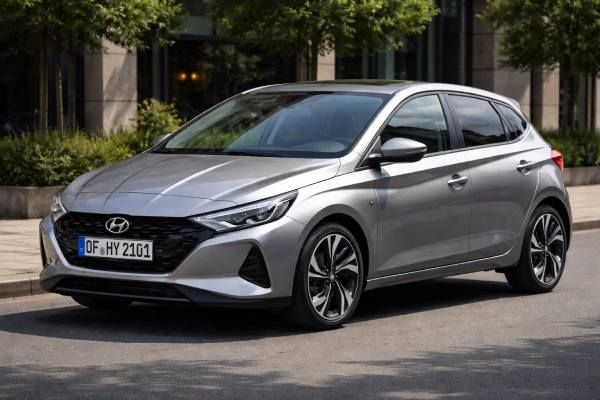
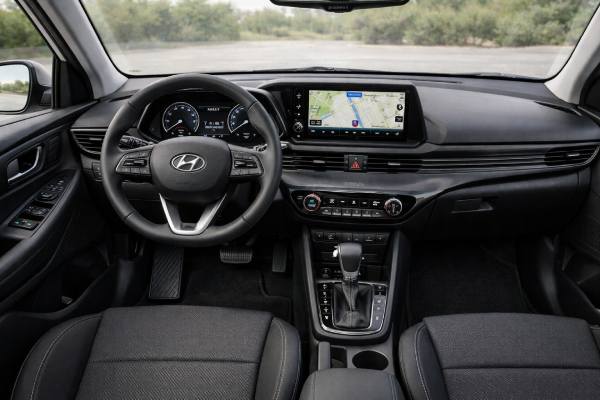
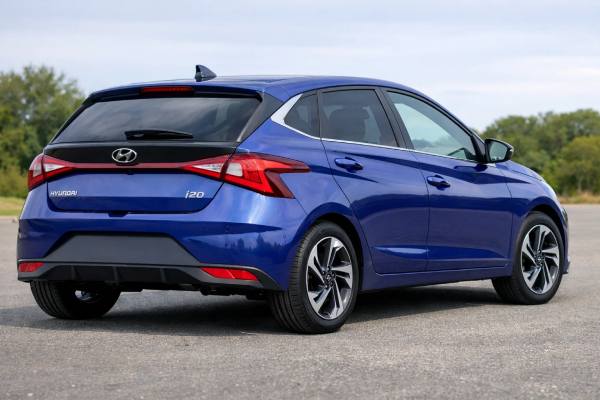
The third-generation Hyundai i20 BC3 is usually discussed in Europe as a 1.2 MPi or 1.0 T-GDi car, but the 1.4 MPi 100 hp version is a real and worthwhile branch of the same model line in selected markets. That matters, because it gives the BC3 i20 a different ownership character. Instead of a small turbo three-cylinder, you get a naturally aspirated 1,368 cc four-cylinder with multi-point injection, simple front-wheel-drive packaging, and either a manual or automatic transmission depending on region. In practice, that makes this i20 especially appealing to buyers who want the newer BC3 body, stronger safety package, and better cabin technology without the added complexity of turbocharging or mild-hybrid hardware. It is still not a fast car, but it is roomy, honest, easy to use, and often a better long-term bet for simple ownership. This guide focuses on the 2020–2023 i20 BC3 1.4 MPi 100 hp, covering specs, safety, maintenance, reliability, and used-buying logic.
Top Highlights
- The 1.4 MPi is a simple four-cylinder, naturally aspirated petrol that avoids the turbo and direct-injection complexity found in some other BC3 engines.
- The BC3 body is noticeably more practical than older i20 generations, with a 2,580 mm wheelbase and a 352-litre boot in this market-specific version.
- It offers a useful balance of easy urban size, mature cabin tech, and decent highway ability for a naturally aspirated small hatchback.
- The main ownership caveat is that this engine was sold in selected markets, so parts, trim, and exact specifications should always be verified by VIN.
- A sensible real-world oil-and-filter interval is every 10,000–15,000 km or 12 months.
Contents and shortcuts
- Hyundai i20 BC3 market picture
- Hyundai i20 BC3 spec tables
- Hyundai i20 BC3 trims and safety
- Reliability issues and factory actions
- Maintenance schedule and buyer filter
- Road manners and fuel use
- Rival comparison and best fit
Hyundai i20 BC3 market picture
The BC3-generation i20 was a bigger step forward than the model’s compact size first suggests. Hyundai gave it sharper styling, a more digital interior, a stronger safety story, and a more modern cabin layout than the old GB-generation car. In most European discussion, the powertrain focus falls on the 1.2 MPi and 1.0 T-GDi engines. The 1.4 MPi 100 hp version sits slightly outside that mainstream because it was sold in selected markets rather than across the full European range. That makes it easier to overlook, but it also gives it a very distinct ownership appeal.
The key difference is the engine philosophy. The 1.4 MPi is a 1,368 cc naturally aspirated four-cylinder with multi-point injection, DOHC, and D-CVVT. It makes 100 hp at 6,000 rpm and 134 Nm at 4,000 rpm. On paper, that sounds less fashionable than a small turbo engine. In practice, it can be attractive for buyers who value mechanical simplicity over maximum torque. There is no turbocharger, no direct-injection intake-valve concern, and no mild-hybrid layer to think about. That does not make it old-fashioned in a bad way. It makes it clear and predictable.
The BC3 body helps that simple engine feel more complete. This i20 is 4,040 mm long, 1,775 mm wide, and rides on a 2,580 mm wheelbase in the market-specific 1.4 MPi specification. Those are useful numbers. They explain why the car feels more grown-up than earlier i20 generations while still being easy to park. The 352-litre boot is another quiet strength. That is enough luggage room to make the car work as a genuine everyday all-rounder rather than just a commuter hatch.
This version also tends to come with a better equipment story than small cars used to. Depending on region and trim, you may see cruise control, rear camera, rear parking sensors, keyless entry, touchscreen infotainment, smartphone mirroring, automatic lighting, and LED exterior details. In other words, the car may use a simple engine, but it does not feel stripped back.
Its limits are equally clear. This is still a naturally aspirated 1.4 in a small hatchback. It needs revs more than a turbo petrol does, and the 134 Nm torque figure tells you it will never feel especially muscular at low rpm. It is also a market-specific BC3 variant, so some trim, gearbox, braking, and service details differ by country. That matters when buying parts or comparing used examples.
The best way to understand the i20 BC3 1.4 MPi is as the simple-engine alternative inside a much more modern i20 body. It will not be the quickest BC3, but it may be one of the easier ones to own long term if your priority is straightforward, low-drama motoring.
Hyundai i20 BC3 spec tables
The figures below focus on the Hyundai i20 BC3 1.4 MPi 100 hp as sold in selected markets between 2020 and 2023. Because this was not the universal BC3 powertrain across all regions, exact trim, gearbox, brake, and equipment details should always be confirmed by VIN.
Powertrain and efficiency
| Item | Hyundai i20 (BC3) 1.4 MPi 100 hp |
|---|---|
| Engine family | Kappa 1.4 MPi |
| Engine layout and cylinders | Transverse I-4, DOHC, D-CVVT, 4 valves per cylinder |
| Displacement | 1.4 L (1,368 cc) |
| Bore × stroke | 72.0 × 84.0 mm (approx. 2.83 × 3.31 in) |
| Induction | Naturally aspirated |
| Fuel system | Multi-point injection |
| Compression ratio | Not consistently published in open official brochures; verify by VIN/spec sheet |
| Max power | 100 hp (74 kW) @ 6,000 rpm |
| Max torque | 134 Nm (98.8 lb-ft) @ 4,000 rpm |
| Timing drive | Chain-type maintenance logic is commonly associated with this engine family, but verify by VIN before preventive timing work |
| Rated efficiency | Around 5.8–6.6 L/100 km depending on gearbox, tyre package, and market cycle |
| Real-world highway @ 120 km/h | Typically about 6.3–7.2 L/100 km, depending on transmission, tyres, and load |
This engine is best judged by its simplicity rather than by raw output. It does not produce turbo-style low-rpm shove, but it is mechanically straightforward and usually easy to service.
Transmission, driveline, and chassis
| Item | Hyundai i20 (BC3) 1.4 MPi 100 hp |
|---|---|
| Transmission | 6-speed manual or 6-speed automatic, market dependent |
| Drive type | Front-wheel drive |
| Differential | Open |
| Front suspension | MacPherson strut |
| Rear suspension | Coupled torsion beam axle |
| Steering | Electric power steering |
| Brakes | Front ventilated discs / rear drums in many trims |
| Most common tyre sizes | 185/65 R15 or 195/55 R16 |
| Ground clearance | Not consistently published in open official brochures for this exact variant |
The chassis layout stays conventional, which is part of the car’s appeal. There is no unusual hardware here, and that usually keeps ownership costs sensible.
Dimensions, weights, and practical data
| Item | Hyundai i20 (BC3) 1.4 MPi 100 hp |
|---|---|
| Length | 4,040 mm (159.1 in) |
| Width | 1,775 mm (69.9 in) |
| Height | 1,450 mm (57.1 in) |
| Wheelbase | 2,580 mm (101.6 in) |
| Kerb weight | About 1,025–1,055 kg (2,260–2,326 lb), gearbox dependent |
| GVWR | About 1,560–1,590 kg (3,439–3,505 lb) |
| Fuel tank | 40 L (10.6 US gal / 8.8 UK gal) |
| Cargo volume | 352 L (12.4 ft³) seats up / 1,165 L (41.1 ft³) seats folded |
| Seating capacity | 5 |
That 352-litre boot is worth noting. It is a useful figure for a B-segment hatchback and one of the reasons the BC3 feels like a serious everyday car rather than a compromise purchase.
Performance, towing, and service capacities
| Item | Hyundai i20 (BC3) 1.4 MPi 100 hp |
|---|---|
| 0–100 km/h | About 12.5–13.0 s, transmission dependent |
| Top speed | About 182 km/h (113 mph) |
| Braking distance | Not consistently published in open official material for this exact variant |
| Towing capacity | Verify by VIN and market before towing |
| Payload | About 500 kg class, trim dependent |
| Fluid or spec | Value |
|---|---|
| Engine oil | Around 3.6–3.8 L (3.8–4.0 US qt) with filter; use market-approved Hyundai petrol specification |
| Coolant | Around 4.3 L (4.5 US qt), phosphated ethylene-glycol type |
| Manual transmission oil | About 1.6–1.7 L (1.7–1.8 US qt) |
| Automatic transmission fluid | Verify exact fluid spec and fill quantity by VIN and transmission code |
| Brake and clutch fluid | DOT 3 or DOT 4 |
| A/C refrigerant | Verify under-hood label before service; refrigerant and charge vary by market |
| Wheel lug nut torque | 88–107 Nm (65–79 lb-ft) |
| Safety item | Value |
|---|---|
| Euro NCAP | 4 stars |
| Adult occupant | 76% |
| Child occupant | 82% |
| Vulnerable road users | 76% |
| Safety assist | 67% |
| IIHS | Not applicable for this model and market context |
| ADAS | Standard fitment varies by market; core cars usually include ESC, HAC, TPMS, airbags, camera and parking aids, with some higher trims adding lane support or forward collision functions |
The naturally aspirated engine means the spec sheet looks modest in some places, but the overall package is honest and easy to understand.
Hyundai i20 BC3 trims and safety
One of the useful things about the BC3 i20 is that even the simpler engine versions live inside a much more modern car than older i20s did. That is especially true for the 1.4 MPi markets, where Hyundai often paired the engine with a sensible equipment mix rather than treating it as a stripped-out fleet special. The result is a version that may be mechanically straightforward but still feels current enough in daily use.
Trim naming varies a lot by market, but the broad pattern is familiar. Entry or mid-grade cars usually bring the fundamentals: ABS, ESC, Hill-start Assist, front airbags, TPMS, a rear camera, manual air conditioning, heated mirrors, steering-wheel audio controls, and smartphone-friendly infotainment. Higher trims often add automatic lights, folding mirrors, alloy wheels, keyless entry, rear parking sensors, cruise control, digital instruments, wireless charging, and LED lighting elements. In some regions, the 1.4 MPi was sold in both conservative and better-equipped forms, which is good news for used buyers because it means choice.
The best used buy is usually not the most basic car and not necessarily the most expensive one. A middle trim with the 1.4 MPi, 15- or 16-inch wheels, rear camera, cruise control, and sound service history often lands in the sweet spot. It gives you the BC3’s nicer interior and daily usability without piling on every possible extra.
Safety is one of the BC3’s bigger strengths, even though the headline number needs context. Euro NCAP applied the 2021 Hyundai BAYON safety result to the i20 because the two cars share closely related safety equipment and architecture. The outcome was a four-star result with 76% for adult occupant protection, 82% for child occupant protection, 76% for vulnerable road users, and 67% for safety assist. That is a respectable modern small-car result, but it is not the same thing as saying every market-spec 1.4 MPi car has the full European safety package. Equipment fitment still varies.
That variation matters. Some market brochures for the BC3 1.4 MPi show a core safety set built around ABS, ESC, HAC, airbags, TPMS, and child-seat ISOFIX provisions, while better-equipped regional brochures also list lane-keep assist and forward collision avoidance functions. This is exactly why you should not assume that every 2020–2023 1.4 MPi BC3 has the same ADAS. Some do. Some do not. Verification by VIN and actual equipment is essential.
Passive safety fundamentals remain strong regardless. The car was engineered in the modern era, and that shows in the structure, restraint systems, and general crashworthiness. It feels like a more serious safety proposition than earlier budget superminis did. Child-seat usability is also generally good, with ISOFIX availability and better cabin packaging than many older B-segment cars.
When shopping used, confirm the exact car rather than relying on a generic brochure or trim badge. Check for the camera, parking sensors, TPMS, cruise control, lane-support controls, and airbag count. The BC3 i20’s safety and equipment story is one of its real advantages, but only if the specific car actually has the features you expect.
Reliability issues and factory actions
The 1.4 MPi BC3 i20 starts with a basic reliability advantage over the 1.0 T-GDi cars: it is naturally aspirated and uses multi-point injection. That means there is less heat, less boost-related stress, and less induction complexity to manage over the long term. In broad terms, that makes it a safer used-engine choice for buyers who value simplicity. But simple is not the same as fault-free, and the car still follows the normal ageing pattern of a modern small hatchback.
Common, usually low-to-medium cost issues
- Ignition wear: Spark plugs and coil packs can create hesitation, uneven idle, or mild misfire under load if service history is poor.
- Cooling-system seepage: Hose joints, thermostat housings, and plastic cooling-system parts can age or seep. A sweet smell after driving or repeated low coolant warnings should be investigated quickly.
- Battery and electrical sensitivity: Weak batteries can create warning lights, erratic start-stop behavior where fitted, or general annoyance rather than dramatic breakdown.
- Rear-brake corrosion: Cars used mostly for gentle urban trips can develop rear-brake drag or uneven wear.
Occasional, medium-cost issues
- Engine mounts: Older small hatchbacks often develop extra vibration through tired mounts, especially with automatic transmission load changes.
- Clutch wear on manuals: High bite point, shudder, or slip are normal used-car concerns and more likely to reflect usage than design weakness.
- Automatic transmission neglect: On 6-speed automatic market cars, fluid quality and shift smoothness matter. Hard or hesitant shifts deserve proper diagnosis, not guesswork.
Less common but still important
- Timing-system noise: This engine family is generally viewed as the simpler choice, but any persistent chain-like rattle or timing-correlation fault should be taken seriously and checked by VIN-specific workshop data before assumptions are made.
- Suspension wear: Front drop links, bushes, and dampers can become noisy on poor roads. These are common wear items rather than model-specific disasters.
- Cabin electronics: Infotainment screens, parking sensors, and convenience items such as mirror folding or keyless-entry hardware can fail with age, though usually as isolated faults rather than system-wide problems.
The 1.4 MPi’s biggest reliability advantage is that it avoids the more expensive failure chain sometimes seen on small turbo direct-injection engines. There is no turbocharger to overheat, no GDi intake-valve carbon concern in the same form, and no mild-hybrid system layer to think about. That alone makes the car attractive to buyers who want a newer hatchback without buying into more complex hardware.
Factory actions and recalls should still be checked by VIN. Hyundai’s official recall and campaign tools are there for a reason. Even if no active recall appears, dealer records can help show whether the car remained inside proper service networks and whether software or campaign work was completed. That matters most when you are buying a car from a market with mixed import histories.
The overall reliability picture is positive. The i20 BC3 1.4 MPi is not special because it is indestructible. It is special because it gives you a newer-generation small car with a simpler engine than many rivals now use. If the service history is strong and the cooling system, brakes, tyres, and electrics are healthy, it is usually a reassuring used-car formula.
Maintenance schedule and buyer filter
This is the kind of engine that responds well to ordinary, disciplined maintenance. You do not need a heroic service budget, but you do need consistency. Because the 1.4 MPi is simpler than the turbo alternatives, neglect stands out even more clearly. A well-maintained car tends to feel crisp and easy. A neglected one feels tired in very familiar ways.
Practical maintenance schedule
| Item | Practical interval |
|---|---|
| Engine oil and filter | Every 10,000–15,000 km or 12 months |
| Engine air filter | Inspect annually; replace about every 30,000–40,000 km |
| Cabin air filter | Every 15,000–20,000 km or 12 months |
| Spark plugs | About every 30,000–45,000 km depending on plug type |
| Coolant | Inspect at every service; replace by official schedule for exact VIN and market |
| Brake fluid | Every 24 months |
| Manual transmission oil | Inspect for leaks and shift quality; refresh when gear quality deteriorates |
| Automatic transmission fluid | Follow market-specific Hyundai guidance; earlier fluid changes are sensible in warm climates or heavy traffic use |
| Auxiliary belt and hoses | Inspect every annual service |
| Tyres and alignment | Rotate and inspect regularly; align if pull or uneven wear appears |
| 12 V battery | Test yearly once age passes about 4 years |
| Timing components | Inspect for noise or fault history; verify exact system by VIN before preventive work |
The most useful idea here is not a single factory number. It is the maintenance mindset. Because the 1.4 MPi is straightforward, routine fluid and filter discipline is usually enough to keep it healthy. That is exactly why it appeals to buyers who want predictable ownership rather than maximum performance.
Useful service figures include about 3.6–3.8 L of engine oil with filter, around 4.3 L of coolant, about 1.6–1.7 L of manual transmission oil, and 88–107 Nm wheel-lug torque. These are the numbers that help when you read old invoices and try to judge whether previous servicing was credible.
Used-buyer checklist
- Start the engine from cold and listen for unstable idle, ignition miss, or unusual timing noise.
- Check for coolant smell, staining around joints, or evidence of repeated top-ups.
- Test the clutch for bite-point height and take-off smoothness on manual cars.
- If automatic, drive it fully warm and confirm that shifts stay smooth and consistent.
- Inspect rear brakes and tyre wear carefully, especially on lightly used cars.
- Test every electrical item, including the camera, sensors, infotainment, mirrors, and climate controls.
- Confirm the exact trim and safety equipment by VIN, not just by the badge.
- Verify recall and service-campaign completion through official Hyundai channels.
- Look for annual servicing rather than one or two big gap years.
The best BC3 1.4 MPi cars are usually the ones with calm, ordinary histories: yearly service stamps, good tyres, clean coolant, and no drama. That is the right profile for this model. If you want a used car that feels newer than an old PB or GB i20 without stepping into turbo complexity, this is the version that makes that argument best.
Road manners and fuel use
On the road, the i20 BC3 1.4 MPi feels exactly like what it is: a modern naturally aspirated small hatchback with sensible engineering and enough output to avoid feeling slow in ordinary use. The engine is not especially strong at very low rpm, but it is smooth, predictable, and easier to modulate than a lot of small turbo units. If you are the kind of driver who values clean throttle response and a simple manual or conventional automatic feel, that matters.
In town, the car is easy to drive. Steering is light, visibility is decent, and the compact body is simple to place. The BC3’s cabin feels more mature than earlier i20 generations, so the car no longer gives off obvious budget-hatchback energy from the driver’s seat. Ride quality is generally comfortable enough for bad urban roads, especially on 15-inch wheels. Sixteen-inch cars look better, but they tend to pass a little more sharpness into the cabin.
The engine’s nature shows most on hills and overtakes. Because peak torque is only 134 Nm and arrives at 4,000 rpm, the car asks for more revs than a turbo equivalent would. That does not make it unpleasant. It just means you need to use the gearbox properly if you want brisk progress. In manual form, that is often part of the appeal. In automatic form, it means kickdown and throttle position matter more than in a torquey turbo hatch.
At steady speed, the i20 feels composed. The BC3 platform is more mature than older i20 generations, and the car tracks cleanly on faster roads. It is not a sporty chassis in the Fiesta sense, but it feels secure and tidy rather than flimsy or vague. Braking is straightforward, and the car’s light weight helps it feel responsive enough even without strong engine torque.
Real-world fuel use is one of the car’s more honest qualities. You should not expect miracle numbers, because this is not a tiny turbo working low-load miracles in lab conditions. In mixed driving, healthy manual cars often return around 6.2–7.2 L/100 km. Highway cruising at around 120 km/h will usually land in the mid-6s to low-7s depending on load and transmission. Urban short-trip use can push the number higher, especially with the automatic. Even so, the overall efficiency remains reasonable because the car is light and the engine is uncomplicated.
Noise, vibration, and harshness are respectable. The naturally aspirated four-cylinder is generally smoother at idle and under low load than many small three-cylinder turbos. Wind and tyre noise still appear at motorway pace, because this is a supermini, but the overall feel is modern enough that the car does not come across as outdated.
The core verdict is simple. The BC3 1.4 MPi is not the quick i20, but it may be the calmest and easiest i20 for buyers who want a naturally aspirated petrol in a genuinely modern small hatchback.
Rival comparison and best fit
The i20 BC3 1.4 MPi 100 hp lives in an unusual space because it is a market-specific naturally aspirated version of a generation otherwise associated with smaller turbo petrol engines. That changes how it compares with rivals. Its natural alternatives are not just other BC3 i20s. They are also cars like the Kia Rio 1.4 MPi, Toyota Yaris 1.5 naturally aspirated, Suzuki Baleno 1.4 in some markets, older Volkswagen Polo 1.6 MPI-type regional variants, and simpler Renault Clio or Dacia Sandero petrol cars depending on region.
Against the 1.0 T-GDi i20, the 1.4 MPi loses on low-rpm punch and easy overtaking. The turbo car simply feels stronger in the middle of the rev range. But the 1.4 MPi answers with a simpler ownership case. For some buyers, that matters more than torque. If you keep cars a long time and prefer conventional mechanical layouts, the MPi version can be easier to justify.
Against a Kia Rio 1.4 MPi, the Hyundai often feels very evenly matched because the philosophy is similar: practical body, straightforward petrol engine, easy daily use. The choice between them usually comes down to condition, trim, and local parts support rather than any huge engineering difference.
Against turbo rivals like the Fiesta EcoBoost, Polo TSI, or Clio TCe, the i20 1.4 MPi will usually feel less eager. Those cars often produce more low-rpm torque and stronger overtaking response. The Hyundai counters with simplicity and lower drivetrain stress. You buy it because you prefer the long-term calm of a naturally aspirated engine, not because you expect it to win traffic-light sprints.
Against value-oriented competitors such as the Sandero, the i20 generally feels more mature in cabin design, safety hardware, and overall finish. That matters because the BC3 is a more modern-feeling small car than many budget alternatives even when fitted with the simpler engine.
So who is this car actually for? It makes the most sense for buyers who want the BC3 body, safety, and cabin upgrades but do not want the 1.0 T-GDi’s extra mechanical layer. It suits urban and suburban drivers, smaller families, newer drivers, and anyone who values predictable ownership more than low-rpm shove. It is less ideal for people who regularly drive fully loaded on motorways or who expect the effortless mid-range of a turbo engine.
That is also its main advantage. The i20 BC3 1.4 MPi is not the most exciting variant, but it may be one of the most rational for a certain kind of owner. If you want a newer i20 with a simpler petrol engine, this version deserves more attention than it usually gets.
References
- Nouvelle i20 2023 (Technical Data)
- i20 2023 (Brochure)
- Tanıtma ve Kullanma Kılavuzu 2023 (Owner’s Manual)
- EuroNCAP | Hyundai i20 2021 (Safety Rating)
- Home | Hyundai Recalls & Service Campaigns 2026 (Recall Database)
Disclaimer
This article is for informational purposes only and is not a substitute for professional diagnosis, repair, or vehicle-specific technical advice. Specifications, torque values, service intervals, procedures, safety equipment, and fitted features can vary by VIN, market, trim, and production date, so always verify critical details against official service documentation for the exact vehicle.
If this guide helped you, please consider sharing it on Facebook, X, or another social platform to support our work.