


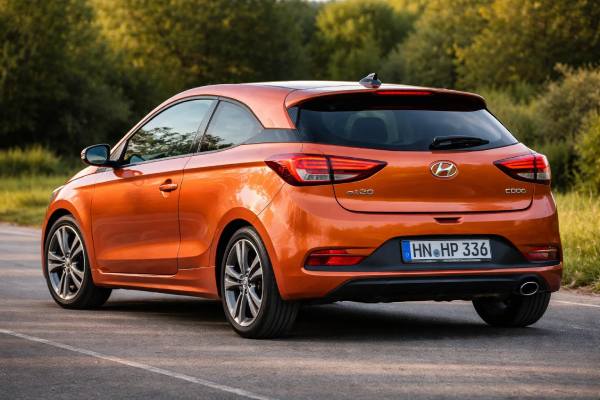
The Hyundai i20 Coupe GB 1.0 T-GDi 100 is one of the more interesting small hatchbacks of its era because it mixes a style-led three-door body with a genuinely useful everyday package. Under the sharper roofline sits Hyundai’s compact 1.0-liter turbocharged three-cylinder petrol engine, and in 100 hp form it gives the Coupe more flexibility than the basic naturally aspirated engines without turning it into a high-strung performance model. The GB-generation platform also brought a more mature cabin, improved road manners, and stronger overall refinement than the earlier i20. That makes this version appealing to buyers who want a small car that still feels substantial on longer trips. The one thing to watch is market variation. Not every country listed the 100 hp Coupe in the same way, and some official materials focused more heavily on the 120 hp version. So when comparing cars, parts, or claims, it is important to verify the VIN, trim, gearbox, and regional specification rather than assuming every 2015–2018 i20 Coupe 1.0 T-GDi is identical.
What to Know
- The 1.0 T-GDi 100 gives the Coupe better mid-range pull than the base petrol engines.
- Coupe styling adds visual appeal without sacrificing a useful boot or everyday cabin space.
- The GB-generation chassis feels more stable and refined than many value-focused superminis.
- Turbo-petrol ownership means oil quality, timing-chain noise, and cooling-system condition deserve close attention.
- A careful owner should plan an oil and filter service every 12 months, or every 10,000 to 15,000 km in real use.
Start here
- Hyundai i20 Coupe GB overview
- Hyundai i20 Coupe GB specification guide
- Hyundai i20 Coupe GB trim and safety layout
- Reliability trends and factory checks
- Maintenance routine and used-buying advice
- Turbo driving feel and real economy
- How the Coupe compares in class
Hyundai i20 Coupe GB overview
The Hyundai i20 Coupe arrived as the three-door version of the second-generation GB i20, but it was more than a five-door with two doors removed. Hyundai gave it a lower roofline, a cleaner side profile, unique rear styling, and a more obviously youthful character. Even so, the i20 Coupe never lost the practical roots of the standard car. It still offered seating for five, a useful luggage area, and enough rear-seat space to remain a realistic daily hatchback rather than a style exercise.
That balance is what makes the 1.0 T-GDi 100 version worth attention. The basic shape and platform already gave the GB i20 family a more mature feel than the older PB car, but the turbocharged three-cylinder engine sharpened the whole package. In ordinary driving, the extra torque matters far more than the headline 100 hp figure. It gives the Coupe an easier stride in traffic, better overtaking response on secondary roads, and less of the breathless feeling that small naturally aspirated engines often bring when loaded with passengers or luggage.
There is an important market-specific detail here. The GB Coupe was not marketed the same way everywhere. Some official European material introduced the 1.0 T-GDi to the Coupe line with strong emphasis on the 120 hp version, while other markets also listed the 100 hp car with a 6-speed manual. That does not make the 100 hp Coupe obscure, but it does mean buyers should expect some variation in brochure data, trim combinations, and equipment lists. If you are comparing used examples across borders, the VIN and country of first registration matter.
From an engineering point of view, this model sits in a useful middle ground. The engine is modern enough to bring direct injection, a turbocharger, strong low-rpm torque, and respectable official fuel use. At the same time, the rest of the car stays conventional. Front-wheel drive, a simple rear suspension layout, straightforward cabin controls, and mainstream service parts all help keep the ownership case sensible. That makes it more attractive than many stylish three-door small cars that traded too much practicality for image.
Its limits are easy to define. This is not a hot hatch, and the Coupe name should not mislead buyers into expecting a truly sporty chassis. Steering feel is competent rather than vivid, and the turbo engine needs proper servicing in a way that the old basic 1.2 does not. But if you want a small hatchback that looks cleaner than the ordinary five-door, feels stronger than the entry engines, and still works in real life, the i20 Coupe 1.0 T-GDi 100 is one of the smarter versions of the GB line.
Hyundai i20 Coupe GB specification guide
Because official documentation for the 100 hp Coupe varies by market, the cleanest way to present this model is to combine Coupe-specific body data with the shared 1.0 T-GDi 100 powertrain details used in the GB i20 range. The figures below reflect the 100 hp manual Coupe specification as commonly listed in European-market data, while also respecting the fact that some official materials highlighted the 120 hp Coupe more prominently.
Powertrain and efficiency
| Item | Hyundai i20 Coupe (GB) 1.0 T-GDi 100 |
|---|---|
| Code | G3LC family, verify by VIN |
| Engine layout and cylinders | Inline-3, DOHC, 12-valve |
| Valves per cylinder | 4 |
| Bore × stroke | 71.0 × 84.0 mm |
| Displacement | 1.0 L (998 cc) |
| Induction | Single-scroll turbocharger with intercooler |
| Fuel system | Direct injection |
| Compression ratio | 10.0:1 |
| Max power | 100 hp (74 kW) @ 6000 rpm |
| Max torque | 172 Nm (127 lb-ft) @ 1500–4000 rpm |
| Timing drive | Chain |
| Rated efficiency | Typically about 4.8 L/100 km combined for the 100 hp Coupe |
| Real-world highway @ 120 km/h | Usually about 5.8 to 6.5 L/100 km |
Transmission and driveline
| Item | Figure |
|---|---|
| Transmission | 6-speed manual |
| Drive type | FWD |
| Differential | Open |
Chassis and dimensions
| Item | Figure |
|---|---|
| Suspension, front | MacPherson strut |
| Suspension, rear | Coupled torsion beam axle |
| Steering | Electric power-assisted rack-and-pinion |
| Steering ratio | About 15.6:1 |
| Lock-to-lock | 2.7 turns |
| Brakes, front | Ventilated disc, typically 280 mm on better-equipped turbo Coupes |
| Brakes, rear | Solid disc, 262 mm |
| Wheels and tyres | 195/55 R16 common; 205/45 R17 on higher trims |
| Ground clearance | About 140 mm |
| Length | 4045 mm |
| Width | 1730 mm without mirrors |
| Height | 1449 mm |
| Wheelbase | 2570 mm |
| Turning circle | 10.2 m |
| Kerb weight | About 1145 kg |
| GVWR | 1640 kg |
| Fuel tank | 50 L |
| Cargo volume | 336 L seats up / 1011 L seats folded, VDA |
Performance and capability
| Item | Figure |
|---|---|
| 0–100 km/h | About 10.2 s |
| 0–62 mph | About 10.2 s |
| Top speed | About 190 km/h |
| Towing capacity | 1110 kg braked / 450 kg unbraked |
| Payload | Up to about 495 kg |
Fluids and service capacities
| Item | Figure |
|---|---|
| Engine oil capacity | 3.6 L including filter |
| Coolant capacity | About 4.3 L |
| Gearbox oil | About 1.6 L |
| Engine oil specification | Use the Hyundai-approved viscosity and performance grade for climate and market |
| A/C refrigerant | Verify by under-bonnet label |
| A/C compressor oil | Verify by service documentation |
| Key torque specs | Wheel nuts commonly 88–107 Nm |
Safety and driver assistance
| Item | Figure |
|---|---|
| Euro NCAP | 4 stars for the GB-generation i20 tested in 2015 |
| Adult occupant | 85% |
| Child occupant | 73% |
| Vulnerable road user | 79% |
| Safety assist | 64% |
| ADAS suite | Lane Departure Warning available on some trims; no full modern AEB, ACC, or blind-spot package in regular pre-facelift models |
The important thing to notice is not just the numbers themselves, but how cohesive the package is. The Coupe body keeps strong practicality, the turbo engine adds genuinely useful flexibility, and the dimensions remain compact enough to make the car easy to live with in town.
Hyundai i20 Coupe GB trim and safety layout
The Hyundai i20 Coupe was styled to feel sportier than the standard five-door, but it remained a trim-led supermini rather than a performance sub-brand model. That means most of the differences owners notice day to day come from equipment level, wheel and tyre package, cabin finish, and available safety features rather than from deep mechanical changes. For a used buyer, that is good news, because it makes the smart choice more about fit and condition than about chasing a rare specification.
In many markets, the Coupe was positioned above the most basic fleet-style trims. That often meant you got a more interesting baseline package than you would in the cheapest five-door. Sixteen-inch alloy wheels, projector headlamps, LED daytime running lights, cornering lights, rear parking sensors, cruise control, and Bluetooth functions were often part of the mix. Better-equipped versions added heated seats, heated steering wheel, automatic climate control, rain and light sensors, folding mirrors, and upgraded cabin trim. Those features make the Coupe feel much newer than its age on the used market.
Wheel size deserves special attention. A 16-inch Coupe on 195/55 R16 tyres is often the best ownership sweet spot. It looks right, keeps tyre costs sensible, and usually rides better than a 17-inch car. Seventeen-inch versions can sharpen the visual stance and marginally tighten steering response, but the improvement is modest. On a small hatchback with comfort-biased suspension, the larger wheel is more about appearance than transformation.
There is also a useful body-style benefit. Hyundai gave the Coupe easy-entry front seats with memory function, which helps rear-seat access more than many buyers expect. It is still not as convenient as the five-door in daily family use, but the difference is less dramatic than on some rivals. Because the Coupe also keeps a 336-liter boot, it remains more practical than many three-door small cars that sacrificed luggage space for style.
Safety is solid for the class, even if it is not class-leading by later standards. The GB-generation i20 earned a 4-star Euro NCAP result in 2015, and the Coupe shares the same underlying platform, body shell philosophy, and main restraint architecture. That means buyers can reasonably expect the same broad safety character: strong enough structural protection for the segment, but a shortfall in safety-assist technology compared with five-star cars tested under the same tougher Euro NCAP regime. Equipment often included six airbags, ABS, ESC, Vehicle Stability Management, Hill-start Assist Control, tyre-pressure monitoring, ISOFIX anchorages, and emergency stop signal.
Driver assistance is where the period shows. Lane Departure Warning was available on some Coupes and was a strong feature for the class at the time, but there is no mainstream adaptive cruise control, no full blind-spot monitoring suite, and no broadly fitted autonomous emergency braking package on regular 2015–2018 models. That simplicity can help long-term ownership, but it also means buyers should judge the car by the standards of its time and keep the fundamentals right: matching tyres, healthy sensors, and no unresolved warning lights.
Reliability trends and factory checks
The Hyundai i20 Coupe 1.0 T-GDi 100 is generally a solid used buy, but it is not the kind of turbo-petrol engine that forgives neglect forever. The platform itself is straightforward and usually durable. The risk sits mostly in how the engine was serviced and how the car was used. A Coupe that has had regular oil changes, decent fuel, and normal warm-up habits is usually a good prospect. One that has been run cheaply can become much less attractive.
The most important engine-specific point is the timing chain. A chain sounds reassuring on paper, but it still depends on clean oil, correct viscosity, and good tensioner health. On a used 1.0 T-GDi, a metallic cold-start rattle, repeated timing-related fault codes, or rough running at start-up should never be ignored. These symptoms do not automatically mean the engine is beyond saving, but they do suggest the chain system deserves inspection rather than hopeful guesswork.
The second watchpoint is direct-injection life. Because fuel is injected directly into the combustion chamber, the intake valves do not benefit from the same washing effect as in old multi-point-injection engines. Over time, especially with repeated short journeys and stretched service intervals, intake deposits can contribute to rough idle, reduced smoothness, or softer throttle response. That does not mean every i20 Coupe turbo will need intake cleaning, but it does mean short-trip urban cars should be inspected more carefully than motorway-driven examples with clean service records.
Cooling health matters as well. Turbo engines manage more heat than basic small petrol units, and a minor coolant leak is more serious here than on a simple non-turbo runabout. Buyers should check for dried coolant marks, a sweet smell after a drive, evidence of repeated topping up, or any sign the car has run hot. Turbocharger condition also deserves attention. The engine should pull cleanly and without unusual whistle, smoke, or hesitant boost delivery.
Away from the engine, the reliability picture becomes more ordinary. Suspension links, bushings, wheel bearings, tyres, and brake wear are typical used-supermini concerns. Minor electrical issues can also appear in parking sensors, mirror functions, cabin switches, and infotainment units, especially on higher-spec cars with more equipment. These are usually manageable faults, but they help explain why condition matters more than trim level on the used market.
As for official actions, the safest habit is always a VIN-based check through Hyundai’s recall portal and the relevant government recall database. Public recall history does not suggest that the Coupe is defined by one famous campaign flaw, which is positive. Still, a buyer should ask for proof of completed recall work, dealer invoices, and routine servicing. On a turbocharged small hatch, the strongest reliability sign is not a seller’s confidence. It is paperwork that shows the car was cared for consistently.
Maintenance routine and used-buying advice
The i20 Coupe 1.0 T-GDi 100 rewards routine maintenance more than dramatic repair work. That is the smartest way to think about ownership. The engine is efficient and capable, but it depends on clean oil, sound cooling, and timely ignition service. Buyers who assume it can be treated like an old cheap naturally aspirated city car are the ones most likely to be disappointed.
Practical maintenance schedule
| Item | Practical interval |
|---|---|
| Engine oil and filter | Every 10,000 to 15,000 km or 12 months |
| Engine air filter | Inspect every service, replace around 20,000 to 30,000 km as needed |
| Cabin air filter | Every 20,000 km or 12 to 24 months |
| Spark plugs | Around 60,000 km, sooner if running quality changes |
| Coolant | Replace on schedule or immediately if history is unclear |
| Brake fluid | Every 2 years |
| Gearbox oil | Refresh around 80,000 to 100,000 km if history is unknown |
| Auxiliary belt and hoses | Inspect every service |
| Brake pads and discs | Inspect every service |
| Tyre rotation and alignment | Check regularly and after suspension work |
| 12 V battery | Test annually once older than about 4 years |
| Timing chain system | Inspect if there is cold-start noise, fault-code history, or uneven start-up running |
Useful service figures
| Item | Figure |
|---|---|
| Engine oil capacity | 3.6 L |
| Gearbox oil | 1.6 L |
| Coolant capacity | About 4.3 L |
| Fuel tank | 50 L |
| Common tyre sizes | 195/55 R16 and 205/45 R17 |
| Wheel nut torque | 88–107 Nm |
A buyer’s inspection should begin with invoices, not paintwork. On this engine, service history is not a bonus. It is central to the decision. You want evidence of regular oil services, not just a vague claim that the car was “maintained.” Ideally, the file should also show spark-plug replacement, brake-fluid changes, battery work, and any cooling-system repair.
Next, inspect the car for consistency. Uneven tyre wear can point to poor alignment or bent suspension parts. Curbed wheels and damaged sidewalls suggest careless use. Under the bonnet, look for coolant staining, oil residue near the turbo plumbing, weak aftermarket battery terminals, or untidy accessory wiring. Inside the cabin, test everything. Heated seats, mirror folding, climate control, parking sensors, steering-wheel controls, and warning lights all matter because small electrical faults can stack up on higher-spec Coupes.
On the road, a strong example should start cleanly, settle to a steady idle, and pull smoothly from low revs without surging or rattling. The clutch should bite progressively, the manual gearbox should feel clean rather than obstructive, and the steering should stay even in effort. A car that hesitates, rattles at start-up, or smells hot after a short drive needs more scrutiny before purchase.
The best-used examples are usually manual cars with complete history, sensible wheels, and no signs of deferred maintenance. The cars to avoid are the shiny, attractively priced ones with cooling issues, vague paperwork, or the early symptoms of chain and running-quality problems. Long term, the i20 Coupe can be durable, but it only stays that way when the owner treats the turbo engine with the respect it deserves.
Turbo driving feel and real economy
The i20 Coupe 1.0 T-GDi 100 works because it feels stronger and more polished than a modestly powered three-cylinder hatchback has any right to feel. The engine’s 172 Nm torque figure transforms the car’s day-to-day character. Instead of needing constant revs to keep pace, the Coupe pulls with much more ease than the basic naturally aspirated versions. That makes it a better fit for mixed commuting, hilly roads, and normal overtaking than the headline power number suggests.
In town, the engine is willing from low revs and usually smooth once warm, though the three-cylinder pulse is still noticeable at idle and on cold starts. The turbocharger is tuned for usability rather than drama, so the car steps into its torque band early and does not need to be thrashed. That suits the Coupe perfectly. It is a style-led small hatchback, not a hot hatch, and the engine’s broad everyday response fits that role better than an engine that only comes alive high in the rev range.
The 6-speed manual also helps the car feel more mature. It spreads the ratios more effectively than an old 5-speed box would, keeps the engine calmer at cruise, and makes the Coupe feel more relaxed on the motorway than many small petrol rivals from the same era. The result is a car that can do urban work easily but does not become tiring as soon as speeds rise.
Ride and handling remain sensible rather than playful. The Coupe looks sportier than the five-door, but it is still tuned around stability and everyday control. Steering is light and predictable, body control is decent, and straight-line composure is one of the GB platform’s quiet strengths. On 16-inch wheels the car usually strikes the best compromise between appearance, comfort, and noise. Seventeen-inch cars look sharper, but the benefit is mostly visual.
Refinement is another advantage. Compared with a small diesel, the 1.0 T-GDi is smoother in short-trip use, less intrusive around town, and easier to live with in cold weather. At motorway speeds, wind and tyre noise remain present, as they do in most superminis, but the Coupe still feels more grown up than many cheaper rivals.
Official combined economy around 4.8 L/100 km was strong for the period, and real use remains respectable now. A healthy example often returns around 5.7 to 6.5 L/100 km in mixed driving, dipping lower on gentle open-road runs and rising into the 7s with short winter trips or heavy urban use. That is the real appeal of this car: it offers useful turbocharged performance without demanding the running compromises of an aging diesel or the fuel bills of a larger engine.
How the Coupe compares in class
The Hyundai i20 Coupe 1.0 T-GDi 100 sits in a very appealing niche. It is not a full performance model, but it does more than the ordinary small hatchback job with more style and a better engine than the basic versions. That gives it a stronger identity than many superminis that try to be everything to everyone and end up feeling anonymous.
Against naturally aspirated rivals, the Hyundai’s advantage is easy to feel. The turbo engine gives it stronger mid-range response, which makes overtakes easier and daily use less tiring. That is especially useful if you carry passengers, drive outside town, or simply prefer an engine that does not need constant revs. The Coupe body then adds the design edge that the regular five-door lacks, giving buyers something a little more distinctive without punishing them with a tiny boot or unusable rear seats.
Against small diesel rivals, the argument changes. A diesel may still beat it on motorway consumption and low-rpm shove, but the turbo petrol is usually easier to recommend in the real used market. It warms up better, suits short and mixed journeys more naturally, and avoids the emissions-system worries that make many older diesels harder to justify now. For buyers with uncertain annual mileage, that is a major advantage.
Where the Coupe gives something back is in pure simplicity and convenience. The basic 1.2 petrol i20 is mechanically less demanding, even if it feels weaker. The five-door is also still the easier family car. And a few rivals from the same era deliver more steering feel or a more playful chassis. The Hyundai answers with maturity rather than excitement.
That makes the best buyer profile fairly clear. This car suits someone who wants a compact hatchback with genuine everyday practicality, a useful amount of turbocharged shove, and a bit more visual character than the ordinary five-door. The best examples are documented, manual, and in sensible trims with manageable wheel sizes. The wrong examples are the cheap cars with vague service history and the early signs of turbo-petrol neglect. Buy carefully, and the i20 Coupe 1.0 T-GDi 100 remains one of the smartest understated supermini buys of its generation.
References
- Hyundai Owners manuals | Hyundai Motor UK 2026 (Owner’s Manual)
- Hyundai i20 Coupe | Technische Daten Benziner | Stand: 5.2017 2017 (Technical Data)
- Hyundai i20 – Euro NCAP Results 2015 2015 (Safety Rating)
- Home | Hyundai Recalls & Service Campaigns 2026 (Recall Database)
- Check if a vehicle, part or accessory has been recalled 2026 (Recall Database)
Disclaimer
This article is for informational purposes only and is not a substitute for professional diagnosis or repair. Specifications, torque values, intervals, fluid requirements, and procedures can vary by VIN, market, trim, gearbox, and fitted equipment, so always verify against the official service documentation for the exact vehicle.
If this guide helped you, please consider sharing it on Facebook, X, or another platform to support our work.