
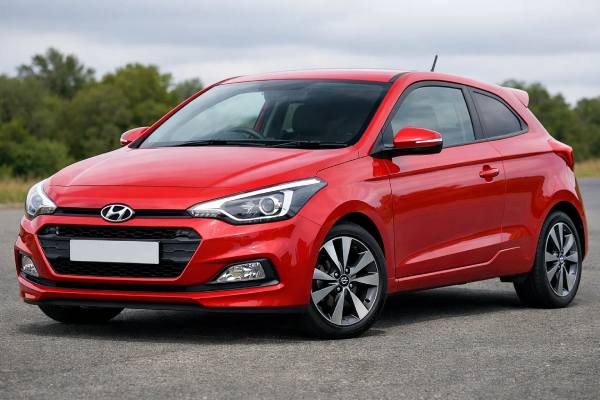
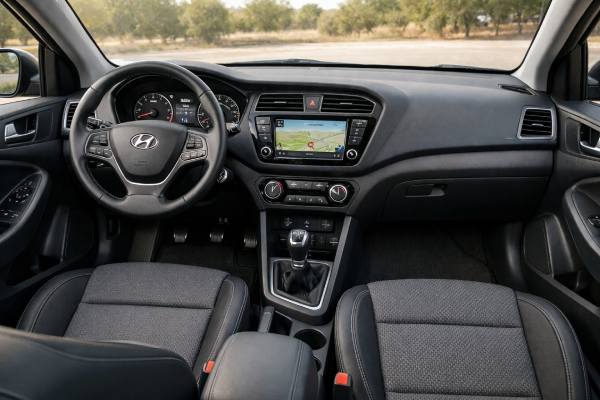
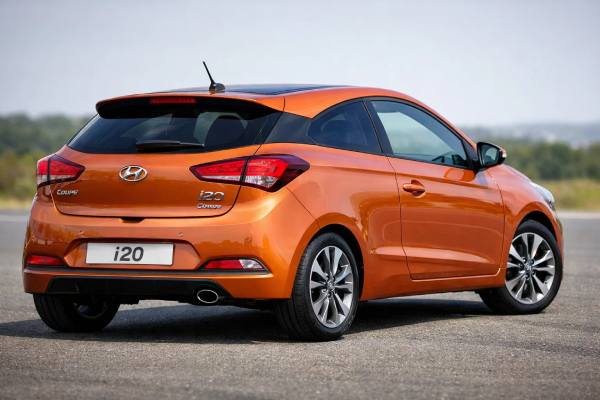
The Hyundai i20 Coupe GB with the 1.1 CRDi 75 hp diesel is a niche version of a sensible small car. It takes the roomy, mature second-generation i20 and gives it a lower, cleaner three-door shape, while keeping a strong focus on fuel economy and everyday usability. The result is not a hot hatch or a style-first coupe in the traditional sense. It is a practical supermini with a sportier silhouette, a large boot for its class, and a diesel engine built to stretch a tank a long way.
That makes it appealing today, but only for the right owner. A well-kept example can still be an efficient commuter and a surprisingly useful small long-distance car. A neglected one can quickly become frustrating through DPF issues, overdue servicing, weak batteries, and cooling or chain-related wear. With this model, usage history matters almost as much as service history. Buyers who want style without abandoning practicality will find a lot to like here.
Fast Facts
- Coupe body adds sharper looks while keeping a class-leading 336 L boot.
- The 1.1 CRDi can return excellent real-world economy when used on mixed or longer routes.
- Six-speed manual gearing helps the car feel calmer on faster roads.
- Short-trip use can accelerate DPF, EGR, and battery-related trouble.
- A realistic oil-service interval is every 10,000–15,000 km or 12 months in normal used-car ownership.
Explore the sections
- Hyundai i20 Coupe GB diesel character
- Hyundai i20 Coupe GB technical picture
- Hyundai i20 Coupe GB equipment and safety
- Weak points and workshop patterns
- Maintenance roadmap and buyer screening
- Driving manners and real economy
- How the Coupe stacks up
Hyundai i20 Coupe GB diesel character
The i20 Coupe sits in an unusual place in the small-car market. It looks like the emotional version of the regular i20, with a lower roofline, longer doors, and a tidier side profile, yet the 1.1 CRDi engine makes it one of the most rational versions of the whole range. That contrast is exactly what defines the car. It offers more visual flair than the standard five-door without changing the core mission: efficient, low-stress transport in a body that is still genuinely practical.
The engineering recipe is simple and mostly sensible. Hyundai used the same broad GB-generation platform as the five-door hatch, then gave the Coupe its own roofline, altered dimensions, and a larger 336-litre luggage area. The engine is the familiar 1.1-litre U-II three-cylinder diesel, paired here with a six-speed manual and front-wheel drive. On paper, 75 hp sounds thin. In use, the low-rpm torque and long gearing do much of the heavy lifting. The engine’s 180 Nm is enough to make the car feel willing in town and acceptable on open roads if the driver uses the gearbox properly.
What makes this car interesting as a used buy is the way it mixes image and common sense. The Coupe body adds character, but it does not destroy practicality. Easy-entry front seats help rear access, the cabin is still spacious enough for the class, and the boot is better than many buyers expect from a three-door hatchback with a descending roofline. That makes it a strong fit for solo commuters, couples, or anyone who likes the idea of a sportier-looking hatch without giving up usefulness.
The downside is that this is still a small modern diesel, and diesels punish the wrong use pattern. Cars that spent most of their time on short urban trips are more likely to develop DPF trouble, repeated regeneration interruptions, tired batteries, and EGR contamination. Cars that saw regular mixed or motorway use usually age far better. That is a major point for buyers, because two examples with similar mileage can feel completely different depending on how they were used.
In ownership terms, the i20 Coupe 1.1 CRDi is less about excitement than ease. It is not quick, but it can be comfortable enough on longer journeys, very easy on fuel, and cheaper to keep running than a more powerful sporty alternative. It also feels more grown-up than many small coupes or three-door superminis of the same era. That is the real character of the car. It is the stylish member of the i20 family, but still unmistakably the sensible one.
Hyundai i20 Coupe GB technical picture
Official Hyundai Europe Coupe press information provides the Coupe-specific body measurements, luggage volume, and core mechanical data. Public owner-support pages and period technical information help fill in service-capacity and equipment context. Where an item can vary by market, trim, or wheel package, that is noted rather than presented as universal.
| Category | Specification |
|---|---|
| Code | D3FA |
| Engine layout and cylinders | Inline-3, transverse, DOHC, 4 valves per cylinder |
| Bore × stroke | 75.0 × 84.5 mm (2.95 × 3.33 in) |
| Displacement | 1.1 L (1,120 cc) |
| Induction | Turbocharged, intercooler |
| Fuel system | Common-rail direct diesel injection |
| Compression ratio | 16.0:1 |
| Max power | 75 hp (55 kW) @ 4,000 rpm |
| Max torque | 180 Nm (133 lb-ft) @ 1,750–2,500 rpm |
| Timing drive | Chain |
| Rated efficiency | About 3.8–4.0 L/100 km (61.9–58.8 mpg US / 74.3–70.6 mpg UK), market and tyre dependent |
| Real-world highway @ 120 km/h | Roughly 4.6–5.3 L/100 km (51.1–44.4 mpg US / 61.4–53.3 mpg UK) |
| Transmission and driveline | Specification |
|---|---|
| Transmission | 6-speed manual |
| Drive type | FWD |
| Differential | Open |
| Chassis and dimensions | Specification |
|---|---|
| Suspension, front | MacPherson strut, anti-roll bar |
| Suspension, rear | Semi-independent torsion beam |
| Steering | Electric power-assisted rack and pinion; 2.7 turns lock-to-lock |
| Brakes | Diesel models: 280 mm ventilated front discs, 262 mm solid rear discs |
| Most popular tyre size | 185/65 R15 |
| Other common tyre sizes | 195/55 R16, 205/45 R17 |
| Ground clearance | 140 mm (5.5 in) |
| Length | 4,045 mm (159.3 in) |
| Width | 1,730 mm (68.1 in) |
| Height | 1,449 mm (57.0 in) |
| Wheelbase | 2,570 mm (101.2 in) |
| Turning circle | 10.2 m (33.5 ft) |
| Kerb weight | About 1,150–1,180 kg (2,535–2,601 lb), market dependent |
| GVWR | About 1,680 kg (3,704 lb), equipment dependent |
| Fuel tank | 50 L (13.2 US gal / 11.0 UK gal) |
| Cargo volume | 336 L (11.9 ft³) seats up / 1,011 L (35.7 ft³) seats folded, VDA |
| Performance and capability | Specification |
|---|---|
| 0–100 km/h | 15.7 s |
| Top speed | 161 km/h (100 mph) |
| Braking distance | No widely published factory figure for this exact model |
| Towing capacity | Around 1,000 kg (2,205 lb) braked / 450 kg (992 lb) unbraked, market dependent |
| Payload | About 500–530 kg (1,102–1,168 lb), trim dependent |
| Fluids and service capacities | Specification |
|---|---|
| Engine oil | Commonly 5W-30; exact approval depends on emissions spec and market; about 4.8 L (5.1 US qt) |
| Coolant | Ethylene-glycol based coolant with demineralised water; about 6.4 L (6.8 US qt) |
| Transmission oil | Manual transaxle fluid, commonly around 1.7–1.9 L (1.8–2.0 US qt) |
| Brake and clutch fluid | DOT 3 or DOT 4; around 0.7–0.8 L (0.7–0.8 US qt) service fill |
| Differential / transfer case | Not applicable |
| A/C refrigerant | Verify by under-bonnet label by VIN |
| A/C compressor oil | Verify by system label and refrigerant type |
| Key torque specs | Wheel nuts 88–107 Nm (65–79 lb-ft) |
| Safety and driver assistance | Specification |
|---|---|
| Euro NCAP | 4 stars; 85% adult, 73% child, 79% pedestrian, 64% safety assist |
| IIHS | Not applicable |
| Headlight rating | Not applicable |
| ADAS suite | Typical cars have ESC and a basic safety package; some markets offered Lane Departure Warning System on higher trims, but no typical 1.1 CRDi setup includes modern AEB, ACC, or blind-spot monitoring |
The key technical takeaway is simple. The Coupe shares the same honest small-diesel logic as the five-door GB, but with a slightly lower body, a bigger-than-expected boot, and Coupe-specific proportions. It is not quick, but it is properly engineered for efficiency and everyday use rather than just for showroom style.
Hyundai i20 Coupe GB equipment and safety
The i20 Coupe was positioned as the more style-led member of the GB family, so even when the engine was the humble 1.1 CRDi, the car often presented itself as a slightly more premium or design-conscious alternative to the regular hatch. Trim naming varied by market, but labels such as S, SE, Premium, Sport, Go!, or similar regional names were common themes. What matters most is that the Coupe body usually came with a stronger visual identity even before optional equipment was added.
Some cars are quite basic. They may have smaller wheels, manual air conditioning, a simple radio unit, and minimal brightwork. Better-equipped versions can add climate control, cruise control, upgraded infotainment, steering-wheel controls, alloy wheels, parking sensors, a reversing camera in some markets, and appearance packs. Hyundai’s own Coupe press information also highlighted features such as easy-entry front seats with memory function and, on certain specifications, equipment like a heated steering wheel, automatic windscreen defog, or Lane Departure Warning System. Those details are useful because they show the Coupe was not just a three-door body shell. It was marketed as a better-featured, more distinctive derivative.
Mechanical differences by trim are modest but worth attention. Wheel size matters on this engine more than it does on stronger versions. Fifteen-inch wheels suit the 1.1 CRDi well, preserving ride quality and economy. Larger 16-inch or 17-inch wheels improve appearance, but they can make the car feel slightly more lethargic, noisier, and less efficient. Since the 75 hp engine does not have excess power in reserve, tyre and wheel choice affects the overall feel more than many buyers expect.
Safety is respectable rather than class-leading. Euro NCAP awarded the second-generation i20 four stars in 2015. Adult occupant protection was solid at 85%, with good pedestrian protection for the period at 79%, but the car missed a higher overall score largely because the tested version did not have autonomous emergency braking. That is a useful distinction. Structurally, the car was decent for the class. In terms of active crash avoidance, it was already behind the curve compared with the best-equipped rivals of the time.
For a used Coupe buyer, this means the real safety value now comes from condition and equipment confirmation. ESC should be present, airbags and seatbelt systems need to be fault-free, and the tyre condition matters enormously. The Coupe body does not materially erase the practicality of the five-door in front-seat comfort or luggage capacity, but rear-seat access is naturally less convenient. For owners who rarely use the back seats, that is not a serious drawback. For those who do, it matters more than any brochure language about sporty styling.
The best trim is usually not the most decorative one. It is the one with working climate control, decent tyres, no warning lights, and documented maintenance. With this car, actual health always outranks trim prestige.
Weak points and workshop patterns
The i20 Coupe 1.1 CRDi does not have a reputation as a disaster-prone car, but it does have the same key sensitivities as many small Euro 6 diesels of its era. Reliability depends less on the basic design than on how the car was used and serviced. The Coupe body changes the shape, not the core diesel ownership logic.
The most common trouble pattern comes from short-trip use. A diesel particulate filter does not enjoy a life made up entirely of cold starts, low-speed traffic, and repeated interrupted journeys. Over time, that can lead to failed regeneration attempts, warning lights, reduced response, higher fuel use, and sometimes limp-home behaviour. Owners often blame the DPF itself, but the real cause is usually a use pattern the engine never suited. A weak battery can worsen the situation by interrupting proper regeneration behaviour or contributing to poor start quality and electrical instability.
EGR contamination is another frequent issue. Soot and oily residue can build up in the valve and intake path, leading to hesitation, rough idle, flat response, or warning lights. These are predictable diesel-age faults rather than unusual defects, but they do matter because they can make a slow car feel even slower. Thermostat weakness is also worth watching. An engine that stays too cool too long harms economy and can make emissions hardware less happy.
The timing chain removes the scheduled belt-replacement job, but it is not a free pass. If oil changes are stretched too far, or the wrong oil quality is used repeatedly, chain, guide, and tensioner wear can become a real concern. The clues are familiar: chain rattle on cold start that lasts too long, timing-correlation faults, or a harsher mechanical noise from the top end than you would expect. On this engine, disciplined oil service is the best chain insurance.
Medium-cost issues include injectors, boost-hose leaks, engine mounts, clutch wear, and the usual small-car suspension consumables. Anti-roll-bar links, bushes, dampers, wheel bearings, and rear brake corrosion on lightly used cars are all normal age-related findings. The 1.1 CRDi is not a clutch killer in the way a more powerful diesel can be, but city use and poor driving can still shorten clutch life.
Electrical issues are usually minor rather than systemic, but older batteries cause a disproportionate number of annoying diesel symptoms. Rough starts, unexplained warnings, or weak regeneration behaviour can sometimes be traced back to poor battery health rather than a dramatic engine fault.
Corrosion is less of an automatic problem than on much older superminis, but it should still be checked carefully. Brake lines, rear axle areas, subframe sections, jacking points, and lower seams deserve a proper look. A pretty Coupe shell is not a bargain if the underside is already telling a different story.
As with any used Hyundai of this era, campaign completion and software history are worth checking through official channels. Dealers can confirm service records and outstanding actions, and that is far more useful than relying on forum guesses or advert language. On a used small diesel, paperwork is often the most important component on the car.
Maintenance roadmap and buyer screening
The best way to own an i20 Coupe 1.1 CRDi is to accept that it rewards discipline. This is not a car that needs constant expensive intervention, but it does want regular basics done properly. Clean oil, a healthy battery, correct filters, and enough sustained driving to keep the DPF happy make a very large difference to how the car behaves over time.
A sensible real-world maintenance routine looks like this:
- Engine oil and filter every 10,000–15,000 km or 12 months.
- Fuel filter around every 40,000–60,000 km, sooner if fuel quality is doubtful.
- Engine air filter inspect at each service and replace as needed.
- Cabin filter every 15,000–20,000 km or annually.
- Coolant inspect regularly and renew by age and schedule, commonly after about 5 years initially and then at shorter intervals.
- Brake fluid every 2 years.
- Manual gearbox oil replace around 80,000–100,000 km if history is incomplete.
- Timing chain no routine replacement interval, but inspect for stretch, noise, and timing-correlation faults.
- Auxiliary belt and hoses inspect at every service.
- Tyre rotation and alignment check every 10,000–12,000 km or when wear suggests it.
- Battery test yearly once the battery is more than about 4 years old.
- DPF health monitoring especially on cars used mostly in town; regular longer drives are important.
The basic fluid capacities remain manageable: about 4.8 L of engine oil, around 6.4 L of coolant, roughly 1.7–1.9 L of gearbox oil, and about 0.7–0.8 L for brake and clutch hydraulic service fill. Wheel-nut torque is typically 88–107 Nm. These figures help with ownership planning, but exact VIN-specific specifications should always take priority before major work.
For buyers, the inspection process should be deliberate. Start with the underside and the service file, not the body kit or alloy wheels. Look for leaks, bent undertrays, crusty coolant joints, rust at jacking points, tired brake lines, and signs of recent cosmetic undersealing hiding old corrosion. Then insist on a genuine cold start. A healthy car should start promptly, settle quickly, and warm up in a normal way.
A smart used-buying checklist includes:
- Full service history with believable intervals.
- Evidence of regular oil changes, not just one recent stamp.
- Clean cold starts with no excessive smoke or roughness.
- No chain noise that lingers beyond a brief cold-start moment.
- No DPF warnings, limp behaviour, or obvious regeneration struggles.
- Even tyre wear and decent-brand tyres.
- Stable coolant level with no staining around hose joints.
- Smooth clutch take-up and clean six-speed gearchange.
- Quiet front suspension over rough surfaces.
Common catch-up jobs on a newly bought example are usually manageable: all fluids, filters, battery, tyres, rear brakes, suspension links, and sometimes thermostat or EGR cleaning work. The expensive risks are chain work, heavily compromised DPF systems, hidden corrosion, or injector-related repairs.
The best cars to target are usually later 2017–2018 examples with full records and a clear history of mixed or longer-distance use. The ones to avoid are cheap town-only cars with vague maintenance history and repeated warning-light stories. The right example can last well. The wrong one can eat up its fuel savings very quickly.
Driving manners and real economy
The i20 Coupe 1.1 CRDi is not a performance car, but it is a more pleasant drive than the modest power figure suggests. Around town, the engine’s torque makes it easy to move away cleanly, and the six-speed gearbox means you are not constantly revving the engine to make progress. The steering is light and straightforward, and the Coupe body still keeps the car compact and easy to place in traffic.
Ride quality is one of its stronger points. The GB platform feels more mature than many older superminis, and the Coupe does not give up that basic composure. It is firm enough to feel tidy without becoming harsh on typical roads. Smaller wheels suit it best, especially with this engine. On larger wheels, the car can become slightly more brittle over sharp bumps, and since performance is limited anyway, the visual benefit is often greater than the dynamic one.
In corners, the i20 Coupe feels safe, stable, and predictable. It is not especially playful, and the steering does not deliver a lot of feedback, but it behaves honestly. Straight-line stability is decent for a small car, and at motorway speeds it feels more relaxed than many older supermini diesels because the six-speed gearing keeps the engine calmer. That is one of the real advantages of this version. Even if it is slow on paper, it rarely feels frantic.
The powertrain character is defined by torque and economy, not urgency. Low-speed response is acceptable, and in normal city traffic the car never feels as weak as 75 hp sounds. The problem appears when you ask for more. Overtaking on faster roads requires planning, hills punish lazy gear choices, and a full load makes the engine’s limits obvious. Drivers coming from a larger diesel or a stronger 1.4 CRDi may find it too subdued. Drivers coming from a basic petrol city car may find it more relaxed than expected.
Refinement is typical of a small three-cylinder diesel. At idle and when cold, the engine has a clear thrum and clatter. Once warm, it settles enough to be comfortable, though it never disappears into the background. Wind noise is moderate, tyre noise varies heavily with wheel and tyre choice, and worn engine mounts can make an otherwise decent car feel much rougher.
Real-world fuel economy remains the strongest argument for the car. A healthy example can usually deliver:
- City: about 4.9–5.9 L/100 km
about 48.0–39.9 mpg US
about 57.6–47.9 mpg UK - Highway at 100–120 km/h: about 4.6–5.3 L/100 km
about 51.1–44.4 mpg US
about 61.4–53.3 mpg UK - Mixed use: about 4.7–5.4 L/100 km
about 50.0–43.6 mpg US
about 60.1–52.3 mpg UK
Cold weather and repeated short trips will push those numbers upward and can make the diesel aftertreatment less happy. That is why the 1.1 CRDi makes most sense for mixed or longer-distance use rather than purely urban driving.
In short, the Coupe delivers what it promises. It feels like a practical supermini wearing a sharper suit, and the 1.1 diesel gives it a low-cost long-range character that still has appeal.
How the Coupe stacks up
The Hyundai i20 Coupe 1.1 CRDi occupies an unusual position among small cars because it mixes coupe-like styling cues with very rational diesel ownership values. Against a Ford Fiesta three-door diesel, the Hyundai usually loses on steering feel and driver involvement. The Fiesta remains the more entertaining car. But the Hyundai counters with stronger practicality, a notably larger boot, and a more mature sense of space.
Compared with a SEAT Ibiza SC or Renault Clio three-door-style alternatives, the i20 Coupe often feels less fashionable inside, but it makes a strong case on usability. Its boot is genuinely impressive for the class, and the overall packaging is better than the rakish shape suggests. That matters because many sporty-looking small cars ask buyers to sacrifice day-to-day usefulness. The Hyundai does less of that than most.
Against a Volkswagen Polo diesel, the i20 Coupe may not feel as polished in every detail, but it is usually easier to justify on value and no less competent as basic transport. Against a Vauxhall Corsa three-door diesel, the Hyundai often feels like the more rounded package, especially if service history is equal. It combines respectable safety, straightforward mechanicals, useful space, and low running costs without leaning too far toward any one gimmick.
Its biggest rival may actually be the regular i20 five-door 1.1 CRDi. That comparison is more important than it first appears. The five-door is easier for rear-seat access and can be the more practical family choice. The Coupe gives you the sharper look, slightly more distinctive identity, and a bigger boot than many people expect, but it asks you to accept longer doors and less convenient rear access. Buyers who rarely use the back seats may prefer the Coupe immediately. Buyers with frequent family duty may still be better served by the standard hatch.
There is also the question of whether to choose this engine at all. The 1.4 CRDi makes the car easier and more versatile at higher speeds. The 1.1 CRDi makes the strongest case only if economy, tax, insurance, and low running costs are the top priorities. That does not make it the weak choice. It makes it the most focused one.
So what is the final verdict? The i20 Coupe 1.1 CRDi is not the obvious enthusiast’s pick, and it is not the most glamorous small coupe-shaped hatchback ever sold. But it is one of the more cleverly judged ones. It gives buyers a sharper shape, useful practicality, excellent economy potential, and simple daily usability. For the right owner, that balance is more valuable than outright speed or image. It is a small car that looks like it is making a statement, while actually being one of the more sensible choices in its segment.
References
- Hyundai Owners manuals | Hyundai Motor UK 2026 (Owner’s Manual Portal)
- Hyundai Car Servicing | Hyundai Motor UK 2026 (Service Information)
- Press information 2015 (Technical Specifications)
- Hyundai i20 – Euro NCAP Results 2015 2015 (Safety Rating)
- What make is the vehicle? – Check if a vehicle, part or accessory has been recalled – GOV.UK 2026 (Recall Database)
Disclaimer
This article is for informational purposes only and is not a substitute for professional diagnosis, repair, or workshop advice. Specifications, torque values, service intervals, procedures, and fitted equipment can vary by VIN, market, model year, and trim, so always verify details against the official Hyundai service documentation for the exact vehicle.
If this guide was useful, please consider sharing it on Facebook, X, or another platform to support our work.