
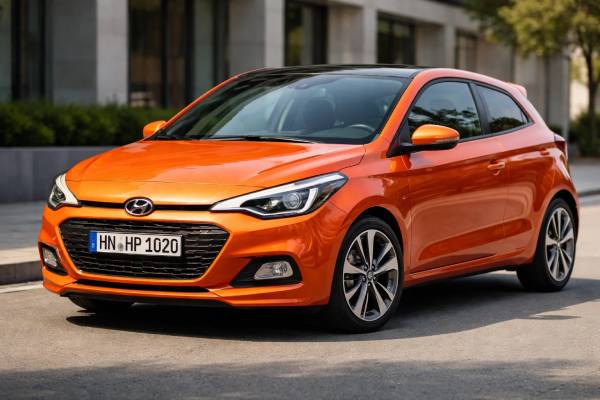
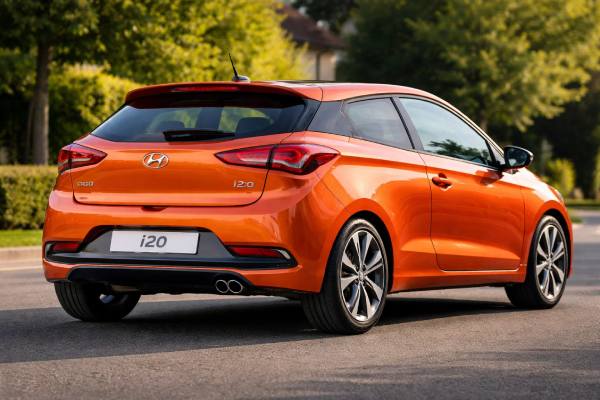
The Hyundai i20 Coupe GB with the 1.4 CRDi 90 hp diesel is one of those small cars that looks more style-led than practical at first glance, but the engineering tells a different story. Under the lower roofline and three-door body, it keeps the same useful GB-generation platform logic: a roomy wheelbase, a strong 1.4-litre turbo-diesel with real mid-range torque, a six-speed manual gearbox, and sensible front-wheel-drive packaging. That matters because it makes the Coupe more than a fashion version of the regular i20. It is still compact enough for daily city use, yet it has the torque, gearing, and fuel economy to work well on longer trips. The trade-off is equally clear. This is an older diesel, so condition, service history, and use pattern matter more than brochure appeal. This guide covers the 2015–2018 Hyundai i20 Coupe 1.4 CRDi in depth, including specifications, safety, maintenance, common faults, real-world driving, and where it fits among its main rivals.
At a Glance
- The 1.4 CRDi’s 240 Nm gives the i20 Coupe much stronger everyday pull than the small petrol versions.
- The Coupe keeps the GB platform’s useful 2,570 mm wheelbase and adds a larger 336-litre boot than many buyers expect.
- A six-speed manual and low official fuel use make it a credible small long-distance car, not just a city hatch.
- Repeated short trips are the ownership caveat, because older diesels are harder on EGR, DPF-related systems, and battery health.
- For long-term used-car life, a 10,000–15,000 km or 12-month oil-and-filter service is the safer routine.
Navigate this guide
- Hyundai i20 Coupe under the skin
- Hyundai i20 Coupe spec matrix
- Hyundai i20 Coupe trim and safety map
- Failure points and service campaigns
- Upkeep schedule and buyer strategy
- Real-world feel and diesel costs
- Hyundai i20 Coupe versus rivals
Hyundai i20 Coupe under the skin
The i20 Coupe is best understood as a sharper-looking version of the GB-generation i20 rather than a fundamentally different car. That is a good thing. Hyundai took the regular i20’s strong points, kept the same core platform and wheelbase, and wrapped them in a lower, more expressive three-door body. The result is a car that looks sportier but still behaves like a sensible supermini underneath.
For this diesel version, that balance works particularly well. The 1.4 CRDi is a far better match for the Coupe body than many buyers assume. On paper, 90 hp does not sound especially strong, but the real figure that matters is torque. With 240 Nm available low in the rev range, the engine gives the i20 Coupe a much easier, more mature feel than the small naturally aspirated petrol engines in the same family. That changes the car’s role. Instead of feeling like a city-first hatchback, it starts to feel like a compact long-distance car that just happens to fit easily into tight parking spaces.
The body itself is not just a styling exercise. Hyundai gave the Coupe its own roofline, rear-quarter treatment, and a more dynamic stance, but it retained the useful 2,570 mm wheelbase. That means the car keeps much of the five-door model’s interior usability. It is still a three-door, so rear access is less convenient, yet the front-seat memory walk-in arrangement helps. The bigger surprise is cargo room. With 336 litres of luggage space, the Coupe is more practical than many sporty-looking small cars, and that makes a real difference in daily life.
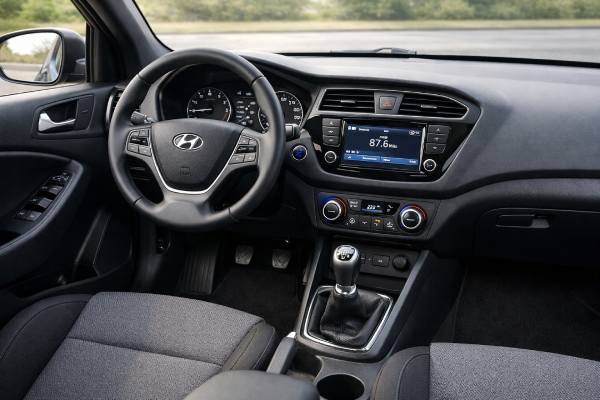
The engineering character also fits the car’s mission. The 1.4 CRDi is paired with a six-speed manual transmission, which is one of the most important features of the package. Around town, the lower gears make it easy to use the engine’s torque without constant revving. On the motorway, the extra gear helps the car feel calmer and more efficient than many old superminis. That is a quieter advantage than styling, but for owners it matters more.
The limits are predictable. This is not a hot hatch, and it does not feel like one. The steering is light rather than especially rich in feedback, and the chassis is tuned for stability and easy control, not for aggressive cornering. It also remains a diesel. That means it likes regular use, full warm-up cycles, and proper servicing. Cars used only for very short trips can age badly.
So the best way to think about the i20 Coupe 1.4 CRDi is as a style-conscious version of a fundamentally practical car. It is not the sharpest driver’s car in the class, but it combines real-world space, useful diesel torque, and sensible engineering better than its shape first suggests. That is why it remains more interesting than many overlooked superminis from the same period.
Hyundai i20 Coupe spec matrix
The table set below focuses on the Hyundai i20 Coupe GB with the 1.4 CRDi 90 hp diesel sold from 2015 to 2018. Some details vary by trim, market, and tyre package, so exact parts ordering should always be confirmed by VIN.
Powertrain and efficiency
| Item | Hyundai i20 Coupe (GB) 1.4 CRDi 90 hp |
|---|---|
| Code | U2 1.4 CRDi |
| Engine layout and cylinders | Transverse I-4, DOHC, 4 valves per cylinder |
| Displacement | 1.4 L (1,396 cc) |
| Bore × stroke | 75.0 × 79.0 mm (2.95 × 3.11 in) |
| Induction | Turbocharged |
| Fuel system | Common-rail direct injection |
| Compression ratio | 16.0:1 |
| Max power | 90 hp (66 kW) @ 4,000 rpm |
| Max torque | 240 Nm (177 lb-ft) @ 1,500–2,500 rpm |
| Timing drive | Verify by VIN and engine build before major timing-parts work |
| Rated efficiency | About 3.7–4.1 L/100 km (57.4–63.6 mpg US / 68.9–76.4 mpg UK), version dependent |
| Real-world highway at 120 km/h | Usually around 4.8–5.5 L/100 km in healthy cars |
The engine’s appeal is not outright speed. It is the way it combines strong low-rpm pull with small-car fuel use. In normal traffic, that makes the Coupe feel more relaxed than its modest horsepower suggests.
Transmission, driveline, and chassis
| Item | Hyundai i20 Coupe (GB) 1.4 CRDi 90 hp |
|---|---|
| Transmission | 6-speed manual |
| Drive type | Front-wheel drive |
| Differential | Open |
| Front suspension | MacPherson strut with anti-roll bar |
| Rear suspension | Torsion beam |
| Steering | Motor-driven power steering |
| Steering wheel turns | About 2.8 lock-to-lock |
| Brakes | Front ventilated discs / rear discs |
| Most common tyre sizes | 185/65 R15 or 195/55 R16 |
| Ground clearance | About 140 mm (5.5 in) |
| Turning circle | About 10.2 m (33.5 ft) |
This is all conventional hardware, and that is part of the i20’s attraction. There is nothing especially exotic underneath, which keeps servicing and chassis repairs relatively straightforward.
Dimensions, weights, and practicality
| Item | Hyundai i20 Coupe (GB) 1.4 CRDi 90 hp |
|---|---|
| Body style | 3-door coupe hatchback |
| Length | 4,035 mm (158.9 in) |
| Width | 1,734 mm (68.3 in) |
| Height | 1,474 mm (58.0 in) |
| Wheelbase | 2,570 mm (101.2 in) |
| Kerb weight | About 1,165–1,230 kg (2,568–2,712 lb), trim dependent |
| GVWR | About 1,650–1,690 kg (3,638–3,725 lb), trim dependent |
| Fuel tank | 50 L (13.2 US gal / 11.0 UK gal) |
| Cargo volume | 336 L (11.9 ft³) seats up / about 1,011 L (35.7 ft³) seats folded |
The Coupe body is useful enough that it does not feel like a compromise-only model. Rear access is less convenient than in the five-door, but the wheelbase and boot space keep it genuinely practical.
Performance, towing, and service capacities
| Item | Hyundai i20 Coupe (GB) 1.4 CRDi 90 hp |
|---|---|
| 0–100 km/h | About 12.1 s |
| Top speed | About 175 km/h (109 mph) |
| Braking distance | Tyre and test dependent; no single universal value |
| Towing capacity | Around 1,100 kg (2,425 lb) braked / 450 kg (992 lb) unbraked |
| Payload | Roughly 380–480 kg, trim dependent |
| Fluid or spec | Value |
|---|---|
| Engine oil | About 5.3 L (5.6 US qt); SAE 5W-30; diesel-specific spec depends on DPF fitment |
| Coolant | About 6.4 L (6.8 US qt); phosphated ethylene-glycol type |
| Manual transaxle fluid | About 1.7–1.8 L (1.8–1.9 US qt); API GL-4 SAE 70W |
| Brake and clutch fluid | DOT 3 or DOT 4 |
| A/C refrigerant | 470 ± 25 g |
| A/C compressor oil | 110 g PAG oil |
| Wheel lug nut torque | 88–107 Nm (65–79 lb-ft) |
Those capacity figures are especially useful when reading used-car invoices. They help you spot whether previous servicing sounds plausible or improvised.
Hyundai i20 Coupe trim and safety map
The i20 Coupe was marketed as the more style-conscious version of the GB i20, but Hyundai did not turn it into a stripped-down niche model. In most markets, it kept the same basic equipment philosophy as the five-door: sensible entry trims, better-equipped middle versions, and upper trims that added visual upgrades and convenience features. That is good news for used buyers, because it means the Coupe is more than just a pretty shell.
Lower trims often provide the essentials that matter most in daily use: remote central locking, heated electric mirrors, height-adjustable driver’s seat, steering-wheel adjustment, basic infotainment connectivity, and straightforward cabin materials that tend to wear well. These can make very good used buys because they keep the attractive body and diesel drivetrain without adding too many expensive extras.
Mid-range trims are often the sweet spot. This is where you tend to find the features that make the car feel genuinely complete: Bluetooth, steering-wheel audio controls, leather-trimmed wheel and shift knob, cruise control with speed limiter, rear parking sensors, automatic climate control on some markets, and upgraded upholstery or wheel packages. For most owners, this is the point where the i20 Coupe moves from basic supermini to something that feels properly well equipped.
Upper trims brought a more premium appearance, often with 16-inch wheels, LED running lights or projector lamps depending on market, privacy glass, rain and light sensors, and trim-specific interior details. These versions can feel very polished, but they are also the ones where cosmetic wear, wheel damage, and electrical age issues show up more clearly. They are desirable, but only when condition is strong.
Safety is one of the more important parts of the GB i20 story. Hyundai built the car around a stronger body shell than the earlier generation and backed that up with a solid standard safety package. Six airbags, Electronic Stability Control, Vehicle Stability Management, Hill Start Assist, tyre-pressure monitoring, and good seat-belt basics all helped the i20 feel like a modern small car for its time. In better-equipped versions, lane-departure warning and additional convenience-related safety items could also appear.
The Euro NCAP result should be read carefully. The GB-generation i20 received a four-star rating in 2015. That is respectable, but it also reflects the period’s growing emphasis on active crash-avoidance systems. The i20’s passive safety was decent, yet the lack of broader advanced driver assistance limited the headline score. For a used buyer, the important point is context. This is not an unsafe car. It is an older car from the stage just before autonomous emergency braking and broader ADAS became mainstream in the segment.
That means expectations should be realistic. The i20 Coupe does not offer modern AEB, adaptive cruise, blind-spot monitoring, or lane-centering. What it does offer is a solid body, useful airbag coverage, proper stability control, and a mature basic safety package. In the used market, that still counts for a lot. When buying, verify actual equipment by VIN and by the car itself. Do not assume that every Coupe has the same lights, sensors, cruise control, or lane support just because the trim badge sounds familiar.
Failure points and service campaigns
The i20 Coupe 1.4 CRDi can be a reliable used diesel, but only when it is judged honestly. The engine is not fragile by design, yet like most small Euro 6 diesels it responds very differently to good use and bad use. A car that has done steady commuting or regular longer runs is often much healthier than a low-mileage example used only for cold starts and short urban hops.
Common and usually low-to-medium cost issues
- EGR and intake contamination: Symptoms include hesitation, weak response below 2,000 rpm, rougher idle, smoke under load, or a warning light. The likely cause is soot and oil residue building up in the EGR path or intake. The remedy is inspection, cleaning, and sometimes replacement of the affected components.
- Fuel-filter neglect: Hard starting, poor pull under load, uneven running, or sensitivity to poor fuel can often be traced to overdue fuel-filter service or contaminated diesel.
- Brake corrosion: Cars that do light mileage can suffer from dragging rear brakes, uneven pad wear, and sticky caliper sliders.
- Suspension wear items: Drop links, front bushes, dampers, and wheel bearings can become noisy with age, especially on rough roads.
Occasional medium-cost issues
- Boost leaks: Split intercooler hoses or loose charge-air joints can cause hissing, flat performance, underboost faults, or excess smoke.
- Glow-plug and cold-start faults: Long cranking or rough initial running in cold weather often point to glow plugs, the control module, or weak battery condition.
- Battery and stop-start sensitivity: Low voltage can cause unexpected drivability complaints or fault warnings, particularly on cars with economy-focused stop-start systems.
Higher-cost risks
- Clutch and dual-mass flywheel wear: Not every car suffers here, but take-off shudder, heavy pedal feel, idle rattle, or slipping under load should be treated seriously.
- DPF-related issues on equipped cars: Repeated interrupted regeneration cycles can lead to warning lights, limp mode, rising oil level, and expensive filter or sensor work.
- Injector sealing or injector faults: Diesel smell, chuffing, uneven idle, or hard starting can point to injector sealing failures or more serious fuel-system problems.
- Turbo wear after poor oil history: Excess whistle, oil smoke, or persistent lack of boost after hose checks can indicate more serious wear.
The engine’s long-term health depends heavily on oil discipline. This is one reason experienced diesel owners tend to shorten the oil interval rather than stretch it. Clean oil matters to the turbo, to the timing side, and to soot handling. A long-gap service record is a bigger warning sign on this engine than on a basic small petrol.
Software history matters too, even if it is rarely advertised. Like many diesels of the period, the i20 can benefit from dealer-level updates related to drivability, emissions strategy, and sensor behavior. You do not need proof of constant software work, but you should want a believable dealer or specialist history that shows the car was not ignored.
On recalls and service campaigns, always check by VIN through Hyundai’s official campaign tools and dealer records. That step is worth doing even if the seller claims there are no outstanding actions. It confirms whether safety work, service campaigns, and any official updates were completed. On a used diesel, paperwork quality is often just as important as the road test.
Upkeep schedule and buyer strategy
The i20 Coupe 1.4 CRDi is a car that rewards preventative maintenance. Hyundai’s official normal diesel schedule can look generous on paper, but once a vehicle is into used-car life, the safer approach is usually more conservative. On an older diesel, annual attention is cheap insurance.
Practical maintenance schedule
| Item | Practical interval |
|---|---|
| Engine oil and filter | Every 10,000–15,000 km or 12 months |
| Fuel filter | About every 30,000–40,000 km, sooner if fuel quality is doubtful |
| Engine air filter | Inspect annually; replace around 30,000 km or earlier in dust |
| Cabin air filter | Every 15,000–20,000 km or 12 months |
| Coolant | Inspect regularly; replace by official schedule for the exact car |
| Brake fluid | Every 24 months |
| Manual gearbox oil | Inspect for leaks and shift feel; refresh earlier if use is hard or shift quality drops |
| Auxiliary belts and hoses | Inspect at every annual service |
| Brake pads and rotors | Inspect at every service, especially rear-brake condition |
| Tyres | Rotate and inspect regularly; align if pull or uneven wear appears |
| 12 V battery | Test yearly once age passes about 4 years |
| Timing components | Confirm the exact arrangement by VIN and inspect where noise or fault history suggests concern |
That timing note matters because buyers often assume all small Hyundai diesels share identical timing-system guidance. They do not. Before ordering major timing parts or planning preventative replacement, verify the exact system on the car in front of you.
Useful ownership figures include about 5.3 L of engine oil, about 6.4 L of coolant, about 1.7–1.8 L of manual-transaxle fluid, and 88–107 Nm wheel-lug torque. These details are not glamorous, but they are exactly the sort of numbers that help you judge old invoices and workshop claims.
Used-buyer checklist
- Start the engine from cold and listen for long cranking, injector blow-by, or an uneven first idle.
- Drive it properly warm and check for clean turbo pull without flat spots or limp mode.
- Look for smoke under load only after full warm-up, not just at start-up.
- Test the clutch in a higher gear for slip and listen for flywheel vibration at idle.
- Inspect coolant hoses, radiator seams, and the expansion tank for staining or pressure signs.
- Check whether the oil level is stable and ask about past DPF or regeneration problems.
- Inspect tyre wear, rear-brake condition, front-end knocks, and wheel-bearing noise.
- Test all electrics, especially parking sensors, heater controls, mirrors, windows, lights, and infotainment.
- Verify service records, recall completion, and the pattern of annual maintenance.
As a buying strategy, the best Coupe diesels are rarely the very cheapest ones. The right car is usually a mid-spec example with a believable history, decent tyres, clean cold start, and evidence of regular distance driving. The wrong car is often a bargain-looking urban runabout with vague paperwork, weak battery behavior, and a seller who avoids diesel-system questions. Long-term durability is good when the basics are respected. Neglect is what turns this car expensive.
Real-world feel and diesel costs
From the driver’s seat, the i20 Coupe 1.4 CRDi feels more mature than its looks first suggest. The diesel engine is the key reason. It gives the car an easy, low-effort character that suits commuting and longer trips better than the smaller petrol engines do. You are aware that it is a diesel, especially from cold, but once warm it works in a calm, useful way.
The strongest part of the experience is mid-range flexibility. You do not need to rev the engine hard to make progress. Around town, that means fewer downshifts and less fuss. On fast roads, it means the car feels less breathless than many small hatchbacks of the period. Officially, 0–100 km/h takes about 12.1 seconds and top speed is around 175 km/h. Those are decent figures, but they still do not fully explain the car’s real character. The important part is how easily it pulls from everyday speeds.
The six-speed manual helps the engine feel more grown-up. Lower gears make urban driving easy, while the higher ratios help the Coupe settle down at motorway pace. This is not a car that wants to be driven like a hot hatch. Instead, it rewards smooth inputs and sensible use of torque. That suits the model perfectly.
The chassis balance is safe and predictable. Steering is light and accurate enough, but there is no real claim to Fiesta-like handling sparkle. The suspension is tuned more for stability and day-to-day usability than for excitement, and that is the right choice for the powertrain. The i20 Coupe stays tidy in corners, but it is more honest than playful. On a twisty road it is competent. On a long commute it makes even more sense.
Ride quality depends partly on wheel choice. Cars on 15-inch tyres generally ride better and cost less to keep on good rubber. Sixteen-inch versions look sharper, but rough urban surfaces and expansion joints become more noticeable. On a used car, tyre quality makes a big difference. Good tyres can make the car feel much quieter and more settled than a cheap set will.
Noise, vibration, and harshness are typical for a small diesel. Cold starts sound busy. Once warm, the engine settles, though wind and tyre noise remain more noticeable at speed than they would in a larger car. Even so, the Coupe feels more substantial than many style-led three-door superminis. That is one of its better qualities.
Real-world economy remains a big reason to choose this version. In mixed driving, healthy cars often return around 4.7–5.5 L/100 km. A steady highway run can stay in the high-4s to low-5s. Dense city use will pull the number upward, especially in colder weather, and that same use pattern is also the least friendly for diesel emissions hardware. So the basic conclusion is simple: the i20 Coupe diesel is at its best when it is used regularly and properly, not when it is treated like a short-hop city-only car.
Hyundai i20 Coupe versus rivals
The i20 Coupe 1.4 CRDi entered a crowded market. Its obvious rivals included the Ford Fiesta 1.5 TDCi three-door, Volkswagen Polo 1.4 TDI or 1.6 TDI, Skoda Fabia 1.4 TDI, Renault Clio dCi, Peugeot 208 BlueHDi, and Toyota Yaris 1.4 D-4D. Each of those rivals offers something strong, which means the Hyundai’s case depends on balance rather than one standout trick.
Against the Ford Fiesta, the Hyundai usually loses on steering feel and handling enjoyment. The Ford is the better driver’s car. The i20 Coupe answers with a calmer, more comfort-first personality and with stronger everyday practicality than its shape suggests. If you value commuting ease more than cornering fun, the Hyundai can be the better ownership choice.
Against the Volkswagen Polo and Skoda Fabia, the Hyundai often feels less premium inside, but it usually looks attractive on value. The VW-group rivals may have slightly more restrained cabins, yet the Hyundai often gives you a generous mix of equipment, useful space, and straightforward ownership logic for less money in the used market. That becomes more important as the cars age and service history matters more than badge prestige.
Against French rivals like the Clio dCi and 208 BlueHDi, the Hyundai often feels less characterful but easier to read as a used buy. It may not match them for charm or ride sophistication, but it has a plain honesty that many used buyers appreciate. The Kia Rio is another natural alternative because it shares much of the same corporate logic: sensible engineering, easy packaging, and low-drama transport.
The Toyota Yaris diesel has the advantage of Toyota’s reputation, but the Hyundai fights back with a roomier-feeling platform, a strong boot for the Coupe body style, and usually better equipment value per pound or euro spent. The biggest advantage of the i20 Coupe over most of these rivals is that it offers a genuinely useful diesel supermini package in a body that still looks a little special without becoming impractical.
The biggest reason to skip it is equally clear. If your driving is mostly urban and short-trip based, the diesel powertrain becomes less convincing. In that case, a simple petrol rival may make more sense. You should also look elsewhere if you want a truly sporty chassis or modern ADAS.
Where the Coupe wins is clarity. It offers useful torque, honest fuel economy, practical dimensions, and enough style to feel distinct without creating big usability sacrifices. That is a narrow target, but it is a worthwhile one. Bought carefully, the Hyundai i20 Coupe 1.4 CRDi remains one of the more rational and underrated small used diesels in its class.
References
- Hyundai i20 2017 (Brochure)
- Εγχειρίδια Κατόχου – Hyundai Ελλάς ΑΒΕΕ 2026 (Owner’s Manual portal)
- Hyundai i20 – Euro NCAP Results 2015 2015 (Safety Rating)
- Home | Hyundai Recalls & Service Campaigns 2026 (Recall Database)
Disclaimer
This article is for informational purposes only and is not a substitute for professional diagnosis, repair, or vehicle-specific technical advice. Specifications, torque values, service intervals, procedures, emissions equipment, and fitted features can vary by VIN, market, trim, and production date, so always verify critical details against official service documentation for the exact vehicle.
If this guide was useful, please consider sharing it on Facebook, X, or another social platform to support our work.