
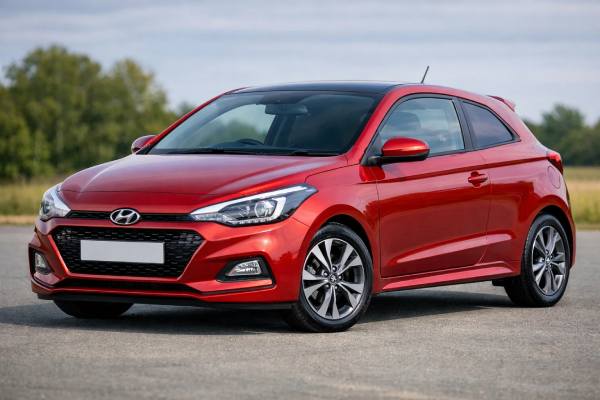
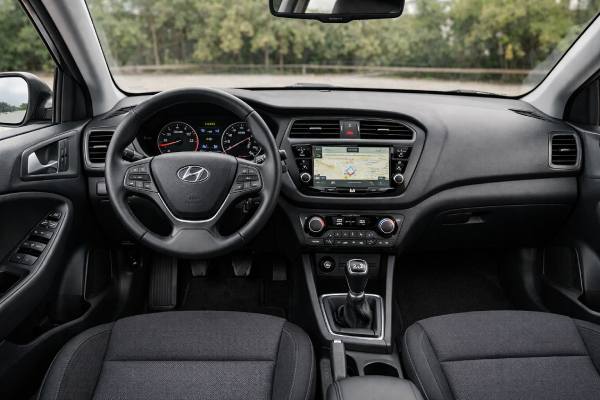
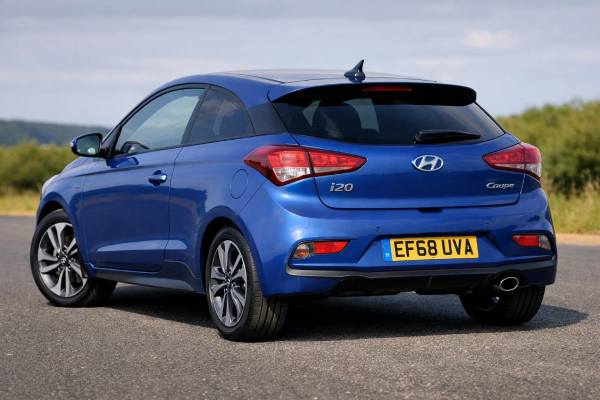
The facelifted Hyundai i20 Coupe GB with the 1.0-litre T-GDi 100 hp engine sits in one of the smartest parts of the late-2010s supermini market. It is stronger and easier to drive than the basic 1.2 petrol, but it stays lighter, simpler, and usually cheaper to own than faster warm-hatch alternatives. The three-door Coupe body also gives the i20 more style and rarity than the regular hatch while keeping everyday usefulness intact. Under the skin, the formula is straightforward: a turbocharged three-cylinder petrol engine, front-wheel drive, compact dimensions, and a simple rear torsion-beam setup. That sounds modest, but it works well in daily driving. For most buyers, the real questions are not complicated. How quick is it in the real world? Which faults matter? Is it safe enough by modern small-car standards? And which used examples are worth the money? This guide covers those points clearly, including the known weak spots.
Owner Snapshot
- The 1.0 T-GDi 100 hp engine gives the i20 Coupe the torque the basic 1.2 petrol lacks.
- The three-door body looks better than the regular hatch but still keeps a practical boot.
- Running costs are usually sensible when oil changes are done on time.
- Delayed oil service, weak 12 V batteries, and rusty rear brakes are the main ownership watch points.
- Change engine oil every 15,000 km or 12 months; shorter intervals suit short-trip use better.
Guide contents
- Hyundai i20 Coupe GB essentials
- Hyundai i20 Coupe GB data
- Hyundai i20 Coupe GB trims and safety
- Reliability patterns and fixes
- Maintenance plan and buying tips
- On-road character and economy
- Against Fiesta, Polo, and Rio
Hyundai i20 Coupe GB essentials
The facelifted 2018–2020 Hyundai i20 Coupe is best understood as the sweet-spot version of Hyundai’s GB supermini rather than a full hot hatch. It takes the sensible, roomy i20 formula and gives it a lower-looking three-door body, a more youthful appearance, and, in 1.0 T-GDi 100 hp form, a powertrain that finally matches the chassis well. That matters because the naturally aspirated 1.2 petrol feels honest but slow, while the 100 hp turbo unit adds the mid-range pull that makes overtaking and motorway joining less stressful.
This engine is a small direct-injection turbocharged three-cylinder, and that tells you a lot about its character. It is not especially dramatic at high rpm, but it feels stronger than its power number suggests in the middle of the rev range. In everyday use, that gives the car a light-footed feel. Around town, the i20 Coupe remains easy to place, light to steer, and simple to park. On faster roads, it does not turn into a sports coupe, but it is composed enough to feel secure and mature.
The facelift is worth having. It brought a fresher front end, updated lighting details, cleaner infotainment options, and, depending on market and trim, broader driver-assistance availability. It also sharpened the car’s showroom appeal without changing the basic strengths that made the GB i20 a sensible small-car platform in the first place: decent cabin space, an easy driving position, solid visibility for a three-door, and straightforward mechanical layout.
One of the i20 Coupe’s underappreciated strengths is that it does not force a heavy styling compromise on the owner. You still get a useful luggage area, folding rear seats, and sensible running costs. That makes it more practical than many people assume from the word “Coupe.” In the used market, it also has another quiet advantage: it is less common than the standard five-door, so it feels more distinctive without carrying specialist-car risk.
The ownership case is also fairly simple. A good car with timely oil changes, decent tyres, working air conditioning, and clean electronic history can be a very sensible used buy. A neglected one can quickly turn into a false economy, mainly because small turbo engines do not like stretched service intervals. In other words, the i20 Coupe 1.0 T-GDi 100 is appealing because it blends style, usable torque, and modest ownership costs. It is not the sharpest car in the class, but it often proves to be one of the easier ones to live with.
Hyundai i20 Coupe GB data
This section focuses on the facelift-era GB-platform 1.0 T-GDi 100 hp car and uses Coupe-specific values where the body style differs from the standard hatch. Because Hyundai published some facelift technical sheets for the wider i20 range rather than the Coupe alone, a few body and trim figures vary slightly by market, wheel package, and gearbox. That is normal for this model, so VIN-specific verification still matters.
Powertrain and driveline
| Item | Specification |
|---|---|
| Code | Kappa 1.0 T-GDi, commonly listed as G3LC |
| Engine layout and cylinders | Inline-3, DOHC, 4 valves per cylinder, 71.0 × 84.0 mm (2.80 × 3.31 in) |
| Displacement | 1.0 L (998 cc) |
| Induction | Turbocharged |
| Fuel system | Direct injection |
| Compression ratio | Commonly listed as 10.0:1 |
| Max power | 100 hp (74 kW) @ 4,500 rpm |
| Max torque | 172 Nm (127 lb-ft) @ 1,500–4,000 rpm |
| Timing drive | Chain |
| Rated efficiency | 5.0 L/100 km (47.0 mpg US / 56.5 mpg UK) combined for the facelift 100 hp manual range car |
| Real-world highway at 120 km/h | About 6.0–6.8 L/100 km (39.2–34.6 mpg US / 47.1–41.5 mpg UK) |
| Transmission | 5-speed manual is the key setup for this variant; some facelift 100 hp range cars in other markets also used a 7-speed DCT |
| Drive type | FWD |
| Differential | Open |
Chassis and dimensions
| Item | Specification |
|---|---|
| Suspension, front / rear | MacPherson strut / coupled torsion beam axle |
| Steering | Motor-driven power steering; 2.70 turns lock-to-lock |
| Brakes | Front ventilated discs; rear solid discs on most better trims, drums on some lower-spec related cars |
| Wheels and tyres | 195/55 R16 is the most common desirable setup; 185/65 R15 appears on smaller-wheel trims |
| Ground clearance | About 140 mm (5.5 in), depending on tyre and market |
| Length / Width / Height | Coupe-specific period figures are typically 4045 / 1730 / 1449 mm (159.3 / 68.1 / 57.0 in) |
| Wheelbase | 2570 mm (101.2 in) |
| Turning circle | 10.2 m (33.5 ft) |
| Kerb weight | Roughly 1065–1145 kg (2348–2524 lb), depending on trim and body specification |
| GVWR | Roughly 1600–1640 kg (3527–3616 lb) |
| Fuel tank | 50 L (13.2 US gal / 11.0 UK gal) |
| Cargo volume | About 336 L seats up / 1011 L seats down, VDA method |
Performance and capability
| Item | Specification |
|---|---|
| 0–100 km/h | About 10.8 s |
| 0–62 mph | 10.8 s on official facelift 100 hp manual data |
| Top speed | 188 km/h (117 mph) |
| Braking distance 100–0 km/h | Not consistently published for this exact variant |
| Towing capacity | Commonly up to 1000 kg (2205 lb) braked / 450 kg (992 lb) unbraked, verify by VIN |
| Payload | About 495–535 kg (1091–1179 lb) |
Fluids and service capacities
| Item | Specification |
|---|---|
| Engine oil | Hyundai-approved fully synthetic petrol-engine oil; 5W-30 is the common choice, with 0W-30 also seen by climate and market |
| Engine oil capacity | About 3.6 L (3.8 US qt) with filter |
| Coolant | Hyundai long-life ethylene-glycol coolant, usually 50/50 premix |
| Coolant capacity | About 6.0 L (6.3 US qt), verify by VIN |
| Transmission fluid | Manual gearbox specification varies by gearbox code; verify before service |
| Differential / transfer case | Not applicable as separate service units on this FWD setup |
| A/C refrigerant | R134a or R1234yf depending production date and market |
| A/C refrigerant charge | About 470 ± 25 g (16.6 oz) |
| A/C compressor oil | PAG or FD46XG-type depending refrigerant system |
| A/C compressor oil charge | About 110 mL (3.7 fl oz) |
| Key torque specs | Always verify by VIN-specific workshop data before service; wheel, plug, and drain-plug values can vary by wheel and market setup |
The main takeaway from the raw numbers is simple. This is a light, compact front-wheel-drive small car with a useful torque band, sensible dimensions, and enough performance to feel effortless in daily driving. It is not unusually heavy, complicated, or thirsty, which helps explain why the 100 hp version is often the best-used buy in the range.
Hyundai i20 Coupe GB trims and safety
The trim story on the facelifted i20 Coupe can look more confusing than it really is because Hyundai used slightly different grade naming across markets. In broad terms, the 100 hp 1.0 T-GDi sat in the middle of the range, where it was paired with the equipment buyers actually wanted: alloy wheels, better infotainment, nicer cabin trim, and more convenience features. The key point is that the 100 hp engine was not the bare-bones option. That matters, because it means many used cars combine the better powertrain with the better cabin.
In the UK facelift-era range, Hyundai’s published i20 spec structure showed the 100 hp engine mainly in SE and Premium Nav-type positions, while the 120 hp version sat higher up and the 1.2 naturally aspirated engine covered the lower trims. In practice, that means most good 1.0 T-GDi 100 cars are fairly well equipped. Useful identifiers include 16-inch alloy wheels on upper trims, climate-control rather than simple manual air conditioning, parking sensors, navigation or larger touchscreen hardware, and richer steering-wheel and gearknob trim. The Coupe body itself is already the quickest visual identifier, but wheel size and infotainment layout are the easiest ways to separate a better-used example from a cheaper one.
Year-to-year changes within 2018–2020 are modest. The major change is the facelift itself rather than a fresh overhaul every year. Most later cars simply benefit from being newer, more likely to have current infotainment software, and often easier to find with full Hyundai or specialist service history.
Safety ratings and what they mean
Safety is one area where context matters. The i20 nameplate appears in more than one test framework, and the result can look contradictory if you compare different years and protocols directly. Older Euro NCAP material places the i20 on a 4-star footing under an earlier protocol, while ANCAP shows a 5-star result for Dec 2016 to Mar 2019 hatch and Cross variants with strong occupant-protection scores. That does not mean one source is wrong. It means the test year, protocol, and fitted safety equipment matter.
For a used buyer, the practical conclusion is this: the facelifted i20 Coupe is not an unsafe car, but it is not a class leader by current 2020s ADAS standards either. Its basic structure, airbag package, and stability systems are solid. What varies is the active-safety layer.
Safety systems and driver assistance
Most cars in this family include the expected core safety hardware:
- front, side, and curtain airbags
- ABS, ESC, and brake-force distribution
- tyre-pressure monitoring
- ISOFIX on the outer rear seats
- hill-start assistance on many trims
Driver-assistance features are more variable. Depending on market and trim, the facelift era could add autonomous emergency braking, lane-related support, high-beam assist, rear parking sensors, and a reversing camera. Some test-market cars were rated without AEB or lane support as standard, so do not assume every facelifted Coupe has the same driver-assistance package. Check the actual car.
That matters after repair work too. If a car has a camera-based system and has had windscreen replacement or front-end accident repair, calibration quality matters. A cheap used example with poor panel fit, warning lights, or non-functioning assistance features is not a bargain. It is usually a sign to move on.
Reliability patterns and fixes
The facelifted i20 Coupe 1.0 T-GDi 100 is generally a decent reliability bet, but it rewards disciplined maintenance more than neglect-tolerant old-school small cars. The engine itself is not notorious in the way some rival small turbo motors became, yet it still has a few known pressure points. Most of them are manageable if caught early.
Common and low-to-medium cost issues
- Cold-start rattle or timing noise: The likely cause is wear in the timing-chain system, especially if oil changes were stretched. The right response is early inspection, not wishful thinking. Fresh oil may quiet a mild case, but persistent rattle, correlation faults, or metal debris mean chain, guides, and tensioner need proper repair.
- Rough idle, hesitation, or misfire: Usually spark plugs, ignition coils, or occasionally intake and boost leaks. This is often a moderate-cost fix unless the car has been driven for a long time while misfiring.
- Weak battery and electronic oddities: Cars that do short trips or sit unused can show slow cranking, warning messages, or stop-start irregularities where fitted. The cure is often a proper battery test and replacement rather than chasing random sensors.
- Rear brake corrosion or sticking: Common on lightly used small cars. Symptoms are poor handbrake feel, hot rear wheels, or uneven braking. A clean-up may work early; worn hardware needs proper replacement.
Occasional issues that deserve attention
- Boost-control or sensor faults: Flat response, inconsistent pull, or engine lights can point to vacuum issues, boost hoses, or sensor problems. These are usually fixable without major engine work.
- Cooling-system seepage: Small leaks from hoses, joints, or thermostat housing can go unnoticed until the cabin heater weakens or the expansion tank level drops. Any coolant smell should be investigated quickly.
- Clutch wear on hard-used manual cars: The engine’s torque is modest, but repeated urban abuse, hill starts, and learner-driver history can shorten clutch life.
DCT-specific note
Some facelift 100 hp i20s in related markets used a 7-speed dual-clutch transmission. If you are looking only at the Coupe configuration most commonly sold with a manual, this matters less. But if you do encounter a DCT-equipped car, pay attention to low-speed shudder, poor take-up, or outdated software history.
Service actions, software, and used-car checks
No single headline recall pattern defines this exact facelifted Coupe in the way it does for some rivals, but that should not make you casual. You still want dealer evidence that all campaign work is complete. ECU and infotainment updates can matter because they may improve idle quality, driveability, or system stability.
Before buying, ask for:
- full service history with dated oil changes
- proof of recall or campaign completion
- a true cold start
- scan results if any warning light has ever appeared
- tyre brand matching and alignment condition
- evidence of recent battery, brake, or clutch work if mileage suggests it
A good i20 Coupe rarely hides huge mechanical drama. A bad one usually tells on itself through noisy starts, rough idle, cheap tyres, neglected fluids, and patchy paperwork.
Maintenance plan and buying tips
For long-term ownership, this car responds well to simple, consistent upkeep. The biggest mistake is treating it like an old low-stress naturally aspirated supermini and stretching service work because “it still runs fine.” The turbocharged direct-injection engine is still small and tightly packaged, so fresh oil and careful cooling-system attention matter.
Practical maintenance schedule
| Item | Practical interval | Notes |
|---|---|---|
| Engine oil and filter | Every 15,000 km or 12 months | For short trips, cold climate, or hard use, 10,000 km is the safer habit |
| Engine air filter | Inspect every service; replace around 30,000–45,000 km | Earlier in dusty use |
| Cabin filter | Every 15,000–20,000 km or 12 months | Helps HVAC performance and demisting |
| Spark plugs | Around 45,000–60,000 km | Misfire under load often points here first |
| Coolant | First major change around 5 years or 100,000 km, then by condition or shorter interval | Verify exact schedule by VIN and manual |
| Brake fluid | Every 2 years | Important for pedal feel and corrosion control |
| Manual gearbox oil | Inspect for leaks routinely; refresh around 90,000–120,000 km if keeping the car long term | Often worth doing even if not pushed in marketing schedules |
| Timing chain | No fixed replacement interval | Inspect for rattle, guide wear, and timing-correlation faults |
| Auxiliary belt and hoses | Inspect every service; replace by condition | Age matters as much as mileage |
| Brake pads and discs | Inspect at least annually or every 15,000 km | Rear brakes can corrode before they wear out |
| Tyre rotation and alignment | Every 10,000–15,000 km | Uneven inner wear often signals alignment drift |
| 12 V battery | Test yearly after year four | Prevents nuisance electronic faults |
What to inspect before buying
Check the engine from fully cold. A clean, quiet start is a very good sign. Listen for chain noise, feel for a smooth idle, and make sure the car pulls cleanly from low rpm without surging. Look for coolant staining around hoses and the thermostat area, and check whether the expansion tank level is stable. On the road, the clutch should engage cleanly and the manual shift should feel light, not obstructive.
Body inspection matters too. Look at panel alignment, rear quarter condition, wheel rash, and signs that the longer doors have been opened hard into curbs or walls. Inside, make sure seat-fold operation works correctly and that the infotainment, steering-wheel controls, air conditioning, and parking sensors all behave normally.
Best years and versions to target
For most buyers, the best pick is a 2019 or 2020 manual car with full service history, mid-to-upper trim, and ordinary mileage. Those cars usually give the best balance of price, equipment, and reduced age-related wear. A seller who can show regular oil changes is worth paying extra for.
The cars to avoid are not defined by badge so much as by care level:
- neglected service history
- cheap mixed tyres
- noisy cold starts
- poorly repaired accident damage
- warning lights or unexplained battery issues
- overheated rear brakes or dragging handbrake feel
Long term, the durability outlook is good rather than exceptional. Treat it well and it should stay affordable. Ignore early signs and the savings disappear fast.
On-road character and economy
On the road, the 1.0 T-GDi 100 version feels like the engine the i20 Coupe always wanted. It is not brutally fast, but it is eager enough that the car feels complete rather than merely acceptable. The official 0–100 km/h time of about 10.8 seconds tells only part of the story. What matters more is the strong low-to-mid-range torque delivery. With 172 Nm available from low rpm, the car feels more relaxed than the power figure suggests.
Ride, handling, and refinement
The chassis is tuned more for clean everyday control than outright excitement. Steering is light and easy in town, with reasonable precision but limited feedback. The front end responds neatly, and the rear torsion-beam setup keeps the car predictable. Cornering balance is safe and mild rather than playful. That makes sense for the car’s brief. It is an everyday supermini with a coupe body, not a junior track toy.
Ride quality is acceptable on 15-inch wheels and slightly firmer on the more attractive 16-inch setup. Sharp-edged urban potholes come through more than they do in the softest rivals, but body control is tidy and motorway stability is respectable. Noise levels are typical for the class. You hear some three-cylinder thrum under load and some tyre roar on coarse surfaces, but the car does not feel unrefined.
Engine and gearbox feel
The manual gearbox suits the car well. It is light, simple, and easier to trust than an aging small dual-clutch unit if your goal is dependable used ownership. Throttle response is decent once moving, though there is a small pause if you ask for a lot from very low rpm. Keep it in the meat of the torque band and the car feels stronger than its badge suggests.
Real-world fuel use
Official combined economy for the facelift 100 hp manual range sits around 5.0 L/100 km, which is strong on paper. In real use, most owners should expect roughly:
- city: 6.5–7.5 L/100 km, about 36.2–31.4 mpg US or 43.5–37.7 mpg UK
- highway at 100–120 km/h: 6.0–6.8 L/100 km, about 39.2–34.6 mpg US or 47.1–41.5 mpg UK
- mixed driving: 5.5–6.3 L/100 km, about 42.8–37.3 mpg US or 51.4–44.8 mpg UK
Cold weather, heavy traffic, and underinflated tyres move those numbers the wrong way quickly. Good oil, correct tyre pressure, and clean spark plugs make a visible difference on small turbo engines like this one.
The overall driving verdict is easy: the i20 Coupe 1.0 T-GDi 100 is not the most exciting supermini of its era, but it is quick enough, economical enough, and composed enough to make daily ownership satisfying.
Against Fiesta, Polo, and Rio
The facelift Hyundai i20 Coupe 1.0 T-GDi 100 does not win every category against its main rivals, but it does make a strong used-car case because it avoids major weaknesses in the areas most owners actually care about.
Against the Ford Fiesta 1.0 EcoBoost 100, the Hyundai loses on steering feel and playful handling. The Fiesta is the driver’s choice. But the i20 Coupe often feels like the calmer ownership choice if condition is equal, and the Hyundai’s three-door styling is more distinctive than most ordinary Fiestas.
Against the Volkswagen Polo 1.0 TSI 95, the i20 usually loses on cabin polish and motorway refinement. The Polo feels more grown-up and often more spacious from the driver’s seat. It also tends to cost more for the same age and condition. If value matters, the Hyundai often closes the gap quickly.
Against the SEAT Ibiza 1.0 TSI 95, the i20 again trails slightly on outright cabin freshness and sometimes on steering sharpness, but the Hyundai fights back with a simpler used-car feel and, in Coupe form, more character. The Ibiza is rationally excellent. The Hyundai is slightly more unusual.
Against the Kia Rio 1.0 T-GDi 100, the comparison is especially close because the cars sit in the same wider family of engineering priorities. The Rio is usually the more conservative-looking five-door. The i20 Coupe is the one to buy if you want the same general idea with more visual appeal.
So where does that leave the Hyundai? It is best for buyers who want:
- a small turbo petrol with usable mid-range torque
- lower used prices than some German rivals
- a distinctive three-door shape
- sensible running costs with proper maintenance
It is less ideal for buyers chasing class-best handling, the quietest motorway ride, or the most advanced driver-assistance suite. In simple terms, the i20 Coupe 1.0 T-GDi 100 is the smart emotional choice in the class. It is not the sharpest or fanciest option, but it combines enough character with enough practicality to stay genuinely appealing years later.
References
- New Hyundai i20 – Technical data and dimensions 2018 (Technical Data) ([Hyundai News][1])
- OWNER’S MANUAL 2018 (Owner’s Manual) ([Hyundai DM Assets][2])
- Hyundai i20 | Safety Rating & Report | ANCAP 2016 (Safety Rating) ([ANCAP][3])
- Hyundai i20 – Euro NCAP Results 2015 2015 (Safety Rating) ([Euro NCAP Newsroom][4])
- Check if a vehicle, part or accessory has been recalled – GOV.UK 2026 (Recall Database) ([GOV.UK][5])
Disclaimer
This article is for informational purposes only and is not a substitute for professional diagnosis, repair, or VIN-specific workshop guidance. Specifications, torque values, service intervals, fluids, and procedures can vary by VIN, market, transmission, trim, and equipment level, so always verify against official Hyundai service documentation for the exact vehicle.
If this guide helped you, please consider sharing it on Facebook, X, or another social platform to support our work.