
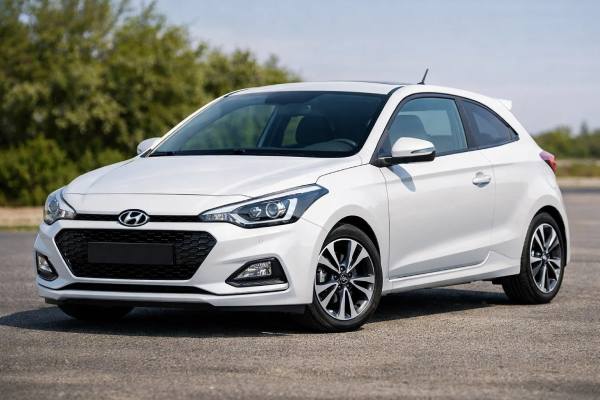
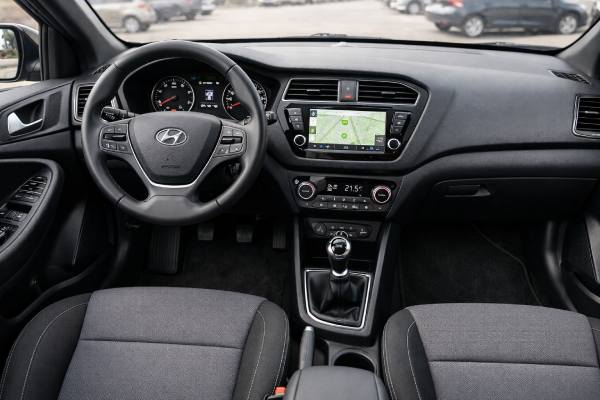
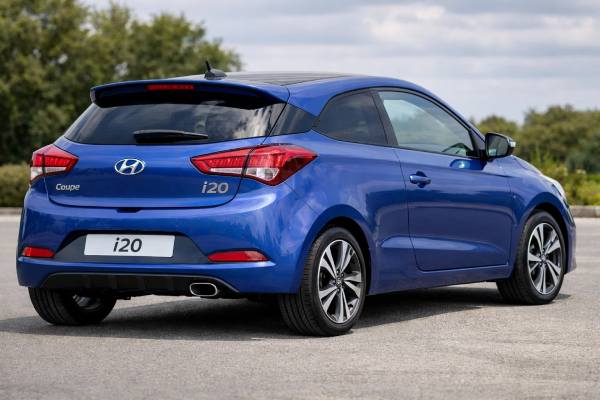
The facelift-era Hyundai i20 Coupe GB with the 1.0 T-GDi 120 hp engine is the version that gives this three-door supermini its most complete road character. It keeps the same practical small-car base, compact size, and straightforward front-wheel-drive layout as the rest of the i20 family, but the stronger turbo petrol and six-speed manual make it feel more alert and more effortless than the 100 hp model. That matters in real ownership, because this is not just about acceleration times. It is about easier overtakes, quieter motorway cruising, and less need to work the gearbox hard. The Coupe body also remains one of the more distinctive shapes in this class. It looks sharper than the five-door hatch without turning into a compromised niche car. The main things worth checking today are service history, timing-chain health, brake condition, battery strength, and whether the trim and safety equipment match the car’s market and year.
Fast Facts
- The 120 hp turbo engine gives the i20 Coupe noticeably better mid-range pull than the 100 hp version.
- The three-door Coupe body is still practical enough for daily use, with a strong boot for the class.
- A six-speed manual helps the 120 hp car feel calmer on faster roads than lower-output versions.
- Stretched oil intervals, weak batteries, and neglected rear brakes are the main ownership risks.
- A sensible engine-oil interval is every 15,000 km or 12 months, with shorter gaps for heavy city use.
What’s inside
- Hyundai i20 Coupe GB ownership profile
- Hyundai i20 Coupe GB spec tables
- Hyundai i20 Coupe GB equipment and protection
- Fault hotspots and campaign checks
- Service routine and smart buying
- How the 120 hp car drives
- Where it stands in class
Hyundai i20 Coupe GB ownership profile
The 2018–2020 facelift-era Hyundai i20 Coupe 1.0 T-GDi 120 is the version of the GB-platform Coupe that makes the most sense for drivers who want a small car with real energy but without stepping into warm-hatch territory. The basic formula is simple: light weight, compact footprint, front-wheel drive, and a turbocharged three-cylinder engine that offers stronger performance than the lower-output versions. On paper that sounds ordinary, but in practice it changes the whole car. The 120 hp tune gives the i20 Coupe the extra urge that the chassis can comfortably handle.
This model also sits in an interesting position in the used market. It is not as common as the five-door i20, so it feels more individual, but it is still based on ordinary Hyundai small-car hardware rather than anything rare or exotic. That matters for ownership costs. You are not dealing with a specialist performance model. You are dealing with a mainstream supermini that happens to have the best petrol engine in the range and a cleaner, sportier body.
The Coupe shape still works well. It has longer doors, a lower roofline, and a more dramatic rear profile, but it keeps a useful boot and enough cabin space to remain practical for normal use. The compromise is mostly about access, not utility. If you need frequent rear-seat loading, the five-door remains easier. If you want a small car that feels less anonymous every time you walk up to it, the Coupe has a clear edge.
There is one important point of context for this article. Public facelift documentation for the 2018–2020 i20 range is richer for the general i20 lineup than for every Coupe-market variant, and some regions phased the three-door body out earlier than others. That means the core mechanical picture is clear, but exact trim menus and some published body figures can vary slightly by market. In other words, this is a car where VIN-specific checking matters more than brochure assumptions.
The ownership case is still attractive. You get a turbo petrol with decent torque, a six-speed manual, compact running costs, and a five-year Hyundai warranty when new, which helped shape the service culture of surviving cars. The downside is that small direct-injection turbo engines do not respond well to neglect. Poor oil history, cheap tyres, and ignored brake or battery issues can quickly turn a tidy i20 Coupe into a disappointing one. Buy a well-kept car, though, and the 120 hp version is one of the most satisfying mainstream i20 derivatives of its period.
Hyundai i20 Coupe GB spec tables
This section combines the best-documented facelift powertrain figures with Coupe-body dimensions used across the GB-generation three-door model. Where a value varies by market, trim, or body publication, that is noted clearly so you can separate platform facts from VIN-specific details.
Powertrain and efficiency
| Item | Specification |
|---|---|
| Code | Kappa 1.0 T-GDi, commonly listed as G3LC |
| Engine layout and cylinders | Inline-3, DOHC, 4 valves per cylinder |
| Bore × stroke | 71.0 × 84.0 mm (2.80 × 3.31 in) |
| Displacement | 1.0 L (998 cc) |
| Induction | Turbocharged |
| Fuel system | Direct injection |
| Compression ratio | 10.0:1 |
| Max power | 120 hp (88 kW) @ 6,000 rpm |
| Max torque | 172 Nm (127 lb-ft) @ 1,500–4,000 rpm |
| Timing drive | Chain |
| Rated efficiency | 5.2 L/100 km combined (45.2 mpg US / 54.3 mpg UK) for the best-documented facelift 120 hp manual trim |
| Real-world highway at 120 km/h | About 6.2–7.0 L/100 km (37.9–33.6 mpg US / 45.6–40.4 mpg UK) |
| Transmission | 6-speed manual; public facelift press sheets do not always print the gearbox code |
| Drive type | FWD |
| Differential | Open |
Chassis and dimensions
| Item | Specification |
|---|---|
| Suspension, front / rear | MacPherson strut / coupled torsion beam axle |
| Steering | Motor-driven power steering; 2.7 turns lock-to-lock |
| Turning circle | 10.2 m kerb-to-kerb (33.5 ft) |
| Brakes | Front 256 mm (10.1 in) ventilated discs; rear 262 mm (10.3 in) solid discs on most better trims |
| Wheels and tyres | 195/55 R16 is the most common facelift 120 hp road setup; 205/45 R17 was a Coupe-specific sporty option earlier in the run |
| Ground clearance | 140 mm (5.5 in) |
| Length / Width / Height | 4045 / 1730 / 1449 mm (159.3 / 68.1 / 57.0 in) for Coupe body data; some facelift market sheets list slightly different overall length |
| Wheelbase | 2570 mm (101.2 in) |
| Kerb weight | Around 1070 kg (2359 lb) in the best-documented facelift 120 hp trim; market variation is possible |
| GVWR | 1640 kg (3616 lb) |
| Fuel tank | 50 L (13.2 US gal / 11.0 UK gal) |
| Cargo volume | 336 L (11.9 ft³) seats up / 1011 L (35.7 ft³) seats down, VDA |
Performance and capability
| Item | Specification |
|---|---|
| 0–100 km/h | About 10.2 s |
| 0–62 mph | 10.2 s |
| Top speed | 190 km/h (118 mph) |
| Braking distance 100–0 km/h | No consistent public Hyundai number for this exact facelift Coupe variant |
| Towing capacity | Up to 1110 kg (2447 lb) braked / 450 kg (992 lb) unbraked in the main facelift 120 hp sheet; always verify by VIN |
| Payload | About 570 kg (1257 lb) |
Fluids, capacities, and safety data
| Item | Specification |
|---|---|
| Engine oil | Hyundai-approved full synthetic; 5W-30 is the common choice, with climate-based alternatives in some markets |
| Engine oil capacity | Roughly 3.6–3.9 L (3.8–4.1 US qt) with filter; verify by VIN-specific service data |
| Coolant | Long-life ethylene-glycol coolant, normally 50/50 mix |
| Coolant capacity | Public owner literature is not always explicit for this exact variant; verify by VIN before refill work |
| Manual transmission fluid | Hyundai manual gearbox specification varies by gearbox family; use VIN-specific data |
| A/C refrigerant | R134a or R1234yf depending build date and market |
| A/C charge | Verify from the under-bonnet label and service manual before recharging |
| Key torque specs | Wheel, plug, and drain-plug values should be confirmed by VIN-specific workshop data before service |
| Euro NCAP crash rating | 4 stars for the GB-generation i20 platform under the 2015 protocol; period reporting commonly lists 85% adult, 73% child, 79% pedestrian, 64% safety assist |
| IIHS | Not applicable; this model was not an IIHS-market car |
| Headlight rating | Not applicable |
| ADAS suite | AEB, lane keep assist, driver attention alert, high beam assist, and TPMS were available in facelift-era upper trims; ACC, blind-spot monitoring, and rear cross-traffic alert were not core features of this variant |
The key lesson from the numbers is that this is still a light, simple supermini. The 120 hp engine lifts performance meaningfully, but the car stays within sensible running-cost territory.
Hyundai i20 Coupe GB equipment and protection
Trim and equipment are especially important on the facelift i20 family because the engine and safety story often depended on grade, not just on year. In the best-documented facelift public data, the 120 hp 1.0 T-GDi sat at the upper end of the normal range rather than the bargain-basement end. That is good news for used buyers, because it means most surviving 120 hp cars tend to come with the features that make the car easier to live with.
The most relevant facelift-era 120 hp setup is a six-speed manual in Premium SE Nav form. That usually means 16-inch alloy wheels, climate control, upgraded infotainment, rear-view camera support through navigation-equipped systems, heated front seats, heated steering wheel, keyless start, and broader active-safety coverage than lower trims. In plain ownership terms, that matters because the stronger engine is usually paired with the better cabin and convenience equipment.
Quick identifiers for better-equipped cars include:
- 16-inch alloy wheels rather than steel wheels or simpler alloys
- navigation screen rather than the basic display unit
- climate-control panel rather than simple manual air conditioning
- heated seat switches and heated steering wheel on high-spec examples
- front and rear parking sensors on richer trims
- panoramic roof on some top-spec cars
Mechanical differences across trims are not dramatic in the way they are on a hot hatch. You are not choosing between open and limited-slip differentials or radically different suspension packages. The meaningful differences are wheel size, tyre specification, cabin equipment, and active-safety availability. That means the best-used choice is usually the car with the best history and best equipment, not the car with the rarest badge.
Safety requires more nuance. The GB-generation i20 platform earned a 4-star Euro NCAP result under the 2015 protocol, and the usual explanation was not weak basic crash structure but a thinner safety-assist package by newer standards. In later regional testing, some related hatch and crossover-style derivatives were listed differently, which is why buyers sometimes see mixed ratings online. The important takeaway is that this car has a sound mainstream safety base for its age, but it should not be mistaken for a modern ADAS-heavy supermini.
Most facelift-era better trims offered or included:
- six airbags, including side and curtain coverage
- ABS, ESC, VSM, and hill-start assist
- ISOFIX on the outer rear seats
- AEB
- lane keep assist
- driver attention alert
- high beam assist
- tyre pressure monitoring
After repair work, calibration matters. If the car has camera-based lane or braking support and has had a windscreen replacement or front-end accident repair, the system should work cleanly with no warning lights or strange behavior. A cheap used 120 hp car with non-functioning assistance features is rarely worth the gamble. The right way to buy one is to verify what the car actually has, not what a generic spec list claims.
Fault hotspots and campaign checks
The i20 Coupe 1.0 T-GDi 120 is not a notorious troublemaker, but it is not a neglect-proof old-school small hatch either. Most problems are manageable when caught early. Trouble usually begins when owners stretch oil changes, ignore weak batteries, or assume a small turbo engine will forgive poor maintenance forever.
Common faults
- Rear brake corrosion or sticking
This is one of the most believable day-to-day faults on lightly used examples. Symptoms include uneven braking, hot rear wheels, weak handbrake feel, or advisory notes at inspection time. The cause is usually corrosion and lack of use rather than a dramatic design failure. The remedy ranges from cleaning and freeing off to full disc, pad, and caliper service. - Weak 12 V battery and nuisance electronics
Slow cranking, stop-start irregularity where fitted, and occasional warning-light behavior often trace back to battery condition rather than a deeper electrical fault. The fix is usually simple: load-test the battery and replace it if tired. - Ignition and tune-up issues
Rough idle, hesitation under boost, and occasional misfire are often caused by aging plugs or a weak coil pack. These are usually low-to-medium cost fixes if handled early.
Occasional faults
- Timing-chain wear from poor oil history
This is the main engine-specific issue to respect. Symptoms are cold-start rattle, timing correlation faults, or a harsher top-end sound. The likely root cause is wear in the chain, guides, or tensioner, often encouraged by delayed oil changes. The right remedy is proper inspection and replacement of worn timing hardware, not repeated oil-thickening shortcuts. - Boost leaks or sensor faults
Flat acceleration, inconsistent pull, or a check-engine light can point to vacuum leaks, boost-hose issues, or sensor errors. Usually these are fixable without major engine work. - Carbon build-up tendency
As a direct-injection turbo engine, the 1.0 T-GDi can develop intake deposit issues over higher mileage or heavy short-trip use. Symptoms include rougher idle and dulled response. It is not the first issue most cars show, but it should be on the long-term ownership radar.
Software, campaigns, and buying checks
Software history matters more than many used buyers expect. ECU updates can improve idle quality, throttle behavior, and fault sensitivity. Infotainment updates help with navigation and connectivity. Safety-camera systems also depend on proper calibration after windscreen or front-end work.
Public recall visibility is more fragmented than it is for US-market cars, so the correct habit is simple:
- run an official VIN or registration recall check
- ask a Hyundai dealer for campaign completion records
- confirm there are no outstanding warning lights
- scan the car if any prior engine or safety fault is mentioned by the seller
A pre-purchase inspection should focus on cold-start timing noise, boost delivery, battery health, brake condition, tyre quality, clutch behavior, air-conditioning performance, and any evidence of poorly repaired crash damage. A tidy i20 Coupe usually feels honest. A neglected one usually reveals itself quickly.
Service routine and smart buying
The best way to keep a 120 hp i20 Coupe cheap is to service it like a small turbo engine, not like an old naturally aspirated city car. The public story of this model is simple: routine care is manageable, but skipped care creates expensive catch-up work.
Practical maintenance schedule
| Item | Practical interval | Notes |
|---|---|---|
| Engine oil and filter | Every 15,000 km or 12 months | For short trips, hard use, or very hot climate, 10,000 km is the safer habit |
| Engine air filter | Inspect every service; replace around 30,000–45,000 km | Earlier in dusty conditions |
| Cabin filter | Every 15,000–20,000 km or 12 months | Helps HVAC performance and demisting |
| Spark plugs | Around 45,000–60,000 km | Earlier if misfire appears |
| Coolant | Inspect every service; preventive replacement around 5–6 years or 100,000 km is sensible on used cars | Some Hyundai long-life schedules allow longer, but age matters on older examples |
| Brake fluid | Every 2 years | Important for pedal feel and corrosion control |
| Manual gearbox oil | Inspect for leaks routinely; refresh around 90,000–120,000 km for long-term ownership | Useful preventive service |
| Timing chain | No fixed replacement interval | Inspect for rattle, correlation faults, and tensioner wear |
| Auxiliary belt and hoses | Inspect every service; replace by condition | Age and cracking matter |
| Brake pads and discs | Inspect yearly or every 15,000 km | Rear hardware can corrode before it wears out |
| Tyre rotation | Every 10,000–15,000 km | Helps wear consistency |
| Alignment check | At least yearly or after pothole strikes | Uneven shoulder wear is the warning sign |
| 12 V battery | Test yearly after year four | Prevents nuisance electrical faults |
Fluids and buyer checks
For most owners, the important fluid decisions are simple:
- use a Hyundai-approved fully synthetic oil in the correct grade for climate
- do not guess gearbox-fluid specifications
- verify A/C refrigerant type from the car itself, not from memory
- keep coolant condition and level under regular watch
Before buying, inspect:
- cold-start timing noise
- clutch bite and pedal feel
- smooth pull under load
- coolant level and any staining
- rear brake condition and handbrake operation
- tyre brand consistency and alignment wear
- battery test results
- infotainment, camera, parking sensors, and lane-related functions
- panoramic roof operation and drain condition where fitted
The most desirable used version is usually a late 2019 or 2020 manual car with Premium-level equipment and full history. The main cars to avoid are modified examples, cars with patchy oil history, and any car showing unresolved engine or safety warnings. Long-term durability is good if the owner stays ahead of maintenance. It is much less impressive when service is treated as optional.
How the 120 hp car drives
The 120 hp i20 Coupe is not a true junior hot hatch, but it is the version that feels most naturally matched to the platform. The extra power does not transform the chassis into something wild. It simply makes the car feel more complete.
At low speeds, the car is light, easy, and tidy. Steering is light rather than talkative, visibility is decent for a three-door coupe-shaped hatch, and the manual gearbox is easy to use in traffic. The engine is smooth enough for a small turbo triple, though you still hear a little characteristic thrum when you accelerate hard. That is part of the car’s character rather than a fault.
On faster roads, the 120 hp tune separates itself clearly from the 100 hp version. There is more willingness at the top end and less need to plan every overtake. The torque peak arrives early, but the stronger power figure makes the engine feel less breathless as revs rise. That matters most on slip roads and when passing slower traffic. The six-speed manual also helps the car settle into quieter motorway running.
Ride quality is acceptable rather than plush. On 16-inch wheels it feels tied down but not especially soft over broken surfaces. Sharp edges come through more than they do in the cushiest rivals, yet body control stays neat. Straight-line stability is good for a supermini of this size, and the car feels composed rather than nervous at motorway pace.
Handling is safe and predictable. The front end responds cleanly, grip is decent on good tyres, and the rear torsion-beam setup behaves honestly. What you do not get is much steering feel or playful lift-off balance. This is a sensible front-wheel-drive supermini with a sporty body, not a stripped-back driver’s toy.
Real-world fuel use is still respectable:
- city: about 6.8–8.0 L/100 km, or 34.6–29.4 mpg US and 41.5–35.3 mpg UK
- highway: about 6.2–7.0 L/100 km, or 37.9–33.6 mpg US and 45.6–40.4 mpg UK
- mixed use: about 5.8–6.6 L/100 km, or 40.6–35.6 mpg US and 48.7–42.8 mpg UK
Cold weather, short journeys, low tyre pressure, and worn plugs all hurt those figures quickly. Braking feel is straightforward and consistent in normal driving, though rear-brake condition matters a lot on cars that have not been used regularly. Overall, the car drives exactly as many buyers want it to: quicker than expected, mature enough for longer trips, and simple enough not to feel fragile.
Where it stands in class
Against its main rivals, the Hyundai i20 Coupe 1.0 T-GDi 120 wins by combining style, useful real-world pace, and sensible ownership rather than by dominating a single category.
Against the Ford Fiesta 1.0 EcoBoost 125, the Hyundai loses on steering feel and chassis sparkle. The Fiesta is the better driver’s car. But the i20 Coupe counters with cleaner styling, a rarer three-door body, and often a simpler, calmer ownership appeal when both cars are older and shopping budgets are tight.
Against the Volkswagen Polo 1.0 TSI 115, the Hyundai usually trails on cabin polish and high-speed refinement. The Polo feels more grown-up. It also tends to cost more in comparable age and condition. The i20 Coupe makes a strong case if value and distinctiveness matter more than badge prestige and interior softness.
Against the SEAT Ibiza 1.0 TSI 115, the Hyundai again gives away some polish and some dynamic sharpness, but it stays competitive on equipment and often on reliability perception. The Ibiza feels a little more modern inside. The Hyundai feels less common and sometimes better equipped for the money.
Against the Kia Rio 1.0 T-GDi 118, the comparison is close because the cars chase similar priorities. The Rio is usually the more conservative five-door choice. The Hyundai Coupe is the better pick if you want the same broad ownership logic with more visual character.
The i20 Coupe 120 is especially strong for buyers who want:
- a small turbo petrol with enough real overtaking strength
- a manual gearbox and straightforward front-wheel-drive layout
- better style than a standard five-door supermini
- solid practicality without moving to a larger car
- sensible used prices compared with some German rivals
It is less convincing for buyers who want:
- the sharpest handling in the class
- the quietest motorway ride
- the most advanced safety-assist suite
- the easiest rear-seat access
That leaves the Hyundai in a very good place. It is not the class hero in every category, but it is one of the more balanced choices. It looks better than many rivals, goes better than the lower-power i20s, and remains practical enough to serve as a real daily car. For many buyers, that blend is exactly the point.
References
- New Hyundai i20 – Technical data and dimensions 2018 (Technical Data)
- Press information 2015 (Press Kit)
- OWNER’S MANUAL 2018 (Owner’s Manual)
- Hyundai i20 – Euro NCAP Results 2015 2015 (Safety Rating)
- Check if a vehicle, part or accessory has been recalled – GOV.UK 2026 (Recall Database)
Disclaimer
This article is for informational purposes only and is not a substitute for professional diagnosis, repair, or VIN-specific service work. Specifications, torque values, service intervals, procedures, fluids, and equipment can vary by VIN, market, gearbox, trim, and production date, so always verify against official Hyundai service documentation for the exact vehicle.
If you found this guide useful, please consider sharing it on Facebook, X, or another social platform to support our work.