
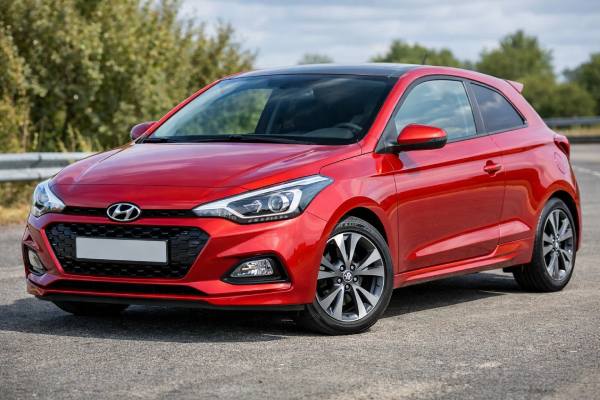
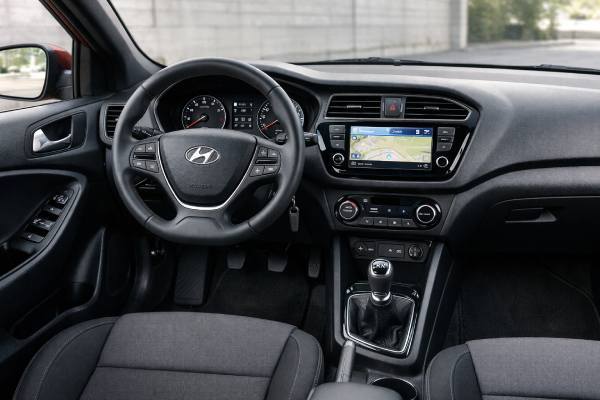
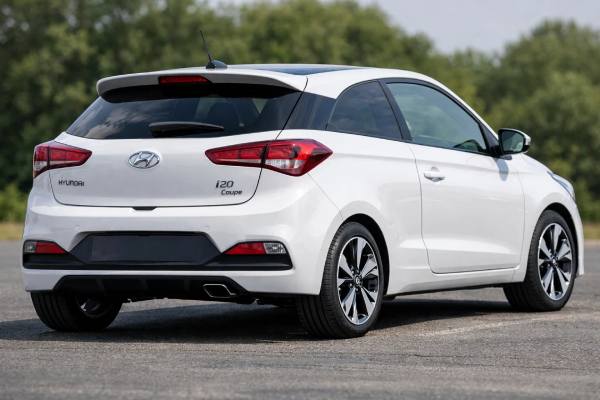
The Hyundai i20 Coupe GB 1.2 84 sits in an interesting place in the late life of the second-generation i20. It combines the sharper three-door Coupe body with the simplest petrol engine in the range that still feels reasonably usable beyond city limits. For many buyers, that is the point. This is not the fast i20, and it does not pretend to be. Instead, it offers straightforward naturally aspirated petrol engineering, a tidy manual gearbox, low running-cost potential, and a cabin that still feels more spacious than the car’s exterior suggests. One important detail, though, is that the Coupe sold during the 2018–2020 facelift period did not always mirror the five-door facelift in every market. Some regions kept the established Coupe body and core mechanical package with lighter equipment changes. That means VIN, trim, market, and build year matter when you compare specifications, safety features, and parts. Buy with that in mind, and this can still be a very sensible late-run supermini.
At a Glance
- The 1.2 84 engine is simple, naturally aspirated, and usually easier to own long term than the turbo alternatives.
- The Coupe body adds style without giving up a useful boot or realistic rear-seat space for the class.
- Fifteen-inch and sixteen-inch cars usually make the most sense for ride comfort and tyre costs.
- Because performance is modest, any clutch wear, ignition weakness, or cooling issue is felt quickly on the road.
- A careful owner should treat engine oil and filter service as a yearly job, or every 10,000 to 15,000 km in real use.
What’s inside
- Hyundai i20 Coupe GB in late form
- Hyundai i20 Coupe GB hard numbers
- Hyundai i20 Coupe GB grades and safeguards
- Failure trends and campaign checks
- Service map and buyer screening
- Everyday feel and fuel reality
- Coupe GB among small hatches
Hyundai i20 Coupe GB in late form
The late-run i20 Coupe is best understood as the style-focused branch of the GB i20 family rather than a separate sporty sub-brand. Hyundai gave it a lower-looking roofline, longer doors, a more dramatic side profile, and a larger boot than the standard five-door, but it did not turn the car into a hard-edged coupe in the traditional sense. It remained a practical supermini with a good driving position, a usable rear bench, and an everyday-friendly cabin layout.
That is what makes the 1.2 84 version appealing to a certain type of buyer. It keeps the Coupe’s cleaner design while pairing it with a very simple powertrain. The 1.25-litre Kappa petrol is a four-cylinder, naturally aspirated, multi-point-injection engine with modest output, a 5-speed manual gearbox, and none of the turbocharged complexity that defines the more modern 1.0 T-GDi cars. In late-life ownership terms, that matters. The car is slower, but it is also easier to understand, easier to service, and usually less sensitive to poor-quality fuel or stop-start urban use.
There is one complication that makes this article especially important. The 2018–2020 period is often described as the facelift era for the GB i20, but the Coupe did not always track the five-door facelift in a perfectly neat way across all markets. Some countries sold the Coupe into this late period with largely established Coupe-specific bodywork and equipment logic, while the five-door saw more visible line-up and safety-tech adjustments. That means a late-registered Coupe may still look closer to the earlier Coupe than to a facelifted five-door brochure photo. Buyers who assume every late GB i20 shares the same trim, front-end details, or option structure can easily compare the wrong cars.
From an ownership point of view, the appeal is clear. The Coupe offers a more distinctive shape than the regular hatch, yet it avoids most of the practical penalties usually associated with stylish three-door small cars. The boot is genuinely useful, rear access is helped by easy-entry seats, and the cabin still feels spacious enough for normal daily life. For buyers who want something a bit less anonymous than a five-door supermini, that matters.
Its limits are equally clear. The 84 hp petrol is adequate rather than eager, and the Coupe’s looks do not transform the chassis into something sporty. It remains a comfort-biased front-wheel-drive hatchback with light steering and sensible handling. Used the right way, though, that is a strength. The late-run i20 Coupe 1.2 84 is not exciting, but it is honest, stylish enough, and simpler than many later small turbo rivals. For many owners, that is exactly the point.
Hyundai i20 Coupe GB hard numbers
For the late-run i20 Coupe 1.2 84, the clearest technical foundation comes from Hyundai’s Coupe technical data and ongoing official Coupe specification material. The key thing to remember is that the Coupe’s core body and powertrain package stayed broadly consistent even as the wider i20 range moved through the facelift period. That makes the car easier to understand than some market-specific brochures suggest.
Powertrain and efficiency
| Item | Hyundai i20 Coupe (GB) 1.2 84 |
|---|---|
| Code | Kappa family, verify by VIN |
| Engine layout and cylinders | Inline-4, DOHC, 16-valve |
| Valves per cylinder | 4 |
| Bore × stroke | 71.0 × 78.8 mm |
| Displacement | 1.2 L (1248 cc) |
| Induction | Naturally aspirated |
| Fuel system | MPFI |
| Compression ratio | 10.5:1 |
| Max power | 84 hp (62 kW) @ 6,000 rpm |
| Max torque | 122 Nm (90 lb-ft) @ 4,000 rpm |
| Timing drive | Verify by VIN and workshop documentation before major parts ordering |
| Rated efficiency | Typically around the mid-5 to low-6 L/100 km range depending on market and wheel size |
| Real-world highway @ 120 km/h | Usually around 6.4 to 7.1 L/100 km |
Transmission and driveline
| Item | Figure |
|---|---|
| Transmission | 5-speed manual |
| Drive type | FWD |
| Differential | Open |
Chassis and dimensions
| Item | Figure |
|---|---|
| Suspension, front | MacPherson strut with anti-roll bar |
| Suspension, rear | Coupled torsion beam axle |
| Steering | Electric power-assisted rack-and-pinion |
| Steering ratio / lock-to-lock | 2.7 turns lock-to-lock |
| Brakes, front | 256 mm ventilated discs |
| Brakes, rear | 262 mm solid discs |
| Wheels and tyres | 185/65 R15, 195/55 R16, or 205/45 R17 depending on trim |
| Ground clearance | 140 mm |
| Length | 4045 mm |
| Width | 1730 mm without mirrors |
| Height | 1449 mm |
| Wheelbase | 2570 mm |
| Turning circle | 10.2 m |
| Kerb weight | Market and trim dependent; verify from VIN plate and homologation data |
| GVWR | Verify by market and VIN plate |
| Fuel tank | 50 L |
| Cargo volume | 336 L seats up / 1011 L seats folded, VDA |
Performance and capability
| Item | Figure |
|---|---|
| 0–100 km/h | 12.8 s |
| Top speed | 170 km/h |
| Braking distance | Not consistently published in stable open official material |
| Towing capacity | Verify by VIN, market, and tow approval before purchase |
| Payload | Market dependent |
Fluids and service capacities
| Item | Figure |
|---|---|
| Engine oil specification | Use the Hyundai-approved grade for the exact VIN and climate |
| Engine oil capacity | Verify from owner documentation before service |
| Coolant | Use Hyundai-approved coolant mix only |
| Transmission fluid | Verify exact fluid spec by gearbox code |
| A/C refrigerant | Confirm by under-bonnet label |
| A/C compressor oil | Confirm by system label or workshop documentation |
| Key torque specs | Wheel nuts commonly 88–107 Nm |
Safety and driver assistance
| Item | Figure |
|---|---|
| Euro NCAP | 4 stars for the GB-generation i20 tested in 2015 |
| Adult occupant | 85% |
| Child occupant | 73% |
| Vulnerable road user | 79% |
| Safety assist | 64% |
| ADAS suite | LDWS available in some Coupe specifications; no full modern AEB or ACC package across the line |
The numbers explain the car well. It is compact outside, practical inside, and mechanically simple. It is not quick, but it is tidy, light, and well-matched to buyers who value straightforward ownership over headline performance.
Hyundai i20 Coupe GB grades and safeguards
Trim and equipment make a real difference with the i20 Coupe, because Hyundai used the body style to add some visual appeal and available comfort features that were not always present in the cheapest five-door versions. Even so, the Coupe was never about maximum luxury. The best late-run examples are usually the ones with the right mix of useful features, sensible wheels, and clean history, not necessarily the fullest options list.
One of the Coupe’s quiet strengths is that it often feels slightly more special than a regular i20 without becoming difficult to live with. Depending on market, buyers may find projector lamps, LED daytime running lights, cruise control, rear parking sensors, reversing aids, automatic climate control, heated seats, heated steering wheel, navigation, or upgraded cabin trim. These features help the car feel newer than its age, especially in well-kept late-life examples.
Wheel size is one of the most important ownership choices. Fifteen-inch and sixteen-inch cars usually offer the best balance. They ride more comfortably, tyres cost less, and the handling difference versus a 17-inch car is much smaller than the appearance difference suggests. Seventeen-inch Coupes look more dramatic, but they are usually the less rational choice if long-term running costs matter. On an 84 hp supermini, cosmetic wheel upgrades do not change the basic character of the car.
The Coupe also remains more practical than its shape suggests. Easy-entry front seats help rear access, and the larger 336-litre boot is a real advantage over the five-door. That matters because many three-door small cars sacrifice too much to look different. The i20 Coupe does not. It still works as a real everyday hatch.
Safety is broadly respectable, but it needs context. The underlying GB-generation i20 scored 4 stars in Euro NCAP’s 2015 protocol. That sounds modest today, but the result reflects a car with good crash protection and a weaker active-safety story rather than a weak structure. In practical terms, the Coupe benefits from the same general safety engineering as the five-door, including airbags, ABS, ESC, Vehicle Stability Management, Hill-start Assist, tyre-pressure monitoring, and ISOFIX anchorages.
Driver assistance depends heavily on market and trim. Official Hyundai Coupe safety material highlights Lane Departure Warning System, TPMS, Hill-start Assist Control, Static Bending Lights, ESC, VSM, ABS, and Brake Assist. That is a decent equipment story for a supermini from this period, but it is not a full modern ADAS suite. Buyers should not expect adaptive cruise control, widespread autonomous emergency braking, or a deeply integrated lane-centering package in the regular late-run Coupe.
In the used market, the best safety setup is still a healthy basic one. Matching tyres, working ABS and ESC, good suspension, clean brake operation, and no warning lights matter more than a longer equipment list on paper. A mid-grade Coupe with everything working is usually a better buy than a higher-spec example with electrical faults and tired chassis parts.
Failure trends and campaign checks
The i20 Coupe 1.2 84 has a relatively easy reliability brief because it uses one of the simplest engines in the GB family. That is good news, but it should not be confused with immunity from neglect. A naturally aspirated Hyundai supermini can age very well, yet it can also become a chain of medium-sized repair bills if basic servicing has been deferred for too long.
The most common issues are the kind that come with age rather than one famous model defect. Suspension drop links, bushes, dampers, wheel bearings, brake wear, and tired tyres are all normal by now, especially on urban cars. A good Coupe should still feel tighter than many older superminis. If it knocks heavily over bumps, tramlines on worn tyres, or feels vague in quick lane changes, the likely cause is accumulated wear in ordinary components. None of that is unusual, but it still needs to be budgeted.
Cooling-system condition matters more than some buyers think. The 1.2 engine is not highly stressed, yet a small leak, old coolant, or tired hose can still become a real problem if ignored. On a used inspection, look for dried coolant traces, staining around the radiator area, damp hose joints, or a seller who says the car “just needs the level topped up now and then.” That kind of language often signals work the owner has chosen not to do.
Ignition and running-quality faults are another realistic area. Because the 84 hp Coupe is not especially powerful to begin with, a weak coil, worn spark plugs, air leak, or dirty throttle body can make it feel far more lethargic than it should. Symptoms are usually simple: rough idle, mild misfire under load, flat response, poor cold start, or unexpectedly high fuel use. These are normally manageable repairs, but they matter because performance margins are already modest.
Timing-related work is the one area where care is best. Open official material is not always neat enough across markets to justify a one-size-fits-all timing-service claim for every late-run Coupe, so timing-drive planning should be checked by VIN and workshop documentation rather than guessed from internet parts listings. Any timing-related noise or fault code deserves diagnosis before purchase.
Electrical issues are usually small but still worth noting. Parking sensors, mirror functions, infotainment glitches, battery weakness, and switchgear wear are the usual used-car annoyances. On better-equipped Coupes, one or two minor electrical faults can quickly become three or four, so cabin function checks matter.
As for recalls and service actions, the best rule is simple: trust the VIN, not memory. Hyundai’s official recall portal and the relevant national recall database are the right place to check whether campaign work is complete. Public data does not suggest a single headline campaign that defines the late-run 1.2 Coupe, which is reassuring. But that makes service history even more important. A car with proper invoices and campaign proof is almost always worth more than a cosmetically cleaner car with gaps in the paperwork.
Service map and buyer screening
The i20 Coupe 1.2 84 is at its best when it is maintained on a simple, conservative schedule. That means ignoring the temptation to treat it like an appliance that can survive indefinitely on occasional cheap oil changes. Its advantage is that most maintenance items are straightforward and reasonably priced, so there is little excuse for letting the basics slide.
Practical maintenance schedule
| Item | Practical interval |
|---|---|
| Engine oil and filter | Every 10,000 to 15,000 km or 12 months |
| Engine air filter | Inspect every service, replace as needed |
| Cabin air filter | Every 20,000 km or 12 to 24 months |
| Spark plugs | Around 45,000 to 60,000 km, sooner if running quality drops |
| Coolant | Replace on schedule or immediately if history is unclear |
| Brake fluid | Every 2 years |
| Manual gearbox oil | Refresh around 80,000 to 100,000 km if history is unknown |
| Auxiliary belt and hoses | Inspect every service |
| Brake pads, discs, rear discs, and lines | Inspect every service |
| Tyre rotation and alignment | Check regularly and after suspension work |
| 12 V battery | Test annually once older than about 4 years |
| Timing components | Verify exact service approach by VIN if noise or faults appear |
Useful service notes
| Item | Guidance |
|---|---|
| Engine oil | Use only the Hyundai-approved viscosity and specification for the exact car |
| Coolant | Use proper Hyundai-compatible coolant and correct mix ratio |
| Gearbox oil | Confirm by transmission code |
| Wheel nut torque | Commonly 88–107 Nm |
| Best wheel size for ownership | 15-inch or 16-inch cars usually make the most sense |
A used buyer should start with paperwork, because this engine’s simplicity can hide long periods of neglect. Ask for invoices that show routine oil changes, spark plugs, coolant work, brake-fluid replacement, and ordinary wear-item spending. A stamped booklet is helpful, but itemized invoices are far more useful because they show what was actually done.
The physical inspection should focus on consistency. Tyre wear tells you a lot about alignment, suspension, and ownership habits. Curbed wheels, cheap mismatched tyres, and sloppy panel fit all point toward a car that may have had a harder life than the seller suggests. Under the bonnet, check for coolant traces, oil leaks, untidy aftermarket wiring, and a generally uncared-for engine bay.
Inside the cabin, test every function. Windows, locking, air conditioning, media controls, parking sensors, seat heaters where fitted, mirror functions, and every warning light on startup all matter. Older small cars often reveal the truth through lots of small faults rather than one dramatic failure.
On the road, the Coupe should feel smooth, tidy, and honest. It will not feel fast, but it should not feel weak or unhealthy. The engine should rev cleanly, the clutch should engage progressively, and the steering should stay even and light. The cars to target are clean manual examples on sensible wheels with full history. The cars to avoid are the cheapest listings with vague paperwork, tired cooling systems, and a generally worn test drive. Long term, this can be a durable late-run small hatch, but only if it is bought on condition rather than badge optimism.
Everyday feel and fuel reality
The i20 Coupe 1.2 84 is not a car that wins you over through outright pace. It wins you over through consistency. The engine is smooth for a small, inexpensive four-cylinder, the controls are light, and the car feels easy to place in traffic or narrow streets. That makes it very approachable, especially for newer drivers or anyone who wants a small hatch that does not feel nervous or overly busy.
Power delivery is predictable. The naturally aspirated 1.2 needs revs more than the turbocharged 1.0 T-GDi, and you notice that most on hills or with passengers on board. Around town, though, the engine is perfectly pleasant. It responds cleanly, sounds more refined than many small diesels, and does not punish short-trip use the way an aging diesel can. That makes the Coupe 1.2 a better choice for urban and mixed low-to-medium mileage than the old diesel versions, even if its motorway performance is clearly more limited.
The 5-speed manual suits the engine’s simple character, but it also reminds you that this is an unhurried car. Overtaking on faster roads takes planning, and the car benefits from being driven with foresight rather than aggression. That is not a flaw so much as a clear statement of purpose. The 84 hp Coupe is about low-stress everyday use, not about making a supermini feel like something it is not.
Ride and handling are well judged for the target brief. The Coupe looks sportier than the five-door, but the chassis remains comfort-biased and predictable. Steering is light, body control is tidy enough, and the car feels stable at cruising speeds provided the tyres and suspension are healthy. On 15-inch or 16-inch wheels, it usually rides better than buyers expect. Seventeen-inch cars look better, but they do not add enough dynamic sparkle to justify the harsher edges for every owner.
Noise levels are fair for the class. At city speeds, the petrol engine is unobtrusive. At motorway pace, wind and tyre noise become more noticeable, and the 5-speed gearing makes the engine work harder than stronger or longer-legged rivals. Still, the Coupe feels mature enough for regular mixed driving.
Fuel economy is one of the main reasons to choose this version. In mixed real-world use, a healthy manual example often lands around 5.9 to 6.8 L/100 km. Gentle open-road driving can better that, while winter traffic and repeated short journeys can push it past 7.0. That is entirely acceptable for a simple naturally aspirated petrol supermini with this kind of practicality. The verdict is straightforward: the i20 Coupe 1.2 84 is not quick, but it is smooth, predictable, and efficient enough to make sense as an everyday late-run small hatch.
Coupe GB among small hatches
The i20 Coupe 1.2 84 sits in a useful niche. It gives buyers a more distinctive shape than a regular five-door supermini, but it avoids becoming a compromise car that only looks good in photos. That is the key to its appeal. It offers style in a modest dose, not at the expense of all the things that make a small hatchback useful.
Against turbocharged rivals, the Hyundai gives up mid-range shove and sometimes a little low-end flexibility, but it often answers with simpler long-term ownership. A naturally aspirated multi-point-injection engine is easier to understand and usually less sensitive to service discipline than a small direct-injection turbo. For buyers who plan to keep an older supermini for years rather than just through one finance cycle, that simplicity still counts for a lot.
Against other naturally aspirated small hatchbacks, the Coupe’s advantages are its packaging and presentation. The boot is generous for a three-door, the cabin feels more mature than you might expect, and the body shape adds some personality without tipping into impracticality. That makes it more appealing than many rival three-door superminis that ask the owner to sacrifice too much space or convenience just to gain style.
Where it loses ground is obvious. The five-door i20 is easier for families and passengers. Stronger engines in the same range feel noticeably more effortless. A few rivals offer more steering feel or a more playful chassis. And if your driving is mostly fast A-road or motorway work with a full car, this is not the i20 you want. The 1.0 turbo or a different class of car makes more sense there.
Even so, the late-run Coupe 1.2 84 has a clear buyer. It suits someone who wants a tidy, simple, petrol-powered hatchback with a cleaner shape than the ordinary five-door, realistic cabin space, and predictable running costs. The best examples are manual, documented, sensibly shod, and clearly cared for. The wrong examples are the cheapest shiny ones with vague records and a worn, underpowered feel that suggests deferred maintenance. Bought carefully, the i20 Coupe 1.2 84 remains one of the more rational style-led superminis in the used market.
References
- Hyundai Owners manuals | Hyundai Motor UK 2026 (Owner’s Manual)
- i20 Coupe Specification – Find a Car | Hyundai GT 2026 (Technical Data)
- i20 Coupe Safety – Find a Car | Hyundai GT 2026 (Safety Information)
- Hyundai i20 – Euro NCAP Results 2015 2015 (Safety Rating)
- Home | Hyundai Recalls & Service Campaigns 2026 (Recall Database)
Disclaimer
This article is for informational purposes only and is not a substitute for professional diagnosis or repair. Specifications, torque values, intervals, fluid requirements, and procedures can vary by VIN, market, trim, gearbox, and fitted equipment, so always verify against the official service documentation for the exact vehicle.
If this guide was useful, please consider sharing it on Facebook, X, or another platform to support our work.