
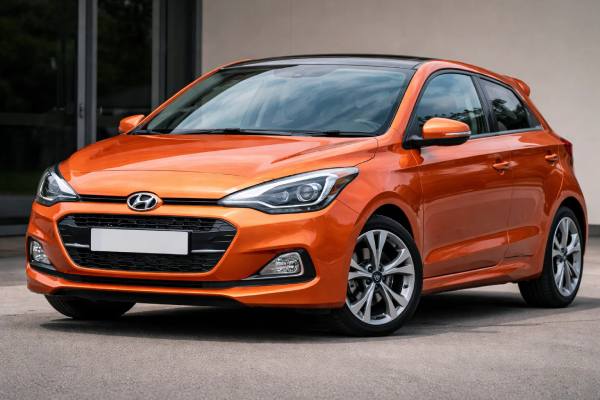
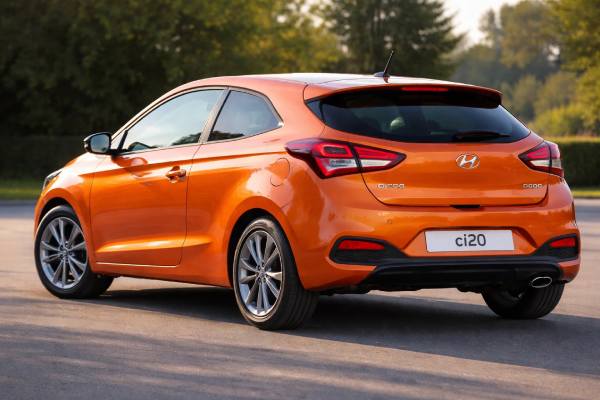
The Hyundai i20 Coupe GB 1.0 T-GDi 120 hp is one of the most appealing non-N versions of the second-generation i20 because it adds genuine urge to a platform that was already roomy, mature, and easy to live with. The Coupe body gives the car a lower, cleaner profile and a slightly more distinctive look than the regular five-door, but it does not throw away the practical basics. Hyundai also matched it with the stronger 120 hp version of the 1.0-litre turbo three-cylinder petrol engine, which gives the car useful low-rpm torque and much better flexibility than the entry petrol models. The result is a stylish supermini that still works as an everyday hatchback. Today, the real question is not whether the design has aged well. It has. The more important question is how well the car has been maintained. A tidy example can still feel brisk, solid, and smart. A neglected one can quickly turn expensive.
Essential Insights
- Strong 120 hp turbo-petrol performance makes the Coupe feel much more relaxed than the basic i20 petrol models.
- Coupe-specific bodywork adds style without giving up the useful hatchback layout or rear-seat practicality entirely.
- The chassis is mature, the cabin is roomy for the class, and boot space is still generous at 336 L.
- Buy carefully: this direct-injection turbo engine needs good oil history, healthy cooling, and sensible ownership habits.
- A cautious oil-and-filter service every 10,000–15,000 km or 12 months is a wise used-car interval.
Start here
- Hyundai i20 Coupe GB character
- Hyundai i20 Coupe GB technical picture
- Hyundai i20 Coupe GB trim and safety map
- Known issues and remedies
- Maintenance schedule and buyer’s guide
- Real-world drive and efficiency
- Where the Coupe stands
Hyundai i20 Coupe GB character
The i20 Coupe arrived as Hyundai’s attempt to add more style and emotion to the GB-generation range without turning the car into something impractical or expensive to own. That balance is what still makes it attractive now. It is not a hard-edged coupe in the traditional sense, and it is not a stripped-out performance special. Instead, it is a three-door version of the regular GB i20 with its own roofline, rear styling, and slightly more assertive stance, designed to look more youthful while keeping the same core strengths that made the standard i20 such a sensible supermini.
Those strengths were considerable. The GB i20 was already a large and mature entry in the B-segment. Hyundai gave it a long wheelbase, a roomy cabin, and a ride quality that felt closer to a larger hatchback than many people expected. The Coupe carries most of that character across. In fact, one of the nicer surprises is that it does not punish the driver for choosing the better-looking body style. It still offers useful rear-seat space for the class, and the boot is actually bigger than the five-door’s at 336 litres, which is a genuine practical advantage rather than a styling footnote.
The 1.0 T-GDi 120 hp engine is the real key to the variant. In lesser petrol forms, the GB i20 is easy to like but not especially quick. The naturally aspirated 1.25 engines work well in town, yet they can feel stretched with passengers, luggage, or motorway work. The 120 hp turbo-petrol changes the car’s personality because it gives the platform enough torque to feel properly matched to its size. With 172 Nm delivered low in the rev range, the Coupe no longer feels like an entry-level hatchback trying hard. It feels composed, flexible, and much more grown-up.
There is also an ownership angle here that matters. Hyundai positioned the 120 hp engine above the basic range, so it typically came in better-equipped trims such as Sport and Sport Nav. That means many used examples offer more than just extra speed. They also tend to bring better wheels, improved cabin trim, stronger infotainment, and a more desirable overall specification. For used buyers, that matters because this is a car that often looks and feels richer than its badge or price might suggest.
Still, the Coupe needs to be understood honestly. The stronger engine adds appeal, but it also adds maintenance sensitivity. This is a turbocharged direct-injection petrol, not the simpler 1.25-litre naturally aspirated unit. That does not make it fragile, but it does mean service history is more important. The Coupe makes the most sense for buyers who want a stylish small hatch with real-world pace and are willing to maintain it properly. It is less suited to those who want the absolute lowest-risk, lowest-effort version of the i20 range.
Hyundai i20 Coupe GB technical picture
Official Hyundai press material for the i20 Coupe and the 2016 GB i20 range gives a clear outline of how the 1.0 T-GDi 120 hp version is put together. The engine is Hyundai’s 998 cc Kappa-family three-cylinder turbocharged direct-injection petrol unit, paired with a 6-speed manual transmission and front-wheel drive. In the Coupe, it sits inside a body that is slightly longer and lower than the regular five-door, while keeping the GB platform’s core suspension and steering layout.
Powertrain and efficiency
| Item | Figure |
|---|---|
| Engine family | Kappa 1.0 T-GDi |
| Code | 1.0 T-GDi Kappa family |
| Engine layout and cylinders | Inline-three, 3 cylinders, DOHC, 4 valves per cylinder |
| Bore × stroke | 71.0 × 84.0 mm (2.80 × 3.31 in) |
| Displacement | 1.0 L (998 cc) |
| Induction | Turbocharged |
| Fuel system | Gasoline direct injection |
| Compression ratio | 10.0:1 |
| Max power | 120 hp (88 kW) @ 6,000 rpm |
| Max torque | 172 Nm (126.9 lb-ft) @ 1,500–4,000 rpm |
| Timing drive | Chain-driven timing system |
| Rated efficiency | Up to about 58.9 mpg UK combined, roughly 4.8 L/100 km under period official figures depending on trim and tyre package |
| Real-world highway @ 120 km/h | Usually around 6.0–6.8 L/100 km in a healthy manual car |
Transmission and driveline
| Item | Figure |
|---|---|
| Transmission | 6-speed manual |
| Drive type | FWD |
| Differential | Open |
Chassis and dimensions
| Item | Figure |
|---|---|
| Front suspension | Subframe-mounted MacPherson struts, coil springs, gas dampers, anti-roll bar |
| Rear suspension | Semi-independent coupled torsion beam axle with separate coil springs and gas dampers |
| Steering | Electric rack-and-pinion BLAC-MDPS |
| Steering ratio / turns | 2.7 turns lock-to-lock |
| Brakes | 256 mm ventilated front discs, 262 mm solid rear discs |
| Wheels and tyres | 185/65 R15, 195/55 R16, or 205/45 R17 depending on trim |
| Length | 4,045 mm (159.3 in) |
| Width | 1,730 mm (68.1 in) excluding mirrors |
| Height | 1,449 mm (57.0 in) |
| Wheelbase | 2,570 mm (101.2 in) |
| Turning circle | 5.1 m minimum radius |
| Ground clearance | 140 mm (5.5 in) |
| Fuel tank | 50 L (13.2 US gal / 11.0 UK gal) |
| Cargo volume | 336 L seats up / 1,011 L seats folded, VDA |
Performance and capability
| Item | Figure |
|---|---|
| 0–100 km/h | Around low-10-second range, depending on trim and tyre specification |
| Top speed | Around 190 km/h (118 mph) |
| Towing capacity | Market-dependent; verify by VIN and local handbook |
| Payload | Varies by trim and equipment; verify from VIN or local registration data |
Fluids and service capacities
| Item | Practical guidance |
|---|---|
| Engine oil | Use only the exact Hyundai-approved turbo-petrol oil specification for the VIN and market |
| Engine oil capacity | Verify by VIN-specific handbook before refill |
| Coolant | Correct Hyundai-compatible aluminum-safe ethylene-glycol coolant |
| Transmission fluid | Use the exact manual gearbox specification for the 6-speed unit |
| A/C refrigerant | R-134a |
| Key torque specs | Wheel nuts commonly fall in the 88–107 Nm range; verify for the exact wheel package |
Safety and driver assistance
| Item | Figure |
|---|---|
| Euro NCAP result for GB i20 range | 4 stars |
| Adult occupant | 85% |
| Child occupant | 73% |
| Vulnerable road user | 79% |
| Safety assist | 64% |
| ADAS | No full modern AEB package on early cars; later i20 updates gained stronger active safety, but Coupe equipment varies by year and market |
The most useful conclusion from the numbers is that the Coupe is not just a regular i20 with two fewer doors. It has its own body proportions, a larger boot, and the stronger running gear that makes the 120 hp engine feel properly worthwhile.
Hyundai i20 Coupe GB trim and safety map
Trim structure matters more on the i20 Coupe 1.0 T-GDi 120 than on many used superminis because Hyundai did not pair this engine with the cheapest versions. The stronger 120 hp turbo was positioned as the range-topping petrol for the MY16 period, and in markets such as the UK it appeared in better-equipped variants like Coupe Sport and Sport Nav. That means most examples offer a more distinctive visual package and a higher level of comfort and convenience than the entry i20 hatchbacks.
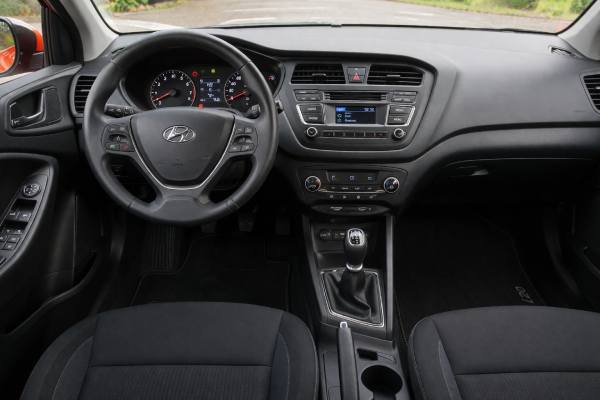
The Coupe body itself already brought some uniqueness. Hyundai gave it a lower roofline, longer front doors, a more dramatic rear quarter treatment, and a larger 336-litre boot. Inside, it kept the driver-focused dashboard, good visibility, and surprisingly usable second row that made the five-door GB i20 such a practical car. Easy-entry front seats with a memory function were a particularly useful feature because they make rear access less awkward than some three-door rivals.
Sport-oriented trim added to that feel. Depending on market and model year, you could expect alloy wheels, rear privacy glass, air conditioning or climate control, Bluetooth, steering-wheel audio controls, cruise control, parking sensors, upgraded upholstery, projector or enhanced lighting, and navigation on higher grades. Sport Nav versions in particular are appealing on the used market because they blend the stronger powertrain with the extra cabin equipment buyers actually notice every day.
This trim structure matters for two reasons. First, the better-equipped cars often feel more modern and more desirable than their prices suggest. Second, high-spec examples also demand a more careful inspection. Navigation systems, parking sensors, Bluetooth modules, folding mirrors, camera hardware where fitted, steering-wheel controls, climate systems, and heated equipment all need to be tested properly. A broken feature may not always be expensive on its own, but several small faults together can point to a car that has been maintained cheaply.
Safety was one of the GB i20 family’s stronger selling points. The platform used a body shell with substantial high-strength and ultra-high-strength steel content, and Hyundai fitted six airbags, ESC, ABS, EBD, Vehicle Stability Management, Hill-start Assist, and tyre-pressure monitoring. Under the 2015 Euro NCAP protocol, the GB i20 achieved four stars. That score disappointed some observers at the time, but the detail matters: the car’s basic crash structure was good, while the overall result was held back mainly by the absence of a stronger standard active-safety package.
That distinction is important for used buyers. A GB i20 Coupe is not a flimsy style exercise. It is a properly engineered small hatchback with a solid passive-safety foundation. The gap versus newer small cars lies more in modern ADAS than in basic structure. If you are looking at a later car, check exactly what it has. If you are buying an earlier one, judge it on the strength of its fundamentals rather than expecting modern autonomous emergency braking or lane-centering systems.
The safest way to buy is to verify actual equipment, not brochure assumptions. Confirm airbags and warning lights behave correctly, make sure the ESC system is present and functional, inspect tyre pressures and TPMS behaviour, and look carefully for crash repair. A well-equipped Coupe with a poor structural history is always the wrong bargain.
Known issues and remedies
The i20 Coupe 1.0 T-GDi 120 is a more maintenance-sensitive car than the naturally aspirated 1.25 models, but that does not mean it has a disastrous reputation. The more accurate picture is that it behaves like many modern small turbo direct-injection petrol cars: it rewards good habits and punishes poor ones. That makes service history, warm-up practices, and overall ownership quality more important than mileage alone.
Common and usually low-to-medium cost
- Ignition and driveability faults: Hesitation, slight misfire, rough idle, or an occasional warning lamp can come from worn plugs, tired coil packs, or overdue servicing. Because this is a small turbo engine, owners often notice performance loss quickly, even when the fix is still relatively straightforward.
- Boost leaks and intake-side faults: Split hoses, loose clamps, or small leaks around boost plumbing can make the car feel flat. Symptoms often mimic a more serious turbo failure, so a careful smoke or pressure test is a better first step than replacing expensive parts.
- Suspension wear: Front drop links, bushes, top mounts, and dampers are normal wear points. A Coupe on low-quality tyres or cheap suspension parts can feel noisier and less precise than it should.
Occasional and medium cost
- Cooling-system and thermostat weakness: Turbo engines depend on stable temperature control. Slow warm-up, fluctuating temperature, or unexplained coolant loss deserves immediate inspection.
- Carbon build-up and intake deposits: As a direct-injection engine, the 1.0 T-GDi does not wash the intake valves in the same way as a port-injected petrol. Cars used mainly for short trips with irregular servicing are more likely to feel less clean over time.
- Clutch wear: The 172 Nm torque figure is useful but can expose a worn clutch faster than in lower-output i20 petrols. A high bite point or slip under mid-range load is a warning sign.
Less common but higher-cost risk
- Timing-chain wear caused by poor oil history: The chain setup avoids routine belt replacement, but that does not make it maintenance-free. Cold-start rattle, timing-related fault codes, or vague oil-change records should be taken seriously.
- Turbocharger wear: Persistent whistle, smoke, or oily residue in the intake path can point to turbo problems, but many cars are blamed unfairly before hoses and breathers are checked properly.
- Crash repair and alignment problems: Small coupes are often bought for style and sometimes repaired cheaply after minor impacts. Uneven panel gaps, an off-centre steering wheel, mismatched tyre brands, or poor light fitment deserve suspicion.
The Coupe body adds a few inspection points of its own. The longer doors take more stress in tight parking spaces, so check hinges, check straps, seal condition, and whether the doors shut squarely. Easy-entry seat mechanisms should work smoothly. Rear trim in three-door cars can also loosen or rattle more than in equivalent five-doors if the car has had a harder life.
Software and electronics are not the main reliability story, but they still matter. Test Bluetooth, navigation, parking sensors, USB inputs, steering-wheel controls, lighting, climate functions, and central locking. A car with several dead convenience features usually hints at low maintenance standards overall.
For recalls and service actions, rely on an official Hyundai VIN or registration check rather than seller memory or forum folklore. With a turbo-petrol Coupe, documented servicing and documented campaign checks are often more valuable than a low odometer reading alone.
Maintenance schedule and buyer’s guide
The smartest way to maintain an i20 Coupe 1.0 T-GDi 120 is to treat it like a lightly stressed performance-oriented small petrol, not like the cheapest city hatchback on sale. The engine is not extreme, but it is still a turbocharged direct-injection unit, and a cautious service routine pays back in durability and drive quality.
Practical maintenance schedule
| Item | Sensible interval |
|---|---|
| Engine oil and filter | Every 10,000–15,000 km or 12 months |
| Oil level check | Monthly and before any long trip |
| Engine air filter | Inspect yearly, replace around 20,000–30,000 km in dusty or mixed use |
| Cabin air filter | Every 15,000–20,000 km or 12 months |
| Spark plugs | Around 40,000–60,000 km depending on plug type and running quality |
| Coolant | Replace promptly if history is unclear, then follow the exact handbook schedule for the VIN |
| Brake fluid | Every 2 years |
| Manual gearbox oil | Inspect for leaks and shift quality regularly; refresh around 60,000–100,000 km on ageing cars |
| Auxiliary belt and hoses | Inspect at every annual service |
| Tyres and alignment | Check yearly and after any suspension work |
| Brakes, steering joints, driveshaft boots, and wheel bearings | Inspect at every service |
| 12 V battery | Test yearly once the car is beyond about year 4 |
That plan is deliberately conservative, and that is the point. On used turbo-petrol cars, the cheapest approach often becomes the most expensive one later. Oil quality matters. Coolant quality matters. Correct plug intervals matter. Good tyres matter more than many owners think, especially on a Coupe with stronger torque and a more style-led chassis setup.
Useful service guidance
- Use only the exact Hyundai-approved oil specification for the 1.0 T-GDi in the car’s market and VIN.
- Do not guess the refill quantity. Turbo engines are sensitive to both overfill and underfill.
- Confirm manual gearbox fluid type before topping up or replacing.
- Keep cooling-system maintenance current. Turbo engines are much less forgiving of weak thermostats and old coolant.
- Wheel-nut torque is commonly in the 88–107 Nm range, but always verify for the exact wheel package.
Buyer’s checklist
- Start the engine completely cold and listen for timing-chain rattle or unstable idle.
- Drive gently first, then test mid-range acceleration in a higher gear to check for clutch slip or boost hesitation.
- Inspect oil level, coolant condition, and any signs of oil misting around turbo plumbing.
- Check all four tyres for matching brands, proper sizes, and even wear.
- Test Bluetooth, navigation, audio, parking sensors, camera functions if fitted, and climate control.
- Listen for front suspension knocks and check that the steering self-centres cleanly.
- Verify recall and service-campaign status through Hyundai.
The best examples are usually the ones with boring paperwork: regular servicing, quality tyres, sensible repairs, and no cosmetic shortcuts. Cars to avoid are the ones sold mainly on looks, with weak invoices, a slipping clutch, several dead convenience features, or suspicious paintwork around the nose and rear quarters.
Long-term durability can be strong, but only if the previous owners treated the car as a turbo petrol that needs proper upkeep. A good one will feel tight, eager, and more expensive than it really is. A bad one will feel tired in nearly every system at once.
Real-world drive and efficiency
The i20 Coupe 1.0 T-GDi 120 works so well because the engine finally gives the GB platform the effortless pace it deserves. In lower-powered form, the regular i20 is honest and competent, but it can feel slightly under-engined once you ask more of it. The 120 hp turbo changes that. It does not turn the Coupe into a hot hatch, but it does make the car feel properly awake.
Around town, the engine’s low-end torque is the main advantage. You do not need to chase revs to keep the car moving smoothly, and the six-speed manual is easy to use. The three-cylinder character is present, but not crude. In day-to-day traffic the Coupe feels more flexible than the 1.25 petrols and generally less busy than the lower-output versions of the same 1.0 T-GDi family.
On open roads, the stronger mid-range is what defines the experience. Slip roads, overtakes, and gentle climbs all feel easier. The Coupe body also helps the car feel a little more special from the driver’s seat. The lower roofline and sportier trim packages add a subtle sense of occasion without making the car awkward to place. Straight-line stability is good, and the GB platform’s wheelbase gives the car a mature, planted feel for a supermini.
The chassis is tuned for confidence more than playfulness. Steering is light and accurate enough, but not especially rich in feedback. The Coupe is tidy in bends rather than thrilling. That means it is easy to trust and easy to drive quickly in a normal-road way, even if it never quite reaches Fiesta territory for involvement. Brake feel depends heavily on maintenance and tyre choice. A well-kept car feels composed and stable. A neglected one can feel nervous and noisier than it should.
Ride quality is another strong point. Hyundai’s European tuning work shows here. The Coupe does not crash over broken roads, and it generally feels more settled than many older style-led three-door superminis. The lower roof and firmer-looking stance do not ruin comfort in ordinary use.
Real-world fuel economy is fair for a 120 hp turbo petrol with genuine performance. In a healthy manual car, drivers can usually expect roughly:
- around 7.0–8.3 L/100 km in heavy city use,
- around 6.0–6.8 L/100 km at a true 120 km/h cruise,
- and around 5.6–6.5 L/100 km in mixed driving.
Those numbers move noticeably if the car is on poor tyres, the alignment is out, the clutch is dragging, or servicing has slipped. This engine rewards a tidy car. It also rewards sympathetic driving. Let the engine warm properly, avoid repeated short hard runs from cold, and the Coupe feels much happier.
The performance verdict is straightforward. The i20 Coupe 1.0 T-GDi 120 gives you enough speed to stop thinking about speed. That is often the sweet spot in a supermini. It is brisk enough to feel satisfying, refined enough to stay comfortable, and simple enough not to feel intimidating. For many buyers, that is exactly the right combination.
Where the Coupe stands
The i20 Coupe 1.0 T-GDi 120 sits in an interesting place among rivals because it mixes style, practicality, and real performance better than its badge might suggest. Its natural competitors include the Ford Fiesta 1.0 EcoBoost 125 three-door, SEAT Ibiza SC 1.0 TSI, Volkswagen Polo three-door petrol turbos, and in some cases the DS 3 or Peugeot 208 three-door-style alternatives from the same era.
Against a Fiesta, the Hyundai usually loses on steering feel and outright driver involvement. The Ford remains the more playful car. But the i20 Coupe often gives you a roomier-feeling cabin, a larger boot, and a more restrained kind of maturity in everyday use. Against a Polo or Ibiza, the Hyundai may feel a little less premium in the details, yet it often makes up for that with stronger value, simpler used-market logic, and a generous level of equipment when bought in Sport or Sport Nav form.
The Coupe body also changes its appeal compared with the regular five-door i20. It is the more emotional choice, but not an irrational one. You keep a useful hatchback boot, decent rear-seat space for the class, and practical day-to-day manners. What you give up is convenience of access rather than actual usefulness. That is a trade many buyers can live with.
Where the Coupe falls short is mostly predictable. It is not the sharpest car in the class. It is not the cheapest i20 to maintain. And because it uses a turbocharged direct-injection engine, it is less forgiving of neglect than the basic 1.25 naturally aspirated petrols. Buyers wanting absolute long-term simplicity may still be happier in the 1.25 84 hp or in a less powerful but lower-stress rival.
But the Coupe has a very strong used-car argument:
- it looks better than most ordinary superminis,
- it feels faster than the basic range,
- it keeps real practicality,
- and it usually comes with a richer specification than entry-level models.
So who should choose it? Drivers who want a stylish small hatchback with genuine mid-range punch, good equipment, and everyday usability. It suits commuters, younger buyers wanting something with more character, and owners who like the idea of a small car that does not feel cheap.
Who should look elsewhere? Anyone who wants the absolute lowest-maintenance version of the i20, anyone needing the easiest rear access every day, or drivers who care more about cornering feel than overall balance.
As a used buy, the Hyundai i20 Coupe GB 1.0 T-GDi 120 is one of those cars that makes more sense the longer you look at it. It is not just the pretty version. It is the one where the engine, body style, and equipment level finally line up. Find a straight, well-maintained example, and it becomes one of the most appealing small turbo-petrol coupes of its era.
References
- New Generation i20 Coupe – Hyundai Europe 2015 (Press Information)
- Hyundai Motor UK reveals pricing of 2016 i20 line-up 2016 (Specifications)
- Hyundai Owners manuals | Hyundai Motor UK 2026 (Owner’s Manual)
- Hyundai i20 – Euro NCAP Results 2015 2015 (Safety Rating)
- Home | Hyundai Recalls & Service Campaigns 2026 (Recall Database)
Disclaimer
This article is for informational purposes only and is not a substitute for professional diagnosis or repair. Specifications, torque values, service intervals, procedures, and equipment can vary by VIN, market, trim, tyre package, and model year, so always verify the exact details against the correct official service documentation for the specific vehicle.
If this guide helped you, please consider sharing it on Facebook, X, or another social platform to support our work.