
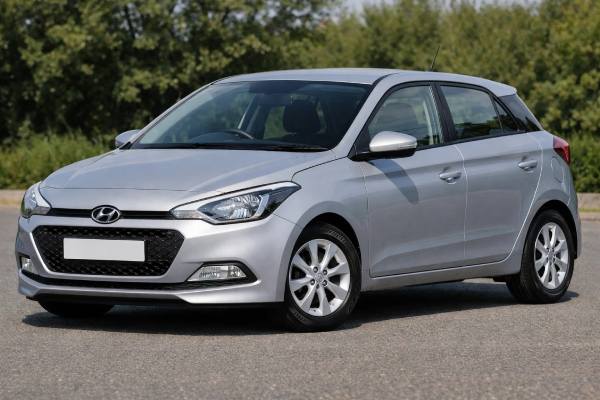
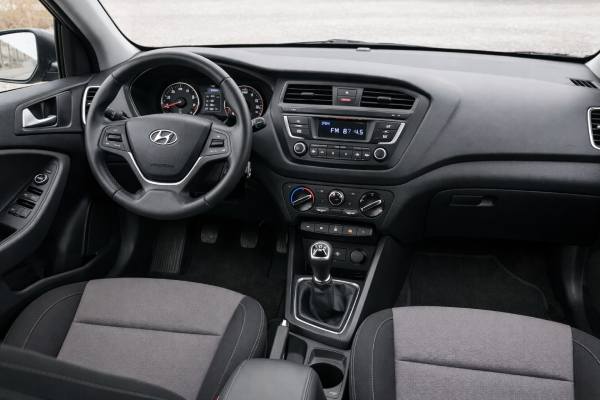
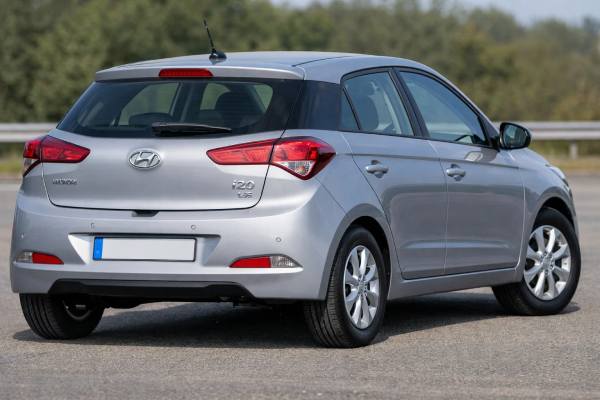
The Hyundai i20 GB 1.1 CRDi is one of those small diesels that makes sense when ownership costs matter more than badge prestige. It combines a roomy supermini body, a light three-cylinder diesel, and a six-speed manual gearbox into a package aimed squarely at economy-minded drivers. On paper, the 75 hp output looks modest. In practice, the low-end torque, long gearing, and sensible chassis tuning make it more usable than the headline figure suggests.
That is why this version still deserves attention on the used market. A healthy car can be cheap to run, easy to live with, and surprisingly refined on longer trips. The downside is that age now matters more than the original specification. DPF condition, service history, chain health, cooling-system integrity, and underbody corrosion all matter more than trim level. Buyers who want a straightforward, efficient small diesel hatchback will still find real value here, provided they choose carefully and buy on condition first.
Essential Insights
- Excellent real-world fuel economy remains this model’s biggest strength.
- The six-speed manual helps the i20 feel calmer on faster roads than many older superminis.
- Cabin space and a 326 L boot make it more practical than its compact size suggests.
- Repeated short trips can accelerate DPF, EGR, and battery-related problems.
- A sensible oil-service routine is every 10,000–15,000 km or 12 months in real use, even if some official schedules are longer.
Contents and shortcuts
- Hyundai i20 GB diesel profile
- Hyundai i20 GB specs and capacities
- Hyundai i20 GB trims and protection
- Trouble spots and service actions
- Care schedule and smart buying
- Daily driving and fuel use
- Rivals and class position
Hyundai i20 GB diesel profile
The second-generation Hyundai i20, known internally as the GB, moved the model upmarket in feel without losing the core practicality that made earlier i20s appealing. In 1.1 CRDi form, it was clearly aimed at drivers who wanted low fuel use and manageable running costs rather than outright pace. That objective shaped the whole car. The engine is a small 1.1-litre three-cylinder turbo diesel, but it is paired with a six-speed manual, decent cabin packaging, and a body that is larger and more mature than many B-segment rivals of the period.
That combination matters because the i20 1.1 CRDi works best when it is understood correctly. It is not the engine for drivers who regularly carry a full load and expect brisk overtaking at any speed. It is the engine for commuters, mixed-route drivers, and owners who value economy, range, and simple everyday usefulness. The 180 Nm torque figure arrives low enough to make the car feel flexible in urban traffic, and the extra sixth gear gives it a more relaxed motorway character than many older small diesels.
The GB-generation body is also a meaningful step forward from the PB. It is longer, wider, and more spacious inside, with better rear-seat room and a noticeably larger boot. That gives the car a broader ownership appeal. It can work as a first car, a low-cost family runabout, or a practical daily commuter. The cabin design is simple rather than flashy, but it feels solidly laid out and easier to live with than many budget superminis of the era.
Mechanically, the appeal is still rooted in simplicity. This is a front-wheel-drive hatchback with a conventional diesel drivetrain, no hybrid system, and no complicated all-wheel-drive hardware. That does not make it trouble-free, but it does make faults easier to understand. The likely ownership concerns are the familiar used-diesel ones: DPF loading from short trips, EGR soot, tired batteries, chain-noise risk if oil changes were neglected, thermostat and cooling issues, suspension wear, and the usual age-related brake and corrosion problems.
There is also a market nuance to remember. The GB i20 changed a little through its life, and exact equipment varies by country, trim, and year. The 1.1 CRDi 75 hp version sat below the 1.4 CRDi in performance, but for many owners it was the more rational choice because it returned excellent economy without losing the usefulness that made the i20 attractive in the first place.
That is why this version still makes sense now. It is not exciting, but it is honest. A good one feels like a mature, efficient, well-packaged small hatchback. A neglected one feels slow, clogged, and expensive. The gap between those two experiences depends almost entirely on maintenance history.
Hyundai i20 GB specs and capacities
Public official sources do not place every market-specific 1.1 CRDi GB figure into one open technical sheet, so the tables below reflect the most consistently published European-market figures for the 2014–2018 Hyundai i20 GB 1.1 CRDi 75. Where an item varies by market, wheel package, or trim, that is noted rather than presented as universal.
| Category | Specification |
|---|---|
| Code | D3FA |
| Engine layout and cylinders | Inline-3, transverse, DOHC, 4 valves per cylinder |
| Bore × stroke | 75.0 × 84.5 mm (2.95 × 3.33 in) |
| Displacement | 1.1 L (1,120 cc) |
| Induction | Turbocharged, intercooler |
| Fuel system | Common-rail direct diesel injection |
| Compression ratio | About 16.0:1 |
| Max power | 75 hp (55 kW) @ 4,000 rpm |
| Max torque | 180 Nm (133 lb-ft) @ about 1,750–2,500 rpm |
| Timing drive | Chain |
| Rated efficiency | About 3.8 L/100 km (61.9 mpg US / 74.3 mpg UK) combined |
| Real-world highway @ 120 km/h | Roughly 4.5–5.2 L/100 km (52.3–45.2 mpg US / 62.8–54.3 mpg UK) |
| Transmission and driveline | Specification |
|---|---|
| Transmission | 6-speed manual |
| Drive type | FWD |
| Differential | Open |
| Chassis and dimensions | Specification |
|---|---|
| Suspension, front | MacPherson strut |
| Suspension, rear | Torsion beam |
| Steering | Rack-and-pinion electric assist |
| Brakes | Front ventilated discs, rear drums on many 1.1 CRDi versions |
| Most popular tyre size | 185/65 R15 |
| Other common tyre size | 175/70 R14 |
| Ground clearance | About 140 mm (5.5 in) |
| Length | 4,035 mm (158.9 in) |
| Width | 1,734 mm (68.3 in) |
| Height | 1,474 mm (58.0 in) |
| Wheelbase | 2,570 mm (101.2 in) |
| Turning circle | About 10.2 m (33.5 ft) |
| Kerb weight | About 1,143 kg (2,520 lb) |
| GVWR | About 1,680 kg (3,704 lb) |
| Fuel tank | 50 L (13.2 US gal / 11.0 UK gal) |
| Cargo volume | 326 L (11.5 ft³) seats up / 1,042 L (36.8 ft³) seats folded |
| Performance and capability | Specification |
|---|---|
| 0–100 km/h | About 16.0 s |
| Top speed | About 159 km/h (99 mph) |
| Braking distance | No widely published factory figure for this exact variant |
| Towing capacity | Around 1,000 kg (2,205 lb) braked / 450 kg (992 lb) unbraked, market dependent |
| Payload | Around 537 kg (1,184 lb), equipment dependent |
| Fluids and service capacities | Specification |
|---|---|
| Engine oil | Commonly 5W-30; exact approval varies by emissions spec and market; about 4.8 L (5.1 US qt) |
| Coolant | Ethylene-glycol based coolant with demineralised water; about 6.4 L (6.8 US qt) |
| Transmission oil | Manual transaxle fluid, commonly GL-4 70W or 75W-85 depending on source and market; about 1.7–1.9 L (1.8–2.0 US qt) |
| Brake and clutch fluid | DOT 3 or DOT 4; about 0.7–0.8 L (0.7–0.8 US qt) service fill |
| Differential / transfer case | Not applicable |
| A/C refrigerant | Verify by under-bonnet label by VIN |
| A/C compressor oil | Verify by refrigerant type and system label |
| Key torque specs | Wheel nuts 88–107 Nm (65–79 lb-ft) |
| Safety and driver assistance | Specification |
|---|---|
| Euro NCAP | 4 stars; 85% adult, 73% child, 79% pedestrian, 64% safety assist |
| IIHS | Not applicable |
| Headlight rating | Not applicable |
| ADAS suite | No factory AEB on the tested configuration; no ACC, blind-spot monitoring, or lane-centering on typical 1.1 CRDi cars |
These numbers tell the real story. The i20 1.1 CRDi is not quick, but it is reasonably light, very efficient, and usefully geared. The strong points are economy, range, and practicality, not outright performance. For buyers who understand that, the spec sheet is actually more attractive than it first appears.
Hyundai i20 GB trims and protection
The GB-generation i20 was sold in a broader range of trims than the older PB, and that matters because the 1.1 CRDi could appear in straightforward value-led specifications as well as better-equipped mid-range versions. Depending on market, names such as S, SE, Go!, Premium, Classic, Comfort, Style, or similar local equivalents may appear. The trim structure varied across Europe, so the safest rule is to judge the actual car in front of you, not a generic specification list from an advertisement.
In practical terms, lower trims usually came with steel wheels or simple smaller alloys, manual air conditioning or no climate control, a basic audio unit, and fewer cosmetic upgrades. Better-equipped cars often added alloy wheels, cruise control, steering-wheel audio controls, upgraded seat trim, a larger media unit, and extra convenience features. The important point is that the 1.1 CRDi’s ownership appeal does not depend on luxury equipment. A modest but well-kept mid-spec car is usually a smarter buy than a high-trim example with poor maintenance history.
Mechanical differences by trim are generally limited, but they still matter. Wheel and tyre package changes can affect ride quality and noise. Some markets paired higher trims with slightly heavier wheel setups that dull the car’s economy edge. Since the engine is only 75 hp, tyre choice has a noticeable effect on how willing the car feels. A lighter wheel-and-tyre package often suits this version better than a larger, more cosmetic one.
Safety is respectable for the period, but not class-leading. Euro NCAP tested the new-generation i20 in 2015 and gave it four stars. The car scored 85% for adult occupant protection, 73% for child occupant protection, 79% for pedestrian protection, and 64% for safety assist. The main reason it missed a higher overall score was the absence of autonomous emergency braking on the tested setup. That is an important distinction. The car’s crash structure and passive-safety fundamentals were decent, but its active safety package was already beginning to look dated even when new.
For used buyers, that means expectations should be realistic. This generation i20 usually offers a solid shell, multiple airbags, ABS, ESC, and ISOFIX on the rear outer seats, but it does not give you the safety-tech suite expected from newer cars. Adaptive cruise control, blind-spot warning, rear cross-traffic alert, and active lane-centering are not part of the normal 1.1 CRDi experience. Some later markets and trims may show small variations in warning systems, but the overall picture remains the same: passive safety is better than active assistance.
Rear-seat and child-seat usability are strengths. Unlike some cramped superminis, the GB i20 has decent rear space and a genuinely useful boot. That makes it more versatile for family use than many rivals. The safety value today, however, comes less from a brochure feature list and more from actual condition. Good tyres, healthy brakes, properly functioning ESC, and no structural corrosion matter much more than whether the car once left the factory with a slightly nicer trim package.
The best-used example is usually a mid-grade car with complete history, working air conditioning, decent tyres, and no dashboard surprises. In the real world, condition is the most important option.
Trouble spots and service actions
The Hyundai i20 GB 1.1 CRDi is generally a sensible used car, but it is still a modern small diesel, and that means reliability depends heavily on usage pattern. Cars that did regular longer runs tend to age far better than cars used only for short urban hops. The biggest difference between a reliable example and a frustrating one usually comes down to DPF health, service discipline, and whether the engine was allowed proper warm-up and regeneration opportunities.
The most common low-to-medium cost issues are familiar diesel items. EGR contamination and intake soot build-up can cause roughness, hesitation, reduced response, or warning lights. Diesel particulate filter trouble is another major one, especially on cars used only in town. Symptoms can include failed regeneration attempts, warning lights, reduced performance, rising fuel use, or increased fan operation after shutdown. Often the root cause is not a “bad DPF” but a short-trip duty cycle combined with overdue servicing or weak battery condition.
Battery and glow-plug complaints are also common enough to note. A 1.1 CRDi with a tired battery may crank but still start poorly, especially in colder weather. Weak glow plugs can add rough starts, smoke, and idle shake. Thermostats and cooling-system wear also appear with age. An engine that never gets fully warm or takes too long to do so is not just mildly annoying; it can also worsen economy and DPF behaviour.
Occasional medium-cost issues include injectors, boost-hose leaks, and clutch wear. The 1.1 CRDi is not especially hard on clutches compared with stronger diesels, but urban use and poor technique can still shorten clutch life. Injector imbalance may show up as lumpy idle, smoky starts, or reluctant hot restarting. Split boost pipes and vacuum-control problems can imitate turbocharger failure, so a proper diagnosis matters before expensive parts are ordered.
The timing chain is one of the most important long-term mechanical notes. Unlike a belt-driven diesel, this engine relies on a chain, which removes the scheduled belt-change burden. However, that does not make it maintenance-free. Extended oil intervals and poor-quality oil can increase wear on the chain, guides, and tensioner. Persistent chain rattle at start-up, timing-correlation faults, or abnormal top-end noise should be taken seriously. On this engine, oil quality and interval discipline are the best timing-chain protection you can buy.
Chassis issues are normal small-car wear items: front anti-roll-bar links, bushes, dampers, wheel bearings, and brake corrosion on lightly used cars. Steering issues are not widespread, but any electric-assist oddity or clunk should be checked properly rather than dismissed as “just a small car thing.”
Rust is less of an automatic problem than on some older superminis, but underbody inspection still matters. Check brake lines, seams, rear arches, jacking points, and subframe areas. Cars from salty climates deserve extra attention underneath.
Campaign and software-update history matters too. Hyundai dealers can check for outstanding campaigns and network service history, and that is worth doing. On used diesels of this era, a software update for drivability or emissions-control strategy can be more valuable than many owners realise. Good paperwork remains one of the best reliability indicators.
Care schedule and smart buying
The i20 1.1 CRDi rewards preventive maintenance more than reactive maintenance. Because it is efficient and relatively lightly stressed in normal use, owners are sometimes tempted to stretch servicing or ignore minor symptoms. That is a mistake. The smartest way to own this engine is to keep the basics tight: clean oil, healthy battery, clean filters, correct coolant, and enough regular road use for the emissions hardware to stay happy.
A sensible real-world maintenance plan looks like this:
- Engine oil and filter every 10,000–15,000 km or 12 months.
- Fuel filter roughly every 40,000–60,000 km, depending on fuel quality and operating conditions.
- Engine air filter inspect at every service and replace as needed.
- Cabin filter every 15,000–20,000 km or yearly.
- Coolant inspect regularly and refresh by schedule or age, commonly around 5 years initially and then shorter intervals thereafter.
- Brake fluid every 2 years.
- Manual gearbox oil inspect condition and replace around 80,000–100,000 km if history is unclear.
- Timing chain no scheduled replacement like a belt, but inspect for rattle, stretch symptoms, and correlation faults.
- Auxiliary belt and hoses inspect every service.
- Tyre rotation and alignment check around every 10,000–12,000 km.
- Battery test yearly once the battery reaches about 4 years old.
- DPF health monitor especially if the car is used mainly on short trips; give it regular longer runs.
The fluid picture is manageable. Expect about 4.8 L of engine oil, about 6.4 L of coolant, roughly 1.7–1.9 L of gearbox oil, and around 0.7–0.8 L for brake and clutch hydraulic service fill. Wheel nuts are typically tightened to 88–107 Nm. Those figures are useful for planning, but the exact VIN-specific service information should always take precedence before major work.
Used buyers should inspect in a clear sequence. Start with the underside. Rust, wetness, damaged undertrays, and tired brake lines tell you more about real care than polished paint does. Then insist on a proper cold start. The engine should start promptly, idle evenly after the initial diesel roughness settles, and warm up normally on the drive. Watch for DPF warnings, limp behaviour, or a car that feels strangled at higher load.
A practical buyer’s checklist includes:
- Full service history, not just verbal claims.
- Evidence of regular oil changes.
- Proof of fuel-filter and brake-fluid service.
- Healthy battery and clean cold starts.
- No chain rattle beyond a brief cold-start moment.
- No DPF warning lights or repeated regeneration issues.
- Even tyre wear and decent-brand tyres.
- Smooth clutch take-up and clean gearbox engagement.
- Stable coolant level with no crusting around joints.
Common catch-up items after purchase are usually filters, fluids, battery, tyres, rear brakes, anti-roll-bar links, and sometimes thermostat-related work. The more expensive risks are chain work, injector problems, heavily loaded DPF systems, or hidden underbody corrosion.
The best cars to target are usually later 2016–2018 examples with full records, motorway-friendly usage history, and no evidence of neglected emissions hardware. Avoid cheap cars that were used only for short city trips unless they come with unusually strong maintenance documentation. Long-term durability is good when this engine is serviced properly and driven in a way that suits a diesel. It becomes mediocre only when buyers ignore that basic truth.
Daily driving and fuel use
On the road, the Hyundai i20 GB 1.1 CRDi is calmer than its modest power figure suggests. It does not feel fast, but it does feel purposeful. The engine’s low-end torque and six-speed gearbox give the car a more grown-up character than some older small diesels with shorter gearing. In town, that means fewer frantic shifts and an easy, relaxed rhythm. On the motorway, it means the engine is not constantly buzzing at the top of its comfort zone.
Ride quality is one of the model’s quiet strengths. The GB i20 is not a soft, floating supermini, but it is composed and generally more mature-feeling than many budget rivals. It rides small bumps reasonably well, settles quickly after larger impacts, and remains stable in a straight line. Handling is safe and predictable rather than playful. The steering is light, accurate enough, and easy to live with, but it is not rich in feedback. That suits the character of the car. It was built to be sensible, not exciting.
The three-cylinder diesel engine has a recognisable sound at idle and under load, but refinement is respectable once warm. Around town you hear the diesel clatter more clearly than in the petrol versions, and at low speed there is some vibration through the pedals and controls. At a steady cruise, however, it settles down into a calmer rhythm than many buyers expect. Good engine mounts and decent tyres make a major difference here. Tired mounts or cheap tyres can make the same car feel much rougher and louder.
Performance is usable rather than brisk. The official 0–100 km/h time of about 16 seconds tells the truth: this is not a quick overtaking machine. Yet in real traffic it often feels better than that figure implies, because the engine’s torque arrives where daily drivers actually use it. Urban pull is fine, country-road progress is adequate with planning, and motorway cruising is more relaxed than the modest output suggests. The weakness appears when the car is heavily loaded or asked to accelerate hard from higher speeds. Then the small displacement becomes obvious.
Real-world economy is the big reward. A healthy example can often return:
- City: about 4.8–5.8 L/100 km
about 49.0–40.6 mpg US
about 58.9–48.7 mpg UK - Highway at 100–120 km/h: about 4.3–5.2 L/100 km
about 54.7–45.2 mpg US
about 65.7–54.3 mpg UK - Mixed use: about 4.5–5.3 L/100 km
about 52.3–44.4 mpg US
about 62.8–53.3 mpg UK
Cold weather and repeated short trips can worsen those figures noticeably. They can also encourage DPF trouble if the car never gets the chance to complete proper longer drives. That is why this engine is at its best in mixed or longer-distance use rather than pure town duty.
Braking feel is straightforward and easy to meter, though rear-drum setups on some versions are a reminder that this is a cost-conscious supermini. On decent tyres, grip and stability are reassuring. On cheap or mismatched tyres, the car feels less settled and noisier. That matters more here than some owners think, because the i20’s chassis is fundamentally honest and benefits clearly from sensible rubber.
Overall, the 1.1 CRDi is not the fun version of the i20, but it may be the most rational one. It turns the GB i20 into a genuine low-cost long-range hatchback, which is still a useful talent in the used market.
Rivals and class position
The Hyundai i20 GB 1.1 CRDi sits in a competitive class where rivals often shine in one area but compromise another. The Ford Fiesta is a good example. It remains the better driver’s car, with sharper steering and more willing cornering balance. But the i20 counters with better rear-seat space, a larger boot, and a calmer sense of practical ownership. If you want entertainment, the Fiesta is more appealing. If you want low-drama everyday usefulness, the i20 often makes the stronger case.
Compared with a Volkswagen Polo diesel or a Skoda Fabia diesel, the Hyundai tends to feel less premium in minor cabin details, but it is usually generous for space and easy to justify on price. The Polo may feel more polished. The i20 often feels more straightforward. In used-car terms, that matters. A car that is simpler to buy, easier to understand, and roomy enough for real life can be the smarter choice even if it does not win the first-impression contest.
Against a Vauxhall Corsa diesel, the Hyundai usually comes across as the more complete all-round package if maintenance history is equal. The i20’s cabin packaging, boot space, and mature road manners give it an advantage. Against some French superminis of the period, the Hyundai may not have the same design flair, but it often feels less fussy and more predictable to own long term.
Its closest rival may actually come from within Hyundai-Kia. The related Kia Rio diesel offers a similar ownership logic: small footprint, honest diesel efficiency, and practical packaging. In that comparison, the better buy is almost always the cleaner individual car rather than the better badge story. The same logic applies to most of this class. Service history and condition beat brochure reputation every time.
There is also an internal i20 comparison to make. The 1.4 CRDi versions are the better choice for drivers who regularly carry passengers or do more overtaking on faster roads. The 1.1 CRDi is the choice for maximum efficiency and minimal running-cost stress. That makes it the most rational diesel in the range, even if not the most versatile one.
So where does the i20 1.1 CRDi land overall? It is not the most desirable used supermini in emotional terms. It is not the sharpest, quickest, or most premium-feeling. But it is spacious, economical, sensible, and mature enough to work well as real transport. For many buyers, those are the qualities that matter most.
That is the real advantage of this model today. It does not rely on image. It relies on doing the basics well. A good Hyundai i20 GB 1.1 CRDi is a practical, efficient hatchback that still fits modern ownership needs, provided you buy one that has been maintained for the kind of use a diesel actually needs.
References
- Hyundai Owners manuals | Hyundai Motor UK 2026 (Owner’s Manual Portal)
- Hyundai Car Servicing | Hyundai Motor UK 2026 (Service Information)
- 5-Year Warranty | New Cars | Hyundai Motor UK 2026 (Campaign and Service History Lookup)
- Hyundai i20 – Euro NCAP Results 2015 2015 (Safety Rating)
- What make is the vehicle? – Check if a vehicle, part or accessory has been recalled – GOV.UK 2026 (Recall Database)
Disclaimer
This article is for informational purposes only and is not a substitute for professional diagnosis, repair, or workshop advice. Specifications, torque values, service intervals, procedures, and fitted equipment can vary by VIN, market, model year, and trim, so always verify details against the official Hyundai service documentation for the exact vehicle.
If this guide was useful, please consider sharing it on Facebook, X, or another platform to support our work.