
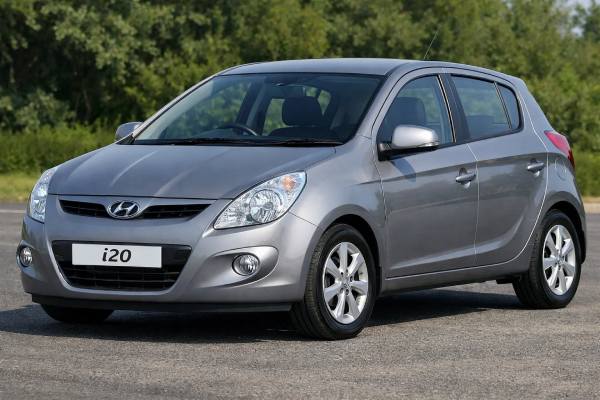
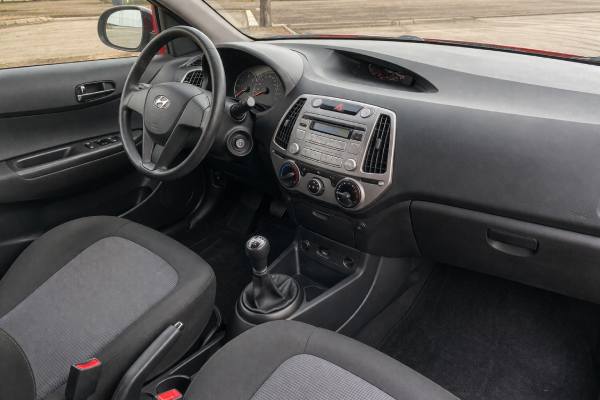
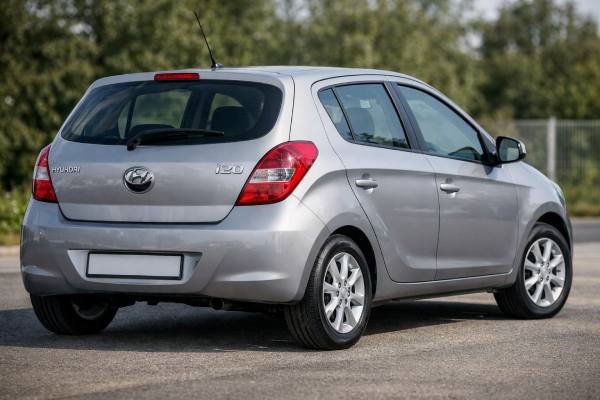
The Hyundai i20 PB with the 1.6 CRDi is one of those small diesels that makes more sense the longer you keep it. It combines supermini running costs with a genuinely useful torque figure, a roomy cabin for its class, and straightforward front-wheel-drive hardware. In period, it stood out because it felt more grown-up than many budget hatchbacks without becoming complicated or expensive to maintain.
Today, that matters even more. A good example can still be an efficient commuter or long-distance budget car, but condition now matters far more than brochure appeal. The best cars have regular oil changes, proof of fuel-filter service, no outstanding campaign work, and a dry, tidy engine bay. The weakest cars are usually hurt by neglect rather than bad design. For buyers who want a practical small diesel with honest mechanicals, the 115 hp i20 remains one of the more sensible used options in its age bracket.
Quick Overview
- Strong mid-range torque and easy motorway pace for a small hatchback.
- Roomy cabin, usable 295 L boot, and simple front-wheel-drive layout.
- Official service items and fluid capacities are well documented in Hyundai owner literature.
- Skip cars with unclear timing-belt history, neglected fuel-filter changes, or rust underneath.
- Normal European diesel oil service is every 20,000 km or 12 months; tyre rotation is recommended every 12,000 km.
Guide contents
- Hyundai i20 PB diesel character
- Hyundai i20 PB specs and data
- Hyundai i20 PB trims and safety
- Reliability and workshop trouble spots
- Maintenance and used-buying advice
- Driving manners and fuel use
- How the i20 compares
Hyundai i20 PB diesel character
The 2008–2012 i20 PB sits in the heart of the old European supermini class, but the 1.6 CRDi gives it a noticeably different personality from the smaller petrol and diesel versions. Around town it is not especially sporty, yet it feels stronger and more relaxed than most 1.2-litre rivals once the road opens up. That is the real appeal here. The 115 hp diesel turns the i20 from a basic city car into a compact all-rounder that can handle commuting, weekend trips, and regular motorway use without feeling strained.
Mechanically, it is a simple recipe: a transverse 1.6-litre four-cylinder common-rail turbo diesel, front-wheel drive, and a manual gearbox. There is no modern mild-hybrid system, no complicated emissions hardware of the latest generation, and no advanced driver-assistance package to diagnose. That simplicity is part of the ownership case. It does not mean trouble-free motoring, but it does mean most faults still follow familiar small-diesel patterns: filters, hoses, wear items, injectors, EGR contamination, and age-related suspension or corrosion issues.
Cabin packaging is another quiet strength. The PB i20’s compact footprint still leaves useful rear-seat space and a practical hatchback cargo area. That matters because many used buyers end up choosing this model as a second family car, a first motorway car, or a durable commuter rather than just a city runabout. The diesel’s extra torque also makes the car feel less busy with passengers or luggage aboard.
What you should expect now is not new-car refinement, but honest usability. A healthy 1.6 CRDi should start cleanly, pull hard from low revs, and settle into a long-legged cruise. A neglected one will often advertise itself quickly with smoky starts, idle shake, flat spots, worn clutch feel, suspension knock, or a dashboard full of old warning lights. Because the newest examples are already well into old-car territory, service history matters more than trim level.
That is why this version still makes sense for the right owner. It offers enough performance to feel genuinely capable, enough practicality to be useful every day, and a maintenance structure that is still understandable. The downside is that a cheap, tired car can absorb money fast. The upside is that a carefully maintained one still delivers the core small-diesel virtues that made cars like this so popular in the first place.
Hyundai i20 PB specs and data
Open official sources do not publish every single market-specific figure for every trim in one place, so the table below prioritizes Hyundai owner-manual data where available and otherwise uses the most consistent European-market figures published for the 1.6 CRDi 115 hatchback. Where a value can vary by wheel size, body style, or market, that is noted rather than guessed.
| Category | Specification |
|---|---|
| Code | D4FB |
| Engine layout and cylinders | Inline-4, DOHC, 4 valves per cylinder |
| Bore × stroke | 77.2 × 84.5 mm (3.04 × 3.33 in) |
| Displacement | 1.6 L (1,582 cc) |
| Induction | Turbocharged, intercooled |
| Fuel system | Common-rail direct diesel injection |
| Compression ratio | 17.3:1 |
| Max power | 115–116 hp (85 kW) @ about 4,000 rpm |
| Max torque | 260 Nm (192 lb-ft) @ 1,900–2,750 rpm |
| Timing drive | Timing belt |
| Rated efficiency | 4.4 L/100 km (53.5 mpg US / 64.2 mpg UK) combined |
| Real-world highway at 120 km/h | Roughly 4.8–5.4 L/100 km in fair weather, inferred from factory and published road-test figures |
| Transmission and driveline | Specification |
|---|---|
| Transmission | Manual, commonly 6-speed on the 115 hp European car |
| Drive type | FWD |
| Differential | Open |
| Chassis and dimensions | Specification |
|---|---|
| Front suspension | MacPherson strut |
| Rear suspension | Torsion-beam rear axle |
| Brakes | Front ventilated discs, rear discs on common 1.6 CRDi fitments |
| Common brake disc sizes | Front about 256 × 22 mm; rear about 262 × 10 mm |
| Most common tyre size | 185/60 R15 |
| Other factory tyre sizes | 175/70 R14; 195/50 R16 |
| Length | 3,940 mm (155.1 in) |
| Width | 1,710 mm (67.3 in) |
| Height | 1,490 mm (58.7 in) |
| Wheelbase | 2,525 mm (99.4 in) |
| Turning circle | About 10.4 m (34.1 ft) |
| Kerb weight | About 1,210–1,221 kg (2,668–2,692 lb), market dependent |
| GVWR | About 1,650 kg (3,638 lb) |
| Fuel tank | 45 L (11.9 US gal / 9.9 UK gal) |
| Cargo volume | 295 L seats up / about 1,060 L seats folded, typically quoted in VDA form |
| Performance and capability | Specification |
|---|---|
| 0–100 km/h | About 10.7 s |
| Top speed | About 190 km/h (118 mph) |
| Towing capacity | About 1,100 kg braked / 450 kg unbraked |
| Payload | Roughly 429–439 kg |
| Fluids and service capacities | Specification |
|---|---|
| Engine oil | API CH-4 or above, ACEA B4; 5.3 L (5.60 US qt) |
| Common viscosity choices | 5W-30 commonly used in Europe; temperature-dependent alternatives shown in Hyundai oil chart |
| Coolant | Ethylene-glycol based coolant with distilled water; 6.8 L (7.1 US qt) |
| Manual transmission fluid | API GL-4 SAE 75W-85; 1.9 L (2.01 US qt) |
| Brake and clutch fluid | FMVSS116 DOT-3 or DOT-4; 0.7–0.8 L (0.7–0.8 US qt) |
| A/C refrigerant | Varies by equipment; verify under-bonnet label by VIN |
| Key torque spec | Wheel nuts 88–107 Nm (65–79 lb-ft) |
| Safety and assistance | Specification |
|---|---|
| Euro NCAP | 5 stars; 88% adult, 83% child, 64% pedestrian, 86% safety assist |
| IIHS | Not applicable for this European-market supermini |
| ADAS | No modern AEB, ACC, lane-centering, blind-spot monitoring, or rear cross-traffic alert on this generation |
The headline spec story is simple: this is a light B-segment hatch with decent diesel torque, modest official consumption, and enough gearing to make it comfortable beyond city work. That combination explains why many owners still hold onto good examples. It also explains why bad examples often look worn out: these cars were used hard because they were good at being useful.
Hyundai i20 PB trims and safety
Trim naming depended on market, but the broad pattern was consistent. Lower trims focused on value, mid-grade cars usually added alloy wheels and comfort items, and upper trims were the ones most likely to be paired with the stronger diesel. In many European markets the 1.6 CRDi 115 was linked to trims such as Style or similarly named upper-middle specifications rather than true base models. That matters because the engine itself is only part of the buying decision. A well-equipped, better-kept mid-grade car is usually more desirable than a sparse high-mileage example with the same engine.
Quick identifiers are useful when adverts are vague. Factory 14-inch steel wheels usually suggest a lower trim, while 15-inch or 16-inch alloys point to better-equipped versions. Climate control, steering-wheel audio controls, fog lamps, and a tidier interior trim finish also tend to signal more desirable specifications. Early cars and facelift-era cars can differ in wheel patterns, upholstery, and small trim details, but the platform and core mechanical package remain familiar across the run. European-market listings for the 115 hp car most often describe a 5-door hatch with a 6-speed manual and mid-to-upper trim equipment.
Safety is one of the PB i20’s stronger historic selling points. Euro NCAP awarded the i20 five stars in 2009, with 88% for adult occupant protection, 83% for child protection, 64% for pedestrian protection, and 86% for safety assist. The tested car was a left-hand-drive 1.4 GL 5-door, but the rating applied across the i20 range. The passenger compartment stayed stable in the frontal test, side-impact performance was strong, and side-head and side-body airbags were fitted to the tested vehicle. The main caveats were marginal whiplash protection and poor protection in some adult head-impact zones on the bonnet.
In practical ownership terms, do not expect modern driver assistance. This generation predates the current safety-tech era. There is no factory AEB, adaptive cruise control, or lane-keeping assistance. What you do get is a conventional passive-safety structure, ABS, seatbelt reminders, and ESC on many cars. Rear outboard ISOFIX anchorages are present, but checking the physical fittings matters more than relying on an advert.
For buyers, the best trim is usually the one with air conditioning that works properly, a clean interior, intact electrical items, and documented maintenance. Safety equipment is only part of the picture now. Tyres, brakes, and rust condition will do more to separate a genuinely safe old i20 from a merely well-optioned one.
Reliability and workshop trouble spots
The i20 PB 1.6 CRDi is not a fragile design, but it is now old enough that age and maintenance gaps matter more than reputation alone. The biggest ownership mistake is treating it like a cheap throwaway diesel. When serviced on time, it can be durable. When oil changes, filters, and belt-related work are delayed, small faults stack into larger ones.
Common, lower-cost issues are usually the predictable small-diesel ones. Expect occasional EGR contamination, tired vacuum or boost hoses, sticking thermostats, glow-plug or glow-relay complaints in colder climates, and the usual wear in anti-roll-bar links, bushes, top mounts, and wheel bearings. Fuel-filter neglect can show up as surging, hard starting, or flat performance. Diesel fuel-filter replacement depends heavily on fuel quality, and poor-quality diesel may require much more frequent service than the normal European interval.
Medium-cost ownership problems usually show up with mileage. Clutch wear is normal; on harder-used cars, dual-mass flywheel symptoms can include rattle, judder, or rough take-up. Injectors deserve attention if the car is smoky, noisy at idle, or slow to start when warm. Turbo problems are less common than internet folklore suggests, but oil-feed neglect, long drain intervals, or split boost plumbing can all mimic turbo failure. Cooling systems should also be inspected seriously. Coolant level checks, leak inspection, and water-pump attention when belt work is done are all important.
The timing belt is the major workshop question on any used example. Public owner-manual pages clearly reference timing-belt service, but open Hyundai sources do not present one clean universal replacement interval for every market and spec on the same page. For a buyer, that means undocumented belt history should be treated as an immediate service item, ideally with water pump and related rollers done at the same time. That is cheaper than guessing.
Recall and campaign checking is worth doing, but it should be done properly. Public, model-specific campaign detail for this exact early European diesel can be patchy in open sources, so the best method is not forum searching. Use Hyundai’s campaign lookup and service-history lookup, then verify against the government recall database by registration or VIN where available. On a car this old, proof of completed campaign work and consistent servicing is more valuable than a seller saying there are no known issues.
Rust is the final reliability filter. On salted-road cars, inspect the underside, rear arches, seams, brake pipes, and subframe areas carefully. A mechanically healthy car with heavy corrosion is a worse buy than a tidy shell that needs routine consumables. That is especially true in this price bracket, where body condition often decides whether the car remains economical to own.
Maintenance and used-buying advice
For this engine, the maintenance plan that matters most is simple and disciplined. In the normal European diesel schedule, Hyundai specifies engine oil and filter replacement every 20,000 km or 12 months. Under severe use, that drops to 10,000 km or 6 months. On an old turbo diesel, following the shorter schedule is the smarter real-world choice, especially for short trips, city use, or cold starts. Hyundai also recommends tyre rotation every 12,000 km, climate-control filter replacement every 20,000 km in Europe, and fuel-filter replacement on the normal European diesel schedule at 60,000 km and 120,000 km, with much shorter intervals if fuel quality is poor.
A practical ownership schedule looks like this:
- Engine oil and filter: every 10,000–15,000 km or annually in real use; use the correct diesel-grade oil.
- Fuel filter: every 60,000 km on good EN590 fuel, sooner if drivability issues appear.
- Cabin filter: every 20,000 km or 12 months.
- Air filter: inspect regularly; replace sooner in dusty use.
- Brake fluid: first major change at 48,000 km or 24 months, then every 40,000 km or 24 months.
- Coolant: first major change at 100,000 km or 60 months, then every 40,000 km or 24 months.
- Manual gearbox oil: inspect routinely; under severe use, replace at 100,000 km.
- Timing-belt service: verify by VIN and invoices; if unknown, do it immediately.
- Tyres, alignment, and brake inspections: at every service, with rotation every 12,000 km.
- Battery and charging health: test yearly on older cars, especially before winter.
The key fluids are straightforward: 5.3 L of engine oil, 1.9 L of GL-4 75W-85 manual transmission fluid, 6.8 L of ethylene-glycol coolant, and 0.7–0.8 L of DOT-3 or DOT-4 brake and clutch fluid. Wheel-nut torque is 88–107 Nm. These are useful figures for ownership decisions, but procedures and final specs should still be confirmed by VIN before any major service.
For buyers, inspect in this order: body corrosion, cold start, smoke, idle quality, clutch take-up, gearbox feel, coolant condition, service records, then tyres and brakes. A good test drive should include a hot restart, a full-throttle pull in a higher gear, and a look underneath after the drive for leaks. The best cars usually show boring strengths: clean paperwork, stock specification, matched tyres, a quiet suspension, and no homemade modifications. The cars to avoid are the cheap examples with missing belt history, warning lights, or a seller who cannot explain basic servicing.
Long term, the durability outlook is still decent for a cared-for car. The 1.6 CRDi i20 is not immortal, but it is honest. Buy the cleanest shell, insist on maintenance proof, and assume deferred belt service is your cost unless clearly proven otherwise.
Driving manners and fuel use
On the road, the 1.6 CRDi version feels more substantial than the i20’s size suggests. The steering is light rather than talkative, and the chassis is tuned more for stability and everyday comfort than sharp handling. That makes sense for the engine. With 260 Nm available low down, the diesel car is happiest flowing along rather than being chased down a back road. Straight-line stability is good for the class, and the car’s compact size still makes it easy to place in town or when parking.
The powertrain character is the key differentiator. The engine pulls properly from low revs, so you do not need to work the gearbox hard in normal driving. Turbo lag is modest by late-2000s small-diesel standards, and the manual transmission suits the car’s torque-rich nature well. A healthy example should feel flexible rather than urgent: more strong enough everywhere than genuinely fast. That is why the commonly published 0–100 km/h time of about 10.7 seconds almost undersells the real-world experience. In rolling acceleration and motorway merging, it feels stronger than that number suggests.
Refinement is respectable rather than standout. Around town you hear the diesel clatter, especially when cold, and rougher road surfaces can bring some suspension and tyre noise into the cabin. At a steady cruise, though, the car settles down nicely for an old supermini. That long-legged feel is one of its real strengths. It is the reason buyers who do mixed city and highway use often prefer this engine to the smaller 1.4 CRDi or the period petrols.
Fuel economy is still appealing. The factory combined figure is about 4.4 L/100 km, with commonly quoted urban and extra-urban numbers around 5.5 and 3.9 L/100 km. In real use today, a sound car on proper tyres should still manage roughly 5.0–6.0 L/100 km in urban work, around 4.8–5.4 L/100 km at a genuine 120 km/h cruise, and around 4.6–5.3 L/100 km mixed if driven sensibly. Cold weather and short trips will still move the needle.
Braking feel is conventional and easy to judge. Grip and stopping confidence depend heavily on tyre quality because these cars are now old enough to wear whatever a previous owner fitted. Good tyres transform the car. Cheap ones make it noisier, less precise, and less reassuring in wet weather. That matters because the chassis itself is honest and predictable; it deserves decent rubber.
In daily driving terms, the verdict is straightforward. This is not the most entertaining car in its class, but it is one of the more convincing all-round diesel hatchbacks of its era. It feels like a small car that grew up around motorway use instead of one that was merely forced into it.
How the i20 compares
Against its main period rivals, the Hyundai i20 PB 1.6 CRDi usually wins on sensible ownership rather than charisma. A Ford Fiesta diesel of the same era is often the more playful car to drive, with sharper steering and a more eager front end. But the Hyundai usually feels roomier, simpler in character, and less dependent on buying exactly the right trim to feel complete. If your priority is steering feel, the Fiesta still makes a better first impression. If your priority is everyday usefulness and low-stress ownership, the i20 makes a stronger rational case.
Compared with a Volkswagen Polo or Skoda Fabia 1.6 TDI, the Hyundai often feels less polished inside and not quite as refined at the limit. On the other hand, it is often easier to justify as a used buy because the purchase price is usually lower and expectations are more realistic. The i20’s appeal is that it does not need to be premium-adjacent to be worthwhile. It just needs to be healthy.
Versus a Vauxhall Corsa or Chevrolet Aveo diesel, the Hyundai tends to come across as the more balanced package. It has enough torque to feel effortless, sensible cabin packaging, and a strong period Euro NCAP result. Against its close Korean cousin, the Kia Rio, the differences are usually smaller than the adverts suggest. At that point, condition, rust, and service history should decide the purchase rather than badge preference alone.
That leads to the real verdict. The i20 1.6 CRDi is not the class icon, the class driver’s car, or the class fashion statement. It is the class pragmatist. It offers honest performance, very usable fuel economy, a good safety baseline for its age, and maintenance requirements that are easy to understand. For buyers who want the smartest all-round used choice rather than the most romantic one, that is exactly the point.
References
- Hyundai Owners manuals | Hyundai Motor UK 2026 (Owner’s Manual Portal)
- 5-Year Warranty | New Cars | Hyundai Motor UK 2026 (Warranty and Campaign Lookup)
- HYUNDAI I20 – Euro NCAP Results 2009 2009 (Safety Rating)
- What make is the vehicle? – Check if a vehicle, part or accessory has been recalled – GOV.UK 2026 (Recall Database)
Disclaimer
This article is for informational purposes only and is not a substitute for professional diagnosis, repair, or official workshop guidance. Specifications, torque values, service intervals, procedures, and equipment can vary by VIN, market, production date, and trim, so always verify details against the correct official Hyundai service documentation for your exact vehicle.
If this guide helped you, please consider sharing it on Facebook, X, or your preferred platform to support our work.