
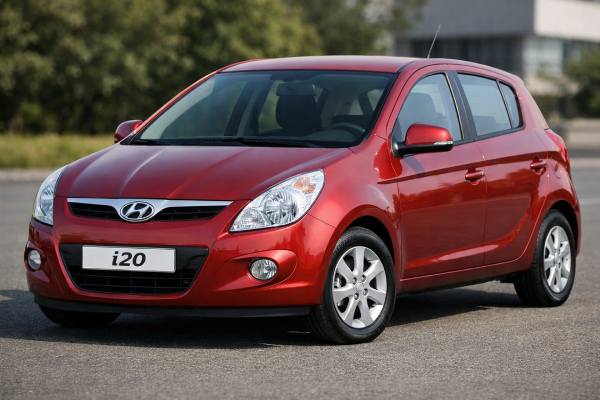
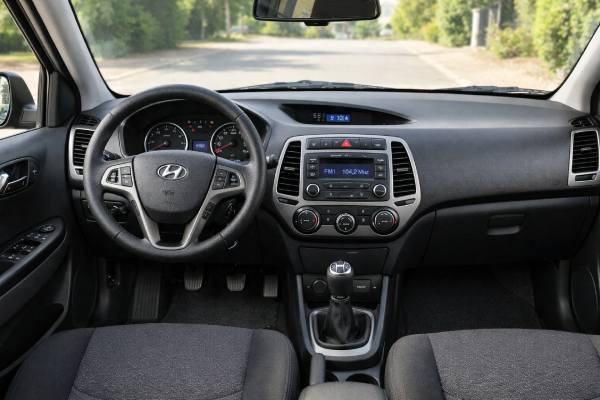
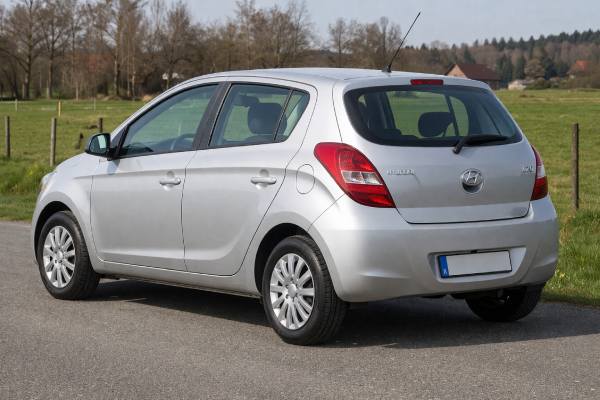
The Hyundai i20 PB is usually remembered as a sensible small hatchback, but the 1.6 CRDi 128 hp version adds a very different character to the range. Instead of focusing only on low-cost commuting, this diesel brings a much stronger torque curve, a 6-speed manual gearbox, and performance that feels closer to a larger family hatch than a typical budget supermini. That makes it one of the more interesting used i20 variants for buyers who want compact dimensions without accepting weak motorway pace. It is also a more specialized choice than the article title suggests, because this exact 128 hp 1.6 CRDi appears in a narrow part of the PB generation rather than evenly across the full 2008–2012 span. As a used buy, it can still make sense: fuel economy is strong, the cabin is practical, and safety was competitive for the class. The catch is that diesel age, maintenance history, and trim-specific equipment now matter far more than the badge on the tailgate.
Fast Facts
- Strong 260 Nm torque and a 6-speed manual make this one of the quickest and most usable diesel i20 PB variants.
- Official combined fuel use of 4.4 L/100 km remains appealing for long-distance drivers.
- Five-door practicality, a 45 L fuel tank, and a 295 L boot make it easy to live with.
- Poor maintenance can lead to EGR, injector, clutch, turbo-hose, and timing-chain related costs.
- In normal service, engine oil and filter changes were scheduled every 20,000 km or 12 months.
What’s inside
- Hyundai i20 PB Profile
- Hyundai i20 PB Specs
- Hyundai i20 PB Equipment
- Fault Patterns and Service Actions
- Maintenance Plan and Buying Tips
- Road Manners and Efficiency
- Competitive Context
Hyundai i20 PB Profile
The PB-generation Hyundai i20 was designed to move Hyundai further into the mainstream European supermini market. It replaced the Getz with a car that was roomier, safer, and more polished, and in most versions that meant a careful balance of value, modest power, and sensible running costs. The 1.6 CRDi 128 hp changes that formula. It remains a practical front-wheel-drive hatchback, but it adds enough output and torque to make the car feel notably stronger than its economy-focused siblings.
That distinction matters because the 1.6 CRDi 128 is not simply a bigger engine in the same shell. It changes the ownership logic. The 75 hp and 90 hp diesels were mostly about thrift. The 128 hp version is still efficient, but it is far more suitable for drivers who cover regular motorway distances, carry passengers often, or simply want a small hatchback that does not feel strained once speeds rise. With 260 Nm available from low rpm, it delivers the kind of mid-range pull that makes overtakes easier and reduces the need for constant downshifts.
There is also an important timeline point. While the PB generation broadly covers the 2008–2012 era, the 128 hp 1.6 CRDi itself appears as a late and relatively narrow-range offering rather than a full-generation staple. In open catalog data it is commonly shown as a 2010 model-year specification. That means buyers should not assume every facelift or every country received it in the same way. In practice, this is a more unusual used-market find than the smaller diesel or petrol i20 variants.
The underlying strengths of the i20 PB still apply. It is compact enough for city use, but its 2525 mm wheelbase gives it decent cabin packaging for the class. The five-door body is the logical match for the 1.6 CRDi, because the engine’s stronger performance suits longer family or commuting use rather than purely short urban work. Hyundai’s broad safety pitch also helped the model age reasonably well in reputation, and the i20’s five-star Euro NCAP result remains one of the key reasons it still looks credible against older budget hatchbacks.
Yet the diesel-specific warnings are more serious here than on the smallest engines. A more powerful diesel encourages higher-mileage use, which can be good for DPF-free engines and regular regeneration behavior where fitted, but it also means more clutch wear, more chance of injector fatigue, and greater importance of correct oil quality. The best examples are usually owned by people who understood that this was a small car with a serious diesel powertrain, not just a cheap hatchback. That is the thread running through the entire ownership verdict: when maintained properly, the 1.6 CRDi 128 is the most complete driver’s version of the PB diesel range; when neglected, it becomes the easiest one in the lineup to turn into a false bargain.
Hyundai i20 PB Specs
The key technical story is simple: this is the strongest diesel i20 PB, and its output moves it from economical supermini territory into genuinely brisk small-hatch territory. Open-spec data consistently identifies it as a 1582 cc four-cylinder common-rail turbo-diesel with a 6-speed manual transmission and front-wheel drive. Public Hyundai owner information for the 2008–2014 i20 range supports the maintenance framework and dimensions, while period catalog data fills in the precise figures for this uncommon engine variant.
| Powertrain and efficiency | Figure |
|---|---|
| Engine code | D4FB |
| Engine layout | Inline 4, DOHC, 4 valves per cylinder |
| Displacement | 1.6 L (1582 cc) |
| Bore × stroke | 77.2 × 84.5 mm (3.04 × 3.33 in) |
| Induction | Turbocharger with intercooler |
| Fuel system | Common-rail direct injection |
| Compression ratio | 17.3:1 |
| Max power | 128 hp (94 kW) @ 4000 rpm |
| Max torque | 260 Nm (192 lb-ft) @ 1900–2750 rpm |
| Timing drive | Chain |
| Rated combined efficiency | 4.4 L/100 km (53.5 mpg US / 64.2 mpg UK) |
| Real-world highway @ 120 km/h | Typically around 5.2–6.0 L/100 km depending on tyre, load, weather, and condition |
| Transmission and driveline | Figure |
|---|---|
| Transmission | 6-speed manual |
| Drive type | Front-wheel drive |
| Differential | Open |
| Chassis and dimensions | Figure |
|---|---|
| Suspension, front | MacPherson strut |
| Suspension, rear | Torsion beam |
| Steering | Electric power steering |
| Front brakes | Ventilated discs |
| Rear brakes | Disc |
| Most popular tyre size | 195/50 R16 |
| Ground clearance | 150 mm (5.9 in) |
| Length | 3940 mm (155.1 in) |
| Width | 1710 mm (67.3 in) |
| Height | 1490 mm (58.7 in) |
| Wheelbase | 2525 mm (99.4 in) |
| Turning circle | 10.4 m (34.1 ft) |
| Kerb weight | 1223 kg (2696 lb) |
| GVWR | 1650 kg (3638 lb) |
| Fuel tank | 45 L (11.9 US gal / 9.9 UK gal) |
| Cargo volume | 295 L to 1060 L |
| Performance and capability | Figure |
|---|---|
| 0–100 km/h | 10.4 s |
| Top speed | 190 km/h (118 mph) |
| Payload | 427 kg (941 lb) |
| Fluids and service capacities | Figure |
|---|---|
| Engine oil | ACEA C3-type low-ash diesel oil where DPF-equipped; verify by VIN; 5.3 L (5.6 US qt) |
| Coolant | Hyundai-approved coolant mix; 6.8 L (7.2 US qt) |
| Manual transmission fluid | API GL-4 SAE 75W/85; verify fill quantity by gearbox code |
| A/C refrigerant | Market and build-dependent; verify by under-bonnet label |
| Key torque spec | Wheel lug nuts 88–107 Nm (65–79 lb-ft) |
| Safety and assistance | Figure |
|---|---|
| Euro NCAP | 5 stars |
| Adult occupant | 88% |
| Child occupant | 83% |
| Vulnerable road users / pedestrian | 64% |
| Safety assist | 86% |
| ADAS suite | No modern AEB, ACC, or lane centering; ABS and ESC availability depends on market and trim |
Two cautions belong with these numbers. First, this exact 128 hp variant is not evenly distributed across all PB years and markets, so buyers should confirm the engine code and transmission on the car itself. Second, some fine-detail specifications, such as brake diameter, refrigerant charge, and DPF fitment, can vary by VIN and region. For a buyer or technician, the safe rule is to treat public catalog data as a guide and the actual vehicle plate and official service literature as final authority.
Hyundai i20 PB Equipment
Because the 1.6 CRDi 128 hp sits near the top of the performance ladder for the PB i20, it tends to appear in better-equipped forms than the entry-level diesel or petrol versions. In many markets, that means alloy wheels, a more finished cabin, extra convenience equipment, and a trim strategy aimed at buyers who wanted something more substantial than a basic runabout. Even so, this is still a Hyundai supermini from the late 2000s and early 2010s, so equipment can vary a great deal by country.
At the lower end of the range, PB i20 trims commonly focused on essentials: manual air conditioning or no air conditioning in some markets, simpler seat fabrics, steel wheels, and fewer cabin electronics. Higher grades often added alloy wheels, improved audio, steering-wheel controls, climate-control functions, upgraded interior trim, and more body-colored exterior pieces. The 1.6 CRDi 128 usually makes the most sense when paired with those higher trims, because the stronger engine fits buyers who are more likely to want motorway comfort, not just low running costs.
Mechanical differences matter more here than cosmetic ones. The 1.6 CRDi 128 uses a 6-speed manual gearbox instead of the 5-speed units fitted to many lower-power versions, and that single change affects the car more than any trim badge does. It gives the engine longer-legged cruising ability and helps explain why this variant feels so much less stressed at higher speeds. Wheel and tyre packages can also change the verdict. A larger alloy setup improves the look and can sharpen response slightly, but it also increases tyre replacement cost and can make the ride feel busier on poor surfaces.
Safety equipment was one of the PB i20’s stronger market points. Euro NCAP’s 2009 result was based on a 1.4 GL five-door and applied across the i20 range. The tested car included frontal airbags, side chest airbags, curtain airbags, seatbelt pretensioners and load limiters, ISOFIX plus top-tether mounting points on the outer rear seats, and seatbelt reminders. ESC was standard on many variants but optional on some, which is important when shopping by trim. A used buyer should not assume every i20 PB includes the same active-safety package, especially across different national markets.
There is no true modern driver-assistance layer here. Buyers coming from newer cars should expect no autonomous emergency braking, no radar cruise control, no lane-keeping assistance, no blind-spot warning, and no traffic-sign reading. The PB i20 relies instead on a conventional safety package: airbags, ABS, EBD, ESC where fitted, solid visibility, and a body shell that performed well by the standards of its time. That is not necessarily a problem in a budget used hatchback, but it is an important part of setting expectations.
Quick identifiers help when viewing cars in person. A 6-speed shift pattern, larger wheels, better interior trim, and more complete comfort equipment can point to stronger-spec variants. But the safest identifier is still the engine code, VIN, and original market documentation. On a car this old, trim names matter less than proof of equipment, proof of maintenance, and proof that the car is exactly what the seller says it is.
Fault Patterns and Service Actions
The Hyundai i20 PB 1.6 CRDi 128 does not have a single famous defect that defines the entire model. Its reliability picture is more nuanced. The core engine and driveline can be durable, but this is a relatively hard-working small diesel, and poor maintenance has a bigger effect here than on a simpler naturally aspirated petrol i20. Most trouble points are not shocking; they are the kind of age-and-use faults that become expensive when owners ignore them.
A useful way to map the issues is by prevalence and cost.
- Common, low to medium cost: tired batteries, glow-plug issues, worn brakes, suspension bushes, drop links, and corroded exhaust sections.
- Common, medium cost on neglected cars: EGR fouling, intake soot buildup, split intercooler or boost hoses, rough idle from injector sealing issues, and failing thermostats.
- Occasional, medium to high cost: clutch wear, possible flywheel noise or vibration, turbo-related air leaks, wheel bearings, and air-conditioning faults.
- Occasional, high cost: injector replacement, chain-noise investigation, serious rust repair, and poorly diagnosed fueling faults.
- Rare but important: unresolved campaign work, major accident repairs, or chronic overheating damage.
Symptoms tend to be more informative than forum lore. A good 1.6 CRDi should start cleanly, settle quickly, pull strongly from low rpm, and feel eager in the mid-range. Warning signs include excessive cranking, irregular idle, diesel odor in the cabin, black smoke under load, hissing under boost, clutch slip in a higher gear, and steering or suspension looseness over broken surfaces. A brief diesel rattle on cold start is normal enough for the era, but persistent chain-area noise or a harsh metallic sound deserves serious attention.
Timing hardware deserves special mention. Open owner information for the i20 points to routine drive-belt inspection rather than a published timing-belt replacement item, which is consistent with a chain-driven arrangement. That should not be confused with lifetime freedom from maintenance. Dirty oil, long service intervals, or repeated short-trip use can accelerate chain and tensioner wear. The right mindset is inspection-by-symptom, not blind faith.
Corrosion is another age-based divider between a good and bad car. Focus on sills, rear arches, the underside, subframe areas, brake and fuel lines, and the edges of the tailgate or doors. Surface rust is unsurprising on a car of this age in wet or salted regions. Structural rust, poor seam repairs, or underbody coating hiding decay should make a buyer very cautious.
The open UK record also shows that some i20 PB cars were included in non-code service actions. One campaign concerned defective tyre valves that could cause loss of tyre inflation. Another involved some gasoline i20 vehicles built from October 2008 to August 2009 for possible wiring-loom damage. The gasoline-specific loom action is not a direct diesel warning, but it is still a reminder to verify campaign history carefully. The right pre-purchase request is simple: ask for full service history, evidence of recent fluid changes, proof of any campaign completion, and enough time for a proper cold start plus an underbody inspection.
Maintenance Plan and Buying Tips
For this engine, a careful maintenance plan matters more than almost any trim or cosmetic difference. The original schedule framework is reasonable, but on an older turbo-diesel most experienced owners benefit from being more conservative than the maximum interval when history is uncertain or usage is harsh. That is especially true if the car does repeated short trips, winter running, or mixed-quality fuel.
A practical schedule for a used i20 PB 1.6 CRDi 128 looks like this:
| Item | Practical interval |
|---|---|
| Engine oil and filter | Every 20,000 km or 12 months maximum in normal service; sooner for harsh use or unknown history |
| Engine air filter | Inspect at every service; replace by condition |
| Cabin air filter | Inspect annually; usually replace every 12 months in regular use |
| Fuel filter | Replace by schedule and sooner if fuel quality is poor or driveability suffers |
| Coolant | First replacement at 100,000 km or 60 months, then every 40,000 km or 24 months |
| Auxiliary belts | First inspect at 80,000 km or 48 months, then every 20,000 km or 12 months |
| Brake fluid | Every 2 years is a sensible age-based practice |
| Brake pads and rotors | Inspect at every service |
| Manual gearbox oil | Check for leaks and renew on mileage and age if history is absent |
| Tyre rotation | Around every 12,000 km |
| Battery test | Annually after about year four |
| Timing chain | No routine replacement interval in the owner schedule; inspect when noisy or when timing-correlation symptoms appear |
| Core fluids and values | Figure |
|---|---|
| Engine oil capacity | 5.3 L |
| Coolant capacity | 6.8 L |
| Wheel lug nut torque | 88–107 Nm |
| Gearbox fluid type | API GL-4 SAE 75W/85 |
The buyer’s guide is where this car really separates itself from cheaper diesel rivals. The strongest examples are the ones with complete history, evidence of regular oil changes, clean cold-start behavior, and no signs of injector blow-by or clutch fatigue. The engine should pull hard and smoothly from low rpm. The gearbox should shift cleanly. The steering should feel light but accurate, not vague or clunky. And the underbody should show age, not neglect.
Use this inspection checklist:
- Start the engine fully cold.
- Listen for abnormal chain or injector-area noise.
- Check for smoke under acceleration.
- Inspect for boost-hose leaks and oily misting around intake plumbing.
- Test clutch engagement in a higher gear under load.
- Look under the car for corrosion, leaks, and damaged brake lines.
- Confirm air conditioning and all electrics work.
- Verify tyre wear is even.
- Check service records for oil, filters, coolant, and brake work.
- Confirm campaign history by VIN.
The trims to seek are usually the well-kept, moderately equipped cars rather than the sparsest or flashiest. The ones to avoid are obvious: patchy history, seller excuses about warning lights, heavy start-up smoke, loud drivetrain rattles, or cars that feel much rougher than a modern 1.6 diesel should. Long term, the durability outlook is good if you buy the right one. The engine can cover serious mileage, but it does not tolerate neglect as gracefully as a small naturally aspirated petrol engine.
Road Manners and Efficiency
This is the section where the 1.6 CRDi 128 hp i20 PB makes the strongest case for itself. In everyday driving, it feels much closer to a lower-medium hatch than a typical economy supermini. The reason is simple: 260 Nm in a relatively light body makes the car feel energetic even before you look at official acceleration numbers. Around town, it has easy step-off torque and rarely feels caught short. On open roads, it has enough reserve to overtake without the long planning required in weaker small diesels.
The 6-speed manual is a major part of the experience. It gives the engine a more relaxed motorway gait and helps the i20 feel less frantic than many five-speed small cars from the same era. At 120 km/h, this matters just as much as peak power. The car feels more settled, less busy, and better suited to the kind of long-distance use that makes a diesel worthwhile in the first place.
Ride and handling are secure rather than playful. The front MacPherson struts and rear torsion-beam axle are simple, predictable, and inexpensive to maintain. The steering is light, which helps in urban driving and parking, but feedback is limited compared with the sharper B-segment benchmarks of the period. Straight-line stability is decent, and the car’s compact footprint plus 10.4 m turning circle keep it easy to thread through town.
The main dynamic trade-offs are noise and texture. At idle and under heavy throttle, the 1.6 CRDi sounds like what it is: a small, high-output diesel from the late 2000s. It is not refined in the modern sense. Once warm and settled into a cruise, the harshness backs off, but buyers stepping from newer diesel or hybrid cars will notice the difference. Wind and road noise are also more obvious than in later superminis.
Official performance figures remain respectable today. A 0–100 km/h time of 10.4 seconds and a 190 km/h top speed were strong numbers for a small diesel hatchback of this era. The real value, though, is not the launch figure. It is the way the car responds from 80 to 120 km/h, where the torque and 6-speed gearing make it feel adult and useful.
Efficiency is another reason this engine still makes sense. Officially, it returns 5.5 L/100 km urban, 3.9 L/100 km extra-urban, and 4.4 L/100 km combined. Real-world results are usually higher, as expected from older test cycles, but still attractive for drivers who do regular open-road mileage. In ordinary mixed use, something around the mid-5 L/100 km range is realistic for a healthy car. At a true 120 km/h cruise, the number typically rises into the low-to-mid 5s or a bit more depending on wind, tyres, gradient, and load.
That gives the i20 1.6 CRDi 128 a clear identity. It is not the quietest, smoothest, or most playful supermini diesel. It is the one that best combines compact size with genuinely useful long-distance pace.
Competitive Context
Against its rivals, the Hyundai i20 PB 1.6 CRDi 128 occupies a surprisingly strong niche. The obvious alternatives include the Ford Fiesta diesel, Volkswagen Polo diesel, Skoda Fabia diesel, Renault Clio dCi, Peugeot 207 HDi, and Toyota Yaris D-4D. Most of those cars offer at least one clear advantage over the Hyundai. The Fiesta is often the better steer. The Polo and Fabia can feel more mature inside. The Yaris usually benefits from Toyota’s stronger reliability perception. Some French rivals can be more comfortable on poor roads.
The Hyundai’s case rests on the balance of traits rather than dominance in one single area. It offers strong torque, a genuinely useful 6-speed gearbox, good official economy, practical cabin packaging, and a respectable safety story for the era. It also tends to be a less obvious used-market choice, which can work in a buyer’s favor if the seller does not fully appreciate that this is one of the most capable diesel PB variants.
Compared with the weaker 1.4 CRDi i20 versions, the 1.6 CRDi 128 is the driver’s choice. It preserves the economy logic of the small diesel hatchback but removes much of the sluggishness that often makes those cars feel compromised on motorways or full-load journeys. That means it may appeal to buyers who had planned to step into a class above. In some cases, it gives enough performance to replace a larger and thirstier hatchback without feeling like an obvious downgrade.
Its weaknesses are still real. It is rarer, so shopping can take longer. Diesel-specific maintenance risk is higher than on the small petrol models. Refinement is only average by modern standards. And equipment consistency across markets is not perfect, so buyers have to verify rather than assume. A weak example will never feel worth saving. A good one, by contrast, can feel like a clever used-car buy because it delivers more real-world pace than the i20 badge might suggest.
The final verdict is favorable, but only with conditions. The Hyundai i20 PB 1.6 CRDi 128 hp is one of the most interesting versions of the first-generation i20 because it pairs supermini practicality with genuinely useful performance and strong diesel economy. Its advantages are torque, cruising ability, range, and compact everyday usability. Its risks are age, neglect, and the fact that an uncommon diesel variant demands careful verification. If you want the most complete diesel PB i20 and you find a rust-free, correctly maintained car with clear history, this version makes a better case for itself than many buyers expect.
References
- Hyundai Owners Manuals | Hyundai Motor UK 2026 (Owner’s Manual)
- Hyundai i20 three-door 2009 (Manufacturer release)
- HYUNDAI I20 – Euro NCAP Results 2009 2009 (Safety Rating)
- Non Code Action Bulletin: 01 January 2008 – 31 December 2012 2013 (Recall Database)
- Specs of Hyundai i20 I (PB) 1.6 CRDi (128 Hp) /2010/ 2026 (Technical Data)
Disclaimer
This article is for informational purposes only and is not a substitute for professional diagnosis, repair, or vehicle inspection. Specifications, torque values, intervals, procedures, and fitted equipment can vary by VIN, market, build date, emissions hardware, and trim level, so always verify against the official service documentation and parts information for the exact vehicle.
If this guide was useful, please consider sharing it on Facebook, X, or another social platform to support our work.