
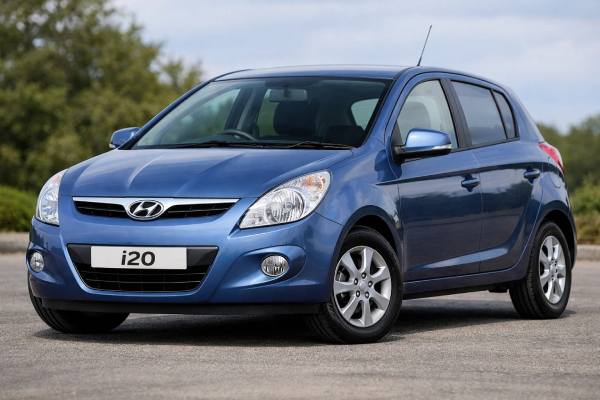
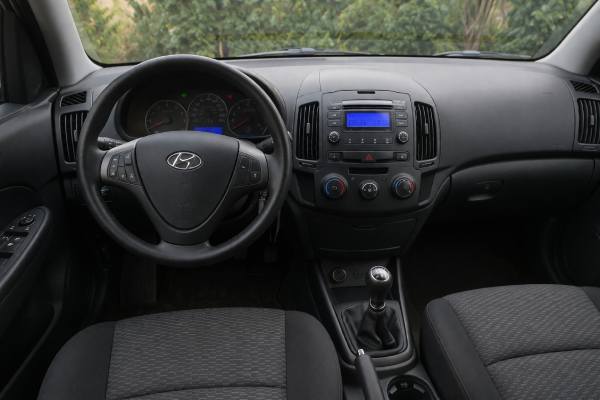
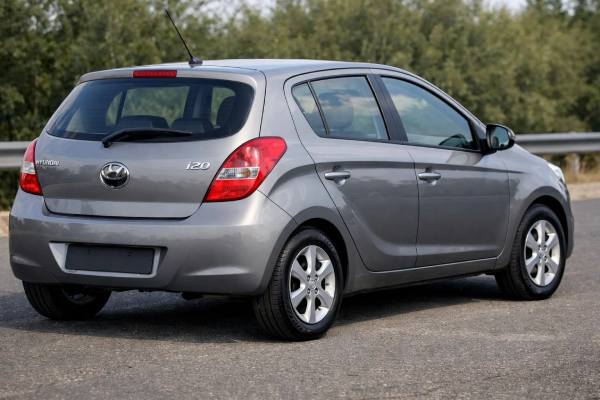
The first-generation Hyundai i20 PB was Hyundai’s serious push into the modern supermini class, and the 1.4 CRDi 75 hp diesel was the efficiency-led version of that plan. It is not the quick one in the range, but it has the traits many used-car buyers still want: a simple front-wheel-drive layout, strong low-rpm diesel torque for daily traffic, sensible running costs, and a cabin that feels more grown-up than many budget hatchbacks from the same period. In Europe, Hyundai backed the i20 with strong value and competitive safety equipment, and Euro NCAP’s 2009 result helped the car’s credibility. Today, though, this is an age-sensitive purchase. A well-kept example can still make an economical commuter or first car for long-distance users, while a neglected one can turn cheap fuel savings into injector, clutch, or emissions-system bills. The key is knowing which facts matter before you buy.
Owner Snapshot
- Strong low-end torque makes it easier to drive than its 75 hp figure suggests.
- Official combined economy of 4.4 L/100 km is still impressive for an older diesel hatchback.
- Cabin packaging is good for the class, helped by a 45 L fuel tank and useful boot space.
- Neglected cars can suffer from soot-related diesel issues, injector problems, clutch wear, and timing-chain noise.
- In normal European service, Hyundai scheduled engine oil and filter changes every 20,000 km or 12 months.
Navigate this guide
- Hyundai i20 PB Basics
- Hyundai i20 PB Data
- Hyundai i20 PB Trims
- Reliability and Known Faults
- Maintenance and Buying Advice
- On-Road Performance
- Rivals and Verdict
Hyundai i20 PB Basics
The PB-generation i20 replaced the Getz as Hyundai’s global B-segment hatchback and was designed to feel more mature, safer, and more competitive in Europe. The 1.4 CRDi 75 hp diesel sat on the economy side of the range, pairing a small-displacement common-rail turbo-diesel with a manual gearbox and front-wheel drive. In plain terms, this is the i20 for buyers who value torque, range, and low fuel use more than speed.
That matters because the 75 hp number does not tell the whole story. With 220 Nm of torque, the 1.4 CRDi feels stronger in normal urban and suburban driving than many naturally aspirated small petrol engines from the same era. It pulls acceptably from low revs, copes well with extra passengers, and suits commuting better than the 0–100 km/h time suggests. Hyundai’s period material also tied this engine to 116 g/km of CO2 and 4.4 L/100 km combined consumption, which made it one of the strongest low-running-cost options in the range.
The PB i20 also earned credibility through safety. Euro NCAP tested the i20 in 2009 and awarded it five stars, with 88% for adult occupant protection, 83% for child occupant protection, 64% for pedestrian protection, and 86% for safety assist. For a supermini from this period, that is a meaningful strength, especially for buyers comparing it with older budget hatchbacks that feel less secure structurally.
Practicality is another reason these cars still attract buyers. Official manual data lists overall dimensions at 3995 mm long, 1710 mm wide, and 1490 mm high, with a 2525 mm wheelbase. That wheelbase was generous for the class and helped rear-seat space. Hyundai also offered three-door and five-door body styles in Europe, with the three-door using the same basic platform and wheelbase as the five-door. In used-car terms, the shape is compact enough for city use but not so tiny that motorway or family duty feels unreasonable.
The catch is age. The newest cars in this bracket are now old enough that condition matters more than trim badge or brochure promise. A rust-free, correctly serviced diesel with proof of recall completion is far more attractive than a cheaper example with patchy oil history and unknown emissions-system care. That reality shapes the rest of the verdict on the i20 PB 1.4 CRDi 75.
Hyundai i20 PB Data
Public factory literature does not place every technical detail for this exact 75 hp diesel in one open document, so the table below focuses on figures that are directly documented in period Hyundai material and supported by widely consistent catalog data for the 75 hp 1.4 CRDi manual hatchback. Where open factory data is thin, that is noted rather than guessed.
| Powertrain and efficiency | Figure |
|---|---|
| Engine code | D4FC |
| Engine layout | Inline 4, DOHC, 4 valves per cylinder |
| Displacement | 1.4 L (1396 cc) |
| Bore × stroke | 75 × 79 mm (2.95 × 3.11 in) |
| Induction | Turbocharger with intercooler |
| Fuel system | Common-rail direct injection |
| Compression ratio | 17.0:1 |
| Max power | 75 hp (55 kW) @ 4000 rpm |
| Max torque | 220 Nm (162 lb-ft) @ 1750–2350 rpm |
| Transmission | 5-speed manual |
| Drive type | Front-wheel drive |
| Differential | Open |
| Official combined economy | 4.4 L/100 km (53.5 mpg US / 64.2 mpg UK) |
| Official urban economy | 5.5 L/100 km (42.8 mpg US / 51.4 mpg UK) |
| Official extra-urban economy | 3.8 L/100 km (61.9 mpg US / 74.3 mpg UK) |
| Chassis and dimensions | Figure |
|---|---|
| Suspension, front | MacPherson strut |
| Suspension, rear | Torsion beam |
| Steering | Rack-and-pinion, electric assist |
| Front brakes | Ventilated discs |
| Rear brakes | Market-dependent; many listings show rear discs on this variant |
| Most common tyre size | 175/70 R14 |
| Wheel size | 5.5J × 14 |
| Length | 3995 mm (157.3 in) |
| Width | 1710 mm (67.3 in) |
| Height | 1490 mm (58.7 in) |
| Wheelbase | 2525 mm (99.4 in) |
| Turning circle | 10.4 m (34.1 ft) |
| Ground clearance | 150 mm (5.9 in) |
| Fuel tank | 45 L (11.9 US gal / 9.9 UK gal) |
| Cargo volume, seats up | 295 L (10.4 ft³) |
| Performance | Figure |
|---|---|
| 0–100 km/h | 16.2 s |
| 0–62 mph | 16.2 s |
| Top speed | 161 km/h (100 mph) |
| Emissions standard | Euro 4 |
| CO2 | 116 g/km |
| Fluids and service capacities | Figure |
|---|---|
| Engine oil, with DPF | ACEA C2 or C3, 5.3 L (5.6 US qt) |
| Engine oil, without DPF | ACEA B4, 5.3 L (5.6 US qt) |
| Manual transaxle fluid | API GL-4 SAE 75W/85, 1.9–2.0 L (2.0–2.1 US qt) |
| Coolant guidance | Distilled or soft water in the correct coolant mixture for the aluminum engine |
| Wheel lug nut torque | 88–107 Nm (65–79 lb-ft) |
Those numbers tell an important story. This is not a hot hatch, and Hyundai never presented it as one. The 75 hp calibration trades pace for economy and tax-friendly emissions. What makes the package work is the torque curve and the low running-cost profile, not outright acceleration. That is why buyers who do a lot of mixed or motorway miles often like this version more than the stopwatch does.
A few fields are worth treating carefully when you shop. Published curb weights, rear-brake configuration, and some market-spec wheel packages vary across catalogs and regions, so it is best to confirm those on the actual car by VIN or build sticker. The same caution applies to DPF fitment, because oil specification and ownership risk change if the car uses a particulate filter.
Hyundai i20 PB Trims
For the European-market launch period, Hyundai offered the i20 in trims such as Classic, Comfort, and Style, and equipment climbed in a predictable way as you moved up. The lower trims focused on value, while higher versions added convenience items such as climate control, upgraded audio, steering-wheel controls, powered features, and dress-up details. The 1.4 CRDi 75 hp was usually aimed at buyers who wanted a low-emissions commuter rather than a luxury small car, so many examples on the used market are sensibly specified rather than heavily optioned.
That makes trim decoding worth doing before you buy. A plain-looking car can still be the right one if it has air conditioning, the correct seat configuration, a clean service record, and evidence of regular diesel maintenance. On the other hand, a higher trim with bigger wheels and more gadgets can become less attractive if its clutch, emissions hardware, or electrical systems have been neglected. In this model range, condition beats brochure prestige almost every time.
Safety equipment was one of the i20’s selling points. Hyundai highlighted six airbags, active head restraints, ABS, electronic brake-force distribution, and electronic stability control. Euro NCAP’s detailed 2009 report also listed driver and passenger frontal airbags, side chest airbags, side head airbags, pretensioners and load limiters, ISOFIX and top-tether mountings on the rear outboard seats, front and rear seatbelt reminders, and ESC on the tested specification. However, ESC was standard on many variants and optional on some, which matters because market and trim specifications were not identical everywhere.
The crash result itself is strong for the class and age. Euro NCAP’s five-star rating is not directly comparable with much newer test protocols, but within its own period it was a solid result and one of the reasons the i20 felt like a more serious contender than older Hyundai small cars. The body shell remained stable in the frontal impact test, child protection scored well overall, and the main criticisms centered on smaller details rather than a core structural weakness.
Buyers should not expect modern driver assistance. This era of i20 predates the widespread arrival of autonomous emergency braking, adaptive cruise control, lane centering, blind-spot monitoring, and traffic-sign systems in small cars. What you get instead is conventional passive safety, ABS, ESC where fitted, seatbelt reminders, and good visibility. That is still enough for many budget buyers, but it changes the value equation if you are cross-shopping against a much newer rival.
Quick identifiers help. Steel wheels and basic cabin trim often point to lower grades, while alloy wheels, climate-control panels, and upgraded steering-wheel buttons usually indicate Comfort or Style-type specifications. Because market names differ, the safest route is still the VIN, original sales invoice, or build documentation rather than relying only on a badge.
Reliability and Known Faults
The broad reliability verdict is fairly simple: the i20 PB 1.4 CRDi can be a durable small diesel, but it is now old enough that maintenance quality matters more than model reputation. There is no single public record showing a major design defect that defines every car. Instead, the biggest ownership differences come from service discipline, trip type, fuel quality, and whether previous owners dealt with problems early or kept driving through them.
The most common trouble pattern on older examples is diesel-related wear from short trips and deferred maintenance. Cars used mainly in town are more likely to suffer from EGR and intake soot loading, poor cold-start behavior, and general roughness if filters and oil changes were stretched. On DPF-equipped cars, the wrong oil grade is a real red flag because Hyundai specified low-ash ACEA C2 or C3 oil for those versions. On non-DPF cars, ACEA B4 is the relevant factory guidance. That one detail alone can tell you a lot about how carefully the car was maintained.
A practical way to think about the known issues is by prevalence and cost:
- Common, low to medium cost: tired batteries, glow-plug faults, sticky EGR behavior, worn brakes, suspension bush wear, and aged tyres on low-value cars.
- Occasional, medium cost: leaking injector seals, boost-hose leaks, rough idle from fuel-system faults, handbrake cable issues, wheel bearings, and air-conditioning weakness.
- Occasional, high cost: clutch wear, possible dual-mass flywheel expense on some cars, severe corrosion repair, and chain-related noise on neglected engines.
- Rare but important: unresolved recall items, accident-repair history, or badly maintained emissions hardware.
Symptoms matter more than folklore. A hard-starting engine, excessive diesel knock, fuel smell in the cabin, black smoke under load, or a hissing boost leak all justify a closer inspection. A rattly start-up on a cold engine can point to normal diesel harshness, but persistent chain-area noise on a poorly serviced car deserves more caution because Hyundai’s public maintenance material lists accessory-belt inspections, not a routine timing-belt replacement interval, which is consistent with a chain-driven setup but does not make the chain maintenance-free. Clean oil history still matters.
Corrosion is another deciding factor. In salted climates, pay close attention to sills, rear arches, the underside, brake lines, and subframe areas. Cosmetic rust is not unusual on cars of this age, but structural corrosion or badly patched repairs can turn a cheap i20 into a poor-value buy very quickly.
Official service actions are not extensive in the open public record, but they do exist. The UK government bulletin lists a non-code action for certain i20s concerning defective tyre valves that could cause loss of tyre inflation, and another action for some gasoline i20s built between October 2008 and August 2009 relating to possible wiring-loom damage. That second campaign is gasoline-specific, so it is not a direct warning about the 1.4 CRDi diesel, but it is still a reminder to check campaign completion by VIN and dealer history.
Before purchase, ask for full service records, proof of the correct oil type, evidence of fuel-filter changes, recent clutch or brake work if mileage is high, and confirmation that all open campaigns were completed. A cold start, a longer test drive, and an underbody inspection tell you much more than a polished exterior on this model.
Maintenance and Buying Advice
The best i20 PB diesels are the ones maintained by schedule and by condition. Hyundai’s normal European diesel schedule called for engine oil and filter changes every 20,000 km or 12 months, with shorter intervals under harsher use. For an older used example, many cautious owners now choose shorter oil intervals than the original maximum, especially if the car sees short trips, winter use, or uncertain fuel quality. That is cheap insurance on a small turbo-diesel.
A practical ownership schedule looks like this:
| Item | Practical interval |
|---|---|
| Engine oil and filter | Every 20,000 km or 12 months normal use; sooner in harsh use |
| Engine air filter | Inspect at every service; replace by condition or more often in dusty use |
| Cabin filter | Inspect annually; replace as airflow or odor declines |
| Fuel filter | Follow market schedule; if fuel does not meet EN590, Hyundai notes much shorter inspection and replacement intervals |
| Coolant | First replacement at 100,000 km or 60 months, then every 40,000 km or 24 months |
| Drive belts | First inspect at 80,000 km or 48 months, then every 20,000 km or 12 months |
| Brake fluid | Sensible 2-year service practice on cars of this age |
| Brakes, tyres, steering, boots, ball joints | Inspect at every service |
| Tyre rotation | About every 12,000 km or 7,500 miles |
| Manual gearbox oil | Check for leaks; refresh on age and mileage if history is unknown |
| 12 V battery | Test regularly after about 4 years |
| Timing chain | No routine replacement interval published in the open owner material; inspect if noisy or if timing faults appear |
| Key fluids and values | Figure |
|---|---|
| Engine oil, with DPF | ACEA C2 or C3, 5.3 L |
| Engine oil, without DPF | ACEA B4, 5.3 L |
| Manual gearbox fluid | API GL-4 SAE 75W/85, 1.9–2.0 L |
| Wheel lug nut torque | 88–107 Nm |
The buyer’s checklist should focus on the expensive basics, not cosmetics first:
- Start the engine from cold and listen for excessive rattle, chain-area noise, injector leak sounds, or uneven idle.
- Check for smoke under acceleration and make sure the engine pulls cleanly from low revs.
- Confirm the correct oil type was used, especially if the car has a DPF.
- Inspect the clutch bite point and watch for slip in higher gears.
- Look underneath for rust, fluid leaks, damaged brake lines, and tired suspension parts.
- Confirm air conditioning works properly.
- Verify recall and service-action completion by VIN.
- Check tyre wear for alignment problems or worn suspension bushes.
The best years and trims to seek are not always the richest ones. A simpler, rust-free diesel with documented maintenance is usually the smarter purchase than a nicer-looking, higher-trim car with unknown service history. Try to avoid examples with missing records, obvious injector blow-by, heavy smoke, or signs that the seller has masked warning lights.
Long-term durability is decent if the car has been cared for. The engine itself is not inherently fragile, but older diesel neglect gets expensive faster than older petrol neglect. In that sense, the i20 rewards disciplined ownership and punishes false economy.
On-Road Performance
On the road, the 1.4 CRDi 75 feels exactly like an efficiency-tuned supermini diesel from its era. It is easy to drive, flexible at modest speeds, and more useful in daily traffic than the power figure suggests. The 220 Nm torque output gives it enough shove for town work, roundabouts, and moderate inclines without constant downshifting. The trade-off is obvious once speeds rise: this is not a quick overtaking car on fast roads, and the 16.2-second 0–100 km/h time is honest evidence of that.
The engine’s character is mixed in a predictable way. Around town it can feel peppy enough because the torque arrives low in the rev range, but at start-up and under heavier acceleration it sounds like a small diesel of its generation: noticeably gruff, not especially refined, then calmer when cruising. If you want quietness and rev-happy response, a petrol rival will feel nicer. If you want inexpensive motorway commuting and long range, the CRDi still makes sense.
Ride and handling are secure rather than playful. The PB chassis uses a simple MacPherson-strut front and torsion-beam rear setup, which keeps the car predictable and inexpensive to maintain. Light steering and a compact footprint make parking easy, and the 10.4 m turning circle is useful in city driving. At the same time, the i20 does not have the sharp front-end response of the best-driving Ford Fiesta variants from the same period, and motorway wind and road noise are more noticeable than in newer small cars.
Fuel economy remains one of the strongest reasons to buy this engine. Official figures are 5.5 L/100 km urban, 3.8 L/100 km extra-urban, and 4.4 L/100 km combined. Real-world results are usually higher than the official number, which is normal for older test cycles, but still generally favorable for a conventional diesel hatchback. Gentle mixed use can stay close to the car’s reputation as a frugal commuter, while steady 120 km/h motorway use will usually consume noticeably more than the brochure combined figure.
Braking performance is adequate for the mission, though this is not a car bought for hard repeated braking or sporty tyre packages. What matters more in used examples is brake condition, tyre age, and suspension wear. A healthy i20 feels tidy and confidence-inspiring. A neglected one feels noisy, vague, and much older than it really is.
Rivals and Verdict
The i20 PB 1.4 CRDi 75 sits in a crowded field of late-2000s and early-2010s supermini diesels, so its value depends on what you care about most. Against a Ford Fiesta diesel of similar age, the Hyundai is usually less entertaining to drive but often feels like the calmer value choice. Against a Volkswagen Polo or Skoda Fabia diesel, it can look less polished inside, but it often offers stronger equipment-per-price and a simpler ownership proposition if you find a good one. Against a Toyota Yaris 1.4 D-4D, the Hyundai usually wins on price and often on cabin size, while the Toyota tends to keep the stronger reliability image.
The nearest natural rival may actually be the Kia Rio of the same period because the package logic is similar: value, sensible space, and diesel economy instead of driver-chasing sparkle. In that context, the i20’s biggest strengths are easy to see. It offers strong official efficiency, useful torque, a respectable safety result for its era, and practical dimensions without feeling flimsy or too basic.
Its weaknesses are just as clear. The 75 hp version is slow on paper and only modest on the open road. Refinement is average, modern driver-assistance technology is absent, and older diesel ownership always carries maintenance risk if the previous owner cut corners. That means the i20 is not the universal best buy in the class. It is the right buy for a specific person: someone who wants a cheap-to-run, straightforward small hatchback and is willing to prioritize condition, records, and mechanical honesty over badge prestige or sporty driving feel.
Overall, the Hyundai i20 PB 1.4 CRDi 75 is still a sensible used car when bought carefully. Its core advantages are economy, torque, packaging, and safety for the period. Its main dangers are age, neglect, and the false savings of a poorly maintained diesel. Buy the clean one, not the cheapest one, and the verdict becomes much easier.
References
- Hyundai Owners manuals | Hyundai Motor UK 2026 (Owner’s Manual)
- Handleidingen | Hyundai Motor Nederland 2026 (Owner’s Manual)
- Hyundai i20 three-door 2009 (Manufacturer release)
- HYUNDAI I20 – Euro NCAP Results 2009 2009 (Safety Rating)
- Non Code Action Bulletin: 01 January 2008 2013 (Recall Database)
Disclaimer
This article is for informational purposes only and is not a substitute for professional diagnosis, repair, or vehicle inspection. Specifications, torque values, service intervals, fluids, procedures, and fitted equipment can vary by VIN, market, build date, emissions hardware, and trim level, so always verify details against the official service documentation and parts information for the exact vehicle.
If this guide helped you, please consider sharing it on Facebook, X, or another social platform to support our work.
Hyundai i20 (PB) 1.4 l / 75 hp / 2008 / 2009 / 2010 / 2011 / 2012 : Specs, Dimensions, and Reliability
Hyundai i20 (PB) 1.4 l / 75 hp / 2008 / 2009 / 2010 / 2011 / 2012 : Specs, Performance, and Economy
Hyundai i20 (PB) 1.4 l / 75 hp / 2008 / 2009 / 2010 / 2011 / 2012 : Specs, Safety, and Maintenance
Hyundai i20 (PB) 1.4 l / 75 hp / 2008 / 2009 / 2010 / 2011 / 2012 : Specs, Common Problems, and Buying Guide
Hyundai i20 (PB) 1.4 l / 75 hp / 2008 / 2009 / 2010 / 2011 / 2012 : Specs, Engine Data, and Running Costs
Hyundai i20 (PB) 1.4 l / 75 hp / 2008 / 2009 / 2010 / 2011 / 2012 : Specs, Ownership, and Service Intervals
Hyundai i20 (PB) 1.4 l / 75 hp / 2008 / 2009 / 2010 / 2011 / 2012 : Specs, Practicality, and Rivals
Hyundai i20 (PB) 1.4 l / 75 hp / 2008 / 2009 / 2010 / 2011 / 2012 : Specs, Fuel Economy, and Durability
The first-generation Hyundai i20 PB was Hyundai’s serious push into the modern supermini class, and the 1.4 CRDi 75 hp diesel was the efficiency-led version of that plan. It is not the quick one in the range, but it has the traits many used-car buyers still want: a simple front-wheel-drive layout, strong low-rpm diesel torque for daily traffic, sensible running costs, and a cabin that feels more grown-up than many budget hatchbacks from the same period. In Europe, Hyundai backed the i20 with strong value and competitive safety equipment, and Euro NCAP’s 2009 result helped the car’s credibility. Today, though, this is an age-sensitive purchase. A well-kept example can still make an economical commuter or first car for long-distance users, while a neglected one can turn cheap fuel savings into injector, clutch, or emissions-system bills. The key is knowing which facts matter before you buy.
Owner Snapshot
- Strong low-end torque makes it easier to drive than its 75 hp figure suggests.
- Official combined economy of 4.4 L/100 km is still impressive for an older diesel hatchback.
- Cabin packaging is good for the class, helped by a 45 L fuel tank and useful boot space.
- Neglected cars can suffer from soot-related diesel issues, injector problems, clutch wear, and timing-chain noise.
- In normal European service, Hyundai scheduled engine oil and filter changes every 20,000 km or 12 months.
Navigate this guide
- Hyundai i20 PB Basics
- Hyundai i20 PB Data
- Hyundai i20 PB Trims
- Reliability and Known Faults
- Maintenance and Buying Advice
- On-Road Performance
- Rivals and Verdict
Hyundai i20 PB Basics
The PB-generation i20 replaced the Getz as Hyundai’s global B-segment hatchback and was designed to feel more mature, safer, and more competitive in Europe. The 1.4 CRDi 75 hp diesel sat on the economy side of the range, pairing a small-displacement common-rail turbo-diesel with a manual gearbox and front-wheel drive. In plain terms, this is the i20 for buyers who value torque, range, and low fuel use more than speed.
That matters because the 75 hp number does not tell the whole story. With 220 Nm of torque, the 1.4 CRDi feels stronger in normal urban and suburban driving than many naturally aspirated small petrol engines from the same era. It pulls acceptably from low revs, copes well with extra passengers, and suits commuting better than the 0–100 km/h time suggests. Hyundai’s period material also tied this engine to 116 g/km of CO2 and 4.4 L/100 km combined consumption, which made it one of the strongest low-running-cost options in the range.
The PB i20 also earned credibility through safety. Euro NCAP tested the i20 in 2009 and awarded it five stars, with 88% for adult occupant protection, 83% for child occupant protection, 64% for pedestrian protection, and 86% for safety assist. For a supermini from this period, that is a meaningful strength, especially for buyers comparing it with older budget hatchbacks that feel less secure structurally.
Practicality is another reason these cars still attract buyers. Official manual data lists overall dimensions at 3995 mm long, 1710 mm wide, and 1490 mm high, with a 2525 mm wheelbase. That wheelbase was generous for the class and helped rear-seat space. Hyundai also offered three-door and five-door body styles in Europe, with the three-door using the same basic platform and wheelbase as the five-door. In used-car terms, the shape is compact enough for city use but not so tiny that motorway or family duty feels unreasonable.
The catch is age. The newest cars in this bracket are now old enough that condition matters more than trim badge or brochure promise. A rust-free, correctly serviced diesel with proof of recall completion is far more attractive than a cheaper example with patchy oil history and unknown emissions-system care. That reality shapes the rest of the verdict on the i20 PB 1.4 CRDi 75.
Hyundai i20 PB Data
Public factory literature does not place every technical detail for this exact 75 hp diesel in one open document, so the table below focuses on figures that are directly documented in period Hyundai material and supported by widely consistent catalog data for the 75 hp 1.4 CRDi manual hatchback. Where open factory data is thin, that is noted rather than guessed.
| Powertrain and efficiency | Figure |
|---|---|
| Engine code | D4FC |
| Engine layout | Inline 4, DOHC, 4 valves per cylinder |
| Displacement | 1.4 L (1396 cc) |
| Bore × stroke | 75 × 79 mm (2.95 × 3.11 in) |
| Induction | Turbocharger with intercooler |
| Fuel system | Common-rail direct injection |
| Compression ratio | 17.0:1 |
| Max power | 75 hp (55 kW) @ 4000 rpm |
| Max torque | 220 Nm (162 lb-ft) @ 1750–2350 rpm |
| Transmission | 5-speed manual |
| Drive type | Front-wheel drive |
| Differential | Open |
| Official combined economy | 4.4 L/100 km (53.5 mpg US / 64.2 mpg UK) |
| Official urban economy | 5.5 L/100 km (42.8 mpg US / 51.4 mpg UK) |
| Official extra-urban economy | 3.8 L/100 km (61.9 mpg US / 74.3 mpg UK) |
| Chassis and dimensions | Figure |
|---|---|
| Suspension, front | MacPherson strut |
| Suspension, rear | Torsion beam |
| Steering | Rack-and-pinion, electric assist |
| Front brakes | Ventilated discs |
| Rear brakes | Market-dependent; many listings show rear discs on this variant |
| Most common tyre size | 175/70 R14 |
| Wheel size | 5.5J × 14 |
| Length | 3995 mm (157.3 in) |
| Width | 1710 mm (67.3 in) |
| Height | 1490 mm (58.7 in) |
| Wheelbase | 2525 mm (99.4 in) |
| Turning circle | 10.4 m (34.1 ft) |
| Ground clearance | 150 mm (5.9 in) |
| Fuel tank | 45 L (11.9 US gal / 9.9 UK gal) |
| Cargo volume, seats up | 295 L (10.4 ft³) |
| Performance | Figure |
|---|---|
| 0–100 km/h | 16.2 s |
| 0–62 mph | 16.2 s |
| Top speed | 161 km/h (100 mph) |
| Emissions standard | Euro 4 |
| CO2 | 116 g/km |
| Fluids and service capacities | Figure |
|---|---|
| Engine oil, with DPF | ACEA C2 or C3, 5.3 L (5.6 US qt) |
| Engine oil, without DPF | ACEA B4, 5.3 L (5.6 US qt) |
| Manual transaxle fluid | API GL-4 SAE 75W/85, 1.9–2.0 L (2.0–2.1 US qt) |
| Coolant guidance | Distilled or soft water in the correct coolant mixture for the aluminum engine |
| Wheel lug nut torque | 88–107 Nm (65–79 lb-ft) |
Those numbers tell an important story. This is not a hot hatch, and Hyundai never presented it as one. The 75 hp calibration trades pace for economy and tax-friendly emissions. What makes the package work is the torque curve and the low running-cost profile, not outright acceleration. That is why buyers who do a lot of mixed or motorway miles often like this version more than the stopwatch does.
A few fields are worth treating carefully when you shop. Published curb weights, rear-brake configuration, and some market-spec wheel packages vary across catalogs and regions, so it is best to confirm those on the actual car by VIN or build sticker. The same caution applies to DPF fitment, because oil specification and ownership risk change if the car uses a particulate filter.
Hyundai i20 PB Trims
For the European-market launch period, Hyundai offered the i20 in trims such as Classic, Comfort, and Style, and equipment climbed in a predictable way as you moved up. The lower trims focused on value, while higher versions added convenience items such as climate control, upgraded audio, steering-wheel controls, powered features, and dress-up details. The 1.4 CRDi 75 hp was usually aimed at buyers who wanted a low-emissions commuter rather than a luxury small car, so many examples on the used market are sensibly specified rather than heavily optioned.
That makes trim decoding worth doing before you buy. A plain-looking car can still be the right one if it has air conditioning, the correct seat configuration, a clean service record, and evidence of regular diesel maintenance. On the other hand, a higher trim with bigger wheels and more gadgets can become less attractive if its clutch, emissions hardware, or electrical systems have been neglected. In this model range, condition beats brochure prestige almost every time.
Safety equipment was one of the i20’s selling points. Hyundai highlighted six airbags, active head restraints, ABS, electronic brake-force distribution, and electronic stability control. Euro NCAP’s detailed 2009 report also listed driver and passenger frontal airbags, side chest airbags, side head airbags, pretensioners and load limiters, ISOFIX and top-tether mountings on the rear outboard seats, front and rear seatbelt reminders, and ESC on the tested specification. However, ESC was standard on many variants and optional on some, which matters because market and trim specifications were not identical everywhere.
The crash result itself is strong for the class and age. Euro NCAP’s five-star rating is not directly comparable with much newer test protocols, but within its own period it was a solid result and one of the reasons the i20 felt like a more serious contender than older Hyundai small cars. The body shell remained stable in the frontal impact test, child protection scored well overall, and the main criticisms centered on smaller details rather than a core structural weakness.
Buyers should not expect modern driver assistance. This era of i20 predates the widespread arrival of autonomous emergency braking, adaptive cruise control, lane centering, blind-spot monitoring, and traffic-sign systems in small cars. What you get instead is conventional passive safety, ABS, ESC where fitted, seatbelt reminders, and good visibility. That is still enough for many budget buyers, but it changes the value equation if you are cross-shopping against a much newer rival.
Quick identifiers help. Steel wheels and basic cabin trim often point to lower grades, while alloy wheels, climate-control panels, and upgraded steering-wheel buttons usually indicate Comfort or Style-type specifications. Because market names differ, the safest route is still the VIN, original sales invoice, or build documentation rather than relying only on a badge.
Reliability and Known Faults
The broad reliability verdict is fairly simple: the i20 PB 1.4 CRDi can be a durable small diesel, but it is now old enough that maintenance quality matters more than model reputation. There is no single public record showing a major design defect that defines every car. Instead, the biggest ownership differences come from service discipline, trip type, fuel quality, and whether previous owners dealt with problems early or kept driving through them.
The most common trouble pattern on older examples is diesel-related wear from short trips and deferred maintenance. Cars used mainly in town are more likely to suffer from EGR and intake soot loading, poor cold-start behavior, and general roughness if filters and oil changes were stretched. On DPF-equipped cars, the wrong oil grade is a real red flag because Hyundai specified low-ash ACEA C2 or C3 oil for those versions. On non-DPF cars, ACEA B4 is the relevant factory guidance. That one detail alone can tell you a lot about how carefully the car was maintained.
A practical way to think about the known issues is by prevalence and cost:
- Common, low to medium cost: tired batteries, glow-plug faults, sticky EGR behavior, worn brakes, suspension bush wear, and aged tyres on low-value cars.
- Occasional, medium cost: leaking injector seals, boost-hose leaks, rough idle from fuel-system faults, handbrake cable issues, wheel bearings, and air-conditioning weakness.
- Occasional, high cost: clutch wear, possible dual-mass flywheel expense on some cars, severe corrosion repair, and chain-related noise on neglected engines.
- Rare but important: unresolved recall items, accident-repair history, or badly maintained emissions hardware.
Symptoms matter more than folklore. A hard-starting engine, excessive diesel knock, fuel smell in the cabin, black smoke under load, or a hissing boost leak all justify a closer inspection. A rattly start-up on a cold engine can point to normal diesel harshness, but persistent chain-area noise on a poorly serviced car deserves more caution because Hyundai’s public maintenance material lists accessory-belt inspections, not a routine timing-belt replacement interval, which is consistent with a chain-driven setup but does not make the chain maintenance-free. Clean oil history still matters.
Corrosion is another deciding factor. In salted climates, pay close attention to sills, rear arches, the underside, brake lines, and subframe areas. Cosmetic rust is not unusual on cars of this age, but structural corrosion or badly patched repairs can turn a cheap i20 into a poor-value buy very quickly.
Official service actions are not extensive in the open public record, but they do exist. The UK government bulletin lists a non-code action for certain i20s concerning defective tyre valves that could cause loss of tyre inflation, and another action for some gasoline i20s built between October 2008 and August 2009 relating to possible wiring-loom damage. That second campaign is gasoline-specific, so it is not a direct warning about the 1.4 CRDi diesel, but it is still a reminder to check campaign completion by VIN and dealer history.
Before purchase, ask for full service records, proof of the correct oil type, evidence of fuel-filter changes, recent clutch or brake work if mileage is high, and confirmation that all open campaigns were completed. A cold start, a longer test drive, and an underbody inspection tell you much more than a polished exterior on this model.
Maintenance and Buying Advice
The best i20 PB diesels are the ones maintained by schedule and by condition. Hyundai’s normal European diesel schedule called for engine oil and filter changes every 20,000 km or 12 months, with shorter intervals under harsher use. For an older used example, many cautious owners now choose shorter oil intervals than the original maximum, especially if the car sees short trips, winter use, or uncertain fuel quality. That is cheap insurance on a small turbo-diesel.
A practical ownership schedule looks like this:
| Item | Practical interval |
|---|---|
| Engine oil and filter | Every 20,000 km or 12 months normal use; sooner in harsh use |
| Engine air filter | Inspect at every service; replace by condition or more often in dusty use |
| Cabin filter | Inspect annually; replace as airflow or odor declines |
| Fuel filter | Follow market schedule; if fuel does not meet EN590, Hyundai notes much shorter inspection and replacement intervals |
| Coolant | First replacement at 100,000 km or 60 months, then every 40,000 km or 24 months |
| Drive belts | First inspect at 80,000 km or 48 months, then every 20,000 km or 12 months |
| Brake fluid | Sensible 2-year service practice on cars of this age |
| Brakes, tyres, steering, boots, ball joints | Inspect at every service |
| Tyre rotation | About every 12,000 km or 7,500 miles |
| Manual gearbox oil | Check for leaks; refresh on age and mileage if history is unknown |
| 12 V battery | Test regularly after about 4 years |
| Timing chain | No routine replacement interval published in the open owner material; inspect if noisy or if timing faults appear |
| Key fluids and values | Figure |
|---|---|
| Engine oil, with DPF | ACEA C2 or C3, 5.3 L |
| Engine oil, without DPF | ACEA B4, 5.3 L |
| Manual gearbox fluid | API GL-4 SAE 75W/85, 1.9–2.0 L |
| Wheel lug nut torque | 88–107 Nm |
The buyer’s checklist should focus on the expensive basics, not cosmetics first:
- Start the engine from cold and listen for excessive rattle, chain-area noise, injector leak sounds, or uneven idle.
- Check for smoke under acceleration and make sure the engine pulls cleanly from low revs.
- Confirm the correct oil type was used, especially if the car has a DPF.
- Inspect the clutch bite point and watch for slip in higher gears.
- Look underneath for rust, fluid leaks, damaged brake lines, and tired suspension parts.
- Confirm air conditioning works properly.
- Verify recall and service-action completion by VIN.
- Check tyre wear for alignment problems or worn suspension bushes.
The best years and trims to seek are not always the richest ones. A simpler, rust-free diesel with documented maintenance is usually the smarter purchase than a nicer-looking, higher-trim car with unknown service history. Try to avoid examples with missing records, obvious injector blow-by, heavy smoke, or signs that the seller has masked warning lights.
Long-term durability is decent if the car has been cared for. The engine itself is not inherently fragile, but older diesel neglect gets expensive faster than older petrol neglect. In that sense, the i20 rewards disciplined ownership and punishes false economy.
On-Road Performance
On the road, the 1.4 CRDi 75 feels exactly like an efficiency-tuned supermini diesel from its era. It is easy to drive, flexible at modest speeds, and more useful in daily traffic than the power figure suggests. The 220 Nm torque output gives it enough shove for town work, roundabouts, and moderate inclines without constant downshifting. The trade-off is obvious once speeds rise: this is not a quick overtaking car on fast roads, and the 16.2-second 0–100 km/h time is honest evidence of that.
The engine’s character is mixed in a predictable way. Around town it can feel peppy enough because the torque arrives low in the rev range, but at start-up and under heavier acceleration it sounds like a small diesel of its generation: noticeably gruff, not especially refined, then calmer when cruising. If you want quietness and rev-happy response, a petrol rival will feel nicer. If you want inexpensive motorway commuting and long range, the CRDi still makes sense.
Ride and handling are secure rather than playful. The PB chassis uses a simple MacPherson-strut front and torsion-beam rear setup, which keeps the car predictable and inexpensive to maintain. Light steering and a compact footprint make parking easy, and the 10.4 m turning circle is useful in city driving. At the same time, the i20 does not have the sharp front-end response of the best-driving Ford Fiesta variants from the same period, and motorway wind and road noise are more noticeable than in newer small cars.
Fuel economy remains one of the strongest reasons to buy this engine. Official figures are 5.5 L/100 km urban, 3.8 L/100 km extra-urban, and 4.4 L/100 km combined. Real-world results are usually higher than the official number, which is normal for older test cycles, but still generally favorable for a conventional diesel hatchback. Gentle mixed use can stay close to the car’s reputation as a frugal commuter, while steady 120 km/h motorway use will usually consume noticeably more than the brochure combined figure.
Braking performance is adequate for the mission, though this is not a car bought for hard repeated braking or sporty tyre packages. What matters more in used examples is brake condition, tyre age, and suspension wear. A healthy i20 feels tidy and confidence-inspiring. A neglected one feels noisy, vague, and much older than it really is.
Rivals and Verdict
The i20 PB 1.4 CRDi 75 sits in a crowded field of late-2000s and early-2010s supermini diesels, so its value depends on what you care about most. Against a Ford Fiesta diesel of similar age, the Hyundai is usually less entertaining to drive but often feels like the calmer value choice. Against a Volkswagen Polo or Skoda Fabia diesel, it can look less polished inside, but it often offers stronger equipment-per-price and a simpler ownership proposition if you find a good one. Against a Toyota Yaris 1.4 D-4D, the Hyundai usually wins on price and often on cabin size, while the Toyota tends to keep the stronger reliability image.
The nearest natural rival may actually be the Kia Rio of the same period because the package logic is similar: value, sensible space, and diesel economy instead of driver-chasing sparkle. In that context, the i20’s biggest strengths are easy to see. It offers strong official efficiency, useful torque, a respectable safety result for its era, and practical dimensions without feeling flimsy or too basic.
Its weaknesses are just as clear. The 75 hp version is slow on paper and only modest on the open road. Refinement is average, modern driver-assistance technology is absent, and older diesel ownership always carries maintenance risk if the previous owner cut corners. That means the i20 is not the universal best buy in the class. It is the right buy for a specific person: someone who wants a cheap-to-run, straightforward small hatchback and is willing to prioritize condition, records, and mechanical honesty over badge prestige or sporty driving feel.
Overall, the Hyundai i20 PB 1.4 CRDi 75 is still a sensible used car when bought carefully. Its core advantages are economy, torque, packaging, and safety for the period. Its main dangers are age, neglect, and the false savings of a poorly maintained diesel. Buy the clean one, not the cheapest one, and the verdict becomes much easier.
References
- Hyundai Owners manuals | Hyundai Motor UK 2026 (Owner’s Manual)
- Handleidingen | Hyundai Motor Nederland 2026 (Owner’s Manual)
- Hyundai i20 three-door 2009 (Manufacturer release)
- HYUNDAI I20 – Euro NCAP Results 2009 2009 (Safety Rating)
- Non Code Action Bulletin: 01 January 2008 2013 (Recall Database)
Disclaimer
This article is for informational purposes only and is not a substitute for professional diagnosis, repair, or vehicle inspection. Specifications, torque values, service intervals, fluids, procedures, and fitted equipment can vary by VIN, market, build date, emissions hardware, and trim level, so always verify details against the official service documentation and parts information for the exact vehicle.
If this guide helped you, please consider sharing it on Facebook, X, or another social platform to support our work.
Hyundai i20 (PB) 1.4 l / 75 hp / 2008 / 2009 / 2010 / 2011 / 2012 : Specs, Dimensions, and Reliability
Hyundai i20 (PB) 1.4 l / 75 hp / 2008 / 2009 / 2010 / 2011 / 2012 : Specs, Performance, and Economy
Hyundai i20 (PB) — 1.4 CRDi / 1.4l — 75 hp – Diesel — 2008–2012 : Specs, Dimensions, Performance, Reliability, Safety ratings, Maintenance, and Advantages.
The first-generation Hyundai i20 PB was Hyundai’s serious push into the modern supermini class, and the 1.4 CRDi 75 hp diesel was the efficiency-led version of that plan. It is not the quick one in the range, but it has the traits many used-car buyers still want: a simple front-wheel-drive layout, strong low-rpm diesel torque for daily traffic, sensible running costs, and a cabin that feels more grown-up than many budget hatchbacks from the same period. In Europe, Hyundai backed the i20 with strong value and competitive safety equipment, and Euro NCAP’s 2009 result helped the car’s credibility. Today, though, this is an age-sensitive purchase. A well-kept example can still make an economical commuter or first car for long-distance users, while a neglected one can turn cheap fuel savings into injector, clutch, or emissions-system bills. The key is knowing which facts matter before you buy.
Owner Snapshot
- Strong low-end torque makes it easier to drive than its 75 hp figure suggests.
- Official combined economy of 4.4 L/100 km is still impressive for an older diesel hatchback.
- Cabin packaging is good for the class, helped by a 45 L fuel tank and useful boot space.
- Neglected cars can suffer from soot-related diesel issues, injector problems, clutch wear, and timing-chain noise.
- In normal European service, Hyundai scheduled engine oil and filter changes every 20,000 km or 12 months.
Navigate this guide
- Hyundai i20 PB Basics
- Hyundai i20 PB Data
- Hyundai i20 PB Trims
- Reliability and Known Faults
- Maintenance and Buying Advice
- On-Road Performance
- Rivals and Verdict
Hyundai i20 PB Basics
The PB-generation i20 replaced the Getz as Hyundai’s global B-segment hatchback and was designed to feel more mature, safer, and more competitive in Europe. The 1.4 CRDi 75 hp diesel sat on the economy side of the range, pairing a small-displacement common-rail turbo-diesel with a manual gearbox and front-wheel drive. In plain terms, this is the i20 for buyers who value torque, range, and low fuel use more than speed.
That matters because the 75 hp number does not tell the whole story. With 220 Nm of torque, the 1.4 CRDi feels stronger in normal urban and suburban driving than many naturally aspirated small petrol engines from the same era. It pulls acceptably from low revs, copes well with extra passengers, and suits commuting better than the 0–100 km/h time suggests. Hyundai’s period material also tied this engine to 116 g/km of CO2 and 4.4 L/100 km combined consumption, which made it one of the strongest low-running-cost options in the range.
The PB i20 also earned credibility through safety. Euro NCAP tested the i20 in 2009 and awarded it five stars, with 88% for adult occupant protection, 83% for child occupant protection, 64% for pedestrian protection, and 86% for safety assist. For a supermini from this period, that is a meaningful strength, especially for buyers comparing it with older budget hatchbacks that feel less secure structurally.
Practicality is another reason these cars still attract buyers. Official manual data lists overall dimensions at 3995 mm long, 1710 mm wide, and 1490 mm high, with a 2525 mm wheelbase. That wheelbase was generous for the class and helped rear-seat space. Hyundai also offered three-door and five-door body styles in Europe, with the three-door using the same basic platform and wheelbase as the five-door. In used-car terms, the shape is compact enough for city use but not so tiny that motorway or family duty feels unreasonable.
The catch is age. The newest cars in this bracket are now old enough that condition matters more than trim badge or brochure promise. A rust-free, correctly serviced diesel with proof of recall completion is far more attractive than a cheaper example with patchy oil history and unknown emissions-system care. That reality shapes the rest of the verdict on the i20 PB 1.4 CRDi 75.
Hyundai i20 PB Data
Public factory literature does not place every technical detail for this exact 75 hp diesel in one open document, so the table below focuses on figures that are directly documented in period Hyundai material and supported by widely consistent catalog data for the 75 hp 1.4 CRDi manual hatchback. Where open factory data is thin, that is noted rather than guessed.
| Powertrain and efficiency | Figure |
|---|---|
| Engine code | D4FC |
| Engine layout | Inline 4, DOHC, 4 valves per cylinder |
| Displacement | 1.4 L (1396 cc) |
| Bore × stroke | 75 × 79 mm (2.95 × 3.11 in) |
| Induction | Turbocharger with intercooler |
| Fuel system | Common-rail direct injection |
| Compression ratio | 17.0:1 |
| Max power | 75 hp (55 kW) @ 4000 rpm |
| Max torque | 220 Nm (162 lb-ft) @ 1750–2350 rpm |
| Transmission | 5-speed manual |
| Drive type | Front-wheel drive |
| Differential | Open |
| Official combined economy | 4.4 L/100 km (53.5 mpg US / 64.2 mpg UK) |
| Official urban economy | 5.5 L/100 km (42.8 mpg US / 51.4 mpg UK) |
| Official extra-urban economy | 3.8 L/100 km (61.9 mpg US / 74.3 mpg UK) |
| Chassis and dimensions | Figure |
|---|---|
| Suspension, front | MacPherson strut |
| Suspension, rear | Torsion beam |
| Steering | Rack-and-pinion, electric assist |
| Front brakes | Ventilated discs |
| Rear brakes | Market-dependent; many listings show rear discs on this variant |
| Most common tyre size | 175/70 R14 |
| Wheel size | 5.5J × 14 |
| Length | 3995 mm (157.3 in) |
| Width | 1710 mm (67.3 in) |
| Height | 1490 mm (58.7 in) |
| Wheelbase | 2525 mm (99.4 in) |
| Turning circle | 10.4 m (34.1 ft) |
| Ground clearance | 150 mm (5.9 in) |
| Fuel tank | 45 L (11.9 US gal / 9.9 UK gal) |
| Cargo volume, seats up | 295 L (10.4 ft³) |
| Performance | Figure |
|---|---|
| 0–100 km/h | 16.2 s |
| 0–62 mph | 16.2 s |
| Top speed | 161 km/h (100 mph) |
| Emissions standard | Euro 4 |
| CO2 | 116 g/km |
| Fluids and service capacities | Figure |
|---|---|
| Engine oil, with DPF | ACEA C2 or C3, 5.3 L (5.6 US qt) |
| Engine oil, without DPF | ACEA B4, 5.3 L (5.6 US qt) |
| Manual transaxle fluid | API GL-4 SAE 75W/85, 1.9–2.0 L (2.0–2.1 US qt) |
| Coolant guidance | Distilled or soft water in the correct coolant mixture for the aluminum engine |
| Wheel lug nut torque | 88–107 Nm (65–79 lb-ft) |
Those numbers tell an important story. This is not a hot hatch, and Hyundai never presented it as one. The 75 hp calibration trades pace for economy and tax-friendly emissions. What makes the package work is the torque curve and the low running-cost profile, not outright acceleration. That is why buyers who do a lot of mixed or motorway miles often like this version more than the stopwatch does.
A few fields are worth treating carefully when you shop. Published curb weights, rear-brake configuration, and some market-spec wheel packages vary across catalogs and regions, so it is best to confirm those on the actual car by VIN or build sticker. The same caution applies to DPF fitment, because oil specification and ownership risk change if the car uses a particulate filter.
Hyundai i20 PB Trims
For the European-market launch period, Hyundai offered the i20 in trims such as Classic, Comfort, and Style, and equipment climbed in a predictable way as you moved up. The lower trims focused on value, while higher versions added convenience items such as climate control, upgraded audio, steering-wheel controls, powered features, and dress-up details. The 1.4 CRDi 75 hp was usually aimed at buyers who wanted a low-emissions commuter rather than a luxury small car, so many examples on the used market are sensibly specified rather than heavily optioned.
That makes trim decoding worth doing before you buy. A plain-looking car can still be the right one if it has air conditioning, the correct seat configuration, a clean service record, and evidence of regular diesel maintenance. On the other hand, a higher trim with bigger wheels and more gadgets can become less attractive if its clutch, emissions hardware, or electrical systems have been neglected. In this model range, condition beats brochure prestige almost every time.
Safety equipment was one of the i20’s selling points. Hyundai highlighted six airbags, active head restraints, ABS, electronic brake-force distribution, and electronic stability control. Euro NCAP’s detailed 2009 report also listed driver and passenger frontal airbags, side chest airbags, side head airbags, pretensioners and load limiters, ISOFIX and top-tether mountings on the rear outboard seats, front and rear seatbelt reminders, and ESC on the tested specification. However, ESC was standard on many variants and optional on some, which matters because market and trim specifications were not identical everywhere.
The crash result itself is strong for the class and age. Euro NCAP’s five-star rating is not directly comparable with much newer test protocols, but within its own period it was a solid result and one of the reasons the i20 felt like a more serious contender than older Hyundai small cars. The body shell remained stable in the frontal impact test, child protection scored well overall, and the main criticisms centered on smaller details rather than a core structural weakness.
Buyers should not expect modern driver assistance. This era of i20 predates the widespread arrival of autonomous emergency braking, adaptive cruise control, lane centering, blind-spot monitoring, and traffic-sign systems in small cars. What you get instead is conventional passive safety, ABS, ESC where fitted, seatbelt reminders, and good visibility. That is still enough for many budget buyers, but it changes the value equation if you are cross-shopping against a much newer rival.
Quick identifiers help. Steel wheels and basic cabin trim often point to lower grades, while alloy wheels, climate-control panels, and upgraded steering-wheel buttons usually indicate Comfort or Style-type specifications. Because market names differ, the safest route is still the VIN, original sales invoice, or build documentation rather than relying only on a badge.
Reliability and Known Faults
The broad reliability verdict is fairly simple: the i20 PB 1.4 CRDi can be a durable small diesel, but it is now old enough that maintenance quality matters more than model reputation. There is no single public record showing a major design defect that defines every car. Instead, the biggest ownership differences come from service discipline, trip type, fuel quality, and whether previous owners dealt with problems early or kept driving through them.
The most common trouble pattern on older examples is diesel-related wear from short trips and deferred maintenance. Cars used mainly in town are more likely to suffer from EGR and intake soot loading, poor cold-start behavior, and general roughness if filters and oil changes were stretched. On DPF-equipped cars, the wrong oil grade is a real red flag because Hyundai specified low-ash ACEA C2 or C3 oil for those versions. On non-DPF cars, ACEA B4 is the relevant factory guidance. That one detail alone can tell you a lot about how carefully the car was maintained.
A practical way to think about the known issues is by prevalence and cost:
- Common, low to medium cost: tired batteries, glow-plug faults, sticky EGR behavior, worn brakes, suspension bush wear, and aged tyres on low-value cars.
- Occasional, medium cost: leaking injector seals, boost-hose leaks, rough idle from fuel-system faults, handbrake cable issues, wheel bearings, and air-conditioning weakness.
- Occasional, high cost: clutch wear, possible dual-mass flywheel expense on some cars, severe corrosion repair, and chain-related noise on neglected engines.
- Rare but important: unresolved recall items, accident-repair history, or badly maintained emissions hardware.
Symptoms matter more than folklore. A hard-starting engine, excessive diesel knock, fuel smell in the cabin, black smoke under load, or a hissing boost leak all justify a closer inspection. A rattly start-up on a cold engine can point to normal diesel harshness, but persistent chain-area noise on a poorly serviced car deserves more caution because Hyundai’s public maintenance material lists accessory-belt inspections, not a routine timing-belt replacement interval, which is consistent with a chain-driven setup but does not make the chain maintenance-free. Clean oil history still matters.
Corrosion is another deciding factor. In salted climates, pay close attention to sills, rear arches, the underside, brake lines, and subframe areas. Cosmetic rust is not unusual on cars of this age, but structural corrosion or badly patched repairs can turn a cheap i20 into a poor-value buy very quickly.
Official service actions are not extensive in the open public record, but they do exist. The UK government bulletin lists a non-code action for certain i20s concerning defective tyre valves that could cause loss of tyre inflation, and another action for some gasoline i20s built between October 2008 and August 2009 relating to possible wiring-loom damage. That second campaign is gasoline-specific, so it is not a direct warning about the 1.4 CRDi diesel, but it is still a reminder to check campaign completion by VIN and dealer history.
Before purchase, ask for full service records, proof of the correct oil type, evidence of fuel-filter changes, recent clutch or brake work if mileage is high, and confirmation that all open campaigns were completed. A cold start, a longer test drive, and an underbody inspection tell you much more than a polished exterior on this model.
Maintenance and Buying Advice
The best i20 PB diesels are the ones maintained by schedule and by condition. Hyundai’s normal European diesel schedule called for engine oil and filter changes every 20,000 km or 12 months, with shorter intervals under harsher use. For an older used example, many cautious owners now choose shorter oil intervals than the original maximum, especially if the car sees short trips, winter use, or uncertain fuel quality. That is cheap insurance on a small turbo-diesel.
A practical ownership schedule looks like this:
| Item | Practical interval |
|---|---|
| Engine oil and filter | Every 20,000 km or 12 months normal use; sooner in harsh use |
| Engine air filter | Inspect at every service; replace by condition or more often in dusty use |
| Cabin filter | Inspect annually; replace as airflow or odor declines |
| Fuel filter | Follow market schedule; if fuel does not meet EN590, Hyundai notes much shorter inspection and replacement intervals |
| Coolant | First replacement at 100,000 km or 60 months, then every 40,000 km or 24 months |
| Drive belts | First inspect at 80,000 km or 48 months, then every 20,000 km or 12 months |
| Brake fluid | Sensible 2-year service practice on cars of this age |
| Brakes, tyres, steering, boots, ball joints | Inspect at every service |
| Tyre rotation | About every 12,000 km or 7,500 miles |
| Manual gearbox oil | Check for leaks; refresh on age and mileage if history is unknown |
| 12 V battery | Test regularly after about 4 years |
| Timing chain | No routine replacement interval published in the open owner material; inspect if noisy or if timing faults appear |
| Key fluids and values | Figure |
|---|---|
| Engine oil, with DPF | ACEA C2 or C3, 5.3 L |
| Engine oil, without DPF | ACEA B4, 5.3 L |
| Manual gearbox fluid | API GL-4 SAE 75W/85, 1.9–2.0 L |
| Wheel lug nut torque | 88–107 Nm |
The buyer’s checklist should focus on the expensive basics, not cosmetics first:
- Start the engine from cold and listen for excessive rattle, chain-area noise, injector leak sounds, or uneven idle.
- Check for smoke under acceleration and make sure the engine pulls cleanly from low revs.
- Confirm the correct oil type was used, especially if the car has a DPF.
- Inspect the clutch bite point and watch for slip in higher gears.
- Look underneath for rust, fluid leaks, damaged brake lines, and tired suspension parts.
- Confirm air conditioning works properly.
- Verify recall and service-action completion by VIN.
- Check tyre wear for alignment problems or worn suspension bushes.
The best years and trims to seek are not always the richest ones. A simpler, rust-free diesel with documented maintenance is usually the smarter purchase than a nicer-looking, higher-trim car with unknown service history. Try to avoid examples with missing records, obvious injector blow-by, heavy smoke, or signs that the seller has masked warning lights.
Long-term durability is decent if the car has been cared for. The engine itself is not inherently fragile, but older diesel neglect gets expensive faster than older petrol neglect. In that sense, the i20 rewards disciplined ownership and punishes false economy.
On-Road Performance
On the road, the 1.4 CRDi 75 feels exactly like an efficiency-tuned supermini diesel from its era. It is easy to drive, flexible at modest speeds, and more useful in daily traffic than the power figure suggests. The 220 Nm torque output gives it enough shove for town work, roundabouts, and moderate inclines without constant downshifting. The trade-off is obvious once speeds rise: this is not a quick overtaking car on fast roads, and the 16.2-second 0–100 km/h time is honest evidence of that.
The engine’s character is mixed in a predictable way. Around town it can feel peppy enough because the torque arrives low in the rev range, but at start-up and under heavier acceleration it sounds like a small diesel of its generation: noticeably gruff, not especially refined, then calmer when cruising. If you want quietness and rev-happy response, a petrol rival will feel nicer. If you want inexpensive motorway commuting and long range, the CRDi still makes sense.
Ride and handling are secure rather than playful. The PB chassis uses a simple MacPherson-strut front and torsion-beam rear setup, which keeps the car predictable and inexpensive to maintain. Light steering and a compact footprint make parking easy, and the 10.4 m turning circle is useful in city driving. At the same time, the i20 does not have the sharp front-end response of the best-driving Ford Fiesta variants from the same period, and motorway wind and road noise are more noticeable than in newer small cars.
Fuel economy remains one of the strongest reasons to buy this engine. Official figures are 5.5 L/100 km urban, 3.8 L/100 km extra-urban, and 4.4 L/100 km combined. Real-world results are usually higher than the official number, which is normal for older test cycles, but still generally favorable for a conventional diesel hatchback. Gentle mixed use can stay close to the car’s reputation as a frugal commuter, while steady 120 km/h motorway use will usually consume noticeably more than the brochure combined figure.
Braking performance is adequate for the mission, though this is not a car bought for hard repeated braking or sporty tyre packages. What matters more in used examples is brake condition, tyre age, and suspension wear. A healthy i20 feels tidy and confidence-inspiring. A neglected one feels noisy, vague, and much older than it really is.
Rivals and Verdict
The i20 PB 1.4 CRDi 75 sits in a crowded field of late-2000s and early-2010s supermini diesels, so its value depends on what you care about most. Against a Ford Fiesta diesel of similar age, the Hyundai is usually less entertaining to drive but often feels like the calmer value choice. Against a Volkswagen Polo or Skoda Fabia diesel, it can look less polished inside, but it often offers stronger equipment-per-price and a simpler ownership proposition if you find a good one. Against a Toyota Yaris 1.4 D-4D, the Hyundai usually wins on price and often on cabin size, while the Toyota tends to keep the stronger reliability image.
The nearest natural rival may actually be the Kia Rio of the same period because the package logic is similar: value, sensible space, and diesel economy instead of driver-chasing sparkle. In that context, the i20’s biggest strengths are easy to see. It offers strong official efficiency, useful torque, a respectable safety result for its era, and practical dimensions without feeling flimsy or too basic.
Its weaknesses are just as clear. The 75 hp version is slow on paper and only modest on the open road. Refinement is average, modern driver-assistance technology is absent, and older diesel ownership always carries maintenance risk if the previous owner cut corners. That means the i20 is not the universal best buy in the class. It is the right buy for a specific person: someone who wants a cheap-to-run, straightforward small hatchback and is willing to prioritize condition, records, and mechanical honesty over badge prestige or sporty driving feel.
Overall, the Hyundai i20 PB 1.4 CRDi 75 is still a sensible used car when bought carefully. Its core advantages are economy, torque, packaging, and safety for the period. Its main dangers are age, neglect, and the false savings of a poorly maintained diesel. Buy the clean one, not the cheapest one, and the verdict becomes much easier.
References
- Hyundai Owners manuals | Hyundai Motor UK 2026 (Owner’s Manual)
- Handleidingen | Hyundai Motor Nederland 2026 (Owner’s Manual)
- Hyundai i20 three-door 2009 (Manufacturer release)
- HYUNDAI I20 – Euro NCAP Results 2009 2009 (Safety Rating)
- Non Code Action Bulletin: 01 January 2008 2013 (Recall Database)
Disclaimer
This article is for informational purposes only and is not a substitute for professional diagnosis, repair, or vehicle inspection. Specifications, torque values, service intervals, fluids, procedures, and fitted equipment can vary by VIN, market, build date, emissions hardware, and trim level, so always verify details against the official service documentation and parts information for the exact vehicle.
If this guide helped you, please consider sharing it on Facebook, X, or another social platform to support our work.