
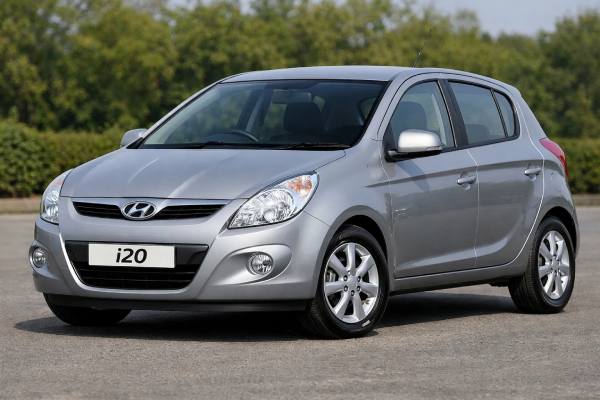
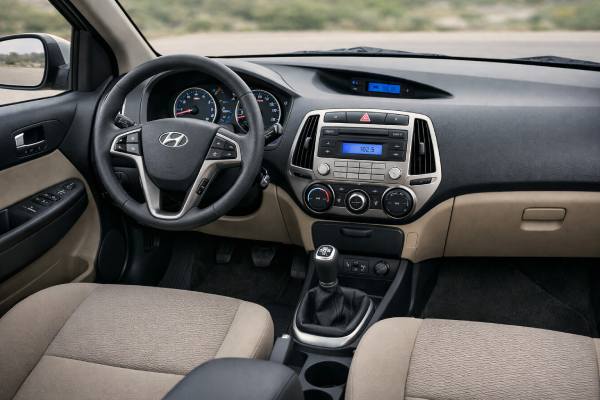
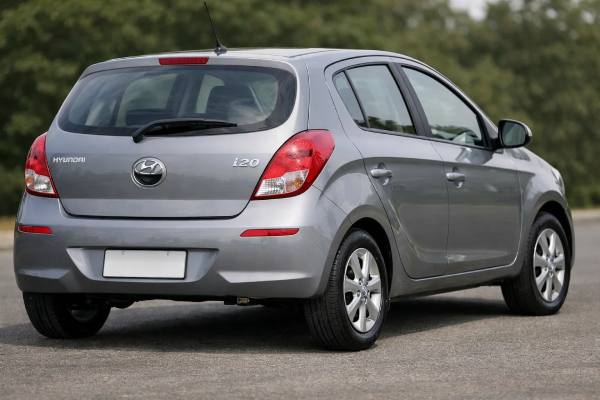
The Hyundai i20 PB 1.4 CRDi 90 is one of those small hatchbacks that makes the most sense when you look past the headline power figure. On paper, 90 hp does not sound especially exciting, but the diesel’s healthy low-rpm torque gives the car a more relaxed and flexible character than many naturally aspirated small hatch rivals from the same era. It was also one of the more practical options in the class, with a roomy cabin, a useful boot, and safety credentials that were strong for its time. Across the 2008 to 2012 run, though, buyers need to treat the i20 as a family of closely related versions rather than one fixed specification. Early cars, facelifted cars, and Blue Drive versions can differ in gearing, emissions class, dimensions, and equipment. That is why VIN, trim, and market matter so much when you compare specs, service intervals, parts, or real-world ownership expectations.
Owner Snapshot
- Strong diesel torque makes the i20 feel easier and more flexible than its 90 hp figure suggests.
- Cabin space, boot volume, and everyday usability are genuine strengths for a supermini of this era.
- Later cars can offer lower CO2 output and better cruising manners, especially with the 6-speed manual.
- Condition matters more than reputation now, with cooling leaks, clutch wear, tired suspension, and minor electrical faults worth checking closely.
- A normal-service oil and filter change is due every 20,000 km or 12 months, while severe-use service is every 10,000 km or 6 months.
Guide contents
- Hyundai i20 PB in context
- Hyundai i20 PB specs and capacities
- Hyundai i20 PB trims and safety tech
- Reliability issues and factory actions
- Maintenance plan and buyer checks
- Road manners and diesel character
- Hyundai i20 PB versus rivals
Hyundai i20 PB in context
The PB-generation Hyundai i20 replaced the older Getz with a car that felt more modern in design, packaging, and safety. In 1.4 CRDi 90 form, it also became one of the more appealing versions for buyers who covered mixed mileage and wanted strong fuel economy without moving into a larger hatchback. The key number here is not just the 90 hp output, but the diesel’s 220 Nm torque figure, which gives the car a stronger everyday response than the modest power figure suggests. In normal driving, that matters more than outright acceleration.
One reason the i20 remains relevant as a used buy is that it feels like a “full” small car rather than a stripped-down city runabout. The seating position is easy to live with, the rear bench is serviceable for adults on shorter trips, and the luggage space is useful enough for commuting, airport runs, or light family duty. That broad ability is one of the reasons these cars still make sense as affordable daily transport.
Buyers do need to remember that the 2008 to 2012 period covers more than one meaningful specification. Early cars in many European listings are shorter, often paired with a 5-speed manual, and usually tied to older emissions tuning. Later facelifted and Blue Drive cars in some markets brought revised dimensions, lower official fuel-consumption figures, lower CO2 output, and in some cases a 6-speed manual. These changes affect real ownership more than they first appear to. A late 6-speed car is usually the better motorway companion, while an early car may still be a smart buy if the price is lower and the maintenance record is stronger.
The i20’s basic appeal rests on four things. It is practical, efficient, easy to place on the road, and generally straightforward to own. It also offered solid safety for the class, which helped it stand out when new. The weak points are equally familiar. It is not the most engaging supermini to drive, refinement is only average by modern standards, and older diesel examples need careful inspection because neglect can erase the model’s value advantage very quickly. A good one still feels like honest transport. A poor one can feel tired and expensive in a hurry.
Hyundai i20 PB specs and capacities
Because this article covers the full 2008 to 2012 span, the most useful way to present the i20 PB 1.4 CRDi 90 is to separate the core fixed specs from the areas that can vary by year, market, and trim. The engine architecture stays broadly consistent, but details such as gearbox choice, dimensions, tyre size, and official economy can differ between early and late cars.
Powertrain and efficiency
| Item | Hyundai i20 PB 1.4 CRDi 90 |
|---|---|
| Engine layout | Inline-4 turbo-diesel |
| Valvetrain | DOHC, 16 valves |
| Displacement | 1.4 L (1396 cc) |
| Bore × stroke | 75.0 × 79.0 mm |
| Fuel system | Common-rail diesel injection |
| Induction | Turbocharged |
| Compression ratio | Commonly listed at 17.0:1 |
| Max power | 90 hp (66 kW) at 4,000 rpm |
| Max torque | 220 Nm at low to mid rpm |
| Timing drive | Verify by VIN and engine specification before parts ordering |
| Official combined economy | About 4.4 L/100 km on many early cars; lower on some later Blue Drive versions |
| Real-world highway at 120 km/h | Usually around the low-5 L/100 km range in healthy cars |
Transmission and driveline
| Item | Typical figure |
|---|---|
| Transmission | 5-speed manual on many early cars; 6-speed manual on some later versions |
| Drive type | Front-wheel drive |
| Differential | Open |
Chassis and dimensions
| Item | Typical figure |
|---|---|
| Front suspension | MacPherson strut |
| Rear suspension | Torsion beam |
| Steering | Rack-and-pinion with electric assist |
| Turning circle | 5.2 m |
| Length | 3940 mm early / 3995 mm on some later facelift cars |
| Width | 1710 mm |
| Height | 1490 mm |
| Wheelbase | 2525 mm |
| Kerb weight | About 1230 kg, depending on body and trim |
| GVWR | About 1650 kg |
| Fuel tank | 45 L |
| Cargo volume | 295 L seats up / 1060 L seats folded |
| Popular tyre sizes | 185/60 R15 and 195/50 R16, depending on trim |
Performance and capability
| Item | Typical figure |
|---|---|
| 0–100 km/h | About 13.6 s |
| 0–62 mph | About 13.5 s |
| Top speed | Roughly 171–174 km/h |
| Towing capacity | Up to 1100 kg braked on some later UK-market figures |
| Unbraked trailer | Around 450 kg |
| Payload | Roughly 400 kg, depending on trim |
Fluids and service capacities
| Item | Figure |
|---|---|
| Engine oil specification | API CH-4 or higher / ACEA B4 |
| Engine oil viscosity | Check climate and market guidance before filling |
| Engine oil capacity | 5.3 L |
| Manual transaxle fluid | GL-4 SAE 75W-85 |
| Manual transaxle capacity | 1.9 L |
| Coolant capacity | 6.8 L |
| Brake and clutch fluid | About 0.7–0.8 L |
| A/C refrigerant | R-134a |
| Wheel nut torque | 88–107 Nm |
The main practical takeaway is simple: the broad specification is easy to understand, but exact details matter. If you are comparing tyres, brakes, gearbox parts, or body dimensions, always confirm the VIN and trim rather than assuming all i20 PB 1.4 CRDi 90 cars are identical.
Hyundai i20 PB trims and safety tech
Trim structure depended on market, but the i20 PB generally followed a familiar small-hatch formula. Lower trims were built around value and low running costs, while mid- and upper-spec versions added comfort equipment, nicer wheel designs, improved audio systems, and in some cases the more desirable tyre and gearbox combinations. For a used buyer, this matters because two cars with the same engine badge can feel meaningfully different in daily use.
Entry-level cars tend to sit on smaller wheels and simpler interior trim, and they usually offer the cheapest long-term running costs for tyres and brake wear. Mid-spec cars often strike the best balance because they add convenience features without piling on expensive cosmetic items. Higher trims can look better and feel a little richer inside, especially when fitted with alloy wheels, upgraded upholstery, and more complete infotainment or audio packages. In some markets, Blue Drive versions are especially worth identifying correctly because they can carry the best official fuel economy and emissions figures in the range.
Mechanical differences are not dramatic, but they matter. A later 6-speed diesel is the more appealing option for drivers who spend a lot of time at highway speeds, while an earlier 5-speed car may be perfectly adequate for mixed or urban use. Wheel size also affects the character of the car. Smaller-wheel versions generally ride more softly and cost less to maintain. Larger-wheel trims can look better and feel slightly tighter, but they often bring firmer low-speed ride quality and higher tyre costs.
Safety was a strong point for the i20 PB when new. The model earned a 5-star Euro NCAP result, which gave it a solid reputation in a class where not every rival matched it at the time. Depending on trim and market, buyers will usually find six airbags, ABS, electronic brake-force distribution, stability control, seatbelt reminders, ISOFIX child-seat mountings, and a passenger airbag deactivation switch. That is a respectable passive-safety package for a supermini from this era.
What the car does not offer is modern advanced driver assistance. Do not expect adaptive cruise control, lane centering, blind-spot monitoring, or a fully developed automatic emergency braking package. In this Hyundai, safety comes from sound structural performance and standard stability systems rather than contemporary driver aids. That simplicity can be an advantage for long-term ownership, but it also means drivers need to judge it by the standards of its time, not by what a new supermini offers today.
Reliability issues and factory actions
The Hyundai i20 PB 1.4 CRDi does not have a single dominant flaw that defines every car, but it does follow a clear used-car pattern. The strongest examples tend to be the ones with consistent maintenance and sensible ownership. The weakest cars are usually the ones that have been run on a budget, driven mainly on short trips, or repaired only when a fault became impossible to ignore. That means condition and history matter more than model reputation alone.
Common lower-cost problems are the sort of issues you expect on an aging supermini. Paint can chip easily, exterior trim may show wear early, and small electrical faults can appear in items such as central locking, windows, radio functions, or key-related electronics. These faults are annoying more than disastrous, but they are useful clues. A scruffy cabin, broken switches, and tired trim often suggest broader neglect elsewhere.
The next tier of concern is mechanical wear. Clutch shudder, a heavy pedal, or poor engagement feel should be taken seriously on a diesel supermini because city use can be hard on the clutch system. Suspension bushes, dampers, wheel bearings, and CV joints can also show their age by now, especially on rough roads. A car that knocks over broken surfaces or feels unstable in fast lane changes may simply need normal wear items, but buyers should price that work in rather than treating it as a surprise.
Cooling-system health deserves extra attention. Radiator seepage, hose deterioration, coolant staining, or an engine that smells hot after a drive all deserve follow-up. A small diesel that runs low on coolant can become expensive quickly, and many buyers overlook early warning signs because the car still appears to drive normally. Steering should also be checked carefully. Electric-assist issues are not universal, but warning lights, inconsistent assistance, or a notchy feel are all reasons to pause.
For the diesel engine itself, focus on symptoms rather than myths. Hard starting, excess smoke, whistle beyond normal turbo noise, boost leaks, uneven idle, or repeated fuel-system faults all deserve proper diagnosis. A healthy 1.4 CRDi should feel willing at low rpm and should not need heroic throttle inputs to move smartly. If it feels flat, smoky, or hesitant, assume the car needs work.
Factory actions and recall history are not especially dramatic for this model, but that does not make them unimportant. Buyers should still check official VIN-based recall records and dealer history, especially on older cars with incomplete paperwork. Proof of completed service actions is always a plus, particularly when the car already shows warning lights or odd driveability behavior.
Maintenance plan and buyer checks
The i20 PB 1.4 CRDi is at its best when it gets routine maintenance on time and is used in a way that suits a small turbo-diesel. Long intervals can work in theory, but severe-use driving changes the picture. Repeated short trips, cold starts, dusty roads, and heavy urban traffic all justify earlier servicing. That is often the difference between a cheap diesel that stays dependable and one that becomes a series of preventable faults.
Practical maintenance schedule
| Item | Normal schedule | Severe-use or practical note |
|---|---|---|
| Engine oil and filter | Every 20,000 km or 12 months | Every 10,000 km or 6 months |
| Cabin air filter | Every 20,000 km or 12 months | Replace sooner in dusty or urban conditions |
| Engine air filter | Inspect regularly | Replace earlier in dusty use |
| Fuel filter | Inspect at intervals, replace at 60,000 km in many schedules | Shorten if fuel quality is poor |
| Coolant | First at 100,000 km or 60 months | Then every 40,000 km or 24 months |
| Brake and clutch fluid | First at 48,000 km or 24 months | Then every 40,000 km or 24 months |
| Manual gearbox oil | Inspect on normal schedule | Replace around 100,000 km in severe use |
| Brakes, tyres, steering, suspension | Inspect at every service | Rotate tyres and check alignment as needed |
| 12 V battery | Test annually once older | Budget for 4–6 years depending on use |
| Auxiliary belts and hoses | Inspect each service | Replace on condition |
| Timing components | Verify exact system and interval by VIN | Never assume from a generic listing |
A few service figures are especially useful when checking invoices or preparing for ownership. Engine oil capacity is 5.3 L, manual transmission capacity is 1.9 L, coolant capacity is 6.8 L, and wheel nut torque sits in the 88–107 Nm range. Those are practical numbers to keep on hand because they help separate accurate servicing from guesswork.
A buyer’s inspection should focus on the basics first. Look for paint defects, corrosion beginning around body edges or underbody points, and any sign of poor accident repair. Then move to fluids: coolant staining, damp hose joints, oil leaks, and diesel smell around the engine bay matter more than polished paint. On the test drive, check clutch take-up, gearbox action, brake feel, and steering consistency with the car fully warmed up.
The best used examples are the ones with a complete service history, evidence of proper fluid changes, and a general sense of tidy ownership. The ones to avoid are cars with fresh cosmetic cleanup but vague paperwork, warning lights, inconsistent idle, or signs of chronic overheating. Long term, the i20 can be durable, but only when maintenance has been steady rather than reactive.
Road manners and diesel character
The i20 PB 1.4 CRDi is a car that feels better in real traffic than it does on paper. Its strength is not outright pace, but the way the diesel engine delivers torque low in the rev range. Around town, that makes the car feel light on effort. It pulls cleanly away from junctions, handles mild inclines without fuss, and needs fewer gear changes than many small gasoline rivals from the same era. For daily commuting, that easy flexibility is one of its strongest selling points.
Performance is best described as sufficient rather than quick. A healthy example can manage the 0–100 km/h run in the mid-13-second range, which is entirely normal for a small diesel hatchback of this period. The important thing is how it feels rather than how it times. In everyday use, the engine’s low-end torque gives it a more relaxed character than the numbers suggest, especially when carrying passengers or luggage.
On the road, the chassis is predictable and honest. The steering is light, the body control is acceptable, and the car is easy to place in traffic or in narrow city streets. It is not especially communicative by enthusiast standards, and some drivers may find the steering a little artificial, but the overall setup suits the i20’s practical mission. Smaller-wheel versions usually ride better over broken surfaces, while larger wheels can sharpen the response slightly at the cost of extra firmness.
Refinement is average for an older supermini diesel. At low speeds, some diesel clatter is part of the experience, and at highway pace the car is competent rather than especially quiet. This is where later 6-speed versions have an advantage. They generally feel more settled at higher speeds and make better use of the engine’s torque band. Early 5-speed cars can still cruise perfectly well, but they tend to feel busier.
Fuel economy remains one of the car’s main advantages. Official combined figures vary by year and specification, with some later Blue Drive models posting very low paper figures. In the real world, a healthy car usually lands around the low-5 L/100 km range on steady highway work, with higher numbers in urban use or cold weather. That still makes the 1.4 CRDi an economical choice for drivers who cover regular mileage. The verdict is simple: this is not a sporty supermini, but it is an efficient, easy, and mature small hatch when used as intended.
Hyundai i20 PB versus rivals
The Hyundai i20 PB 1.4 CRDi competed in one of the toughest parts of the European market, where buyers expected low running costs, easy parking, decent safety, and real-world practicality. Against its main rivals, the i20’s advantage was rarely excitement. Its advantage was balance. It combined useful diesel torque, solid cabin space, respectable safety, and generally sensible ownership costs in one package.
Compared with sharper-handling alternatives, the Hyundai can feel more conservative. Some rivals offered more steering feel or more playful chassis tuning. Even so, the i20 often made a better case for buyers who wanted a small car that felt grown up in everyday use. The roomy interior and useful boot helped it appeal to drivers who needed a city-sized hatchback without accepting a cramped or flimsy-feeling cabin.
Its diesel engine also gave it a clear role. If you were covering regular mixed mileage, commuting longer distances, or doing frequent A-road and motorway trips, the 1.4 CRDi made more sense than many small naturally aspirated gasoline engines of the time. It delivered better low-rpm flexibility and often lower fuel consumption. That remains true today, as long as the car is used in a way that suits an older diesel. For drivers who only do short urban trips, the same diesel advantage can become less compelling.
The i20’s safety story also helped it stand out. While modern standards have moved on, the PB-generation car offered a strong safety package for its era, and that still counts in the used market. Families shopping on a budget often value that combination of practicality and credible crash performance more than sharper steering or a more fashionable badge.
So which buyers should choose one? The i20 PB 1.4 CRDi is best for someone who wants an affordable small hatch that feels sensible, efficient, and straightforward. A later 6-speed or Blue Drive car is usually the most attractive option for higher-mileage use. An earlier 5-speed car can still be a very smart buy if it is cleaner, better maintained, and priced correctly. The cars to avoid are the ones with weak histories, poor cooling-system health, tired clutches, or a general sense of neglect. Buy on condition, not on brochure promise, and the i20 remains one of the more rational used supermini diesels of its generation.
References
- Hyundai Owners manuals | Hyundai Motor UK 2026 (Owner’s Manual)
- HYUNDAI I20 – Euro NCAP Results 2009 2009 (Safety Rating)
- Home | Hyundai Recalls & Service Campaigns 2026 (Recall Database)
- Check if a vehicle, part or accessory has been recalled 2026 (Recall Database)
Disclaimer
This article is for informational purposes only and is not a substitute for professional diagnosis, inspection, or repair. Specifications, torque values, service intervals, fluid requirements, and procedures can vary by VIN, market, body style, emissions standard, and fitted equipment, so always verify against official service documentation for the exact vehicle.
If this guide was useful, please consider sharing it on Facebook, X, or another platform to support our work.