
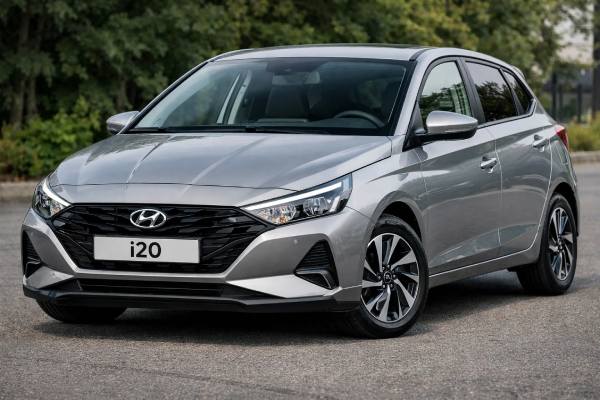
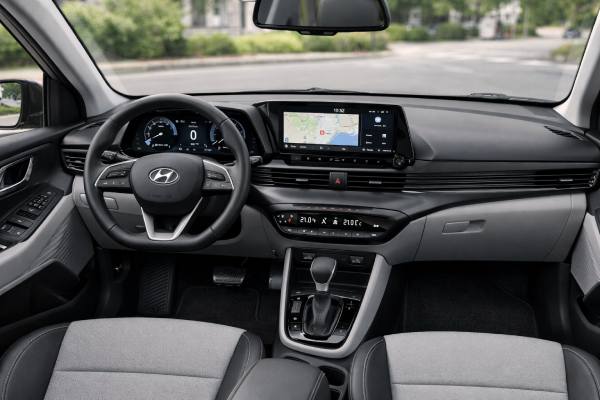
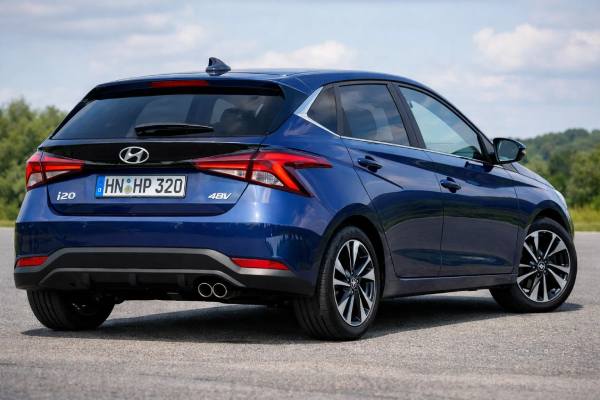
The facelifted Hyundai i20 BC3 1.2 MPi 79 hp is the version for buyers who want the newest shape of the i20 without stepping into turbo-petrol complexity. It keeps the sharp-looking BC3 body, the roomy cabin, and the modern safety and infotainment upgrades introduced in the facelift era, but pairs them with a conventional naturally aspirated four-cylinder engine and a simple 5-speed manual. That matters more than the modest power figure suggests. In everyday ownership, the 1.2 MPi is easier to understand, usually cheaper to maintain than the turbo alternatives, and better suited to drivers who value low drama over strong acceleration. The trade-off is clear: it is smooth and honest, but not fast. For city use, commuting, and general family hatchback duty, that can be a very good balance. For heavy motorway work or full-load hill driving, the 1.0 T-GDi still makes more sense.
Quick Overview
- The 1.2 MPi engine keeps the facelifted i20 mechanically simple and easier to own than the turbo versions.
- The BC3 body offers strong supermini practicality, with a roomy cabin and a 352 L boot.
- Current-market facelift cars bring improved infotainment and a broad active-safety package, even in lower trims.
- This is a condition-sensitive used buy: cheap tyres, weak brakes, and overdue servicing make the 79 hp car feel slower and rougher than it should.
- A practical oil-and-filter service every 10,000–15,000 km or 12 months is a smart real-world interval.
Quick navigation
- Hyundai i20 BC3 current-market role
- Hyundai i20 BC3 1.2 essentials
- Hyundai i20 BC3 grade and safety mix
- Typical problems and campaigns
- Maintenance schedule and buying advice
- Real-world pace and economy
- BC3 i20 against rivals
Hyundai i20 BC3 current-market role
The BC3-generation i20 was already a more polished and more ambitious car than the older GB model, but the facelifted version sharpened the formula in exactly the areas buyers now notice first. The exterior gained cleaner front and rear detailing, the interior kept its modern horizontal layout, and the equipment list moved closer to what people expect from a much larger hatchback. That is why the current i20 no longer feels like a value-first small car that happens to be well equipped. It feels like a genuinely modern supermini that can compete on design, technology, and safety.
The 1.2 MPi 79 hp version sits at the calm, simple end of that range. Depending on market, the facelift-era powertrain line-up changed over time, and some countries now position the 1.2 as the entry engine while others lean more heavily on the 1.0 T-GDi. That is important because the title “2024–present” can cover slightly different trim and engine combinations depending on region. In current European-market form, the 1.2 MPi is best understood as the low-complexity choice: a naturally aspirated four-cylinder with multi-point injection, a 5-speed manual, and front-wheel drive.
That sounds ordinary, and in a good way it is. Buyers who keep cars for a long time often prefer the ordinary version once the warranty period is over. There is no turbocharger, no direct-injection intake deposit concern dominating the conversation, and no dual-clutch transmission as standard. The 1.2 MPi does not turn the BC3 into a warm hatch, but it does preserve the qualities that make the current i20 easy to live with: good visibility, a stable and mature platform, a well-packaged interior, and a useful hatchback boot.
This version also benefits from the BC3’s basic proportions. The car is wider and longer than earlier i20s, the wheelbase is generous for the class, and the cabin genuinely feels roomy in front and usable in the rear. That is why the 79 hp version still works as a family’s second car or a daily commuter rather than only as a first-car compromise. It feels like a proper small hatchback, not an urban penalty box.
There is one clear limit, though. Performance is adequate, not abundant. The 1.2 suits urban, suburban, and mixed secondary-road use very well, but buyers who spend long hours on high-speed roads with passengers and luggage may find it a little stretched. That does not make it a bad engine. It just makes it a specialised one. The facelift BC3 1.2 MPi is for drivers who value ownership ease, predictable service needs, and modern cabin and safety features more than strong mid-range acceleration. Judged on those terms, it is one of the most rational current i20 variants.
Hyundai i20 BC3 1.2 essentials
The current 1.2 MPi i20 uses Hyundai’s naturally aspirated four-cylinder petrol layout rather than the smaller turbocharged three-cylinder engines used higher up the range. In current-market European material, the engine is listed at 58 kW, or 79 PS, with 113 Nm of torque and a 5-speed manual transmission. While facelift-era feature content changed, the basic BC3 platform dimensions and body packaging stayed largely consistent, which means the practical strengths of the 2020 car carried forward into the later facelift generation.
Powertrain and efficiency
| Item | Figure |
|---|---|
| Code | 1.2 MPi four-cylinder petrol family |
| Engine layout and cylinders | Inline-four, 4 cylinders, DOHC, 4 valves per cylinder |
| Bore × stroke | 71.0 × 76.0 mm (2.80 × 2.99 in) |
| Displacement | 1.2 L (1,197 cc) |
| Induction | Naturally aspirated |
| Fuel system | Multi-point petrol injection |
| Compression ratio | 11.0:1 |
| Max power | 79 hp / 79 PS (58 kW) @ 6,000 rpm |
| Max torque | 113 Nm (83 lb-ft) @ 4,200 rpm |
| Timing drive | Chain |
| Rated efficiency | About 5.3 L/100 km combined in current published European-market data |
| Real-world highway @ 120 km/h | Usually around 6.2–7.0 L/100 km in healthy trim |
Transmission and driveline
| Item | Figure |
|---|---|
| Transmission | 5-speed manual |
| Drive type | FWD |
| Differential | Open |
Chassis and dimensions
| Item | Figure |
|---|---|
| Suspension (front / rear) | MacPherson strut / Coupled torsion beam axle |
| Steering | Electric power steering |
| Steering ratio | About 15.0:1 on the 1.2 setup |
| Steering lock-to-lock | 2.7 turns |
| Brakes | Front ventilated discs, rear drum brakes on the basic 1.2 setup |
| Most popular tyre sizes | 185/65 R15, 195/55 R16, 215/45 R17 depending on trim |
| Ground clearance | 140 mm (5.5 in) |
| Length / Width / Height | 4,065 / 1,775 / 1,450 mm |
| Wheelbase | 2,580 mm (101.6 in) |
| Turning circle | 5.2 m (17.1 ft) |
| Kerb weight | Roughly 1,088–1,198 kg depending on trim and market specification |
| GVWR | Around 1,580 kg in earlier BC3 1.2 data; verify by VIN for facelift cars |
| Fuel tank | 40 L (10.6 US gal / 8.8 UK gal) |
| Cargo volume | 352 L seats up / 1,165 L seats down, VDA |
Performance and capability
| Item | Figure |
|---|---|
| 0–100 km/h | Around the low-to-mid 13-second range, depending on exact market tune and equipment |
| Top speed | Around 170–173 km/h (106–107 mph) |
| Towing capacity | Market-dependent; verify from VIN and local handbook before towing |
| Payload | Roughly around 420–530 kg depending on trim and equipment |
Fluids and service capacities
| Item | Figure / guidance |
|---|---|
| Engine oil | Use only Hyundai-approved petrol-engine oil specified for the exact VIN and market |
| Engine oil capacity | About 3.4 L (3.6 US qt) including filter on earlier BC3 1.2 technical data; verify for facelift VIN |
| Coolant | Hyundai-approved aluminium-safe coolant only |
| Coolant capacity | About 2.1 L listed in earlier BC3 technical data; always confirm before refill |
| Transmission fluid | Use the exact Hyundai specification for the 5-speed manual |
| Transmission capacity | About 1.3–1.4 L in earlier BC3 1.2 data |
| Differential / transfer case | Not applicable |
| A/C refrigerant | Verify by VIN and market specification before service |
| Key torque specs | Always confirm wheel and service torque figures using VIN-specific official literature |
Safety and driver assistance
| Item | Figure |
|---|---|
| Euro NCAP | 4 stars |
| Adult occupant | 76% |
| Child occupant | 82% |
| Vulnerable road users | 76% |
| Safety assist | 67% |
| IIHS | Not applicable |
| ADAS suite | AEB with pedestrian and cyclist detection, lane follow assist, traffic-sign recognition, and high beam assist depending on trim and market |
The most useful conclusion from the data is that the 79 hp i20 is not trying to win with speed. It wins with space efficiency, simplicity, and a modern platform underneath a straightforward petrol engine.
Hyundai i20 BC3 grade and safety mix
The facelifted BC3 i20 makes a stronger case on trim and safety than many buyers expect from a small naturally aspirated hatchback. That is because Hyundai did not treat the entry engine as a stripped-out afterthought in every market. In current European-market form, the 1.2 MPi is commonly tied to lower and mid trims, but even those trims now carry far more equipment than entry-level superminis once did.
In current German-market press material, the 1.2 79 PS appears as the entry Select model. Even there, Hyundai includes a 10.3-inch navigation touchscreen with Bluelink connectivity, over-the-air infotainment updates, a 4.2-inch cluster display, Apple CarPlay and Android Auto, multifunction steering-wheel controls, a reversing camera, and rear parking assistance. That is already a much richer base than small hatchbacks used to offer only a few years ago.
Step up to Trend and the i20 becomes noticeably more attractive as an everyday used buy. That trim adds a 10.3-inch digital cockpit, multi-colour ambient lighting, wireless smartphone charging, a heated steering wheel, front seat heating, power-folding mirrors, and 16-inch alloys. Prime then adds 17-inch wheels, full LED lamps front and rear, climate control, Bose audio, smart key with push-button start, rear outer-seat heating, front parking sensors, blind-spot warning, rear cross-traffic assistance, and stronger versions of the front-collision system. In some markets, optional packages also add adaptive cruise control and automated parking assistance.
That trim spread matters because the 1.2 MPi powertrain does not define the whole ownership experience. A well-equipped 1.2 Prime can feel far more modern than its modest power suggests, while a basic 1.2 trim is appealing for a different reason: fewer features to go wrong, lower tyre and wheel costs, and simpler daily ownership.
Safety is one of the BC3’s most valuable strengths. Euro NCAP rated the i20 at four stars in 2021, with respectable scores for adult occupant, child occupant, vulnerable road-user protection, and safety assist. The rating is not class-leading on paper, but it still represents a meaningful step up from older i20 generations and many older used rivals. More importantly, the standard active-safety content is much stronger than before.
Even lower trims can include Autonomous Emergency Braking with pedestrian and cyclist detection, intelligent traffic-sign recognition, lane follow assist, and high beam assist. On better trims, the safety story improves again with junction-turn collision support, blind-spot warning, rear cross-traffic assistance, front parking sensors, and optional adaptive cruise control in some markets. That means the facelifted 1.2 can be much closer to current expectations than earlier non-turbo small hatchbacks.
For used buyers, the trim and safety checklist matters. A BC3 with a camera, parking sensors, lane assistance, and sign recognition should have all those systems functioning correctly. If warning lights stay on, the camera image is poor, or the lane systems behave strangely, you should ask whether the car has had windscreen work, front-end repair, or simply weak battery voltage. Modern safety systems are a real advantage, but only when they are working properly.
Typical problems and campaigns
The facelift BC3 i20 1.2 MPi does not appear to be defined by one widely known catastrophic failure pattern, and that is good news. Its reliability picture is closer to what most buyers want from a mainstream small hatch: ordinary wear points, some modern electronics to watch, and a powertrain that is generally forgiving if the basics are done on time. That said, “simple” does not mean “maintenance-proof.”
Common and usually low-to-medium cost
- Front suspension wear: Drop links, top mounts, bushes, and dampers are still the familiar weak spots on small hatchbacks driven on broken urban roads. Symptoms are knocking, vague steering, and uneven tyre wear. Remedy is normal suspension refresh work and correct alignment.
- Tyres and brake condition changing the whole feel of the car: A 79 hp i20 is very sensitive to cheap tyres, dragging rear brakes, or old fluid. Symptoms are sluggish acceleration, noisy running, poor steering precision, and disappointing economy. Remedy is a full chassis baseline check rather than blaming the engine.
- 12V battery-related electronic oddities: Weak starting, warning lights, infotainment resets, and camera glitches often come from the conventional 12V battery rather than something deeper.
Occasional and medium cost
- Ignition-side rough running: Mild hesitation, misfire, or uneven idle often point to spark plugs, coils, or air leaks. Because this is a naturally aspirated multi-point injected engine, diagnosis is usually more straightforward than on the turbo versions.
- Cooling-system ageing: Thermostat drift, ageing hoses, or old coolant can cause slow warm-up and unstable temperature behavior. These faults are easy to overlook in a newer-looking car, but they still matter.
- Clutch wear: The 1.2 does not produce much torque, but repeated urban use, poor technique, and heavy learner use can still wear the clutch early.
Less common but more important
- Timing-chain wear on poor oil history: The chain avoids a routine belt replacement interval, but skipped oil changes and low oil levels can still create cold-start chain noise or timing-related fault codes.
- Camera and ADAS calibration problems: Windscreen replacement or front-end damage can upset lane-follow, traffic-sign recognition, or AEB behavior. The system may not fully fail, but inconsistent warnings or poor intervention quality need investigation.
- Poor crash repair: The BC3 has a strong safety and tech case, which makes body quality even more important. Uneven panel gaps, odd headlamp fitment, poor paint match, or a steering wheel that no longer sits straight should all slow you down.
Official recall and service-action scope can vary by market and build date, so the right approach is VIN-based verification through Hyundai rather than internet rumor. On a current-generation small hatchback, that matters not only for core mechanical work but also for software and driver-assistance calibration. Infotainment, connected services, and safety-system updates may be part of dealer checks or campaign work even when the owner sees no obvious fault.
The overall reliability message is positive. The 1.2 MPi is the calmer, lower-risk BC3 engine. But the car is still modern enough that neglect shows up in more than one place at once. A car with dead sensors, mismatched tyres, overdue servicing, and weak brakes is not “mostly fine.” It is telling you how it was owned.
Maintenance schedule and buying advice
The best way to own a BC3 i20 1.2 MPi is to treat it as a modern car that happens to use a simple engine, not as an old-school beater that can survive anything. Hyundai’s earlier BC3 technical data lists service intervals of up to 30,000 km or two years in some markets, but for used ownership, that is more of an upper limit than a best practice. A more cautious annual routine is usually the better long-term decision.
Practical maintenance schedule
| Item | Sensible interval |
|---|---|
| Engine oil and filter | Every 10,000–15,000 km or 12 months |
| Engine air filter | Inspect yearly, replace around 30,000 km or sooner in dusty use |
| Cabin air filter | Every 15,000–20,000 km or 12 months |
| Spark plugs | Around 40,000–60,000 km depending on plug type and running quality |
| Coolant | Replace if history is unclear, then follow the exact handbook interval |
| Brake fluid | Every 2 years |
| Manual gearbox oil | Check for leaks and shift quality regularly; refresh around 80,000–100,000 km on ageing cars |
| Auxiliary belt and hoses | Inspect at every annual service |
| Tyres and alignment | Check yearly and after any suspension work |
| Brakes, steering joints, suspension bushes, and CV boots | Inspect every service |
| 12V battery | Test yearly after about year 4 |
| ADAS and camera health | Check at service if warning lights, windscreen replacement, or crash repair has occurred |
Useful service guidance
- Engine oil capacity on earlier BC3 1.2 data is about 3.4 L including filter, but always verify by VIN before refill.
- Manual gearbox oil capacity is about 1.3–1.4 L on earlier BC3 1.2 data.
- Coolant capacity on earlier BC3 1.2 data is about 2.1 L.
- Use only Hyundai-approved fluids matching the exact VIN, climate, and market.
- Wheel, tyre, and brake specification varies by trim. Do not assume a Prime on 17s should feel like a Select on 15s.
Buyer’s checklist
- Start the engine fully cold and listen for chain noise, rough idle, or warning lamps.
- Check clutch take-up and first-to-second shift quality.
- Inspect all four tyres for correct size, matching brand quality, and even wear.
- Drive over rough surfaces to listen for front-end knocks.
- Test the reversing camera, parking sensors, touchscreen, smartphone pairing, lane systems, and traffic-sign recognition.
- Check carefully for front-end or windscreen repair, because these affect ADAS calibration.
- Verify recall and service-campaign status through Hyundai.
The best cars to seek are the ones with normal, boring histories: routine servicing, good tyres, straight bodywork, and every feature working. Cars to avoid are the ones that look highly specified but have several dead convenience or safety features, cheap tyres, or patchy service records. Long-term durability is promising, but only if the owner respected the fact that even a simple modern hatchback still needs disciplined maintenance.
Real-world pace and economy
The 79 hp i20 is one of those cars that drives better when you understand its purpose properly. It is not quick, but it is usually smoother and more predictable than the turbo alternatives at low speed. Around town, that matters more than many buyers expect. The engine responds cleanly, the 5-speed manual is easy to use, and the car feels calm rather than busy.
In normal urban and suburban use, the powertrain suits the BC3 well enough. You do not have much torque, so the car still likes to be revved a bit and shifted deliberately, but it does not feel crude or strained in light-duty driving. The four-cylinder layout gives it a smoother character than many small three-cylinder rivals, and that helps the 1.2 feel friendlier in stop-start traffic.
On faster roads, the limits are more obvious. Overtakes need planning, long motorway inclines need downshifts, and a loaded car feels clearly slower than the 1.0 T-GDi. That does not make the 1.2 a bad engine. It just means you should buy it for the kind of driving it suits. A driver doing mostly town work, moderate commuting, or secondary-road trips will often prefer its simplicity. A driver doing frequent full-load motorway miles will probably wish they had bought the turbo.
Ride quality remains one of the BC3’s most convincing strengths. The platform is wider and more mature than the older i20s, and the car feels composed on typical roads. Steering is light and city-friendly rather than especially talkative, but the chassis stays predictable and stable. That makes the i20 feel more grown-up than many basic superminis that aim only to be cheap.
Refinement depends heavily on trim and tyre choice. A Select on 15-inch wheels can feel more comfortable and more relaxed over poor surfaces than a heavily optioned car on bigger wheels. At motorway speed, wind and tyre noise become more noticeable than engine harshness. In town, the 1.2 is pleasantly quiet.
Real-world fuel use is another area where expectations matter. In healthy trim, owners can usually expect something like:
- around 6.6–7.6 L/100 km in heavy city use,
- around 6.2–7.0 L/100 km at a true 120 km/h motorway cruise,
- and around 5.4–6.2 L/100 km in mixed driving.
Those figures are realistic for a modern naturally aspirated petrol hatch with 79 hp. The official combined figure of around 5.3 L/100 km is achievable in gentle use, but tyre pressure, load, temperature, and route profile matter a lot. This engine is efficient enough, but its real advantage is that it delivers reasonable economy without relying on a turbocharger or mild-hybrid hardware.
The verdict on performance is simple. The facelift BC3 i20 1.2 MPi 79 hp is pleasant, not powerful. If you want a smooth, current-looking supermini for ordinary daily life, that works. If you want speed or effortless overtaking, it does not.
BC3 i20 against rivals
The facelift BC3 i20 1.2 MPi 79 hp competes with a familiar group of small hatchbacks: Toyota Yaris entry petrols and hybrids, Volkswagen Polo 1.0 MPI or small TSI versions, Skoda Fabia, Renault Clio entry engines, and the Ford Fiesta in its final naturally aspirated forms. Each rival has a clearer single strength. The Yaris hybrid wins in town economy. The Polo often feels more substantial. The Fiesta is usually nicer to steer. The Fabia offers especially strong practicality. The Hyundai’s case is based on balance and low drama.
Compared with a Yaris hybrid, the i20 cannot match urban fuel savings, but it avoids hybrid complexity for buyers who still prefer a conventional manual petrol hatchback. Compared with a Polo or Fabia, it may feel a little less premium in the details, though it often gives back a lot in equipment, especially once you move above the entry trim. Compared with a Fiesta, it loses some steering feel, but it keeps a calmer, more modern cabin and often a stronger technology story in facelift form.
Its biggest internal rival is the BC3 1.0 T-GDi 100. That turbo car is simply stronger and more flexible. The 1.2’s answer is lower complexity, smoother four-cylinder character, and the kind of used-car ownership profile many cautious buyers still prefer. The gap between them is not about right or wrong. It is about priorities.
The facelifted BC3 also benefits from timing. The 2024-on update keeps the car looking current and gives buyers access to strong standard infotainment, a generous boot, and meaningful safety technology even on mainstream trims. That makes it easier to recommend than many small naturally aspirated cars that feel basic the moment you step inside.
Where does it fall short?
- Performance is only adequate.
- It is not the sharpest car in the class.
- Full-load motorway use exposes the engine’s limits quickly.
- Higher trims can be very attractive, but they also bring more electronics to test.
Where does it succeed?
- low-complexity petrol ownership,
- strong practicality for the size,
- a modern safety and infotainment package,
- and a calm, mature road feel.
So who should choose it? Buyers wanting a current-shape supermini with a simple petrol engine, a good equipment baseline, and predictable service needs. It suits first-time owners, second-car households, and anyone who prefers reliability-minded buying over brochure performance.
Who should look elsewhere? Drivers who cover lots of motorway miles, carry passengers often, or want stronger overtaking pace. Those buyers will usually be happier in the 1.0 T-GDi or in a rival with a more powerful entry engine.
As a used or nearly used car, the facelift Hyundai i20 BC3 1.2 MPi 79 hp is easy to respect. It does not pretend to be more than it is. But what it is—a roomy, current-looking, low-drama small hatchback—is exactly what many buyers need.
References
- Der Hyundai i20: Mehr Auswahl für den Bestseller 2025 (Press Information)
- i20 | Donanımlar | Hyundai Motor Türkiye 2026 (Product Guide)
- Hyundai i20 | Technische Daten 2021 (Technical Guide)
- EuroNCAP | Hyundai i20 2021 (Safety Rating)
- Hyundai Owners manuals | Hyundai Motor UK 2026 (Owner’s Manual)
Disclaimer
This article is for informational purposes only and is not a substitute for professional diagnosis or repair. Specifications, torque values, service intervals, fluid requirements, procedures, and equipment can vary by VIN, market, trim, and model year, so always verify the exact details against the correct official service documentation for the specific vehicle.
If this guide helped you, please consider sharing it on Facebook, X, or another social platform to support our work.