
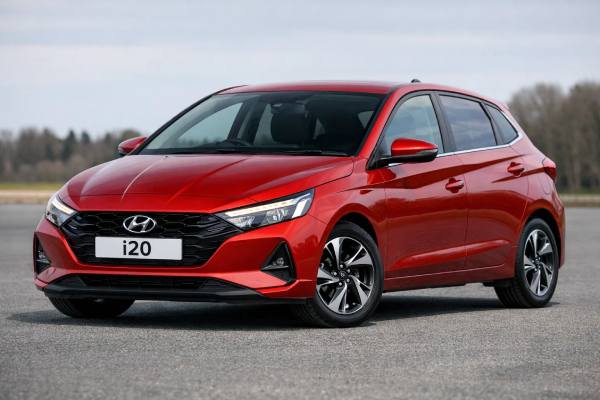
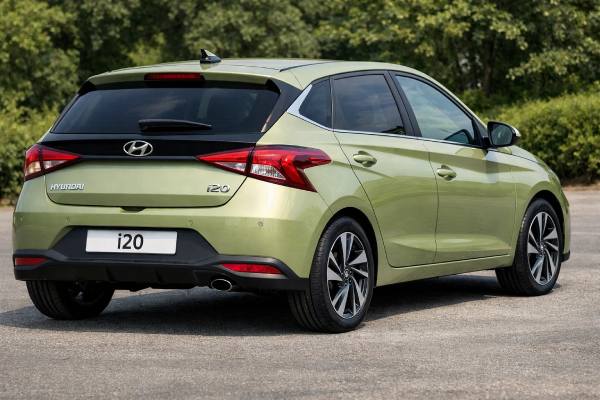
The facelifted Hyundai i20 BC3 with the 1.2 MPi 84 hp petrol engine is a supermini built around clarity rather than complexity. It uses a naturally aspirated four-cylinder engine, a conventional front-wheel-drive layout, and the sharper styling and upgraded tech introduced with the 2023 update. That may sound conservative in a class full of small turbos and electrified options, but it gives the i20 a very clear identity: easy to drive, easy to understand, and easier to own long term than many trendier alternatives.
That straightforward character is the real appeal. The 1.2 MPi will not turn the i20 into a fast hatch, but it does offer linear throttle response, predictable manners in traffic, and fewer complexity concerns than a turbocharged engine. For buyers who care more about long-term usability than brochure excitement, that still matters. The main caveat is market variation. Exact trim, gearbox, and standard safety equipment can differ by region, so any used example should always be verified by VIN and spec sheet rather than by advert alone.
At a Glance
- Naturally aspirated 1.2-litre petrol engine keeps the ownership case simple and predictable.
- Facelift cars gained sharper styling, more standard safety tech, and improved connectivity.
- Cabin space and a 352 L boot remain standout strengths in the supermini class.
- Performance is modest, so tyre choice and gearbox condition matter more than on stronger versions.
- A cautious real-world oil-service interval is every 10,000–15,000 km or 12 months.
Navigate this guide
- Hyundai i20 BC3 facelift essentials
- Hyundai i20 BC3 facelift numbers
- Hyundai i20 BC3 facelift trims and safety
- Known issues and service campaigns
- Maintenance strategy and buying advice
- On-road feel and fuel use
- Rival picture and overall case
Hyundai i20 BC3 facelift essentials
The facelifted BC3-generation Hyundai i20 is a good example of how a small update can sharpen an already competent car. Hyundai did not reinvent the platform. Instead, it refreshed the exterior design, expanded the available safety and convenience technology, and refined the trim structure in a way that keeps the i20 competitive in a crowded supermini class. For the 1.2 MPi 84 hp version, those changes matter because they improve the things owners use every day without changing the engine’s basic honest character.
That engine is central to the car’s appeal. The 1.2 MPi is not a powertrain chosen for drama. It is there because some buyers still want a naturally aspirated four-cylinder with direct, predictable response and fewer long-term complexity questions than a small turbo engine. In town, it feels smooth and cooperative. In mixed driving, it asks for more revs than the turbocharged alternatives, but it rewards that with progressive, easy-to-judge power delivery. That matters in real ownership, especially for drivers who spend more time in traffic, on short trips, or simply prefer straightforward mechanical behaviour.
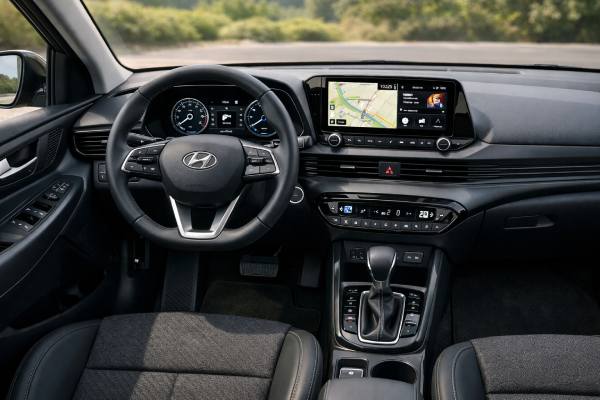
The facelift also helps the i20 feel more contemporary. Hyundai’s 2023 update brought a more angular front treatment, revised lighting signatures, new wheel designs, and broader availability of advanced driver assistance systems. The result is a small hatch that still feels current without trying too hard. Inside, the BC3 i20 remains one of the more useful cars in its class, with respectable rear-seat room and a large 352-litre boot. That boot volume is especially important because it allows the i20 to function as more than a city car. It can be a first family hatch, a commuter with luggage space, or a compact daily driver that does not force constant compromises.
There is one caveat that needs to be stated clearly. The exact 1.2 MPi 84 hp facelift configuration is market-specific. Some countries package the engine with different trim levels or gearbox choices, and some features that are standard in one market may be optional or unavailable in another. That means buyers should never treat a generic classified listing as authoritative. Verify the VIN, the equipment list, and the handbook details for the actual car.
As a used or nearly new proposition, the 1.2 MPi facelift i20 makes a specific promise. It does not promise speed or fashion-first excitement. It promises space, straightforward engineering, and a level of day-to-day ease that can age very well. For many buyers, that remains a more valuable promise than a flashier specification.
Hyundai i20 BC3 facelift numbers
Hyundai’s 2023 technical data for the updated i20 confirms the core details of the facelifted 1.2 MPi model. Public sources also confirm the BC3 body dimensions, kerb-weight range, and safety baseline. Because trim and market can alter tyres, kerb weight, and some equipment, the table below focuses on the most consistent published data for the facelifted i20 1.2 MPi 84 hp.
| Category | Specification |
|---|---|
| Code | Smartstream G1.2 / 1.2 MPi |
| Engine layout and cylinders | Inline-4, transverse, DOHC, 4 valves per cylinder |
| Bore × stroke | 71.0 × 75.6 mm (2.80 × 2.98 in) |
| Displacement | 1.2 L (1,197 cc) |
| Induction | Naturally aspirated |
| Fuel system | Multi-point fuel injection |
| Compression ratio | 11.0:1 |
| Max power | 84 hp (62 kW) @ 6,000 rpm |
| Max torque | 118 Nm (87 lb-ft) @ 4,200 rpm |
| Timing drive | Chain |
| Rated efficiency | Roughly 5.0–5.4 L/100 km (47.0–43.6 mpg US / 56.5–52.3 mpg UK), market and wheel dependent |
| Real-world highway @ 120 km/h | Roughly 5.7–6.4 L/100 km (41.3–36.8 mpg US / 49.6–44.1 mpg UK) |
| Transmission and driveline | Specification |
|---|---|
| Transmission | 5-speed manual |
| Drive type | FWD |
| Differential | Open |
| Chassis and dimensions | Specification |
|---|---|
| Suspension, front | MacPherson strut |
| Suspension, rear | Coupled torsion beam axle |
| Steering | Electric power-assisted rack and pinion |
| Brakes | Front ventilated discs; rear drums on many 1.2 MPi versions |
| Most popular tyre size | 185/65 R15 |
| Other common tyre sizes | 195/55 R16, market dependent |
| Ground clearance | About 140 mm (5.5 in), market dependent |
| Length | 4,040 mm (159.1 in) |
| Width | 1,775 mm (69.9 in) |
| Height | About 1,450 mm (57.1 in) |
| Wheelbase | 2,580 mm (101.6 in) |
| Turning circle | About 10.4 m (34.1 ft) |
| Kerb weight | 1,013–1,123 kg (2,234–2,476 lb), trim dependent |
| GVWR | Verify by VIN and market label |
| Fuel tank | 40 L (10.6 US gal / 8.8 UK gal) in many European specifications; verify by market |
| Cargo volume | 352 L (12.4 ft³) seats up / about 1,165 L (41.1 ft³) seats folded |
| Performance and capability | Specification |
|---|---|
| 0–100 km/h | 13.1 s |
| Top speed | 173 km/h (107 mph) |
| Braking distance | No widely published factory figure for this exact configuration |
| Towing capacity | Market dependent; verify by VIN and local handbook |
| Payload | Trim and market dependent |
| Fluids and service capacities | Specification |
|---|---|
| Engine oil | Hyundai-approved petrol engine oil; commonly 0W-20, 0W-30, or 5W-30 by climate and market; about 3.4 L (3.6 US qt) |
| Coolant | Ethylene-glycol based coolant for aluminium radiators; about 6.66 L (7.04 US qt) in current 1.2 manual data |
| Transmission fluid | 5MT quantity varies by gearbox code; verify by transmission label and handbook |
| Differential / transfer case | Not applicable |
| Brake and clutch fluid | DOT 4; about 0.7–0.8 L (0.7–0.8 US qt) service fill |
| A/C refrigerant | Verify by under-bonnet label |
| A/C compressor oil | Verify by system label |
| Key torque specs | Wheel nuts 107–127 Nm (79–94 lb-ft) in current handbook data |
| Safety and driver assistance | Specification |
|---|---|
| Euro NCAP | 4 stars; 76% adult, 82% child, 76% vulnerable road user, 67% safety assist |
| IIHS | Not applicable |
| Headlight rating | Not applicable |
| ADAS suite | Depending on trim and market: FCA with pedestrian and cyclist detection, LKA, LFA, ISLA, DAW, HBA, BCA, RCCA, NSCC |
The specification picture is honest rather than flashy. The i20 1.2 MPi is not quick, but it is light, roomy, and technically straightforward. The appeal lies in balance, not headline performance.
Hyundai i20 BC3 facelift trims and safety
The facelifted i20’s trim structure depends heavily on market, but Hyundai’s 2023 update made one theme clear across Europe and the UK: more safety and connectivity features became easier to access, and the car’s exterior and interior presentation became more modern. That matters for the 1.2 MPi because this engine is often chosen by buyers who keep a car for several years. For those owners, trim quality and safety content can matter just as much as engine simplicity.
In many markets, lower trims focus on value. They usually include the core safety systems, air conditioning, a digital driver display, and touchscreen connectivity, but wheel size, upholstery, parking aids, and the full Hyundai Smart Sense package can vary. Mid-grade cars are often the sweet spot, adding better wheels, upgraded media features, camera or sensor support, and broader driver-assistance content. Higher trims can bring nicer interior finishes, more lighting detail, and the most complete ADAS suite, but the exact naming and packaging differ by region.
That variation matters because the facelift’s safety value is strongly trim-sensitive. Hyundai publicly highlighted that the updated i20 offers a broad Smart Sense package that can include Forward Collision-Avoidance Assist with pedestrian and cyclist detection, Lane Following Assist, Lane Keeping Assist, Intelligent Speed Limit Assist, Driver Attention Warning, Blind-spot Collision-avoidance Assist, Rear Cross-traffic Collision Assist, and Navigation-based Smart Cruise Control. Not every 1.2 MPi car will have all of those features. Some are standard only on higher grades, and some are optional depending on country. Buyers need to confirm the exact equipment on the actual car.
The BC3 i20’s Euro NCAP result is a useful safety baseline. Euro NCAP applied the 2021 BAYON test result to the i20 because the two cars share closely related safety equipment and structure. The rating was four stars, with 76% adult occupant protection, 82% child occupant protection, 76% vulnerable road user protection, and 67% safety assist. That is a respectable foundation, but it also shows why trim-specific ADAS matters. The shell and restraint systems are only part of the story. Avoidance tech and lane support help determine how modern the car feels in everyday safety use.
Practical safety is another strength. Rear-seat space is good enough for proper child-seat use, ISOFIX provision is clear, and visibility is decent by class standards. The car also benefits from not being oversized or overstyled. For many owners, active safety is helped simply by the fact that the i20 is easy to place and easy to drive.
The best trim is usually not the most decorative one. It is the one that combines the ADAS package you actually want, the wheel size that suits the engine, and a believable maintenance record. On the 1.2 MPi, smaller wheels and a strong safety spec often make a more satisfying real-world combination than a more cosmetic, heavily optioned car with less sensible tyres.
Known issues and service campaigns
Because the facelifted BC3 i20 1.2 MPi is still a relatively recent car, its reliability story is less about long-established major faults and more about early ownership patterns, ordinary wear, and trim-specific electronic issues. That is important to state honestly. There is less deep long-term failure data than there is for older i20 generations. What the current picture suggests is encouraging: the naturally aspirated 1.2 is simpler than many rivals, and most early complaints are the type that usually show up on modern small cars rather than evidence of a serious design weakness.
The most common lower-cost issues are the ordinary modern-hatchback ones. Battery health matters more than many owners expect, especially on cars with lots of electronic features and frequent short-trip use. A weak battery can create nuisance warnings, poor stop-start behaviour where fitted, or erratic system messages. Infotainment glitches, camera resets, sensor false warnings, or driver-assistance recalibration issues can also appear occasionally, particularly after battery replacement, windscreen work, or accident repair. These are not unusual, but they should be fixed properly rather than ignored.
Suspension and tyre-related complaints are also predictable. Anti-roll-bar links, bushes, alignment drift after pothole impacts, and tyre-edge wear are normal age-related concerns. Because the 1.2 MPi has modest power, poor tyres and poor alignment affect the way the car feels more obviously than on stronger versions. A tired example can feel slower, noisier, and less secure simply because the chassis basics have been neglected.
The engine itself looks like one of the safer parts of the ownership case, but that does not mean no caution is needed. It uses a chain-driven timing system rather than a scheduled belt. That removes one large maintenance cost, but chain systems still rely on correct oil grade and reasonable intervals. Persistent cold-start chain rattle, timing-correlation faults, or abnormal top-end mechanical noise should be taken seriously. On a simple petrol engine like this, regular oil service is the best long-term protection.
Cooling-system issues are generally small rather than alarming, but they should be watched early. Thermostat behaviour, coolant-level stability, and hose-joint condition are worth checking because a slow-to-warm engine or a minor coolant seep can become an annoyance if ignored. Coil-pack or sensor-related faults are also possible, as with most modern petrol engines, but they are usually smaller repair events rather than pattern failures.
Automatic- or transmission-related concerns are limited mainly to markets where the 1.4 or turbo engines were paired with more complex gearboxes. The 1.2 MPi’s standard 5-speed manual helps keep risk down. The main manual-gearbox checks are clutch take-up, gear engagement, and any sign of abuse rather than an expected major weakness.
For campaigns and recalls, the right method is always the same: check by VIN through Hyundai and through the official government recall tool for your market. Campaign status can change over time, and newer cars sometimes receive software updates that improve safety-system behaviour, infotainment stability, or calibration logic without owners realising how important they are. On a current-generation supermini, software history is part of reliability history.
The overall reliability outlook is therefore positive but still developing. Early evidence points to a car that is more likely to suffer ordinary modern-car niggles than dramatic mechanical faults, provided it is serviced properly and repaired with the right procedures when systems need calibration.
Maintenance strategy and buying advice
The facelifted i20 1.2 MPi is a good candidate for conservative, uncomplicated maintenance. The goal is not to over-service the car. It is to avoid the common modern problem of stretching routine items until a simple petrol supermini starts behaving like a complicated one. The recipe is familiar: good oil, good battery health, good tyres, and careful attention to calibration-sensitive systems after any repair.
A practical used-car or long-term ownership schedule looks like this:
- Engine oil and filter every 10,000–15,000 km or 12 months.
- Engine air filter inspect every service and replace as needed.
- Cabin filter every 15,000–20,000 km or annually.
- Coolant inspect regularly and refresh by age and official schedule.
- Brake fluid every 2 years.
- Spark plugs by official interval for the exact engine and market, typically around 60,000 km in practical planning.
- Manual gearbox oil inspect and replace if shifting quality worsens or history is unclear, especially at higher mileage.
- Timing chain no routine replacement interval, but inspect for rattle, noise, and timing-fault evidence.
- Auxiliary belt and hoses inspect every service.
- Tyre rotation and alignment every 10,000–12,000 km or whenever wear suggests it.
- Battery test yearly once the battery is about 4 years old.
- ADAS camera and sensor calibration checks after windscreen replacement, front-end repair, or relevant warning messages.
The fluid picture is manageable. Current manual data for the 1.2 shows roughly 3.4 L of engine oil and 6.66 L of coolant, with DOT 4 brake fluid and market-specific transmission data. Wheel-nut torque in current handbook data is 107–127 Nm. These are useful planning numbers, but exact VIN-specific specifications should always take priority before major work.
For buyers, the checklist should reflect the fact that this is a newer, electronically richer car. Start with service history, then inspect body condition, then confirm all driver-assistance and infotainment features work properly. A cold start should be clean and quiet beyond a brief normal initial mechanical sound. The road test should include rough surfaces, full-lock parking manoeuvres, and a higher-speed check for steering straightness and tyre noise.
A strong used-buying checklist includes:
- Regular oil-service history with correct grade.
- No persistent warning lights or stored system messages.
- Proper operation of AEB, lane-support, camera, and parking systems where fitted.
- Even tyre wear and quality matching tyres.
- Stable coolant level and no seepage around joints.
- Smooth clutch take-up and easy 5-speed engagement.
- No prolonged chain rattle at cold start.
- No impact damage or poor repairs around sensors, radar areas, or the windscreen.
Common catch-up items after purchase are usually modest: tyres, filters, fluids, battery, alignment, and perhaps brake service. What costs more is negligence around electronics or accident repairs. On a modern i20, proper calibration work matters. A cosmetically tidy but electronically confused car is not a bargain.
The best cars to target are facelift examples with mid-grade or higher safety spec, full service history, and no evidence of cheap repair shortcuts. A well-kept 1.2 MPi should age well. The trick is buying one that has already been treated like a current car, not an old throwaway hatchback.
On-road feel and fuel use
The facelifted i20 1.2 MPi does not try to impress with speed. Instead, it wins points by feeling tidy, natural, and easy to use. Around town, the naturally aspirated four-cylinder is smooth and predictable. It needs revs to do its best work, but it responds in a clean, linear way that many drivers still prefer to the punchier but less progressive feel of a small turbo engine. The result is a car that often feels more pleasant in traffic than its modest outputs suggest.
Ride quality is one of the model’s real strengths. The BC3 platform feels mature for the class, and the facelift did nothing to disturb that. On 15-inch wheels especially, the i20 rides with more composure than many small hatchbacks that try to feel sporty first. Broken city surfaces, patched asphalt, and motorway joints are dealt with cleanly enough that the car feels like a class-size step above some rivals. It is not soft, but it is rarely fussy.
Handling follows the same theme. The steering is light and accurate, though not full of feedback, and the chassis prefers neat inputs over aggressive driving. In corners, the i20 feels safe and predictable. It does not egg the driver on like a Fiesta, but it also does not punish ordinary use. Straight-line stability is good, and the car’s compact size makes it easy to place in traffic or on narrow roads.
Where the 1.2 shows its limits is obvious. Higher-speed overtakes need planning, hills require downshifts, and a full load makes the engine feel modest rather than merely adequate. That is simply the price of choosing simplicity over forced induction. The 84 hp version is not for buyers who want effortless motorway pace or instant mid-range shove. It is for buyers who want a dependable daily engine that behaves predictably and costs less to worry about.
Refinement is generally good for the class. Once warm, the four-cylinder is quieter and smoother than many three-cylinder rivals under load. Tyre and wind noise are reasonable rather than exceptional, but the overall impression is composed. Good tyres make a large difference here. Because the power is limited, a poor tyre choice affects both noise and perceived performance more than some owners expect.
Real-world fuel economy usually falls into a sensible bracket:
- City: about 6.3–7.5 L/100 km
about 37.3–31.4 mpg US
about 44.8–37.7 mpg UK - Highway at 100–120 km/h: about 5.7–6.4 L/100 km
about 41.3–36.8 mpg US
about 49.6–44.1 mpg UK - Mixed use: about 5.9–6.8 L/100 km
about 39.9–34.6 mpg US
about 47.9–41.5 mpg UK
That is not outstanding in the age of hybrids, but it is realistic and usually easy to achieve without changing your driving style. More importantly, the engine is tolerant of short-trip use in a way many small diesels are not.
Overall, the facelifted i20 1.2 MPi drives exactly as it should. It feels like a polished, practical supermini designed to reduce fuss rather than manufacture excitement. For many owners, that remains one of the best kinds of competence.
Rival picture and overall case
The facelifted Hyundai i20 1.2 MPi sits in a very competitive class, and that means its strengths only become obvious when you compare it honestly. It is not the sharpest supermini to drive, not the fastest, and not the most image-driven. What it offers instead is one of the better balances of space, clarity, and everyday usability.
Against a Ford Fiesta, the Hyundai usually loses on steering feel and overall driver entertainment. The Ford remains more playful and more eager in corners. But the i20 counters with a bigger, more useful boot, better rear-seat practicality, and a smoother four-cylinder feel than some small-engine rivals. For buyers who care about passengers and luggage as much as they care about driving feel, that matters.
Compared with a Volkswagen Polo or Skoda Fabia, the i20 may not feel quite as premium in minor cabin details, but it stays very competitive on space and often looks like the better value used buy. The Polo may still carry the stronger badge. The i20 often carries the simpler ownership logic. Against a Renault Clio or Peugeot 208, the Hyundai is less style-led, but it is arguably easier to understand and easier to buy sensibly. The French rivals can look more distinctive. The Hyundai tends to feel more matter-of-fact and straightforward.
Its closest internal rival is the 1.0 T-GDi i20. That comparison matters because many buyers will choose between those two powertrains. The 1.0 turbo versions are quicker, more flexible in the middle of the rev range, and often better suited to heavier motorway use. The 1.2 MPi version answers with a simpler engine concept, more linear throttle response, and fewer perceived long-term complexity concerns. The “better” choice depends on the buyer. The 1.2 is not the exciting option. It is the careful option.
That is also why this car remains relevant in the current market. Many newer small cars are moving toward mild hybrid systems, higher complexity, or purely spec-led appeal. The 1.2 MPi i20 still offers an alternative for buyers who value usability over novelty. It gives them a current-shape supermini with good space, modern enough safety, predictable road manners, and an engine that does not require a new way of thinking about ownership.
The final verdict is clear. The facelifted BC3 i20 1.2 MPi 84 hp is not a headline car. It is a quietly intelligent one. If you want a supermini that is roomy, easy to drive, sensibly equipped, and less complicated than many modern alternatives, it deserves a serious place on the shortlist. For the right owner, its greatest advantage is not that it stands out. It is that it keeps making sense.
References
- Hyundai i20 | Technical Data | August 2023 2023 (Technical Data)
- New i20 attracts with elegant and sporty design 2023 (Press Release)
- Hyundai i20 Specifications | Hyundai Motor UK 2026 (Brochure and Specification Portal)
- EuroNCAP | Hyundai i20 2021 (Safety Rating)
- Hyundai Owners Manuals | Hyundai Motor UK 2026 (Owner’s Manual Portal)
Disclaimer
This article is for informational purposes only and is not a substitute for professional diagnosis or repair. Specifications, torque values, service intervals, procedures, and equipment can vary by VIN, market, production date, and trim, so always verify details against the official service documentation for the exact vehicle.
If this guide helped you, please consider sharing it on Facebook, X, or another platform to support our work.