
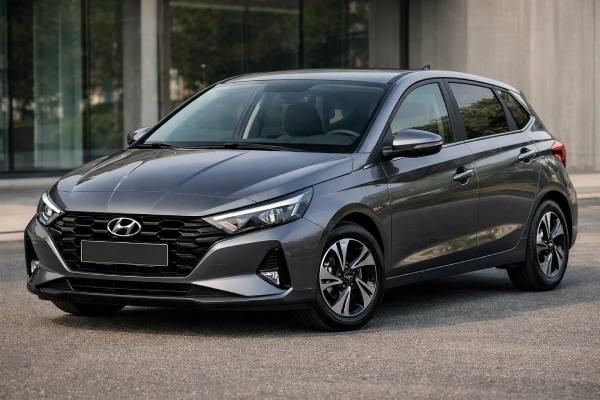
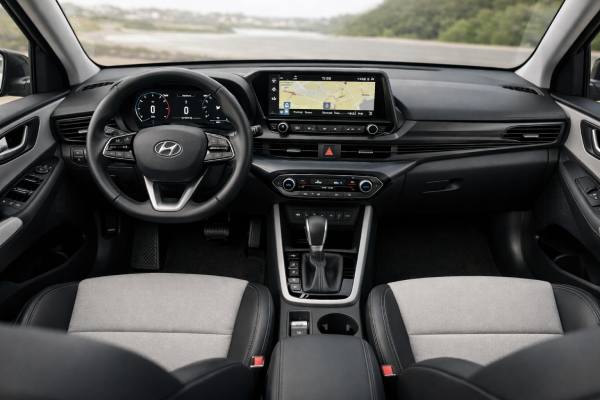
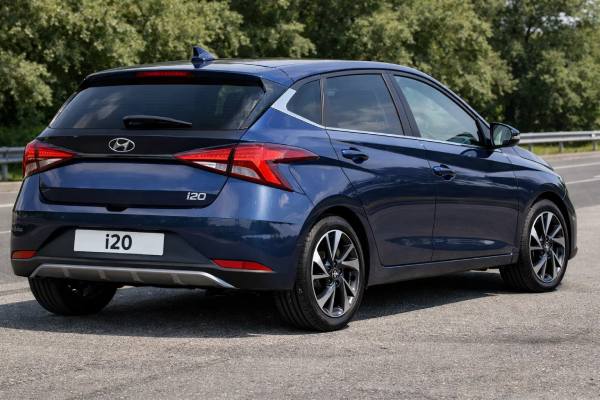
The facelifted Hyundai i20 BC3 1.0 T-GDi 90 is the version of the third-generation i20 that puts efficiency, simplicity, and everyday usability ahead of headline pace. This current update keeps the core BC3 platform, but adds fresher styling, improved standard technology, and a broader safety package. In practice, that means the 2024–present i20 is a refined update rather than an all-new car. Its appeal is easy to understand: a compact turbocharged petrol engine, a roomy cabin for the class, modern connectivity, and a much stronger safety-tech package than older i20 generations offered. The 90 hp version is also worth separating from the earlier 100 hp and 120 hp mild-hybrid cars, because current market versions focus on a simpler 1.0 T-GDi layout with 6-speed manual availability and, in some markets, a 7-speed dual-clutch option. For used buyers, the strongest points are efficiency, cabin space, and modern equipment. The main caution is that this is still a modern turbocharged small car, so oil quality, cooling health, and warning lights matter.
What to Know
- Strong 172 Nm torque makes the 90 hp engine feel more flexible than the power figure suggests.
- The BC3 body gives you a useful 352 L boot and noticeably better cabin space than older i20s.
- Current facelift cars bring a broader standard safety package, including lane and forward-collision support.
- This is still a modern turbo car, so oil quality, cooling health, and software warnings deserve real attention.
- A practical oil-and-filter interval for used ownership is every 10,000 to 15,000 km or 12 months.
Jump to sections
- Hyundai i20 BC3 facelift in use
- Hyundai i20 BC3 data and capacities
- Hyundai i20 BC3 trims and safety suite
- Weak spots and official remedies
- Care routine and shopper advice
- Road behavior and economy
- Facelift i20 against rivals
Hyundai i20 BC3 facelift in use
The facelifted BC3 i20 is not a radical mechanical reset. Hyundai kept the core third-generation structure, wheelbase, and general packaging, but updated the styling, standard technology, and safety equipment. That is why the car still feels familiar if you know the 2020–2023 BC3, yet fresher and more complete in the details. The facelift brought revised front and rear styling, new wheel designs, upgraded USB provision, a wider digital-equipment spread, and a broader standard SmartSense package. The result is a car that remains practical first, but looks more modern and better equipped than many older superminis.
The 90 hp engine is the interesting part because it changes the position of the car in the range. Earlier BC3 versions often pushed the 100 hp and 120 hp mild-hybrid engines harder, but the facelift 90 hp version now works as the accessible current turbo-petrol option in many markets. It is not the engine for buyers chasing performance. It is the engine for people who want the more modern character of the current i20 without stepping into the stronger and often pricier versions.
In everyday use, this engine is better than the raw number suggests. The important figure is 172 Nm, available low enough in the rev range to make the car feel willing in traffic and reasonably relaxed on secondary roads. It is not fast, but it is much easier to drive smoothly than the older naturally aspirated entry-level engines that used to define the lower end of this class. That makes the facelift 90 hp i20 feel more grown up than many buyers expect.
The body and cabin also do a lot of the work. Hyundai still packages the BC3 i20 very well, so rear-seat space is genuinely usable and the boot remains one of the stronger ones in the class. That matters because many buyers shopping this engine are not looking for a toy. They want a supermini that can commute, carry shopping, handle short family trips, and still feel modern enough inside. The facelift delivers that.
Its limits are straightforward. This is still a comfort-led small hatch with a modest power output. Heavy loads and fast motorway overtakes still need planning. The engine, while modern and efficient, also needs more attention than an old simple 1.2 MPI. But as a current, sensible, well-packaged supermini, the facelifted 90 hp BC3 makes a lot of sense. It is the rational choice in the line-up, not the showpiece.
Hyundai i20 BC3 data and capacities
The facelift 90 hp i20 is easiest to understand when you separate the core mechanical package from the trim-dependent details. The engine and body are consistent enough to form a clear technical picture, while wheel size, transmission, and equipment can shift some of the published numbers depending on market.
Powertrain and efficiency
| Item | Hyundai i20 (BC3 facelift) 1.0 T-GDi 90 |
|---|---|
| Engine code | Verify by VIN; current official materials describe a 1.0 T-GDi 3-cylinder |
| Engine layout and cylinders | Inline-3, DOHC, 12-valve |
| Valves per cylinder | 4 |
| Bore × stroke | 71 × 84 mm |
| Displacement | 1.0 L (998 cc) |
| Induction | Turbocharged |
| Fuel system | Gasoline direct injection |
| Compression ratio | 10.5:1 |
| Max power | 90 hp (66 kW) @ 4,800–5,700 rpm |
| Max torque | 172 Nm (127 lb-ft) @ 1,500–3,500 rpm |
| Timing drive | Chain |
| Transmission | 6-speed manual; 7DCT in some current markets |
| Drive type | FWD |
| Differential | Open |
| Combined WLTP economy | 5.5–5.9 L/100 km depending on trim and transmission |
| Real-world highway @ 120 km/h | Typically about 6.1–6.8 L/100 km |
Performance
| Item | 6-speed manual | 7DCT |
|---|---|---|
| 0–100 km/h | 11.5 s | 12.8 s |
| Top speed | 183 km/h | 180 km/h |
Chassis and dimensions
| Item | Figure |
|---|---|
| Suspension, front | MacPherson strut |
| Suspension, rear | Coupled torsion beam axle |
| Steering | Electric power steering |
| Front brakes | Ventilated discs |
| Rear brakes | Discs in current brochure specifications |
| Wheel and tyre sizes | 185/65 R15, 195/55 R16, 215/45 R17 |
| Length | About 4,065 mm; some market brochures list 4,075 mm |
| Width | 1,775 mm |
| Height | 1,455 mm |
| Wheelbase | 2,580 mm |
| Ground clearance | 140 mm |
| Turning circle | 5.2 m |
| Kerb weight | About 1,070–1,095 kg |
| GVWR | About 1,610–1,625 kg |
| Fuel tank | 40 L in current brochure figures |
| Cargo volume | 352 L seats up / 1,165 L seats down, VDA |
Capability
| Item | Figure |
|---|---|
| Braked towing | 910 kg |
| Unbraked towing | 450 kg |
| Payload | Market and trim dependent |
Fluids and service capacities
| Item | Figure |
|---|---|
| Engine oil specification | ACEA C2 in current owner-manual data |
| Engine oil viscosity | 0W-20 commonly listed for the 1.0 T-GDi family |
| Engine oil capacity | 3.6 L |
| Coolant capacity | About 5.73 L |
| Manual transmission fluid | API GL-4, SAE 70W |
| Manual transmission capacity | About 1.5–1.6 L |
| DCT fluid | API GL-4, SAE 70W |
| DCT capacity | About 1.6–1.7 L |
| Brake / clutch fluid | About 0.7–0.8 L |
| A/C refrigerant | Verify by under-bonnet label |
| A/C compressor oil | Verify by service documentation |
| Wheel nut torque | 88–107 Nm |
Safety and driver assistance
| Item | Figure |
|---|---|
| Euro NCAP | 4 stars |
| Adult occupant | 76% |
| Child occupant | 82% |
| Vulnerable road users | 76% |
| Safety assist | 67% |
| ADAS suite | FCA, LKA, LFA, DAW, HBA, ISLA and trim-dependent extras such as BCA, RCCA, NSCC |
The figures explain the car’s role clearly. It is not a hot hatch, but it is no longer a stripped-down entry model either. The torque, body size, and equipment potential make it a proper all-round supermini rather than just a city-special.
Hyundai i20 BC3 trims and safety suite
The current facelift i20 is very trim-sensitive, and that matters even more on the 90 hp engine than on the stronger versions. Hyundai has pushed the BC3 range upmarket enough that equipment level now affects the personality of the car in a meaningful way. In several current European markets, the 90 hp engine appears in trims that range from honest value-focused versions to surprisingly rich small hatches with big screens, driver aids, and nicer wheel designs.
That means the best-used buy is not always the highest trim. Fifteen-inch and sixteen-inch cars usually make the most sense for long-term ownership. They ride more softly, tyres cost less, and they still give the facelift i20 the clean, modern look most buyers want. Seventeen-inch cars look sharper and suit the darker trim packs visually, but the gain is mostly cosmetic. On a 90 hp supermini, comfort and tyre cost matter more than a slightly more aggressive stance.
Mid-grade trims are often the sweet spot. They tend to add the equipment that improves daily life without overwhelming the car with unnecessary expense. That means a better screen, smartphone connectivity, reversing camera, parking sensors, automatic climate control, and the key safety features most owners will actually notice. Higher trims can add more visual polish and more convenience features, but they also raise replacement cost for damaged wheels, screens, sensors, and trim.
Safety is one of the facelift car’s strongest arguments. Compared with earlier i20 generations, the BC3 facelift offers a much fuller ADAS story. Forward Collision-Avoidance Assist, Lane Keeping Assist, Lane Following Assist, Driver Attention Warning, High Beam Assist, and Intelligent Speed Limit Assist are part of the current conversation around the car. Depending on market and trim, features such as Blind-spot Collision-avoidance Assist, Rear Cross-traffic Collision Assist, Navigation-based Smart Cruise Control, and other parking or camera-based helpers may also appear.
The Euro NCAP result needs context. The i20 currently carries a 4-star rating under the 2021 Euro NCAP application used for this platform family. That does not mean the car is weak. It means that under the stricter modern testing environment, its active-safety performance did not quite reach 5-star territory. Structurally and in terms of passive protection, the car is still strong for the class. For buyers, the real-world takeaway is that the facelift i20 is a safe, modern supermini with a solid base and a strong technology menu, but not the outright benchmark under the latest rating logic.
In used ownership, the best safety setup is a healthy one. Matching tyres, correctly functioning sensors, no warning lights, and proper calibration after windshield or bumper work matter more than a long option list on paper. On a current i20, unresolved ADAS faults are not something to shrug off. They are part of the car’s overall condition.
Weak spots and official remedies
Because the facelift 90 hp i20 is still fairly new, its reliability picture is defined more by likely weak points than by a long public age-related record. That is mostly good news. There is no widely visible single defect that defines the entire facelift 90 hp line. But modern small turbo cars are less tolerant of neglect than older simple petrol hatchbacks, so what matters here is service quality, electrical health, and attention to warning signs.
The most important engine-side issue is oil discipline. A 1.0 T-GDi with a timing chain and turbocharger depends on clean, correct-spec oil. If the service history shows long gaps, poor-quality lubricants, or vague owner habits, that matters. Cold-start rattle that lasts longer than a brief startup sound, repeated timing-related fault codes, or rough startup behaviour should not be waved away. These engines are not inherently fragile, but they are not casual-service motors either.
The next watchpoint is the usual turbo-petrol collection of ignition and air-path issues. Spark plugs, coils, boost plumbing, and sensor accuracy all affect how the car feels. If a used example hesitates under load, feels flat, misfires, or idles roughly when warm, the problem is more likely to be found in those systems than in some dramatic internal failure. That is reassuring, but only if the issue is diagnosed early rather than ignored.
Cooling health also deserves real attention. A modern small turbo engine runs hotter and depends more on stable thermal control than an older naturally aspirated supermini motor. That means coolant level, hose condition, radiator health, and any history of warning lights or overheating matter more than they would on a simple old city car. A seller who cannot explain repeated coolant top-ups should make you cautious.
Electrical and software condition are increasingly important here because the facelift i20 is far more ADAS-heavy than its predecessors. Camera calibration, parking sensors, infotainment stability, battery condition, and general warning-light history all form part of the car’s real health picture. An unresolved driver-assistance fault is not just an annoyance. It is a clue that the car may have had poor repairs, weak battery support, or skipped dealer-level diagnosis.
Transmission choice changes the weak-point picture slightly. The manual is mechanically simpler and usually the safer long-term bet for drivers who do not mind involvement. The 7DCT offers convenience but should be checked carefully for repeated hesitation, shudder, or shift behaviour that does not feel clean and consistent. As always, service history matters more than prejudice.
The final rule is simple: check the VIN against the official recall and campaign tools, and ask for dealer records. On a current supermini, a fully documented service and campaign trail is not a bonus. It is a major part of the value of the car.
Care routine and shopper advice
The best maintenance plan for a used facelift i20 90 hp is a realistic one. This is not an engine that needs exotic service, but it does need consistent service. Buyers who treat it like an old entry-level petrol hatch and stretch intervals because “it still runs fine” are the ones most likely to create future problems. Conservative maintenance is the smart path.
Practical maintenance schedule
| Item | Practical interval |
|---|---|
| Engine oil and filter | Every 10,000 to 15,000 km or 12 months |
| Severe-use oil and filter | Every 7,500 to 10,000 km or 6 months |
| Engine air filter | Inspect every service, replace around 20,000 to 30,000 km if needed |
| Cabin air filter | Every 15,000 to 20,000 km or 12 to 24 months |
| Spark plugs | Around 60,000 km |
| Coolant | Check annually; replace at major interval or earlier if history is unclear |
| Brake fluid | Every 2 years |
| Manual or DCT fluid | Refresh around 80,000 to 120,000 km if history is unclear |
| Auxiliary belt and hoses | Inspect every service |
| Brakes, tyres, and alignment | Inspect every service |
| 12 V battery | Test yearly from about year 4 onward |
| Timing chain system | Inspect if there is noise, poor service history, or timing-related faults |
Useful service figures
| Item | Figure |
|---|---|
| Engine oil capacity | 3.6 L |
| Coolant capacity | About 5.73 L |
| Manual transmission fluid | About 1.5–1.6 L |
| DCT fluid | About 1.6–1.7 L |
| Fuel tank | 40 L |
| Wheel nut torque | 88–107 Nm |
For buyers, the inspection checklist starts with invoices, not appearance. A current i20 with only a digital service stamp and little else is not as reassuring as a car with itemized oil-service history, brake-fluid work, and evidence of general maintenance discipline. On a turbo small car, oil history is one of the best predictors of confidence.
Then inspect the whole car as a system. Tyre wear tells you about alignment, suspension, and driving style. A replacement windshield or front bumper should make you think about ADAS calibration. Under the bonnet, look for any coolant residue, oil around turbo plumbing, poor-quality aftermarket wiring, or evidence that the engine bay has simply not been cared for. Inside, test everything: infotainment, USB ports, camera, parking sensors, climate controls, steering-wheel buttons, and every warning-light cycle.
On the test drive, the car should start cleanly, idle steadily, and feel more willing in the mid-range than its power output suggests. The manual should feel light and straightforward. The DCT should feel smooth and predictable, not hesitant or confused. A strong example should feel modern, tidy, and easy, not strained or unfinished.
The best versions are usually mid-grade or upper-mid-grade 16-inch cars with complete service history, functioning ADAS, and no warning lights. The worst versions are cheap high-spec examples with vague service evidence and unresolved camera, battery, or drivetrain issues. Long term, the facelift 90 hp i20 should be durable and sensible. But that only remains true if the owner respects that it is a current turbocharged, sensor-heavy supermini, not a disposable runabout.
Road behavior and economy
The facelift i20 90 hp is more pleasant on the road than its modest output suggests, and that comes down to torque and overall chassis maturity. In town, the 172 Nm torque figure makes the car feel cooperative and easy. It does not lurch into performance territory, but it also does not feel breathless in the way old entry-level petrol superminis often did. That makes the facelift 90 more usable day to day than the badge implies.
The manual version is the better match for drivers who want the sharpest response from the engine. It is the quicker configuration on paper and tends to feel slightly more direct in real use. The 7DCT suits buyers who prioritize commuting ease, but it softens the car slightly and does not improve the pace story. Either way, the 90 hp i20 should be judged as a competent, flexible current supermini, not as a warm hatch.
Ride and handling are tuned around confidence rather than entertainment. The BC3 platform gives the i20 a more mature feel than older generations, with better straight-line stability and a more settled motorway manner. On 16-inch wheels, the car usually delivers the best all-round balance. Fifteen-inch cars ride more softly and may be the better answer for rough roads. Seventeen-inch cars look the part but add more edge than most owners need in a 90 hp hatch.
Noise and refinement are well judged for the class. You still hear some three-cylinder character at idle and under load, but once warm the engine is smoother than many buyers expect. At faster speeds, tyre and wind noise remain present, yet the car never feels flimsy or low-grade. Compared with older naturally aspirated rivals, it feels more relaxed under load. Compared with stronger versions of the same i20, it simply asks for a bit more patience in overtaking.
Economy is one of the main reasons to choose this engine. In mixed real-world use, a healthy manual example should usually return about 5.9 to 6.7 L/100 km. Highway work at 100–120 km/h often lands around 6.1 to 6.8 L/100 km. Cold weather, heavy traffic, and repeated short urban trips can lift that figure into the 7s, especially with the DCT. Even so, the current 90 hp i20 remains efficient enough to feel well judged for the class and more than good enough for drivers who want a petrol alternative to full-hybrid rivals.
The verdict from behind the wheel is straightforward. The facelift i20 90 hp is not exciting, but it is modern, flexible, easy to place, and mature enough to handle more than just city work. That is exactly what many small-hatch buyers want.
Facelift i20 against rivals
The facelift i20 90 hp competes best on balance. It is not the sportiest supermini, and it is not the urban-efficiency champion compared with a full hybrid. What it does well is combine a current turbo-petrol engine, useful cabin space, broad available safety technology, and a relatively calm ownership proposition in one package.
Against naturally aspirated rivals, the Hyundai’s biggest advantage is obvious. The turbocharged torque makes it easier to drive in normal conditions, especially with passengers or gradients. That gives the i20 a more grown-up feel than many entry-level small hatchbacks without forcing the owner into a more expensive high-output version.
Against full hybrids, the Hyundai loses some low-speed fuel-economy advantage, especially in dense urban use. A hybrid alternative can make more sense for buyers who spend nearly all their time in city traffic. But the i20 answers with a more conventional driving feel, a clean packaging story, and often a simpler ownership calculation than cars with bigger hybrid systems and different drivetrain compromises.
Against sharper superminis, the i20 is calmer rather than livelier. Hyundai has tuned it for ease, not edge. That makes it a better fit for someone who wants one small car to handle commuting, school runs, shopping, and light motorway work with the least drama, rather than a buyer who wants steering sparkle above all else.
The best buyer for this car is someone who wants a current, sensible, well-equipped small hatch that feels modern without being overcomplicated by the standards of its class. The best versions are documented manual or clean DCT cars on 16-inch wheels with full service history and no active warning lights. The ones to avoid are cheaply priced high-spec cars with missing invoices, lingering ADAS faults, and signs of careless ownership. Bought well, the facelift 90 hp BC3 is one of the more rounded mainstream superminis on sale today.
References
- New Hyundai i20 fuses emotional design with state-of-the-art technology 2023 (Press Kit)
- Hyundai i20 Features | Hyundai Motor UK 2026 (Model Features)
- i20 Varianten & Preise | Hyundai Motor Deutschland 2026 (Technical Data)
- EuroNCAP | Hyundai i20 2021 (Safety Rating)
- Home | Hyundai Recalls & Service Campaigns 2026 (Recall Database)
Disclaimer
This article is for informational purposes only and is not a substitute for professional diagnosis or repair. Specifications, torque values, intervals, procedures, and equipment can vary by VIN, market, trim, and transmission, so always verify against the official service documentation for the exact vehicle.
If this guide helped you, please consider sharing it on Facebook, X, or another platform to support our work.