
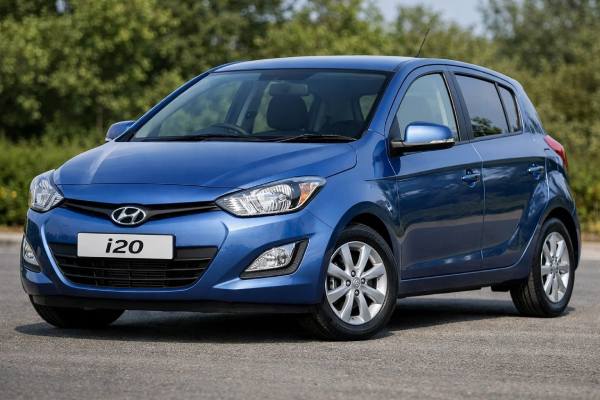
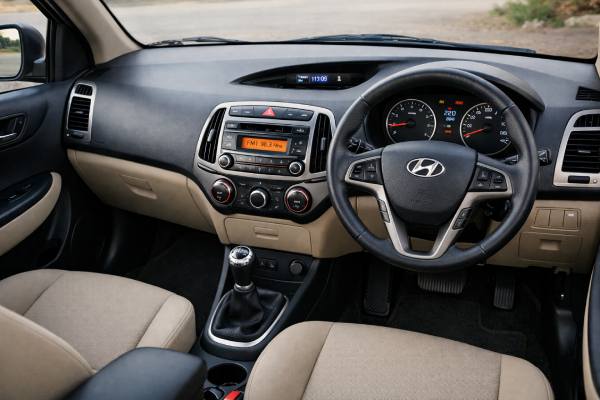
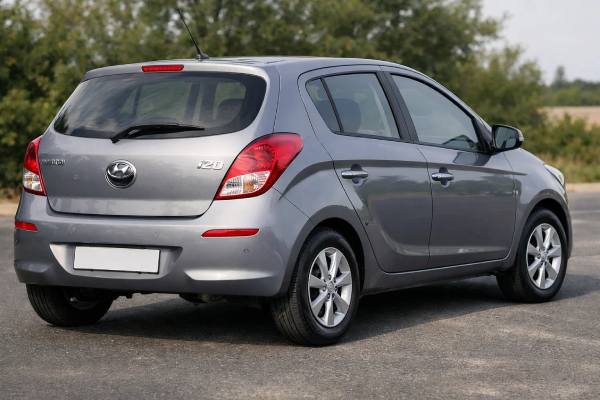
The facelifted Hyundai i20 PB with the 1.1 CRDi 75 hp diesel engine is one of the most rational small hatchbacks of its period. It was designed for buyers who valued low fuel use, decent highway range, and uncomplicated day-to-day ownership more than speed or image. The facelift brought a cleaner front-end design and a fresher cabin feel, but the real story sits under the bonnet: a small three-cylinder common-rail turbo diesel paired with a six-speed manual gearbox and front-wheel drive. That combination gives the i20 a very different personality from the petrol models. It feels more relaxed at low revs, more efficient on long trips, and more suitable for high-mileage use. The trade-off is that diesel-specific care now matters more than ever. Service history, injector health, turbo condition, EGR cleanliness, and evidence of correct oil use matter far more than trim level alone on a used 2012–2014 i20 1.1 CRDi.
What to Know
- The 1.1 CRDi is impressively efficient and usually stronger in everyday mid-range driving than its 75 hp figure suggests.
- The six-speed manual helps the facelift diesel feel calmer on the highway than the older small-engined petrol versions.
- Cabin space, visibility, and general ease of use remain strong points for the class.
- Short-trip use can accelerate diesel-related issues such as EGR and DPF trouble on poorly maintained cars.
- A smart real-world service baseline is engine oil and filter every 10,000-15,000 km or 12 months.
Explore the sections
- Hyundai i20 PB Facelift Diesel Profile
- Hyundai i20 PB Facelift Spec Data
- Hyundai i20 PB Facelift Trims and Safety
- Reliability Patterns and Service Actions
- Maintenance Routine and Buying Checks
- Driving Feel and Real Fuel Use
- Where It Sits Against Rivals
Hyundai i20 PB Facelift Diesel Profile
The 2012–2014 facelifted Hyundai i20 PB 1.1 CRDi occupies a practical niche that still makes sense in the used market. It is a supermini designed around economy first, but it avoids feeling bare or outdated in the way some older budget diesels do. Hyundai gave the facelift version cleaner styling, a tidier front fascia, and a more polished overall presentation. More importantly, the 1.1 CRDi engine changed the way the i20 felt on the road.
This diesel is not about outright pace. With 75 hp, it is modest on paper. But because it produces its torque low in the rev range, it feels more flexible than the smaller naturally aspirated petrol versions in everyday use. Pulling away from junctions, climbing mild grades, and holding speed without constant downshifts are all easier than the output figure suggests. The six-speed manual is also a real benefit. It helps the car settle at highway speeds and supports the low-consumption character that makes this version appealing.
Ownership, though, is more condition-sensitive than on the petrol i20s. A well-kept 1.1 CRDi can be a very economical long-distance commuter. A neglected one can become expensive because small diesel systems do not respond kindly to poor maintenance. The wrong oil, late oil changes, repeated short-trip operation, clogged EGR hardware, tired glow plugs, or delayed injector attention can turn a cheap supermini into a repair project. That is why service records matter so much with this engine.
The facelift i20 also remains attractive because it is otherwise simple. It is front-wheel drive, uses a conventional manual gearbox, and keeps a straightforward chassis layout. There is no dual-clutch transmission, no hybrid system, and no modern camera-based ADAS to complicate routine body or windscreen work. The cabin is practical rather than flashy, and the rear seat and boot remain competitive for a car of this size.
As a used buy, the best audience for this model is the driver who does regular mixed or longer-distance use and values fuel range, low tax in some markets, and modest running costs. It is less ideal for a short-hop urban life where a diesel particulate filter may never get proper heat and flow conditions. In that sense, the i20 1.1 CRDi is a smart car when matched to the right use pattern and the right maintenance history.
Hyundai i20 PB Facelift Spec Data
Exact figures vary slightly by market, trim, wheel size, and whether the car was sold in low-CO2 “blue” form. The figures below reflect the common European facelifted Hyundai i20 PB 1.1 CRDi 75 hp five-door configuration from the 2012–2014 period.
Powertrain and efficiency
| Item | Hyundai i20 PB facelift 1.1 CRDi |
|---|---|
| Code | U2 1.1 CRDi family |
| Engine layout and cylinders | Inline-3, DOHC, 12-valve |
| Cylinders | 3 |
| Valves per cylinder | 4 |
| Bore × stroke | Approximately 75.0 × 84.5 mm (2.95 × 3.33 in) |
| Displacement | 1.1 L (1,120 cc) |
| Induction | Turbocharged |
| Fuel system | Common-rail direct injection |
| Compression ratio | Approximately 17.8:1 |
| Max power | 75 hp (55 kW) @ 4,000 rpm |
| Max torque | 180 Nm (133 lb-ft) @ 1,750-2,500 rpm |
| Timing drive | Chain |
| Rated efficiency | Roughly 3.2-4.0 L/100 km depending on version and market |
| Real-world highway @ 120 km/h | About 4.8-5.6 L/100 km |
Transmission and driveline
| Item | Hyundai i20 PB facelift 1.1 CRDi |
|---|---|
| Transmission | 6-speed manual |
| Drive type | FWD |
| Differential | Open |
Chassis and dimensions
| Item | Hyundai i20 PB facelift 1.1 CRDi |
|---|---|
| Suspension front | MacPherson strut with coil springs |
| Suspension rear | Coupled torsion beam axle |
| Steering | Motor-driven power steering |
| Brakes | Front disc, rear drum on most 1.1 CRDi trims |
| Wheels and tyres | Commonly 175/70 R14 or 185/60 R15 |
| Ground clearance | About 150 mm (5.9 in), market-dependent |
| Length | 3,995 mm (157.3 in) |
| Width | 1,710 mm (67.3 in) |
| Height | About 1,490 mm (58.7 in) |
| Wheelbase | 2,525 mm (99.4 in) |
| Turning circle | About 10.4 m (34.1 ft) |
| Kerb weight | Roughly 1,080-1,150 kg (2,381-2,535 lb) |
| GVWR | Roughly 1,600-1,680 kg (3,527-3,704 lb), market-dependent |
| Fuel tank | 45 L (11.9 US gal / 9.9 UK gal) |
| Cargo volume | About 295 L (10.4 ft³) seats up / around 1,060 L (37.4 ft³) seats folded |
Performance and capability
| Item | Hyundai i20 PB facelift 1.1 CRDi |
|---|---|
| 0-100 km/h (0-62 mph) | About 16.0 s |
| Top speed | About 158-161 km/h (98-100 mph) |
| Braking distance 100-0 km/h | Typically around 40-43 m on good tyres |
| Towing capacity | Market-specific and often modest; verify by VIN before towing |
| Payload | Commonly around 430-500 kg |
Fluids and service capacities
| Item | Hyundai i20 PB facelift 1.1 CRDi |
|---|---|
| Engine oil | Low-SAPS diesel oil, commonly 5W-30 meeting ACEA C3 or market-required equivalent |
| Engine oil capacity | Roughly 5.3 L (5.6 US qt) with filter, verify by VIN |
| Coolant | Long-life ethylene glycol mix, exact capacity varies by market |
| Transmission fluid | Manual gearbox oil to Hyundai specification, roughly around 1.8-2.0 L |
| Differential / transfer case | Not applicable |
| A/C refrigerant | Type and fill vary by build and label |
| A/C compressor oil | Verify on under-bonnet label or service literature |
| Key wheel-nut torque | Commonly around 88-110 Nm depending on market guidance |
Safety and driver assistance
| Item | Hyundai i20 PB |
|---|---|
| Euro NCAP | 5 stars |
| Adult occupant | 88% |
| Child occupant | 83% |
| Vulnerable road user | 64% |
| Safety assist | 86% |
| IIHS | Not applicable |
| Headlight rating | Not applicable |
| ADAS suite | No modern AEB, ACC, lane-centering, BSD, or RCTA systems |
Hyundai i20 PB Facelift Trims and Safety
The facelifted 2012–2014 i20 PB was sold in several trim structures depending on country, so buyers should focus on actual equipment rather than trim names alone. In one market, a mid-grade car might carry alloy wheels, rear parking sensors, Bluetooth, and cruise control. In another, those same features could appear only on a higher package.
On the 1.1 CRDi, the biggest mechanical identifier is the diesel engine itself paired with the six-speed manual gearbox. That alone gives the car a different driving profile from the petrol lineup. Beyond that, wheel size, tyre size, and small equipment differences matter more than large mechanical changes. Most versions use front discs and rear drums, conventional suspension, and the same basic body structure.
Typical trim differences include:
- steel wheels versus alloy wheels
- manual air conditioning versus climate control
- basic audio versus steering-wheel controls and Bluetooth
- rear parking sensors on higher trims
- chrome or body-colour exterior accents
- upgraded seat fabrics and leather details inside
Useful used-car identifiers include fog lamps, wheel design, multifunction steering wheel, rear parking-sensor cutouts, and mirror or door-handle finish. Some markets also gave the facelift a more distinctive front grille and reshaped lamp details, which help confirm you are looking at the later PB rather than the earlier car.
Safety remained one of the i20’s strongest selling points in the class. The model line achieved a five-star Euro NCAP result, which was a meaningful credential for a small hatch of this era. That does not put it on the same level as a modern supermini with current crash structures and avoidance systems, but it does show Hyundai had a serious safety brief for the platform.
Typical safety equipment on facelift diesel models included:
- front airbags
- side airbags
- curtain airbags
- ABS
- electronic stability control on many trims and markets
- ISOFIX child-seat mounting points
- seatbelt reminders
There are no modern driver-assistance systems in the present-day sense. No autonomous emergency braking, no lane-keeping assist, no blind-spot monitoring, and no adaptive cruise control were fitted to this generation. That is worth stating clearly because used buyers sometimes confuse late-facelift styling with newer platform features.
One practical point for owners is post-repair safety integrity. If the car has been in a front-end crash, you need to be especially careful about airbag status, steering-angle calibration where applicable, alignment, and the quality of structural repair. In this price range, poor accident repair is often a larger safety concern than original trim level.
Reliability Patterns and Service Actions
The facelifted i20 1.1 CRDi can be a dependable small diesel, but it is more sensitive to use pattern and service quality than the petrol models. It rewards regular highway use, correct oil, and proper warm-up habits. It punishes neglect.
Common issues, low-to-medium cost
- EGR contamination: Symptoms include hesitation, uneven idle, flat response, and recurring engine warning lights. The usual cause is soot build-up from short journeys and delayed servicing. Cleaning or replacing EGR components is the common remedy.
- DPF trouble on urban-only cars: Frequent regeneration interruption can cause warning lights, limp mode, rising oil level, or reduced power. A forced regeneration or deeper diagnosis may be needed.
- Glow plug wear: Hard cold starts and rough first-minute running are typical clues.
- Front suspension wear: Drop links, bushes, and top mounts remain common age items, as on the petrol cars.
Occasional issues, medium-cost
- Injector imbalance or leakage: Symptoms include diesel knock, smoky running, poor starts, or a smell around the engine bay. The right remedy depends on whether the issue is sealing, line integrity, coding, or injector wear itself.
- Turbo system faults: A split boost hose, sticky actuator, or neglected air-path issue can mimic more serious turbo failure. Whistling, weak boost, or black smoke under load deserve prompt inspection.
- Battery and charging weakness: Modern diesels are more sensitive to battery condition than many owners expect, especially where stop-start or repeated short journeys are involved.
- Wheel-bearing noise and rear-brake hardware wear: Both are age-related and fairly typical.
Less common but more serious
- Timing-chain noise from poor lubrication history: The chain is not a routine replacement item, but it is not immune to neglect.
- High oil dilution from interrupted DPF regeneration: This is especially relevant on cars used only for short urban runs.
- Poor-quality crash repair or underbody corrosion on neglected examples
Historically, Hyundai i20 service actions in the UK included a non-code action related to defective valves that could cause tyre pressure loss on some cars. Earlier actions also covered possible wiring-loom damage on certain gasoline vehicles. Not every service action applies to this facelift diesel, but VIN checks still matter because used cars in this age band often have incomplete histories.
Ask for these pre-purchase checks:
- Full service record with oil spec evidence
- Fault-code scan, including stored diesel aftertreatment faults
- Hot and cold start behaviour
- Smooth idle and smoke check
- Evidence of recall or campaign verification
This engine is best thought of as reliable when maintained and used properly, not foolproof under neglect.
Maintenance Routine and Buying Checks
The 1.1 CRDi needs a more disciplined service approach than the small petrol i20s. It is still inexpensive compared with many larger diesels, but the margin for delay is smaller. Buyers who want long life and low running costs should front-load maintenance rather than wait for warning lights.
Practical maintenance schedule
| Item | Practical interval |
|---|---|
| Engine oil and filter | Every 10,000-15,000 km or 12 months |
| Engine air filter | Every 30,000 km, sooner in dusty conditions |
| Cabin air filter | Every 20,000 km or 24 months |
| Fuel filter | Around 30,000-60,000 km depending on fuel quality and market schedule |
| Coolant | Around 5 years or 100,000 km, then inspect closely by age |
| Manual transmission oil | Refresh around 60,000-90,000 km for long-term ownership |
| Brake fluid | Every 2-3 years |
| Serpentine belt and tensioner | Inspect every service |
| Hoses and intercooler pipes | Inspect annually |
| Brake pads and front discs | Inspect every service |
| Rear drums and hardware | Inspect periodically, especially on low-mileage cars |
| Tyre rotation | Every 10,000 km |
| Alignment | Check annually or when tyre wear suggests it |
| 12 V battery | Test yearly from year 4 onward |
| Timing chain | Inspect by symptom, not fixed interval |
| DPF and EGR health | Monitor operating pattern and warning-light history continuously |
Fluids and service notes
- Use the exact low-ash diesel oil required for DPF-equipped operation.
- Keep fuel-filter changes on schedule, especially where diesel quality is inconsistent.
- Do not ignore small coolant loss or weak cabin heat, because both can be early clues.
- Manual gearbox oil often gets overlooked; changing it can improve long-term shift quality.
- Brake fluid replacement matters because older small cars often age out by time before mileage.
Buyer’s inspection checklist
- Confirm the car starts cleanly from cold without excessive smoke.
- Check for turbo-hose hiss or boost leaks under acceleration.
- Look for DPF or engine warning-light history.
- Inspect the oil level and smell; overfilled or diesel-diluted oil is a concern.
- Check the clutch take-up and gearbox shift quality.
- Inspect underbody and front subframe areas for corrosion or impact damage.
- Test air conditioning, windows, locks, and all dashboard functions.
Best versions to seek
- Cars with documented diesel-specific servicing
- Cars used for regular mixed or motorway driving
- Unmodified examples on quality tyres
Examples to avoid
- Short-trip urban cars with repeated DPF warnings
- Cars with patchy oil history
- Cars that crank slowly or smoke heavily from cold
- Cars with turbo noise and no repair records
The durability outlook is good if the car’s use pattern matches diesel ownership.
Driving Feel and Real Fuel Use
The facelift i20 1.1 CRDi feels more grown-up on the move than its modest output suggests. The reason is torque. Peak torque arrives low enough that normal traffic driving needs fewer revs and fewer downshifts than a low-powered naturally aspirated petrol. That gives the car a calmer, more flexible feel in everyday use.
Around town, the diesel pulls cleanly from low speed and suits stop-start traffic better than its numbers imply. The steering is light, the controls are friendly, and the car is easy to place. The engine itself has the faint thrum typical of a small three-cylinder diesel, but it is usually acceptable once warm. At idle and during cold starts, it is less refined than the petrol models. Once moving, the torque advantage becomes obvious.
On faster roads, the six-speed manual is one of the car’s real strengths. It allows more relaxed cruising than the smaller older petrol engines and helps keep fuel use low. Straight-line stability is decent for a supermini, and the suspension is tuned for secure, predictable behaviour rather than quick reactions. The car does not feel sporty, but it does feel composed enough for long commutes.
Ride quality is generally compliant. Broken city surfaces are handled reasonably well, though cheap replacement tyres or worn suspension parts can make the car feel harsher and noisier than it should. Steering feedback is limited, but the chassis is honest and easy to trust. Braking feel is usually steady if the system is healthy.
Real-world fuel use is one of the headline reasons to buy this engine:
- City: about 4.8-5.8 L/100 km
- Highway at 100-120 km/h: about 4.2-5.3 L/100 km
- Mixed driving: about 4.5-5.4 L/100 km
That roughly translates to:
- City: 41-49 mpg US / 49-59 mpg UK
- Highway: 44-56 mpg US / 53-67 mpg UK
- Mixed: 44-52 mpg US / 52-63 mpg UK
Cold weather, short trips, blocked regenerations, underinflated tyres, and poor injector condition can all worsen those numbers. A heavily urban use cycle can also make the car feel less smooth because the engine and aftertreatment rarely get the sustained load they prefer.
In short, the facelift 1.1 CRDi is not quick, but it is easy, economical, and surprisingly relaxed in the right driving environment.
Where It Sits Against Rivals
The facelifted Hyundai i20 1.1 CRDi competed in a crowded field, and it still sits among several strong used alternatives. Its position is clear: it is one of the more sensible small diesels for buyers who want efficiency without excessive mechanical complexity.
Against a Ford Fiesta 1.4 TDCi, the Hyundai usually feels roomier and more straightforward to live with. The Ford often offers sharper steering and more engaging handling. The Hyundai answers with a calmer cabin layout, better sense of value, and often lower purchase price for similar age and mileage.
Against a Volkswagen Polo 1.2 TDI, the Hyundai usually wins on value and can feel less expensive to buy and maintain. The Polo may feel more solid at speed and more premium inside, but it can also cost more to purchase in equal condition. In this comparison, service history matters more than badge.
Against a Skoda Fabia 1.2 TDI, the Hyundai again competes on honesty and cost efficiency. The Skoda can feel sturdy and practical, but the i20 often gives buyers a newer-feeling cabin and stronger equipment list for the money.
Against a Toyota Yaris diesel, the Hyundai often offers stronger packaging and usually a more attractive used-market price. The Toyota badge still carries confidence with many buyers, but the i20 deserves attention if the goal is maximum value per euro or pound.
The Hyundai i20 1.1 CRDi is strongest when compared on these points:
- low real-world fuel consumption
- six-speed manual cruising ability
- practical cabin and boot
- solid safety credentials for its era
- straightforward used-market value
It is weaker on:
- diesel suitability for short-trip users
- refinement at cold idle
- outright performance
- lack of modern driver-assistance systems
For buyers who regularly cover distance and want a small diesel hatch without too much complication, the facelift i20 1.1 CRDi remains a credible choice. It is not the class leader in excitement or image, but it makes a strong case as a disciplined, efficient daily car when bought carefully.
References
- HYUNDAI I20 – Euro NCAP Results 2009 2009 (Safety Rating)
- Non Code Action Bulletin: 01 January 2008 2012 (Service Action Bulletin)
- All recalls since 1992 (CSV, 5MB) 2026 (Recall Database)
- One Car. Multiple Senses. 2013 (Brochure)
- Hyundai Owners Manuals 2026 (Owner’s Manual)
Disclaimer
This article is for informational purposes only and is not a substitute for professional diagnosis, repair, or model-specific technical advice. Specifications, torque values, capacities, intervals, and procedures can vary by VIN, market, trim, emissions equipment, and build date. Always verify service information and repair procedures against the official documentation for the exact vehicle.
If this guide helped you, please consider sharing it on Facebook, X, or another social platform to support our work.