
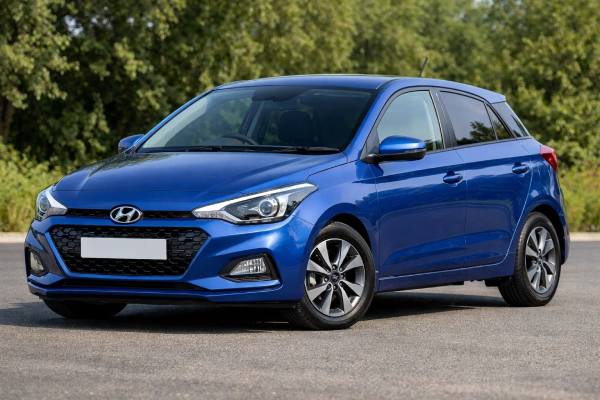
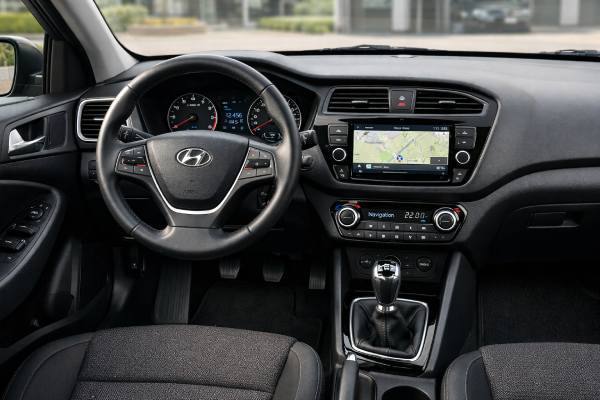
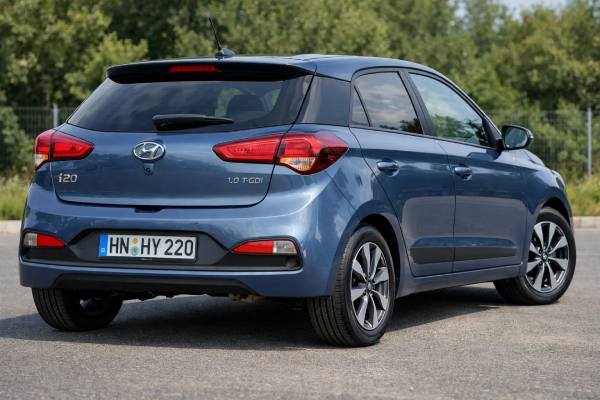
The facelifted Hyundai i20 GB with the 1.0 T-GDi 100 hp engine is one of the most balanced versions of the second-generation i20. It combines the mature chassis and roomy cabin of the GB-generation hatchback with a small turbocharged petrol engine that gives it noticeably more real-world punch than the naturally aspirated 1.2 and 1.4 options. That makes it appealing to buyers who want a compact hatchback that feels easy in town but still comfortable on faster roads. The 2018 facelift also mattered. Hyundai updated the styling, brought in more connectivity and safety equipment, and, in some markets, expanded the availability of the 7-speed dual-clutch transmission with the 100 hp turbo engine. As a used buy, this version offers a smart blend of practicality, economy, and everyday performance. The catch is that it is no longer just a simple small petrol car. Turbocharging, direct injection, and more electronics mean maintenance history matters much more than price alone.
At a Glance
- The 1.0 T-GDi 100 hp engine gives the facelifted i20 stronger mid-range performance than the non-turbo petrol models.
- The GB-generation cabin is roomy for the class, with good rear-seat space and a useful 326 L boot.
- Facelift models gained better connectivity and, in many trims, a stronger active-safety package.
- Poor maintenance can lead to carbon build-up, ignition issues, turbo-related faults, and expensive clutch wear on DCT-equipped cars.
- Hyundai commonly scheduled engine oil and filter service every 15,000 km or 12 months on this generation.
Start here
- Hyundai i20 GB Facelift Outline
- Hyundai i20 GB Facelift Specification
- Hyundai i20 GB Facelift Trims
- Known Issues and Factory Actions
- Service Routine and Buying Checks
- Real Driving and Fuel Results
- Position Against Key Rivals
Hyundai i20 GB Facelift Outline
The facelifted Hyundai i20 GB was Hyundai’s effort to keep the second-generation i20 competitive against increasingly polished rivals in the supermini class. The updates were not purely cosmetic. The refreshed front and rear design made the car look more modern, but the more meaningful changes were inside the equipment list. Hyundai improved connectivity, expanded the availability of newer safety technology, and in some markets widened the transmission choices for the 1.0 T-GDi 100 hp engine.
That engine is the main reason this version stands out. The earlier non-turbo 1.2 and 1.4 petrol options were dependable and simple, but they could feel underpowered once the car was loaded or driven at sustained motorway speeds. The 1.0 T-GDi changes that. With 172 Nm of torque arriving low in the rev range, the facelifted i20 feels stronger in normal use than the 100 hp figure suggests. It is still not a hot hatch, but it is clearly the point in the range where the car starts to feel relaxed rather than merely adequate.
The wider GB-generation i20 already had useful strengths before the facelift. It was roomy for its class, rode with more composure than many budget-oriented superminis, and felt more mature than the older PB-generation car. The facelift kept those traits. Rear-seat space remained a selling point, the driving position stayed comfortable, and the hatchback body remained practical enough for small families or longer daily commutes. That balance is a big part of the appeal today.
The important ownership shift is that this version is more modern and more complex than the naturally aspirated i20s. Turbocharging, direct injection, and extra safety electronics make the car better in everyday use, but they also raise the importance of proper servicing. A 1.0 T-GDi that has had regular oil changes, correct plugs, good tyres, and sensible warm-up habits can be a very satisfying used car. A neglected one can quickly become more expensive than a slower but simpler alternative.
There is also a market-spec point worth keeping in mind. The facelift i20 100 hp could be found with a 5-speed manual in some markets and with a 7-speed dual-clutch transmission in others, and trim structures varied widely across Europe. That affects not only equipment but also reliability risk and driving character. For used buyers, the safest assumption is that no generic advert tells the whole truth. The exact VIN, market, transmission, and service history matter more than brochure headlines.
In short, the facelifted i20 1.0 T-GDi 100 is one of the most attractive GB variants because it gives the chassis the engine it needed. It remains practical and easy to use, but it no longer feels as if performance was an afterthought.
Hyundai i20 GB Facelift Specification
The facelifted i20 1.0 T-GDi 100 pairs a small-displacement turbocharged direct-injection three-cylinder engine with the familiar GB-platform chassis. Hyundai’s official UK facelift announcement confirmed the 1.0 T-GDi 100 PS engine and the introduction of the 7-speed dual-clutch transmission, while Euro-market technical material for the GB i20 line provides consistent dimensional and performance context for the facelift period.
| Powertrain and efficiency | Figure |
|---|---|
| Code | Kappa 1.0 T-GDi |
| Engine layout and cylinders | Inline 3, DOHC, 4 valves per cylinder |
| Bore × stroke | 71.0 × 84.0 mm (2.80 × 3.31 in) |
| Displacement | 1.0 L (998 cc) |
| Induction | Turbocharged |
| Fuel system | Gasoline direct injection |
| Compression ratio | 10.5:1 |
| Max power | 100 hp (74 kW) @ about 4500–6000 rpm |
| Max torque | 172 Nm (127 lb-ft) @ about 1500–4000 rpm |
| Timing drive | Chain |
| Rated efficiency | Roughly 5.0–5.5 L/100 km combined depending on market, tyre, and transmission |
| Real-world highway @ 120 km/h | Usually around 6.2–7.0 L/100 km |
| Transmission and driveline | Figure |
|---|---|
| Transmission | 5-speed manual or 7-speed dual-clutch in facelift-era markets |
| Drive type | Front-wheel drive |
| Differential | Open |
| Chassis and dimensions | Figure |
|---|---|
| Suspension, front | MacPherson strut |
| Suspension, rear | Torsion beam |
| Steering | Electric power steering |
| Brakes | Front discs, rear drums on many 100 hp trims |
| Wheels and tyres | Common sizes include 185/60 R15 and 195/55 R16 |
| Length | About 4035 mm (158.9 in) |
| Width | 1734 mm (68.3 in) |
| Height | About 1474 mm (58.0 in) |
| Wheelbase | 2570 mm (101.2 in) |
| Turning circle | About 10.2 m (33.5 ft) |
| Kerb weight | Roughly 1065–1175 kg depending on transmission and trim |
| GVWR | Roughly 1600–1650 kg class depending on version |
| Fuel tank | 50 L (13.2 US gal / 11.0 UK gal) |
| Cargo volume | About 326 L seats up, about 1042 L seats folded |
| Performance and capability | Figure |
|---|---|
| 0–100 km/h | Roughly 10.7–11.4 s depending on transmission and spec |
| Top speed | About 186–188 km/h (116–117 mph) |
| Payload | About 425–535 kg depending on trim |
| Fluids and service capacities | Figure |
|---|---|
| Engine oil | Low-SAPS oil meeting Hyundai specification; capacity around 3.8–4.0 L depending on service fill |
| Coolant | Hyundai-approved coolant mixture; verify exact capacity by VIN and market |
| Transmission fluid | Hyundai-specified manual or DCT fluid only; verify by gearbox code |
| A/C refrigerant | Check under-bonnet label for type and charge |
| Key torque spec | Wheel nuts 88–107 Nm (65–79 lb-ft) |
| Safety and driver assistance | Figure |
|---|---|
| Euro NCAP | 4 stars in 2015 standard test configuration for the GB i20 line |
| Adult occupant | 85% |
| Child occupant | 73% |
| Vulnerable road users | 79% |
| Safety assist | 64% |
| ADAS suite | Depending on trim and market, AEB, Lane Keep Assist, Driver Attention Alert, High Beam Assist, and speed-limit information |
These numbers show the basic truth of the car. It is not extreme in any one area, but it is far more complete than the base petrol versions. The torque figure matters most. That is what makes the car feel noticeably stronger in ordinary traffic and on faster roads.
Hyundai i20 GB Facelift Trims
The facelifted i20 range was reshaped around stronger technology and safety value, and the 1.0 T-GDi 100 PS engine sat in the middle-to-upper part of the lineup in many markets. In the UK, Hyundai’s official facelift pricing and specification announcement made it clear that the 100 PS turbo engine was offered above the entry-level 1.2 and could be paired with the 7-speed dual-clutch transmission. SE and Premium Nav-type grades were central to the range, with safety and connectivity increasing as you moved upward.
That matters because trim level changes the ownership experience more on this car than on older, simpler i20s. Lower trims might still give you the engine, but higher ones add features that make the facelift feel meaningfully more modern: touchscreen infotainment, Apple CarPlay and Android Auto, rear camera, parking sensors, climate functions, and more active-safety equipment. On the used market, a mid- or upper-trim 100 hp facelift can feel much newer in day-to-day use than the basic specification suggests.
Safety equipment is one of the biggest differences. Hyundai stated that facelift cars from SE trim upward in the UK gained features such as Autonomous Emergency Braking, Lane Keep Assist, Driver Attention Alert, and High Beam Assist. This does not mean every European 100 hp facelift has the same package, because market specifications differ, but it does show the model’s direction. Buyers should verify actual equipment on the specific car rather than assuming all facelift i20s are identical.
Mechanically, the main trim-linked difference is transmission. Some 100 hp cars are manuals, others use the 7-speed dual-clutch transmission. That changes the verdict more than wheel design or infotainment. The manual version is often the simpler long-term bet. The DCT version can make the car feel more modern and more convenient in traffic, but it also adds complexity and potential repair cost if neglected. For some buyers, that is a reasonable trade. For others, it is exactly what they are trying to avoid.
Wheel size matters too. Many 15- or 16-inch wheel packages suit the car best. They help preserve ride comfort and keep tyre costs manageable. Larger wheels may improve appearance, but on a 100 hp supermini they rarely change the ownership verdict in a helpful way. What matters more is tyre quality and even wear.
Quick identifiers help in person. SE and Premium Nav-style trims often include more complete safety and infotainment features, while entry versions can be visually similar but much more basic. The presence of a camera, parking sensors, climate controls, lane-assist menus, or DCT selector layout can tell you more about the car than a seller’s copied advert ever will. Since this is a facelift car, buyers should also look for the updated front-end styling and interior tech features that separate it from earlier GB examples.
The best used version is usually not the absolute cheapest 100 hp car. It is the one with the right engine, the right transmission for your needs, working technology, and a full record of proper servicing.
Known Issues and Factory Actions
The facelifted i20 1.0 T-GDi 100 has a generally sound reputation, but its reliability profile is different from that of the naturally aspirated 1.2 and 1.4 cars. The turbocharged direct-injection setup gives the car much better real-world performance, but it also introduces a few areas where neglect becomes expensive more quickly.
A practical way to understand the risk pattern is by frequency and cost:
- Common, low to medium cost: batteries, tyres, brake wear, front suspension links and bushes, and ordinary trim or switch issues.
- Common, medium cost: coil-pack or spark-plug related misfire, thermostat or cooling-system wear, air-conditioning weakness, and intake or boost-related sensor issues.
- Occasional, medium to high cost: carbon build-up on intake valves typical of direct-injection petrol engines, turbo plumbing leaks, wastegate or boost-control complaints, and clutch wear.
- Occasional, high cost: neglected turbo problems, catalytic-converter damage after unresolved misfire, DCT-related drivability complaints on poorly maintained cars, and overheating-related engine stress.
- Rare but important: hidden accident history, unresolved recall or campaign work, and badly executed software or aftermarket tuning changes.
The engine itself can be durable, but it needs the right care. Turbocharged small petrol engines depend heavily on timely oil changes and the correct oil specification. A patchy oil history is a much bigger concern here than on a naturally aspirated small hatchback. Cold-start behavior also matters. A healthy engine should settle quickly, pull smoothly from low rpm, and not show repeated warning lights or obvious hesitation under load.
Direct injection introduces another consideration: carbon build-up. Not every car will suffer badly, but over time deposits can accumulate on intake valves because fuel no longer washes over them in the same way as port injection. Symptoms can include rough idle, occasional hesitation, or reduced smoothness. That does not make the engine a poor design, but it does mean buyers should not assume a turbo direct-injection supermini can be neglected like an older MPI petrol.
Transmission choice shapes the reliability story too. The manual is the safer bet for buyers who want fewer unknowns. The 7-speed DCT can work well, but any sign of shudder, poor low-speed behavior, hesitation when selecting drive, or unclear service history deserves caution. A car that feels strange at parking speed or in stop-start traffic should not be dismissed as “just how they all are.”
Chassis and body issues are more ordinary. Suspension wear, wheel bearings, brake vibration, and tyre neglect can all make the car feel worse than it really is. A poor example often does not have one catastrophic defect. It simply feels loose, noisy, and not worth the price. That is why a longer road test matters.
Factory campaign status should always be verified by VIN through Hyundai’s official recall and service-campaign tools. Even on otherwise dependable models, software updates or regional campaigns can exist. A buyer should always ask for full service history, proof of correct oil service, and enough time for a cold start plus a proper mixed-route test drive.
Service Routine and Buying Checks
A good maintenance plan for the i20 1.0 T-GDi 100 is not complicated, but it does need discipline. This is not the version to buy and then service casually whenever convenient. The engine is efficient and enjoyable, but it responds best to timely oil changes, correct plugs, good cooling-system care, and attention to drivability symptoms before they grow into larger bills.
For many markets, Hyundai used a 15,000 km or 12-month framework for routine servicing, and that remains a sensible baseline. On an older used turbo petrol, conservative servicing is a strength, not a waste. If the car has been used for short trips, urban stop-start driving, or long intervals on cheap oil, that history matters.
| Item | Practical interval |
|---|---|
| Engine oil and filter | Every 15,000 km or 12 months maximum |
| Engine air filter | Inspect at every service and replace by condition |
| Cabin air filter | Inspect annually and usually replace every 12 months |
| Spark plugs | Replace on schedule with the correct specification for the T-GDi engine |
| Coolant | Replace by time and mileage schedule, not only after a fault appears |
| Auxiliary belts | Inspect regularly with age and mileage |
| Brake fluid | Every 2 years is sensible |
| Brake pads, discs, shoes, drums | Inspect at every service |
| Manual or DCT transmission | Check for leaks and confirm correct service practices by gearbox type |
| Tyre rotation | Around every 12,000 km |
| Battery test | Annually after about year four |
| Timing chain | No routine replacement interval, but investigate any persistent chain or correlation fault symptoms |
| Core fluids and values | Figure |
|---|---|
| Engine oil capacity | About 3.8–4.0 L |
| Wheel nut torque | 88–107 Nm |
| Fuel tank | 50 L |
| Engine type | Turbocharged direct-injection petrol |
The buyer’s inspection checklist should focus on the items that change the ownership verdict most:
- Start the engine cold and listen for rough idle, extended rattling, or misfire.
- Check that the engine pulls cleanly from low rpm with no hesitation or warning lights.
- Inspect service history carefully, especially oil type and interval.
- On DCT cars, test low-speed smoothness, parking behavior, and traffic response.
- Look for signs of cheap tyres, poor alignment, or neglected suspension wear.
- Confirm the cooling system is healthy and there are no overheating stories.
- Verify all infotainment, camera, parking aids, and safety systems work.
- Check for recall or campaign completion by VIN.
- Avoid cars with obvious aftermarket tuning unless the history is exceptionally strong.
- Prefer a car with evidence of regular plugs, brakes, and coolant care.
The best trims to seek are usually the mid-to-upper facelift cars with the useful safety and connectivity upgrades, provided their maintenance history is sound. The cars to avoid are the cheap ones with vague oil history, repeated ignition faults, poor low-speed DCT behavior, or sellers who dismiss warning lights as minor. Long-term durability can be good, but only if the car starts from a healthy baseline.
Real Driving and Fuel Results
This is the section where the facelifted i20 1.0 T-GDi 100 justifies itself. In everyday driving, it feels stronger and more complete than the non-turbo petrol i20s. The reason is simple: 172 Nm arrives early, so the car does not need to be revved hard to feel useful. In town, that makes it easy and relaxed. On open roads, it gives the car enough mid-range to stop feeling like a purely urban hatchback.
The engine’s character suits the car well. Around town it is responsive, flexible, and easy to drive smoothly. There is a slight small-turbo character to the way torque arrives, but Hyundai tuned the engine to feel progressive rather than abrupt. The result is a powertrain that feels noticeably stronger than its 100 hp figure suggests in day-to-day traffic.
On the motorway, the 100 hp i20 makes far more sense than the basic petrol versions. It is still a supermini, so wind and road noise remain more noticeable than in a larger hatchback, but the engine no longer feels strained just to hold speed or handle a moderate incline. The 7-speed DCT version can feel especially easy in traffic and steady cruising, while the manual keeps a slightly more direct and predictable feel.
Ride and handling remain mature rather than sporty. The facelift did not turn the i20 into a sharp driver’s car, but the GB platform already rode well for the class and felt settled at speed. Steering is light, grip is adequate, and the car is easy to place. Compared with a Ford Fiesta of the same era, the Hyundai is usually less engaging. Compared with many value-focused rivals, it feels composed and grown-up.
Real-world fuel economy is one of the car’s stronger points, but expectations should stay realistic. Official combined figures often sit around the low-5 L/100 km range depending on trim and transmission. In actual mixed use, something in the upper-5 to mid-6 L/100 km range is more typical for a healthy car driven normally. City use, cold weather, and heavier right-foot driving can push that higher. At a true 120 km/h cruise, most cars will land somewhere around the low-to-high 6 L/100 km range depending on wind, tyres, and load.
That is still a good result for a 100 hp turbo petrol hatchback with honest real-world pace. The point is not that the i20 is class-leading on every measure. The point is that it combines decent economy with a level of performance that makes the car feel complete. Many small hatchbacks give you one or the other. This version gives you a useful amount of both.
Overall, the driving verdict is straightforward. The facelifted i20 1.0 T-GDi 100 is not thrilling, but it is one of the easiest GB versions to recommend because it finally gives the car enough torque to match its otherwise mature feel.
Position Against Key Rivals
The facelifted i20 1.0 T-GDi 100 competes directly with cars such as the Ford Fiesta 1.0 EcoBoost 100, Volkswagen Polo 1.0 TSI, Skoda Fabia 1.0 TSI, SEAT Ibiza 1.0 TSI, Kia Rio 1.0 T-GDi, and similar mid-output turbo superminis. Every one of those rivals has a strong point. The Fiesta often drives better. The Polo can feel more mature and upscale. The Ibiza is usually more energetic in character. The Rio is perhaps the most natural cousin to the Hyundai in overall ownership logic.
The Hyundai’s strength is balance. It combines good cabin room, solid ride quality, useful torque, sensible equipment availability, and a reputation for straightforward ownership when maintained properly. It is not the sharpest or the trendiest choice, but it often feels like a car built around daily usefulness rather than a single headline trait.
Compared with the naturally aspirated i20 engines, the 1.0 T-GDi 100 is the version that makes the platform feel properly complete. That matters because the GB i20 was always roomy and well sorted. What it sometimes lacked was an engine that felt truly at ease outside town. The turbo 100 fixes much of that.
Its weaknesses are also clear. It is more complex than the 1.2 or 1.4 MPI cars, so buyers who want absolute simplicity may still prefer those slower alternatives. The DCT version adds another layer of potential cost. And while the car is competent, rivals such as the Fiesta and Ibiza can still feel more entertaining for keen drivers.
Even so, the facelifted i20 1.0 T-GDi 100 remains a very convincing used supermini. Its best qualities are everyday torque, strong packaging, useful safety and connectivity updates, and a mature all-round feel. Its biggest risks are poor maintenance, cheap tyres, and the temptation to buy a marginal example because the price looks attractive. Buy a healthy one with proper oil history and the right transmission for your needs, and it stands up well against the class.
References
- Hyundai Owners Manuals | Hyundai Motor UK 2026 (Owner’s Manual)
- Hyundai Motor UK announces New i20 5 door pricing and specifications 2018 (Manufacturer release)
- Hyundai i20 – Euro NCAP Results 2015 2015 (Safety Rating)
- Home | Hyundai Recalls & Service Campaigns 2026 (Recall Database)
- Check if a vehicle, part or accessory has been recalled 2026 (Recall Database)
Disclaimer
This article is for informational purposes only and is not a substitute for professional diagnosis or repair. Specifications, torque values, intervals, procedures, and fitted equipment vary by VIN, market, build date, and equipment level, so always verify them against the official service documentation and parts information for the exact vehicle.
If this guide helped you, please consider sharing it on Facebook, X, or another social platform to support our work.