
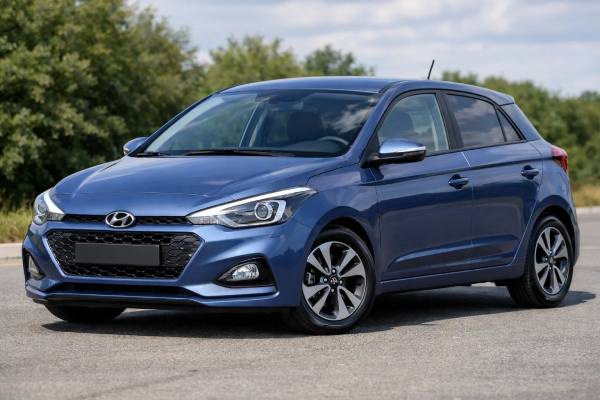
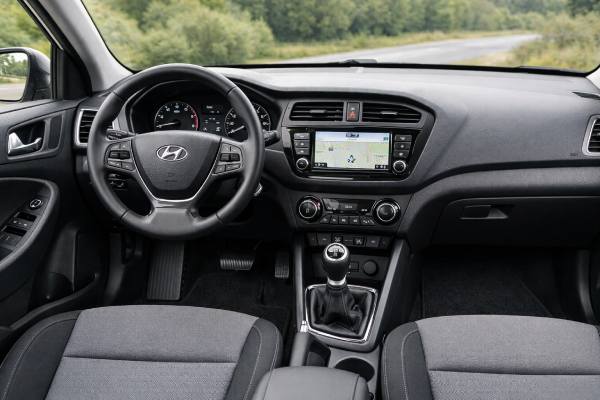
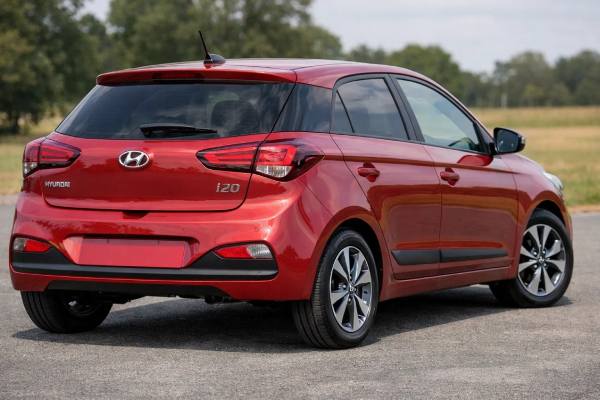
The facelifted Hyundai i20 GB with the naturally aspirated 1.4-litre 100 hp petrol engine is one of the quieter sensible choices in the supermini class. It does not chase turbo drama or crossover styling. Instead, it offers a simple four-cylinder engine, straightforward front-wheel-drive hardware, a roomy cabin, and the cleaner design and upgraded tech that arrived with the 2018 update. That makes it appealing to buyers who want an easy small hatchback without the extra complexity of a downsized turbo or a dual-clutch transmission.
There is one important caveat, though. This 1.4-litre 100 hp facelift combination was market-specific, and some western-European facelift ranges leaned more heavily on the 1.0 T-GDi engines. So when shopping, trim, gearbox, and exact equipment should always be confirmed by VIN and market. Find a well-kept example, however, and the payoff is a practical, honest supermini that still feels easy to recommend.
Top Highlights
- Simple naturally aspirated four-cylinder engine keeps the ownership case easy to understand.
- Facelift cars gained fresher styling, improved connectivity, and more safety equipment in many markets.
- Cabin space and a 326 L boot remain strong points for the class.
- Automatic-transmission cars deserve closer inspection for shift quality and fluid-service history.
- A cautious real-world oil-service routine is every 10,000–15,000 km or 12 months.
On this page
- Hyundai i20 GB facelift in use
- Hyundai i20 GB facelift by numbers
- Hyundai i20 GB facelift trim and safety
- Reliability map and known faults
- Servicing routine and buying checks
- Road manners and real economy
- Against Fiesta, Polo, and Clio
Hyundai i20 GB facelift in use
The facelifted GB-generation i20 arrived in 2018 with a cleaner front end, a revised rear design, and upgraded connectivity and safety features in many markets. It was not a radical reinvention of the car, but it did sharpen the package in the ways that matter most in daily use. The i20 was already a roomy and sensible supermini. The facelift simply made it look fresher and feel more current without disturbing the parts of the formula that already worked.
That matters for the 1.4-litre 100 hp version, because this engine suits the basic character of the car very well. Unlike the smaller turbocharged options, the 1.4 feels simple and linear. It does not hit hard in the mid-range, but it responds predictably, sounds smoother than the three-cylinder alternatives, and asks less of the driver in stop-start traffic. In practice, it is the engine for people who value consistency and low ownership drama more than brisk acceleration figures.
The facelifted i20 also kept one of the model’s biggest strengths: space. The GB body is larger inside than many buyers expect from a B-segment hatchback. Rear-seat room is respectable, front-seat comfort is good for the class, and the boot is a genuine family-strength asset rather than a token city-car compartment. That makes the car more versatile than many fashionable rivals that look better in photos than they work in real life.
There is an important market note here. The exact 1.4 100 hp facelift combination was not sold in identical form everywhere. Some markets focused more on the 1.0 T-GDi engines after the update, while others continued to offer naturally aspirated 1.4-litre cars. That is why buyers should not rely on generic listings. A seller may advertise a “facelift 1.4” while using photos or equipment data from a different regional specification. Trim, gearbox, emissions standard, and safety equipment all need to be checked against the actual car.
As a used proposition, the 1.4-litre facelift i20 makes sense for drivers who want a straightforward small hatchback that does not feel stripped down. It has enough performance for normal use, enough cabin space to work as a primary household car, and less complexity than many modern turbocharged alternatives. It is not the most exciting car in the class, but it is one of the more rational ones. That tends to matter more once the showroom shine is gone and ownership starts depending on how a car behaves every day.
In the end, this version of the i20 is best understood as a mature supermini with a conservative engine choice. That may sound unglamorous, but on the used market it is often exactly the right answer.
Hyundai i20 GB facelift by numbers
Because this facelifted 1.4-litre 100 hp combination was market-specific, published figures can vary slightly by region, trim, and transmission. The table below reflects the most consistent GB-generation i20 body data, combined with official Hyundai engine information for the 1.4-litre 100 PS unit and the 2018 facelift’s publicly announced feature changes. Where a number may vary by market, that is noted rather than overstated.
| Category | Specification |
|---|---|
| Code | Kappa 1.4 MPi, market-dependent code listing |
| Engine layout and cylinders | Inline-4, transverse, DOHC, 4 valves per cylinder |
| Bore × stroke | About 72.0 × 84.0 mm (2.83 × 3.31 in) |
| Displacement | 1.4 L (1,368 cc) |
| Induction | Naturally aspirated |
| Fuel system | Multi-point fuel injection |
| Compression ratio | About 10.5:1 |
| Max power | 100 hp (74 kW) @ 6,000 rpm |
| Max torque | About 134 Nm (99 lb-ft) @ 3,500 rpm |
| Timing drive | Chain |
| Rated efficiency | Roughly 5.8–6.4 L/100 km (40.6–36.8 mpg US / 48.7–44.1 mpg UK), depending on market and gearbox |
| Real-world highway @ 120 km/h | Roughly 5.7–6.6 L/100 km (41.3–35.6 mpg US / 49.6–42.8 mpg UK) |
| Transmission and driveline | Specification |
|---|---|
| Transmission | 6-speed manual or market-dependent automatic on some 1.4-litre applications |
| Drive type | FWD |
| Differential | Open |
| Chassis and dimensions | Specification |
|---|---|
| Suspension, front | MacPherson strut |
| Suspension, rear | Torsion beam |
| Steering | Electric power-assisted rack and pinion |
| Brakes | Front ventilated discs; rear drums on many 1.4-litre variants |
| Most popular tyre size | 185/65 R15 |
| Other common tyre sizes | 175/70 R14, 195/55 R16 |
| Ground clearance | About 140 mm (5.5 in) |
| Length | 4,035 mm (158.9 in) |
| Width | 1,734 mm (68.3 in) |
| Height | 1,474 mm (58.0 in) |
| Wheelbase | 2,570 mm (101.2 in) |
| Turning circle | About 10.2 m (33.5 ft) |
| Kerb weight | Roughly 1,070–1,130 kg (2,359–2,491 lb), market and transmission dependent |
| GVWR | About 1,560–1,600 kg (3,439–3,527 lb) |
| Fuel tank | 50 L (13.2 US gal / 11.0 UK gal) |
| Cargo volume | 326 L (11.5 ft³) seats up / 1,042 L (36.8 ft³) seats folded |
| Performance and capability | Specification |
|---|---|
| 0–100 km/h | Roughly 11.6–12.9 s, depending on market and transmission |
| Top speed | Roughly 175–183 km/h (109–114 mph) |
| Braking distance | No widely published factory figure for this exact facelift variant |
| Towing capacity | Market dependent; verify by VIN and local handbook |
| Payload | Typically around 430–530 kg (948–1,168 lb), equipment dependent |
| Fluids and service capacities | Specification |
|---|---|
| Engine oil | Commonly 5W-30 or 5W-40 depending on climate and spec; about 3.3–3.6 L (3.5–3.8 US qt) typical for the 1.4 MPi family |
| Coolant | Ethylene-glycol based coolant with demineralised water; verify exact fill by VIN |
| Transmission oil | Manual transaxle or ATF specification depends on gearbox; verify by transmission code |
| Differential / transfer case | Not applicable |
| Brake and clutch fluid | DOT 3 or DOT 4; service fill varies |
| A/C refrigerant | Verify by under-bonnet label |
| A/C compressor oil | Verify by system label and refrigerant type |
| Key torque specs | Wheel nuts 88–107 Nm (65–79 lb-ft) |
| Safety and driver assistance | Specification |
|---|---|
| Euro NCAP | Publicly relevant GB i20 result: 4 stars; 85% adult, 73% child, 79% pedestrian, 64% safety assist |
| IIHS | Not applicable |
| Headlight rating | Not applicable |
| ADAS suite | Facelift cars gained broader safety equipment in many markets, including AEB, lane support, driver attention alert, and high beam assist on higher or better-equipped trims |
The big picture is simple. This is a light, roomy supermini with a straightforward naturally aspirated engine and enough power to avoid feeling bare-minimum. The numbers do not promise excitement, but they do promise usability, which is exactly why this version deserves attention.
Hyundai i20 GB facelift trim and safety
The 2018 facelift mattered most in exactly the areas supermini buyers tend to notice: appearance, infotainment, and active safety. Hyundai did not rebuild the i20 from scratch. Instead, it revised the exterior with the brand’s then-current grille treatment, updated bumpers and rear-end detailing, and improved what owners saw and touched every day. That was a smart move, because the underlying GB i20 was already competitive on cabin space and basic usability.
Trim structures varied by market, but the broad theme remained familiar. Lower trims covered the basics, while mid-level and upper trims added the equipment that makes an i20 feel more complete: alloy wheels, better infotainment, climate control or upgraded air conditioning, cruise control, parking sensors, nicer trim finishes, and convenience features such as power-folding mirrors or automatic wipers in some versions. The facelift also helped standardise smartphone connectivity and improved the availability of safety technology in many markets.
That safety detail is important. Hyundai’s UK announcement for the updated five-door i20 specifically highlighted the wider spread of safety features such as Autonomous Emergency Braking, Lane Keep Assist, Driver Attention Alert, and High Beam Assist from SE trim upwards. Not every market mirrored that exact ladder, but it is a useful clue to what the facelift period represented. The i20 did not become a class-leading ADAS showcase, yet it became more competitive and easier to recommend than earlier GB cars when spec was right.
The underlying safety rating stayed tied to the GB i20’s 2015 Euro NCAP result, which was four stars. That is a respectable outcome, but it is worth understanding what it means today. Structurally, the car was decent for the class. The limitation was not a weak shell. It was the absence or limited availability of the newer crash-avoidance systems that were becoming more important in the rating regime. For used buyers, that means trim and market matter. A well-equipped facelift car can be meaningfully better in everyday safety than a sparsely specified one, even if both share the same broad crash-test background.
The 1.4 100 hp powertrain itself does not usually define trim level, but it does interact with the ownership experience. Smaller wheels often suit this engine better because they protect ride quality and preserve the car’s modest performance. Bigger wheels improve appearance, but the naturally aspirated 1.4 does not have spare torque to hide extra rotational mass the way a turbocharged engine can. That is why a neat mid-trim car on sensible 15-inch wheels can be a better real-world choice than a more decorative version.
For identification, look for facelift-specific front and rear styling, updated infotainment hardware, and market-appropriate safety equipment. Do not assume every facelift car has the same assistance features. On this model, “facelift” tells you the design era, not automatically the exact equipment list.
The best examples are usually mid-grade or upper-mid-grade cars with the safety pack you actually want, working climate equipment, and clean service history. In this case, specification matters, but not as much as condition.
Reliability map and known faults
The facelifted i20 1.4 MPi is not known as a fundamentally troublesome car, and that is part of its appeal. A naturally aspirated four-cylinder petrol engine with chain drive and conventional front-wheel-drive hardware is a simpler ownership proposition than many downsized turbo rivals. That said, simple does not mean fault-free. Like any used supermini, it has a pattern of common age- and maintenance-related issues that buyers should understand.
The most common low-cost issues are ordinary wear items and minor age-related faults. Suspension consumables such as anti-roll-bar links, bushes, top mounts, and dampers can show wear, especially on cars used on rough urban roads. Rear brakes on lightly used cars may corrode before they wear out, especially where rear drums are fitted. Battery condition can also cause more annoyance than many owners expect, because stop-start systems and modern electronics do not tolerate weak batteries gracefully. Strange warning behaviour, poor stop-start operation, or intermittent faults often start with basic electrical health.
Cooling-system problems are usually modest rather than dramatic, but they matter. Thermostats can weaken, hose joints can seep slightly, and neglected coolant can accelerate age-related wear. A car that takes too long to warm up, smells faintly of coolant, or shows residue around hose connections deserves attention before a small issue becomes a bigger one.
The timing chain is a key ownership point. One of the advantages of the 1.4 MPi is the absence of a routine timing-belt replacement interval. However, that does not mean the timing drive should be ignored. Long oil intervals, poor oil quality, or low oil level can contribute to chain, guide, or tensioner wear over time. Persistent chain rattle at cold start, timing-related fault codes, or abnormal upper-engine noise should be taken seriously. On this engine, disciplined oil changes are cheap insurance.
On automatic-transmission cars, gearbox behaviour becomes a major inspection point. Not all markets offered the same transmission with the facelift 1.4, but where an automatic is fitted, buyers should look for clean take-up, sensible shifts, and service evidence. Slurred, hesitant, or harsh shifts may not always signal total failure, but they do signal risk, and this is not the kind of car to buy with a doubtful automatic unless priced accordingly.
Less common but still relevant faults include ignition-coil or sensor-related issues, aged engine mounts, noisy wheel bearings, and infotainment glitches. None of these are particularly exotic. The danger comes when several small neglected issues pile up on a cheap car.
Corrosion is less of a headline issue than on older generations, but underbody inspection still matters. Check seams, brake lines, jacking points, lower suspension mounts, and the inner lips of the arches, especially on cars from cold or heavily salted regions.
The most important reliability filter remains service quality. A simple engine stays simple only when it has been serviced like one. A sketchy history car with ignored warning lights and delayed oil changes can undo much of the benefit this powertrain offers on paper.
Servicing routine and buying checks
The best way to own the facelift i20 1.4 is to keep the maintenance routine conservative and boring. That sounds unexciting, but it is exactly how these cars stay dependable. This is not an engine that demands specialist intervention every few months. It simply rewards regular oil changes, good cooling-system care, sensible tyre maintenance, and prompt attention to minor faults before they become irritating patterns.
A practical used-car service routine looks like this:
- Engine oil and filter every 10,000–15,000 km or 12 months.
- Engine air filter inspect every service and replace as needed.
- Cabin filter every 15,000–20,000 km or yearly.
- Coolant inspect regularly and refresh by age and official schedule.
- Brake fluid every 2 years.
- Spark plugs by official interval for the exact market and plug type, often around 60,000 km for conventional service planning.
- Manual gearbox oil inspect or replace around 80,000–100,000 km if history is unclear.
- Automatic transmission fluid where applicable, change by sensible used-car practice even if some markets described it more optimistically.
- Timing chain no routine replacement interval, but inspect for noise and timing-related faults.
- Auxiliary belt and hoses inspect every service.
- Tyre rotation and alignment check every 10,000–12,000 km or when wear patterns suggest it.
- Battery test yearly once the battery is about 4 years old.
The fluid picture is manageable, though exact capacities depend on gearbox and market. Expect roughly 3.3–3.6 L of engine oil, a normal supermini-scale coolant fill, and transmission fluid quantities that need confirming by code. Wheel-nut torque is typically 88–107 Nm. Those figures help you budget, but VIN-specific documentation should always guide the actual service work.
For buyers, the inspection order should be deliberate. Start with the service history, then the cold start, then the underside. A good 1.4 should start easily, idle cleanly, and warm up normally with no persistent chain rattle. Underneath, you want to see a dry engine and gearbox, no excessive rust, and no obvious suspension damage. On the road, listen for knocks, wheel-bearing hum, uneven braking, and poor alignment.
A strong buying checklist includes:
- Believable service history with regular oil changes.
- Clean cold starts and quiet mechanical behaviour once settled.
- No persistent engine, airbag, ABS, or stability-system warnings.
- Smooth idle and clean pickup through the rev range.
- Healthy cooling-system condition with no staining or leaks.
- Even tyre wear and matched decent-brand tyres.
- Quiet suspension over small broken surfaces.
- Sensible gearbox behaviour, especially on automatics.
- Working infotainment, camera, parking sensors, and climate controls where fitted.
Common catch-up jobs after purchase are usually manageable: tyres, filters, fluids, battery, brake service, suspension links, and sometimes plugs or a thermostat. Expensive surprises are less common than on some turbo rivals, which is part of the i20’s appeal.
The best cars are usually facelift examples with mid-grade or higher trim, the safety equipment you want, and a record of regular maintenance rather than irregular bargain hunting. Buy the cleanest, most boringly well-kept one you can find.
Road manners and real economy
The facelifted i20 1.4 100 hp is not a fast supermini, but it is often nicer to drive than people expect. That comes from consistency rather than punch. The naturally aspirated engine gives predictable response, the four-cylinder layout feels smoother than many small triples, and the GB platform remains one of the more mature-feeling bases in this class. For buyers who care about ease more than acceleration, that matters a lot.
Around town, the car is simple and pleasant. The steering is light, visibility is good, and the engine responds cleanly without the slight pause or abruptness some small turbo engines show at low speed. You do need revs to get the best from it, but the delivery is honest and linear. In traffic, it feels easy to meter. That is one reason many owners continue to prefer engines like this even when brochures tell them they should want something smaller and turbocharged instead.
On open roads, the i20 behaves like a mature supermini. Straight-line stability is respectable, the chassis feels planted rather than nervous, and ride quality is usually better than rivals with firmer setups or oversized wheels. The car is not playful in the way a Fiesta can be, but it is tidy and predictable. Cornering balance is safe, and the steering, while not full of feedback, is accurate enough to build confidence.
Where the engine shows its limits is at higher speeds or when the car is fully loaded. Overtaking requires planning, hills ask for a downshift, and automatic-transmission variants can feel more relaxed than urgent. That is not a flaw so much as the nature of a 100 hp naturally aspirated supermini. Buyers expecting turbo-style shove will be disappointed. Buyers expecting an easy, smooth everyday engine will usually be satisfied.
Refinement is one of the better parts of the package. Once warm, the 1.4 is generally quieter and smoother than the small diesel options and less characterful but often less tiring than a three-cylinder under load. Wind noise and tyre roar are average for the class. Wheel choice matters here. Cars on sensible 15-inch tyres usually feel more composed and quieter than heavily wheeled versions.
Real-world fuel economy depends heavily on route type and gearbox, but a healthy car usually lands in a reasonable bracket:
- City: about 6.8–8.0 L/100 km
about 34.6–29.4 mpg US
about 41.5–35.3 mpg UK - Highway at 100–120 km/h: about 5.7–6.6 L/100 km
about 41.3–35.6 mpg US
about 49.6–42.8 mpg UK - Mixed use: about 6.1–7.1 L/100 km
about 38.6–33.1 mpg US
about 46.3–39.8 mpg UK
Cold weather and short trips can push those numbers upward, but this engine is generally forgiving. That is a real advantage over a small diesel or a more stressed turbo petrol, especially for owners with unpredictable daily use.
In short, the facelift i20 1.4 feels like a car engineered to reduce fuss. It does not try to entertain first and explain later. It aims to be easy, smooth, and sensible, and in used form that is often exactly the right priority.
Against Fiesta, Polo, and Clio
The facelifted Hyundai i20 1.4 100 hp competes in one of the most crowded parts of the used-car market, and it does not dominate that class in the obvious ways. It is not the sharpest to drive, not the most prestigious, and not the most fashion-led. What it does offer is a very balanced case once a buyer looks past badge hierarchy.
Against a Ford Fiesta, the Hyundai usually loses on steering feel and chassis fun. The Fiesta remains the more engaging car on a back road. But the i20 counters with a roomier rear cabin, a stronger sense of practical space, and often a calmer, more comfort-led ride. For buyers who carry adults or care about boot and rear-seat usability, the Hyundai can make more sense than the Ford.
Compared with a Volkswagen Polo, the i20 may not feel as polished in small interior details, but it is often just as practical and sometimes easier to justify financially. The Polo’s badge and cabin finish can still feel more premium. The Hyundai fights back with honest packaging, straightforward ownership, and generally sensible parts-and-service expectations. On the used market, that can outweigh a slightly more expensive-feeling dashboard.
Against a Renault Clio, the Hyundai often feels less style-conscious but easier to live with. The Clio may look more dramatic inside and out. The i20 tends to win with clearer ergonomics, more rear-seat room, and a less fussy ownership feel. Against a Vauxhall Corsa, the Hyundai usually comes across as the more rounded all-rounder when service history is equal, especially if the buyer values space and predictable day-to-day comfort.
The strongest comparison may actually be inside the i20 range. The facelift 1.0 T-GDi models are the more modern-feeling options and often the quicker ones. They make better sense for drivers who want stronger mid-range punch or a more up-to-date small-turbo character. The 1.4 100 hp, by contrast, is the simpler choice. It is the version for buyers who prefer naturally aspirated response, lower perceived complexity, and a less stressed engine. That is a smaller audience, but it is a real one.
That is also why this car remains relevant. The used market is full of small hatchbacks that promise style, sportiness, or technology, but not all of them feel better to own after two years of real driving. The i20 1.4 facelift makes a more modest promise. It offers space, sanity, and straightforward mechanicals in a body that still feels modern enough. For many buyers, that is more valuable than a stronger badge or a slightly faster brochure time.
The final verdict is simple. This is not the emotional choice in the class. It is one of the practical intelligent ones. If you want a facelifted supermini that is roomy, easy to drive, and less complicated than many rivals, the i20 1.4 100 hp deserves a serious place on the shortlist.
References
- Hyundai Owners manuals | Hyundai Motor UK 2026 (Owner’s Manual Portal)
- Hyundai Motor UK announces New i20 5 door pricing and specifications 2018 (Press Release)
- Hyundai i20 2017 (Brochure)
- Hyundai i20 – Euro NCAP Results 2015 2015 (Safety Rating)
- What make is the vehicle? – Check if a vehicle, part or accessory has been recalled – GOV.UK 2026 (Recall Database)
Disclaimer
This article is for informational purposes only and is not a substitute for professional diagnosis or repair. Specifications, torque values, service intervals, procedures, and equipment can vary by VIN, market, engine calibration, gearbox, and trim, so always verify details against the official service documentation for the exact vehicle.
If this guide helped you, please consider sharing it on Facebook, X, or another platform to support our work.