
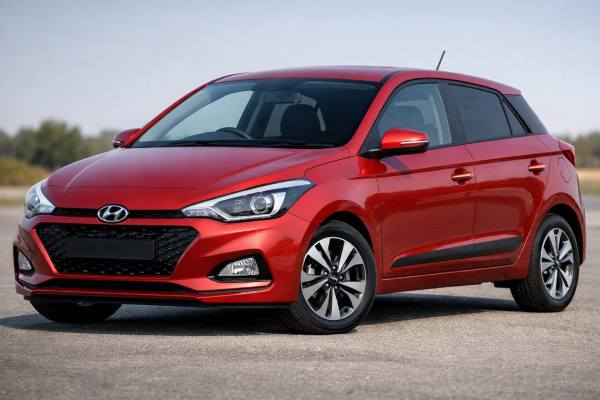
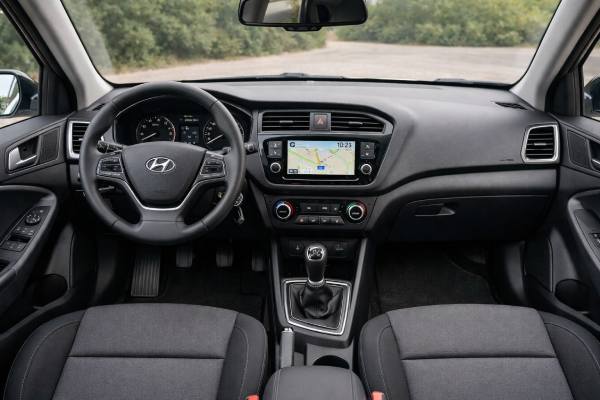
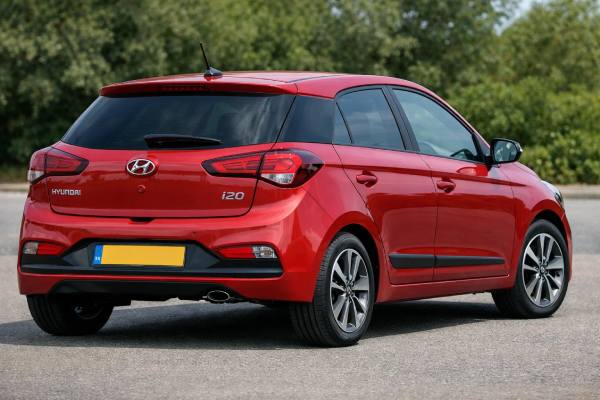
The facelifted Hyundai i20 GB with the 1.0 T-GDi 120 hp engine is one of the strongest versions of the second-generation i20 for drivers who want a small car that does not feel basic. It keeps the GB car’s roomy cabin, 326-litre boot, and mature road manners, then adds the sharper front-end update from 2018 and the most energetic mainstream petrol engine in the range. The key engineering appeal is simple: a turbocharged 998 cc three-cylinder with 172 Nm of torque, a six-speed manual in many facelift markets, and a body that is still compact outside but usefully spacious inside. That gives the car a much broader skill set than earlier naturally aspirated i20s. It can handle urban use, commuting, and motorway miles without feeling underpowered. The main ownership question now is how well each example has been maintained. This guide focuses on the 2018–2020 facelift i20 GB 1.0 T-GDi 120 hp, covering specs, safety, reliability, maintenance, and real-world ownership value.
Core Points
- The 120 hp 1.0 T-GDi gives the facelift i20 genuinely strong everyday performance for the class, especially in the mid-range.
- A 2,570 mm wheelbase and 326-litre VDA boot make it more practical than many buyers expect from a small hatchback.
- The 2018 facelift added a more modern equipment mix, including broader availability of AEB and lane support on higher trims.
- The main ownership caveat is turbo direct-injection age, so oil quality, cooling-system condition, and short-trip history matter.
- A careful used-car routine is an annual oil and filter service, even if the official schedule can look longer on paper.
On this page
- Hyundai i20 facelift overview
- Hyundai i20 facelift technical profile
- Hyundai i20 facelift trims and safety
- Common failures and official actions
- Maintenance routine and buying checklist
- Driving impressions and real economy
- How the i20 stacks up
Hyundai i20 facelift overview
The 2018 facelift did not change the i20 GB’s basic character, but it sharpened the parts that mattered. Hyundai gave the car a cleaner, more modern nose, refreshed trim structure, and a more contemporary safety and infotainment story. The underlying platform stayed familiar: a practical B-segment hatchback with a long 2,570 mm wheelbase, front-wheel drive, and an emphasis on easy daily use rather than gimmicks. That was already a good starting point. The 1.0 T-GDi 120 hp engine is what turns it from merely sensible into genuinely appealing.
This engine changes the i20 more than the facelift styling does. Earlier naturally aspirated petrols in the range were dependable enough, but they asked for revs and rarely felt eager. The 1.0 T-GDi offers 172 Nm from low revs, and that makes the car feel much stronger in ordinary traffic than its size suggests. Pulling away from junctions, climbing hills, or overtaking on a motorway all take less effort. It is still a small hatchback, not a warm hatch, but it no longer feels like a compromise if you regularly drive outside city limits.
The body remains one of the i20’s quiet strengths. At 4,035 mm long and 1,734 mm wide without mirrors, it is easy to place in town and simple to park, yet it offers enough rear-seat room and boot capacity to function as a proper all-round family second car. The facelift did not reduce that practicality. In fact, the i20’s ability to stay genuinely useful while remaining compact is a large part of its long-term appeal.
The 120 hp version also sits in a smart part of the range. In many facelift markets, it was paired with a six-speed manual and reserved for better trims. That gives it two benefits: a more relaxed motorway feel and a used-market tendency to come with stronger equipment than basic cars. Good examples often have the safety and comfort features buyers actually want, not just the engine.
Its limits are straightforward. The i20 is not the sharpest driver’s car in the segment, and the 1.0 T-GDi is still a small turbo direct-injection petrol that depends on correct oil service and sensible use. Neglect is what makes this version expensive, not some single dramatic design flaw. A good car feels lively, refined enough, and easy to live with. A neglected one can become a chain of medium-cost fixes involving coils, plugs, boost leaks, cooling parts, or chain-related concerns.
So the facelift i20 1.0 T-GDi 120 is best viewed as a practical small hatch with unusually strong everyday performance for the class. It keeps the i20’s rational core but adds enough engine and equipment to make the car feel complete rather than merely adequate.
Hyundai i20 facelift technical profile
The tables below focus on the facelifted Hyundai i20 GB with the 1.0 T-GDi 120 hp engine sold from 2018 to 2020. Exact values can vary slightly by market, trim, and transmission choice, so VIN-level confirmation still matters when ordering parts or checking towing data.
Powertrain and efficiency
| Item | Hyundai i20 (GB facelift) 1.0 T-GDi 120 hp |
|---|---|
| Engine family | Kappa 1.0 T-GDi |
| Code | 1.0 T-GDi 88 kW |
| Engine layout and cylinders | Transverse I-3, DOHC, 4 valves per cylinder |
| Displacement | 1.0 L (998 cc) |
| Bore × stroke | 71.0 × 84.0 mm (2.80 × 3.31 in) |
| Induction | Turbocharged |
| Fuel system | Gasoline direct injection |
| Compression ratio | 10.0:1 |
| Max power | 120 hp (88 kW) @ 6,000 rpm |
| Max torque | 172 Nm (126.9 lb-ft) @ 1,500–4,000 rpm |
| Timing drive | Chain |
| Rated efficiency | Around 5.0–5.7 L/100 km, depending on market cycle and trim |
| Real-world highway @ 120 km/h | Typically about 5.8–6.7 L/100 km |
The engine’s character is defined by torque rather than headline drama. It is the sort of motor that makes the car feel much easier in daily use than a naturally aspirated supermini engine.
Transmission, driveline, and chassis
| Item | Hyundai i20 (GB facelift) 1.0 T-GDi 120 hp |
|---|---|
| Transmission | 6-speed manual in many facelift markets |
| Drive type | Front-wheel drive |
| Differential | Open |
| Front suspension | MacPherson strut |
| Rear suspension | Coupled torsion beam axle |
| Steering | Motor Driven Power Steering |
| Steering ratio | 13.9:1 |
| Steering turns lock-to-lock | 2.5–2.7 depending on source and market specification |
| Brakes | Front ventilated discs / rear discs |
| Front brake diameter | 280 mm (11.0 in) |
| Rear brake diameter | 262 mm (10.3 in) |
| Most common tyre sizes | 185/65 R15 or 195/55 R16 |
This hardware mix is one of the i20’s strengths. It stays conventional, easy to understand, and relatively cheap to service without feeling crude.
Dimensions, weights, and capacities
| Item | Hyundai i20 (GB facelift) 1.0 T-GDi 120 hp |
|---|---|
| Length | 4,035 mm (158.9 in) |
| Width | 1,734 mm (68.3 in) without mirrors |
| Width with mirrors | 1,880–1,985 mm depending on source convention |
| Height | 1,474 mm (58.0 in) |
| Wheelbase | 2,570 mm (101.2 in) |
| Turning circle | 10.2 m (33.5 ft) |
| Ground clearance | 140 mm (5.5 in) |
| Kerb weight | About 1,070–1,218 kg DIN, trim dependent |
| GVWR | About 1,640 kg (3,616 lb) |
| Payload | About 422–570 kg (930–1,257 lb), trim dependent |
| Fuel tank | 50 L (13.2 US gal / 11.0 UK gal) |
| Cargo volume | 326–1,024 L VDA, depending on source and seat position |
| Roof load | 70 kg (154 lb) |
The boot and wheelbase figures explain why the i20 feels roomier than some small hatchbacks that look similar on paper.
Performance, towing, and service capacities
| Item | Hyundai i20 (GB facelift) 1.0 T-GDi 120 hp |
|---|---|
| 0–100 km/h | About 10.2 s |
| 0–62 mph | About 10.2 s |
| Top speed | About 190 km/h (118 mph) |
| Braked towing | Up to 1,110 kg (2,447 lb) |
| Unbraked towing | 450 kg (992 lb) |
| Gross train weight | 2,750 kg (6,063 lb) |
| Nose weight | 75 kg (165 lb) |
| Fluid or spec | Value |
|---|---|
| Engine oil | About 3.8 L (4.0 US qt) incl. filter; use correct Hyundai-approved turbo-petrol spec |
| Typical viscosity | SAE 5W-30 |
| Coolant | About 4.3 L (4.5 US qt), phosphated ethylene-glycol type |
| Manual transmission oil | About 1.6–1.7 L (1.7–1.8 US qt), API GL-4 SAE 70W |
| A/C refrigerant | About 470 ± 25 g |
| A/C compressor oil | About 110 g PAG oil |
| Wheel lug nut torque | 88–107 Nm (65–79 lb-ft) |
| Safety item | Value |
|---|---|
| Euro NCAP | 4 stars for the GB-generation public test basis |
| Headlight rating (IIHS) | Not applicable |
| ADAS availability | AEB, lane keep assist, driver attention alert, and high beam assist on many facelift trims above base |
The facelift’s technical story is simple and appealing: small size, low weight, useful torque, and just enough equipment to make the car feel modern without becoming overly complex.
Hyundai i20 facelift trims and safety
Trim structure varies by market, but the facelift i20 typically followed a clear ladder from simple entry-grade cars to better-equipped versions with the technology and comfort features most buyers actually notice. For the 1.0 T-GDi 120 hp, this matters because the engine was usually not offered as the cheapest configuration. In many markets it sat near the top of the regular i20 range, which means used examples often come with more desirable specification.
Base trims still delivered the fundamentals: air conditioning, height- and reach-adjustable steering, remote locking, Bluetooth, digital radio or basic infotainment depending on market, and a sensible wheel-and-tyre package. Those cars make good budget buys with the smaller engines. The 120 hp facelift cars are more likely to be found in middle or upper trims, where the i20 begins to feel much more complete. Features such as cruise control with speed limiter, rear parking sensors, a rear-view camera, 7-inch navigation, smartphone integration, climate control, power-folding mirrors, and better seat trim become far more common.
The 2018 facelift also improved the safety story. In UK-spec trim data, autonomous emergency braking, driver attention alert, lane keep assist, and high beam assist appeared from SE grade upward rather than being reserved only for the most expensive model. That is important because it means many real-world used cars now include more meaningful active safety kit than earlier GB cars did. On higher trims, front and rear parking sensors, navigation-based camera support, and better lighting further improve day-to-day confidence.
Passive safety remains solid for the class. Front, side, and curtain airbags are widely fitted, and the structure itself was designed around the GB-generation body shell rather than as an afterthought to the facelift. ESC, hill-start assist, VSM, and ISOFIX anchorages are core parts of the package. That gives the i20 a sound baseline even if the car’s later public reputation was shaped partly by the four-star Euro NCAP score rather than by a simple five-star headline.
That score needs context. The underlying GB-generation i20 received four stars in Euro NCAP’s 2015 testing. By the standards of the time, crash protection was respectable, but the lack of stronger standard crash-avoidance tech held the result back. The facelift later addressed some of that gap by broadening AEB and lane support in many markets, but it did not magically turn the car into a current-generation ADAS leader. Buyers should see it as a well-equipped late-2010s supermini, not as a modern semi-autonomous hatchback.
Wheel size and trim also affect the ownership feel. Fifteen-inch cars tend to ride better and cost less to keep on tyres. Sixteen-inch versions look more polished and often come with the more desirable trim packages, but they can ride a little firmer. That means the ideal used i20 is often not the absolute top trim. It is the one with the best balance of equipment, ride, and verified maintenance.
When shopping, verify safety and comfort equipment by VIN or by the car itself. Do not assume every 120 hp facelift i20 has exactly the same AEB, lane assist, parking sensors, climate system, or lighting package. On the used market, those details shape real value.
Common failures and official actions
The facelifted i20 1.0 T-GDi is generally a sound used car, but it has the typical strengths and weak spots of a small turbo direct-injection petrol. That means the basic engineering is good, yet it responds badly to stretched oil changes, chronic short-trip use, and general neglect. Understanding that pattern is the difference between buying a lively, efficient hatchback and buying a car that slowly eats money.
Common, usually low-to-medium cost issues
- Spark plug and ignition-coil faults: Symptoms include hesitation under load, slight misfire, uneven idle, or a drop in throttle smoothness. These are often simple service-related issues rather than major engine problems.
- Boost leaks: Split hoses, weak clamps, or minor charge-air leaks can create flat response, hissing, and inconsistent torque delivery.
- Weak battery behavior: Low battery voltage can upset stop-start systems, create warning lights, or make the car feel electrically inconsistent.
- Brake wear and corrosion: Lightly used cars can suffer from rear-brake drag, uneven pad wear, or corroded disc surfaces.
Occasional medium-cost concerns
- Cooling-system seepage: Thermostat housings, hose joints, and plastic cooling components deserve inspection. Coolant loss on a modern turbo petrol should never be ignored.
- Carbon build-up: Because this is a direct-injection engine, intake-valve deposits can build up over time, especially on cars used mostly for cold running and very short trips.
- Clutch wear: On manual cars, high bite point, shudder, or slip under full load are conventional used-car concerns rather than rare faults.
Less common but more serious risks
- Timing-chain noise linked to poor oil history: The chain itself is a plus over a routine timing belt, but the system still depends on clean oil and sensible intervals. Persistent cold-start rattle is a real warning sign.
- Turbo wear after neglect: Long oil intervals or repeated overheating can shorten turbo life. Excess whistle, oil traces, or obvious lack of boost should be investigated properly.
- DCT-related problems on markets where dual-clutch versions exist: While this article focuses on the 120 hp facelift, which is commonly manual, some market variations in the wider 1.0 T-GDi family used dual-clutch gearboxes. Any hesitation or shudder at low speed deserves attention.
Software and calibration history matter more than many buyers expect. Dealer-level updates can improve idle quality, throttle smoothness, stop-start behavior, and fault sensitivity. That does not mean the car needs constant electronic intervention. It means a documented dealer or specialist history is genuinely valuable. On a modern small turbo petrol, software updates can be part of good maintenance rather than evidence of bad design.
Official actions should always be checked by VIN. Hyundai’s campaign and recall lookup tools exist for a reason, and they are especially useful on cars that may have changed owners or crossed borders. Even when there is no open safety recall, service-campaign history can help confirm whether the car has stayed within a proper maintenance network.
From a used-buyer perspective, the biggest message is simple. The 1.0 T-GDi is enjoyable and efficient, but it is less tolerant of neglect than the older naturally aspirated 1.25. Annual oil servicing, proper spark-plug replacement, and a healthy cooling system are the things that keep it pleasant. Patchy history is the thing that makes it risky.
Maintenance routine and buying checklist
The facelift i20 1.0 T-GDi is one of those cars where preventative maintenance pays off clearly. Hyundai’s official service structure can appear generous, but most experienced used-car owners shorten the oil interval rather than follow the longest theoretical schedule. With a turbocharged, direct-injection three-cylinder, that is a sensible strategy.
Practical maintenance schedule
| Item | Practical interval |
|---|---|
| Engine oil and filter | Every 10,000–15,000 km or 12 months |
| Engine air filter | Inspect annually; replace about every 30,000–40,000 km |
| Cabin air filter | Every 15,000–20,000 km or 12 months |
| Spark plugs | About every 30,000–45,000 km depending on plug type and use |
| Coolant | Inspect every service; replace by official schedule for exact VIN and market |
| Brake fluid | Every 24 months |
| Manual transmission oil | Inspect for leaks and shift quality; refresh when shift feel deteriorates |
| Auxiliary belt and hoses | Inspect at every annual service |
| Tyres and alignment | Rotate and inspect regularly; align if pull or uneven wear appears |
| 12 V battery | Test yearly once age passes about 4 years |
| Timing components | Inspect for chain noise, fault codes, or poor oil-service history |
That schedule is deliberately conservative. It reflects what keeps these engines healthy in real used-car life rather than what looks best in a brochure. The most important choice is the oil interval. Clean oil protects the turbocharger, the chain system, and general internal cleanliness. Saving money there rarely ends well.
Useful workshop quantities include about 3.8 L of oil with filter, about 4.3 L of coolant, and about 1.6–1.7 L of manual transmission oil. Wheel-lug torque sits in the 88–107 Nm range. Those figures help when you are reading invoices or deciding whether previous servicing sounds professionally done.
Used-buyer checklist
- Start the engine fully cold and listen for prolonged chain rattle or uneven idle.
- Drive from low revs in a higher gear and confirm that boost builds smoothly without hesitating.
- Check for coolant smell, dried residue around hose connections, or signs of repeated top-ups.
- Inspect the clutch for high bite point, slip, or judder under load.
- Look closely at tyre brands and wear patterns, because cheap tyres often hint at cheap maintenance.
- Inspect rear brakes for corrosion or binding, especially on low-mileage cars.
- Test every electrical item, including parking sensors, camera, climate controls, mirrors, and infotainment.
- Verify service history, annual oil changes, recall completion, and whether the car stayed with Hyundai or a reputable specialist.
The best facelift 120 hp cars are usually manual, middle- or upper-trim examples with complete history, decent tyres, and evidence of yearly servicing. A car that looks attractive on paper but has had long oil intervals, cheap mixed tyres, and no recent cooling-system work is not the bargain it first appears to be.
Long-term durability is good when the car is cared for properly. What makes the 1.0 T-GDi version appealing is that it still feels modern enough to be enjoyable, yet it remains simple enough to reward good maintenance rather than demanding constant expensive intervention.
Driving impressions and real economy
On the road, the facelift i20 1.0 T-GDi 120 feels like one of the best-sorted regular i20 variants of the GB era. The engine is the clear highlight. It gives the car real flexibility, and that matters more in daily driving than the raw 120 hp number alone. The i20 never feels fast in a dramatic way, but it feels alert, willing, and much less strained than the smaller petrol versions.
Around town, the early torque makes the car easy to drive smoothly. You do not need to chase revs, and you do not have to work the gearbox constantly to keep the engine in its useful range. That makes the car a better all-rounder than earlier naturally aspirated i20s. It still remains compact and light enough for tight streets and parking, but it no longer feels like it was designed only for urban work.
On faster roads, the six-speed manual found in many facelift 120 hp cars is a real benefit. It helps the engine settle down at cruising speed and makes motorway use feel more mature than a five-speed supermini normally does. The car’s straight-line stability is good, the driving position is natural, and overtaking feels confident rather than hesitant. It is not a genuine hot hatch, but it is quick enough to feel satisfying.
Handling is safe, tidy, and easy rather than playful. The steering is accurate enough, but it does not offer the rich feedback of a Ford Fiesta. The suspension is tuned more for daily comfort and predictability than for aggressive cornering. That suits the car’s role well. Most owners will appreciate the i20 more for its calmness on mixed roads than for any attempt at sportiness.
Wheel and tyre choice change the verdict more than many buyers realize. Cars on 15-inch tyres ride more softly and often feel quieter. Sixteen-inch trims respond a little more cleanly but bring higher tyre cost and sharper impacts over broken surfaces. In used form, tyre quality often matters more than wheel size alone. A car on good tyres can feel substantially more refined than one on cheap rubber.
Noise, vibration, and harshness are typical for a small turbo three-cylinder, but generally well controlled. There is a light three-cylinder thrum at idle, yet once moving the engine sounds refined enough for the class. At motorway speed, wind and tyre noise become more noticeable, but the car still feels more substantial than many older superminis.
Real-world fuel economy remains one of the model’s strong points. Mixed-use figures around 5.8–6.8 L/100 km are realistic in healthy cars. A steady motorway run at 100–120 km/h can return something in the high-5s to low-6s depending on speed, weather, and load. Heavy urban short-trip use pushes the number upward, especially in winter, but the engine’s balance of torque and efficiency is still impressive.
The overall verdict on driving is easy to summarize. The facelift 120 hp i20 is not the sharpest-handling small hatch, but it may be one of the most complete non-sport GB i20s. It is quick enough, refined enough, and practical enough to feel like a genuinely rounded car rather than simply a good-value one.
How the i20 stacks up
The facelift i20 1.0 T-GDi 120 sits in a busy part of the used market. Its natural rivals include the Ford Fiesta 1.0 EcoBoost 125, Volkswagen Polo 1.0 TSI 115, Skoda Fabia 1.0 TSI 110, SEAT Ibiza 1.0 TSI 115, Renault Clio TCe 120, and Kia Rio 1.0 T-GDi. Each of those cars offers something useful, so the Hyundai’s case depends on overall balance rather than one single class-leading trait.
Against the Ford Fiesta, the i20 usually loses on steering feel and handling sparkle. The Ford is the better enthusiast’s car. The Hyundai answers with a more comfort-first chassis, a roomy cabin, and a strong value proposition. If your priorities are commuting, practicality, and easy ownership rather than cornering fun, the i20 makes a convincing case.
Against the Polo, Fabia, and Ibiza, the Hyundai often feels slightly less premium inside, but it counters with strong equipment value and a refreshingly straightforward ownership feel. Those VW-group rivals may have sharper branding or a more restrained cabin look, yet the i20 is often easier to justify when specification, condition, and purchase cost are weighed honestly.
The Renault Clio and Kia Rio are closer philosophical competitors. The Clio often brings more style, the Rio similar rationality. The Hyundai’s main advantage is that it combines a genuinely useful body, a broad torque band, and respectable safety equipment in a package that feels mature without becoming expensive-looking or overcomplicated.
Compared with Hyundai’s own smaller-engine facelift cars, the 120 hp version is the one that most clearly avoids the “good but a bit slow” verdict. It feels like the engine the chassis deserved. That gives it stronger long-term appeal in the used market, because performance adequacy matters more as traffic speeds and expectations rise.
So where does that leave the car today? In a very sensible place. It is not the most prestigious small hatch, not the sharpest, and not the newest-feeling in safety technology. But it is one of the more rational. It offers a practical cabin, a strong real-world powertrain, useful towing ability for the class, and manageable running costs when maintained correctly.
Buy it if you want a small hatch that feels lively, practical, and mature without stepping into larger-car costs. Skip it if you want the segment’s sharpest handling or if you are allergic to the service discipline a small turbo direct-injection engine deserves. For many buyers, though, the facelift i20 1.0 T-GDi 120 is exactly the right balance of performance, value, and usability.
References
- New Hyundai i20 – Technical data and dimensions 2018 (Technical Data)
- Hyundai i20 | Technische Daten | Stand: 9.2018 2018 (Technical Data)
- Handleidingen | Hyundai Motor Nederland 2026 (Owner’s Manual portal)
- Hyundai i20 – Euro NCAP Results 2015 2015 (Safety Rating)
- Home | Hyundai Recalls & Service Campaigns 2026 (Recall Database)
Disclaimer
This article is for informational purposes only and is not a substitute for professional diagnosis, repair, or vehicle-specific technical advice. Specifications, torque values, service intervals, procedures, emissions equipment, and fitted features can vary by VIN, market, trim, and production date, so always verify critical details against official service documentation for the exact vehicle.
If this guide helped you, please consider sharing it on Facebook, X, or another social platform to support our work.