
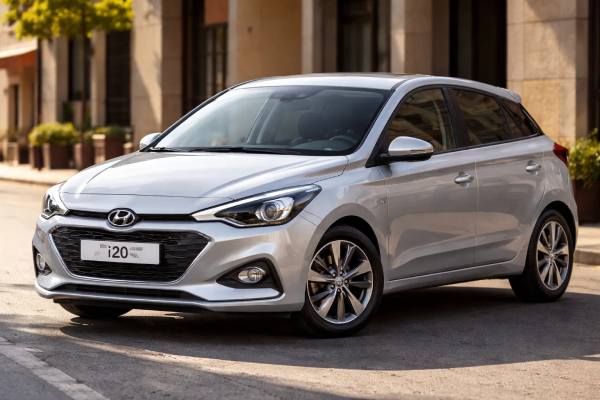
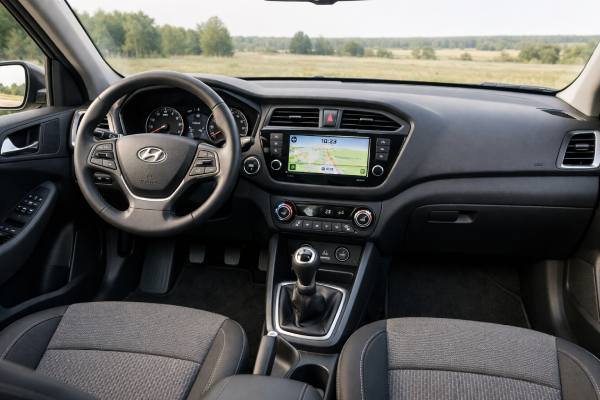
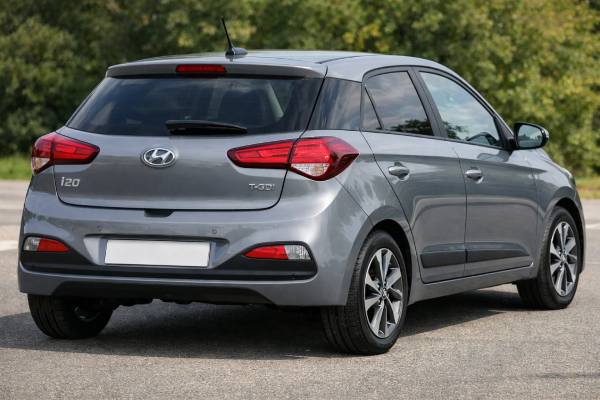
The facelifted Hyundai i20 GB 1.2 75 is one of those small hatchbacks that makes sense the moment you stop judging it by power alone. On paper, 75 hp looks modest, and it is. But this version was never about speed. It was aimed at buyers who wanted simple petrol engineering, low running costs, tidy dimensions, and a cabin that felt more mature than many superminis in the same price range. The 2018 update sharpened the styling, refreshed the infotainment options, and in some markets added more advanced safety features than the earlier GB models offered. The result is a straightforward, honest small car that can still be a smart used buy. The important thing is to separate this 2018–2020 facelift model from earlier GB cars and from higher-output 84 hp or 100 hp versions, because trim, market, and equipment differences are significant. VIN, country specification, and service history matter just as much as the engine badge.
Core Points
- The 1.2 75 hp engine is simple, naturally aspirated, and usually cheaper to own than the turbocharged alternatives.
- The facelifted GB i20 keeps a roomy cabin and a useful 326 L boot for a car in this class.
- Fifteen-inch-wheel versions are often the best long-term buy for comfort, tyre cost, and everyday durability.
- This engine is dependable when maintained, but weak performance means neglected clutch, ignition, or cooling issues are felt quickly.
- A careful owner should change the engine oil and filter every 12 months, or every 10,000 to 15,000 km in real-world use.
Navigate this guide
- Hyundai i20 GB facelift basics
- Hyundai i20 GB facelift specs
- Hyundai i20 GB facelift trims and safety
- Known issues and service actions
- Ownership schedule and buyer checks
- On-road manners and fuel use
- Hyundai i20 GB versus rivals
Hyundai i20 GB facelift basics
The facelifted GB-generation Hyundai i20 is best understood as an already solid supermini that was tidied up rather than reinvented. Hyundai revised the front and rear styling, updated parts of the cabin and infotainment package, and in some markets broadened the safety-tech story. Underneath, though, the car remained what it had always been: a practical five-door hatch with a roomy cabin, sensible chassis tuning, and a clear bias toward comfort and ease of ownership over sporty character.
That makes the 1.2 75 hp version easier to appreciate when you judge it correctly. It is the entry-level naturally aspirated petrol, and it exists for buyers who prefer mechanical simplicity over stronger acceleration. In most European specifications, this engine is a Kappa-family four-cylinder with multi-point injection, modest torque, and a manual gearbox. It is not quick, but it is uncomplicated. There is no turbocharger, no direct injection, and no dual-clutch transmission to complicate long-term ownership. For many used-car buyers, especially those covering city and suburban mileage, that simplicity is a real advantage.
The facelift matters because the 2018 update made the i20 feel fresher at exactly the point when many rivals were loading in more technology. Hyundai’s changes gave the car a cleaner grille treatment, revised bumpers, smarter wheel designs, and more available connectivity. In certain markets, SmartSense features such as lane support, driver-attention warning, high-beam assist, and forward collision-avoidance functions also became part of the conversation. The important catch is that availability varied a lot by trim and country. A basic 75 hp car does not necessarily mirror the feature list of a well-equipped launch-market press car.
The body remains one of the i20’s biggest strengths. The car is only a little over four metres long, yet it feels larger inside than many superminis of its era. Rear-seat space is honest rather than token, and the boot is large enough for shopping, small-family use, or airport runs without playing luggage Tetris. That gives the 75 hp car a clear place in the line-up. It is not the version for eager drivers, but it is a very rational version for people who value space, visibility, and uncomplicated ownership.
Its limitations are clear. With 75 hp, the engine does not hide a full load or steep gradients especially well. You need to use the gearbox more than in the 84 hp or turbocharged cars, and motorway overtakes take planning. Even so, when used for the job it was built for, the facelift i20 1.2 75 is a convincing small hatchback: simple, roomy, comfortable, and less intimidating to own than many downsized turbo rivals from the same period.
Hyundai i20 GB facelift specs
For the 2018–2020 facelift i20 GB 1.2 75, the most useful technical picture comes from official facelift-market brochures and Hyundai owner-documentation pages. One detail matters straight away: this version is market-sensitive. Some countries focused more heavily on the 84 hp 1.2, while others retained the 75 hp engine in lower trims. The figures below reflect the 75 PS facelift five-door car in European-market form.
Powertrain and efficiency
| Item | Hyundai i20 (GB facelift) 1.2 75 |
|---|---|
| Code | Kappa 1.2 MPI family, verify by VIN |
| Engine layout and cylinders | Inline-4, DOHC, 16-valve |
| Valves per cylinder | 4 |
| Bore × stroke | 71.0 × 78.8 mm |
| Displacement | 1.2 L (1248 cc) |
| Induction | Naturally aspirated |
| Fuel system | MPFI |
| Compression ratio | 10.5:1 |
| Max power | 75 hp (61.8 kW) @ 5500 rpm |
| Max torque | 121.6 Nm @ 4000 rpm |
| Timing drive | Verify by VIN and market documentation before major parts ordering |
| Rated efficiency | 5.6–5.8 L/100 km combined |
| Real-world highway @ 120 km/h | Usually about 6.3 to 7.0 L/100 km in healthy cars |
Transmission and driveline
| Item | Figure |
|---|---|
| Transmission | 5-speed manual |
| Drive type | FWD |
| Differential | Open |
Chassis and dimensions
| Item | Figure |
|---|---|
| Suspension, front | MacPherson strut |
| Suspension, rear | Coupled torsion beam axle |
| Steering | Motor Driven Power Steering |
| Steering ratio / lock-to-lock | About 2.7 turns lock-to-lock |
| Brakes, front | Disc |
| Brakes, rear | Drum on most lower-output versions |
| Wheels and tyres | 185/65 R15 most common; some markets also list 195/55 R16 |
| Length | 4035 mm |
| Width | 1734 mm |
| Height | 1474 mm |
| Wheelbase | 2570 mm |
| Turning circle, kerb-to-kerb | About 10.2 m |
| Kerb weight | 980 kg lightest / 1158 kg highest listed |
| GVWR | Verify by market plate and homologation label |
| Fuel tank | 50 L |
| Cargo volume | 326 L seats up / 1042 L seats folded, VDA |
Performance and capability
| Item | Figure |
|---|---|
| 0–100 km/h | 13.6 s |
| Top speed | 160 km/h |
| Braking distance | Not consistently published in stable open official facelift data |
| Towing capacity | Verify by VIN, market, and tow-approval plate before purchase |
| Payload | Market and trim dependent |
Fluids and service capacities
| Item | Figure |
|---|---|
| Engine oil specification | Use the Hyundai-approved oil grade specified for the VIN, market, and climate |
| Engine oil capacity | Verify by VIN and owner documentation before service |
| Coolant | Use Hyundai-approved coolant mix only; verify fill quantity by VIN |
| Transmission oil | Verify exact gearbox fluid and capacity by transmission code |
| Differential / transfer case | Integrated with transaxle |
| A/C refrigerant | Verify by under-bonnet label |
| A/C compressor oil | Verify by system label or workshop documentation |
| Key torque specs | Wheel nuts commonly 88–107 Nm |
Safety and driver assistance
| Item | Figure |
|---|---|
| Euro NCAP | 4 stars for the GB-generation i20 tested in 2015 |
| Adult occupant | 85% |
| Child occupant | 73% |
| Vulnerable road user | 79% |
| Safety assist | 64% |
| Headlight rating | IIHS not applicable in this Europe-focused context |
| ADAS suite | Lane and collision-support functions available in some facelift markets and trims, not universal across the range |
The key thing these numbers show is that the facelift 1.2 75 is not a performance buy. It is a light, efficient, compact hatchback with a simple naturally aspirated engine and a body that prioritises space and usability. That is exactly why some buyers still prefer it.
Hyundai i20 GB facelift trims and safety
The facelift i20’s trim structure matters because this engine was often sold in the lower and middle parts of the range. That means equipment differences can be large, and they affect both the ownership experience and resale appeal. A basic 75 hp car may look nearly identical to a richer version at a glance, but the cabin feel, infotainment level, wheel size, and safety-tech content can be very different.
In many markets, the 75 hp engine served as the value point in the facelift line-up. That usually means manual air conditioning, smaller wheels, simpler upholstery, and a more modest media system. Those cars may seem less exciting in a showroom sense, but they often make the most sense as used buys because they have fewer electronic extras to fail, cheaper tyres, and a slightly softer ride. A well-kept lower trim is frequently the safest low-cost ownership route.
Mid-grade facelift cars are often the sweet spot. They tend to add the equipment that genuinely improves daily use, such as better smartphone connectivity, rear parking sensors, steering-wheel controls, improved cabin trim, and nicer small details without becoming overloaded. On the 75 hp engine, that can be the ideal match: you get the cheap-running powertrain with enough comfort kit to make the car feel modern rather than stripped.
By contrast, higher trims make more sense with the stronger engines. Larger wheels, richer infotainment, contrasting trim details, navigation, and added convenience equipment look attractive on paper, but they also bring more reconditioning cost as the car ages. Since the 75 hp engine is fundamentally the calm, sensible choice, it usually pairs best with the modest end of the trim ladder rather than the most decorative one.
Safety is a slightly more complex story. The GB-generation i20 earned a 4-star Euro NCAP result in 2015, with good crash protection but a missed 5-star result due largely to the absence of autonomous emergency braking in the tested configuration. That rating belongs to the original GB test, not specifically to the 2018 facelift under a new retest. The facelift then complicated matters by adding more available safety technology in some markets, including Lane Keeping Assist, Forward Collision-Avoidance Assist, High Beam Assist, and Driver Attention Warning. The result is that a facelift brochure can look more advanced than the original Euro NCAP score might suggest.
The important point is that availability was not universal. Some of these systems were market-specific, trim-specific, or tied to later package logic. So buyers need to inspect the actual car, not assume from generation alone. Core safety items such as airbags, ABS, ESC, Hill-start Assist, tyre-pressure monitoring, and ISOFIX anchorages are more consistent across the range and remain solid strengths for the class. In used ownership, working basics matter more than a long options list. A modestly equipped facelift i20 with healthy brakes, matching tyres, and no warning lights is a better safety prospect than a high-spec car with unresolved sensor faults and neglected maintenance.
Known issues and service actions
The facelift i20 1.2 75 has a fairly reassuring reliability profile because its engine and transmission are among the simplest in the GB line-up. That does not mean it is trouble-free. It means the likely issues are generally easier and cheaper to deal with than on the turbocharged versions, provided the car has not been neglected. For used buyers, that is an important distinction.
The most common faults are normal aging-supermini items. Suspension links, bushes, dampers, wheel bearings, brake wear, and tyres are all likely by now, especially on cars that have spent their life in town. A healthy i20 should feel tidier than its class position suggests. If it clunks over sharp bumps, wanders in crosswinds, or feels vague at turn-in, the likely cause is accumulated wear rather than a major design flaw. Those repairs are usually manageable, but they still need to be budgeted honestly.
Cooling-system condition is worth more attention than many buyers give it. The 1.2 MPI is not a stressed engine, but a small petrol hatch with a tired radiator, weak hose, or old coolant can still become an expensive nuisance if overheating is ignored. Look for crusted coolant traces, repeated top-up history, or a seller who cannot explain recent cooling work on an older car. These clues matter more than cosmetic shine.
Ignition and running-quality faults are another realistic area. Rough idle, misfire under load, weak cold-start behaviour, or poor fuel economy usually point to ordinary causes such as spark plugs, ignition coils, battery age, intake leaks, or overdue service work rather than deep engine failure. The 75 hp car is already modest on performance, so small faults are felt quickly. A lazy example can feel far slower than it should, which is why a good test drive matters so much.
As for the timing system, this is one place where honesty matters. Public open sources do not present a single clear, stable service-sheet answer for every facelift-market 75 hp car, so timing-related work should always be checked by VIN before ordering parts or making preventive-replacement decisions. Any abnormal timing noise, correlation fault code, or startup rattle deserves investigation rather than assumption.
Electrical faults are usually minor but not rare. Parking sensors, infotainment glitches, tired 12 V batteries, central-locking issues, mirror-folding faults where fitted, and occasional warning lights all sit in the normal used-supermini category. None of these are model-defining disasters, but several small faults on the same car are often a sign of broader neglect.
On recalls and service campaigns, the best approach is simple. Do not rely on memory or the seller’s confidence. Use Hyundai’s official recall portal and the relevant national recall database to verify the VIN. Open official sources do not show one famous facelift 1.2 75 campaign that defines the model, which is good news, but it makes paperwork more important rather than less. A complete service record and proof of campaign completion remain stronger indicators of a good buy than low mileage alone.
Ownership schedule and buyer checks
The facelift i20 1.2 75 rewards basic, disciplined maintenance. That is the single best ownership takeaway. Because the engine is simple and unstressed, small neglect can often be corrected before it becomes expensive. But that only works if the owner is proactive. Waiting for symptoms is what turns a cheap supermini into a slow chain of annoying bills.
Practical maintenance schedule
| Item | Practical interval |
|---|---|
| Engine oil and filter | Every 10,000 to 15,000 km or 12 months |
| Engine air filter | Inspect every service, replace as needed |
| Cabin air filter | Every 20,000 km or 12 to 24 months |
| Spark plugs | Around 45,000 to 60,000 km, sooner if running quality drops |
| Coolant | Replace on schedule or immediately if history is unclear |
| Brake fluid | Every 2 years |
| Manual gearbox oil | Refresh around 80,000 to 100,000 km if history is unknown |
| Auxiliary belt and hoses | Inspect every service |
| Brake pads, shoes, discs, and rear drums | Inspect every service |
| Tyre rotation and alignment | Check regularly and after suspension work |
| 12 V battery | Test annually once older than about 4 years |
| Timing components | Verify service method and parts by VIN if noise or timing faults appear |
Useful decision points
| Item | Guidance |
|---|---|
| Engine oil | Use only the Hyundai-approved specification for the exact VIN and climate |
| Coolant | Use correct Hyundai-compatible coolant and proper mix ratio |
| Transmission oil | Confirm exact spec by gearbox code |
| Wheel nut torque | Commonly 88–107 Nm |
| Best wheel size for ownership | 15-inch cars usually offer the best comfort and tyre cost balance |
For buyers, the inspection process should begin with paperwork rather than the test drive. Look for evidence of regular oil services, brake-fluid changes, spark-plug replacement, battery work, and normal wear-item spending. The 75 hp engine does not hide neglect well. A missed service or weak ignition system affects how the car feels more obviously than on a stronger engine.
Next, inspect the car for consistency. Uneven tyre wear can hint at poor alignment or tired bushes. Corrosion is usually not the model’s defining weakness, but look at underbody fasteners, suspension mounts, brake lines, and the edges of repaired panels. Inside the cabin, test every switch, the blower motor, media system, window motors, locking, parking sensors, and all warning lights. Older small cars often reveal their true condition through dozens of small details rather than one dramatic fault.
On the road, the car should idle smoothly, pull cleanly, shift easily, and stop straight. It should not feel fast, but it should feel willing. If it hesitates, shudders, overheats, or feels much weaker than expected, assume work is needed. The trims to seek are usually documented mid-grade or lower-grade cars on sensible wheels with complete history. The cars to avoid are the shiny cheap ones with vague records, tired clutches, cooling questions, and the usual signs of deferred maintenance. Long term, the i20 1.2 75 can be durable, but only because it is simple. Simplicity is not the same as immunity.
On-road manners and fuel use
The facelift i20 1.2 75 is a car you understand within the first ten minutes. It is easy to place, easy to drive, and honest in its responses. Nothing feels aggressive or demanding. The steering is light, the pedals are manageable, visibility is good, and the cabin feels less flimsy than many budget superminis. This is part of the model’s appeal. It does not try to be sporty. It tries to be sensible, and it generally succeeds.
The engine defines the experience. With 75 hp and just over 120 Nm, the 1.2 MPI is not a strong low-rpm unit, and it does not have the mid-range punch of the turbocharged 1.0 T-GDi. That means you need to use the gearbox, especially with passengers, luggage, or hills. In town, that is rarely a problem. The car is light enough that it moves around urban traffic willingly, and the smoothness of the naturally aspirated engine helps it feel calmer than the numbers suggest. Outside town, though, the limitations become clear. Overtakes take planning, and steep motorway gradients ask a lot more from the driver than they do in the stronger versions.
The 5-speed manual is part of that story. It suits the engine’s simple character, but it also means the car can feel a little busy at higher speeds compared with later 6-speed rivals. Even so, the i20 remains one of the more mature-feeling superminis in this segment. Straight-line stability is decent, and on 15-inch tyres the ride is usually more forgiving than buyers expect.
Handling is competent rather than memorable. The car turns in neatly, grips well enough for everyday road use, and stays stable in fast bends, but it is tuned for security and comfort rather than playfulness. That is fine for the target buyer. What matters more is that worn examples lose their polish quickly. Tired dampers, cheap tyres, or neglected alignment make the car feel much older than it really is.
Noise levels are fair for the class. Around town, the petrol engine is smoother and quieter than the old small diesels many buyers cross-shop against. At motorway speed, wind and tyre noise become more obvious, and the engine works harder than the stronger petrols. But for short- to medium-distance use, the refinement is perfectly acceptable.
Fuel economy remains one of the 75 hp car’s strongest arguments. Official combined figures in the mid-5 L/100 km range were respectable, and real-world mixed driving usually lands somewhere around 5.9 to 6.8 L/100 km depending on speed, weather, and load. A gentle suburban run can beat that. Cold urban use can easily go past it. The verdict is straightforward: this is not the i20 for fast drivers, but it is the i20 for buyers who want a smooth, simple, efficient small hatch that does not intimidate them at the pump or in the workshop.
Hyundai i20 GB versus rivals
The facelift Hyundai i20 GB 1.2 75 competes best on common sense. It is not the quickest supermini, not the sharpest-handling one, and not the most feature-rich in every trim. What it offers instead is a calm, roomy, usable package with straightforward petrol engineering and a level of maturity that many small hatchbacks only partially achieve.
Against turbocharged rivals, the i20 gives away pace but often wins on long-term simplicity. A downsized turbo engine may feel more eager and easier on hills, but it also brings more thermal load, more complex air and fuel hardware, and more sensitivity to oil quality. For buyers who want the least stressful older supermini ownership path, the simple 1.2 still has a very real advantage, even if the performance gap is obvious.
Against other naturally aspirated small hatchbacks, the Hyundai’s strongest cards are its interior packaging and its sense of solidity. The boot is larger than many class rivals, the rear seat is more usable than you might expect, and the driving position feels mature. It is the kind of car that works equally well as a first car, a city commuter, or a second household hatchback.
Where does it lose? Mainly in urgency. If you regularly drive with four adults, carry a full boot, or do lots of high-speed motorway work, the 75 hp engine is the wrong choice in the i20 range. The 84 hp 1.2 or the 1.0 T-GDi make better sense there. It also loses ground to more recent superminis on active safety, because even facelift cars varied widely by market and did not always bring the full SmartSense feature set buyers now expect.
That still leaves a strong case for the right buyer. The facelift i20 1.2 75 is a good match for someone who values low running costs, light controls, clean visibility, simple petrol engineering, and sensible cabin space over acceleration bragging rights. The best version is usually a documented five-door manual on 15-inch wheels with full service history and no unresolved electrical or cooling faults. The wrong version is the cheapest car in the listings with missing paperwork and a tired test drive. Buy the former, and the facelift GB i20 remains one of the more sensible supermini choices from its era.
References
- Handleidingen | Hyundai Motor Nederland 2026 (Owner’s Manual)
- I think, therefore i20. 2018 (Brochure)
- Hyundai i20 – Euro NCAP Results 2015 2015 (Safety Rating)
- Home | Hyundai Recalls & Service Campaigns 2026 (Recall Database)
- Check if a vehicle, part or accessory has been recalled 2026 (Recall Database)
Disclaimer
This article is for informational purposes only and is not a substitute for professional diagnosis or repair. Specifications, torque values, intervals, fluid requirements, and procedures can vary by VIN, market, trim, gearbox, and fitted equipment, so always verify against the official service documentation for the exact vehicle.
If this guide helped you, please consider sharing it on Facebook, X, or another platform to support our work.