
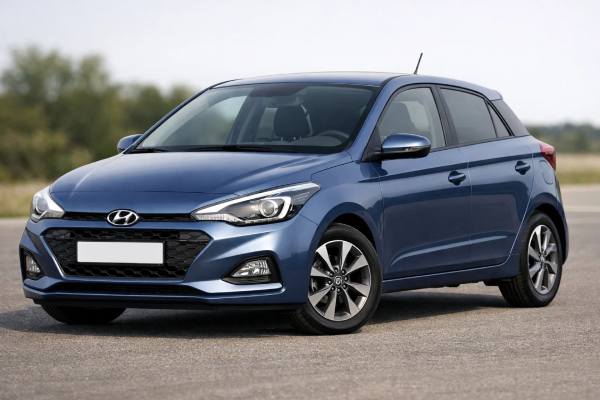
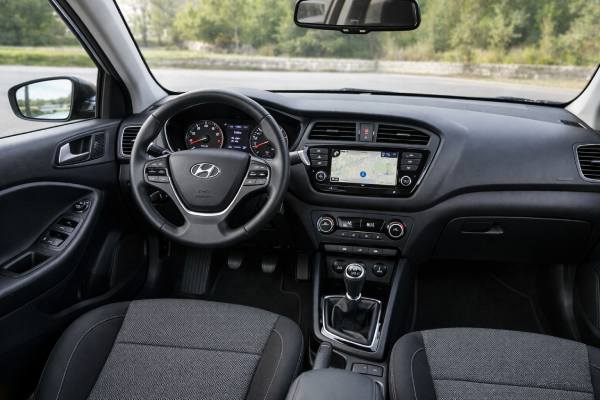
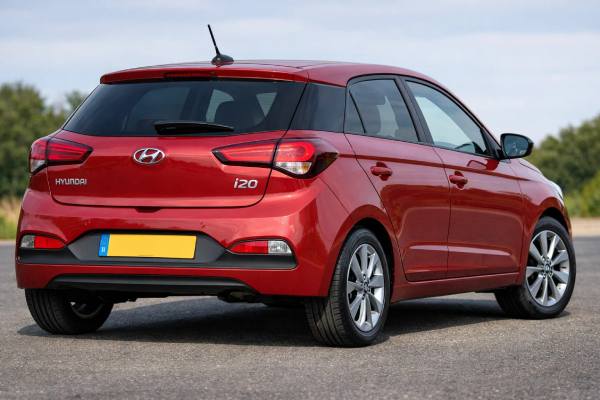
The facelifted Hyundai i20 GB 1.2 84 hp is one of the most sensible versions of the second-generation i20. It keeps the qualities that made the GB car more mature than the older PB model—good cabin space, a settled ride, and honest supermini practicality—then adds updated styling, better infotainment, and more safety equipment on better trims. The 1.2-litre naturally aspirated petrol engine is not the quickest option in the range, but it is one of the easiest to understand and usually one of the lowest-risk to own long term. That matters more and more in the used market. This version suits buyers who want a clean, simple hatchback for daily use rather than a small turbo car with more maintenance sensitivity. The trade-off is straightforward: you give up some motorway punch, but you gain mechanical simplicity, predictable running costs, and a powertrain that generally ages well when the service basics are kept up.
At a Glance
- Simple 1.2-litre naturally aspirated petrol engine keeps ownership risk lower than the turbo alternatives.
- Facelift models gained better infotainment, cleaner styling, and stronger safety equipment on SE trim and above.
- Spacious cabin and a practical hatchback layout make it more usable than many basic superminis.
- Buy carefully: cheap tyres, tired front suspension, and skipped servicing make the 84 hp car feel slower than it really is.
- A practical oil-and-filter service every 10,000–15,000 km or 12 months is a smart used-car habit.
On this page
- Hyundai i20 GB facelift profile
- Hyundai i20 GB facelift specs
- Hyundai i20 GB facelift trims and safety
- Usual faults and fixes
- Service plan and buying checklist
- Everyday performance and efficiency
- Rivals and final take
Hyundai i20 GB facelift profile
The GB-generation Hyundai i20 was already a strong step forward from the older PB car, but the 2018 facelift made the range feel more up to date without changing its basic character. Hyundai refreshed the nose and tail, improved the equipment list, and sharpened the i20’s market position at a time when the B-segment was becoming much more demanding. Buyers no longer wanted a small hatchback that was merely cheap and practical. They wanted one that felt modern, connected, safe, and reasonably mature on the road. The facelifted i20 answered that well.
The 1.2-litre 84 hp petrol version sits in the sensible middle of the facelift range. It is clearly a step up from the 75 hp 1.2, but it is not the more expensive 1.0 T-GDi turbo model. That makes it an interesting used-car choice now. On paper, 84 hp does not sound especially exciting. In practice, the engine suits the i20’s role well enough for everyday driving, especially if your mileage pattern is mostly urban, suburban, and moderate-distance mixed use. It gives you a smoother, simpler powertrain than the turbo cars, while still offering enough performance that the i20 does not feel completely basic.
That engine choice is also closely linked to the facelift trim structure. In the UK-market facelift line-up, the 84 hp engine appeared from SE trim upward, rather than in the most stripped-down version. That is useful because it means many 84 hp cars are not poverty-spec models. They often come with alloy wheels, better lighting, improved cabin trim, parking sensors, cruise control, and, importantly, a stronger active-safety package than earlier GB i20s. Later in the run, the i20 PLAY special edition also used the 84 hp engine and added a high-value equipment mix.
The broader GB platform remains one of the car’s strongest assets. The wheelbase is long for the class, the body is roomy, and the suspension tuning gives the i20 a more settled ride than many budget-minded superminis. Even in 84 hp form, it does not feel flimsy or cramped when it is in good condition. That matters because used buyers often compare the i20 to more fashionable rivals and forget that Hyundai got many of the important fundamentals right.
Still, the 84 hp i20 should be judged honestly. This is not the variant for buyers who regularly drive loaded on fast motorways or expect effortless overtaking on hilly roads. It is the version for people who want a straightforward small hatchback with real practicality, a conventional petrol engine, and fewer long-term complications. That makes it especially appealing as a first car, second family car, or dependable commuter. Its main advantage is not excitement. It is ease. When you find a tidy facelift 1.2 84, it feels like a car that was designed to make daily life simpler rather than more dramatic.
Hyundai i20 GB facelift specs
Official Hyundai technical data for the facelifted i20 gives a clear picture of the 1.2 MPi 84 PS version. It uses a 1,248 cc naturally aspirated four-cylinder petrol engine, a 5-speed manual transmission, and front-wheel drive. The important point is not just the output figure. It is the overall balance of the package: a light kerb weight, modest tyre sizes, practical interior dimensions, and a simple powertrain that avoids turbocharger and dual-clutch complexity.
Powertrain and efficiency
| Item | Figure |
|---|---|
| Engine family | 1.2 MPi petrol |
| Code | 1.2-litre MPi four-cylinder family |
| Engine layout and cylinders | Inline-four, 4 cylinders, DOHC, 4 valves per cylinder |
| Bore × stroke | 71.0 × 78.8 mm (2.80 × 3.10 in) |
| Displacement | 1.2 L (1,248 cc) |
| Induction | Naturally aspirated |
| Fuel system | Multi-point petrol injection |
| Compression ratio | 10.5:1 |
| Max power | 84 hp / 84 PS (62 kW) @ 6,000 rpm |
| Max torque | 122 Nm (90.0 lb-ft) @ 4,000 rpm |
| Timing drive | Chain-driven timing system |
| Rated efficiency | Roughly 5.5–6.1 L/100 km depending on trim and test cycle |
| Real-world highway @ 120 km/h | Usually around 6.0–6.7 L/100 km in healthy trim |
Transmission and driveline
| Item | Figure |
|---|---|
| Transmission | 5-speed manual |
| Drive type | FWD |
| Differential | Open |
Chassis and dimensions
| Item | Figure |
|---|---|
| Front suspension | MacPherson strut |
| Rear suspension | Coupled torsion beam axle |
| Steering | Motor-driven power steering |
| Steering wheel turns lock-to-lock | 2.70 |
| Turning circle | 10.2 m |
| Brakes | Front ventilated discs, rear solid discs on 84 hp facelift trims |
| Common tyre size | 185/65 R15 on SE |
| Higher trim tyre size | 195/55 R16 on Premium Nav and higher |
| Length | 4,035 mm (158.9 in) |
| Width excl. mirrors | 1,734 mm (68.3 in) |
| Width incl. mirrors | 1,880 mm (74.0 in) |
| Height | 1,474 mm (58.0 in) |
| Wheelbase | 2,570 mm (101.2 in) |
| Ground clearance | About 140 mm (5.5 in) |
| Front track | 1,520 mm on 15-inch trim / 1,514 mm on 16-inch trim |
| Rear track | 1,519 mm on 15-inch trim / 1,513 mm on 16-inch trim |
Weight, cargo, and capability
| Item | Figure |
|---|---|
| Kerb weight | 980 kg (2,161 lb) |
| Payload | 600 kg (1,323 lb) |
| GVWR | 1,580 kg (3,483 lb) |
| Braked towing capacity | 910 kg (2,006 lb) |
| Unbraked towing capacity | 450 kg (992 lb) |
| Gross train weight | 2,490 kg (5,490 lb) |
| Fuel tank | 50 L (13.2 US gal / 11.0 UK gal) |
| Cargo volume | Typically 301 L seats up / 1,017 L seats down on 84 hp facelift trims |
Performance
| Item | Figure |
|---|---|
| 0–100 km/h (0–62 mph) | 12.8 s |
| Top speed | 171 km/h (106 mph) |
Fluids and service-capacity notes
| Item | Guidance |
|---|---|
| Engine oil | Use the exact Hyundai-approved petrol-engine oil specification for the VIN and market |
| Coolant | Use the correct aluminium-safe Hyundai coolant specification |
| Manual gearbox oil | Use the exact Hyundai specification for the 5-speed transaxle |
| A/C refrigerant | R-134a |
| Key torque figures | Confirm wheel-nut and service torque values from the VIN-specific handbook or workshop data before repair |
Hyundai’s public facelift press material does not publish every refill capacity and workshop torque value, so those details should always be confirmed against the correct owner’s manual or service literature for the exact car. For buying and ownership decisions, the bigger story is already clear: light weight, simple front-drive packaging, practical dimensions, and modest running costs.
Hyundai i20 GB facelift trims and safety
The 2018 facelift did more than alter the styling. It also reshaped the range structure and, in some markets, made the i20 a noticeably better-equipped car. That is especially relevant for the 1.2 84 hp version because this engine was not limited to the most basic trim. In UK form, it was offered in SE, Premium Nav, and Premium Nav SE, while later special-edition models such as the i20 PLAY also used the 84 hp engine.
SE trim was where the facelifted 84 hp car started to make strong sense. It added 15-inch alloy wheels, front fog lamps, LED daytime running lamps, projector headlamps, rear parking sensors, cruise control with speed limiter, electric rear windows, and nicer cabin trim touches such as a leather steering wheel and gear knob. That already makes it much easier to recommend than a bare-bones supermini.
Premium Nav added another layer of desirability. In that trim the facelift i20 gained 16-inch alloys, a darker grille treatment, LED rear lamps, front and rear parking sensors, climate control, privacy glass, power-folding mirrors, automatic wipers, an auto-dimming rear-view mirror, and 7-inch touchscreen navigation with Apple CarPlay and Android Auto. Premium Nav SE then built further with smart entry, push-button start, panoramic sunroof, and heated front seats and steering wheel. That is a surprisingly rich equipment list for a small hatchback in this class.
The 2019 i20 PLAY special edition is also worth noting because it bundled a lot of useful features into a mid-range package. For used buyers, special editions like this can be very good value if the car has been cared for properly.
Safety is one of the facelift i20’s most underappreciated strengths. The original GB-generation i20 achieved a four-star Euro NCAP result under the tougher 2015 protocol. That result was not poor in structural terms. In fact, the main weakness was the limited safety-assist score rather than weak crash performance. The body shell itself used high-strength steel extensively, and Hyundai fitted six airbags, ESC, ABS, EBD, Hill-start Assist Control, Vehicle Stability Management, and tyre-pressure monitoring.
The facelift improved matters where many buyers care most. In the UK, new i20 SE introduced Autonomous Emergency Braking, Lane Keep Assist, Driver Attention Alert, and High Beam Assist. That is a meaningful change. It means later facelift 84 hp cars, especially SE trim and above, can feel much closer to modern expectations in their basic driver-assistance offering than early GB cars.
For used buyers, trim verification matters. Check the actual car against what it should have. Test the parking sensors, camera if fitted, lights, Bluetooth, touchscreen, TPMS, cruise control, climate system, and any lane or AEB hardware. A high-spec facelift i20 with half its convenience and safety equipment not working is not a great buy. It is usually a sign of low-cost ownership standards elsewhere too. The best 84 hp facelift cars are the ones where the equipment still works as intended and the structure has never been repaired badly after an accident.
Usual faults and fixes
The facelift i20 1.2 84 hp is one of the lower-risk GB variants to own, but it still follows the same rule as most used superminis: maintenance quality matters more than myths. There is no single dramatic design flaw that defines the car. Instead, problems usually come from age, neglect, cheap consumables, or incomplete servicing.
Common and usually low-to-medium cost
- Front suspension wear: Drop links, bushes, top mounts, and tired dampers can create knocks over rough roads and make the steering feel vague. On an 84 hp car, this matters even more because weak chassis condition makes the modest performance feel worse than it is.
- Brake condition drift: Even though facelift 84 hp cars use rear discs rather than drums, brake feel still depends heavily on maintenance. Corroded discs, sticky sliders, tired fluid, and cheap pads all make the car feel older and less confident.
- Battery and charging weakness: Random warning lamps, lazy starting, or weak infotainment behaviour often come down to an ageing 12 V battery rather than a major electrical problem.
Occasional and medium-cost
- Rough idle or hesitation: This is often ignition-related rather than catastrophic. Spark plugs, coils, and air leaks are the first places to check. Because the 1.2 MPi is naturally aspirated and port-injected, diagnosis is usually more straightforward than on a small turbo engine.
- Cooling-system ageing: Thermostat weakness, old coolant, or hose deterioration can lead to slow warm-up or unstable temperature behaviour. These are not glamorous faults, but they matter because they affect both economy and durability.
- Clutch wear: The engine is not highly stressed, but city use and learner-driver treatment can still leave a high bite point or mild slip under load.
Less common but more important
- Timing-chain wear from poor oil history: The 1.2 uses a chain rather than a belt, which is helpful, but it is not a free pass to ignore oil changes. Cold-start rattle, timing-related fault codes, or a dirty service history deserve attention.
- Crash repair and alignment problems: Small hatchbacks are often repaired cheaply after minor accidents. Look carefully at panel gaps, paint finish, light alignment, tyre wear, and whether the steering wheel sits straight.
- Corrosion in older examples: The GB is better protected than many older small cars, but rear beam areas, brake pipes, wheel-arch lips, and lower door edges are still worth checking.
The good news is that most of these faults are conventional rather than exotic. That is part of the i20’s appeal. The 1.2 84 hp does not usually fail in expensive, modern-turbo ways. It just wears like an ordinary hatchback. The bad news is that many owners underestimate how much several “small” faults can change the feel of a low-powered car. Poor tyres, weak front dampers, old plugs, dragging brakes, and bad alignment can make an 84 hp i20 feel much slower and rougher than a sorted example.
Official recall and service-campaign completion should always be checked by VIN or registration. Even on a relatively simple car, documented campaign status helps with peace of mind and resale. If the seller cannot prove regular servicing, campaign checks, and at least some recent spending on tyres, brakes, or suspension, assume the car needs a baseline reset and price it accordingly.
Service plan and buying checklist
The facelift i20 1.2 84 hp rewards steady, sensible maintenance. It is not a car that needs heroic spending, but it does respond well to owners who stay ahead of ordinary service work. On the used market, the best approach is to think in terms of a baseline reset rather than trusting whatever the seller describes as “just serviced.”
Practical maintenance plan
| Item | Sensible interval |
|---|---|
| Engine oil and filter | Every 10,000–15,000 km or 12 months |
| Engine air filter | Inspect yearly, replace around 30,000–40,000 km or sooner in dusty use |
| Cabin air filter | Every 15,000–20,000 km or 12 months |
| Spark plugs | Around 40,000–60,000 km depending on plug type and running quality |
| Coolant | Replace promptly if history is unclear, then follow the correct handbook interval |
| Brake fluid | Every 2 years |
| Manual gearbox oil | Check for leaks and shift quality regularly; consider refreshing around 80,000–100,000 km on ageing cars |
| Auxiliary belt and hoses | Inspect at every annual service |
| Brakes, wheel bearings, suspension joints, and CV boots | Inspect every service |
| Tyres and alignment | Check wear pattern yearly and after suspension work |
| 12 V battery | Test yearly once the car is past about year 4 |
That schedule is slightly more conservative than many marketing-led service plans, and that is exactly why it works well on a used facelift i20. A naturally aspirated 1.2 can last very well when the basics stay current.
Practical service notes
- Use the exact Hyundai-approved oil specification for the market and VIN.
- Confirm gearbox fluid type before topping up or replacing it.
- Treat coolant quality seriously. Old coolant can quietly shorten the life of hoses, thermostat parts, and the radiator.
- Do not assume all 84 hp facelift cars have the same wheel, brake, and spare-wheel setup. Trim matters.
Buyer’s checklist
- Start the engine from fully cold and listen for chain noise, rough idle, or warning lamps.
- Check that first-to-second shifts are clean and the clutch engagement feels consistent.
- Inspect all four tyres for matching brands, correct sizes, and even wear.
- Drive over rough roads to listen for front-end knocks.
- Test the air conditioning, touchscreen, Bluetooth, cruise control, parking sensors, lights, and any lane or AEB functions.
- Check for crash repair around the front corners, tailgate opening, and inner wings.
- Verify recall and service-campaign status through Hyundai.
The best 84 hp facelift cars are often the boring ones: sensible trim, complete history, quality tyres, no warning lights, and evidence of ordinary maintenance done on time. Cars to avoid are the ones sold mainly on their clean paint and nice wheels, but with weak paperwork, cheap tyres, weak brakes, or several inoperative features.
Long-term durability is good if the owner respects the basics. The 1.2 MPi engine is not highly stressed, the 5-speed manual is straightforward, and the overall platform is conventional. That makes the facelift 84 hp car one of the safer used choices in the GB i20 range, provided you accept its modest performance and buy on condition rather than on trim badge alone.
Everyday performance and efficiency
The facelift i20 1.2 84 hp is a car that makes sense once you understand its pace properly. It is not underpowered in the way very small city cars can be, but it is also not the version to buy if you expect effortless high-speed work. Hyundai’s own numbers tell the story clearly: 0–62 mph in 12.8 seconds and a top speed of 106 mph. That is adequate rather than exciting.
Around town and in moderate mixed driving, the car feels well judged. The naturally aspirated four-cylinder engine is smooth, predictable, and easy to use. Throttle response is linear, there is no turbo lag to manage, and the 5-speed manual keeps the car straightforward in slow traffic. That smoothness is part of why the 84 hp version can feel better than the raw numbers suggest in daily use.
On faster roads, the picture changes. You can maintain motorway pace without strain if the car is lightly loaded, but overtakes need planning and hills need a downshift. This is where the 84 hp engine’s honest character becomes obvious. It asks the driver to use the gearbox properly. Buyers who do a lot of full-load motorway driving may prefer the 1.0 T-GDi or a stronger rival.
Ride quality is one of the i20’s biggest strengths. The GB platform was tuned well, and the facelift did not upset that balance. The car rides with more maturity than many budget-minded superminis. It is not soft, but it is composed, and that longer wheelbase helps. Steering is light and city-friendly rather than especially communicative, but it is accurate enough for the job.
NVH is respectable by class standards. At urban speed, the engine is quiet and unobtrusive. At motorway speed, wind and tyre noise become more noticeable, especially on cheaper 16-inch tyre sets. That means tyre choice has a large effect on the whole driving impression. A good example on quality rubber feels much more refined than a neglected one.
Real-world fuel use is fair for a naturally aspirated petrol hatch of this size. In healthy trim, most cars tend to return roughly:
- around 6.8–7.8 L/100 km in heavy city use,
- around 6.0–6.7 L/100 km at a true 120 km/h cruise,
- and around 5.6–6.4 L/100 km in mixed driving.
That lines up reasonably well with the official combined figures once you account for real traffic, tyre condition, weather, and the stricter WLTP-era numbers on later special editions. In short, the car is efficient enough, but not magical. Its real strength is that it delivers that economy without relying on a turbocharger, dual-clutch gearbox, or complicated hybrid hardware.
The verdict on driving is easy to understand. The facelift i20 1.2 84 hp is a calm, competent supermini that feels better than its numbers when used in the kind of driving it was built for. It is pleasant, not powerful. If that matches your needs, it is a strong used choice.
Rivals and final take
The facelift i20 1.2 84 hp sits among familiar rivals: Ford Fiesta 1.1 or 1.25, Toyota Yaris 1.33, Volkswagen Polo 1.0 MPI, Skoda Fabia 1.0 MPI, and Mazda2 in lower-output petrol form. Each rival has a clearer headline strength. The Fiesta is more engaging to drive. The Polo often feels more solid. The Yaris usually carries the strongest dependability image. The Fabia can feel especially practical. The Mazda2 is lighter and more eager. The Hyundai’s case is based on balance.
Against the Fiesta, the i20 gives up some steering feel but often offers a calmer cabin and a more settled ride. Against the Polo, it loses some premium polish but usually brings strong value, a simple naturally aspirated engine, and an equipment list that can be generous on facelift SE and above. Against the Yaris, it may lose a little badge-based trust, but it often feels roomier and more complete inside.
The facelift matters here. It makes the i20 look fresher, gives the cabin a more modern interface, and, on the right trims, adds useful active-safety features like Autonomous Emergency Braking and Lane Keep Assist. That helps it age better than earlier GB cars and makes late 2018–2020 examples particularly easy to recommend.
Its weaknesses are also easy to define. The 84 hp engine is the limiting factor if you drive hard or carry full loads often. It is not the sharpest supermini in the class. It is not the quietest at high motorway speed. And because it is not especially powerful, it depends more than some rivals on being in good condition. A tired 84 hp i20 can feel disappointing. A sorted one feels exactly right for its purpose.
So who should choose it?
- Urban and suburban drivers wanting a simple petrol hatchback.
- Buyers who value equipment, practicality, and low mechanical drama over speed.
- Owners who want a later GB i20 but do not need a turbo engine.
Who should look elsewhere?
- Drivers doing heavy motorway mileage with passengers.
- Buyers who want the strongest overtaking pace.
- People who care most about driver involvement.
As a used buy, the facelift Hyundai i20 GB 1.2 84 hp is one of the safer and more rational choices in this part of the market. It does not try to wow you with numbers. Instead, it gives you space, decent safety, straightforward engineering, and a calmer ownership experience when maintained properly. In the long run, those are often the qualities that matter most.
References
- Hyundai Motor UK announces New i20 5 door pricing and specifications 2018 (Press Release)
- New Hyundai i20 – Technical data and dimensions 2018 (Technical Guide)
- i20 PLAY Release | Technical 2019 (Technical Guide)
- Hyundai i20 – Euro NCAP Results 2015 2015 (Safety Rating)
- Home | Hyundai Recalls & Service Campaigns 2026 (Recall Database)
Disclaimer
This article is for informational purposes only and is not a substitute for professional diagnosis or repair. Specifications, torque values, intervals, procedures, fluid requirements, and equipment can vary by VIN, market, trim, wheel package, and model year, so always verify the exact details against the correct official service documentation for the specific vehicle.
If this guide was useful, please consider sharing it on Facebook, X, or another social platform to support our work.