
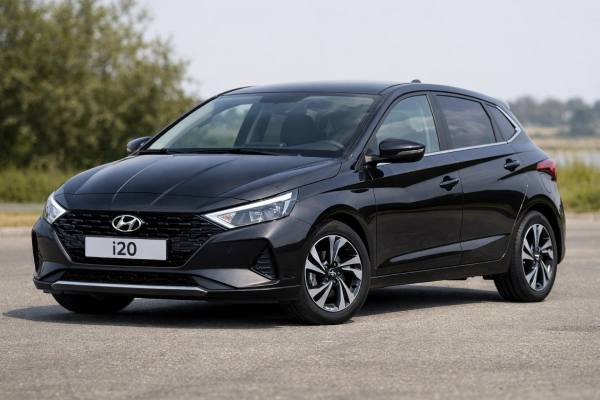
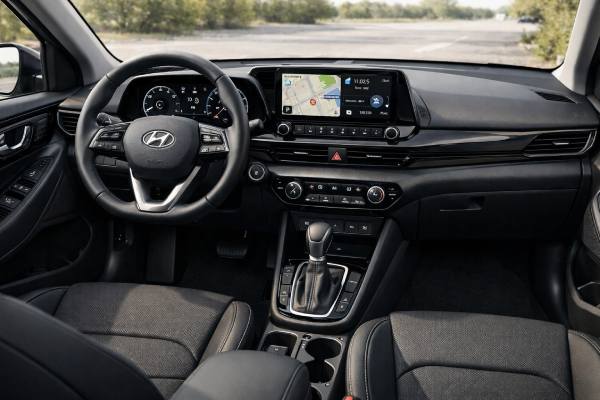
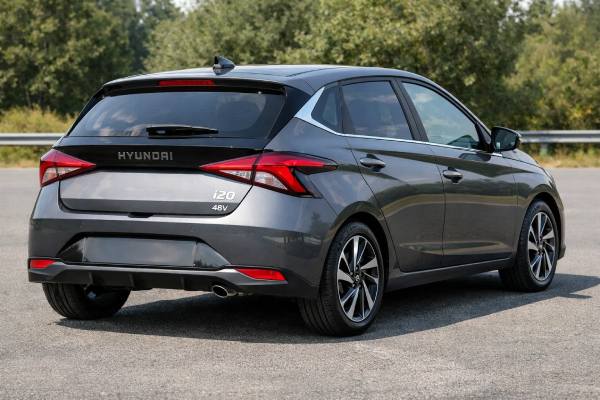
The facelifted Hyundai i20 BC3 with the 1.0 T-GDi 48V 100 hp powertrain is one of the more convincing modern superminis on sale. It combines compact outside dimensions with a surprisingly grown-up feel on the road, a roomy cabin for the class, and a turbocharged three-cylinder engine that delivers useful low-rpm torque rather than relying only on headline horsepower. For many buyers, that is the real attraction. It feels light and easy in town, but it does not fall apart on the motorway or when carrying passengers. The caution is that this is no longer a simple old-school small hatchback. The 48-volt mild-hybrid system, direct injection, turbocharging, and optional dual-clutch transmission mean specification and maintenance quality matter more than trim badge alone. A well-kept car is a smart buy. A badly serviced one can become expensive quickly through drivability faults, software complaints, or transmission issues.
Fast Facts
- The 1.0 T-GDi 48V engine gives the facelift i20 much stronger everyday torque than older naturally aspirated versions.
- Cabin space and boot volume are excellent for a supermini.
- The BC3 platform feels stable, refined, and mature on mixed roads.
- DCT versions and neglected 48V cars deserve extra caution because software, battery, and clutch behaviour matter.
- A smart service baseline is engine oil and filter every 10,000 to 15,000 km or 12 months.
On this page
- Hyundai i20 BC3 Facelift Overview
- Hyundai i20 BC3 48V Technical Profile
- Hyundai i20 BC3 48V Grades and Safety
- Reliability Risks and Dealer Actions
- Service Planning and Used Checks
- On-Road Feel and Consumption
- BC3 Facelift Versus Alternatives
Hyundai i20 BC3 Facelift Overview
The facelifted BC3 i20 does not try to be a mini SUV, a warm hatch, or a stripped budget special. Its appeal is that it stays focused. Hyundai took an already capable supermini platform, refreshed the styling, updated the technology, and kept the things that matter in real ownership: good cabin packaging, a useful boot, a stable chassis, and a powertrain with enough real-world torque to feel easy rather than strained.
That last point matters most. The 1.0 T-GDi 48V 100 hp version is not about dramatic acceleration figures. It is about flexibility. The turbocharged three-cylinder engine develops its torque low enough in the rev range that the car feels far more eager than a simple naturally aspirated 100 hp hatchback. In traffic, on hills, or when joining a faster road, it responds like a bigger engine than the badge suggests. The 48-volt mild-hybrid system does not turn the i20 into a hybrid in the Toyota sense, but it does help smooth stop-start operation and improve efficiency in urban and mixed driving.
The BC3 also feels larger and more mature than older i20 generations. The front seats are comfortable, rear passenger room is competitive, and the luggage area is one of the stronger offerings in the class. That matters because many buyers now use superminis as true all-round cars. The facelift i20 is small enough for city parking and daily commuting, but it no longer feels out of depth on longer trips.
Ownership is where specification becomes crucial. Hyundai sold the 100 hp facelift car with more than one transmission configuration depending on market. Some cars use a six-speed manual or intelligent manual setup, while others use the seven-speed dual-clutch automatic. That changes not only the driving feel but also the maintenance and reliability picture. A simple manual car is usually the lower-risk long-term option. A DCT car can be excellent, but it has to be tested properly and serviced correctly.
In used form, this is not a car to buy purely by year or trim. A lower-spec car with strong service history, good tyres, correct software support, and clean bodywork is usually a better buy than a high-spec car with patchy maintenance. The facelift i20 BC3 1.0 T-GDi 48V is one of the better modern superminis when chosen carefully, but it is very much a condition-led buy.
Hyundai i20 BC3 48V Technical Profile
Exact numbers vary slightly by wheel size, trim, and transmission, but the facelifted 2023-present Hyundai i20 BC3 1.0 T-GDi 48V 100 hp follows a clear technical formula across Europe. It uses Hyundai’s downsized turbocharged petrol three-cylinder engine with a 48-volt mild-hybrid system, front-wheel drive, and either a six-speed manual-style transmission setup or a seven-speed dual-clutch automatic depending on market.
Powertrain and efficiency
| Item | Hyundai i20 BC3 facelift 1.0 T-GDi 48V 100 |
|---|---|
| Code | Kappa 1.0 T-GDi family |
| Engine layout and cylinders | Inline-3, DOHC, 12-valve |
| Cylinders | 3 |
| Valves per cylinder | 4 |
| Bore × stroke | 71.0 × 84.0 mm (2.80 × 3.31 in) |
| Displacement | 1.0 L (998 cc) |
| Motor / hybrid hardware | 48 V belt starter-generator mild-hybrid system |
| System voltage | 48 V |
| Battery chemistry | Lithium-ion polymer |
| Induction | Turbocharged |
| Fuel system | Gasoline direct injection |
| Compression ratio | 10.5:1 |
| Max power | 100 hp (73.5 kW) @ 4,500–6,000 rpm |
| Max torque | 172 Nm (127 lb-ft) @ 1,500–4,000 rpm |
| Timing drive | Chain |
| Rated efficiency | About 5.0–5.8 L/100 km WLTP depending on trim and gearbox |
| Real-world highway @ 120 km/h | About 5.8–6.8 L/100 km |
Transmission and driveline
| Item | Hyundai i20 BC3 facelift 1.0 T-GDi 48V 100 |
|---|---|
| Transmission | 6-speed manual / intelligent manual or 7-speed DCT, market-dependent |
| Drive type | FWD |
| Differential | Open |
Chassis and dimensions
| Item | Hyundai i20 BC3 facelift |
|---|---|
| Suspension front | MacPherson strut |
| Suspension rear | Coupled torsion beam axle |
| Steering | Rack and pinion with motor-driven power steering |
| Steering ratio | About 13.1 to 15.0, spec-dependent |
| Brakes | Ventilated front discs; rear drums or solid discs depending on trim and market |
| Most popular tyre sizes | 195/55 R16 or 215/45 R17 |
| Ground clearance | 140 mm (5.5 in) |
| Length | 4,065 mm (160.0 in) |
| Width | 1,775 mm (69.9 in) |
| Height | 1,450 mm (57.1 in) |
| Wheelbase | 2,580 mm (101.6 in) |
| Turning circle | 10.4 m (34.1 ft) |
| Kerb weight | About 1,065–1,200 kg (2,348–2,646 lb) |
| GVWR | About 1,600–1,630 kg (3,527–3,594 lb) |
| Fuel tank | 40 L (10.6 US gal / 8.8 UK gal) |
| Cargo volume | 352 L (12.4 ft³) seats up / 1,165 L (41.1 ft³) seats down, VDA |
Performance and capability
| Item | Hyundai i20 BC3 facelift 1.0 T-GDi 48V 100 |
|---|---|
| 0–100 km/h (0–62 mph) | About 10.4 s manual / about 11.4 s 7DCT |
| Top speed | 185–188 km/h (115–117 mph) |
| Braking distance | Usually high-30 m to low-40 m range from 100 km/h on good tyres |
| Towing capacity | Up to 1,110 kg (2,447 lb) braked, market-dependent |
| Unbraked towing | 450 kg (992 lb) |
| Payload | About 425–540 kg (937–1,190 lb) |
Fluids and service capacities
| Item | Hyundai i20 BC3 facelift 1.0 T-GDi 48V 100 |
|---|---|
| Engine oil | Hyundai-approved low-friction petrol oil, commonly 0W-30 or 5W-30 by market |
| Engine oil capacity | About 3.6 L (3.8 US qt) with filter |
| Coolant | Long-life ethylene glycol coolant, verify by VIN and market |
| Transmission / ATF | Gearbox-specific Hyundai-approved fluid; verify by transmission code |
| Differential / transfer case | Not applicable |
| A/C refrigerant | Build-date dependent; verify on under-bonnet label |
| A/C compressor oil | Verify by service literature or label |
| Key wheel-nut torque | About 107–127 Nm (79–94 lb-ft), market-dependent |
This is a genuinely modern supermini powertrain. That brings better performance and efficiency than older i20s, but it also means owners have to treat it like a modern turbo car rather than a basic economy hatchback.
Hyundai i20 BC3 48V Grades and Safety
The facelifted BC3 i20 was sold in different grade structures depending on market, but the broad pattern was familiar. Entry versions were already well equipped, mid-range trims were often the best value, and upper grades added the large displays, convenience features, and safety extras that make the car feel truly current.
In markets such as the UK, common trim names included Advance, Premium, and Ultimate, with N Line S adding a sportier cosmetic angle. The 100 hp powertrain was available with both manual-style and DCT transmission choices, but the exact pairing depended on market and model year. That is important because the gearbox and driver-assistance package can matter more to ownership than the trim name itself.
Quick identifiers on used cars include:
- 16-inch versus 17-inch wheel packages
- 8-inch versus 10.25-inch central display
- 10.25-inch digital supervision instrument cluster
- rear camera and parking sensors
- heated seats and steering wheel on higher trims
- blind-spot warning or extra driver-assistance pack hardware on selected versions
The facelift car’s safety story is strong by supermini standards, though not class-leading by the strictest modern test criteria. Euro NCAP gives the i20 a four-star rating under the 2021 protocol, with 76% for adult occupants, 82% for child occupants, 76% for vulnerable road users, and 67% for safety assist. That means the car offers good core crash protection and a decent active-safety package, even if it does not score like a fully loaded newer model with every assist system fitted as standard.
Typical safety equipment includes:
- front, side, and curtain airbags
- autonomous emergency braking
- forward collision avoidance assist for car, pedestrian, and cyclist detection
- lane keep assist
- lane follow assist
- driver attention warning
- tyre-pressure monitoring
- ESC and traction control
- rear ISOFIX anchorages
- eCall support
Higher trims or option packs can add:
- blind-spot collision warning
- blind-spot avoidance assist
- smart cruise control
- more advanced forward-collision functionality
- better camera and parking hardware
This matters after repairs. On a BC3 i20, a windscreen replacement or front-end repair can affect camera alignment and system calibration. A car may look straight and show no obvious warning lights, but the assist systems can still behave poorly if calibration was not done properly. For that reason, repair history matters more on the BC3 than on older i20s. When you inspect a used one, treat ADAS behaviour as part of the mechanical condition, not as a separate electronics issue.
Reliability Risks and Dealer Actions
The facelifted BC3 i20 1.0 T-GDi 48V 100 is generally a capable and durable modern hatchback, but it is not as neglect-tolerant as Hyundai’s older naturally aspirated small cars. Its reliability profile is typical of a small turbo direct-injection petrol engine with mild-hybrid hardware: normally good when maintained, noticeably less forgiving when oil changes, battery health, or software support are ignored.
Common issues, low-to-medium cost
- Ignition misfire: Symptoms include rough idle, hesitation under load, or an intermittent engine warning light. The usual causes are aging spark plugs or coils.
- Weak 12 V battery behaviour: Stop-start refusal, odd warning lights, unstable infotainment behaviour, or DCT roughness can begin with poor battery voltage.
- Front suspension wear: Drop links, bushes, and top mounts remain routine wear points, especially on 17-inch wheels.
- Tyre-related harshness and noise: Cheap or mismatched tyres can make the i20 feel worse than it really is.
Occasional issues, medium cost
- DCT hesitation or shudder: On 7DCT cars, creeping in traffic, parking manoeuvres, or low-speed take-up can reveal clutch wear or calibration problems.
- Boost-control faults: Split hoses, sensor problems, or actuator issues can mimic bigger turbo failure.
- Carbon build-up: As a direct-injection engine, the intake valves do not get cleaned by fuel, so heavy short-trip use can increase deposit formation over time.
- Infotainment and camera glitches: Often software-related rather than major hardware failure.
Less common but higher-cost concerns
- Turbo wear after poor oil history
- Persistent DCT clutch-pack or mechatronic trouble
- 48 V mild-hybrid charging-system faults
- Cooling-system leaks on a hard-used turbo car
Software updates matter here more than they did on older i20s. Engine response, DCT behaviour, infotainment glitches, and even driver-assistance quirks can sometimes be improved by dealer updates rather than hardware replacement. That is why a full dealer or specialist history has more value than a simple stamp book.
The official Hyundai recalls and service-campaign portal is also worth checking by VIN. Even when there is no major public recall dominating discussion, market-specific campaigns and technical actions can exist. A careful buyer should always check that the car has no outstanding campaign work and, ideally, that previous actions were completed on time.
Before purchase, ask for:
- Full service history with oil grade evidence
- A VIN recall and service-campaign check
- A cold start and hot restart demonstration
- A proper slow-speed DCT test if automatic
- A fault-code scan, not only a warning-light check
- Proof of calibration if the windscreen or front end has been repaired
This is a very good small car when it has been maintained correctly. It becomes a poor bargain when bought cheaply with a weak history and the wrong gearbox condition.
Service Planning and Used Checks
The safest way to own a facelifted BC3 i20 1.0 T-GDi 48V is to service it a little more conservatively than the longest official schedule allows. That is especially true once the car is out of warranty. Turbo petrols, direct injection, and dual-clutch gearboxes all reward preventive maintenance.
Practical maintenance schedule
| Item | Practical interval |
|---|---|
| Engine oil and filter | Every 10,000–15,000 km or 12 months |
| Engine air filter | Every 30,000 km, sooner in dusty use |
| Cabin air filter | Every 20,000 km or 24 months |
| Spark plugs | About 40,000–50,000 km |
| Coolant | Around 5 years or 100,000 km, then inspect more often |
| Brake fluid | Every 2 years |
| Manual / iMT gearbox oil | Refresh around 60,000–90,000 km for long-term ownership |
| DCT service evaluation | Follow official guidance and monitor low-speed behaviour well before 100,000 km |
| Tyre rotation | Every 10,000 km |
| Alignment | Check annually or when tyre wear appears |
| 12 V battery | Test yearly from year 4 onward |
| Timing chain | Inspect by noise, symptoms, or timing-correlation faults |
Practical service notes
- Use the correct Hyundai-approved engine oil and do not stretch oil changes.
- Replace spark plugs before misfire appears, not after.
- Treat DCT behaviour as service information, not as something to ignore.
- Keep the 12 V battery healthy because the BC3 is more voltage-sensitive than older i20s.
- Use matching quality tyres because tyre choice affects refinement, braking feel, and fuel economy.
Used buyer’s checklist
- Start the engine from cold and listen for a smooth idle.
- Check for clean turbo response from low rpm.
- On DCT cars, drive in stop-start traffic and during repeated parking manoeuvres.
- Inspect tyre brand, age, and shoulder wear.
- Check coolant level and any staining around hoses or the radiator area.
- Test every camera, sensor, and steering-wheel function.
- Ask whether the windscreen was replaced and whether ADAS calibration followed.
- Look for evidence of annual servicing rather than mileage-only servicing.
Best versions to seek
- Cars with full annual servicing
- Cars on quality, matched tyres
- DCT cars with perfectly smooth low-speed behaviour
- Cars with dealer or specialist invoices, not just stamps
Versions to avoid
- Cars with uncertain oil history
- DCT cars that shudder and are being sold as normal
- Cars with repeated warning-light history and no paperwork
- Front-end repaired cars with doubtful ADAS behaviour
The BC3 i20 can be a very durable modern supermini, but it needs to be treated like a modern turbo car. Buyers who assume it will tolerate long service gaps like an older Hyundai are often the ones who run into the expensive problems.
On-Road Feel and Consumption
The facelifted BC3 i20 1.0 T-GDi 48V 100 feels more mature than most buyers expect from a supermini. The engine is the main reason. Its 172 Nm torque output arrives low enough that ordinary driving feels easy. You do not need to work the engine hard in town, and you do not need constant downshifts on rolling roads. That gives the i20 a relaxed, adult character.
The manual and iMT versions are usually the more natural-feeling cars if you want the lower-risk long-term choice. They let the engine’s torque work cleanly, and they generally feel predictable. The 7DCT is more convenient in traffic and works well when healthy, but it does not behave like a torque-converter automatic. Low-speed take-up can feel slightly artificial even when the gearbox is in good condition, and any shudder or hesitation becomes obvious in crawling traffic.
Ride quality is one of the BC3’s strongest traits. The chassis is stable, well damped, and more settled at speed than many older superminis. It handles rough urban roads well without becoming floaty, and it feels reassuring on faster roads. Steering is light rather than rich in feedback, but it is accurate enough and easy to trust. This is not a driver’s car in the Fiesta sense, but it is a calm and competent one.
Noise levels are respectable. The three-cylinder engine is audible when worked hard, but cruising refinement is good for the class. On 17-inch wheels, tyre roar becomes more obvious, and cheap replacement tyres can make the car feel harsher than it should.
Real-world fuel use is usually reasonable:
- City: about 6.2–7.2 L/100 km
- Highway: about 5.0–6.0 L/100 km
- Mixed: about 5.4–6.3 L/100 km
That roughly equals:
- City: 33–38 mpg US / 39–46 mpg UK
- Highway: 39–47 mpg US / 47–56 mpg UK
- Mixed: 37–44 mpg US / 45–52 mpg UK
The 48 V system helps mostly in urban and mixed conditions, where stop-start and coasting functions have more chance to work. At a steady motorway speed, the advantage over a non-hybrid turbo petrol is smaller. So if most of your driving is mixed commuting, the mild-hybrid system makes more sense. If most of your use is long, steady-distance work, the benefit is less dramatic.
Overall, the facelift i20 is easy to recommend on the road. It is not exciting, but it is quick enough, quiet enough, and comfortable enough to function as a genuine one-car solution for many owners.
BC3 Facelift Versus Alternatives
The facelifted BC3 i20 1.0 T-GDi 48V 100 is strongest when judged as an all-round supermini. It does not dominate one single category, but it offers one of the better blends of cabin space, equipment, modern safety, and real-world drivability.
Against a Ford Fiesta 1.0 EcoBoost, the Hyundai usually loses on steering feel and driver appeal. The Ford is more entertaining. The Hyundai often wins on rear-seat space, boot usability, and perceived equipment value.
Against a Volkswagen Polo 1.0 TSI, the Hyundai feels surprisingly close in maturity. The Polo may have a slightly more polished cabin image, but the i20 usually offers stronger equipment for the money and a more generous feature set in higher trims.
Against a Toyota Yaris, the Hyundai generally gives you more cabin space and a more relaxed motorway feel. The Toyota counters with a stronger reputation for mechanical simplicity if you compare it with non-turbo or hybrid alternatives.
Against a Skoda Fabia 1.0 TSI, the Hyundai competes on very similar ground: practical packaging, sensible pricing, and enough technology to feel modern. The Fabia may edge it slightly for pure packaging in some trims, but the Hyundai often feels better equipped.
The facelift BC3 i20’s strongest advantages are:
- strong real-world torque for a 100 hp supermini
- roomy cabin and large boot
- mature road manners
- wide availability of active-safety features
- sensible used-market value
Its main weaknesses are:
- DCT versions need close inspection
- not as mechanically simple as older Hyundai small cars
- four-star Euro NCAP rating rather than a five-star headline
- less playful to drive than the best-handling rivals
That still leaves it in a strong position. For most used buyers, the facelifted Hyundai i20 BC3 1.0 T-GDi 48V 100 is a smart choice when bought carefully. It offers enough performance, enough practicality, and enough technology to feel properly current, but the exact version and maintenance record must make sense before it becomes a genuinely good buy.
References
- Hyundai i20 | Technical Data | August 2023 2023 (Official Technical Guide)
- Hyundai i20 | Technical, Specifications and Pricing | Model year 2025 | April 2024 2024 (Official Pricing and Technical Guide)
- Hyundai i20 2021 (Safety Rating)
- Home | Hyundai Recalls & Service Campaigns 2026 (Recall Database)
- Hyundai | UK | User Manuals 2026 (Owner’s Manual)
Disclaimer
This article is for informational purposes only and is not a substitute for professional diagnosis or repair. Specifications, torque values, intervals, procedures, and fluid requirements vary by VIN, market, gearbox, trim, and equipment. Always verify the exact data against official Hyundai service documentation for the vehicle before carrying out maintenance or repairs.
If this guide was useful, please consider sharing it on Facebook, X, or another social platform to support our work.