
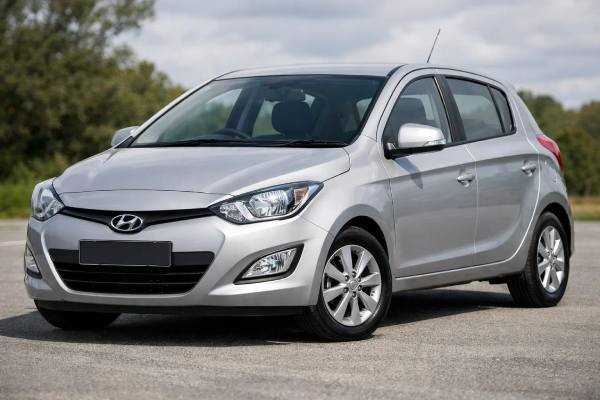
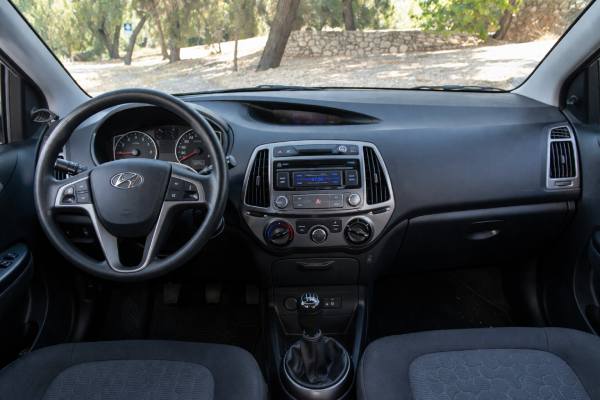
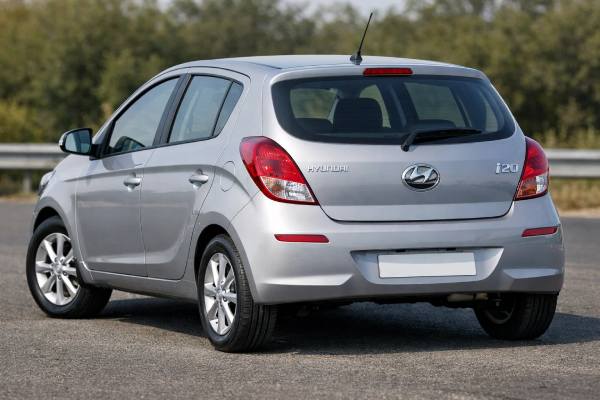
The facelifted Hyundai i20 PB 1.4 petrol is one of the more sensible versions of the first-generation i20. It keeps the simple supermini formula that made the original car easy to live with, then adds a cleaner facelift design, a more polished cabin feel, and a stronger naturally aspirated petrol engine than the entry-level 1.2. The result is not a hot hatch, but it is a noticeably more relaxed small car. With 100 hp, a standard 6-speed manual in most facelift markets, and straightforward front-wheel-drive packaging, it suits drivers who want honest performance without turbo complexity. It also benefits from the i20’s strong class-era safety record and practical boot space. Today, though, ownership is all about condition. A well-maintained facelift 1.4 can still feel tight, dependable, and cheap to run. A neglected one can quickly need tyres, brakes, suspension work, fluids, and overdue electrical repairs.
Quick Specs and Notes
- Stronger than the 1.2 petrol, with a useful 100 PS and a more relaxed motorway feel.
- Facelift styling, 6-speed manual availability, and solid safety are real ownership positives.
- Practical for a supermini, with 295 L boot space and 1,060 L with the rear seats folded.
- Buy on service history and chassis condition, because age-related suspension, brake, and battery wear are now more important than mileage alone.
- A practical annual oil-and-filter service every 12 months is the safe habit, even if a lightly used car covers low mileage.
Explore the sections
- Hyundai i20 facelift petrol positioning
- Hyundai i20 facelift 1.4 specifications
- Hyundai i20 facelift trims and protection
- Petrol ownership risks and remedies
- Upkeep routine and used buying tips
- Daily driving and real economy
- Facelift i20 versus main rivals
Hyundai i20 facelift petrol positioning
The 2012 facelift gave the PB-generation Hyundai i20 a more modern look and a slightly more mature feel without changing its basic mission. This remained a small hatchback designed to do ordinary life well: commuting, shopping, school runs, and the occasional longer trip without drama. The facelift sharpened the front end, added a more contemporary grille treatment, updated light signatures in many markets, and helped the i20 feel less like a budget option and more like a complete class contender. That matters because the facelift 1.4 petrol sits in the part of the range that many used buyers now want most: enough power to feel easy, but without diesel complication or turbocharged long-term risk.
The engineering appeal is straightforward. This 1.4-litre naturally aspirated petrol engine is a simple, well-understood four-cylinder unit that does not need to hide behind a big torque number or a complex forced-induction setup. In facelift brochure form, Hyundai positioned it as the stronger petrol choice, producing 100 PS and paired with a 6-speed manual as standard in many European markets, with a 4-speed automatic offered in some versions. That pairing is important. The six-speed manual helps the facelift 1.4 feel calmer and more versatile than the smaller petrol cars, especially at open-road speeds.
The rest of the car remains conventional in a good way. You get front-wheel drive, a light body, MacPherson strut front suspension, a torsion-beam rear axle, modest wheel sizes, and motor-driven power steering. There is no complicated adaptive chassis, no dual-clutch transmission, and no dense layer of driver-assistance software. For long-term ownership, that simplicity is part of the appeal. It keeps repair risk lower, helps routine servicing stay manageable, and makes the i20 easier to inspect honestly when shopping for a used example.
There is, however, one important caution. The facelift 2012–2014 label covers a family of closely related cars rather than one perfectly identical universal spec. Equipment, tyre sizes, Blue Drive features, gearbox choice, and some published measurements can vary slightly by region. The facelift brochure itself makes that clear by noting that some equipment shown may not be standard in every market. So the right way to buy a PB facelift 1.4 is by VIN, build details, and actual equipment, not by assuming every car advertised as a “2013 i20 1.4” is exactly the same.
As a used car, the facelift 1.4 works best for buyers who want a practical hatchback that feels easy rather than exciting. It is quieter and less busy than the small-engine versions on faster roads, yet still light, affordable, and easy to place in town. That balance is what gives it its value now. It is not special because it is rare. It is special because it is one of the cleanest, lowest-drama versions of the old-school supermini formula.
Hyundai i20 facelift 1.4 specifications
For the facelifted PB i20, Hyundai’s official 2012 brochure provides the clearest factory-issued technical picture of the 1.4 petrol. It identifies the engine as the range-leading petrol option at the time, rated at 100 PS and paired with a 6-speed manual transmission as standard, with a 4-speed automatic also offered. It also confirms the facelift body dimensions, turning radius, steering turns, luggage capacity, and broad chassis layout. Some finer workshop-level details, such as brake disc diameters and exact steering ratio, are not published in the brochure and can vary by market, so they should be verified by VIN before parts ordering.
Powertrain and efficiency
| Item | Figure |
|---|---|
| Engine family | Gamma 1.4 DOHC petrol |
| Code | Market-specific engine code; commonly associated with the 1.4 Gamma family |
| Engine layout and cylinders | Inline-four, 4 cylinders, DOHC, 4 valves per cylinder |
| Bore × stroke | Market-specific workshop figure; verify by VIN before internal engine work |
| Displacement | 1.4 L (1,396 cc) |
| Induction | Naturally aspirated |
| Fuel system | Multi-point petrol injection |
| Compression ratio | Market-specific workshop figure; verify by VIN |
| Max power | 100 hp / 100 PS (73.6 kW) @ 5,500 rpm |
| Max torque | 137.3 Nm (101.3 lb-ft) @ 4,200 rpm |
| Timing drive | Chain-driven petrol engine family; inspect for noise and oil-history problems rather than planning for a routine belt change |
| Rated efficiency | Market and gearbox dependent; typically mid-5 to mid-6 L/100 km combined in brochure-era published data |
| Real-world highway at 120 km/h | Usually around 6.3–7.0 L/100 km in healthy manual cars |
Transmission and driveline
| Item | Figure |
|---|---|
| Transmission | 6-speed manual standard in many facelift markets |
| Optional transmission | 4-speed automatic on selected versions |
| Drive type | FWD |
| Differential | Open |
Chassis and dimensions
| Item | Figure |
|---|---|
| Front suspension | Fully independent subframe-mounted MacPherson struts with coil springs and gas-filled shock absorbers |
| Rear suspension | Coupled torsion beam axle with gas shock absorber |
| Steering | Motor-driven power steering |
| Steering wheel turns | 2.8 lock-to-lock |
| Minimum turning radius | 5.2 m |
| Brakes | Front disc; rear disc or drum by market and trim, verify before ordering parts |
| Wheel and tyre packages | 15-inch and 16-inch wheel packages were offered, depending on trim |
| Length | 3,995 mm |
| Width | 1,710 mm |
| Height | 1,490 mm |
| Wheelbase | 2,525 mm |
| Ground clearance | Market-dependent supermini ride height |
| Cargo volume | 295 L seats up / 1,060 L seats folded |
| Fuel tank | Typically 45 L on PB petrol markets, verify by market documentation |
Performance and capability
| Item | Figure |
|---|---|
| 0–100 km/h | Typically low-12-second range, depending on gearbox and market specification |
| Top speed | Typically around 180 km/h, depending on gearbox and market specification |
| Towing capacity | Market-dependent; verify by VIN and local handbook |
| Payload | Market-dependent; verify from local registration data |
Fluids and service capacities
| Item | Figure |
|---|---|
| Engine oil | Use only oil meeting the correct Hyundai petrol specification for the market and climate |
| Engine oil capacity | Verify by VIN and sump specification before refill |
| Coolant | Ethylene-glycol type coolant for aluminum-system compatibility |
| Transmission fluid | Manual and automatic specifications differ; confirm before service |
| A/C refrigerant | R-134a on PB-era systems |
| Key torque specs | Wheel nuts commonly 88–107 Nm; confirm for the exact car |
Safety and driver assistance
| Item | Figure |
|---|---|
| Euro NCAP | 5 stars |
| Adult occupant | 88% |
| Child occupant | 83% |
| Vulnerable road user | 64% |
| Safety assist | 86% |
| ADAS suite | No modern AEB, ACC, LKA, BSD, or RCTA on this generation |
The big picture is simple. The facelift 1.4 is not defined by one flashy spec. It is defined by balance: enough power, useful dimensions, practical luggage space, and a very conventional layout that still makes sense today.
Hyundai i20 facelift trims and protection
Trim structure on the facelift i20 varied by market, but the overall pattern stayed familiar. Hyundai offered a sensible equipment ladder with a well-equipped entry model and a more attractive upper trim carrying the visual and comfort extras most buyers notice first. In Irish and broader European brochure material, the split commonly appears as Classic and Premium or direct equivalents. The 1.4 petrol facelift was generally not the stripped-out version of the range. It was the stronger petrol option, and in some markets it was tied more closely to better-equipped trims or automatic availability.
That matters because the equipment difference on a used i20 is more important than it first looks. The core car already brought useful basics: multifunction steering wheel controls, driver’s seat height adjustment, driver armrest, heated power mirrors, electric front windows, front fog lamps, USB and AUX connectivity, stability control, anti-lock brakes, and body-colour exterior trim. On facelift cars, Hyundai also leaned harder into the sense that this was now a more polished product. Premium-grade versions added 15-inch alloy wheels, reversing camera, rain sensors, LED daytime running lights, Bluetooth with voice recognition, privacy glass, leather steering wheel and gear knob, reverse parking sensors, auto lights, and manual air conditioning.
From an ownership perspective, those upgrades matter for three reasons. First, they make the car feel newer and easier to live with every day. Second, they help resale because buyers in this class care about visible convenience equipment. Third, they provide useful clues about past ownership. If a car should have a reversing camera, parking sensors, heated mirrors, and auto lights, and half of that equipment no longer works, it tells you something about how carefully the car has been maintained.
Safety is one of the facelift i20’s strongest arguments. The model carries the PB generation’s five-star Euro NCAP result, with 88 percent adult occupant protection, 83 percent child occupant protection, 64 percent vulnerable road user protection, and 86 percent safety assist. That score came from the 2009 test program, so it should be read in period context rather than as a modern like-for-like comparison. Even so, it still places the i20 among the more reassuring older superminis to buy, especially when compared with bargain-priced rivals that look cheap because they were built cheap.
The actual safety equipment list is solid for the era. Hyundai highlighted front, side, and curtain airbags, ABS, ESC, Vehicle Stability Management, seatbelt reminders, and ISOFIX anchorages as core safety features. That is the right kind of safety package for an older used hatchback: strong passive structure, meaningful active safety basics, and broad coverage rather than gimmicks.
What you do not get is modern ADAS. There is no autonomous emergency braking, no adaptive cruise, no blind-spot warning, no lane-centering, and no rear cross-traffic alert. Buyers who expect those features will need a much newer car. But that does not weaken the facelift i20’s case too much, because its real value lies in getting the important fundamentals right. If the car has not been badly repaired and all its basic safety equipment still functions as intended, it remains a credible and sensible used supermini.
Petrol ownership risks and remedies
The facelift i20 1.4 petrol is generally one of the lower-risk PB variants to own, but that does not mean it is fault-free. At this age, the pattern is less about one famous design defect and more about how an ordinary small car wears when maintenance becomes inconsistent. The good news is that most of the common issues are understandable and manageable. The bad news is that multiple small faults can stack up fast on a neglected car.
Common and usually low-to-medium cost
- Suspension knocks and looseness: Front drop links, bushes, top mounts, and tired dampers are typical wear points on older superminis. Symptoms are knocking over broken surfaces, vague steering response, and uneven front-tyre wear. The remedy is a proper front-end inspection and alignment rather than replacing one cheap part and hoping for the best.
- Brake drag or weak pedal feel: Standing around, budget aftermarket parts, and skipped fluid changes can leave the brakes feeling older than the mileage suggests. A full inspection of discs, pads, sliders, rear hardware, and fluid condition is more important than any seller’s claim that “it stops fine.”
- Battery and charging complaints: Random warning lights, slow cranking, and weak electrical behaviour are often simple 12 V battery age rather than major electrical failure.
Occasional and medium cost
- Ignition-side running faults: Hesitation, misfire, or rough idle often come from plugs, coil packs, dirty intake hardware, or overdue servicing. On a naturally aspirated petrol like this, those issues are usually easier to fix than on newer turbo engines, but they still need proper diagnosis.
- Thermostat and cooling-system ageing: Slow warm-up, fluctuating temperature, or unexplained coolant loss should trigger checks for thermostat health, hose ageing, radiator condition, and old coolant neglect.
- Clutch wear: The 1.4 is not highly stressed, but city use, learner-driver treatment, and long-term stop-start work can still leave a high bite point or slip under load.
Less common but more important
- Timing-chain wear on poor oil history: The chain layout avoids routine belt replacement, but it does not make the engine maintenance-proof. Dirty oil, long service intervals, and repeated short trips can contribute to start-up rattle or timing-related running faults on worn cars.
- Throttle-body or sensor drift: The car may feel flat, idle unevenly, or hesitate without any dramatic engine noise. These faults are often annoying rather than catastrophic, but they matter because owners sometimes keep driving and ignore them.
- Crash repair and corrosion: On a small hatchback, poor accident repair can matter more than many mechanical faults. Look for misaligned panels, uneven paint texture, cheap tyres fitted to one corner, odd headlamp fitment, or a steering wheel that does not sit straight.
Inside the cabin, the usual age-related problems are minor but revealing. Window switches, mirror functions, audio units, parking sensors, and steering-wheel buttons can stop working or become intermittent. None of those faults should automatically kill a deal, but each one tells you whether the car has been maintained as a whole.
The key point is this: the facelift 1.4 petrol is not a car you buy because it is indestructible. You buy it because it is simple enough that condition is usually visible if you inspect it carefully. A good one feels honest and sorted. A bad one feels cheaply kept, and it rarely hides that for long.
Upkeep routine and used buying tips
For a facelift PB i20 1.4 petrol, the smartest maintenance plan is conservative and practical rather than optimistic. These cars are now old enough that age matters just as much as mileage, so the goal is not only to follow the original schedule but also to reset anything that has become uncertain. That is why the first service after purchase often matters more than the last one before sale.
Practical maintenance plan
| Item | Sensible interval |
|---|---|
| Engine oil and filter | Every 10,000–15,000 km or 12 months |
| Engine air filter | Inspect yearly, replace around 30,000–40,000 km or sooner in dusty use |
| Cabin air filter | Every 15,000–20,000 km or 12 months |
| Spark plugs | Around 40,000–60,000 km depending on plug type and running quality |
| Coolant | Replace promptly if history is unclear, then follow the correct handbook schedule for the exact car |
| Brake fluid | Every 2 years |
| Manual gearbox oil | Inspect for leaks and shift quality; refresh around 80,000–100,000 km on ageing cars |
| Automatic fluid | Service by condition and exact transmission requirement, not guesswork |
| Auxiliary belt and hoses | Inspect at every annual service |
| Brakes, steering, suspension, boots, and wheel bearings | Inspect every service |
| Tyres and alignment | Check wear pattern at least yearly; rotate as needed |
| 12 V battery | Test annually once the car is past about year 4 |
That schedule is deliberately cautious, and that is the point. The facelift 1.4 is easy to keep healthy if you stay ahead of the basics. It becomes expensive only when owners postpone routine work until several systems need attention together.
Useful service notes
- Use the correct petrol-engine oil specification for the market and climate, not just the cheapest oil on the shelf.
- Confirm gearbox fluid type before service because manual and automatic cars use very different lubricants.
- Treat coolant quality seriously. Old coolant can quietly shorten the life of hoses, thermostat parts, and the radiator.
- Wheel-nut torque is typically in the 88–107 Nm range, but always verify for the exact wheel package.
Used-buyer inspection checklist
- Start the car completely cold and listen for chain noise, rough idle, or warning lights that stay on.
- Check for smooth clutch take-up and clean gearchanges.
- Inspect the tyres for age, brand mismatch, and uneven wear.
- Drive over rough surfaces to listen for front suspension noise.
- Test the air conditioning, heater, locks, windows, mirrors, audio, and any parking aids.
- Look closely for crash repair around the front corners, tailgate, and inner wings.
- Verify recall and service-campaign status by VIN.
The best facelift 1.4 cars are usually the ones with boring paperwork: regular servicing, quality tyres, sensible repairs, and no drama. Cars to avoid are the ones sold on looks alone, with vague history, a dead battery, cheap suspension fixes, and a seller who cannot explain what was actually done at the last service.
Long-term durability is good if the basics stay tight. The engine is not highly stressed, the chassis is simple, and parts support is generally manageable. The car’s real enemy is not age itself. It is indifference.
Daily driving and real economy
On the road, the facelift i20 1.4 petrol feels exactly as its spec suggests: stronger and calmer than the base petrol models, but still focused on everyday usability rather than sport. The first thing you notice is not outright speed. It is ease. The extra power over the smaller engine gives the car a more natural stride in traffic, less frantic motorway merging, and fewer downshifts when climbing or overtaking.
The engine’s character is straightforward. Throttle response is clean and predictable, and because the 1.4 is naturally aspirated, the delivery is linear rather than punchy. It does not surge. It builds. That suits the car well. Around town, the i20 feels light and easy to place. On country roads, it is willing enough to keep a good pace. On the motorway, the 6-speed manual gives it a more settled cruising personality than many older superminis in this size class.
Ride and handling are safe and honest. The chassis is tuned for stability and usability, not for playfulness. Steering is light, especially at low speed, which is good for parking and city driving. Feedback is limited, but the car usually goes exactly where you point it. Straight-line stability is sound, and the modest tyre sizes mean replacement rubber does not have to be painfully expensive. The downside is that it never feels especially sharp or rich in communication. A Fiesta of the same era is more fun. The Hyundai is more about calm control.
Refinement depends heavily on condition. A tidy facelift 1.4 on good tyres feels pleasantly mature for an older B-segment hatch. A worn one quickly becomes noisy through the tyres and suspension. At city speed, the engine is unobtrusive. At motorway speed, tyre roar and wind noise become more noticeable, though still acceptable by class standards of the time.
Real fuel economy is respectable rather than extraordinary. In practice, most healthy manual cars tend to return something like:
- around 7.5–8.5 L/100 km in heavy city use,
- around 6.3–7.0 L/100 km at a real 120 km/h cruise,
- and around 6.5–7.3 L/100 km in mixed driving.
That is not diesel-level thrift, but it is fair for a naturally aspirated petrol supermini with enough power to feel comfortable. The key is consistency. Old plugs, tired brakes, poor tyre pressures, weak alignment, and cheap tyres all hurt economy faster than many owners expect.
The performance verdict is simple. The facelift i20 1.4 will not thrill a keen driver, but it makes everyday driving easier in exactly the ways that matter. It is quick enough to stop feeling basic, smooth enough to remain pleasant, and simple enough that it does not feel fragile. For many used-car buyers, that is the right kind of performance.
Facelift i20 versus main rivals
The facelift i20 1.4 petrol competed in one of the strongest supermini fields of its time, and that remains true in the used market now. Its main rivals are the Ford Fiesta, Volkswagen Polo, Toyota Yaris, Skoda Fabia, and Mazda2. Each rival still has an obvious strength. The Fiesta is the better driver’s car. The Polo often feels more substantial and refined. The Yaris usually carries the strongest reliability image. The Fabia can be more practical. The Mazda2 feels light and agile. The Hyundai’s answer is balance.
Against the Fiesta, the i20 loses steering feel and some driver involvement, but it often wins on equipment value and a calmer, less image-led ownership proposition. Against the Polo, it loses some premium feel, but it usually costs less to buy and can be less intimidating to keep on the road. Against the Yaris, it gives up a little perceived bulletproofness, though it often feels more generously equipped for the money.
The facelift is important here because it helps the i20 present itself better than the earlier PB. The exterior looks cleaner and more modern, the cabin feels a little more resolved, and the 1.4 petrol with the 6-speed manual makes the car feel less basic than many entry-level rivals. It also compares well on safety for its age. A five-star Euro NCAP result, stability control, and broad airbag coverage still give it credibility in the used market.
Where does it fall behind? The answer is refinement and emotional appeal. Some rivals are nicer to steer, some feel more grown-up at speed, and some have stronger interior quality. The i20’s strength is that it usually asks for less from the owner. It is a car that makes sense once you have lived with it for six months, not a car that dazzles in the first ten minutes.
That is also why it can be such a smart used buy. Reputation drives asking prices more than condition does, and that creates opportunities. A cleaner, better-serviced facelift i20 1.4 is often a wiser purchase than a more fashionable rival with weak history and cheap reconditioning.
So who should choose the facelift i20 1.4?
- Drivers who want a simple petrol hatch with enough power to feel relaxed.
- Buyers who value safety, practicality, and easy ownership over driver drama.
- People who want a small car that still works on longer trips.
Who should look elsewhere?
- Drivers wanting a genuinely fun chassis.
- Buyers needing modern driver assistance systems.
- Anyone who wants the quietest cabin in the class.
As a used car, the facelift i20 1.4 succeeds for the same reason it did when new. It is not extreme in any one area, but it gets the important things right. When you find one with good history, straight bodywork, and a genuinely tidy chassis, it becomes one of the more rational and satisfying older superminis to own.
References
- One Car. Multiple Senses. 2012 (Brochure)
- Hyundai Owners manuals 2026 (Owner’s Manual portal)
- Handleidingen | Hyundai Motor Nederland 2026 (Owner’s Manual portal)
- HYUNDAI I20 – Euro NCAP Results 2009 2009 (Safety Rating)
- Home | Hyundai Recalls & Service Campaigns 2026 (Recall Database)
Disclaimer
This article is for informational purposes only and is not a substitute for professional diagnosis, repair, or official workshop guidance. Specifications, torque values, service intervals, procedures, and equipment can vary by VIN, market, model year, transmission, and trim, so always verify the exact details against the correct official service documentation for the specific vehicle.
If this guide helped you, please consider sharing it on Facebook, X, or another social platform to support our work.