

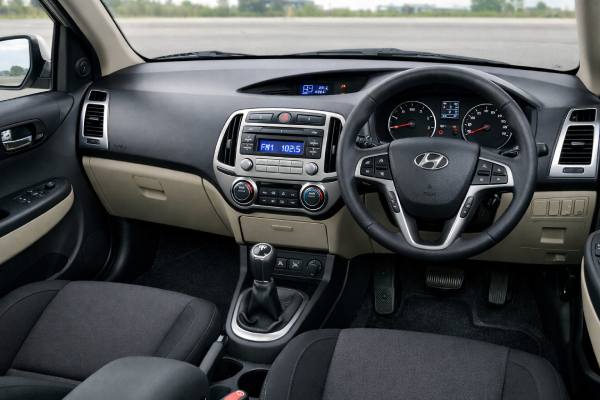
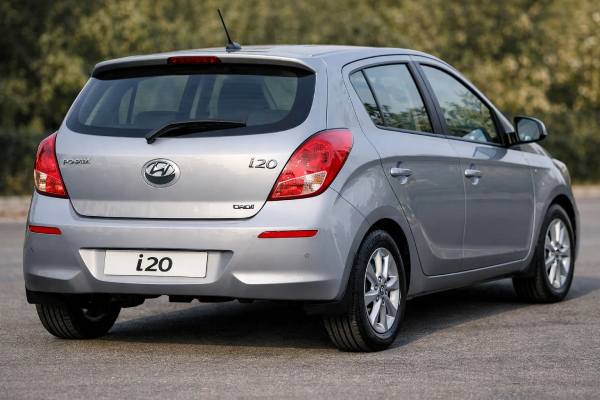
The facelifted Hyundai i20 PB with the 1.25 petrol engine and 85 hp output is one of those small cars that makes more sense with age, not less. It keeps the basic strengths of the original i20 formula: a roomy body for the class, a simple naturally aspirated four-cylinder engine, front-wheel drive, and straightforward manual transmission choices. In facelift form, it also looks a little sharper and feels slightly more mature, but the real appeal remains practical ownership. This version is not fast, yet it is honest, efficient, easy to drive, and usually less mechanically risky than many newer small cars with turbocharging, direct injection, or more complex transmissions. That matters in the used market. For buyers who want a dependable supermini with sensible running costs and usable cabin space, the 2012–2014 i20 1.25 still deserves serious attention. This guide covers the facelift petrol model in depth, including specifications, safety, maintenance, common faults, real-world driving, and how it stacks up against key rivals.
Essential Insights
- The 1.25-litre petrol is simple, chain-driven, and usually cheaper to own than small turbo rivals.
- Cabin and boot space are strong for a B-segment hatchback, helped by the 2,525 mm wheelbase.
- The facelift keeps good everyday comfort and easy city manners without becoming complicated to service.
- Age now matters more than mileage alone, so cooling-system condition, clutch wear, and neglected servicing are bigger concerns than headline spec.
- A sensible oil-and-filter interval for long life is every 15,000–20,000 km or 12 months, whichever comes first.
What’s inside
- Hyundai i20 facelift profile
- Hyundai i20 facelift specs and data
- Hyundai i20 facelift trims and safety
- Reliability and ageing trouble spots
- Care plan and used-buying tips
- Everyday road feel and economy
- Rival check and market position
Hyundai i20 facelift profile
The 2012 facelift did not turn the PB-generation Hyundai i20 into a completely different car, and that is part of the reason it remains a sensible used buy. Hyundai refreshed the appearance, updated trim and equipment details in many markets, and continued to offer the i20 as a practical B-segment hatchback aimed at buyers who cared more about value, cabin space, and ownership ease than brand image. In 1.25 petrol form, the facelift car keeps the same basic idea as the earlier model but feels a little tidier and better resolved.
The 1.25 engine is important here. In European market language it is often referred to as a 1.25, but the actual displacement is 1,248 cc, which is why many catalogues list it as a 1.2. In facelift 85 hp form, it delivers modest but useful improvements over the older 78 hp version. That extra power does not turn the i20 into a quick car, but it gives the engine a slightly less strained feel in normal traffic. It is still a naturally aspirated four-cylinder that likes sensible revs rather than lazy low-rpm pulling, yet it stays smoother and more predictable than many tiny turbo engines introduced later in the decade.
What keeps the i20 relevant is how well it uses its footprint. At 3,940 mm long with a 2,525 mm wheelbase, it is easy to park but not especially cramped. That matters because many superminis from this era feel fine in the front and tight in the rear. The i20 does better than that. It is not a mini-MPV, but adults fit more comfortably than you might expect, and the boot remains useful enough for daily life, shopping, school bags, or a weekend away.
From an ownership point of view, this facelifted 1.25 sits in a strong middle ground. It avoids the diesel complexity of DPF and EGR concerns, and it also avoids the extra parts count that often comes with later downsized turbo petrols. The result is a car that is less exciting on paper but often easier to keep healthy over time. That does not mean every example is trouble-free. These cars are now old enough that cooling parts, brakes, suspension wear, batteries, and general service neglect matter more than showroom-era reputation.
So the best way to see the facelift i20 1.25 is as a practical, low-drama small hatchback with honest engineering. Its strengths are not glamorous, but they are real: simple mechanical layout, useful space, respectable safety for its era, and low-stress day-to-day driving. If you buy carefully and avoid neglected cars, those strengths still hold up well.
Hyundai i20 facelift specs and data
The figures below focus on the facelifted Hyundai i20 PB sold from 2012 to 2014 with the 1.25 petrol engine in 85 hp form. Some details vary by country, trim, emissions package, and wheel size, so the exact car should always be checked by VIN when ordering parts or confirming registration data.
Powertrain and efficiency
| Item | Hyundai i20 (PB facelift) 1.25 / 1.2 85 hp |
|---|---|
| Code | G4LA |
| Engine layout and cylinders | Transverse I-4, DOHC, 4 valves per cylinder |
| Displacement | 1.248 L (1,248 cc) |
| Bore × stroke | 71.0 × 78.8 mm (2.80 × 3.10 in) |
| Induction | Naturally aspirated |
| Fuel system | Multi-point injection |
| Compression ratio | 10.5:1 |
| Max power | 85 hp (63 kW) @ 6,000 rpm |
| Max torque | 121 Nm (89 lb-ft) @ 4,000 rpm |
| Timing drive | Chain |
| Rated efficiency | About 4.9–5.1 L/100 km (46–48 mpg US / 55–58 mpg UK), market dependent |
| Real-world highway at 120 km/h | Typically around 5.8–6.5 L/100 km, depending on tyres, weather, and load |
This engine is one of the car’s biggest advantages. It is a simple four-cylinder petrol with no turbocharger, no diesel emissions hardware, and no especially exotic service demands. That keeps the performance modest, but it also keeps ownership relatively easy.
Transmission, chassis, and dimensions
| Item | Hyundai i20 (PB facelift) 1.25 / 1.2 85 hp |
|---|---|
| Transmission | 5-speed manual |
| Drive type | Front-wheel drive |
| Differential | Open |
| Front suspension | MacPherson strut |
| Rear suspension | Torsion beam |
| Steering | Electric power steering |
| Brakes | Front discs / rear drums on most versions |
| Wheels and tyres | Common sizes include 175/70 R14, 185/60 R15, and 195/50 R16 |
| Length | 3,940 mm (155.1 in) |
| Width | 1,710 mm (67.3 in) |
| Height | 1,490 mm (58.7 in) |
| Wheelbase | 2,525 mm (99.4 in) |
| Turning circle | About 10.4 m (34.1 ft) |
| Ground clearance | About 150 mm (5.9 in), market dependent |
| Kerb weight | About 1,028–1,080 kg (2,266–2,381 lb), market dependent |
| GVWR | About 1,565–1,635 kg (3,450–3,605 lb), market dependent |
| Fuel tank | 45 L (11.9 US gal / 9.9 UK gal) |
| Cargo volume | About 295 L (10.4 ft³) seats up / about 1,045–1,060 L (36.9–37.4 ft³) seats folded |
The dimensions tell an important part of the story. This is still a compact car, but the long wheelbase gives it better cabin usability than many buyers expect from something in this class.
Performance, capacities, and safety basics
| Item | Hyundai i20 (PB facelift) 1.25 / 1.2 85 hp |
|---|---|
| 0–100 km/h | About 12.7 s |
| Top speed | About 168 km/h (104 mph) |
| Braking distance | Tyre dependent; no single universal value |
| Towing capacity | Market dependent; verify by VIN before towing |
| Payload | Roughly 480–540 kg, market dependent |
| Fluid or spec | Value |
|---|---|
| Engine oil | 3.6 L (3.8 US qt), commonly 5W-30; use the correct Hyundai-approved spec for market and climate |
| Coolant | About 4.1–4.3 L (4.3–4.5 US qt), ethylene-glycol type for aluminium radiator |
| Manual transaxle fluid | About 1.5–1.9 L, depending on gearbox specification and market |
| Brake and clutch fluid | DOT 3 or DOT 4 |
| Wheel lug nut torque | 88–107 Nm (65–79 lb-ft) |
| Safety item | Value |
|---|---|
| Euro NCAP | 5 stars |
| Adult occupant | 88% |
| Child occupant | 83% |
| Pedestrian | 64% |
| Safety assist | 86% |
| IIHS | Not applicable for this model and market context |
| ADAS | No modern AEB, ACC, lane keeping, blind-spot monitoring, or rear cross-traffic alert |
Those safety scores were strong for the period, but they should not be read as equivalent to a modern five-star result. This facelift car still belongs to an earlier safety era, even if its passive safety fundamentals remain respectable.
Hyundai i20 facelift trims and safety
Trim strategy for the facelifted PB i20 varies by country, so the most reliable way to judge one is by what is physically fitted rather than by badge alone. In many markets, the car was sold in trim ladders that broadly moved from simple entry grades to better-equipped comfort-focused versions with alloys, upgraded seat trim, extra convenience features, and improved audio or parking aids. The 1.25 petrol sat in the middle of the range in a way that made it especially easy to find in sensible used-car specifications.
That matters because the best-used i20 is often not the cheapest one and not the most loaded one. Lower trims can be appealing because they use smaller wheels, simpler cabin equipment, and fewer electrical extras that can fail with age. Mid-spec trims usually hit the best balance because they add air conditioning, useful infotainment functions, steering-wheel controls, better seat fabrics, and sometimes parking sensors, while still avoiding the cost and cosmetic wear of the most option-heavy cars. Larger 16-inch wheel packages can improve appearance, but they also raise tyre costs and can make ride quality slightly sharper on poor roads.
The facelift itself did not radically alter the i20’s mechanical layout. The 1.25 remained front-wheel drive with a five-speed manual, so the meaningful differences between trims are more about wheel and tyre package, comfort equipment, and perceived quality than about deep engineering changes. That is good news for buyers because it means a lower-trim car is not necessarily a poorer car in any mechanical sense. In fact, some budget-conscious owners prefer the simpler versions because they ride well and keep running costs down.
Safety remains one of the i20’s better arguments. The PB earned a five-star Euro NCAP score in 2009, and the basic body architecture and safety concept carried into the facelift period. The car’s passive safety package was strong for a supermini of its era, with front, side, and curtain airbags on many versions, front seatbelt pretensioners, ISOFIX child-seat anchorages, active front head restraints, ABS, EBD, and wide ESC availability. That combination helped the i20 build a solid reputation as a sensible family-minded small hatchback rather than just a cheap one.
Where the facelift car clearly shows its age is driver assistance. This is not a modern small car with autonomous emergency braking, adaptive cruise, blind-spot monitoring, lane-centering, or traffic-sign recognition. Buyers coming from something much newer will notice that immediately. Still, the i20 does not feel unsafe in context. It feels like a well-sorted late-2000s and early-2010s hatchback with good passive safety, sound stability support where fitted, and none of the overpromised entry-level ADAS that can be expensive to recalibrate later.
When shopping, confirm safety equipment by VIN and by physical inspection. Check whether the car has ESC, count airbags if trim literature is vague, inspect tyre size, and verify parking sensors or camera equipment rather than assuming from the badge. That extra care helps explain value differences between apparently similar facelift cars.
Reliability and ageing trouble spots
The facelifted i20 1.25 is generally one of the safer used bets in its class because the mechanical layout is simple and proven. The naturally aspirated petrol engine avoids the diesel’s soot-related problems and the later turbo petrol trend toward higher parts count. Even so, these are no longer young cars, and most of the real-world problems now come from age, mileage, environment, and maintenance quality rather than any one dramatic design flaw.
The most common low-to-medium cost issues are familiar used-car items. Clutch wear is high on the list, especially on city-driven cars with many short trips or poor driving habits. Symptoms are a high bite point, judder on take-off, or slipping under load in a higher gear. Gearshifts can also feel less crisp with age, usually due to linkage wear, tired transmission fluid, or general use rather than a serious gearbox defect. None of that is unusual, but it affects the ownership feel and the price you should pay.
Cooling-system ageing matters more than many buyers expect. Radiator seepage, ageing hoses, tired clips, thermostat issues, and expansion-tank problems can show up on older small Hyundais. The usual warning signs are coolant smell after a drive, staining around hose joints, unexplained coolant loss, or fans running more often than expected. These faults are usually manageable if caught early, but overheating history should always make you cautious because even a simple engine can become costly after repeated heat stress.
The engine itself is usually durable when serviced properly. It uses a timing chain rather than a routine replacement belt, which is good news, but that does not mean the chain system can be ignored forever. Poor oil history increases the chance of start-up rattle, tensioner wear, or timing-correlation issues later in life. Persistent cold-start noise should be investigated, not dismissed. In general, this engine responds well to clean oil and steady servicing.
Other regular ageing issues include weak batteries, tired alternators, electric window faults, door-lock issues, worn dampers, front anti-roll-bar links, brake corrosion, and noisy wheel bearings. Rear brakes can suffer from low-use corrosion, especially if the car spends most of its time on gentle urban work and rarely gets fully warmed through or driven hard enough to keep the system clean.
Corrosion is not usually the first thing people mention with the PB i20, but it should still be checked carefully. Wheel arches, sill edges, underbody seams, subframe areas, fasteners, exhaust sections, and lower door edges all deserve inspection, especially in wet or salted climates. A tidy-looking body can still hide underside neglect.
On service actions and recalls, the sensible rule is simple: verify by VIN. Market-specific recall data exists, and some Hyundai campaigns in this era covered issues such as handbrake operation on affected vehicles. That does not mean every facelift i20 1.25 is affected, but it does mean paperwork matters. Ask for dealer records, recall proof, and a believable service history. On this model, neglect is a bigger enemy than design complexity.
Care plan and used-buying tips
This is a car that rewards preventative maintenance. The i20 1.25 is not especially demanding, but that makes it tempting for some owners to stretch service work and treat it as indestructible. That is where trouble begins. A practical service plan, carried out on time, usually keeps these cars easy to own.
Practical maintenance schedule
| Item | Practical interval |
|---|---|
| Engine oil and filter | Every 15,000–20,000 km or 12 months |
| Engine air filter | Inspect annually; replace about every 30,000–40,000 km, sooner in dust |
| Cabin air filter | Every 15,000–20,000 km or 12 months |
| Spark plugs | About every 30,000–40,000 km or 24 months, depending on plug type and market |
| Coolant | Replace by official schedule for the exact car; inspect level and condition at every service |
| Brake fluid | Every 24 months |
| Manual gearbox oil | Inspect for leaks and shift quality; refresh earlier if gear engagement degrades |
| Auxiliary belt and hoses | Inspect every annual service |
| Tyres | Rotate and inspect regularly; align if pull or uneven wear appears |
| 12 V battery | Test yearly once age passes about 4 years |
| Timing components | Inspect for chain noise, poor oil history, or timing-correlation faults |
The timing note is important. This engine uses a chain, not a timing belt, so there is no simple fixed belt-replacement rule. Instead, owners should watch for cold-start noise, poor oil service history, and timing-related fault codes. That is how you keep a chain-driven engine cheap rather than letting it become a surprise expense.
Useful capacity figures for decision-making are 3.6 L of engine oil, about 4.1–4.3 L of coolant, and about 1.5–1.9 L of manual-transaxle fluid depending on the exact gearbox specification. Wheel-lug torque falls in the 88–107 Nm range. Those are the kinds of details that help when you are checking invoices or deciding whether past servicing sounds credible.
Used-buyer checklist
- Start the engine from cold and listen for prolonged chain noise, tapping, or unstable idle.
- Check for coolant smell, crusty hose joints, radiator seepage, or evidence of past overheating.
- Test the clutch carefully for high bite point, slipping, or take-off shudder.
- Shift through all gears when warm, not just on a short cold test drive.
- Inspect brake condition, especially rear-brake drag or heavy lip wear.
- Look for tyre-edge wear that may point to alignment or suspension issues.
- Test all windows, locks, heater controls, radio functions, and warning lights.
- Inspect arches, sills, jacking points, floor edges, and subframe areas for corrosion.
- Verify service history, recall completion, and recent fluid changes.
The best facelift cars are often mid-spec manual examples with complete records, annual servicing, sensible tyre brands, and no signs of overheating or cheap reconditioning. Long-term durability is good when the car is looked after. What turns it into a poor purchase is rarely complicated engineering. It is usually neglected basics.
Everyday road feel and economy
In daily driving, the facelift i20 1.25 feels exactly as this type of car should: light, predictable, and easy to live with. It is not a warm hatch, and it does not try to be. Instead, it offers good visibility, manageable controls, tidy dimensions, and a relaxed ownership character. That makes it particularly good in town, where its light steering and compact body reduce effort during parking and low-speed manoeuvres.
The 85 hp engine gives the facelift car a small but useful edge over the earlier lower-output version. You still need revs for brisk progress, but the car feels less breathless in ordinary traffic. The engine responds cleanly, and because it is naturally aspirated, there is no turbo lag or complicated delivery curve to manage. What you get is honest performance: steady acceleration, predictable throttle response, and enough flexibility for everyday use if you use the gearbox properly.
At motorway speeds, the i20 is capable rather than effortless. Around 120 km/h, it will cruise without complaint, but you are aware that this is still a small five-speed petrol hatchback. Overtakes often require a downshift, and the engine sounds busier than a larger car or a six-speed diesel. Even so, it is calm enough for regular longer trips, especially if the car is on smaller wheels and in good mechanical condition.
Ride comfort is one of the i20’s quiet strengths. The chassis is tuned more for stability and comfort than for sharp handling, which suits the car’s mission well. On 14- or 15-inch wheels, it usually rides with decent compliance over poor urban roads. Larger wheels improve appearance but can make broken surfaces feel a little harsher and add tyre noise. The steering is light rather than communicative, and cornering balance is safe and predictable instead of playful.
Noise, vibration, and harshness are acceptable for the class and era. The four-cylinder petrol is smoother and quieter at idle than a comparable small diesel, and around town the car generally feels refined enough. At higher speeds, wind and tyre noise build, especially on poorer road surfaces, but that is normal for a supermini from this period.
Real-world fuel use is still one of the i20’s better qualities. In mixed driving, healthy manual cars often return around 5.6–6.4 L/100 km. A steady highway run can sit around the high-5s to mid-6s depending on speed, load, and weather. Heavy urban short-trip use will usually move the number upward, especially in winter. The fuel economy is not miraculous, but paired with the simplicity of the engine, it remains one of the model’s most convincing ownership traits.
The core verdict is straightforward. This facelift i20 1.25 drives like a sensible tool, not a toy. For buyers who want comfort, predictability, and easy everyday use, that is a compliment.
Rival check and market position
The facelifted Hyundai i20 1.25 sits in one of the busiest parts of the used-car market, so context matters. Its natural rivals include the Ford Fiesta 1.25, Toyota Yaris 1.33, Volkswagen Polo 1.2 or 1.4, Skoda Fabia 1.2, Honda Jazz 1.2 or 1.4, Kia Rio 1.25, and Renault Clio 1.2. All of them can make a case, but the Hyundai stands out by being consistently sensible rather than outstanding in one isolated category.
Against the Ford Fiesta, the i20 generally loses on steering feel and chassis enjoyment. The Ford is the better driver’s car. The Hyundai answers with a more comfort-first ride and a cabin that often feels roomier in everyday use. If your priorities are commuting, shopping, and low-stress ownership, the i20 can make more sense than the sharper Ford.
Against the Toyota Yaris, the Hyundai often looks attractive on value and equipment. The Toyota usually feels a little more polished and carries stronger long-term reputation momentum, but the i20 often gives you more car per euro or pound spent. The same logic applies against the Volkswagen Polo and Skoda Fabia. Those rivals may feel more mature or more premium inside, yet the Hyundai can look like the smarter buy when condition and price are compared honestly.
The Honda Jazz deserves special mention because it beats almost everything here for interior cleverness. If rear-seat flexibility and tall-body practicality matter above all else, the Jazz is hard to ignore. But it can cost more, and not every buyer needs that packaging trickery. The i20 offers a more conventional hatchback shape while still giving very usable space.
The Kia Rio is perhaps the most natural alternative because it shares much of the same corporate logic: straightforward engines, sensible running costs, and practical packaging. The choice between them often comes down to price, condition, and whichever one has the better documented service history.
So where does the facelift i20 1.25 fit today? It fits buyers who want a supermini that feels honest. It is a strong choice for first-time owners, small families, retirees, commuters, or anyone who values simple petrol reliability more than status or speed. It is a weaker choice for enthusiastic drivers, for people who want a premium cabin feel, or for anyone expecting modern driver assistance.
In the used market, that clarity is an advantage. The facelift i20 1.25 does not need to be everything. It just needs to do the basics well. And when bought carefully, it still does.
References
- Hyundai Owners manuals 2026 (Owner’s Manual portal)
- Handleidingen | Hyundai Motor Nederland 2026 (Owner’s Manual portal)
- HYUNDAI I20 LEADS ITS CLASS IN SAFETY WITH FIVE-STAR EURO NCAP RESULT 2009 (Safety Rating)
- HYUNDAI I20 – Euro NCAP Results 2009 2009 (Safety Rating)
- Check if a vehicle, part or accessory has been recalled – GOV.UK 2026 (Recall Database)
Disclaimer
This article is for informational purposes only and is not a substitute for professional diagnosis, repair, or vehicle-specific technical advice. Specifications, torque values, service intervals, procedures, emissions equipment, and fitted features can vary by VIN, market, trim, gearbox, and production date, so always verify critical details against official service documentation for the exact vehicle.
If this guide was useful, please consider sharing it on Facebook, X, or another social platform to support our work.