
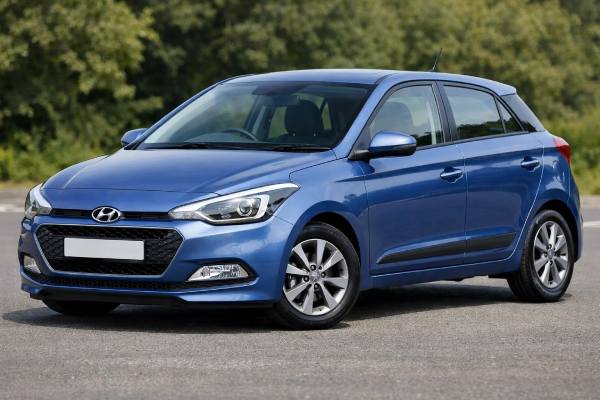
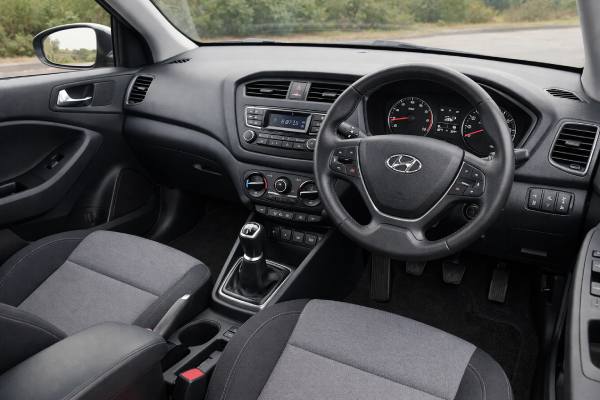
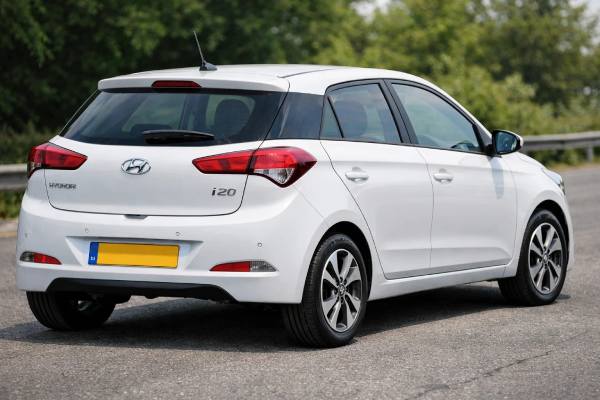
The Hyundai i20 GB 1.0 T-GDi 100 is one of the most interesting versions of the second-generation i20 because it blends small-car practicality with a more modern powertrain than the older naturally aspirated engines. Its 1.0-liter turbocharged three-cylinder petrol engine gives the car stronger low-end response, better flexibility in daily driving, and official fuel economy that still looks respectable today. At the same time, it avoids becoming overly complicated by the standards of later downsized turbo cars. The GB-generation i20 itself also moved the model forward with a bigger-feeling cabin, improved road manners, stronger safety engineering, and a more mature overall design. Buyers do need to watch one detail, though: the GB range launched before every market got the 1.0 T-GDi 100, so the exact start year, trim mix, and gearbox combination can vary by country. That makes VIN, build year, and market specification important whenever you compare parts, performance, or equipment.
Fast Facts
- The 1.0 T-GDi 100 feels more flexible than the base petrol engines, especially in mixed driving.
- The GB i20 offers a roomy cabin and a useful boot for a supermini, which helps it age well as a daily car.
- This version combines strong efficiency with better mid-range pull than the older 1.2 and 1.4 petrol options.
- Turbo-petrol ownership means oil quality, warm-up habits, and timing-chain noise deserve more attention than on the basic naturally aspirated engines.
- A careful owner should treat engine oil and filter service as a yearly job, or every 10,000 to 15,000 km in real-world use.
On this page
- Hyundai i20 GB turbo picture
- Hyundai i20 GB figures and fluids
- Hyundai i20 GB grades and protection
- Weak points and service history
- Care plan and purchase checks
- Real-world pace and consumption
- Where the GB i20 fits
Hyundai i20 GB turbo picture
The GB-generation Hyundai i20 was a meaningful step forward from the older PB car. It looked more modern, felt more mature on the road, and offered a cabin that gave the impression of a class-above car in several day-to-day areas. The 1.0 T-GDi 100 variant is especially important because it brought downsized turbo petrol power to the range without pushing the i20 into expensive hot-hatch territory. In simple terms, it is the version for buyers who want more pull than the basic 1.2 offers, but who do not need the extra pace or cost of the 120 hp tune.
One detail matters right away. While the GB-generation i20 covers the 2015 to 2018 period in this article, the 1.0 T-GDi itself was not equally available across every country from day one. Hyundai’s own European material made clear that the engine expanded the line-up during the GB cycle rather than defining the launch range in every market. That is why some registration years, brochures, and used listings can appear inconsistent. A 2015-build GB i20 and a 2017-model-year 1.0 T-GDi 100 may belong to the same generation while still having different trim logic and specification details.
The powertrain is what gives this model its character. The 998 cc three-cylinder turbocharged direct-injection petrol engine is compact, relatively light, and much stronger in the mid-range than the naturally aspirated engines below it. With 100 hp and around 171 Nm, it does not transform the i20 into a performance car, but it gives the hatchback the kind of easy overtaking response and relaxed part-throttle driving that many small cars lack. That makes it one of the best everyday engines in the GB line.
The body and cabin continue the same theme. The i20 is not a tiny-feeling supermini. It offers enough rear-seat room to be genuinely useful, a boot that works for shopping and travel rather than just school bags, and a driving position that suits longer trips. Hyundai also did a good job with the overall refinement target. The GB feels more stable and better isolated than many budget small hatchbacks from the same period, and that helps the 1.0 turbo make sense. A torquier engine matters more when the rest of the car is calm enough to exploit it.
Its limits are easy to define. This is still a small front-wheel-drive hatchback with simple rear suspension and mainstream comfort priorities. It is not especially playful, and turbo-petrol ownership brings maintenance sensitivity that the older 1.2 does not. But as a compact all-rounder, the i20 GB 1.0 T-GDi 100 is one of the most balanced versions of the model line: useful, efficient, more responsive than expected, and modern enough to feel current in ordinary use.
Hyundai i20 GB figures and fluids
The clearest way to understand the Hyundai i20 GB 1.0 T-GDi 100 is to treat it as a five-door supermini with a compact turbocharged engine, front-wheel drive, and a strong emphasis on efficiency. In many European markets, the 100 hp version was paired with a 5-speed manual, while the higher-output 120 hp engine sat above it. Exact trim and tyre combinations changed the published numbers slightly, especially later in the run.
Powertrain and efficiency
| Item | Hyundai i20 (GB) 1.0 T-GDi 100 |
|---|---|
| Code | G3LC commonly listed; verify by VIN |
| Engine layout and cylinders | Inline-3, DOHC, 12-valve |
| Valves per cylinder | 4 |
| Bore × stroke | 71.0 × 84.0 mm |
| Displacement | 1.0 L (998 cc) |
| Induction | Turbocharged, single-scroll type |
| Fuel system | Direct injection |
| Compression ratio | 10.0:1 |
| Max power | 100 hp (74 kW) @ 4,500 rpm |
| Max torque | 171 Nm (127 lb-ft) @ 1,500–4,000 rpm |
| Timing drive | Timing chain |
| Rated efficiency | Around 4.4 to 4.6 L/100 km combined depending on wheel size and trim |
| Real-world highway @ 120 km/h | Usually around 5.7 to 6.4 L/100 km in healthy cars |
Transmission and driveline
| Item | Figure |
|---|---|
| Transmission | 5-speed manual on the 100 hp version in many markets |
| Drive type | FWD |
| Differential | Open |
Chassis and dimensions
| Item | Figure |
|---|---|
| Suspension, front | MacPherson strut |
| Suspension, rear | Coupled torsion beam axle |
| Steering | Motor Driven Power Steering |
| Steering ratio / lock-to-lock | 2.7 turns lock-to-lock |
| Brakes | Front ventilated disc; rear solid disc on better-equipped 1.0 versions |
| Wheels and tyres | 185/65 R15 or 195/55 R16 most common |
| Length | 4035 mm |
| Width | 1734 mm |
| Height | 1474 mm |
| Wheelbase | 2570 mm |
| Turning circle, kerb-to-kerb | 10.2 m |
| Kerb weight | Roughly 1065 to 1164 kg depending on spec |
| GVWR | Around 1600 kg |
| Fuel tank | 50 L |
| Cargo volume | 326 L seats up / 1042 L seats folded, VDA |
Performance and capability
| Item | Figure |
|---|---|
| 0–100 km/h | About 10.7 s |
| 0–62 mph | 10.7 s |
| Top speed | 188 km/h / 116 mph |
| Braking distance | Not consistently published in stable open factory material |
| Towing capacity | Up to 1000 kg braked / 450 kg unbraked in many market figures |
| Payload | About 436 to 535 kg depending on trim |
Fluids and service capacities
| Item | Figure |
|---|---|
| Engine oil capacity | About 3.6 L with filter |
| Engine oil specification | Use the approved Hyundai viscosity and performance grade for climate and market |
| Coolant capacity | About 6.4 L |
| Manual transmission fluid | Verify by gearbox code and VIN |
| Differential / transfer case | Integrated with transaxle |
| A/C refrigerant | Verify by under-bonnet label |
| A/C compressor oil | Verify by workshop documentation |
| Key torque specs | Wheel nuts commonly 88–107 Nm |
The most important lesson from the numbers is that the 1.0 T-GDi 100 offers meaningful performance without giving up the compact, efficient nature of the i20. It is not quick in an absolute sense, but its torque curve makes the car feel more grown up than the raw figures suggest.
Hyundai i20 GB grades and protection
Trim choice matters more on the i20 GB than many used buyers first assume. The 1.0 T-GDi 100 engine gives the car its broad personality, but the grade level changes how modern, comfortable, and easy to resell the car feels. In UK-style market structure, trims such as SE, Active, Premium Nav, and related upper versions shaped the buyer experience quite differently, even when the same core engine sat under the bonnet.
For many buyers, the 1.0 T-GDi 100 lands best in the mid-range. SE-level cars usually combine the stronger engine with the most useful everyday features without pushing into higher wheel sizes or extra complexity that do not always improve ownership. That can include alloy wheels, Bluetooth, steering-wheel controls, parking sensors, air conditioning, trip computer functions, and practical cabin storage. These are the things that make a small hatch feel properly modern.
Active and upper trims add more personality. The Active version brings crossover-style visual treatment and raised suspension, which changes appearance more than underlying capability. Premium Nav and Premium SE Nav versions go further with navigation, rear-view camera, improved cabin trim, larger screens, automatic lighting and wiper functions, climate control, and in some cases larger wheels. These trims feel more upscale, but buyers should remember that extra equipment also means more age-sensitive electronics and more expensive reconditioning if the car has been neglected.
There are also mechanical and functional differences worth noting. Wheel size affects both ride and economy. Fifteen-inch cars on 185-section tyres are usually the smartest long-term choice for comfort and tyre costs. Sixteen-inch cars often look better and can feel slightly tighter, but the improvement is modest. Active models have their own suspension and wheel package, which can make them appealing visually but less ideal for buyers who want the simplest, cheapest ownership path.
Safety is one of the GB i20’s stronger selling points, but it is not flawless. Euro NCAP awarded the 2015 i20 a 4-star rating, with the car doing best in adult-occupant protection and vulnerable-road-user protection while falling back in safety-assist performance. That tells you a lot about the model. Structurally and in passive safety, the i20 was competitive. In active safety technology, it was more selective. Standard features often included six airbags, ABS, electronic stability control, hill-start assist, tyre-pressure monitoring, and ISOFIX child-seat anchor points. In some markets and trims, Lane Departure Warning System was available, which was an advanced feature for a supermini at the time.
What the car does not offer is a full modern ADAS suite. There is no mainstream adaptive cruise control, no proper blind-spot monitoring package, and no widespread autonomous emergency braking on the regular 2015–2018 GB i20 1.0 T-GDi 100. That does not make it unsafe, but it does mean buyers should judge it by its period. In practical terms, the best trim is usually the one that gives you the engine, sensible wheels, and the comfort features you will actually use, while still keeping the car straightforward to maintain.
Weak points and service history
The Hyundai i20 GB 1.0 T-GDi 100 is generally a sound small hatchback, but it is not a maintenance-free one. Its biggest strength is that it combines modern turbo-petrol performance with a relatively conventional overall package. Its biggest risk is that some buyers treat it like a simple old-school small petrol when the engine actually needs more care than the basic naturally aspirated units in the same range.
The first area to watch is timing-chain and cold-start behaviour. The 1.0 T-GDi uses a chain rather than a belt, which sounds reassuring, but that does not mean the timing system is immortal. On a used turbo three-cylinder, any metallic rattle on cold start, repeated timing-related fault codes, or uneven running during cold operation deserves attention. The most likely causes are wear in the chain, guides, or tensioner rather than a dramatic internal-engine failure. If caught early, that kind of issue is manageable. If ignored, it can become costly.
The second concern is intake and fuel-system cleanliness. This engine uses direct injection, which improves efficiency and response, but it also means intake-valve deposits can become part of long-term ownership in the wrong use case. Cars that spend most of their lives on short urban runs and cheap fuel, with extended oil-change intervals, are more likely to develop rough idle, hesitant throttle response, or reduced smoothness. These symptoms do not always mean severe carbon buildup, but they should not be written off.
Cooling and turbo health are the next priorities. A healthy 1.0 T-GDi should pull smoothly from low revs and should not smoke, whistle excessively, or smell unusually hot after normal driving. Coolant seepage, ageing hoses, or neglected top-ups matter more on a turbo engine than on a basic naturally aspirated one because heat management is central to durability. A buyer should treat any unexplained coolant loss, warning-light history, or evidence of overheating very seriously.
Away from the engine, the reliability picture becomes more familiar. Suspension wear, drop-link noise, wheel-bearing hum, battery weakness, reversing-sensor faults, and the usual supermini electrical annoyances can appear with age. These issues are not unique to Hyundai, but they can make a cheap example feel far more worn than it really is. The i20 should feel tidy and predictable, not loose, clattery, or electronically scruffy.
Service history is therefore central to the buying decision. A turbo-petrol i20 with regular oil changes, proper warm-up habits, and evidence of routine cooling and spark-plug service is a much safer buy than a lower-mileage car with vague records. As for official actions, buyers should always check the VIN through Hyundai’s own recall portal and their national recall database. Even when there is no obvious model-wide headline problem, verified campaign completion and documented dealer work remain some of the strongest signs that the car has been maintained properly.
Care plan and purchase checks
The i20 GB 1.0 T-GDi 100 responds well to conservative maintenance. That is the single most important ownership point. This engine can be economical and durable, but only if it gets quality oil, good filters, and sensible intervals. Buyers who wait for symptoms before servicing usually end up spending more than owners who treat the car proactively.
Practical maintenance schedule
| Item | Practical interval |
|---|---|
| Engine oil and filter | Every 10,000 to 15,000 km or 12 months |
| Engine air filter | Inspect every service, replace around 20,000 to 30,000 km depending on environment |
| Cabin air filter | Every 20,000 km or 12 to 24 months |
| Spark plugs | Around 60,000 to 70,000 km, sooner if running quality drops |
| Coolant | First major replacement around 100,000 km or 5 years, then about every 40,000 km or 2 years |
| Brake fluid | Every 2 to 3 years |
| Manual gearbox oil | Inspect condition and refresh around 80,000 to 100,000 km if history is unknown |
| Auxiliary belt and hoses | Inspect every service |
| Brake pads, discs, and lines | Inspect every service |
| Tyre rotation and alignment | Check regularly and after suspension work |
| 12 V battery | Test yearly once older than about 4 years |
| Timing chain system | Inspect if there is cold-start rattle, fault-code history, or noisy running |
Useful service and decision figures
| Item | Figure |
|---|---|
| Engine oil capacity | About 3.6 L |
| Coolant capacity | About 6.4 L |
| Fuel tank | 50 L |
| Common tyre sizes | 185/65 R15 and 195/55 R16 |
| Wheel nut torque | 88–107 Nm |
For a buyer’s inspection, paperwork comes first. You want invoices showing repeated oil services, not just a verbal claim that the car was “always maintained.” On this engine, oil quality and interval matter enough that a missing history should lower the car’s value sharply. Ideally, you also want proof of spark-plug replacement, battery changes, brake-fluid service, and any cooling-system work.
The walk-around then needs to focus on clues that reveal the real story. Uneven tyre wear can point to alignment or suspension issues. Damaged alloys can suggest curb abuse. A poor panel gap or mismatched paint should make you wonder about previous repairs. Under the bonnet, look for coolant staining, oil residue near turbo plumbing, and signs of low-cost aftermarket wiring for audio, alarms, or accessories.
The test drive needs to be long enough for a cold start and a full warm-up if possible. A strong i20 1.0 T-GDi 100 should start cleanly, idle steadily, pull smoothly, and feel eager in the mid-range. The clutch should engage progressively, the steering should stay even in effort, and the car should not hesitate or surge under light throttle. Any cold-start rattle, hot-idle roughness, or warning light needs explanation before money changes hands.
The best examples are usually mid-spec manual cars with good history, sensible wheels, and no sign of deferred maintenance. The ones to avoid are the attractively priced cars with poor paperwork, obvious cooling neglect, and symptoms that hint at chain or fuel-system issues. Long term, the i20 GB turbo can be a smart buy, but only when the basics have been done well.
Real-world pace and consumption
The Hyundai i20 GB 1.0 T-GDi 100 works because it feels stronger than its headline number suggests. On paper, 100 hp is no longer a special figure, but the engine’s 171 Nm torque output gives the car better flexibility than the basic petrol versions. In traffic, that means fewer downshifts, easier overtakes, and less need to wind the engine out simply to keep up. The turbocharged three-cylinder layout suits the i20’s mission well.
In normal driving, the engine feels most at home in the low and mid-range. It has enough turbo assistance from around 1,500 rpm onward to make the car feel lively without being peaky. There is some three-cylinder character, especially at idle and on cold start, but once warm it settles into a smooth and useful rhythm. The manual gearbox is a good match because it lets the driver use the torque band without fighting a sluggish automatic. That is a major reason the 100 hp version feels more satisfying than some naturally aspirated supermini rivals.
Ride and handling are not the stars of the show, but they are well judged. The i20 GB feels more stable and better damped than many bargain-class small hatchbacks. It does not dart into corners like a sporty supermini, yet it holds a line well, stays composed on the motorway, and deals with rough city streets competently on the right tyre package. Fifteen-inch cars generally offer the best balance of comfort and low running cost, while sixteen-inch cars sharpen the look more than they transform the dynamics.
Refinement is also better than many people expect. The i20 does not feel especially premium, but it does feel grown up. Wind and tyre noise are controlled well enough for the class, and the engine is quieter at cruise than the old small diesels. Compared with the 1.2 petrol, the 1.0 T-GDi feels less strained when loaded or climbing. Compared with the 1.4 diesel, it is smoother and easier to justify for short-trip and mixed urban use.
Fuel economy depends heavily on how the car is driven. Official combined figures in the mid-4 L/100 km range were impressive for the period, but real life is more varied. In mixed use, a healthy manual car often returns around 5.5 to 6.5 L/100 km. Steady highway driving can stay in the high-5s or low-6s, while cold city work and repeated short trips can push the number into the 7s. That still leaves the 1.0 T-GDi as a very reasonable choice for drivers who want useful performance without diesel ownership compromises.
The broader verdict is that this is not a hot hatch pretending to be sensible. It is a sensible hatch with just enough turbocharged character to make daily driving easier and more enjoyable. That is why it remains one of the most appealing engines in the GB i20 range.
Where the GB i20 fits
The Hyundai i20 GB 1.0 T-GDi 100 makes sense in the used market because it sits in a very practical middle ground. It is quicker and more flexible than a basic small petrol hatch, but it does not carry the fuel-system and short-trip compromises of an older small diesel. It is also more modern in feel than many value-focused superminis from the same era, which gives it a broad appeal as a commuter, family second car, or all-purpose daily hatchback.
Against naturally aspirated rivals, the Hyundai wins on torque and ease. The turbo engine simply makes ordinary driving less work. You do not need to chase revs as often, overtakes require less planning, and the car feels stronger when carrying passengers or luggage. That advantage matters most on mixed routes, where the 1.0 T-GDi turns the i20 from a merely competent small car into a more complete one.
Against diesel rivals, the comparison depends on use. A small diesel can still beat it on motorway economy and low-rpm shove, but the petrol turbo is usually the safer recommendation for buyers with shorter commutes, colder climates, or uncertain annual mileage. It warms up more naturally, avoids DPF-related worry, and generally suits the stop-start life most used superminis now live. That is one of its biggest ownership advantages.
Where it loses ground is in outright simplicity compared with the basic 1.2 petrol. The 1.0 T-GDi is still a turbocharged direct-injection engine with a timing chain and a greater dependence on good oil and maintenance discipline. That means it is not the version to buy if you want the least complex powertrain in the GB line. It is the version to buy if you want a better engine and you are prepared to maintain it properly.
So who should choose it? The ideal owner is someone who wants a compact hatchback with decent performance, lowish running costs, and enough cabin and boot space to handle everyday life. The best examples are manual, well documented, and free from cooling, chain-noise, or rough-running concerns. In that form, the i20 GB 1.0 T-GDi 100 stands out as one of the smarter used supermini buys of its generation: balanced, efficient, and more enjoyable than its modest badge and size might suggest.
References
- Hyundai Owners manuals | Hyundai Motor UK 2026 (Owner’s Manual)
- Handleidingen | Hyundai Motor Nederland 2026 (Owner’s Manual)
- Hyundai i20 – Euro NCAP Results 2015 2015 (Safety Rating)
- Home | Hyundai Recalls & Service Campaigns 2026 (Recall Database)
- Check if a vehicle, part or accessory has been recalled 2026 (Recall Database)
Disclaimer
This article is for informational purposes only and is not a substitute for professional diagnosis or repair. Specifications, torque values, intervals, fluid requirements, and procedures can vary by VIN, market, trim, gearbox, and fitted equipment, so always verify against the official service documentation for the exact vehicle.
If this guide was useful, please consider sharing it on Facebook, X, or another platform to support our work.