
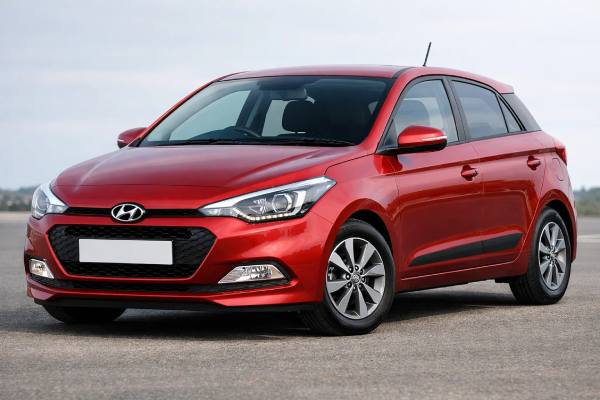
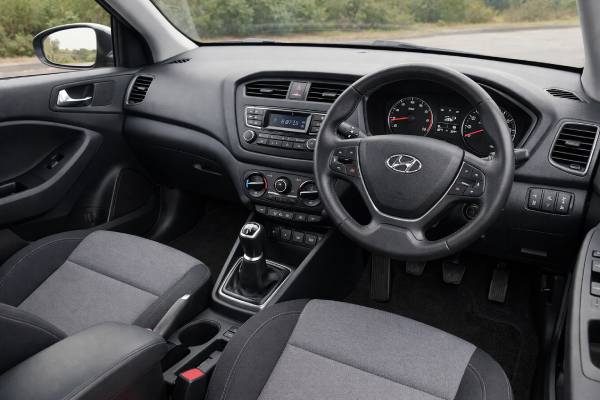
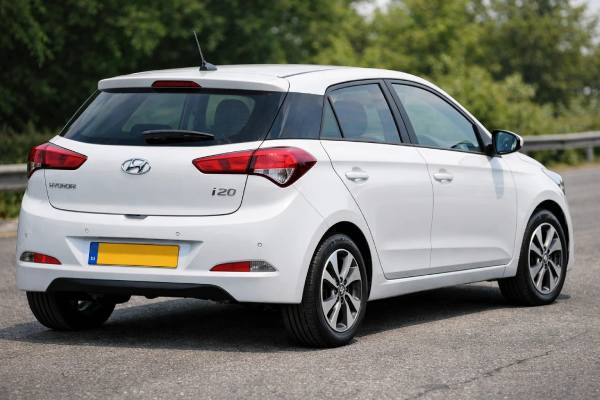
The Hyundai i20 GB with the 1.4-litre 100 hp petrol engine is one of the more overlooked small hatchbacks from the mid-2010s. It arrived with a bigger, more mature feel than the older PB-generation i20, and that matters in daily use. This version combines a naturally aspirated four-cylinder engine, conventional front-wheel drive, and a simple automatic transmission option in many markets, so it avoids several of the high-cost failure points that worry buyers of newer small cars. The result is a supermini that feels honest, roomy, and easy to live with. It is not especially quick, and it is not the sharpest car in the class, but it is practical, refined enough for regular highway work, and usually straightforward to maintain when serviced properly. For used buyers, the real dividing line is condition. Service history, suspension wear, cooling-system health, transmission behaviour, and proof of recall checks matter far more than trim badge alone.
Quick Specs and Notes
- The 1.4 petrol is smoother and more relaxed in mixed driving than the smaller 1.2 engines.
- Cabin space, rear-seat room, and boot usability are strong for a car in this class.
- The naturally aspirated engine and conventional transmission keep long-term complexity relatively low.
- Automatic cars are easy to live with, but they are not especially quick and need clean fluid and smooth shift behaviour.
- A sensible service baseline is engine oil and filter every 10,000 km or 12 months.
Start here
- Hyundai i20 GB Ownership View
- Hyundai i20 GB Specs and Figures
- Hyundai i20 GB Trims, Safety and Tech
- Reliability Patterns and Known Faults
- Maintenance Plan and Buyer’s Checklist
- Road Manners and Real-World Performance
- How the GB i20 Compares
Hyundai i20 GB Ownership View
The GB-generation Hyundai i20 moved the model line closer to the center of the European supermini class. It felt less budget-minded than the earlier car and more like a proper family-friendly hatchback in small form. The 1.4 petrol version sits near the sweet spot for buyers who want enough performance for urban, suburban, and occasional motorway use without moving into turbocharged or more complex drivetrains.
Its biggest advantage is balance. The 1.4-litre petrol engine is not fast, but it is noticeably calmer than the entry-level engines when pulling away, climbing hills, or carrying passengers. The car itself is also usefully roomy. The front seats offer good space, the rear bench is genuinely usable for adults on shorter trips, and the boot is competitive for the class. That matters because a lot of used buyers do not want a tiny city car. They want a small hatch that can cover everyday life without constant compromise.
The i20 GB also benefits from straightforward engineering. In most 1.4 petrol versions, you get a naturally aspirated four-cylinder, multi-point injection, a chain-driven cam arrangement, and a simple driveline. That reduces long-term anxiety compared with small turbo petrols that can bring extra complexity in fuel, cooling, and boost-control systems. It does not make the car maintenance-free, but it does make it more predictable.
This is also a car that generally suits buyers who value comfort over excitement. The suspension tune leans toward daily usability. Steering is light, visibility is decent, and the cabin is more refined than many cheap superminis from the same period. On the other hand, it does not feel especially sporty, and the automatic version in particular prioritizes ease over urgency.
As a used buy, condition is more important than options. A clean car with documented servicing, quiet suspension, healthy tyres, functioning air conditioning, and smooth transmission behaviour is usually a far smarter purchase than a higher-trim example with thin records. The model has enough core quality that a well-kept car still feels credible today. A neglected one quickly becomes disappointing through minor faults, vibration, worn chassis parts, and patchy electrical behaviour. The i20 GB rewards careful buying.
Hyundai i20 GB Specs and Figures
Exact figures vary slightly by market, trim, gearbox, and emissions setup, but the 2014–2018 Hyundai i20 GB 1.4 petrol in European specification generally used a naturally aspirated four-cylinder MPI engine in 100 hp form. The table below reflects the common configuration.
Powertrain and efficiency
| Item | Hyundai i20 GB 1.4 petrol |
|---|---|
| Code | Gamma-family 1.4 MPI |
| Engine layout and cylinders | Inline-4, DOHC, 16-valve |
| Cylinders | 4 |
| Valves per cylinder | 4 |
| Bore × stroke | About 77.0 × 75.0 mm (3.03 × 2.95 in) |
| Displacement | 1.4 L (1,368 cc) |
| Induction | Naturally aspirated |
| Fuel system | Multi-point fuel injection |
| Compression ratio | About 10.5:1 |
| Max power | 100 hp (74 kW) @ about 6,000 rpm |
| Max torque | 134 Nm (99 lb-ft) @ about 3,500 rpm |
| Timing drive | Chain |
| Rated efficiency | Roughly 5.6-6.2 L/100 km depending on market and gearbox |
| Real-world highway @ 120 km/h | About 6.3-7.2 L/100 km |
Transmission and driveline
| Item | Hyundai i20 GB 1.4 petrol |
|---|---|
| Transmission | 4-speed automatic in many markets; some regional variation |
| Drive type | FWD |
| Differential | Open |
Chassis and dimensions
| Item | Hyundai i20 GB 1.4 petrol |
|---|---|
| Suspension front | MacPherson strut with coil springs |
| Suspension rear | Torsion beam axle |
| Steering | Electric power steering |
| Brakes | Front discs, rear drums on many trims; some markets differ |
| Wheels and tyres | Commonly 185/65 R15 or 195/55 R16 |
| Ground clearance | About 140 mm (5.5 in), market-dependent |
| Length | 4,035 mm (158.9 in) |
| Width | 1,734 mm (68.3 in) |
| Height | About 1,474 mm (58.0 in) |
| Wheelbase | 2,570 mm (101.2 in) |
| Turning circle | About 10.2 m (33.5 ft) |
| Kerb weight | Roughly 1,080-1,150 kg (2,381-2,535 lb) |
| GVWR | Roughly 1,580-1,650 kg (3,483-3,638 lb), market-dependent |
| Fuel tank | 50 L (13.2 US gal / 11.0 UK gal) |
| Cargo volume | About 326 L (11.5 ft³) seats up / about 1,042 L (36.8 ft³) seats folded |
Performance and capability
| Item | Hyundai i20 GB 1.4 petrol |
|---|---|
| 0–100 km/h (0–62 mph) | About 13.2 s |
| Top speed | About 171 km/h (106 mph) |
| Braking distance 100–0 km/h | Typically around 39-42 m on good tyres |
| Towing capacity | Market-specific; verify by VIN before towing |
| Payload | Commonly around 430-500 kg |
Fluids and service capacities
| Item | Hyundai i20 GB 1.4 petrol |
|---|---|
| Engine oil | Typically 5W-30 or 5W-40 meeting market-approved spec |
| Engine oil capacity | About 3.3-3.7 L (3.5-3.9 US qt) with filter |
| Coolant | Long-life ethylene glycol mix; capacity varies by market |
| Automatic transmission fluid | Hyundai-approved ATF; capacity varies by service method |
| Manual transmission fluid | Not applicable to most 1.4 automatic-market cars |
| Brake fluid | DOT 3 or approved equivalent |
| A/C refrigerant | Type and charge depend on label and build date |
| Key wheel-nut torque | Commonly around 88-110 Nm depending on market guidance |
Safety and driver assistance
| Item | Hyundai i20 GB |
|---|---|
| Euro NCAP | 4 stars |
| Adult occupant | 85% |
| Child occupant | 73% |
| Vulnerable road user | 79% |
| Safety assist | 64% |
| IIHS | Not applicable |
| Headlight rating | Not applicable |
| ADAS suite | None of the modern AEB, ACC, BSD, or RCTA systems were standard on early cars |
Hyundai i20 GB Trims, Safety and Tech
Trim structures varied by country, so the Hyundai i20 GB was sold with different grade names and option combinations across Europe and other markets. Some buyers will see Classic, S, SE, Premium, Comfort, or Style-style naming depending on region. That means equipment inspection matters more than memorizing trim titles.
On the 1.4 petrol, mechanical differences between trims were limited in most markets. The same basic engine and driveline stayed in place, with changes focused on wheel size, tyre size, cabin equipment, exterior details, and convenience technology. Lower trims often used steel wheels, simpler cloth seats, fewer audio features, and more limited comfort equipment. Higher trims usually added alloy wheels, upgraded infotainment, steering-wheel controls, Bluetooth, parking sensors, climate functions, and in some markets a reversing camera.
Quick used-car identifiers include:
- 15-inch versus 16-inch wheel and tyre packages
- front fog lamps
- parking sensors and reversing camera
- multifunction steering wheel
- automatic lights or rain-sensing wipers on upper trims
- upgraded seat trim and soft-touch interior details
Safety was a solid area for the GB-generation i20, though not class-leading by later standards. Euro NCAP tested the model in 2015 and awarded it four stars under a stricter protocol than the older PB-generation car faced. In practical terms, that still means the i20 offered a credible structure and a sensible set of core restraint and stability features for its time, even if it did not match newer cars with more advanced standard crash-avoidance technology.
Typical safety equipment included:
- front airbags
- side airbags
- curtain airbags
- ABS
- ESC and stability-management functions on many trims
- hill-start assistance on some versions
- ISOFIX child-seat points
- tyre-pressure monitoring on some markets and years
What the car generally lacks is modern driver assistance in the current sense. Early GB i20s do not usually offer autonomous emergency braking, adaptive cruise control, lane-centering, or blind-spot warning. That matters for buyers cross-shopping much newer superminis. The Hyundai’s strength is not semi-automated safety. It is sound basic design and conventional ownership.
One detail worth remembering is that trim differences can affect real-world value more than reliability. A better infotainment screen or a rear camera may improve daily use, but a lower-trim car with excellent service history is usually the better long-term buy than a high-spec car with neglected fluids, worn tyres, or crash-repair history. With this generation i20, equipment matters, but condition matters more.
Reliability Patterns and Known Faults
The Hyundai i20 GB 1.4 petrol is generally a fairly dependable small hatchback, especially compared with some turbocharged rivals of the same period. Its biggest advantage is that the engine itself is simple. Most ownership trouble comes from wear, age, and routine neglect rather than from a single high-profile design defect.
Common issues, low-to-medium cost
- Front suspension wear: Drop links, bushes, and top mounts can produce knocking noises over rough roads. This is common on small hatchbacks and not unusual here.
- Battery and charging-related complaints: Older batteries can cause slow cranking, warning lights, stop-start glitches where fitted, and erratic electrical behaviour.
- Brake wear and rear-brake neglect: Cars that have done light urban work can develop sticky rear hardware or uneven braking feel.
- Tyre and alignment issues: Worn suspension components or repeated curb strikes can create uneven tyre wear and a vague steering feel.
Occasional issues, medium cost
- Ignition-related rough running: Spark plugs, coils, or throttle-body contamination can cause hesitation or a rough idle.
- Automatic transmission hesitation or poor shift quality: The transmission is generally durable, but neglected fluid or hard use can make it feel sluggish, flare slightly, or engage less cleanly than it should.
- Air-conditioning problems: Compressor wear, leaking condensers, or low refrigerant charge become more common as the cars age.
- Wheel-bearing noise: A steady humming sound rising with road speed is the usual symptom.
Less common but more serious
- Cooling-system leaks or thermostat issues: The engine is not known for chronic overheating, so any persistent temperature fluctuation deserves prompt inspection.
- Timing-chain noise on neglected engines: The chain is not a routine service item, but poor oil history can still accelerate wear.
- Crash-repair quality problems: In this price range, poorly repaired front-end damage is a larger practical risk than engine design weakness.
Open-source recall and campaign information does not suggest a major widespread pattern unique to the 1.4 petrol GB model, but buyers should still verify by VIN using an official recall checker and dealer history. That is especially important because some issues get handled as service campaigns, market-specific actions, or quiet warranty work rather than headline recalls.
Pre-purchase, ask for:
- Full service history with evidence of annual oil changes
- Smooth cold start and clean idle
- Quiet suspension on rough roads
- Properly functioning air conditioning
- Smooth transmission engagement and kickdown behaviour on automatic cars
- Proof of recall or dealer campaign checks
In broad terms, this is a condition-sensitive but fundamentally sensible used car. A maintained example is usually easy to live with. A neglected one becomes expensive through stacked minor faults.
Maintenance Plan and Buyer’s Checklist
The i20 GB 1.4 petrol responds well to conservative maintenance. Because the powertrain is uncomplicated, routine service has a direct effect on how the car feels and how long it stays reliable. For owners planning to keep one for years, shorter intervals usually make more sense than simply following the longest possible book schedule.
Practical maintenance schedule
| Item | Practical interval |
|---|---|
| Engine oil and filter | Every 10,000 km or 12 months |
| Engine air filter | Every 30,000 km or sooner in dusty conditions |
| Cabin air filter | Every 20,000 km or 24 months |
| Spark plugs | About 45,000-60,000 km depending on type |
| Coolant | Around 5 years or 100,000 km, then inspect more closely by age |
| Automatic transmission fluid | Refresh around 60,000 km for long-term ownership |
| Brake fluid | Every 2-3 years |
| Serpentine belt and tensioner | Inspect every service |
| Hoses | Inspect annually for cracks, swelling, or seepage |
| Brake pads and front discs | Inspect every service |
| Rear brake hardware | Inspect periodically, especially on low-use cars |
| Tyre rotation | Every 10,000 km |
| Alignment | Check yearly or when tyre wear appears |
| 12 V battery | Test yearly from year 4 onward |
| Timing chain | Inspect by symptom, not fixed mileage |
Useful service guidance
- Use the correct oil grade and avoid stretching annual oil changes.
- Treat automatic transmission fluid as a real service item even if a seller calls it sealed for life.
- Replace spark plugs before drivability issues begin.
- Keep coolant fresh and correctly mixed.
- Brake fluid should be time-based, not just mileage-based.
Buyer’s inspection checklist
- Check cold start and idle quality.
- Listen for knocks from the front suspension.
- Test the transmission from cold and warm.
- Confirm the A/C cools properly.
- Inspect tyre wear across all four wheels.
- Check for cooling-system staining around hose joints and radiator area.
- Test windows, locks, mirrors, audio controls, and camera or sensors if fitted.
- Look for crash-repair clues around lamp mounts, panel gaps, and the boot floor.
Best versions to seek
- Cars with full annual service history
- Cars on quality, matched tyres
- Unmodified examples
- Cars with documented transmission servicing on automatics
Cars to avoid
- Cars with harsh or delayed shifts
- Cars with overheating history
- Cars with repeated warning lights and no diagnosis history
- Cars with front-end accident repair of doubtful quality
Long-term durability is usually good if the owner stays ahead of fluids, tyres, brakes, and suspension wear.
Road Manners and Real-World Performance
The Hyundai i20 GB 1.4 petrol drives with an emphasis on ease and maturity rather than excitement. That suits the car well. In city traffic, it feels light, visible, and manageable. The steering is easy at parking speeds, the controls are simple to learn, and the cabin does not feel as cramped as many rivals.
The 1.4 petrol engine is smoother than the smaller entry-level units and gives the i20 enough flexibility for normal mixed use. Around town, it responds without feeling strained. On faster roads, it is adequate rather than brisk. Overtaking requires planning, especially with passengers on board or when climbing. The automatic gearbox common to many 1.4 versions is pleasant in stop-start traffic but clearly old-school in feel. It does not snap through ratios like a modern dual-clutch or CVT-based system, and kickdown can feel slow if you ask for full acceleration suddenly.
Ride quality is one of the i20’s better traits. Hyundai tuned the chassis for everyday comfort, and the car generally absorbs rough urban surfaces well. It stays composed enough on the motorway too, though tyre noise and wind noise become more noticeable at higher speeds. Steering feel is limited, but the car tracks predictably and feels secure rather than nervous.
Braking performance is usually dependable if the tyres and brake hardware are in good condition. The chassis is not especially playful, but it is honest and forgiving. That matters more to most owners than sharp turn-in or sportier balance.
Real-world fuel use is usually acceptable:
- City: about 7.5-8.8 L/100 km
- Highway: about 5.8-6.8 L/100 km
- Mixed: about 6.6-7.5 L/100 km
That roughly equals:
- City: 27-31 mpg US / 34-38 mpg UK
- Highway: 35-41 mpg US / 42-49 mpg UK
- Mixed: 31-36 mpg US / 38-43 mpg UK
Cold weather, short trips, low tyre pressures, and neglected spark plugs can move those figures upward. Automatic cars usually sit on the higher side of the range. If economy is the main goal, smaller engines or diesel alternatives do better. But if smoothness, simplicity, and relaxed daily driving matter more, the 1.4 petrol makes a good case for itself.
How the GB i20 Compares
The i20 GB 1.4 petrol competes best as a sensible all-rounder. It is not the most characterful car in the class, but it avoids many of the trade-offs that make some rivals more appealing in one area and more troublesome in another.
Against a Ford Fiesta 1.25 or 1.0 EcoBoost, the Hyundai usually loses on steering feel and driving enjoyment. The Ford is more engaging. The Hyundai often counters with a roomier cabin, easier everyday comfort, and in 1.4 MPI form, lower mechanical stress than a small turbo engine.
Against a Toyota Yaris 1.33, the i20 usually offers stronger interior space and often a lower used purchase price for similar age and mileage. The Toyota typically carries stronger resale confidence and a long-standing reputation for low-drama ownership. The Hyundai is often the better value buy if condition is equal.
Against a Skoda Fabia 1.2, the Hyundai feels competitive on packaging and often simpler in naturally aspirated form than some VW Group turbo alternatives. The Fabia may feel more solidly damped on longer motorway runs, but equipment and running costs depend heavily on the exact engine and gearbox.
Against a Kia Rio from the same period, the contest is naturally close. Both share a practical, conservative ownership appeal. Choice often comes down to service history, local parts prices, and how well the individual car was maintained.
Where the i20 GB 1.4 stands out:
- roomy interior for the class
- simple petrol engine layout
- comfortable daily ride
- respectable safety performance for its era
- generally sensible used-market pricing
Where it is weaker:
- modest straight-line performance
- old-fashioned automatic feel on some versions
- limited modern driver-assistance technology
- less sporty character than the Fiesta
For buyers who want a small hatchback that feels grown-up, practical, and not overly complicated, the Hyundai i20 GB 1.4 remains a very reasonable used choice. Its appeal is not emotional. It is rational, and in this part of the market, that can be a real strength.
References
- Hyundai Owners manuals | Hyundai Motor UK 2026 (Owner’s Manual)
- Hyundai i20 – Euro NCAP Results 2015 2015 (Safety Rating)
- Check if a vehicle, part or accessory has been recalled 2026 (Recall Database)
- All recalls since 1992 (CSV, 5MB) 2026 (Recall Database)
- Hyundai i20 2017 (Official Price List)
Disclaimer
This article is for informational purposes only and is not a substitute for professional diagnosis, repair, or vehicle-specific technical advice. Specifications, torque values, intervals, fluids, and service procedures can vary by VIN, market, trim, emissions setup, and equipment. Always verify the exact data for the vehicle against official service documentation before carrying out maintenance or repairs.
If this guide helped you, please consider sharing it on Facebook, X, or another social platform to support our work.