
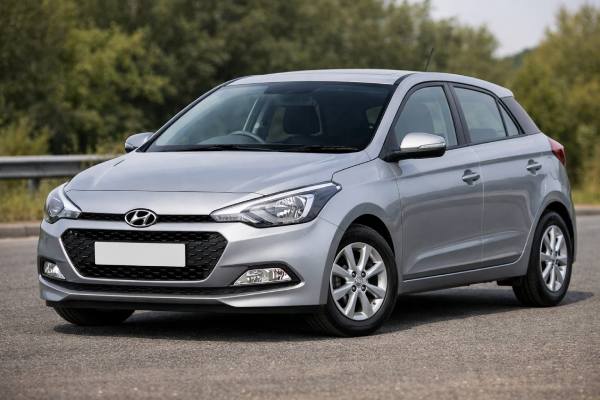
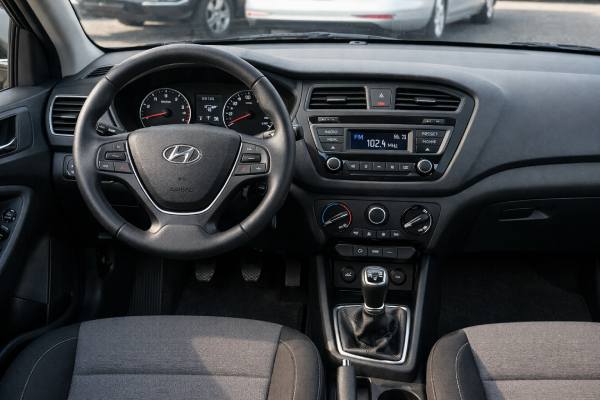
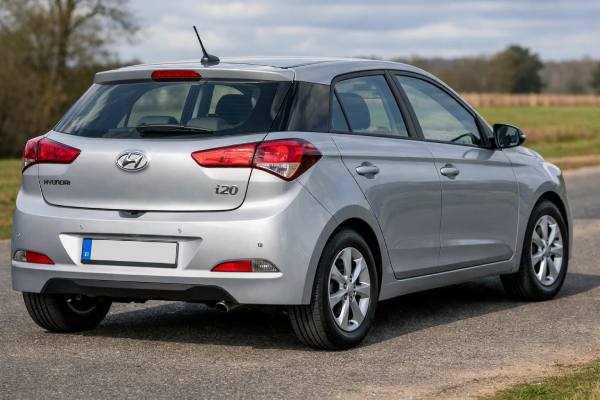
The Hyundai i20 GB with the 1.25-litre 75 hp petrol engine is one of the simplest versions of the second-generation i20, and that is exactly why it still makes sense as a used car. It gives up the stronger mid-range of the 84 hp 1.25 and 100 hp 1.4 models, but in return you get a light, low-stress naturally aspirated engine, a straightforward 5-speed manual, and very conventional front-wheel-drive engineering. The GB-generation car itself was a big step forward over the older PB, with a longer wheelbase, more cabin room, a larger boot, better ride maturity, and stronger class positioning in Europe. It also brought a more modern cabin and a stronger safety story than many budget-minded superminis from the same years. The catch is that 75 hp only feels right if your expectations are realistic. Buy it for calm daily use, modest costs, and honest simplicity, and it works very well. Buy it expecting strong motorway pace, and it quickly feels stretched.
Key Takeaways
- Simple naturally aspirated 1.25 petrol and 5-speed manual keep ownership risk lower than many small turbo rivals.
- The GB i20 is roomier than the older PB, with a 326 L boot and useful rear-seat space for the class.
- Ride comfort, safety basics, and cabin maturity are genuine strengths for an entry-level supermini.
- The 75 hp version needs careful buying because weak servicing, cheap tyres, and worn suspension make it feel slower and older than it should.
- A practical oil-and-filter service every 10,000–15,000 km or 12 months is a sensible used-car routine.
Section overview
- Hyundai i20 GB 1.25 in context
- Hyundai i20 GB 1.25 numbers
- Hyundai i20 GB trims and safety
- Common faults and service actions
- Maintenance plan and buyer checks
- On-road feel and fuel use
- How the GB i20 compares
Hyundai i20 GB 1.25 in context
The GB-generation i20 mattered because it moved Hyundai’s small hatchback from “good value” into something closer to a full mainstream contender. The first-generation PB was practical and honest, but the GB car arrived with more design confidence, a larger footprint, and a noticeably more mature feel. Hyundai stretched the wheelbase to 2,570 mm, widened the body to 1,734 mm, and increased boot volume to 326 litres. Those are not just brochure improvements. In daily use they make the car feel less cramped, more stable, and more useful than many buyers expect from a basic 1.25 petrol supermini.
The 75 hp version is the modest end of the petrol range, and it should be judged on those terms. This is not the brisker 84 hp version of the same engine, and it is not the 1.4-litre 100 hp car. It is the value-led, naturally aspirated four-cylinder option that prioritises low complexity, predictable running costs, and straightforward mechanical packaging. Hyundai paired it with a 5-speed manual, while the more powerful petrols received a 6-speed manual or, in the case of the 1.4, an optional 4-speed automatic. That detail matters because it defines the character of the 75 hp car. It is happiest in town, on shorter regional trips, and in mixed everyday use where clean throttle response and low running stress matter more than outright speed.
The engine itself is from Hyundai’s Kappa petrol family. It is an all-aluminium 1.25-litre four-cylinder with dual overhead camshafts and dual CVVT. On paper, that sounds ordinary. In used-car life, ordinary is a strength. There is no turbocharger, no direct-injection carbon build-up issue to dominate ownership, and no expensive dual-clutch transmission waiting in the background. That makes the 75 hp i20 one of the easier modern-ish small petrol cars to understand and inspect.
The broader GB platform also gives this version a better foundation than many entry engines get. Hyundai tuned the suspension for European roads, worked on ride maturity, and made the car genuinely roomy for the class. The result is that even the low-output model does not feel like a stripped-out penalty box when the car is in good condition. It feels like a sensible supermini that needs to be driven within its limits.
Who should buy one today? Someone who wants a compact hatchback for urban use, moderate commuting, first-car duty, or second-car family use, and who values mechanical simplicity over pace. Who should skip it? Drivers doing frequent full-load motorway work, hilly routes, or fast overtakes with passengers. The 75 hp i20 is best when the rest of the car’s balance matters more than the engine’s headline number.
Hyundai i20 GB 1.25 numbers
The 1.25-litre 75 hp version sits at the simple end of the GB i20 range, but its technical spec is still well resolved. Hyundai’s official product information describes it as a front-wheel-drive five-door B-segment hatchback with a transversely mounted Kappa four-cylinder petrol engine, a 5-speed manual gearbox, and a relatively light curb weight of 980 kg. That light weight is important because it helps the modest output feel more usable than many buyers expect.
Powertrain and efficiency
| Item | Figure |
|---|---|
| Engine family | Kappa |
| Engine code | 1.25 Kappa petrol family |
| Layout and cylinders | Inline-four, 4 cylinders, DOHC, 4 valves per cylinder |
| Bore × stroke | 71.0 × 78.8 mm (2.80 × 3.10 in) |
| Displacement | 1.25 L (1,248 cc) |
| Induction | Naturally aspirated |
| Fuel system | Multi-point petrol injection |
| Compression ratio | 10.5:1 |
| Max power | 75 hp / 75 PS (55 kW) @ 5,500 rpm |
| Max torque | 122 Nm (90 lb-ft) @ 4,000 rpm |
| Timing drive | Chain-driven valve train; no routine timing-belt replacement interval |
| Rated efficiency | 4.7–5.1 L/100 km combined |
| Real-world highway @ 120 km/h | Usually around 6.2–6.9 L/100 km in healthy trim |
Transmission and driveline
| Item | Figure |
|---|---|
| Transmission | 5-speed manual |
| Drive type | FWD |
| Differential | Open |
| Final drive | 4.600 |
Chassis and dimensions
| Item | Figure |
|---|---|
| Front suspension | Subframe-mounted MacPherson struts, coil springs, gas dampers, anti-roll bar |
| Rear suspension | Semi-independent coupled torsion beam axle with separate coil springs and gas dampers |
| Steering | Electric rack-and-pinion, BLAC-MDPS |
| Steering ratio / turns | 2.7 turns lock-to-lock |
| Brakes | 256 mm ventilated front discs, 203.2 mm rear drums |
| Typical tyre size | 185/65 R15 |
| Optional wheel package | 195/55 R16 on higher-spec cars |
| Ground clearance | 140 mm (5.5 in) |
| Length | 4,035 mm (158.9 in) |
| Width | 1,734 mm (68.3 in) |
| Height | 1,474 mm (58.0 in) |
| Wheelbase | 2,570 mm (101.2 in) |
| Turning circle | 5.1 m minimum radius |
| Fuel tank | 50 L (13.2 US gal / 11.0 UK gal) |
| Cargo volume | 326 L seats up / 1,042 L seats folded, VDA |
| Minimum curb weight | 980 kg (2,161 lb) |
| Gross vehicle weight | 1,580 kg (3,483 lb) |
Performance and capability
| Item | Figure |
|---|---|
| 0–100 km/h | 13.6 s |
| Top speed | 160 km/h (99 mph) |
| Payload range | 422–600 kg (depending on exact trim and equipment) |
| Towing capacity | Market-dependent; verify by VIN and local handbook |
Fluids and service capacities
| Item | Guidance |
|---|---|
| Engine oil | Use Hyundai-approved petrol-engine oil of the correct viscosity for climate and market |
| Engine oil capacity | Verify by VIN and sump specification before refill |
| Coolant | Ethylene-glycol coolant compatible with aluminium systems |
| Manual transmission fluid | API GL-4 SAE 75W-85 |
| A/C refrigerant | R-134a |
| Wheel nut torque | Commonly 88–107 Nm; confirm for the exact wheel set |
Safety and driver assistance
| Item | Figure |
|---|---|
| Euro NCAP | 4 stars under the 2015 protocol |
| IIHS | Not applicable for this European-market model |
| ADAS | No AEB or ACC on this version; lane departure warning was trim-dependent on some markets |
The most important thing these numbers show is balance. The 75 hp car is not fast, but it is light, roomy, and mechanically simple. That combination is what keeps it relevant as a used buy.
Hyundai i20 GB trims and safety
One reason the GB i20 still looks attractive on the used market is that Hyundai did not treat even its smaller cars as bare transport. The trim names varied by country, but the overall structure stayed familiar: a value-led base model, a mid-spec version with better daily comfort, and upper trims that brought the equipment buyers actually remember. The 75 hp 1.25 usually sat in the lower or mid range rather than at the very top, but the underlying car was still well designed enough that even modest versions felt complete.
In official brochure form, Hyundai positioned the entry i20 Access with front electric windows, powered and heated mirrors, driver’s seat height adjustment, a steering wheel adjustable for reach and rake, USB and Aux connectivity, keyless entry, and tinted windows. Comfort trim added audio controls, Bluetooth, leather trimming on the wheel and shifter, parking sensors, front fog lights, and cruise control with speed limiter. Higher trims such as Panorama and LED added 16-inch alloys, climate control, power-folding mirrors, projector headlamps, LED daytime running lights, automatic lights, rain sensors, and the signature panoramic roof or LED rear lamps. The 75 hp engine was more likely to appear in the simpler end of that ladder, but exact pairings varied by country.
That trim spread matters for used buyers because equipment tells a story. A low-spec 75 hp i20 can still be a smart buy if it has good maintenance and straight bodywork. A higher-spec one can feel much more modern, but it also brings more things to test: parking sensors, Bluetooth hardware, lighting functions, folding mirrors, and climate-control electronics. Neither approach is better in the abstract. The right choice depends on whether you want maximum simplicity or a more complete feature set.
Safety is a stronger part of the GB i20 story than many people expect. Euro NCAP awarded the model four stars in 2015. That sounds merely decent until you place it in context. The car offered good occupant protection for the class, but it missed the fifth star mainly because autonomous emergency braking was not fitted as standard. In other words, the problem was not weak fundamentals. It was the tougher emphasis placed on active safety technology in the newer test regime.
The passive and basic active safety package was solid. Hyundai highlighted extensive use of ultra-high-strength steel in the body structure, six airbags, Electronic Stability Control, Vehicle Stability Management, ABS, EBD, Hill Start Assist Control, height-adjustable front seat belts, and a tyre-pressure monitoring system. Some markets and trims also offered Lane Departure Warning System, which was unusual in this class at the time.
For families and newer drivers, that matters. The GB i20 may not have the current ADAS layer buyers now expect, but it does have a strong set of fundamentals: a well-developed body shell, broad airbag coverage, stability control, and sensible safety packaging across much of the range. If you are shopping used, check that all warning lights behave correctly, the tyre-pressure system works, the ESC button and indicators function, and the car has not been repaired poorly after a crash. On an older supermini, crash history matters as much as the original test result.
Common faults and service actions
The GB i20 1.25 75 hp does not have a reputation built around one major engineering disaster. Its reliability picture is more typical and, in many ways, more reassuring: these cars usually age according to maintenance quality. A good one stays honest. A neglected one accumulates familiar small-car problems until the whole vehicle feels worse than the badge or age suggests.
Common, low-to-medium cost issues
- Front suspension wear: Drop links, bushes, top mounts, and dampers can start to sound loose on rough roads. The symptoms are knocks, dull steering response, and uneven tyre wear. The fix is usually conventional suspension refresh work rather than anything exotic.
- Brake deterioration: The 75 hp version uses rear drums, which are durable but not immune to age, poor adjustment, or long periods of standing. Front discs can also corrode quickly if the car does short trips. A weak or inconsistent pedal usually means the car needs proper brake inspection, not just new front pads.
- Battery and charging weakness: Random warning lights, slow cranking, or odd electrical glitches are often simple 12 V battery age rather than deeper electronic failure.
Occasional, medium-cost issues
- Coils, plugs, and rough running: A slight misfire or hesitant throttle response often comes from ordinary ignition wear. Because the engine is naturally aspirated and port-injected, diagnosis is usually more straightforward than on newer turbo units.
- Cooling-system ageing: Thermostats, hoses, and old coolant can lead to slow warm-up or unstable temperature behaviour. On a used i20, coolant history matters more than many sellers admit.
- Clutch wear: The engine is not especially powerful, but repeated town use or poor driving can still leave a high bite point or slip under load.
Less common, more important
- Timing-chain wear on poor oil history: The 1.25 uses a chain, which is helpful, but it is not a lifetime excuse to ignore oil services. Cold-start rattle, timing-correlation faults, or dirty service history deserve attention.
- Crash repair and corrosion: The GB is better finished than many older budget superminis, but poor accident repairs still hurt it badly. Check front panel fit, headlamp alignment, tailgate shut lines, bonnet edges, and paint texture. Corrosion is less dramatic than on much older cars, but rear beam areas, brake lines, door bottoms, and wheel-arch lips still deserve inspection.
- Steering or alignment neglect: Electric steering itself is usually not the headline fault. The bigger risk is a car that has been knocked, aligned badly, or kept on poor tyres until the whole front end feels vague.
Software and calibration issues are not a central ownership concern here in the way they are on newer, more complex cars, but trim-dependent electronics still matter. Test Bluetooth, steering-wheel controls, TPMS, parking sensors, lighting functions, central locking, and any lane-departure or camera hardware if fitted. Broken convenience features are not always expensive, but they are clues about the owner’s overall standards.
As for recalls and service campaigns, use an official VIN or registration lookup rather than forum memory. Even on relatively simple cars, campaign completion can affect resale value and peace of mind. Ask for proof of servicing, proof of recall checks, and invoices that show real maintenance rather than vague promises.
Maintenance plan and buyer checks
The 1.25-litre 75 hp i20 responds well to boring maintenance, which is exactly what you want from a used supermini. It is not especially demanding, but it is old enough now that skipped service work shows up quickly. For that reason, a practical maintenance plan matters more than the original marketing line about low running costs.
Practical used-car maintenance schedule
| Item | Sensible interval |
|---|---|
| Engine oil and filter | Every 10,000–15,000 km or 12 months |
| Engine air filter | Inspect yearly, replace around 30,000–40,000 km or sooner in dusty use |
| Cabin air filter | Every 15,000–20,000 km or 12 months |
| Spark plugs | Around 40,000–60,000 km, depending on plug type and running quality |
| Coolant | Replace if history is unclear, then follow the correct market handbook interval |
| Brake fluid | Every 2 years |
| Manual gearbox oil | Check condition and leaks regularly; refresh around 80,000–100,000 km on ageing cars |
| Auxiliary belt and hoses | Inspect every annual service |
| Tyres and alignment | Check wear pattern yearly and after any suspension work |
| Brakes, wheel bearings, boots, and suspension joints | Inspect at every service |
| 12 V battery test | Annually after year 4 or sooner if cold-start performance drops |
That schedule is slightly more conservative than many factory maintenance plans, and for an older used car that is a good thing. The goal is to keep the i20 feeling fresh, not just technically “within interval.”
Fluid and service guidance
- Use a Hyundai-approved petrol-engine oil with the right viscosity for your climate and market.
- The manual transmission uses GL-4 75W-85 fluid.
- Cooling systems should stay on the correct aluminium-safe coolant rather than being topped up with whatever is available.
- Wheel-nut torque commonly falls in the 88–107 Nm range, but always verify for the exact wheel and market.
Buyer’s inspection checklist
- Start the engine from cold and listen for timing-chain rattle, rough idle, or warning lamps that stay on.
- Check clutch take-up and make sure first-to-second shifts feel clean.
- Inspect all four tyres for even wear, sensible brand matching, and correct size.
- Drive over rough surfaces to listen for front-end knocks.
- Test the air conditioning, heater, windows, locks, mirrors, radio, Bluetooth, and parking sensors if fitted.
- Check for crash repair around the front corners, rear hatch opening, and inner wings.
- Verify recall and campaign status through an official Hyundai lookup.
The best 75 hp i20s are usually the most ordinary-looking ones: standard wheels, good paperwork, decent tyres, and no drama. Cars to avoid are those with cheap mixed tyres, lazy clutch action, dead electrical features, worn suspension, or a seller who cannot explain what has actually been serviced.
Long-term durability is good when the car is kept in that steady-service zone. The 1.25 is not highly stressed, the chassis is simple, and parts availability is usually manageable. This is not a car that rewards neglect and then suddenly fails. It warns you first. The skill is buying one whose warnings were not ignored for years.
On-road feel and fuel use
The 75 hp GB i20 drives exactly as an entry-level naturally aspirated supermini should, but the GB platform gives it a more mature base than the old stereotypes suggest. The car feels light, tidy, and easy to place. It has a relaxed control layout, good visibility for the class, and steering that is light enough for town use without feeling disconnected in normal driving.
The engine defines the car’s rhythm. With 75 hp and 122 Nm, it is not a lazy engine, but it does need revs and gear selection more than the stronger i20 petrols. In city traffic, that is not a problem. The response is clean, clutch effort is usually light, and the car feels smoother than many small three-cylinder rivals. On open roads, though, the 75 hp version asks more from the driver. You need to plan overtakes, use the gearbox properly, and accept that a loaded car on a motorway incline will feel busy.
Ride quality is one of the better surprises. Hyundai tuned the GB i20 for European roads, and the longer wheelbase helps. A good car rides with more composure than many older B-segment hatchbacks. It is not plush, but it feels settled enough to avoid the jittery cheapness some entry-level superminis suffer from. The rear drum-brake setup on this engine does not harm everyday braking performance, though pedal feel depends heavily on maintenance quality.
NVH is respectable at low and medium speed. Around town, the engine is unobtrusive. At motorway pace, the picture changes. The 5-speed manual means the 75 hp version works harder than the 84 hp or 100 hp cars, and tyre and wind noise become more noticeable. Good tyres make a bigger difference here than many owners realise.
Real-world fuel economy is one of the car’s more attractive qualities, provided you drive it in a way that suits the engine. Most healthy cars tend to return roughly:
- around 6.8–7.8 L/100 km in heavy city use,
- around 6.2–6.9 L/100 km at a true 120 km/h cruise,
- around 5.4–6.2 L/100 km in mixed driving.
That is not spectacular by modern hybrid standards, but it is respectable for a conventional petrol supermini with a simple powertrain. The official combined figure of 4.7–5.1 L/100 km is achievable only in gentler use and with the car in very good tune. Old plugs, low tyre pressures, poor alignment, dragging brakes, and budget tyres all hurt economy quickly.
The key performance metrics explain the verdict well enough: 0–100 km/h in 13.6 seconds and a 160 km/h top speed. That is modest, but not unusable. More important is the way the car feels in the real world. It is calm in town, easy in traffic, and light on its feet. It only starts to feel underpowered when your use case shifts toward full-load motorway travel, hilly routes, or frequent fast overtakes. For the right buyer, that is an acceptable trade.
How the GB i20 compares
The GB i20 1.25 75 hp sits in a crowded part of the used market. Its rivals include the Ford Fiesta 1.25, Toyota Yaris 1.33, Volkswagen Polo 1.0 or 1.2 MPI, Skoda Fabia 1.0 MPI, and Mazda2 1.5 in lower-output form. Each one has a clearer single strength. The Fiesta is usually more enjoyable to drive. The Yaris often carries the strongest reputation for trouble-free ownership. The Polo can feel more substantial. The Mazda2 is lighter and often more eager. The Hyundai’s strength is balance.
Compared with a Fiesta, the i20 feels less playful but often more spacious and calmer in everyday use. Compared with a Polo, it may feel a little less premium in the finer details, but it is usually simpler to buy sensibly and often better equipped for the money. Compared with a Yaris, it trades a little brand mystique for a bigger-feeling cabin and a more European motorway character. Compared with a Fabia, it loses some boot cleverness but keeps a strong all-round package.
The biggest question is whether the 75 hp version is enough. That depends entirely on how you drive. Against the more powerful 84 hp version of the same 1.25 engine, the 75 hp car is noticeably less flexible. Against small turbo rivals, it feels slower. But it also avoids some of the longer-term cost risk those cars can bring. If you want a used supermini that you can understand easily, service predictably, and drive mostly in urban or mixed use, the Hyundai makes a lot of sense.
Safety also helps its case. A four-star Euro NCAP result is not class-leading by modern standards, but the car’s basic safety engineering is good, and it came from an era when some low-cost small cars still cut corners on fundamentals. Six airbags, ESC, VSM, and a solid body shell still matter when shopping used.
Where does it lose? The answer is mostly pace and polish. The 75 hp engine is the one part of the package that can feel stretched. Buyers who spend a lot of time on faster roads may be happier with the 84 hp 1.25, the 100 hp 1.4, or a different rival altogether. The i20 also is not the most fun car in the class. It is competent, not charismatic.
So who should choose it?
- First-time buyers wanting something more mature than its price suggests.
- Urban and suburban drivers who value simplicity and low mechanical stress.
- Small families needing genuine hatchback practicality without SUV bulk.
Who should look elsewhere?
- Drivers who want strong overtaking pace.
- Buyers doing heavy motorway mileage.
- Anyone who wants the sharpest steering or the most engaging chassis.
As a used purchase, the GB i20 1.25 75 hp wins in the way good used cars usually do: not by dazzling on paper, but by making life easy once you own it. Find one with straight bodywork, sensible tyres, complete servicing, and no neglected suspension or brake work, and it becomes one of the more rational small petrol hatchbacks of its era.
References
- Press information 2014 (Technical Guide)
- Hyundai i20 2015 (Brochure)
- Hyundai Owners manuals | Hyundai Motor UK 2026 (Owner’s Manual portal)
- Hyundai i20 – Euro NCAP Results 2015 2015 (Safety Rating)
- Home | Hyundai Recalls & Service Campaigns 2026 (Recall Database)
Disclaimer
This article is for informational purposes only and is not a substitute for professional diagnosis, repair, or official workshop guidance. Specifications, torque values, service intervals, procedures, and equipment can vary by VIN, market, trim, tyre package, and model year, so always verify the exact details against the correct official service documentation for the vehicle in front of you.
If this guide helped you, please consider sharing it on Facebook, X, or another social platform to support our work.