
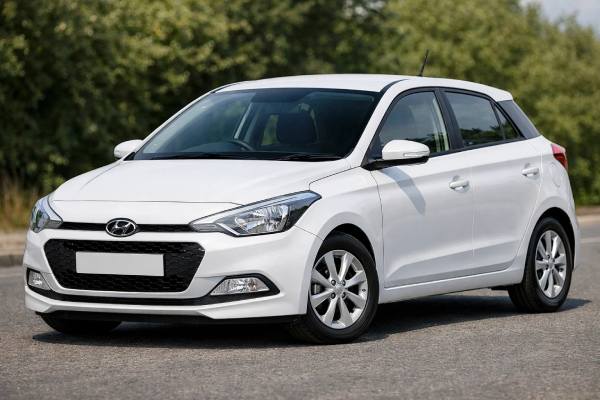
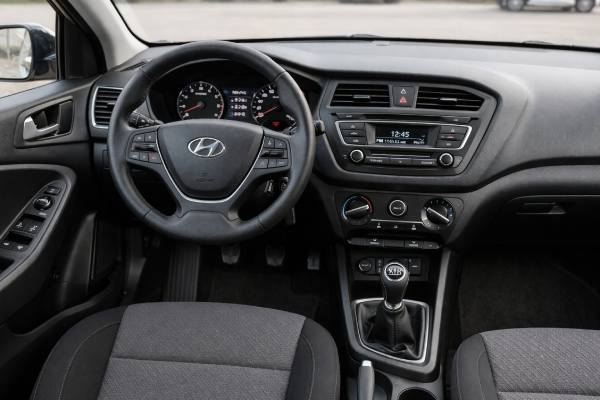
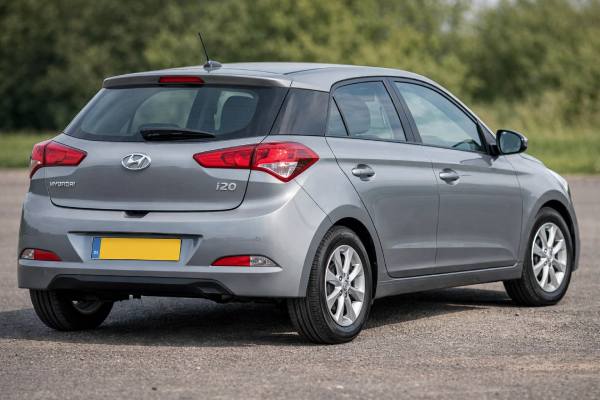
The Hyundai i20 GB with the 1.25-litre 84 hp petrol engine is one of the most sensible versions of Hyundai’s second-generation supermini. It does not rely on turbocharging, hybrid complexity, or big power claims. Instead, it offers a simple naturally aspirated four-cylinder engine, compact dimensions, good cabin space for the class, and lower ownership risk than many modern small turbo cars. That combination is a large part of its appeal on the used market. The GB-generation i20 also moved the model further upmarket than the old PB car, with a calmer cabin, more mature ride, and a stronger feeling of quality. In everyday terms, this is the version for buyers who want dependable, easy transport rather than excitement. The trade-off is obvious: performance is adequate rather than brisk, especially with passengers or at motorway speeds. But for buyers who prioritize low drama, predictable maintenance, and practical value, the 1.25 84 hp remains one of the smartest i20 GB choices.
Quick Specs and Notes
- The naturally aspirated 1.25 petrol is simpler and often lower-risk long term than many small turbo rivals.
- Cabin space, visibility, and ride comfort are strong points for a B-segment hatchback.
- Real-world ownership is usually straightforward when the car has clean service history and good tyres.
- Cheap neglected examples can need suspension, brakes, battery, clutch, and corrosion-related work.
- Under normal service, Hyundai scheduled engine oil and filter changes every 15,000 km or 12 months on many European service plans.
On this page
- Hyundai i20 GB Basics
- Hyundai i20 GB Figures
- Hyundai i20 GB Grades
- Reliability Patterns and Service Actions
- Maintenance Plan and Buyer’s Checklist
- Daily Driving and Real Efficiency
- How It Stacks Up Against Rivals
Hyundai i20 GB Basics
The GB-generation Hyundai i20 marked a clear step forward from the older PB model. Hyundai designed this version to feel more mature, more refined, and more competitive with the strongest European superminis. That matters because the 1.25-litre 84 hp petrol is not the headline-grabbing version of the range. It is the model that makes the most sense when the car is viewed as practical long-term transport. Instead of selling speed or novelty, it sells simplicity.
That simplicity is one of the main reasons buyers still look for this version. The 1.25 petrol is a naturally aspirated four-cylinder unit, so it avoids the added complexity of a turbocharger. In the used market, that can be a real advantage. There is less concern about turbo wear, boost leaks, intercooler plumbing, or the hard thermal life that some downsized turbo engines face in urban use. The result is a powertrain that may feel slower than newer small turbo rivals, but often feels easier to own.
The wider car also helps. Compared with the earlier i20, the GB model feels more substantial on the road and more spacious inside. The cabin packaging is strong for the class, especially in rear-seat space and overall driving position. Hyundai also improved refinement, ride quality, and the sense of solidity. For a buyer coming from an older city car, the i20 GB often feels like a larger and calmer hatchback than its compact size suggests.
The trade-off is performance. With 84 hp, the 1.25 is not underpowered for local driving, but it is not especially quick once the car is fully loaded or asked to work hard on fast roads. Buyers who want stronger overtaking pace will usually prefer the 1.0 turbo or a larger-engined rival. But buyers who want low-stress, low-risk petrol ownership may reach the opposite conclusion. In ordinary commuting, school runs, town driving, and moderate mixed-road use, the 1.25 usually has enough.
This version also benefits from Hyundai’s strong warranty reputation when new, which helped the model’s image. Of course, used buyers today should focus less on the original brochure promise and more on the condition of the actual car. A clean service record, sound tyres, healthy suspension, and a quiet engine matter more than trim name alone. That is the main theme of this car as a used purchase. The fundamentals are good. The question is whether the individual example still reflects them.
Hyundai i20 GB Figures
The Hyundai i20 GB 1.25 84 hp is mechanically straightforward, and that is one of its strengths. It uses a naturally aspirated petrol engine, front-wheel drive, and a conventional manual gearbox in most markets. Official Hyundai owner information for the 2015–2019 i20 family provides the maintenance framework, while period technical databases and Euro-market specification references consistently describe the 84 hp 1.25 as the higher-output version of the non-turbo base petrol engine.
| Powertrain and efficiency | Figure |
|---|---|
| Code | Kappa 1.25 MPI, commonly referenced as G4LA-family |
| Engine layout and cylinders | Inline 4, DOHC, 4 valves per cylinder |
| Bore × stroke | 71.0 × 78.8 mm (2.80 × 3.10 in) |
| Displacement | 1.2 L (1248 cc) |
| Induction | Naturally aspirated |
| Fuel system | Multi-point fuel injection |
| Compression ratio | About 10.5:1 |
| Max power | 84 hp (62 kW) @ 6000 rpm |
| Max torque | 122 Nm (90 lb-ft) @ 4000 rpm |
| Timing drive | Chain |
| Rated efficiency | Around 5.0–5.2 L/100 km combined depending on trim and tyre package |
| Real-world highway @ 120 km/h | Usually around 6.1–6.8 L/100 km |
| Transmission and driveline | Figure |
|---|---|
| Transmission | 5-speed manual on most 84 hp versions |
| Drive type | Front-wheel drive |
| Differential | Open |
| Chassis and dimensions | Figure |
|---|---|
| Suspension, front | MacPherson strut |
| Suspension, rear | Torsion beam |
| Steering | Electric power steering |
| Brakes | Front discs, rear drums on many trims |
| Wheels and tyres | Common sizes include 175/70 R14, 185/60 R15, and 195/55 R16 depending on trim |
| Length | 4035 mm (158.9 in) |
| Width | 1734 mm (68.3 in) |
| Height | About 1474 mm (58.0 in) |
| Wheelbase | 2570 mm (101.2 in) |
| Turning circle | About 10.2 m (33.5 ft) |
| Kerb weight | Roughly 1030–1085 kg depending on trim |
| GVWR | Market-dependent; verify by VIN plate |
| Fuel tank | 50 L (13.2 US gal / 11.0 UK gal) |
| Cargo volume | About 326 L seats up, about 1042 L seats folded |
| Performance and capability | Figure |
|---|---|
| 0–100 km/h | About 12.9–13.1 s |
| Top speed | About 170 km/h (106 mph) |
| Payload | Roughly 430–500 kg depending on version |
| Fluids and service capacities | Figure |
|---|---|
| Engine oil | 5W-30 or 5W-40 depending on market and climate; verify spec in official manual; about 3.6 L |
| Coolant | Hyundai-approved coolant mixture; verify exact capacity by VIN and market |
| Manual transmission fluid | Hyundai-approved manual gearbox oil; verify quantity by gearbox code |
| A/C refrigerant | Vehicle-label and market dependent |
| Key torque spec | Wheel nuts 88–107 Nm (65–79 lb-ft) |
| Safety and driver assistance | Figure |
|---|---|
| Euro NCAP | 4 stars in 2015 test configuration |
| Adult occupant | 85% |
| Child occupant | 73% |
| Vulnerable road users | 79% |
| Safety assist | 64% |
| ADAS suite | ESC, lane departure warning and speed-limit information availability varied by trim and safety pack; no broad modern Level 2 system |
These figures show the basic truth about the car. It is not fast, but it is not weak in the context of a simple B-segment hatchback. The dimensions are particularly important. The GB i20 is roomy for its class, and that helps explain why buyers often accept the modest power output. It feels like an honest, well-packaged small car rather than a stripped-down cheap one.
Hyundai i20 GB Grades
The i20 GB range was broader and more polished than the earlier PB lineup, and the 1.25 84 hp engine was often placed in the middle of the range rather than at the absolute bottom. That means equipment can vary quite a lot depending on market, but many 84 hp cars are sensibly specified and easy to recommend if their condition is right.
Typical lower to mid-range trims included essentials such as air conditioning, electric front windows, central locking, basic audio with USB and Bluetooth on many markets, and modest wheel sizes that helped ride comfort and tyre cost. Higher trims added alloy wheels, climate control, better infotainment, steering-wheel controls, cruise functions, rear parking sensors or camera in some markets, and a visibly better cabin finish. On the used market, these upgrades can be nice to have, but they matter less than overall condition.
Mechanical or functional differences are usually limited on this version. The 1.25 84 hp does not become a different car because of trim alone. What changes most is wheel and tyre choice, cabin equipment, and the availability of safety items. Smaller wheel packages often suit this model well because they improve comfort and lower tyre bills. That is useful, because the i20’s character is built around calm, low-cost daily use rather than sporty response.
Safety deserves attention because the GB-generation i20 moved forward here, but not in a completely simple way. Euro NCAP tested the Hyundai i20 in 2015 and awarded it four stars in the standard configuration then tested. The result reflected 85% adult occupant protection, 73% child occupant protection, 79% vulnerable road user protection, and 64% safety assist. Importantly, the score also reflected how safety equipment availability varied, which is why used buyers should be careful about assuming every car has the same driver-assistance features.
Depending on trim and market, the i20 GB could offer ESC, tyre-pressure monitoring, lane departure warning, and a speed-limit information function in certain equipment combinations. But this is not a modern ADAS-heavy small hatchback, especially in lower trims. Many cars will have a solid passive-safety shell and the basic expected electronic stability systems, but not much more. Buyers should confirm actual equipment on the car rather than relying on generic trim descriptions online.
Quick identifiers help when viewing cars. Smaller steel wheels often point to base or near-base trims, while alloy wheels, touchscreen infotainment, and upgraded cabin materials usually indicate higher grades. The 84 hp 1.25 can also be confused with the lower-power 75 hp 1.25 in some listings, so engine output should be checked through the VIN, registration details, or original sales paperwork. That matters more than trim badge accuracy, especially when sellers copy advertisements from other cars.
For most used buyers, the sweet spot is a modestly equipped 84 hp car with air conditioning, Bluetooth, sound service history, and sensible wheel size. That usually gives the best mix of ownership comfort and running-cost control.
Reliability Patterns and Service Actions
The i20 GB 1.25 84 hp generally has a good reputation because its powertrain is simple, but that should not be mistaken for immunity from age and neglect. The best way to understand its reliability is to separate core design from used-car reality. The design is straightforward and usually durable. The used-car reality depends on maintenance quality, climate, and how many low-cost ownership shortcuts the car has absorbed.
The most common issues are not dramatic. They are the sort of wear items and age faults typical of a small hatchback that has spent years as everyday transport.
- Common, low to medium cost: batteries, brake wear, front drop links, suspension bushes, tired dampers, alignment-related tyre wear, and older 12 V electrical issues.
- Common, medium cost: clutch wear, noisy wheel bearings, exhaust corrosion, thermostat issues, and air-conditioning weakness.
- Occasional, medium cost: coil or spark-plug related misfire, engine mount wear, steering-column or electric-assist concerns, and door-lock or window-switch faults.
- Occasional, high cost: neglected rust repair, repeated overheating damage, catalytic converter problems after long-term misfire use, and poor-quality accident repair.
- Rare but important: unresolved recall or campaign work, serious water ingress, or hidden crash history.
The engine itself is one of the strongest parts of the car when serviced properly. Its naturally aspirated layout means there is no turbocharger to worry about, and the chain-driven cam arrangement removes the cost of a routine timing-belt replacement. But a chain is not a lifetime permission slip to ignore maintenance. Dirty oil, very long change intervals, and repeated neglect can still accelerate wear in the tensioner and chain system. Persistent cold-start rattle or timing-correlation faults should always be investigated.
Cooling system health is another overlooked point. Small petrol hatchbacks are often run cheaply, and that can mean old coolant, tired hoses, and delayed thermostat replacement. Any sign of overheating history, unexplained coolant loss, or a seller who cannot explain the service record deserves caution. The same logic applies to ignition faults. A rough idle may be as simple as plugs or coils, but leaving misfires unresolved can damage the catalytic converter and increase repair costs.
Chassis condition matters more than many buyers expect. A tired i20 does not usually fail in one dramatic way. Instead, it slowly stops feeling good. Worn dampers, cheap tyres, weak alignment, brake vibration, and sloppy drop links can make an otherwise decent car feel much older than it is. That is why the best used examples often stand out immediately on a test drive.
As for service actions, Hyundai provides a recall and campaign lookup by VIN through its official recall portals in some markets, and buyers should use that rather than guesswork. It is worth verifying because even a generally solid model can have market-specific actions or software updates. The correct used-car approach is simple: ask for full history, check for smooth cold start and clean running, inspect underneath carefully, and verify campaign completion through dealer records or the official VIN-based system.
Maintenance Plan and Buyer’s Checklist
The i20 GB 1.25 84 hp is easy to live with when serviced on time, and that is a large part of its appeal. This is not a car that demands specialist ownership habits. It responds well to consistent, normal maintenance and tends to stay dependable if it receives it. The key is not to treat its simplicity as an excuse to defer small jobs.
A practical service plan should be built around routine oil changes, ignition maintenance, brake checks, and suspension condition. Many European owner schedules for this generation used a 15,000 km or 12-month oil and filter interval, which is a sensible baseline for a naturally aspirated small petrol engine. On older cars or cars with unknown history, staying conservative is wise.
| Item | Practical interval |
|---|---|
| Engine oil and filter | Every 15,000 km or 12 months |
| Engine air filter | Inspect every service and replace by condition |
| Cabin air filter | Inspect annually and usually replace every 12 months |
| Spark plugs | Replace by schedule for the plug type fitted; inspect sooner if idle quality changes |
| Coolant | Follow official schedule; replace by time and mileage, not just when a fault appears |
| Auxiliary belts | Inspect regularly with age and mileage |
| Brake fluid | Every 2 years is sensible |
| Brake pads, shoes, discs, drums | Inspect at every service |
| Manual gearbox oil | Check for leaks; renew on age and mileage if history is absent |
| Tyre rotation | Around every 12,000 km |
| Battery test | Annually from about year four onward |
| Timing chain | No routine replacement interval; inspect if noisy or if timing faults appear |
| Core fluids and values | Figure |
|---|---|
| Engine oil capacity | About 3.6 L |
| Wheel nut torque | 88–107 Nm |
| Fuel tank | 50 L |
| Engine type | Naturally aspirated MPI petrol |
The buyer’s checklist should focus on the issues that actually change ownership cost:
- Start the car cold and listen for chain rattle, uneven idle, or misfire.
- Check that the engine pulls cleanly and smoothly through the rev range.
- Inspect the clutch for slip and note whether the bite point feels too high.
- Drive over poor surfaces and listen for front-end knocks from links or bushes.
- Check tyre wear carefully for evidence of neglected alignment or cheap replacements.
- Confirm air conditioning works properly.
- Inspect for rust under the car, especially if the car lived in wet or salted regions.
- Check that all electrics, locks, windows, and dashboard functions behave normally.
- Verify service history, including oil, plugs, brakes, and coolant.
- Confirm recall and service-campaign status by VIN.
The best versions to seek are usually clean mid-spec cars with sensible wheel size, working air conditioning, and strong service records. The ones to avoid are the very cheapest examples with vague history, warning-light excuses, obvious suspension wear, or signs of overheating. Long-term durability is good when the car starts from a healthy baseline. That is why buying the right example matters more than chasing the lowest asking price.
Daily Driving and Real Efficiency
On the road, the i20 GB 1.25 84 hp feels exactly like a well-sorted, naturally aspirated supermini. It is smooth, predictable, easy to place, and rarely stressful. What it does not feel is especially fast. That balance is central to the ownership experience. Buyers who expect punchy turbo-style response may be disappointed. Buyers who want a calm, linear petrol engine often end up liking it.
In town, the 1.25 suits the car well. Throttle response is clean, clutch take-up is usually easy, and visibility is good. The engine does need revs more than a turbocharged rival when the road opens up, but around city and suburban speeds it generally feels adequate. The five-speed manual is not sporty, yet it matches the car’s everyday role. The steering is light, parking is easy, and the cabin layout is straightforward.
Ride comfort is one of the model’s best traits. Hyundai gave the GB i20 a more mature feel than many budget small cars, and that shows in the way it settles over ordinary roads. It is not plush, but it rides with more composure than some rivals on small wheels and regular tyres. That also helps motorway stability. The car feels more substantial than its size might suggest, which is one reason owners often keep them for a long time.
Noise levels are respectable for the class. The naturally aspirated petrol is smoother than the old small diesels, and the GB cabin is quieter than the older PB car. At higher motorway speeds, wind and road noise still become noticeable, and the engine has to work harder than larger or turbocharged alternatives. That is the main reason the car can feel merely adequate on long high-speed journeys, especially with passengers or luggage.
Performance figures reflect that reality. Around 13 seconds to 100 km/h is usable but not quick. In real terms, the car is more comfortable in ordinary mixed driving than in repeated hard overtaking. Planning ahead matters more here than in a stronger engine variant. That said, many owners are perfectly satisfied because the car’s broader behavior is so easygoing.
Fuel economy is one of the main ownership strengths. Official combined figures around the low-5 L/100 km range are achievable in favorable use, though most real drivers will see somewhat more. In mixed driving, healthy examples often return consumption in the upper-5 to mid-6 L/100 km range depending on traffic, tyres, route, and weather. At a steady 120 km/h highway pace, expect something closer to the low-to-high 6 L/100 km range. For a simple four-cylinder petrol hatchback, that is still respectable and easy to live with.
This all leads to a clear verdict behind the wheel. The i20 1.25 84 is not the fun choice in the range. It is the relaxed, low-drama choice, and for many buyers that is exactly the point.
How It Stacks Up Against Rivals
The Hyundai i20 GB 1.25 84 hp competes with many familiar small hatchbacks: Ford Fiesta 1.25, Volkswagen Polo 1.2, Skoda Fabia 1.2, Toyota Yaris 1.33, Kia Rio 1.25, and similar naturally aspirated B-segment cars from the mid-2010s. Each rival has a clear strength. The Fiesta often feels better to drive. The Polo and Fabia may feel more mature inside. The Yaris has Toyota’s reliability reputation. The Rio shares a similar ownership logic and often represents the closest real alternative.
The Hyundai’s case rests on balance. It offers generous cabin room for the class, a straightforward naturally aspirated petrol engine, respectable comfort, simple controls, and lower long-term complexity than many downsized turbo rivals. It is also usually not the most fashionable option in used classifieds, and that can help value. Buyers sometimes get a lot of sensible car for less money than an equivalent Polo or Yaris.
Compared with the lower-power 75 hp 1.25, the 84 hp version is the better all-rounder. It is still not quick, but it avoids some of the strained feeling that the weaker variant can show once speeds rise or the car is fully loaded. Compared with the 1.0 turbo models, the 1.25 84 gives away punch but can win on simplicity and long-term peace of mind.
The biggest weakness is obvious. If you regularly drive in fast traffic, carry four adults often, or want stronger overtaking confidence, this is not the ideal engine. Some rivals feel more eager, and Hyundai’s own turbo options solve part of that problem. But those alternatives also bring more complexity or cost. That is why the 1.25 84 still makes sense: it occupies the conservative middle ground.
Its other weakness is that age and neglect can dull the package more than buyers expect. A worn example can feel slow, noisy, and sloppy. A well-kept one feels honest, comfortable, and more substantial than many small hatchbacks in its price range. In used-car terms, that distinction matters more than badge loyalty.
Overall, the Hyundai i20 GB 1.25 84 hp is a strong choice for buyers who want a compact hatchback with simple engineering, practical space, and predictable ownership. Its strengths are comfort, room, mechanical simplicity, and low-drama day-to-day use. Its drawbacks are modest performance and the need to shop carefully. Buy a good one with proper history and sensible tyres, and it makes a very convincing used supermini.
References
- Hyundai Owners Manuals | Hyundai Motor UK 2026 (Owner’s Manual)
- Hyundai i20 – Euro NCAP Results 2015 2015 (Safety Rating)
- Hyundai Motor hints at the style of the All-New i20 2014 (Manufacturer release)
- Home | Hyundai Recalls & Service Campaigns 2026 (Recall Database)
- Check if a vehicle, part or accessory has been recalled 2026 (Recall Database)
Disclaimer
This article is for informational purposes only and is not a substitute for professional diagnosis or repair. Specifications, torque values, intervals, and procedures vary by VIN, market, equipment, and build date, so always verify them against the official service documentation and parts information for the exact vehicle.
If this guide was useful, please consider sharing it on Facebook, X, or another social platform to support our work.