
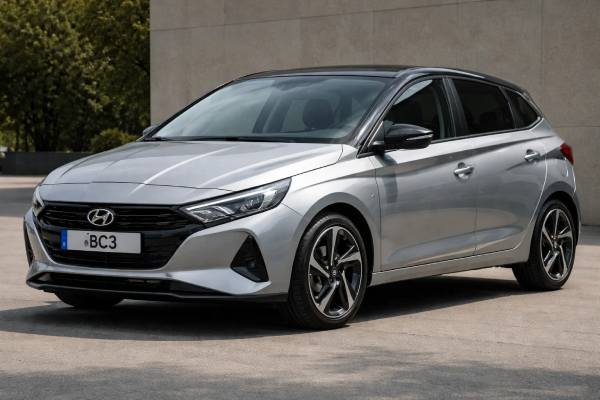
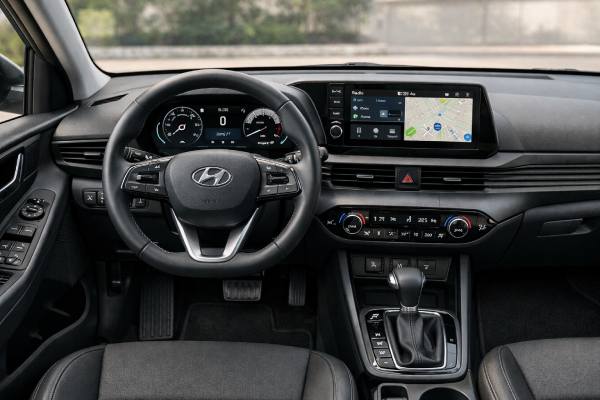
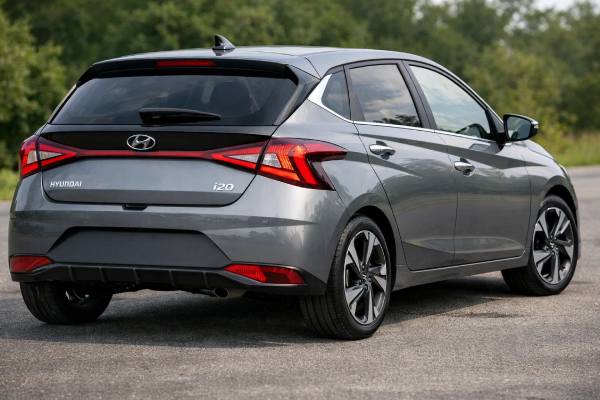
The Hyundai i20 BC3 1.0 T-GDi 48V 100 hp is the version that makes the modern i20 feel complete for many drivers. It keeps the BC3 generation’s sharper styling, larger cabin, and stronger in-car tech, then adds a mild-hybrid turbo-petrol powertrain that gives the car useful real-world torque without turning it into a hot hatch. The 48V system is there to support efficiency and smoother stop-start behavior, while the 1.0-litre three-cylinder turbo gives the car enough mid-range strength to feel easy in daily traffic. That matters, because the naturally aspirated petrol versions are simpler but noticeably slower when loaded or used on faster roads. As a used buy, this i20 works best for owners who want a modern small hatch with good safety equipment, low running costs, and enough performance to avoid feeling basic. The key is maintenance discipline. Buy a well-kept one, and it is a very rounded supermini.
Top Highlights
- The 100 hp turbo-petrol and 172 Nm torque make the BC3 i20 far easier on hills and motorways than the base petrol models.
- The 48V mild-hybrid system improves stop-start smoothness and helps efficiency without making the car feel like a full hybrid.
- Cabin space, a 352 L boot, and modern safety features make it one of the more practical small hatchbacks in its class.
- Service history matters more than mileage alone because turbocharged direct-injection engines are less forgiving of skipped oil changes.
- A sensible oil-and-filter service every 10,000–15,000 km or 12 months is a strong used-car routine.
Jump to sections
- Hyundai i20 BC3 mild-hybrid overview
- Hyundai i20 BC3 48V specifications
- Hyundai i20 BC3 trims and safety
- Hybrid-system issues and fixes
- Maintenance routine and buyer advice
- Driving feel and real economy
- BC3 i20 versus competitors
Hyundai i20 BC3 mild-hybrid overview
The BC3-generation i20 marked a bigger change than many buyers first noticed. Hyundai did not simply restyle the old GB car. It widened the body, stretched the wheelbase, increased luggage capacity, and gave the cabin a much more modern dashboard and digital layout. The result was a small hatchback that felt closer to the class leaders in everyday use, rather than a sensible outsider. In 1.0 T-GDi 48V 100 hp form, the BC3 also gained the powertrain many owners actually want: strong enough to feel relaxed, efficient enough to stay cheap to run, and advanced enough to look current without becoming overly complicated.
That 48V detail matters. This is not a full hybrid that can drive on electric power alone. It is a mild-hybrid setup that uses a belt-driven starter-generator and a 48V lithium-ion polymer battery to support smoother engine restarts, energy recuperation, and a small efficiency benefit in normal driving. It is less dramatic than a full hybrid system, but also lighter, simpler, and easier to integrate into a small hatchback. In real ownership, it mostly shows up through smoother stop-start behavior and slightly better efficiency than an otherwise similar non-hybrid turbo car.
The 1.0-litre turbo engine is the other half of the appeal. Hyundai gave it 100 PS and 172 Nm, which transforms the i20 from a strictly city-focused supermini into a car that copes well with fast roads, passengers, and day-to-day mixed driving. It is not fast in a hot-hatch sense, but it is strong enough that you stop thinking about performance all the time. That is important, because this car is bought to make everyday driving easier, not more dramatic.
There is also a useful ownership split within the 100 hp version. Hyundai offered the engine with a 6-speed intelligent manual transmission, known as iMT, as standard, and a 7-speed dual-clutch transmission as an option in many markets. The iMT feels more direct and slightly quicker. The DCT is easier in traffic but adds some extra mechanical complexity. That means used buyers should decide early whether they want simplicity and driver control or automatic convenience.
The BC3’s strength is that the rest of the car is good enough to support that powertrain. You get modern active safety features, a roomy rear seat for the class, a large 352-litre boot, and a cabin that feels far less cheap than earlier i20 generations. The downside is that this is a turbocharged direct-injection petrol with electrified support, so it needs better service discipline than an old 1.2 MPi car. That is the main trade. In return, you get a modern supermini that feels like it belongs on any road, not just in town.
Hyundai i20 BC3 48V specifications
For the BC3 i20 1.0 T-GDi 48V 100 hp, Hyundai’s 2020 and 2021 technical data provides a very clear factory picture. The engine is a 998 cc three-cylinder turbocharged direct-injection petrol with a 48V mild-hybrid system, front-wheel drive, and either a 6-speed intelligent manual or an optional 7-speed dual-clutch transmission. The 48V system uses a mild-hybrid starter-generator, a 48-volt lithium-ion polymer battery, and a 12 kW electrical support unit rather than a full traction motor.
Powertrain and efficiency
| Item | Figure |
|---|---|
| Code | 1.0 T-GDi 48V mild-hybrid family |
| Engine layout and cylinders | Inline-three, 3 cylinders, DOHC, 4 valves per cylinder |
| Bore × stroke | 71.0 × 84.0 mm (2.80 × 3.31 in) |
| Displacement | 1.0 L (998 cc) |
| Motor type | 48V mild-hybrid starter-generator |
| Motor count and axle | Single belt-driven unit, front-engine support system |
| System voltage | 48 V |
| Battery chemistry | Li-Ion Polymer |
| Battery power | 12 kW |
| Induction | Turbocharged |
| Fuel system | Gasoline direct injection |
| Compression ratio | 10.5:1 |
| Max power | 100 hp (73.5 kW) @ 4,500–6,000 rpm |
| Max torque | 172 Nm (127 lb-ft) @ 1,500–4,000 rpm |
| Timing drive | Chain |
| Rated efficiency | WLTP combined about 5.0–5.3 L/100 km depending on trim and gearbox |
| Real-world highway @ 120 km/h | Typically around 6.0–6.8 L/100 km |
Transmission and driveline
| Item | Figure |
|---|---|
| Transmission | 6-speed intelligent manual transmission (iMT) |
| Optional transmission | 7-speed dual-clutch transmission (7DCT) |
| Drive type | FWD |
| Differential | Open |
Chassis and dimensions
| Item | Figure |
|---|---|
| Suspension front / rear | MacPherson strut / Coupled Torsion Beam Axle |
| Steering | MDPS electric power steering |
| Steering ratio | 15.0 (DC), 13.1 (BLAC) |
| Steering lock-to-lock | 2.7 turns (UK spec) |
| Brakes | Front ventilated discs, rear solid discs |
| Most common tyre sizes | 205/55 R16, 225/45 R17 |
| Ground clearance | 140 mm (5.5 in) |
| Length / Width / Height | 4,040 / 1,775 / 1,450 mm |
| Wheelbase | 2,580 mm (101.6 in) |
| Turning circle | 5.2 m (17.1 ft) |
| Kerb weight | 1,090–1,200 kg iMT / 1,115–1,225 kg DCT |
| GVWR | 1,620 kg iMT / 1,650 kg DCT |
| Fuel tank | 40 L (10.6 US gal / 8.8 UK gal) |
| Cargo volume | 352 L seats up / 1,165 L seats down, VDA |
Performance and capability
| Item | Figure |
|---|---|
| 0–100 km/h / 0–62 mph | 10.4 s iMT / 11.4 s DCT |
| Top speed | 188 km/h (117 mph) iMT / 185 km/h (115 mph) DCT |
| Towing capacity | 1,110 kg braked / 450 kg unbraked |
| Payload | 420–530 kg iMT / 425–535 kg DCT |
Fluids and service-capacity guidance
| Item | Guidance |
|---|---|
| Engine oil | Use the exact Hyundai-approved turbo-petrol specification and viscosity listed for the VIN and market |
| Coolant | Use Hyundai-approved aluminium-safe coolant only |
| Transmission / ATF | iMT and DCT use different lubricants and service procedures |
| Differential / transfer case | Not applicable |
| A/C refrigerant | Verify by VIN and market specification before refill |
| Key torque specs | Always confirm wheel and service torque values in the VIN-specific service literature |
Safety and driver assistance
| Item | Figure |
|---|---|
| Euro NCAP | 4 stars |
| Adult occupant | 76% |
| Child occupant | 82% |
| Vulnerable road users | 76% |
| Safety assist | 67% |
| IIHS | Not applicable |
| ADAS suite | AEB / FCA, LKA, LDW, DAA, HBA standard in UK launch spec; BCW, LFA, and cyclist detection added on higher trim |
The numbers show why this version works so well. It is not just reasonably quick. It also combines good space efficiency, useful towing ability, and a fully modern supermini package.
Hyundai i20 BC3 trims and safety
The BC3 i20 1.0 T-GDi 48V 100 hp was never the stripped-out version of the range. Hyundai launched it in the UK with SE Connect, Premium, and Ultimate trims, which means even the lower end of the 100 hp mild-hybrid line already came with meaningful comfort, infotainment, and safety equipment. That is a real advantage on the used market, because it reduces the number of low-spec, low-appeal examples you need to sort through.
SE Connect already brought a strong core package. It included 16-inch alloys, rear parking sensors with reverse camera, cruise control with speed limiter, 8-inch touchscreen display audio, Apple CarPlay, Android Auto, Bluetooth, a 10.25-inch digital supervision cluster, automatic headlights, high beam assist, and manual air conditioning. On a modern small hatch, that is enough to make the car feel complete.
Premium added 17-inch alloys, LED headlamps, climate control, automatic wipers, power-folding heated mirrors, privacy glass, heated front seats, heated steering wheel, front armrest, and the larger 10.25-inch navigation screen with Bluelink live services. Ultimate then pushed further with keyless entry and start, Bose audio, blind-spot warning, lane follow assist, smarter front-collision assist with cyclist detection, a two-tone roof, and wireless phone charging. That means the used-market difference between a tidy SE Connect and a tidy Ultimate is not only cosmetic. The upper trims genuinely feel more modern.
Safety is one of the BC3’s most useful ownership strengths. Euro NCAP rated the i20 at four stars in 2021, and the details are worth understanding. The car’s adult and child protection figures were respectable, and its active-safety performance was much stronger than earlier i20 generations. Euro NCAP also noted that the i20 shares its safety package closely with the Bayon, so the Bayon-based test result applies to the i20 range. The rating remained valid through later review updates.
The standard safety package already covered the essentials well. Hyundai included front, side, and curtain airbags, AEB or FCA, lane keeping and lane departure warning, driver attention alert, ESC, hill-start assist, eCall, tyre-pressure monitoring, and vehicle stability management. On higher trims, the system list grew to include blind-spot collision warning, lane follow assist, and cyclist detection for the forward-collision system.
From a used-buyer perspective, that means two things. First, the BC3 i20 is a safer proposition than many older superminis even before you get to the higher trims. Second, calibration and repair quality matter more than they did on older generations. If the car has had front-end damage, the camera or radar-based systems may not behave as intended. On any BC3, but especially an Ultimate, you should test warning lights, parking aids, camera quality, lane systems, and all safety-related alerts carefully. A feature-rich small hatch is only a bargain when the features still work properly.
Hybrid-system issues and fixes
Public official sources do not point to one single dominant failure pattern for the BC3 i20 1.0 T-GDi 48V. That is actually reassuring. But it also means the smartest reliability guide is a system-based one rather than a legend-based one. This is a small turbo direct-injection engine with a 48V mild-hybrid support system, so the right inspection approach is to look for the weak points typical of that layout and judge how well the car was maintained.
Common and usually low-to-medium cost
- 12V battery weakness and electronic oddities: Start-stop hesitation, infotainment resets, warning messages, and odd sensor behavior often start with the conventional 12V battery rather than the 48V system itself.
- Tyres, brakes, and front suspension wear: The BC3 rides well when sorted, but cheap tyres, weak front drop links, tired bushes, and poor brake maintenance make it feel older very quickly.
- Sensor and camera cleanliness or alignment issues: AEB, lane systems, and high beam assist depend on the front camera and other inputs working properly. Windscreen replacement or poor accident repair can disturb them.
Occasional and medium cost
- Boost leaks and minor turbo intake faults: The 1.0 T-GDi can feel flat or hesitant if a hose, clamp, or intercooler joint starts leaking. These faults often mimic something more expensive than they really are.
- Ignition and plug-related drivability issues: Misfire, rough idle, or patchy acceleration can come from plugs or coils long before anything internal goes wrong.
- Cooling-system neglect: Turbo and hybrid-support components need a stable thermal environment. Old coolant, weak thermostats, or leaks should never be brushed aside.
Less common but more serious
- Timing-chain wear from poor oil history: This engine uses a chain, but poor oil changes, repeated short cold trips, and low oil level can still create chain-noise or timing-correlation issues.
- Turbocharger wear: Persistent whistle, smoke, or oily intake plumbing deserves proper diagnosis. Many cars are condemned too quickly, but some have clearly suffered from poor warm-up and shutdown habits.
- 48V mild-hybrid support faults: If the starter-generator, DC-DC support, or 48V battery system develops problems, symptoms may include erratic stop-start operation, warnings, or reduced system smoothness. Public sources do not suggest a major epidemic failure pattern, but this area should still be checked on a scan tool.
Transmission choice matters too. The iMT is simpler and usually more appealing to enthusiastic owners, but it still needs a healthy clutch and clean shift action. The 7DCT is convenient, but any shudder, poor take-up, delayed response, or warning messages deserve close attention.
Pre-purchase checks should focus on evidence rather than assumption:
- complete service history,
- correct oil servicing,
- proof of recall and service-campaign checks,
- recent tyres and brake work,
- and a fault-code scan that includes engine, transmission, and safety systems.
The good news is that a careful buyer can usually tell a lot from the way the car starts, idles, shifts, and brakes. The BC3 is not the kind of car that hides neglect gracefully.
Maintenance routine and buyer advice
The best way to own a BC3 i20 1.0 T-GDi 48V is to service it a little more cautiously than the bare minimum. That is not because the car is fragile. It is because small turbo petrol engines with mild-hybrid support reward good habits and lose smoothness faster when the basics are delayed. A conservative maintenance routine is the difference between a modern, easy i20 and a used one that feels tired before its time.
Practical maintenance schedule
| Item | Sensible interval |
|---|---|
| Engine oil and filter | Every 10,000–15,000 km or 12 months |
| Oil level check | Monthly and before long trips |
| Engine air filter | Inspect yearly, replace around 20,000–30,000 km in dusty or mixed use |
| Cabin air filter | Every 15,000–20,000 km or 12 months |
| Spark plugs | Around 40,000–60,000 km depending on plug type and running quality |
| Coolant | Replace if history is unclear, then follow the exact owner’s manual schedule |
| Brake fluid | Every 2 years |
| iMT gearbox oil | Inspect condition and leaks regularly; refresh around 60,000–100,000 km if ageing or shift quality worsens |
| 7DCT service | Follow the exact Hyundai procedure and fluid specification for the VIN |
| Auxiliary belt and hoses | Inspect at every annual service |
| Tyres and alignment | Check yearly and after any suspension work |
| 12V battery | Test yearly after year 4 |
| 48V system health | Check for warnings, correct ISG behavior, and scan for stored faults during service |
Useful fluid and service guidance
- Use only the Hyundai-approved engine oil specified for the 1.0 T-GDi 48V in your market.
- Do not guess refill quantities on engine, coolant, or transmission service.
- Keep the cooling system healthy. Mild-hybrid and turbo systems both depend on temperature control.
- Use only the correct DCT fluid and service method if the car is automatic.
- Wheel and tyre spec matters. Wrong-size or low-quality tyres can upset both refinement and calibration of some assistance systems.
Buyer’s guide
- Start the car from cold and listen for chain noise, unstable idle, or warning lights.
- Test iMT or DCT operation properly once warm, including gentle and brisk acceleration.
- Check that stop-start and hybrid support behave smoothly.
- Inspect tyre condition and brand consistency.
- Test all camera, lane, AEB, and parking-aid functions.
- Look closely for crash repair at the nose, front wings, bonnet edges, and windscreen area.
- Verify Hyundai recall and service-campaign status by VIN or registration.
The best years and trims depend on priorities. SE Connect is often the value choice. Premium adds the equipment many owners appreciate daily. Ultimate is the most desirable but also the most expensive to put right if several features are faulty. Long-term durability is good when the car is serviced properly, but a neglected turbo-mild-hybrid i20 is never the bargain it first appears to be.
Driving feel and real economy
The BC3 i20 1.0 T-GDi 48V 100 hp is one of those cars that feels better in daily use than the numbers alone suggest. The key reason is torque. With 172 Nm available from low revs, it does not need to be worked hard to feel responsive in town or on country roads. That is a big step up from the naturally aspirated 1.2, which is smoother in a simple way but clearly less flexible.
Around town, the i20 feels light, tidy, and easy to place. The steering is tuned for convenience more than deep feedback, but that suits the car’s mission. The mild-hybrid system mostly fades into the background, which is a good thing. It smooths start-stop behavior and helps the powertrain feel a little less abrupt in ordinary driving. The iMT version usually feels more direct and natural than the DCT, while the DCT makes crawling traffic easier at the cost of a little sharpness and performance.
On faster roads, the BC3’s platform maturity becomes obvious. Hyundai widened the car and stretched the wheelbase versus the old GB, and the result is a supermini that feels planted enough for genuine motorway use. Straight-line stability is good, and the chassis is more composed than many small hatchbacks that prioritize price above all else. It is not as playful as a Fiesta, but it is calm and confidence-inspiring.
NVH is respectable for the class. The three-cylinder engine makes itself known under load, but not in an unpleasant way. At motorway speed, tyre and wind noise matter more than the engine itself, and trim level plus tyre choice make a noticeable difference. A Premium or Ultimate on good tyres can feel more mature than many buyers expect.
Real-world economy is one of the car’s stronger points, but only if expectations stay realistic. In healthy trim, most owners can expect something like:
- around 6.8–7.8 L/100 km in heavy city use,
- around 6.0–6.8 L/100 km at a true 120 km/h cruise,
- and around 5.3–6.0 L/100 km in mixed driving.
That lines up reasonably well with Hyundai’s WLTP range of roughly 5.0–5.3 L/100 km once traffic, weather, tyres, and load are considered. Cold weather, repeated short trips, dragging brakes, and poor tyres can push those numbers higher quickly.
The performance figures help explain the verdict. The iMT version reaches 62 mph in 10.4 seconds and tops out at 117 mph, while the DCT takes 11.4 seconds and reaches 115 mph. Neither number is dramatic, but both are enough to make the car feel easy rather than basic. That is the sweet spot for a modern supermini. It is quick enough to remove frustration, efficient enough to stay sensible, and modern enough to feel current without becoming intimidating to own.
BC3 i20 versus competitors
The BC3 i20 1.0 T-GDi 48V 100 hp competes with a very familiar set of rivals: Ford Fiesta 1.0 EcoBoost, Volkswagen Polo 1.0 TSI, SEAT Ibiza 1.0 TSI, Skoda Fabia 1.0 TSI, Toyota Yaris hybrid at the efficient end, and Renault Clio TCe in similar power outputs. Each rival has a clear strength. The Fiesta is sharper to drive. The Polo often feels more grown-up and refined. The Fabia is especially practical. The Yaris can be more efficient in town. The Hyundai’s strength is balance.
Compared with a Fiesta, the i20 loses some steering feel and fun, but often wins on equipment and on the calm maturity of its overall package. Compared with a Polo, it may feel slightly less premium in certain details, yet it often undercuts it on price and still delivers a roomy, solid-feeling cabin. Compared with a Yaris hybrid, the Hyundai cannot match city fuel economy, but it feels more straightforward mechanically to drivers who still prefer a conventional petrol drivetrain.
Its most direct internal rival is the naturally aspirated 1.2 MPi BC3. That car is lower-risk and simpler. The 100 hp 48V car is better for anyone who does mixed driving and wants the i20 to feel comfortable beyond city limits. It is the version that turns the BC3 from a good small hatch into a genuinely rounded all-rounder.
Where does it fall short?
- It is not the sharpest driver’s car.
- The DCT version is convenient but less engaging and slightly slower.
- The turbo engine needs better service discipline than the naturally aspirated alternatives.
- Ultimate trim brings great equipment, but more to inspect and potentially more to fix.
Where does it excel?
- strong real-world flexibility,
- practical dimensions and boot space,
- good standard and optional safety technology,
- modern cabin tech,
- and a useful balance between performance and running costs.
Who should choose it? Drivers wanting a modern supermini with enough torque for daily ease, good safety equipment, and better practicality than its size suggests. Who should look elsewhere? Buyers who want the absolute lowest-maintenance petrol in the range, or drivers who place handling feel above everything else.
As a used car, the BC3 i20 1.0 T-GDi 48V 100 hp is one of the smartest versions of the modern i20. It offers a real upgrade in flexibility over the basic petrols without jumping to full performance-car territory. Find one with straight bodywork, good tyres, complete servicing, and no unresolved warning lights, and it becomes a genuinely strong long-term supermini.
References
- Hyundai announces All New i20 prices and specifications 2020 (Press Release)
- 20201001_Technical Data_i20_v2_clean – Hyundai Europe 2020 (Technical Guide)
- EuroNCAP | Hyundai i20 2021 (Safety Rating)
- Hyundai | UK | User Manuals 2026 (Owner’s Manual portal)
- Home | Hyundai Recalls & Service Campaigns 2026 (Recall Database)
Disclaimer
This article is for informational purposes only and is not a substitute for professional diagnosis or repair. Specifications, torque values, service intervals, procedures, fluids, and equipment can vary by VIN, market, trim, transmission, and model year, so always verify the exact details against the correct official service documentation for the specific vehicle.
If this guide helped you, please consider sharing it on Facebook, X, or another social platform to support our work.