
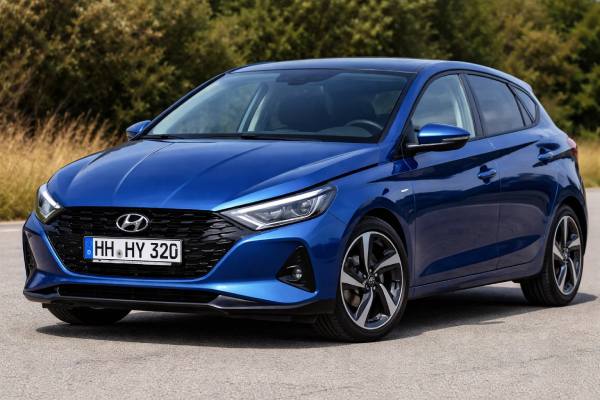
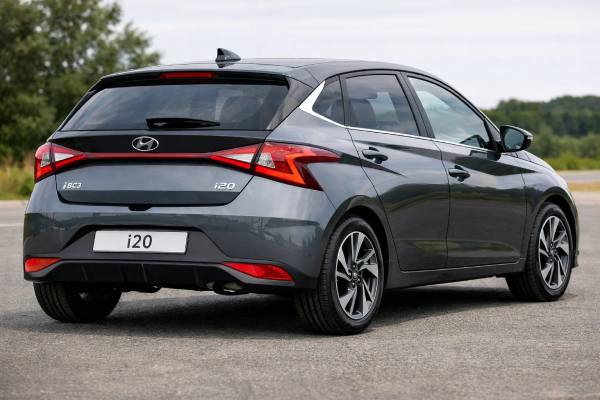
The Hyundai i20 N is the version that transforms the BC3-generation i20 from a smart supermini into a serious driver’s car. Its appeal is not only the 204 hp 1.6-litre turbo engine. Hyundai also gave it a standard mechanical limited-slip differential, a reinforced 6-speed manual gearbox, larger brakes, model-specific suspension tuning, and a body that feels far more focused than a normal small hatchback has any right to be. That makes it one of the most complete modern hot hatches for buyers who still want three pedals and real front-end bite. The ownership picture, however, is different from a basic i20. Tyres, brakes, clutch use, alignment, and oil quality matter far more here than they do on the 1.2 MPi or 1.0 T-GDi versions. Buy a good one and the i20 N feels special every time you drive it. Buy a neglected one and running costs rise quickly.
Quick Overview
- The standard mechanical limited-slip differential is one of the i20 N’s biggest real-world advantages.
- Strong brakes, a 6.2-second 0–100 km/h time, and sharp chassis tuning make it one of the most focused front-drive hot hatches in its class.
- The cabin remains practical enough for daily use, helped by a 352 L boot and five-door layout.
- Hard use, cheap tyres, skipped oil changes, or poor clutch treatment can make ownership expensive in a hurry.
- A sensible routine is engine oil and filter service every 10,000–15,000 km or 12 months, with shorter intervals for track or repeated hard use.
Contents and shortcuts
- Hyundai i20 N BC3 Character
- Hyundai i20 N BC3 Technical Core
- Hyundai i20 N BC3 Equipment and Safety
- Reliability Map and Service Actions
- Maintenance Rhythm and Buyer Checks
- Track Feel and Road Manners
- Rivals and Ownership Verdict
Hyundai i20 N BC3 Character
The i20 N exists because Hyundai decided the ordinary BC3 i20 platform had enough potential to support a genuine high-performance model rather than a cosmetic warm hatch. That decision shows everywhere. The car is not just a regular i20 with more power and stiffer springs. Hyundai built it around a clear idea: make a small front-wheel-drive hatch that feels playful, adjustable, and mechanically involved without losing daily usability.
That philosophy matters when you compare the i20 N with its own siblings. The standard BC3 i20 is practical, roomy, and light on its feet, but it is tuned for comfort and economy. The i20 N takes the same basic footprint and turns it into something much sharper. It gets unique front and rear suspension tuning, a stiffer body structure in key areas, stronger braking hardware, rev matching, launch control, and the N Corner Carving Differential, which is Hyundai’s mechanical limited-slip differential. Those details change the whole car. They are the reason the i20 N feels like a purpose-built performance hatch rather than an uprated trim package.
The engine helps, of course. A 1.6-litre turbocharged four-cylinder making 204 hp and 275 Nm, with temporary overboost to 304 Nm, is more than enough in a car this size. But the power output alone does not explain the appeal. Plenty of modern small cars make good numbers. The i20 N feels special because it combines those numbers with a manual gearbox, a very strong front axle, and a chassis that invites the driver to work with it. That is becoming rare.
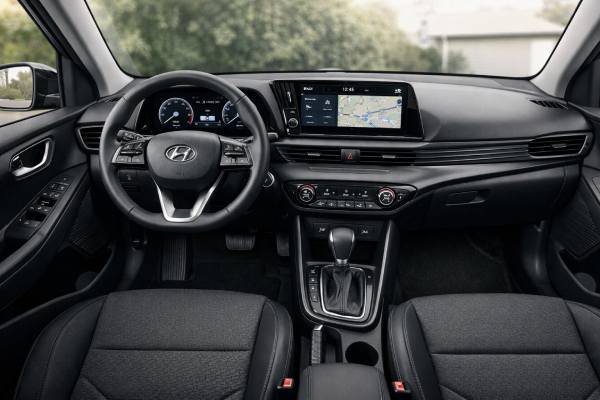
It is also a more usable car than its image might suggest. This is still a five-door hatchback with a decent rear seat, a useful boot, and a modern infotainment setup. The seats are supportive, but the car is not stripped out. The suspension is firm, but the car is not unbearable. That balance is why so many people rate it so highly. It can be a daily driver first and a back-road or track toy second, not the other way around.
The ownership logic follows from that dual role. Someone buying an i20 N should think like both a normal owner and an enthusiast. The normal owner sees a practical hatch with warranty-era Hyundai quality. The enthusiast sees a consumable-heavy machine that will reward good tyres, careful warm-up, fresh fluids, and proper alignment. The best examples are owned by people who understand both sides. That is what makes this model appealing and what makes the used market uneven. A cared-for i20 N can feel brilliant. A badly used one can feel tired surprisingly quickly.
Hyundai i20 N BC3 Technical Core
The i20 N’s technical layout is a big part of why it stands out. It uses Hyundai’s 1.6 T-GDi four-cylinder turbo engine, paired only with a reinforced 6-speed manual transmission. Unlike many modern rivals, there was no dual-clutch option. That decision tells you a lot about the car’s priorities. Hyundai wanted direct driver involvement, not only lap-time optimization.
| Powertrain and efficiency | Figure |
|---|---|
| Code | Gamma II 1.6 T-GDi |
| Engine layout and cylinders | Inline 4, DOHC, 16 valves |
| Displacement | 1.6 L (1,598 cc) |
| Bore × stroke | 75.6 × 89.0 mm (2.98 × 3.50 in) |
| Induction | Turbocharged |
| Fuel system | Gasoline direct injection |
| Compression ratio | 10.0:1 to 10.5:1 depending on official market sheet |
| Max power | 204 hp (150 kW) @ 5,500–6,000 rpm |
| Max torque | 275 Nm (203 lb-ft) @ 1,750–4,500 rpm |
| Overboost torque | 304 Nm (224 lb-ft) @ 2,000–4,000 rpm |
| Timing drive | Chain |
| Rated efficiency | About 6.9–7.0 L/100 km combined WLTP |
| Real-world highway @ 120 km/h | Often around 7.2–8.0 L/100 km, depending on tyres, traffic, weather, and exhaust mode use |
| Transmission and driveline | Figure |
|---|---|
| Transmission | 6-speed manual |
| Drive type | Front-wheel drive |
| Differential | Mechanical limited-slip differential |
| Chassis and dimensions | Figure |
|---|---|
| Suspension, front | MacPherson strut |
| Suspension, rear | Coupled torsion beam axle |
| Steering | Rack-and-pinion, motor-driven power steering |
| Steering ratio | 12.0 |
| Steering wheel turns lock-to-lock | 2.16 |
| Front brakes | Ventilated discs, 320 mm (12.6 in) |
| Rear brakes | Solid discs, 262 mm (10.3 in) |
| Tyres | 215/40 R18 |
| Wheels | 7.5J × 18 alloy |
| Ground clearance | 130 mm (5.1 in) |
| Length | 4,075 mm (160.4 in) |
| Width | 1,775 mm (69.9 in) |
| Height | 1,440 mm (56.7 in) |
| Wheelbase | 2,580 mm (101.6 in) |
| Kerb weight | 1,190–1,220 kg (2,624–2,690 lb) |
| GVWR | 1,650 kg (3,638 lb) |
| Fuel tank | 40 L (10.6 US gal / 8.8 UK gal) |
| Cargo volume | 352 L seats up, 1,165 L seats folded |
| Performance and capability | Figure |
|---|---|
| 0–100 km/h | 6.2 s |
| 0–62 mph | 6.2 s |
| 50–75 mph | 5.8 s |
| Top speed | 230 km/h (142 mph) |
| 62–0 mph braking distance | 33.9 m (111.2 ft) |
| Braked towing capacity | 1,110 kg (2,447 lb) |
| Unbraked towing capacity | 450 kg (992 lb) |
| Payload | 430–460 kg (948–1,014 lb) |
Those figures explain why the i20 N feels so serious. The power is strong, but the important part is how the rest of the car supports it. The brake package is large for the class, the steering is quick, the kerb weight stays impressively low by modern standards, and the limited-slip differential is standard rather than optional. That is a big reason why the i20 N has such a strong reputation with enthusiastic drivers.
Hyundai i20 N BC3 Equipment and Safety
The i20 N is easier to understand than many modern hot hatches because Hyundai kept the trim structure simple. In many markets there was effectively one core i20 N specification with a small number of options, rather than a confusing ladder of performance packs and cosmetic upgrades. That is good news for used buyers, because it means most cars already include the hardware that makes the model worth owning.
Performance equipment is the headline. The i20 N comes with the mechanical limited-slip differential, launch control, rev matching, N Grin Control System with multiple drive modes, variable exhaust behavior, and the larger brake system as standard. It also gets model-specific 18-inch wheels, sport seats, N steering wheel controls, and digital displays designed around the performance features. These items are not gimmicks. They are central to how the car behaves and why it feels so cohesive.
Cabin equipment is modern enough that the car still works well as a daily hatchback. The 10.25-inch digital cluster and touchscreen navigation setup were significant strengths when the car launched, and they still look current enough. Heated front seats, camera and parking aids, and smartphone integration make the i20 N far easier to live with than older stripped-back hot hatches. That matters because the car’s success comes partly from how little compromise it asks of its owner outside spirited driving.
Safety needs a more careful explanation. Euro NCAP does not publish a separate i20 N-specific crash rating. The closest official reference is the 2021 Hyundai i20 result, which Euro NCAP says can be applied from the closely related Bayon because the two share the same relevant safety equipment in the assessed form. That result is four stars, with 76% adult occupant protection, 82% child occupant protection, 76% vulnerable road user protection, and 67% safety assist. For a modern supermini, that is solid rather than class-leading.
The important point is that the i20 N itself was sold with a strong active-safety package in many markets. Hyundai SmartSense features often included Forward Collision-avoidance Assist, Lane Keep Assist or Lane Following Assist, Driver Attention Warning, Intelligent Speed Limit Assist, and other support systems. Equipment fitment still varies by region, but the i20 N was not a bare performance special with safety treated as an afterthought.
There is also a subtle benefit here for used buyers. Because Hyundai did not make the i20 N into a low-volume stripped homologation-type car, most examples are well equipped from the start. That makes condition and history more important than hunting for the “right” pack. The key identifiers are therefore simple: confirm it is a genuine i20 N by VIN and paperwork, verify the standard performance features are present and functioning, and make sure any optional items like audio upgrades or two-tone roof were not added later through unclear aftermarket work.
For a performance hatch, the i20 N’s equipment story is unusually clean. It offers almost everything that matters from the factory, and that makes used shopping easier than you might expect.
Reliability Map and Service Actions
The i20 N’s reliability profile is best understood as performance-car reliability rather than economy-car reliability. The engine and driveline are not widely known for one single catastrophic defect in official public sources, but this is still a hard-driven turbocharged hot hatch. That means the difference between a good and bad example is often usage history, not design reputation alone.
A useful way to break it down is by prevalence and likely cost:
- Common, low to medium cost: front tyres, brake pads, discs under harder use, batteries, and alignment issues after pothole strikes or enthusiastic driving.
- Common, medium cost: clutch wear from repeated launches or poor technique, heat-stressed tyres, and suspension knock from rough-road use.
- Occasional, medium to high cost: ignition-coil or plug-related misfire, boost-related hose or sensor issues, exhaust valve or actuator complaints, and cooling-system attention after repeated hard use.
- Occasional, high cost: neglected turbo issues, catalytic-converter damage after unresolved misfire, and differential or gearbox stress on abused cars.
- Rare but important: hidden track abuse, poor accident repairs, or unresolved recall and service-campaign items.
The strongest warning signs are not mysterious. A healthy i20 N should start cleanly, idle steadily, and pull hard and smoothly from low rpm to the top end. It should not hesitate under load, smell strongly of overheated clutch after normal driving, or show vague steering and uneven tyre wear. The best cars feel tight, eager, and precise. The weak ones feel noisy, over-tyred, or oddly loose for a modern hot hatch.
Tyres and brakes tell you a lot. Cheap tyres on an i20 N usually mean the owner did not understand or did not want to pay for the car properly. Uneven front tyre wear can point to alignment problems or repeated hard kerb contact. A lip on the front brake discs is normal with mileage, but excessive vibration or repeated heat cracking on a road car deserves caution.
Because the engine is turbocharged and direct-injected, oil quality matters more than on the 1.2 MPi models. A stamped service book is not enough by itself. Ideally, you want invoices showing the correct oil grade, good service timing, and proper spark-plug replacement. Cars used for short trips only can also be less attractive than cars used properly and warmed through, provided the service history supports that use.
As for service actions, official Hyundai recall and service-campaign portals should always be checked by VIN before purchase. Public recall databases also show that campaign status can vary by market and production window. The right approach is simple: do not assume. Verify.
The overall reliability verdict is positive if the car has been treated like the performance car it is. The i20 N is not fragile in the way some people fear, but it is absolutely not a car that tolerates neglect as casually as a base i20. It rewards good ownership and exposes lazy ownership quickly.
Maintenance Rhythm and Buyer Checks
The i20 N’s official maintenance framework is not extreme, but practical ownership usually benefits from a more conservative approach than the bare minimum. A high-output turbocharged engine, manual gearbox, limited-slip differential, and strong brake package are all happy to work hard. They are also happier when fluids and consumables are kept fresh.
A sensible real-world maintenance plan looks like this:
| Item | Practical interval |
|---|---|
| Engine oil and filter | Every 10,000–15,000 km or 12 months |
| Engine air filter | Inspect every service; replace earlier in dusty use |
| Cabin filter | Replace annually or by condition |
| Spark plugs | Replace by official schedule or sooner on hard-driven cars |
| Coolant | Replace by time and mileage schedule; inspect closely on tracked or heavily used cars |
| Brake fluid | Every 2 years minimum; annually is sensible with frequent spirited use |
| Brake pads and discs | Inspect at every service and before or after track use |
| Manual gearbox oil | Check for leaks and shift quality; refresh on age or harder use even if no strict routine interval is listed |
| Differential function | Monitor for noise, roughness, or unusual front-end behavior under load |
| Tyre rotation and alignment | Check regularly; alignment is critical after pothole impacts or heavy use |
| Battery | Test annually after about year four |
| Clutch | Inspect by feel and behavior; avoid repeated abusive launches |
| Core fluids and values | Figure |
|---|---|
| Engine oil | Use the correct Hyundai-approved full synthetic oil for the 1.6 T-GDi |
| Engine oil capacity | Verify by VIN and manual edition before service |
| Wheel nut torque | 88–107 Nm |
| Fuel tank | 40 L |
| Front brake discs | 320 mm |
| Rear brake discs | 262 mm |
The buyer’s checklist for an i20 N should be stricter than for a normal supermini:
- Start the engine cold and listen for rough idle, chain-area rattle that lingers, or ignition-related stumble.
- Confirm the engine pulls cleanly and strongly through the rev range.
- Check for excessive clutch smell after a normal drive.
- Inspect front tyres for brand quality, even wear, and recent date codes.
- Look at brake discs and pads for heat stress, deep lips, or poor-quality replacement parts.
- Drive the car over rough roads and listen for front-end looseness or knocks.
- Make sure the differential does not feel strange under tighter loaded corners.
- Verify all N modes, rev matching, camera, sensors, and infotainment functions work.
- Inspect for accident repair, especially around the front end, suspension pickup points, and rear quarter panels.
- Check recall and service-campaign status by VIN.
The best i20 N to buy is usually the one with the least drama in its history, not the one with the flashiest modifications. Mild, well-documented changes may be fine, but heavily altered cars usually carry more risk than benefit. Long term, this is a durable hot hatch when maintained properly. But it needs to be maintained like a hot hatch, not like a basic commuter.
Track Feel and Road Manners
This is where the i20 N earns its reputation. On the road, it feels much more focused than most cars its size. The engine is strong, but the defining trait is the front axle. The mechanical limited-slip differential gives the car real purchase out of corners, and the steering response is quick enough that the whole chassis feels eager to change direction.
The engine character suits the car well. There is useful low-end torque, but the best part is how willingly the engine keeps pulling higher up the rev range. It does not feel like a small turbo motor that signs off early. Combined with the manual gearbox and rev matching, the whole powertrain feels deliberately built around driver involvement. That matters more than the 204 hp number alone.
Ride quality is firm, as expected, but not hopeless on ordinary roads. The i20 N is much more controlled than a normal i20, and on poor surfaces that means you notice the extra tension in the suspension. Yet the damping is good enough that the car usually feels composed rather than crashy. That balance is one of the reasons owners rate it so highly. It can still be used daily without feeling like a track special that escaped onto the street.
Noise, vibration, and harshness are part of the experience rather than something Hyundai tried to erase. The engine note, exhaust behavior, and general road feel all tell you this is an N model. At motorway speed, tyre and road noise are more obvious than in a softer hatch, but the car never feels crude. It feels alert.
Performance is strong enough to feel serious without becoming unusable. A 6.2-second 0–100 km/h time and 230 km/h top speed place it comfortably in true hot-hatch territory. More importantly, its 50–75 mph pace is excellent for the class, and that gives the car real overtaking authority.
Real-world fuel economy depends entirely on how you use it. Gentle mixed driving can keep it within reason for a 204 hp hot hatch, but hard driving, repeated short trips, or heavy motorway speeds will move the numbers quickly. Expect something around the high-7 to low-9 L/100 km range in ordinary mixed use, with more if you use the car as intended. On track or hard mountain-road work, consumption rises sharply, and brake and tyre wear matter much more than fuel anyway.
The overall dynamic verdict is simple: the i20 N feels engineered for people who enjoy driving, not merely for people who enjoy owning something quick. That distinction is why it stands out.
Rivals and Ownership Verdict
The i20 N competes with cars such as the Ford Fiesta ST, Volkswagen Polo GTI, MINI Cooper S, and a few other compact performance hatchbacks that balance daily use with genuine pace. Each rival has a strong case. The Fiesta ST is famous for adjustability and playful handling. The Polo GTI often feels more mature and effortless. The MINI carries a stronger style identity. But the Hyundai’s mix of ingredients is unusual.
Its biggest strength is that it offers proper enthusiast hardware as standard. The manual gearbox, mechanical limited-slip differential, strong brakes, dedicated chassis tuning, and useful performance software are not separate options you have to chase through the used market. They are part of the car’s identity from day one. That makes the i20 N easier to recommend than some rivals that need a specific pack or option combination to be truly interesting.
Compared with the regular BC3 i20, the N version is obviously more expensive to run. Tyres are pricier, brakes wear faster, and enthusiastic owners can burn through consumables quickly. But within the hot-hatch segment, the i20 N still looks rational because it delivers so much driver appeal for the cost.
Its weaknesses are also easy to define. Rear-seat and cabin practicality are good, but not class-leading once you compare the car with softer mainstream hatchbacks. Ride quality is firm enough to matter if your roads are poor. Fuel economy is respectable for what it is, not impressive in absolute terms. And because the car invites spirited use, the used market contains examples that have worked harder than their mileage suggests.
That is why shopping discipline matters. A cared-for i20 N is one of the most convincing modern hot hatches you can buy. A poorly maintained one can become an expensive lesson in why service history matters more than styling or exhaust noise. Look for strong invoices, quality tyres, honest brakes, no evidence of cheap modifications, and a seller who clearly understands the car.
The final verdict is very favorable. The Hyundai i20 N BC3 1.6 T-GDi 204 hp is not just a fast i20. It is one of the best fully developed driver’s cars in its class because it combines real mechanical grip, manual-shift involvement, daily usability, and strong factory engineering. Its advantages are focus, engagement, and standard performance hardware. Its drawbacks are mostly the natural costs of owning a proper hot hatch. Buy the right one, and the i20 N is more than good value. It is genuinely memorable.
References
- Hyundai Owners manuals | Hyundai Motor UK 2026 (Owner’s Manual)
- Hyundai i20 N | Technical specifications 2021 (Technical Data)
- Hyundai announces all-new i20 N prices and specifications 2021 (Manufacturer release)
- EuroNCAP | Hyundai i20 2021 (Safety Rating)
- Home | Hyundai Recalls & Service Campaigns 2026 (Recall Database)
Disclaimer
This article is for informational purposes only and is not a substitute for professional diagnosis or repair. Specifications, torque values, service intervals, fluids, procedures, and fitted equipment vary by VIN, market, build date, and trim level, so always verify them against the official service documentation and parts information for the exact vehicle.
If this guide helped you, please consider sharing it on Facebook, X, or another social platform to support our work.