
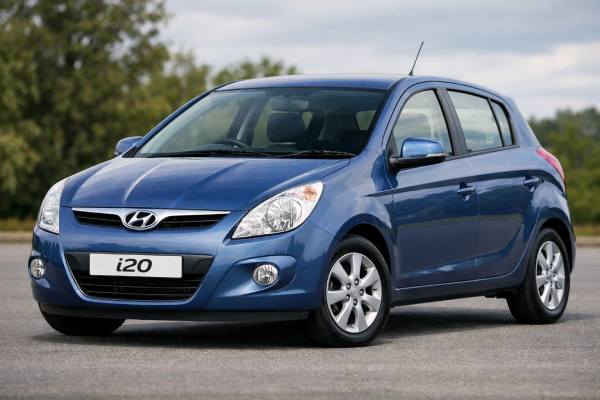
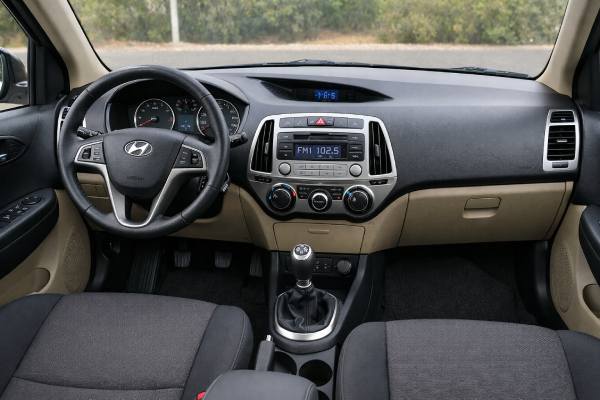
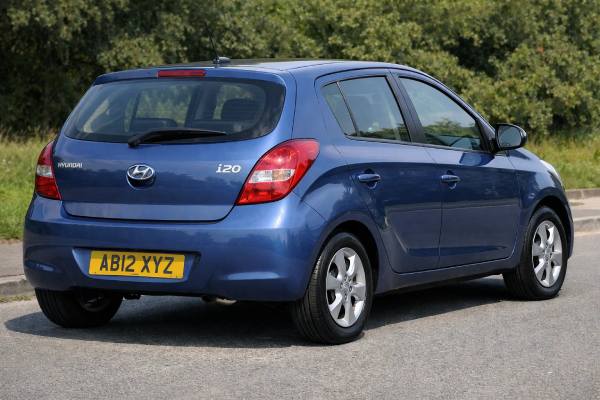
The Hyundai i20 PB with the 1.4-litre 100 hp petrol engine sits in a useful middle ground for used-car buyers. It is newer-feeling and roomier than many budget superminis from the same era, but it still uses simple hardware: a naturally aspirated four-cylinder engine, conventional front-wheel drive, and mostly straightforward electrical systems. That matters today, because a well-kept car can still be inexpensive to own without feeling stripped out or fragile. This version is not the fastest i20 and not the most exciting to drive, yet it remains one of the more sensible choices in the class if you want easy urban manners, decent highway ability, and good passenger space. The key is condition. Service history, cooling-system health, suspension wear, and evidence of recall or service-action completion matter more than trim level alone on a PB-era i20.
Owner Snapshot
- The 1.4 petrol is smooth, simple, and better suited to mixed driving than the smaller base engines.
- Cabin and boot space are strong for a car in this class, especially in five-door form.
- Euro NCAP safety performance was a real strength for its period.
- The automatic is usually durable, but it is old-school and can feel slow in traffic and on hills.
- A safe service baseline is engine oil and filter every 10,000 km or 12 months.
Guide contents
- Hyundai i20 PB Ownership Picture
- Hyundai i20 PB Specs and Data
- Hyundai i20 PB Trims and Safety
- Reliability, Issues and Service Actions
- Maintenance and Buying Advice
- Real-World Driving and Economy
- How the i20 PB Stacks Up
Hyundai i20 PB Ownership Picture
The PB-generation i20 was Hyundai’s move away from the bare-bones small hatchback formula. In 1.4 petrol form, it offered a more relaxed, more complete ownership experience than many 1.2-litre rivals. You got a four-cylinder engine with enough power for real highway use, a cabin that could handle adults in the back without feeling cramped, and equipment levels that were often generous for the class.
That is still the i20 PB’s main appeal today. It is not a hot hatch and it does not pretend to be one. Instead, it is a practical supermini with enough power to avoid feeling strained. Around town, the 1.4 feels smoother and less busy than smaller engines. On longer drives, it holds speed without the constant downshifts and noise you often get in entry-level hatchbacks from the same period.
The model also makes sense as a used buy because it is mostly conventional. There is no turbocharger, no direct injection, and no advanced driver-assistance hardware to complicate ownership. That lowers the risk profile, especially for buyers who want a second car, a first car, or a daily commuter with manageable repair bills.
The weak point is that age now matters more than badge or brochure. A neglected PB i20 can feel tired quickly. Worn front suspension parts, noisy wheel bearings, old ignition components, poor battery condition, and cooling-system neglect can undo the car’s natural strengths. Parts support is generally fine, but you must order carefully because equipment, trim, and transmission differed by market.
For most buyers, the best version is not necessarily the richest trim. A clean, rust-free five-door with a full service record is usually a smarter purchase than a high-spec car with patchy history. If you want the easiest life, focus on a car with documented fluid changes, healthy air conditioning, no dashboard warning lights, and a quiet front suspension over broken roads. In good condition, the i20 PB still feels like a grown-up small car rather than a cheap one.
Hyundai i20 PB Specs and Data
Because Hyundai sold the PB-era 1.4 petrol in several markets, exact figures can vary slightly by year, body style, and gearbox. The table below reflects the common 1.4-litre 100 hp naturally aspirated petrol setup and notes where market differences are normal.
Powertrain and efficiency
| Item | Hyundai i20 PB 1.4 petrol |
|---|---|
| Engine code | Commonly Gamma 1.4 family |
| Engine layout and cylinders | Inline-4, DOHC, 16-valve |
| Valves per cylinder | 4 |
| Bore × stroke | 77.0 × 75.0 mm (3.03 × 2.95 in) |
| Displacement | 1.4 L (1,396 cc) |
| Induction | Naturally aspirated |
| Fuel system | Multi-point fuel injection |
| Compression ratio | About 10.5:1 |
| Max power | 100 hp (73.6 kW) @ 5,500 rpm |
| Max torque | 137 Nm (101 lb-ft) @ 4,200 rpm |
| Timing drive | Chain |
| Rated fuel economy | Roughly 5.8-7.0 L/100 km depending on market and gearbox |
| Real-world highway at 120 km/h | About 6.4-7.4 L/100 km |
Transmission and driveline
| Item | Hyundai i20 PB 1.4 petrol |
|---|---|
| Transmission | 5-speed manual or 4-speed automatic, market-dependent |
| Drive type | FWD |
| Differential | Open |
Chassis and dimensions
| Item | Hyundai i20 PB 1.4 petrol |
|---|---|
| Suspension front | MacPherson strut, coil spring |
| Suspension rear | Coupled torsion beam axle |
| Steering | Motor-driven power steering |
| Brakes | Front disc, rear drum on most trims; some higher trims/markets differ |
| Popular tyre sizes | 175/70 R14 or 185/60 R15 |
| Ground clearance | About 150 mm (5.9 in), market-dependent |
| Length | 3,940 mm (155.1 in) |
| Width | 1,710 mm (67.3 in) |
| Height | 1,490-1,505 mm (58.7-59.3 in), by body style and market |
| Wheelbase | 2,525 mm (99.4 in) |
| Turning circle | About 10.4 m (34.1 ft) |
| Kerb weight | Roughly 1,035-1,110 kg (2,282-2,447 lb) |
| Fuel tank | 45 L (11.9 US gal / 9.9 UK gal) |
| Cargo volume | 295 L (10.4 ft³) seats up / about 1,060 L (37.4 ft³) seats folded |
Performance and service capacities
| Item | Hyundai i20 PB 1.4 petrol |
|---|---|
| 0-100 km/h (0-62 mph) | Roughly 11.5-13.0 s, depending on gearbox |
| Top speed | About 172-180 km/h (107-112 mph) |
| Engine oil | Hyundai commonly specifies 5W-30 meeting ACEA A3/B4 for older petrol applications |
| Engine oil capacity | Usually around 3.3-3.7 L (3.5-3.9 US qt), verify by VIN and sump type |
| Coolant | Premix long-life coolant; total capacity varies by market |
| Manual transmission fluid | GL-4 75W-85, roughly 1.9 L on published Hyundai 1.4-era small-car manuals |
| Automatic transmission fluid | Hyundai ATF MX4, 6.8 L total fill on published Hyundai India data |
| Brake fluid | DOT 3 or market-specified equivalent; system volume around 0.8 L |
| A/C refrigerant | Varies by market and compressor; verify on under-bonnet label |
Safety and driver assistance
| Item | Hyundai i20 PB |
|---|---|
| Euro NCAP | 5 stars |
| Adult occupant | 88% |
| Child occupant | 83% |
| Vulnerable road user / pedestrian | 64% |
| Safety assist | 86% |
| IIHS | Not applicable for this model line |
| Modern ADAS | Not offered |
| Era-correct safety tech | ABS, ESC, VSM, front/side/curtain airbags, ISOFIX, seatbelt reminders; parking aids on some trims |
Hyundai i20 PB Trims and Safety
Trim naming changed by country, which is why two PB i20s from the same year can look similar but have different equipment. In many right-hand-drive markets, buyers saw a simple walk-up from basic cloth-seat cars to better-equipped versions with alloys, fog lamps, steering-wheel audio controls, Bluetooth, climate features, and parking assistance. In India, the familiar names were Magna, Asta, and Asta (O). In parts of Europe, buyers were more likely to see Classic, Comfort, Style, or similar names.
Mechanically, the 1.4 petrol mattered more than the badge. It was the engine that gave the i20 a genuinely usable step up over the entry-level car. Depending on market, it could also be paired with the four-speed automatic, which became one of the easiest ways to identify the higher-output petrol model. Wheel sizes were usually 14 or 15 inches, and suspension hardware stayed conventional across most trims.
Quick identifiers worth checking on a used car include alloy-wheel design, rear parking sensors, mirror-mounted repeaters, leather-wrapped wheel and gear knob, fog lamps, and whether the car has the automatic selector instead of the manual lever. On some cars, the camera display is integrated into the mirror rather than the center of the dashboard, which is a useful sign of a better-equipped trim.
Safety was a real selling point for the PB i20. Euro NCAP gave the model five stars in 2009, with strong adult and child scores for its class and era. That does not make it equal to a much newer small car, but it does mean Hyundai was taking structure, restraint systems, and stability control seriously at a time when some low-cost rivals were still uneven in this area.
In real terms, the best-equipped PB cars usually offered:
- ABS and stability control
- front, side, and curtain airbags
- ISOFIX child-seat anchorage
- seatbelt reminders
- rear parking sensors or a rear camera on selected trims
What you do not get is modern ADAS. There is no factory autonomous emergency braking, adaptive cruise control, lane centering, blind-spot monitoring, or traffic-sign recognition. This is an old-school safety package built around structure, airbags, braking control, and driver visibility. That simplicity helps long-term ownership, but buyers should calibrate expectations accordingly.
Reliability, Issues and Service Actions
The 1.4 petrol PB i20 is usually a decent long-term car when it has been serviced on time. Its biggest strength is that the powertrain is mechanically simple. The bigger story is not catastrophic engine design, but age-related wear, minor electrical faults, and maintenance drift.
Common, low-to-medium cost issues
- Front suspension knocks: Usually worn drop links, bushes, or top mounts. Symptoms are clunks over sharp bumps and loose-feeling front-end response. The fix is normally straightforward.
- Ignition misfire or rough idle: Often caused by aging coils, plugs, or a dirty throttle body. The symptom pattern is cold-start stumble, hesitant pickup, or a flashing engine light under load.
- Battery and charging complaints: Weak batteries and corroded terminals can trigger false warning lights, poor starting, and erratic electronics.
- Door-lock and power-window glitches: These tend to be actuator, switch, or wiring-age problems rather than a major body-control failure.
Occasional, medium-cost issues
- Wheel bearing noise: A humming sound that rises with road speed is a common clue.
- Air-conditioning weakness: Compressor wear, leaks, or simply neglected refrigerant service can show up on older cars.
- Cooling-system age faults: Hose hardening, old coolant, sticky thermostats, and tired expansion-tank caps are worth taking seriously. Overheating is not a normal trait of the car, so any sign of it deserves immediate diagnosis.
- Automatic transmission neglect: The four-speed auto is usually sturdy, but harsh shifts, delayed engagement, or flare under load often point to old fluid or overdue inspection.
Rare but more serious
- Crash-damaged repairs hidden by tidy cosmetics
- Severe corrosion in poorly repaired cars or salted-climate examples
- Persistent loom faults after poor aftermarket audio or alarm installation
Service-action history matters. One official UK bulletin listed a non-code action for defective valves that could cause tyre-pressure loss on some i20s. Another covered gasoline cars built in a specific 2008-2009 window for possible wiring-loom damage. These are not reasons to avoid the model, but they are reasons to ask for proof of action completion and to run an official VIN check.
Pre-purchase, ask for:
- Full service history
- Evidence of recall or service-action completion
- Recent fluid work, especially engine oil and transmission fluid
- Suspension and brake invoices
- Cold-start video or inspection if buying remotely
A cared-for car is usually a safe bet. A cheap, poorly documented one can become expensive through small failures that stack up.
Maintenance and Buying Advice
For a PB i20 1.4 petrol, preventative maintenance is far more valuable than reactive repair. The car responds well to routine fluid service, ignition upkeep, and suspension checks. If you are maintaining one for the long term, a conservative schedule is better than stretching intervals.
Practical maintenance schedule
| Item | Practical interval |
|---|---|
| Engine oil and filter | Every 10,000 km or 12 months |
| Engine air filter | Every 30,000 km or sooner in dusty use |
| Cabin air filter | Every 20,000 km or 24 months |
| Spark plugs | Every 45,000-60,000 km depending on plug type |
| Coolant | Inspect regularly; replace around 100,000 km or 5 years, then more often |
| Brake fluid | Every 45,000 km or 3 years |
| Manual transmission oil | Inspect condition; refresh around 60,000-90,000 km if the car is a keeper |
| Automatic transmission fluid | Refresh around 60,000 km on older cars even if the book is vague |
| Serpentine belt and hoses | Inspect every service; replace on age or cracking |
| Brake pads and rotors | Inspect every service |
| Tyre rotation | Every 10,000 km |
| Wheel alignment | Check annually or after tyre wear appears |
| 12 V battery | Test yearly after year 4 |
| Timing chain | No fixed replacement interval; listen for rattle and watch for timing faults |
Useful fluid guidance
- Engine oil: 5W-30 meeting ACEA A3/B4 is the usual safe baseline for older petrol applications.
- Manual gearbox: GL-4 75W-85.
- Automatic: Hyundai-spec ATF.
- Coolant: correct premix long-life coolant, not universal mix-and-match fluid.
- Brake fluid: DOT 3 or market-approved equivalent.
Buyer’s checklist
- Check cold start, not just warm restart.
- Listen for suspension noise over broken pavement.
- Make sure the A/C cools quickly and evenly.
- Check for uneven tyre wear, which can point to alignment or suspension issues.
- Inspect the radiator area, coolant bottle, and hose joints for crusting or seepage.
- Test every window, mirror, lock, and dashboard switch.
- Look for accident-repair clues around the front slam panel, headlamp mounts, and rear floor.
Best buys
- Five-door cars with full history
- Stock cars without electrical modifications
- Cars with fresh tyres, brakes, and recent fluid service
Cars to avoid
- Any example with overheating history
- Cars with gearbox hesitation and no fluid history
- Rusty or poorly repaired crash cars
- Neglected low-mileage cars that sat unused for years
Long-term, the i20 PB 1.4 is better than average when it is maintained like a proper car, not a disposable hatchback.
Real-World Driving and Economy
The i20 PB 1.4 drives like a mature small hatch, not a sporty one. The steering is light and easy in town, visibility is decent, and the suspension tune usually leans toward comfort over sharpness. That makes it pleasant as a daily driver. Broken urban roads are handled better than some firmer rivals, though a worn front end will quickly make the car feel looser and noisier than it should.
On the highway, the 1.4 petrol is competent rather than brisk. It has enough power for steady overtakes and on-ramp work, but it likes revs more than low-end torque. In manual form, that is fine because you can choose the gear. In automatic form, the old four-speed is smooth enough but clearly dated. Kickdown can be slow, and the gearbox holds higher revs at speed than a newer six-speed or CVT-based rival.
NVH is acceptable for the class and age. Around town, the engine is smooth and quiet enough. At 100-120 km/h, wind and tyre noise become more noticeable, especially on coarse surfaces and with cheaper replacement tyres. That is normal for the class.
Real-world economy is usually reasonable:
- City: about 8.0-9.5 L/100 km
- Highway: about 5.8-6.8 L/100 km in manual form, often a little higher in the automatic
- Mixed driving: about 6.8-7.8 L/100 km
That translates to roughly:
- City: 24-29 mpg US / 30-35 mpg UK
- Highway: 35-41 mpg US / 42-49 mpg UK
- Mixed: 30-35 mpg US / 36-42 mpg UK
Cold weather, short trips, and heavy traffic can move those numbers noticeably upward. So can underinflated tyres and a dirty air filter.
Braking feel is usually predictable, with good pedal response when the system is healthy. The car’s real dynamic weakness is not grip but feedback. Compared with the best driver-focused superminis, it feels more neutral and less eager. For most owners, that is a fair trade because the i20’s easy manners are part of its appeal.
How the i20 PB Stacks Up
Against its main rivals, the PB i20 1.4 wins by being balanced. It does not dominate one category, but it avoids major weakness when you buy a good one.
Against a Ford Fiesta 1.4, the Hyundai is usually the roomier and calmer choice. The Ford is more fun on a twisty road and often has better steering feel. The Hyundai generally feels more family-friendly and less cramped.
Against a Toyota Yaris, the i20 often gives you more cabin and boot space for the money, plus a more substantial feel on the road. The Toyota usually answers with a stronger reputation for long-term low-drama ownership and very predictable resale.
Against a Kia Rio of the same period, the contest is close. The Hyundai and Kia share some core strengths: straightforward engineering, decent packaging, and sensible running costs. Choice often comes down to condition, trim, and local parts prices.
Against a Skoda Fabia or similar European supermini, the i20 often feels better equipped for the price and can be a smarter value buy. The Fabia may offer a broader engine range and a more solid cabin impression in some versions, but complexity can rise faster once turbo engines and DSG gearboxes enter the picture.
So who should buy the i20 PB 1.4?
- Buy it if you want a roomy, simple, comfortable small hatch with enough power for real-world use.
- Skip it if you want sharp handling, a modern automatic, or advanced driver-assistance systems.
- Prioritize condition over trim every time.
For many used-car shoppers, that is exactly why the i20 still makes sense. It is not flashy, but a sorted example delivers honest value.
References
- HYUNDAI I20 – Euro NCAP Results 2009 2009 (Safety Rating)
- Non Code Action Bulletin: 01 January 2008 – 31 December 2012 2012 (Service Action Bulletin)
- PMS Charts – All Hyundai Vehicle | Hyundai Motor India 2026 (Service Schedule)
- Hyundai Car Engine Oil | Hyundai India 2026 (Maintenance Guide)
- Automatic Transmission Oil – Vehicles | Hyundai Motor India 2026 (Maintenance Guide)
Disclaimer
This article is for informational purposes only and is not a substitute for professional diagnosis, repair, or model-specific technical advice. Specifications, torque values, maintenance intervals, fluids, and procedures can vary by VIN, market, transmission, trim, and equipment. Always verify parts, capacities, and repair steps against the official service documentation for the exact vehicle.
If this guide helped you, please consider sharing it on Facebook, X, or another social platform to support our work.