
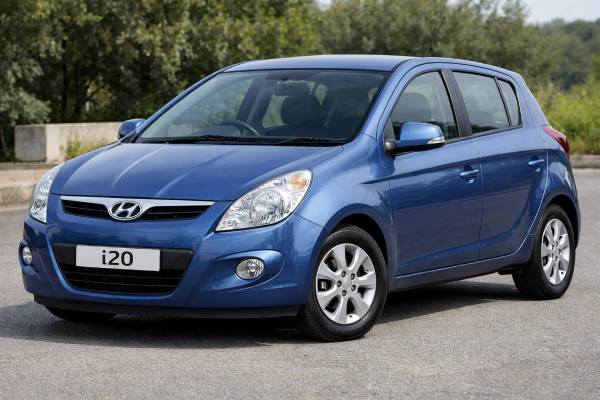
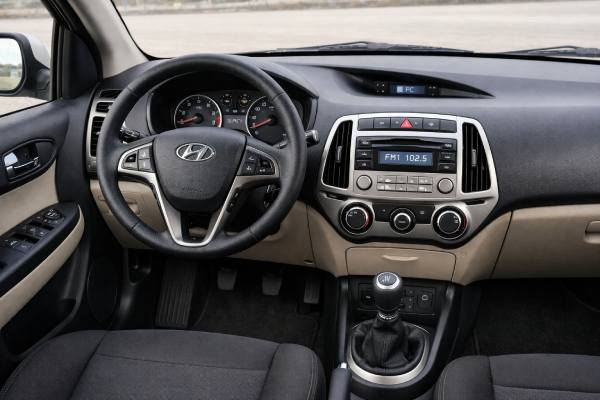
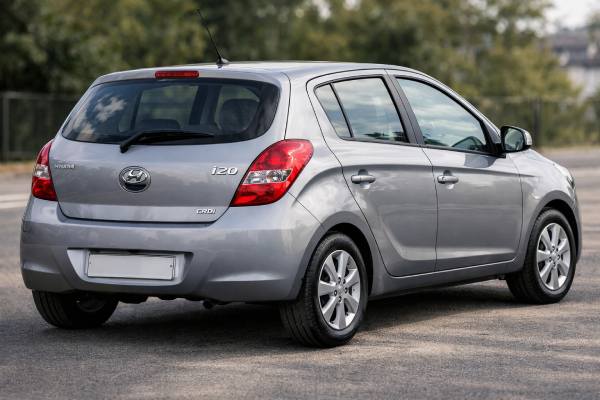
The Hyundai i20 PB with the 1.6-litre 126 hp petrol engine is one of those uncommon supermini versions that feels more interesting now than it did when new. It keeps the i20’s compact footprint, simple front-wheel-drive layout, and easy daily usability, but adds enough power to feel genuinely lively on open roads. The naturally aspirated Gamma engine also avoids the extra heat and hardware of a small turbo setup, which is good news for long-term ownership. Safety was another strong point for the PB era, with a five-star Euro NCAP result and a broad class-era equipment list. The catch is age. Today, the quality of maintenance matters far more than the brochure spec. A cared-for example can be a sturdy, honest hatchback. A neglected one can quickly need brakes, tyres, suspension work, fluids, and overdue electrical fixes.
Owner Snapshot
- Brisk for a PB i20, with 126 hp in a light supermini shell.
- Practical for its size, with a useful hatchback cabin and solid luggage space.
- Strong class-era safety, including a five-star Euro NCAP result and broad airbag coverage on many trims.
- Buy on condition, not mileage alone; age-related brake, suspension, tyre, and battery issues matter more than the badge.
- Normal-use oil service is every 15,000 km or 12 months, with shorter intervals for severe use.
Guide contents
- Hyundai i20 PB 1.6 character
- Hyundai i20 PB 1.6 data
- Hyundai i20 PB trims and safety
- Reliability and known faults
- Maintenance and buyer checks
- Driving and real-world pace
- i20 PB against rivals
Hyundai i20 PB 1.6 character
The PB-generation i20 was Hyundai’s answer to the practical European supermini formula: small on the outside, roomy enough for normal family use, easy to park, and priced to look sensible next to a Fiesta, Polo, Yaris, or Fabia. In standard 1.2 and 1.4 form it was mainly about value and equipment. In 1.6 petrol form, it became something slightly different. The car did not turn into a hot hatch, but it did become one of the more effortless versions of the PB. With 126 hp and 157 Nm, it had enough reserve for fast slip roads, easy overtakes, and motorway work that the smaller petrol engines often found harder.
That extra performance came without a turbocharger, dual-clutch gearbox, or exotic suspension. For many buyers, that is the real appeal today. The 1.6 uses a conventional naturally aspirated layout, a transverse inline-four, and front-wheel drive. The platform itself stays simple too: MacPherson struts up front, a torsion-beam rear axle, electrically assisted steering, and modest tyre sizes. This means parts supply is usually manageable, the car is not overly sensitive to wheel-and-tyre choices, and day-to-day service work is straightforward by modern standards.
It is also worth being precise about the model-year question. The PB generation broadly covers the 2008–2012 period in many markets, but the exact 1.6 petrol 126 hp combination was not offered everywhere for the whole run. Some later PB facelift brochures focus more heavily on 1.25 petrol and diesel engines. So, when buying, it is better to work from VIN, engine code, and registration details than to rely on a general “2008–2012 1.6” label.
From an ownership perspective, the i20 PB 1.6 sits in a useful middle ground. It is more relaxed than the small-engine i20s, but less demanding than a true performance hatch. It suits drivers who want a compact hatchback with honest pace, low complexity, and enough practicality for commuting, second-car family duty, or occasional longer trips. It is less about excitement than about ease. The best examples feel light, direct, and mechanically uncomplicated. The worst examples feel cheap, overdue for maintenance, and a bit loose in the body and chassis. That gap is why service history matters so much here.
The strongest reasons to choose one are simple: good power for the size, modest running complexity, decent safety for its age, and practical packaging. The biggest reasons to walk away are equally simple: patchy maintenance, poor crash repair, neglected brakes or suspension, and a seller who cannot prove routine fluid changes. This is a car that rewards careful buying far more than optimistic buying.
Hyundai i20 PB 1.6 data
For the 1.6 petrol PB, the clearest public specification trail points to the 5-door hatch with the G4FC 1.6-litre naturally aspirated engine and a 5-speed manual, while some markets also offered an automatic. Hyundai’s own PB service data confirms the platform dimensions, tyre sizes, fluids, and basic capacities, while later official brochure material helps with chassis layout, steering turns, cargo figures, and trim-era equipment context. One small complication is length: older PB material lists 3,940 mm, while some facelift brochures list 3,995 mm, so market and facelift differences should be checked by VIN.
Powertrain and efficiency
| Item | Figure |
|---|---|
| Engine code | G4FC |
| Layout | Front-transverse inline-four |
| Valvetrain | DOHC, 4 valves per cylinder |
| Bore × stroke | 77.0 × 85.4 mm (3.03 × 3.36 in) |
| Displacement | 1.6 L (1,591 cc) |
| Induction | Naturally aspirated |
| Fuel system | Multi-port manifold injection |
| Compression ratio | 10.5:1 |
| Max power | 126 hp (94 kW) @ 6,300 rpm |
| Max torque | 157 Nm (115.8 lb-ft) @ 4,200 rpm |
| Timing drive | No routine timing-belt interval is published in the visible gasoline schedule; inspect timing system condition rather than shopping for a belt service |
| Official economy | 6.1 L/100 km combined (38.6 US mpg / 46.3 UK mpg) |
| Official urban / extra-urban | 7.7 / 5.1 L/100 km |
| Real-world highway at 120 km/h | Typically around the mid-6 L/100 km range in a healthy car, depending on tyres, load, weather, and alignment |
Transmission, chassis, and running gear
| Item | Figure |
|---|---|
| Transmission | 5-speed manual most commonly catalogued; 1.6 automatic existed in some markets |
| Drive type | FWD |
| Differential | Open |
| Front suspension | MacPherson struts |
| Rear suspension | Coupled torsion beam axle |
| Steering | Electric rack-and-pinion; about 2.8 turns lock-to-lock |
| Front brakes | Ventilated discs |
| Rear brakes | Disc |
| Popular tyre size | 185/60 R15 |
| Other tyre sizes seen | 175/70 R14, 195/50 R16 |
| Ground clearance | 150 mm (5.91 in) |
Dimensions, weights, and capacities
| Item | Figure |
|---|---|
| Length | 3,940 mm (155.1 in), though some facelift brochures list 3,995 mm |
| Width | 1,710 mm (67.3 in) |
| Height | 1,490 mm (58.6 in) |
| Wheelbase | 2,525 mm (99.4 in) |
| Turning circle | 10.4 m (34.1 ft) diameter / 5.2 m radius |
| Kerb weight | About 1,119 kg (2,467 lb) for the 1.6 manual |
| GVWR | 1,565 kg (3,450 lb) |
| Payload | About 446 kg (983 lb) |
| Fuel tank | 45 L (11.89 US gal / 9.9 UK gal) |
| Cargo volume | 295 L seats up / 1,060 L seats down |
Performance and tow data
| Item | Figure |
|---|---|
| 0–100 km/h | 9.5 s |
| Top speed | 190 km/h (118 mph) |
| Towing capacity, unbraked | 450 kg (992 lb) |
| Towing capacity, braked | 900 kg (1,984 lb) manual; 1,100 kg (2,425 lb) automatic |
| Max nose weight | 50 kg (110 lb) |
Fluids and key service figures
| Item | Figure |
|---|---|
| Engine oil | API SL or above, ACEA A3 or above; SAE 0W-40, 5W-30, or 5W-40 in Europe |
| Engine oil capacity | 3.3 L (3.49 US qt) |
| Coolant | Ethylene-glycol based coolant for aluminum radiator |
| Coolant capacity | 5.8 L (6.1 US qt) |
| Manual transaxle fluid | API GL-4 SAE 75W-85 |
| Manual transaxle capacity | 1.9 L (2.01 US qt) |
| Automatic transaxle fluid | SP-III |
| Automatic transaxle capacity | 6.8 L (7.19 US qt) |
| Brake and clutch fluid | DOT 3 or DOT 4 |
| Brake and clutch fluid capacity | 0.7–0.8 L |
| A/C refrigerant | R-134a |
| Wheel nut torque | 88–107 Nm (65–79 lb-ft) |
The exact 1.6 safety-tech story is simple rather than modern. You get ABS, ESC on many variants, seatbelt reminders, ISOFIX, and a strong passive-safety baseline for the era. You do not get the modern driver-assistance layer buyers now expect, such as autonomous emergency braking, lane centering, or adaptive cruise.
Hyundai i20 PB trims and safety
Trim names varied by market, which matters with the PB i20 because Hyundai sold the car across Europe with different equipment groupings. In Irish brochure form, the broad split was Classic and Premium. In used-car listings elsewhere, the 1.6 petrol often appears in higher-grade trim names such as Style or similarly equipped upper-mid versions. The key point is that the 1.6 was usually not the bare-bones car in the range. Buyers should therefore expect a decent chance of finding alloy wheels, audio controls, trip computer, USB and AUX inputs, and sometimes rain-sensing wipers, automatic lights, Bluetooth, rear parking sensors, or a reversing camera.
In official brochure form, Classic already included front, side, and curtain airbags, seatbelt reminders front and rear, ABS, ESP, Vehicle Stability Management, rear ISOFIX anchorages, remote locking, MDPS steering, 60:40 split folding rear seat, front and rear fog lamps, and audio with USB and iPod connectivity. Premium added 15-inch alloy wheels, manual air conditioning, rain and light sensors, LED daytime running lights, Bluetooth voice control, rear camera display, rear parking assist, privacy glass, and leather trim on the wheel and gear knob. For a class car from this era, that is a strong safety-and-convenience base.
The PB’s safety reputation is better than many people remember. Euro NCAP’s 2009 test gave the i20 five stars under the then-new rating system, with 88 percent for adult occupant protection, 83 percent for child occupant protection, 64 percent for pedestrian protection, and 86 percent for safety assist. Hyundai’s own release highlighted six airbags, front pretensioners, active head restraints, ABS, ESC, and EBD as part of the package. That does not make the PB equivalent to a modern B-segment hatch, but it does make it one of the more reassuring older superminis to buy if crash structure still matters to you.
There are, however, a few nuances. Euro NCAP rated whiplash protection as marginal, and ESC availability could vary slightly by version, with the great majority of cars expected to have it as standard. That means you should not assume identical equipment across every 1.6 you see. Check the actual car for ESC, airbag count, rear ISOFIX points, and whether the original trim’s parking or camera equipment is still present and working. On older cars, broken mirror repeaters, dead parking sensors, failed camera displays, and worn steering-wheel controls are not unusual as simple age-related faults.
As for driver assistance, keep expectations realistic. The PB i20 belongs to the pre-ADAS mainstream. You will not find autonomous emergency braking, adaptive cruise, blind-spot monitoring, rear cross-traffic alert, lane keeping, or traffic-sign assist in the way modern buyers understand those systems. The real safety story is old-school but solid: a good crash structure for its class, lots of airbags, seatbelt reminders, ABS, and stability control. That is still a respectable mix for a small used hatchback, especially if the car has not been poorly repaired after an accident.
Reliability and known faults
The PB i20 1.6 does not have a strong public reputation for one single catastrophic weak point. The bigger truth is more ordinary: this is now an old supermini, so neglect hurts more than design drama. Official sources are far better for safety scores and recall lookups than for a detailed PB fault archive, so the guide below is best read as a practical ownership map based on the car’s design, service schedule, and the patterns buyers should inspect on an older naturally aspirated front-drive hatch. Always verify outstanding campaigns by VIN through Hyundai or an official recall checker.
Common and usually low-to-medium cost
- Tired front suspension links, bushes, and general chassis looseness: symptoms are front-end knocks, vague turn-in, and uneven tyre wear. Cause is usually age, poor roads, or cheap previous repairs. Remedy is straightforward: inspect drop links, bushes, ball joints, and alignment, then fit quality parts and fresh tyres.
- Brakes that feel older than the mileage suggests: long periods of standing can leave rear calipers or sliders sticky, while cheap discs and pads give poor pedal feel. Remedy is a full brake inspection, fluid renewal, and proper lubrication or replacement where needed.
- Battery and charging complaints: slow cranking, random warning lights, and intermittent electrical behaviour are often 12 V battery age rather than something exotic. On a car of this age, a battery and charging test should be basic due diligence.
Occasional and medium cost
- Ignition-side running faults: a slight misfire, rough idle, or hesitation under load often points to plugs, coil packs, or overdue servicing rather than deeper engine trouble.
- Cooling-system drift: slow warm-up, fluctuating temperature, or minor coolant loss should make you inspect hoses, thermostat behaviour, and signs of old coolant neglect.
- Clutch wear on town cars: the 1.6 is not highly stressed, but repeated urban driving or poor technique can leave a high bite point, slip under load, or gearbox harshness that is actually clutch related.
Less common but higher risk
- Timing-system wear from poor oil history: there is no routine timing-belt interval in the visible gasoline schedule, so buyers should focus on cold-start noises, timing-correlation faults, and evidence of irregular oil service rather than hunting for a missing belt invoice.
- Crash repair and corrosion: panel gaps, odd paint texture, cheap tyres on one corner, or a steering wheel that does not sit straight are bigger red flags than many buyers realize. A small car can be cheaply repaired badly.
Software and calibration issues are usually less central here than on newer cars, but that does not mean electronics are irrelevant. Check every window switch, remote key function, mirror adjustment, radio display, trip computer, A/C operation, and parking aid. Small faults are easy to ignore during a test drive, but they add up fast after purchase.
The smartest pre-purchase move is to ask for proof of routine servicing, brake-fluid changes, quality tyres, and recent consumables. A “cheap and tidy” i20 is rarely cheap if it needs tyres, dampers, brakes, battery, alignment, and a full fluid reset in the first month. A fully sorted one can be very usable for years.
Maintenance and buyer checks
For a PB i20 1.6, the official maintenance schedule is a solid starting point, but age now matters as much as mileage. Hyundai’s Europe gasoline schedule sets engine oil and filter at 15,000 km or 12 months in normal use, with shorter intervals under severe conditions. On a fifteen-plus-year-old small petrol hatch, conservative servicing is usually smarter than maximum-interval servicing, especially if the car does lots of short trips or has an incomplete history.
Practical service schedule
| Item | Sensible interval |
|---|---|
| Engine oil and filter | Every 15,000 km or 12 months normal use; severe use starts at 7,500 km or 6 months, then 10,000 km or 6 months |
| Engine air filter | Inspect every 15,000 km; replace more often in dust or around 30,000–40,000 km if dirty |
| Cabin air filter | Replace every 15,000 km or 12 months |
| Spark plugs | Roughly every 40,000 km is a safe planning point |
| Brake and clutch fluid | Officially first at 95,000 km or 60 months, then every 40,000 km or 24 months; on an unknown-history car, do it immediately |
| Manual transaxle fluid | Inspect on schedule; under severe use replace every 100,000 km |
| Automatic transaxle fluid | Inspect on schedule; under severe use replace every 45,000 km |
| Drive belts | Inspect regularly for cracks, noise, and tension issues |
| Suspension, steering, boots, and brakes | Inspect at every annual service |
| Tyre rotation and alignment | Check every 10,000–15,000 km or whenever wear becomes uneven |
| 12 V battery | Test annually after about year 4 |
| Coolant | Verify age and condition; if history is unclear, renew proactively |
That table is where the real buying advice begins. On a used example, the correct first service is often a “baseline service,” not just a routine service. That means engine oil, filters, brake-fluid check or change, coolant assessment, transmission-fluid check, tyre age check, alignment, and a close inspection of brakes, bushes, and boots. A seller saying “it just had a service” is not enough unless you know what was actually done.
Useful fluid and torque figures for decisions
- Engine oil: 3.3 L, ACEA A3/API SL or better, commonly 0W-40, 5W-30, or 5W-40 in Europe.
- Coolant: 5.8 L, ethylene-glycol based coolant for the aluminum radiator.
- Manual gearbox oil: 1.9 L of GL-4 75W-85.
- Automatic fluid: 6.8 L SP-III.
- Wheel nuts: 88–107 Nm.
Buyer’s checklist
- Start the engine from cold and listen for rattles, rough idle, or warning lights.
- Check that the steering tracks straight and returns cleanly.
- Inspect all four tyres for even wear and sensible matching brands.
- Look for brake vibration, rear-brake drag, or a soft pedal.
- Check coolant condition, oil level, and signs of leaks around the engine bay.
- Test every electrical feature, including A/C, locks, mirrors, audio, and parking aids.
- Verify recall or service-campaign status by VIN.
Long-term durability outlook? Good, provided the car has not been run on bargain-basement maintenance. The engine is not highly stressed, the platform is simple, and the car responds well to steady routine care. It is the classic case of an uncomplicated used hatchback that stays cheap only if you keep it properly serviced.
Driving and real-world pace
The i20 PB 1.6 is not a car that shouts about performance, but it does feel usefully stronger than most PB i20s. The extra 126 hp gives the car a lighter, easier character in daily traffic. You do not need to work it hard just to keep up, and that changes the whole feel of the car. Around town, throttle response is clean and predictable rather than punchy. On a country road, the 1.6 makes the car feel more grown-up because it needs fewer downshifts. On a motorway, it has enough reserve to sit at speed without sounding strained all the time. Officially, the common 5-speed manual version does 0–100 km/h in 9.5 seconds and reaches 190 km/h.
The chassis is tuned more for confidence than excitement. Straight-line stability is decent, and the PB’s simple suspension layout means the car usually feels honest about what the road is doing. Steering is light rather than talkative, which suits city use more than fast back-road driving. There is enough grip for normal brisk driving, but this is not the version to buy if you want a playful or truly sporty supermini. Braking feel depends heavily on tyre and brake condition. A fresh, well-maintained car feels stable and tidy. A neglected one can feel noisy, slightly nervous, and older than it is.
NVH is where you most feel the age of the design. At city speeds it is perfectly acceptable. At motorway pace, wind and tyre noise become more obvious than in newer B-segment hatchbacks. The engine itself is smoother than the smaller PB petrols when carrying speed, but the 5-speed gearing means it never fully disappears in the background.
Official fuel economy is respectable rather than miraculous: 7.7 L/100 km urban, 5.1 extra-urban, and 6.1 combined. In real use, a healthy car usually lands a little above that unless it spends its life on gentle secondary roads. Expect something like high-7s to low-8s in heavy urban work, mid-6s at a true 120 km/h cruise, and high-6s to low-7s in mixed driving. Cold weather, underinflated tyres, old spark plugs, and poor alignment will hurt those numbers quickly.
There is also a practical side to the performance verdict. The modest kerb weight helps the 1.6 feel more useful than the raw numbers suggest. That is why the car works so well as a commuter or light family hatch. It is quick enough to be easy, light enough to stay efficient, and simple enough not to feel fragile. It is not the most refined or the sharpest, but it is one of the more balanced “real-world” PB combinations if you want something small that does not feel underpowered.
i20 PB against rivals
Against period rivals, the i20 PB 1.6 makes its case through balance rather than brilliance in one headline area. A Ford Fiesta of the same era is usually the better driver’s car, with sharper steering and a more playful chassis. A Volkswagen Polo often feels more mature and better finished. A Toyota Yaris tends to win on sheer reputation for durability. A Mazda2 can feel lighter on its feet. But the Hyundai brings a strong mix of equipment, safety, simple engineering, and practical day-to-day pace that still looks sensible now.
Compared with smaller-engine rivals, the 1.6 PB i20 has a real advantage: you do not need to drive it flat out to make normal progress. That is a bigger benefit than it sounds. It makes overtaking easier, motorway merging calmer, and full-load driving less frustrating. Against more overtly sporty options, though, the Hyundai feels conventional. It is brisk, not exciting. If your priority is involvement, there are better choices. If your priority is low-drama ownership with enough power, the i20 makes more sense.
It also compares well on safety for its era. The five-star Euro NCAP result, good airbag coverage, and widespread ESC availability help it stand out against older bargain superminis that look cheap up front but feel thin on passive and active safety once you inspect the spec list.
Where it can fall behind today is refinement and used-market perception. Some rivals have stronger interiors, quieter high-speed manners, or a more premium image. The Hyundai’s cabin is functional rather than plush, and neglected examples feel especially ordinary. That means the buying decision is less about paper specs and more about the individual car in front of you.
So who should choose the PB i20 1.6? A buyer who wants:
- a compact hatchback that is easy to live with,
- stronger performance than the average entry-level supermini,
- simple naturally aspirated petrol ownership,
- good class-era safety,
- and straightforward service parts and workshop familiarity.
Who should look elsewhere?
- drivers wanting a truly sporty chassis,
- buyers wanting modern ADAS,
- people who do huge motorway mileage and care deeply about refinement,
- or anyone unwilling to spend time finding a carefully maintained example.
As a used buy, the Hyundai’s real rival is not another brochure figure. It is the best car you can find for the same money. If the i20 has the best history, the cleanest underside, the freshest tyres, and the most convincing maintenance record, it is often the wiser choice than a supposedly more desirable rival with a harder life.
References
- HYUNDAI I20 – Euro NCAP Results 2009 2009 (Safety Rating)
- HYUNDAI I20 LEADS ITS CLASS IN SAFETY WITH FIVE-STAR EURO NCAP RESULT 2009 (Manufacturer Release)
- One Car. Multiple Senses. 2012 (Brochure)
- Home | Hyundai Recalls & Service Campaigns 2026 (Recall Database)
- Check if a vehicle, part or accessory has been recalled – GOV.UK 2026 (Recall Database)
Disclaimer
This article is for informational purposes only and is not a substitute for professional diagnosis, repair, or official workshop guidance. Specifications, torque values, service intervals, procedures, and equipment can vary by VIN, market, model year, transmission, and trim, so always verify details against the correct official service documentation for the exact vehicle.
If this guide helped you, please consider sharing it on Facebook, X, or another social platform to support our work.