
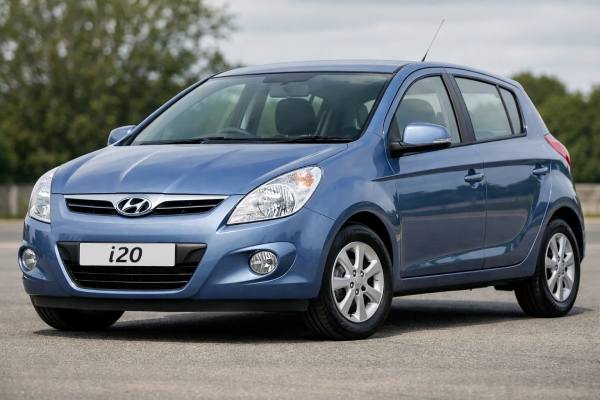
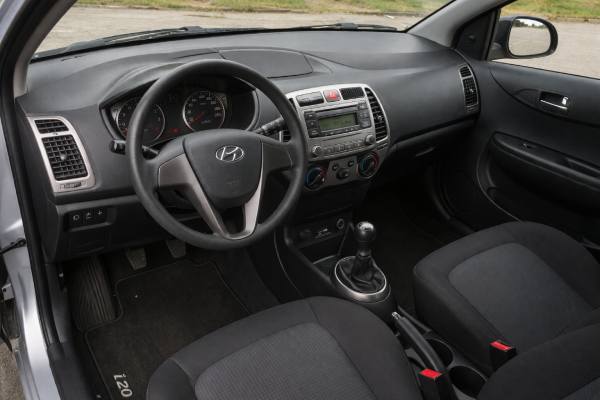

The first-generation Hyundai i20 PB with the 1.2-litre 78 hp petrol engine is a small hatchback that rewards a closer look. It combines a simple naturally aspirated Kappa four-cylinder engine with a five-speed manual gearbox, front-wheel drive, and a roomy supermini body built around a long 2,525 mm wheelbase for the class. That gives it three lasting strengths: straightforward running gear, useful interior packaging, and low day-to-day fuel use when driven sensibly. It is not quick, and age now matters more than brochure claims, but the basic recipe is solid. For buyers who want a practical used car rather than a status purchase, the PB i20 still has real appeal. This guide focuses on the 2008–2012 1.2 petrol in 78 hp form, covering specs, dimensions, performance, reliability, maintenance, safety, trims, and how it compares with its main rivals.
Owner Snapshot
- Roomy cabin for a small hatchback, helped by a 2,525 mm wheelbase and practical five-door packaging in most markets.
- The 1.2 Kappa petrol is a simple naturally aspirated four-cylinder with good official economy and fewer high-complexity parts than later small turbo rivals.
- Safety was a strong point for the era, with a five-star Euro NCAP result and broad airbag coverage on better-equipped versions.
- Most examples are now old enough that clutch wear, cooling-system leaks, tired brakes, and minor electrical faults matter more than headline spec.
- Under the European normal-service schedule, engine oil and filter are replaced every 15,000 km or 12 months.
Quick navigation
- Hyundai i20 PB in context
- Hyundai i20 PB specs and data
- Hyundai i20 PB trims and safety
- Reliability and known weak spots
- Maintenance and used buying guide
- Road manners and real performance
- How it compares with rivals
Hyundai i20 PB in context
The PB-generation i20 replaced the Getz and was aimed directly at the European B-segment. Hyundai positioned it around value, packaging, and safety rather than outright performance, and that is still the right way to understand this 1.2-litre model today. The 78 hp version uses a 1,248 cc Kappa petrol engine, a five-speed manual transmission, and front-wheel drive. Its design priorities were light weight, acceptable refinement, and low running costs.
What still makes the i20 easy to recommend in used form is not one standout feature, but the way the package comes together. The 2,525 mm wheelbase is generous for the class, and that helps explain why the cabin feels more adult-friendly than some rivals from the same era. Overall length is 3,940 mm, so the car stays easy to park, but it does not feel unusually cramped inside. That matters because many buyers looking at a 2008–2012 supermini want one car to handle commuting, school runs, and occasional motorway work without feeling tiny all the time.
The 1.2 petrol also sits in a sensible ownership sweet spot. It is not especially powerful, but it avoids turbochargers, direct injection complexity, and dual-clutch gearboxes. Official combined fuel consumption is around 5.2 L/100 km, and the 45-litre fuel tank gives it a useful touring range on paper. In the real world, that means the i20 works best for buyers who value predictability more than speed. It is happier as an honest everyday hatchback than as a keen driver’s car.
There are limits. The engine needs revs to feel lively, and modern traffic can expose the gap between “adequate” and “quick,” especially with passengers aboard. The biggest question today is condition, not concept. A well-kept i20 PB 1.2 can still be a sensible buy because the underlying engineering is simple and parts support remains broad, but a neglected one can easily absorb money in clutch work, brakes, cooling parts, tyres, and deferred servicing. The best way to judge it is as a durable, space-efficient small car with modest performance and strong ownership logic, provided the individual car has been looked after properly.
Hyundai i20 PB specs and data
The figures below focus on the Hyundai i20 PB with the 1.2-litre 78 hp petrol engine and five-speed manual transmission. Some values can vary slightly by trim, body style, tyre package, and market, so the most important buying rule is still to verify the exact car by VIN when ordering parts or checking registration details.
Powertrain and efficiency
| Item | Hyundai i20 (PB) 1.2 78 hp |
|---|---|
| Engine family | Kappa petrol inline-four |
| Engine layout and cylinders | Transverse I-4, DOHC, 4 valves per cylinder |
| Displacement | 1.248 L (1,248 cc) |
| Bore × stroke | 71.0 × 78.8 mm (2.80 × 3.10 in) |
| Induction | Naturally aspirated |
| Fuel system | Multi-point petrol injection |
| Compression ratio | 10.5:1 |
| Max power | 78 hp (57 kW) @ 6,000 rpm |
| Max torque | 119 Nm (87.8 lb-ft) @ 4,000 rpm |
| Timing drive | Chain |
| Rated efficiency | 5.2 L/100 km (45.2 mpg US / 54.3 mpg UK) |
| Real-world highway at 120 km/h | Typically higher than official combined figure; condition and tyre choice matter |
The engine’s main appeal is simplicity. It is light, efficient for its era, and avoids many of the expensive high-pressure fuel and boost-related failures that later downsized turbo petrol engines can bring.
Transmission, chassis, and dimensions
| Item | Hyundai i20 (PB) 1.2 78 hp |
|---|---|
| Transmission | 5-speed manual |
| Drive type | Front-wheel drive |
| Differential | Open |
| Front suspension | MacPherson strut |
| Rear suspension | Torsion beam |
| Steering | Electric power steering |
| Brakes | Front discs / rear drums on most versions |
| Wheels and tyres | 175/70 R14, 185/60 R15, or 195/50 R16 depending on trim |
| Length | 3,940 mm (155.1 in) |
| Width | 1,710 mm (67.3 in) |
| Height | 1,490 mm (58.7 in) |
| Wheelbase | 2,525 mm (99.4 in) |
| Turning circle | About 10.2 m (33.5 ft) |
| Kerb weight | About 1,045 kg (2,304 lb), market dependent |
| GVWR | About 1,515 kg (3,340 lb), market dependent |
| Fuel tank | 45 L (11.9 US gal / 9.9 UK gal) |
| Cargo volume | About 295 L seats up / around 1,045–1,060 L seats folded, source dependent |
The long wheelbase is one of the i20’s hidden strengths. It improves cabin usability and gives the car a slightly calmer feel than some shorter rivals over broken city roads.
Performance and service capacities
| Item | Hyundai i20 (PB) 1.2 78 hp |
|---|---|
| 0–100 km/h | About 12.9 s |
| Top speed | About 165 km/h (103 mph) |
| Towing capacity | About 850 kg braked / 450 kg unbraked, market dependent |
| Payload | About 470 kg, market dependent |
| Fluid or spec | Value |
|---|---|
| Engine oil | API SL or above, ACEA A3 or above; 3.6 L (3.8 US qt) |
| Coolant | Ethylene-glycol based coolant for aluminium radiator; 4.1 L (4.3 US qt) |
| Manual transaxle fluid | API GL-4 SAE 75W-85; 1.9 L (2.0 US qt) |
| Brake and clutch fluid | FMVSS116 DOT 3 or DOT 4 |
| Wheel lug nut torque | 88–107 Nm (65–79 lb-ft) |
Those service-capacity figures are especially useful when checking a used car, because they help you judge whether a seller’s maintenance claims sound believable.
Hyundai i20 PB trims and safety
Trim strategy on the PB i20 varies by country, so it is safest to think in terms of equipment level rather than one universal badge ladder. In many markets, early cars were offered in grades such as Classic, Comfort, and Style, while other regions used different names or package structures. That matters because two i20s with the same engine can differ quite a lot in wheel size, comfort features, cabin trim, and parking aids.
Entry trims are often the cheapest to run because they carry fewer electrical extras and usually smaller wheels. Mid-spec cars often make the best used buys because they add useful comfort items without piling on too much complexity. Higher trims may include larger alloys, upgraded audio, rear parking sensors, rain and light sensors, Bluetooth, or a reversing camera in some markets.
Mechanically, the 1.2 petrol is usually paired with the five-speed manual and front-wheel drive, so the biggest trim differences are functional rather than transformative. Wheel and tyre sizes can affect ride quality and road noise. Smaller wheels generally improve comfort and reduce tyre costs, which is a real advantage once the car reaches older age and budget ownership becomes the priority.
Safety was a genuine selling point for the i20 PB. The model earned a five-star Euro NCAP result in 2009, with strong child protection and respectable adult occupant performance for the period. Depending on trim and market, safety equipment could include front, side, and curtain airbags, ABS, EBD, electronic stability control, active front head restraints, ISOFIX anchorages, and seatbelt pretensioners. That gave the i20 a stronger safety story than some value-focused rivals at launch.
Where the PB i20 clearly shows its age is driver assistance. It belongs to a period before advanced ADAS became normal in small cars. You may find parking sensors or a rear camera on some better-equipped examples, but you should not expect autonomous emergency braking, lane centring, blind-spot monitoring, adaptive cruise control, or traffic-sign recognition. Buyers moving from a much newer car will notice that gap immediately. Even so, the i20 remains respectable as an older supermini because its passive safety fundamentals were strong for its class and era.
When buying, confirm equipment by VIN or by the car itself rather than assuming from the badge. Check whether it has stability control, count the airbags if trim literature is unclear, and look at wheel size, audio system, and parking hardware. A careful equipment check helps prevent disappointment and also explains why one used i20 may be priced noticeably above another.
Reliability and known weak spots
In broad terms, the i20 PB 1.2 is one of the safer used choices in its class because the mechanical package is simple. The naturally aspirated Kappa petrol avoids turbocharger stress, and the chain-driven valvetrain removes routine timing-belt replacement from the ownership picture. That said, these cars are now old enough that age-related faults matter more than brochure reliability claims. A car with full service history and sound cooling-system condition can be much better than a cheaper example with missing records.
Common low-to-medium-cost issues usually center on normal wear items and minor electrical faults. Clutch judder, high bite points, tired gearbox linkage feel, noisy steering-column components, weak batteries, electric window faults, and worn ignition keys all show up on older examples. None of these automatically make the car a poor buy, but several are annoying enough to matter in daily use and useful enough to raise during price negotiation.
Cooling and drivability faults deserve closer attention. Older small Hyundais can develop radiator seepage, ageing hoses, thermostat issues, or coolant loss from neglected maintenance. Rough running may come from ignition components, tired spark plugs, intake leaks, or general service neglect rather than a major internal engine defect. Fuel filters are generally treated as maintenance-free under normal service, but drivability symptoms such as hard starting, surging, or weak performance should still trigger inspection of the fuel supply side.
Timing-chain trouble is less common than routine wear, but it should not be ignored. Because the chain relies heavily on clean oil and regular servicing, poor maintenance history increases the risk of start-up rattle, tensioner wear, or timing-correlation faults. The remedy is not to panic at every brief noise, but to take persistent cold-start rattle or engine-management faults seriously and inspect before damage becomes expensive.
Chassis and body condition matter too. Worn dampers, tired suspension bushes, uneven brake wear, and corroded exhaust sections are normal age-related findings. Rust is not usually the first headline with the i20 PB, but neglected cars can show corrosion around wheel arches, underbody seams, fasteners, and lower body edges. Cars used in wet or salted climates deserve an especially thorough underside inspection.
Recalls and service actions vary by market, so always verify them by VIN through an official recall database or Hyundai campaign check. Ask for dealer records, not just verbal reassurance. For a used buyer, the best pre-purchase request is simple: full service history, proof of recall completion, evidence of regular fluid changes, and a cold-start inspection before the seller has warmed the car up.
Maintenance and used buying guide
For routine ownership, the PB i20 1.2 is refreshingly conventional. Under a normal-service schedule, engine oil and filter are due every 15,000 km or 12 months. The engine air filter is inspected more often and typically replaced every 35,000 km or 24 months. Spark plugs are also usually listed at 35,000 km or 24 months, while the cabin filter is effectively a yearly service item. Coolant gets its first replacement at 95,000 km or 60 months and then every 40,000 km or 24 months after that. Brake and clutch fluid is effectively a two-year service item.
Severe use changes the picture. Short trips, repeated cold starts, dusty roads, city traffic, long idling, mountainous routes, and extreme temperatures all justify earlier oil changes than the standard schedule. For many surviving i20s used mainly in town, that severe-service logic is more realistic than the published headline interval.
Practical maintenance schedule
| Item | Normal service guide |
|---|---|
| Engine oil and filter | Every 15,000 km or 12 months |
| Drive belts | Inspect every 15,000 km or 12 months |
| Engine air filter | Inspect at 15,000 km / 12 months; replace at 35,000 km / 24 months |
| Cabin filter | Replace every 15,000 km or 12 months |
| Spark plugs | Replace every 35,000 km or 24 months |
| Coolant | First at 95,000 km or 60 months, then every 40,000 km or 24 months |
| Brake and clutch fluid | Replace every 24 months |
| Manual gearbox oil | Inspect; replace as needed by condition or repair work |
| Tyres | Rotate and inspect regularly; align if uneven wear or pull appears |
| 12 V battery | Test yearly once age passes about 4 years |
Even though the Kappa engine uses a timing chain, buyers should still treat cold-start rattle, poor oil history, or cam/crank timing faults seriously. The chain is not a routine service item, but it is not immortal either. The same logic applies to the clutch: there is no reason to replace it on age alone, yet a heavy pedal, shudder, slipping under load, or a very high engagement point usually means money is coming.
Used-buyer checklist
- Start the engine from cold and listen for prolonged chain rattle or rough idle.
- Check for coolant smell, stained hose joints, radiator seepage, or signs of past overheating.
- Make sure the clutch engages smoothly and the gearbox shifts cleanly when warm.
- Inspect tyres for uneven wear that may suggest alignment or suspension issues.
- Check rear brakes, front discs, and handbrake operation carefully.
- Look for rust around arches, lower doors, floor edges, and underbody seams.
- Test all windows, locks, heater controls, radio functions, and warning lights.
- Verify service history, recall completion, and recent fluid changes.
Useful figures for ownership decisions include 3.6 L engine-oil capacity, 4.1 L coolant capacity, 1.9 L manual-transaxle capacity, and 88–107 Nm wheel-lug torque. In long-term durability terms, the i20 PB 1.2 is a sound car when serviced regularly and repaired promptly. Neglect, rather than design complexity, is the main thing that turns it into a money pit.
Road manners and real performance
On the road, the i20 PB 1.2 feels like a good mainstream supermini from the late 2000s: light, easy, and predictable. It is tuned more for comfort and confidence than excitement. The steering is light in town, visibility is decent, and the compact footprint makes it very easy to place. The long wheelbase helps it feel calmer on rough urban surfaces than some shorter rivals, even if it never becomes sporty.
The engine is smooth enough for daily use, but it is not a torque-rich unit. Peak torque arrives at 4,000 rpm and power at 6,000 rpm, so the car responds best when you use the gearbox and let the engine rev. That is especially noticeable on steep roads, slip roads, or when the car is loaded with passengers. The official 0–100 km/h time of about 12.9 seconds and top speed of around 165 km/h tell the story well: it is adequate, not brisk.
In real driving, the i20 feels most comfortable in city and suburban use. It pulls cleanly enough at low speeds, but it does not have much reserve shove for quick overtakes. On faster roads, a downshift is usually needed to keep progress smooth. That is not a flaw so much as a reminder of what this engine was designed to do: deliver affordable, modest-power transport without mechanical drama.
Efficiency is one of the better parts of the ownership experience. In gentle mixed use, figures near the official 5.2 L/100 km are achievable, though most older cars in real conditions will use more. Expect motorway consumption at 100–120 km/h to rise noticeably, especially with larger wheels, tired tyres, strong headwinds, or heavy loads. Urban short-trip use can also push fuel use up if the car spends a lot of time warming up.
Ride comfort is acceptable rather than plush. On smaller wheels, the i20 usually rides better and feels quieter. On larger alloy packages, road noise and sharper impacts can be more obvious. Braking feel is straightforward, and the chassis stays safe and tidy rather than playful. Overall, the PB i20 1.2 drives like a sensible tool: it does not flatter an enthusiastic driver, but it is very easy to live with every day.
How it compares with rivals
Against its period rivals, the Hyundai i20 PB 1.2 wins by being well-rounded rather than class-leading in one narrow area. Compared with a Ford Fiesta 1.25 or 1.4 from the same era, the Hyundai usually feels less sharp to drive, but it counters with a more comfort-first setup and a cabin that can feel roomier in daily use. Compared with a Toyota Yaris 1.33, the i20 often gives you more equipment for the money, though the Toyota tends to feel a little more polished and usually enjoys a stronger reputation for durability.
Against a Skoda Fabia or Volkswagen Polo of the same period, the Hyundai can look less premium inside, but it often makes a better value case on purchase price and standard safety hardware. A Honda Jazz may beat it for interior flexibility, especially if rear-seat cleverness matters, but the i20 is usually simpler to buy cheaply and easy to understand mechanically.
The strongest reason to choose the i20 is ownership logic. You get a simple naturally aspirated petrol engine, decent space, useful crash performance for the era, and broad parts availability. That makes it appealing for first-time drivers, second-car duty, or buyers who want a modest hatchback without turbo or dual-clutch complications.
The biggest reasons to choose a rival are easy to define too. Pick the Fiesta if you value steering feel and chassis balance. Pick the Yaris if you want a slightly more polished overall experience and stronger resale confidence. Pick the Jazz if cabin flexibility matters most. Pick the Polo or Fabia if you place more value on a restrained, mature interior feel.
So where does that leave the PB i20 1.2 today? In a sensible place. It is not the enthusiast’s choice, and it is no longer modern in safety technology, but it remains one of the more rational used superminis when condition is right. Buy it for simplicity, space, and low-stress running. Skip it if you want strong motorway overtaking performance, modern ADAS, or a more premium feel.
References
- Hyundai Owners manuals | Hyundai Motor UK 2026 (Owner’s Manual portal)
- Hyundai Develops New Fuel-Saving Kappa Engine 2008 (Technical Overview)
- Hyundai i20 three-door 2009 (Model Overview)
- HYUNDAI I20 – Euro NCAP Results 2009 2009 (Safety Rating)
- Check if a vehicle, part or accessory has been recalled – GOV.UK 2026 (Recall Database)
Disclaimer
This article is for informational purposes only and is not a substitute for professional diagnosis, repair, or model-specific technical advice. Specifications, torque values, service intervals, procedures, and equipment can vary by VIN, market, body style, trim, and production date, so always verify critical details against official service documentation for the exact vehicle.
If this guide helped you, please consider sharing it on Facebook, X, or another social platform to support our work.