
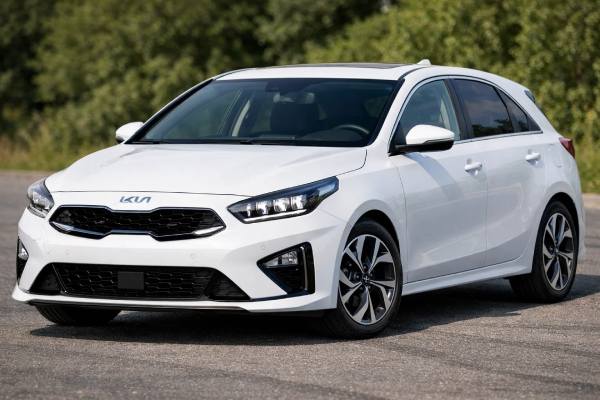
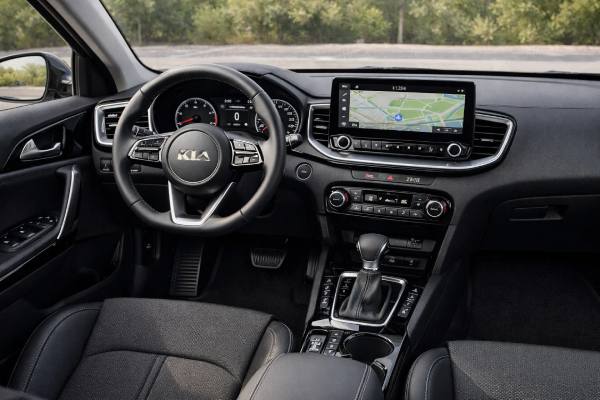
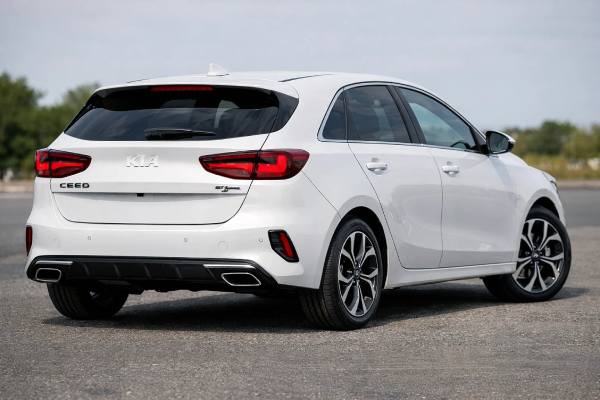
The facelifted Kia Ceed (CD) with the 1.0-liter Kappa II T-GDi (118 hp) is a small-turbo hatch built around a simple idea: give you modern torque and efficiency without the weight, complexity, or running costs of a larger engine. In everyday driving, this powertrain feels “bigger” than its displacement suggests because peak torque arrives early and the gearing is chosen for relaxed commuting. The trade-off is that the engine is working harder when fully loaded or driven fast for long stretches, so oil quality, warm-up habits, and cooling system health matter more than on a naturally aspirated 1.6.
As a facelift model (2021–2026), it also benefits from updated infotainment and wider availability of driver assistance features on many markets. If you want a compact car that can do family duty without feeling barebones, this Ceed is often a sweet spot—provided you buy the right trim and maintain it like a modern direct-injection turbo.
Quick Specs and Notes
- Strong low-rpm pull for city driving and short merges, especially with the common manual gearing.
- Mature ride and predictable handling balance; feels stable at motorway speeds for a compact hatch.
- Usually cheaper to run than larger turbo petrols, with tires and brakes staying modest in size.
- Short trips and low-quality fuel can accelerate intake deposit build-up on direct injection engines.
- Plan engine oil and filter changes every 12 months / 15,000 km (or sooner under heavy city use).
Guide contents
- Kia Ceed CD facelift ownership brief
- Kia Ceed 1.0 T-GDi specs and dimensions
- Kia Ceed CD trims, safety and ADAS
- Common problems, recalls and fixes
- Maintenance plan and smart buying
- Real-world driving and economy
- How it stacks up against rivals
Kia Ceed CD facelift ownership brief
The 2021–2026 facelift Ceed is best understood as a “grown-up” compact car: it aims for quiet competence rather than flash. The cabin layout is straightforward, visibility is good for the class, and the hatchback form keeps it easy to park while still being practical. In this specific configuration—the 1.0 T-GDi 118 hp—Kia’s emphasis is on usable mid-range torque, not top-end power. That matches real life: short gaps in traffic, roundabouts, and motorway slip roads are handled by torque and gearing, not by chasing redline.
Most markets pair this engine with a 6-speed manual, sometimes with an intelligent manual transmission (iMT) that can decouple for coasting, and in some regions with a 7-speed dual-clutch (DCT). The driving experience changes with the gearbox: the manual feels direct and makes the most of the engine’s torque band; the DCT can be smoother once warmed up but is more sensitive to stop-start heat and fluid condition.
Where this Ceed shines is the “whole-car” tuning. Suspension tuning leans toward comfort with good body control, steering is light but accurate, and the braking system is sized sensibly so consumables stay affordable. The facelift years also brought more modern infotainment and, depending on trim, stronger driver assistance packaging—useful if you do long motorway commutes.
For owners, the main theme is that this is a modern small turbo with direct injection: it will reward clean oil, correct spark plugs, and sensible warm-up habits. If you mostly do short trips, plan more frequent oil changes and be realistic about fuel economy in winter. If you do mostly steady-speed commuting, it can be a very efficient, low-stress daily car that still feels composed on the highway.
Kia Ceed 1.0 T-GDi specs and dimensions
Below are specs that match the facelift Ceed (CD) 1.0 T-GDi around 118 hp. Exact figures vary by market, wheel size, and gearbox, so treat these as a configuration guide and verify against your VIN plate and owner documentation.
Powertrain and efficiency (1.0 Kappa II T-GDi)
| Item | Specification |
|---|---|
| Code | Kappa II T-GDi (market-specific code family) |
| Engine layout and cylinders | Inline-3, 3 cylinders, DOHC, 4 valves/cyl (12V) |
| Displacement | 1.0 L (998 cc) |
| Induction | Turbocharged |
| Fuel system | Direct injection (GDI) |
| Compression ratio | Typically ~10:1 (varies by version) |
| Max power | 118 hp (87 kW) @ rpm (market dependent) |
| Max torque | Commonly ~172 Nm (127 lb-ft) (version dependent) |
| Timing drive | Chain |
| Rated efficiency | Typically ~5.5–6.5 L/100 km (43–36 mpg US / 51–43 mpg UK) |
| Real-world highway @ 120 km/h | Often ~6.2–7.2 L/100 km (38–33 mpg US / 46–39 mpg UK) |
Transmission and driveline
| Item | Specification |
|---|---|
| Transmission | 6-MT common; 7-DCT optional in some markets |
| Drive type | FWD |
| Differential | Open |
Chassis and dimensions (hatchback)
| Item | Typical value (market dependent) |
|---|---|
| Suspension (front / rear) | MacPherson strut / multi-link (common on Ceed) |
| Steering | Electric power steering (EPS) |
| Brakes | Ventilated front discs; rear discs on most trims (some markets vary) |
| Most popular tire size | 205/55 R16 or 225/45 R17 (trim dependent) |
| Ground clearance | Typically ~135–150 mm (5.3–5.9 in) |
| Length / Width / Height | ~4,310 / 1,800 / 1,447 mm (169.7 / 70.9 / 57.0 in) |
| Wheelbase | ~2,650 mm (104.3 in) |
| Turning circle (kerb-to-kerb) | ~10.5–10.7 m (34.4–35.1 ft) |
| Kerb (curb) weight | Often ~1,250–1,350 kg (2,756–2,976 lb) depending on gearbox and hybridization |
| Fuel tank | Commonly ~50 L (13.2 US gal / 11.0 UK gal) |
| Cargo volume | Typically ~395 L seats up; ~1,290 L seats down (method varies) |
Performance and capability (typical)
| Item | Typical value |
|---|---|
| 0–100 km/h (0–62 mph) | ~10.2–11.5 s (gearbox and weight dependent) |
| Top speed | ~190–195 km/h (118–121 mph) |
| Braking distance 100–0 km/h | Often ~35–39 m (varies with tires) |
| Towing capacity | Market dependent; often ~1,000–1,200 kg braked / ~500–600 kg unbraked |
| Payload | Often ~450–550 kg depending on trim and GVWR |
Fluids and service capacities (decision-grade)
| Item | Typical specification (verify by VIN) |
|---|---|
| Engine oil | API/ACEA spec per market; common viscosity 0W-30 or 5W-30; capacity often ~3.6–4.0 L (3.8–4.2 US qt) |
| Coolant | Long-life ethylene glycol; 50/50 mix typical; capacity often ~5.5–6.5 L (5.8–6.9 US qt) |
| Manual gearbox oil | Spec varies; capacity typically ~1.8–2.2 L (1.9–2.3 US qt) |
| DCT fluid (if equipped) | Spec varies; service approach depends on model year and market |
| A/C refrigerant | R-1234yf on many facelift models (charge varies) |
Key torque specs (critical fasteners only)
| Fastener | Typical torque (verify by VIN) |
|---|---|
| Wheel lug nuts | ~88–110 Nm (65–81 lb-ft) |
| Engine oil drain plug | Often ~25–35 Nm (18–26 lb-ft) |
| Spark plugs | Often ~15–25 Nm (11–18 lb-ft) |
Safety and driver assistance (high-level)
| Item | Typical content on many trims |
|---|---|
| Crash ratings | Euro NCAP rating applies to the Ceed family test version (see references) |
| ADAS suite | AEB, lane support, driver attention alerts, and (trim dependent) ACC and blind-spot aids |
| Headlights | Halogen, LED, or LED projector depending on trim and option packs |
Kia Ceed CD trims, safety and ADAS
Trim names vary by country, but the facelift Ceed lineup typically follows a familiar ladder: a value-focused base grade, a mid-trim with comfort upgrades, and sport-styled lines that add wheel size and styling rather than major mechanical changes. For the 1.0 T-GDi 118 hp, most mechanical components remain consistent across trims—what changes is equipment, wheel and tire sizing, and how much driver assistance you get.
How to identify trims quickly (useful when shopping used):
- Wheels and brakes: Base trims often wear 16-inch wheels and a more comfort-oriented tire; higher trims move to 17-inch (sometimes 18-inch on sport lines) with a noticeably firmer ride and higher tire replacement cost.
- Lighting: LED headlights and LED rear lamps are common “tell” items for higher trims. Verify functionality and aim for complete headlamp assemblies (not mismatched units), since modern headlights can be expensive.
- Cabin cues: Larger infotainment screens, digital cluster elements, dual-zone climate control, heated seats/steering wheel, and upgraded audio packages cluster in mid and upper trims.
- Badges: Some markets use “GT-Line” styling packages that look sporty but do not turn the car into a GT in mechanical terms. Focus on the engine code and gearbox, not the badge.
Safety ratings and what they mean in practice:
The Ceed scored strongly in European testing for its era, but remember that rating protocols evolve. A five-star result from a given year is still meaningful, yet you should compare the sub-scores (adult occupant, child occupant, vulnerable road users, and safety assist) rather than the star count alone. For buyers, the big differentiator is usually not the body shell—it’s the presence, calibration, and condition of driver assistance systems.
ADAS availability and evolution (facelift years):
- Autonomous Emergency Braking (AEB): Often standard or widely available, sometimes with pedestrian and cyclist detection depending on market.
- Lane keeping and lane following support: Common on mid and high trims. These systems rely on camera alignment; windshield replacement and suspension work can require recalibration.
- Adaptive cruise control (ACC): Frequently optional or tied to upper trims and automatic gearboxes. If ACC matters to you, confirm it in the menu and on the steering wheel buttons.
- Blind-spot monitoring and rear cross-traffic alert: Typically packaged with higher trims. These are practical daily-use aids but can be sensitive to bumper repairs and sensor alignment.
Practical advice: If you want the best long-term ownership experience, prioritize a trim that includes the safety features you will actually use, but avoid “wheel inflation” unless you like the look enough to accept higher tire costs and a slightly firmer ride. For family use, seek the best headlights you can afford and verify that all cameras and radars are working with no warning lights.
Common problems, recalls and fixes
The facelift Ceed 1.0 T-GDi is generally a solid modern compact, but it follows the normal pattern of small direct-injection turbo engines: it is robust when maintained correctly and can become expensive if neglected. Below are issues organized by prevalence and cost tier, with the typical “symptoms → likely cause → fix” format.
Common (low to medium cost)
- Rough idle, hesitant low-speed response → often dirty intake valves from direct injection (fuel does not wash valves) and short-trip use → use quality fuel, keep oil fresh, consider periodic intake cleaning methods appropriate for GDI engines.
- Intermittent misfires under load → commonly spark plugs worn early or coil issues (especially if service intervals were stretched) → fit correct heat-range plugs, replace coils as needed, and verify gap and torque.
- Coolant smell, slow coolant loss → small hose seepage or clamp issues → pressure test, repair early to avoid overheating.
- Turbo “chirp” or boost inconsistency → vacuum/boost hose leaks or wastegate control issues → smoke test intake tract, check actuator and control solenoids.
Occasional (medium cost)
- High oil consumption or oil dilution concerns → repeated cold starts, short trips, and extended oil intervals can stress a small turbo engine → shorten oil change interval, confirm correct oil spec, and monitor level between services.
- Check-engine light for emissions → oxygen sensors, EVAP components, or particulate filter monitoring (where fitted) → diagnose with proper scan tool; don’t replace parts blindly.
- Dual-clutch shudder in traffic (if DCT equipped) → clutch heat management, adaptation needs, or fluid condition depending on design → avoid creeping on inclines, ensure software updates are applied, and follow the correct service procedure.
Rare but higher cost (act fast)
- Overheating, loss of power, coolant pressurizing → cooling system faults that were ignored (leaks, thermostat, radiator fan control) → stop driving, diagnose immediately to protect head gasket and turbo.
- Persistent knocking under load → can be related to low-octane fuel, incorrect oil, or abnormal combustion events → reduce load, confirm fuel quality, scan for knock/ignition timing issues, and inspect for mechanical causes.
Software, calibrations, and updates
Modern engine and safety systems are software-driven. For used buyers, a dealer history printout is valuable because updates can address:
- cold-start behavior and driveability
- fault code sensitivity for emissions sensors
- DCT shift logic and clutch adaptation (where applicable)
- camera/radar related driver assistance alerts
Recalls and service actions
Recalls are market-specific and can depend on production batches. The safest approach is:
- Check official recall databases relevant to your country.
- Ask the seller for proof of completion (invoices or dealer record).
- Confirm there are no active warning lights and that safety systems initialize normally.
Pre-purchase checks worth paying for:
- full scan for stored codes (engine and ADAS)
- coolant pressure test if any coolant odor or history of topping up
- test drive from cold and fully warm (listen for boost leaks and check shift quality)
- inspect service records for oil intervals and correct oil specification
Maintenance plan and smart buying
A small turbo engine can live a long, low-stress life if you treat maintenance as an ownership strategy rather than a checklist. Use the schedule below as a practical baseline; then tighten it if your use is mostly short trips, heavy traffic, or frequent full-load driving.
Practical maintenance schedule (distance/time)
- Engine oil and filter: every 10,000–15,000 km (6,000–9,000 mi) or 12 months, whichever comes first. Use the exact spec listed for your VIN and market. If most trips are under 15 minutes, aim closer to 10,000 km.
- Air filter (engine): inspect every 15,000 km; replace every 30,000–45,000 km depending on dust and city use.
- Cabin filter: every 15,000–30,000 km or yearly if you run A/C often.
- Spark plugs: commonly 60,000–90,000 km (turbo/GDI engines may prefer the shorter end). Replace earlier if misfires appear.
- Coolant: typically long-life; replace around 5 years / 100,000–150,000 km unless your market specifies otherwise.
- Brake fluid: every 2 years regardless of mileage.
- Brake pads/rotors: inspect every service; lifespan varies widely with driving style.
- Manual gearbox oil: often “lifetime” in marketing terms, but changing around 100,000–120,000 km can improve shift quality and longevity.
- DCT service (if equipped): follow the market-specific interval; don’t assume “lifetime.”
- Aux belt and hoses: inspect annually; replace based on condition or by 6–8 years in harsh climates.
- 12 V battery: test annually after year 3; replacement is common around 4–6 years depending on climate and stop-start use.
- Tires: rotate every 10,000–12,000 km, align annually or when tires show uneven wear.
Fluid specs and capacities (buyer-friendly summary)
- Buy oil by specification first, viscosity second. The correct ACEA/API spec matters for turbo protection and emissions system compatibility.
- Keep a spare liter of the correct oil in the car and check level monthly. Small turbo engines are less forgiving of running low.
Buyer’s guide: what to seek (and what to avoid)
Seek:
- Complete service history with documented oil changes at sensible intervals
- A trim that includes the safety features you want (AEB and good headlights are high-value)
- A car that has been driven regularly (not sitting for months repeatedly)
Be cautious with:
- Cars that did mostly short trips with stretched oil intervals
- Warning lights that “come and go” (especially engine and driver assistance)
- Large wheels with cheap tires—this often signals cost-cutting that can hide deeper neglect
Reconditioning items to budget for on a used example:
- tires and alignment
- brake fluid service
- fresh oil, filters, and spark plugs (if records are unclear)
- cabin filter and A/C service if musty smells are present
Long-term outlook: With consistent oil quality, a healthy cooling system, and timely ignition maintenance, the 1.0 T-GDi can be a durable commuter engine. Neglect tends to show up as misfires, boost leaks, and heat-related issues—problems that are cheaper to prevent than to repair.
Real-world driving and economy
In normal use, the facelift Ceed’s 1.0 T-GDi feels energetic at low to mid speeds. The turbo helps the engine produce meaningful torque early, so you don’t need to rev it hard for everyday gaps. The best way to describe it is “responsive when you drive it like a torque engine.” If you drive it like a high-revving naturally aspirated unit—long pulls to redline—you’ll get more noise than speed.
Ride, handling, and NVH
- Ride: On 16-inch wheels, the Ceed is notably comfortable for a compact hatch, with good control over sharp impacts. On 17-inch or larger, the ride firms up and small-bump noise increases.
- Handling: Predictable and neutral at legal speeds. It resists understeer reasonably well, and the rear multi-link setup (where fitted) helps stability over mid-corner bumps.
- Steering: Light, consistent, and easy in the city. It’s not “talkative,” but it places the car confidently.
- Cabin noise: Wind and tire noise depend strongly on tire brand and wheel size. Engine noise is most noticeable during hard acceleration and steep climbs.
Powertrain character
- Throttle response: Good once moving; a small pause can exist at very low rpm if you demand full torque suddenly.
- Turbo behavior: Mild lag is possible below the strongest torque band, but it’s usually manageable with a downshift.
- Manual gearbox: Often the most satisfying match; you can keep the engine in its torque zone easily.
- DCT (if equipped): Generally smooth when warm and driven decisively, but it can feel less happy with repeated creep-and-stop traffic, especially on inclines.
Real-world efficiency
Expect fuel economy to vary more with speed and temperature than many owners anticipate. Small turbo engines can be very efficient when lightly loaded, but they use more fuel under sustained boost.
Typical owner-style ranges:
- City: ~6.5–8.0 L/100 km (36–29 mpg US / 43–35 mpg UK), higher in winter and short trips
- Highway (100–120 km/h): ~6.0–7.2 L/100 km (39–33 mpg US / 47–39 mpg UK)
- Mixed: ~6.0–7.0 L/100 km (39–34 mpg US / 47–40 mpg UK)
Load and towing notes
With passengers and luggage, you’ll notice the engine working harder. Plan earlier downshifts on hills and allow more time for overtakes. If you tow (where permitted), keep speeds moderate, maintain larger following distances, and shorten oil change intervals. Heat management becomes the limiting factor more than raw power.
How it stacks up against rivals
The compact hatch segment is crowded, and the Ceed’s strengths show up most clearly when you compare “whole ownership” rather than just acceleration numbers.
Versus Volkswagen Golf 1.0 TSI / 1.5 TSI
- Ceed advantage: Often better value for equipment per money, and typically straightforward to own.
- Golf advantage: More premium cabin feel in many trims and a broader engine range.
- Verdict: If you want the most refined interior and don’t mind paying more, Golf. If you want strong equipment value and a mature ride, Ceed makes sense.
Versus Ford Focus 1.0 EcoBoost
- Ceed advantage: Typically calmer ride and a more “set and forget” ownership vibe.
- Focus advantage: Sharper steering and handling fun.
- Verdict: Focus for driving feel; Ceed for daily comfort and practical long-term use—especially if your commute includes rough roads.
Versus Hyundai i30 1.0 T-GDi
- Ceed advantage: Very similar engineering but the Ceed often feels slightly more comfort-biased in tuning depending on trim.
- i30 advantage: Sometimes simpler trim packaging or better availability in certain markets.
- Verdict: Shop the best maintained example; condition and history matter more than brand differences here.
Versus Toyota Corolla hybrid (if your priority is economy)
- Ceed advantage: Lower purchase price in some markets and a more conventional driving feel.
- Corolla hybrid advantage: Strong urban fuel economy and excellent stop-start efficiency without turbo stress.
- Verdict: If you do heavy city driving and can charge nothing (no PHEV), a hybrid Corolla can be the more efficient tool. If you want a traditional petrol driving feel with good motorway composure, the Ceed holds up well.
Who should pick the Ceed 1.0 T-GDi facelift?
- Commuters who want a comfortable compact hatch with modern safety options
- Owners who will follow sensible oil intervals and don’t ignore small coolant or ignition issues
- Buyers who value equipment and overall refinement more than outright performance
References
- Kia Ceed 2019 (Safety Rating)
- Servicing Your Kia | Kia UK 2024 (Service Intervals)
- Återkallelser | Äga Kia | Kia Sverige 2025 (Recall Database)
- Ceed brochure_BG.pdf 2021 (Brochure)
Disclaimer
This article is for informational purposes only and is not a substitute for professional diagnosis, inspection, or repair. Specifications, torque values, service intervals, and procedures vary by VIN, market, model year, and installed equipment. Always verify details using your official Kia owner documentation and service information for your exact vehicle.
If this guide helped you, please consider sharing it on Facebook, X (Twitter), or your favorite forum to support our work.