
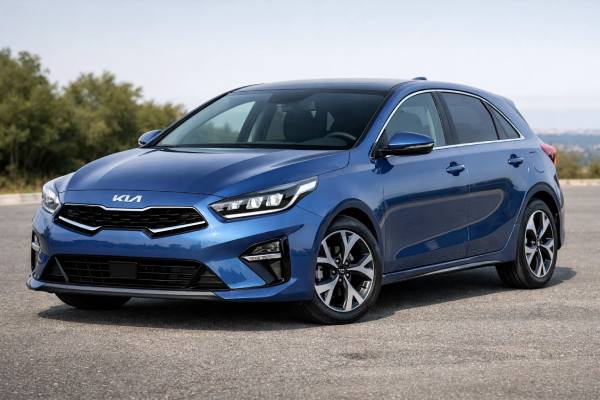
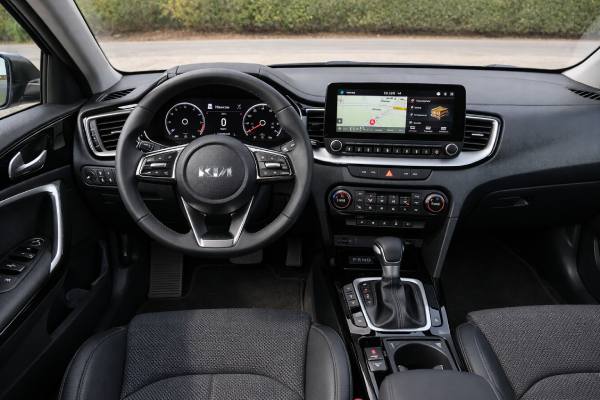
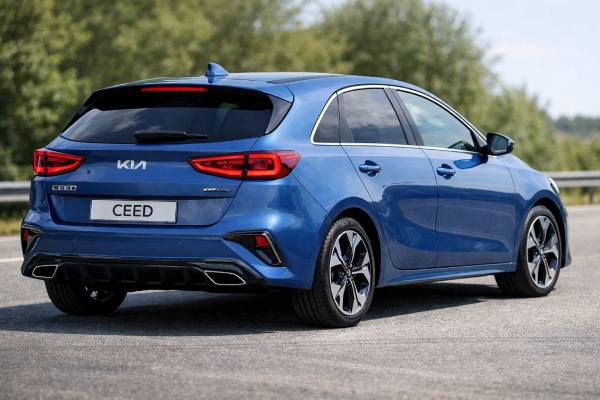
The 2021–2026 facelift Kia Ceed (CD) with the 1.6 Smartstream CRDi diesel in 134 hp tune is the “long-distance” choice in the range: strong mid-range torque, low consumption at steady speeds, and a relaxed feel that suits commuting and motorway work. Compared with lower-output diesels, this version typically adds meaningful pulling power for overtakes, hills, and loaded trips without demanding higher revs. The trade-off is that modern diesel ownership is less forgiving of the wrong driving pattern. Emissions hardware—especially the diesel particulate filter (DPF) and exhaust gas recirculation (EGR)—needs heat and time to stay clean. If the car lives on short, cold trips, issues become more likely.
Choose this Ceed when you actually drive like a diesel: longer runs, consistent servicing with the correct low-ash oil, and attention to early warning signs. Do that, and it can be one of the more rational high-mileage compact hatches.
Quick Specs and Notes
- Strong torque delivery makes overtakes and motorway merging easier than the 114 hp diesel.
- Excellent cruising economy when fully warm and driven steadily.
- Comfortable, stable chassis tuning suits long commutes and mixed roads.
- Ownership caveat: repeated short trips increase DPF and EGR loading risk.
- Plan on engine oil and filter every 12 months or 16,000–32,000 km (10,000–20,000 miles) depending on market schedule and use.
Explore the sections
- Kia Ceed CD 134 hp diesel
- Kia Ceed CD 1.6 CRDi 134 data
- Kia Ceed CD equipment and safety
- DPF, EGR and known faults
- Service routine and buyer advice
- Road behavior and mpg reality
- Comparison with diesel rivals
Kia Ceed CD 134 hp diesel
In the facelift years, the Ceed CD stays true to its purpose: a compact hatch designed to be easy to own, easy to drive, and stable at real-world speeds. The 1.6 CRDi 134 hp version is the diesel for people who rack up distance. Its advantage is not a dramatic 0–100 sprint; it’s the way the car maintains pace with low effort. You get a broader torque plateau, fewer downshifts on inclines, and a calmer feel at motorway speeds—especially when the car is loaded with passengers, luggage, or winter tyres.
What “134 hp diesel” usually means in practice
This output level is commonly tied to the 100 kW (136 PS) calibration, which is often quoted as 134 hp depending on the market’s labeling. Many versions pair it with a 7-speed dual-clutch transmission (DCT), while some markets also offer a 6-speed manual. You may also see mild-hybrid (48 V) variants in the broader Kia family during these years. If your car is mild-hybrid, the ownership feel is similar, but you gain slightly smoother stop-start behavior and sometimes marginally better low-speed response.
The key ownership truth: driving pattern matters
Modern diesels rely on aftertreatment hardware to stay clean, especially the diesel particulate filter (DPF). The DPF periodically burns soot during a regeneration event, which requires heat and time. That’s why this powertrain is a great match for:
- Motorway commuting and regional travel
- Mixed driving with at least one longer run per week
- Drivers who keep the service schedule strict and use the correct oil
It’s a weaker match for “all short trips, all the time,” where the engine rarely reaches full temperature. In that usage, soot and moisture accumulate, the car may attempt frequent regens, and EGR/air-path contamination becomes more likely.
Where the Ceed CD platform helps
The Ceed’s strengths are consistency and predictability. Steering is tuned for stability, the chassis is forgiving over imperfect roads, and the car doesn’t feel nervous in crosswinds. If you choose sensible wheel sizes, it rides well enough for daily use without beating you up. That stability also matters for safety: predictable behavior is often as important as raw grip when conditions are wet, cold, or uneven.
If you want a diesel that feels “effortless” rather than “fast,” this 134 hp Ceed is the right mindset—provided you’ll use it in a diesel-friendly way.
Kia Ceed CD 1.6 CRDi 134 data
This section focuses on the facelift Ceed CD with the 1.6 CRDi in the ~134 hp tune. Exact numbers vary by market, tyres, transmission, and emissions configuration, so consider these as typical owner-facing figures to verify against your VIN and registration documents.
Powertrain and efficiency
| Item | Specification (typical for 1.6 CRDi ~134 hp) |
|---|---|
| Code | 1.6 CRDi Smartstream diesel family (market naming varies) |
| Engine layout and cylinders | Inline-4, transverse; DOHC; 4 valves/cyl |
| Bore × stroke | 77.0 × 85.8 mm (3.03 × 3.38 in) |
| Displacement | 1.6 L (1,598 cc) |
| Induction | Turbocharged, intercooled |
| Fuel system | Common-rail direct injection |
| Compression ratio | ~15.9:1 (variant-dependent) |
| Max power | 134 hp (100 kW) @ ~4,000 rpm |
| Max torque | 320 Nm (236 lb-ft) @ ~2,000 rpm |
| Timing drive | Commonly chain-driven (verify by engine variant) |
| Rated efficiency (typical) | ~4.1–4.9 L/100 km (≈ 48–57 mpg US / 58–69 mpg UK) |
| Real-world highway @ 120 km/h (75 mph) | ~4.8–5.8 L/100 km (≈ 41–49 mpg US / 49–59 mpg UK) |
Transmission and driveline
| Item | Specification |
|---|---|
| Transmission | 6-speed manual or 7-speed DCT (market/trim dependent) |
| Drive type | FWD |
| Differential | Open (traction managed by ESC/TC) |
Chassis and dimensions (Ceed CD hatchback typical)
| Item | Specification (typical range) |
|---|---|
| Suspension (front/rear) | MacPherson strut / multi-link (most trims; verify by market) |
| Steering | Electric power steering |
| Brakes | 4-wheel discs on most trims; diameters vary |
| Most common tyre sizes | 205/55 R16, 225/45 R17, some trims 235/40 R18 |
| Ground clearance | ~135–150 mm (5.3–5.9 in) |
| Length / width / height | ~4,310–4,320 / 1,800 / 1,440–1,465 mm |
| Wheelbase | 2,650 mm (104.3 in) |
| Turning circle (kerb-to-kerb) | ~10.6 m (34.8 ft) |
| Kerb weight | ~1,350–1,470 kg (2,976–3,241 lb) (trim/gearbox dependent) |
| Fuel tank | ~50 L (13.2 US gal / 11.0 UK gal) |
| Cargo volume | ~395 L (14.0 ft³) seats up (VDA); ~1,291 L (45.6 ft³) seats down |
Performance and capability
| Item | Typical figure |
|---|---|
| 0–100 km/h (0–62 mph) | ~9.5–10.5 s |
| Top speed | ~195–205 km/h (121–127 mph) |
| Towing capacity | Often up to ~1,500 kg (3,307 lb) braked; lower unbraked rating (verify by VIN/market) |
| Payload | Commonly ~450–550 kg (992–1,213 lb) |
Fluids and service capacities
| Item | Typical guidance (verify by VIN/market) |
|---|---|
| Engine oil | Low-SAPS oil meeting ACEA C2/C3/C5 (market allowances differ); common viscosity 5W-30 |
| Engine oil capacity | ~4.4 L (4.65 US qt) |
| Coolant | Long-life OAT coolant; mix typically 50/50 |
| A/C refrigerant | Usually R-1234yf on many modern EU cars, but verify for your exact build |
| Brake fluid | DOT 4 class fluid commonly used |
Key torque specs (critical fasteners only)
These vary with hardware; verify in official service information before tightening:
| Fastener | Typical range |
|---|---|
| Wheel fasteners | 90–110 Nm (66–81 lb-ft) |
| Engine oil drain plug | 30–40 Nm (22–30 lb-ft) |
| Front caliper carrier bolts | 90–110 Nm (66–81 lb-ft) |
Safety and driver assistance (high-level)
| Item | Summary |
|---|---|
| Euro NCAP | Ceed generation scores vary by safety pack; focus on fitted equipment, not just stars |
| ADAS suite | AEB, lane support, driver attention, traffic sign assist; ACC and blind-spot features often trim-dependent |
Kia Ceed CD equipment and safety
With the facelift years, equipment strategy becomes a bigger part of the buying decision than the engine itself. Many Ceed diesels share the same core hardware across trims, but the ownership experience can change drastically based on lighting, driver assistance, and wheel choice. For a commuter diesel, the best trim is rarely the sportiest-looking one—it’s the one that matches your roads, your traffic, and your tolerance for tyre and sensor costs.
Trims and options that change the car
Even when trim names differ by country, these patterns are consistent:
- Wheel and tyre package: 16-inch wheels typically deliver the best ride comfort and lowest tyre costs. 18-inch packages can look great, but they often raise road noise and increase the risk of pothole damage.
- Headlights: Full LED headlights are a real safety and fatigue upgrade for night driving. If you do early-morning or winter commuting, prioritize lighting over cosmetic packages.
- Seats and climate: Heated seats, a heated steering wheel, and quick-defrost capability matter more in a diesel than many buyers expect, because cold starts and short trips are the hardest on diesel emissions hardware.
- Infotainment and camera kit: Better cameras and parking sensors reduce minor damage—valuable because modern bumpers integrate radar and sensor arrays.
Safety ratings: how to interpret them
Euro NCAP results for the Ceed generation can vary depending on whether advanced safety features are standard or part of an optional “safety pack.” For used buyers, the practical takeaway is simple: buy the car with the safety features actually installed. A higher star result on paper does not help you if the used example you’re viewing lacks radar cruise, lane-centering support, or pedestrian-aware AEB.
ADAS: what to look for and why it matters
A typical Ceed ADAS menu may include:
- AEB (autonomous emergency braking) for vehicle detection and, on some versions, pedestrian/cyclist detection
- Lane keeping assist and sometimes lane following support for motorway fatigue reduction
- Traffic sign assist and driver attention alerts
- Adaptive cruise control (ACC) on higher trims or with option packs
- Blind-spot monitoring and rear cross-traffic alert on higher trims
For ownership, the hidden cost is calibration. After windscreen replacement, front bumper repair, or significant alignment work, camera and radar systems may need recalibration. When buying used, ask two specific questions: was the windscreen ever replaced, and were any front-end repairs done? If yes, look for invoices that mention calibration.
Practical safety checks on a test drive
- Confirm no warning lights for lane/radar systems at startup.
- Test lane support behavior on a clear road: it should feel consistent, not twitchy.
- Verify ACC (if equipped) engages smoothly and maintains distance without abrupt braking.
- Confirm the reverse camera image is clear and parking sensors react predictably.
Well-equipped trims can make this diesel Ceed feel like a bigger, more relaxing car. Just make sure the sensor and camera systems have been treated correctly over the car’s life.
DPF, EGR and known faults
The 1.6 CRDi 134 hp Ceed is usually dependable when serviced correctly, but its most common issues are “systems issues,” not dramatic mechanical failures. Think soot management, temperature control, and air-path integrity. Below is a practical way to map risks by prevalence and cost.
Common: mostly preventable with correct use
- DPF frequent regeneration (medium cost if ignored):
Symptoms include rising consumption, fans running after shutdown, and a slightly rough idle during regen. Root causes often include repeated short trips, a thermostat that runs too cool, or a sensor that’s drifting. The remedy is a mix of driving pattern (regular longer runs), fixing temperature issues, and addressing sensor/boost faults early. - EGR and intake contamination (low to medium cost):
Symptoms can be hesitation, reduced power, or intermittent fault codes. Contamination tends to build faster on cars that rarely see full operating temperature. Cleaning or replacement is sometimes necessary, but the better fix is finding the reason soot is excessive (cool-running, boost leaks, poor-quality servicing). - Boost leaks from charge plumbing (low to medium cost):
Look for oil mist at hose joints and listen for hissing under load. Leaks reduce efficiency and can increase soot production, which then stresses the DPF.
Occasional: pattern and maintenance dependent
- Turbo control faults (medium cost):
Intermittent limp mode and underboost/overboost codes can be caused by actuator issues, vacuum/pressure leaks, or sensor problems. Proper diagnosis beats random part replacement. - Glow plug or control module issues (low to medium cost):
Poor cold starts and rough cold idle point here. Replacement can be routine, but correct procedure matters to avoid damage. - Manual clutch and dual-mass flywheel wear (high cost when due):
If you lug the engine in high gear or do constant stop-start driving, DMF wear accelerates. Watch for idle rattle, takeoff shudder, and clunks during shutdown.
Rare but expensive: watch for warning signs
- Fuel system sensitivity (medium to high cost):
Hard starting, rough running, or fuel smell can suggest injector sealing or fuel delivery issues. Consistent fuel filter servicing matters, and diagnosis should include leak-off testing rather than guesswork. - DCT concerns (high cost if abused):
If equipped, DCT issues usually show as shuddering at low speed, delayed engagement, or warning lights. City crawling and overheating are the enemies; smooth driving habits and correct fluid/software practices are the protections.
Recalls, TSBs, and software updates
Campaigns vary by market and year. The practical approach is universal: run the VIN on an official recall checker, then ask a dealer to confirm campaign completion. Also treat software updates seriously—diesels often receive calibration revisions for drivability, sensor plausibility, and emissions-system behavior.
Service routine and buyer advice
A modern diesel rewards owners who keep maintenance boring and consistent. The two big goals are clean oil of the correct specification and a healthy thermal cycle (the car needs to warm fully and regularly). Below is a practical schedule that fits most usage, followed by used-buyer guidance.
Maintenance schedule (distance and time)
Use official documentation as the final authority, but these intervals are strong real-world planning targets:
- Engine oil and filter: every 12 months or 16,000–32,000 km (10,000–20,000 miles) depending on market schedule and use. If you do mostly short trips, shorten the distance interval.
- Fuel filter: follow the official interval closely; don’t stretch it if fuel quality is uncertain.
- Engine air filter: inspect at each service; replace around 20,000–30,000 km in dusty or urban conditions.
- Cabin filter: typically 12 months (more often for allergy-sensitive drivers).
- Brake fluid: every 2 years as a safety baseline.
- Coolant: long-life coolant commonly lasts several years, but plan a 5-year horizon unless your market schedule specifies otherwise.
- Manual gearbox oil (if manual): consider a preventative change around 100,000–130,000 km (60,000–80,000 miles) if you’ll keep the car long term.
- DCT fluid (if DCT): service policy varies by market; if your schedule allows, a preventative service around 100,000 km (60,000 miles) can be a longevity play—use only the specified fluid and procedure.
- Tyres and alignment: rotate every 10,000–12,000 km; align if wear is uneven or after suspension work.
- Battery (12 V): test annually after year 3; typical replacement window is 4–6 years depending on trip length and climate.
Oil specification matters more than many owners realize
DPF-equipped diesels require low-ash (low-SAPS) oil to protect aftertreatment hardware. Wrong oil can increase ash accumulation, which the DPF cannot burn off during regeneration. When servicing outside a dealer, insist the invoice lists the exact oil spec, not just “5W-30.”
Used-buyer checklist for this diesel
- Ask about driving pattern: a diesel with regular motorway miles is usually a safer bet than a city-only example.
- Confirm stable operating temperature: a cool-running thermostat can quietly cause soot problems.
- Check for signs of frequent regen: persistent fan run-on, inconsistent idle, and unusually high consumption can be clues.
- Inspect intake and boost plumbing: oil mist at joints and loose clamps are common small faults that create bigger ones.
- Test gearbox behavior: manual clutch takeoff should be smooth; DCT engagement should be consistent with no shudder or hesitation.
- Verify recall and campaign status: run the VIN and request dealer confirmation of completed actions.
- Look for documentation discipline: the best cars usually have proof of correct oil spec and on-time servicing.
Long-term durability outlook
This Ceed diesel can be a strong long-term partner when used for the job it’s designed for: warm, steady driving and consistent servicing. The biggest reliability wins come from preventing soot and temperature issues rather than chasing “upgrades.”
Road behavior and mpg reality
The 1.6 CRDi 134 hp Ceed feels like a mature commuter car. It’s not tuned to entertain in the way a hot hatch does, but it’s tuned to reduce effort—especially at speed and under load. That makes it a good match for long days behind the wheel.
Ride and handling
- Straight-line stability: a Ceed strength. It tracks confidently at motorway speeds and doesn’t feel busy in crosswinds.
- Cornering balance: safe and predictable. It leans toward mild understeer, which suits wet-weather confidence.
- Wheel choice effect: 16-inch wheels often provide the best compliance and lowest cabin noise; 18s can sharpen response but increase harshness and tyre cost.
- Braking feel: generally consistent, but tyre quality dominates stopping performance—choose tyres for wet grip if you drive year-round.
Powertrain character: where the extra output helps
Compared with lower-output diesels, the 134 hp tune typically delivers a stronger, more effortless midrange. The result is fewer “commitment” downshifts to pass slower traffic and better hill performance with passengers. Turbo response is usually best once the engine is warm and in the torque band; below that, you may feel a gentle ramp-up, typical of small turbo diesels.
If you have the DCT, the best driving style is smooth and deliberate at low speed: avoid creeping up long inclines on throttle, use brake hold when available, and don’t rush repeated forward-reverse maneuvers when parking. If you have the manual, avoid lugging the engine in high gear at low rpm—diesel torque makes it tempting, but it increases stress on the clutch/DMF.
Real-world economy ranges
Assuming the car reaches full operating temperature regularly and you drive steadily:
- City-heavy use: ~5.8–7.2 L/100 km (≈ 33–41 mpg US / 39–49 mpg UK) depending on traffic and trip length
- Highway 100–120 km/h: ~4.8–5.8 L/100 km (≈ 41–49 mpg US / 49–59 mpg UK)
- Mixed driving: ~5.2–6.3 L/100 km (≈ 37–45 mpg US / 45–54 mpg UK)
Cold weather and short trips can move these numbers significantly in the wrong direction. You may also notice occasional consumption spikes during DPF regeneration. That’s normal, but it should not feel constant.
Selective performance metrics that matter
This car’s “fast enough” story is about usable speed:
- 0–100 km/h: typically in the high-9 to low-10 second range, which is strong for a diesel commuter hatch
- Passing confidence: the torque band does the work, reducing the need for dramatic downshifts
- Long-range comfort: the Ceed feels calm at motorway speeds, and the diesel’s low consumption supports long fuel stops
If you want an efficient, relaxed daily driver that doesn’t feel strained on real roads, this is where the Ceed diesel delivers.
Comparison with diesel rivals
Cross-shopping in this segment often comes down to priorities: ultimate economy, handling feel, cabin polish, or the lowest-risk ownership path for your usage. Here’s how the Ceed 1.6 CRDi 134 hp typically compares.
Volkswagen Golf TDI and related VW Group diesels
- Strengths: broad model and drivetrain variety, strong motorway refinement, and a huge specialist network.
- Ceed advantage: equipment value and a straightforward “commuter” character without chasing premium options.
- Buying tip: choose the car with cleaner emissions-system history and documented servicing; condition matters more than brand in diesel ownership.
Hyundai i30 diesel
As a close cousin in philosophy, it’s often a spec-and-price decision rather than a character decision.
- Strengths: similar platform feel and packaging logic.
- Ceed advantage: depending on market, trim packaging may offer better value for lighting and ADAS.
- Buying tip: compare wheel sizes, headlight type, and driver assistance presence—those change daily life more than small spec differences.
Ford Focus diesel (where available)
- Strengths: often the benchmark for steering feel and chassis engagement.
- Ceed advantage: calm, stable long-distance demeanor and a generally easy learning curve for any driver in the household.
- Buying tip: if you prioritize comfort and low fatigue, the Ceed is often the easier long-term partner.
Peugeot 308 BlueHDi and similar French diesels
- Strengths: efficiency potential and strong diesel development history.
- Ceed advantage: conventional control layout and a “no surprises” driving feel.
- Buying tip: focus on emissions hardware condition and service history; the best maintained car wins regardless of badge.
Toyota Corolla Hybrid as the non-diesel alternative
This is the key comparison if your driving is mixed or urban:
- Hybrid advantage: city efficiency and lower DPF/EGR-type risk because it isn’t a diesel.
- Ceed diesel advantage: long-range motorway economy and torque-rich cruising without hybrid “rev flare.”
- Buying tip: if you drive mostly short trips, the hybrid is often the safer match. If you drive long distances weekly, the diesel Ceed can be a better fit.
Value verdict
The Ceed 1.6 CRDi 134 hp is best viewed as a tool for efficient distance. It shines when it can warm fully, cruise steadily, and follow a strict oil-and-filter discipline. Buy one with the right history, keep the maintenance consistent, and it can deliver a very satisfying blend of torque, range, and low running effort in the facelift years.
References
- Official Kia Cee’d 2019 safety rating 2019 (Safety Rating)
- Engine Oil Grades and Capacities 2023 (Service Guide)
- 7.2 Kia Service Intervals V25.12.xlsx 2026 (Service Guide)
- Check if a vehicle, part or accessory has been recalled – GOV.UK 2026 (Recall Database)
- Car Safety Recalls | What They Are & What To Do | Kia UK 2026 (Recall Guidance)
Disclaimer
This article is for informational purposes only and is not a substitute for professional inspection, diagnosis, or repair. Specifications, torque values, service intervals, fluid standards, and procedures can vary by VIN, market, model year, and installed equipment. Always verify details using your vehicle’s official owner information and service documentation, and consult qualified technicians for diagnosis and repairs.
If you found this guide useful, please consider sharing it on Facebook, X/Twitter, or your preferred community to support our work.