
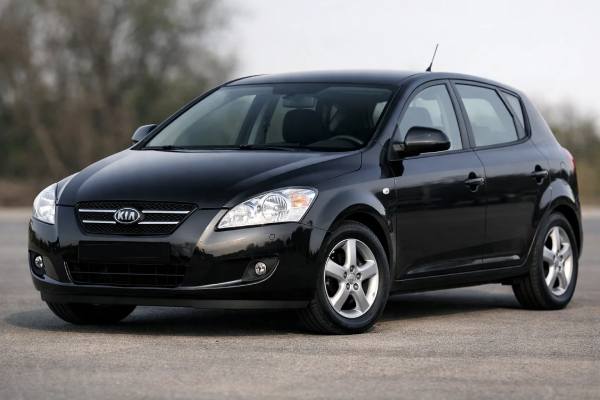
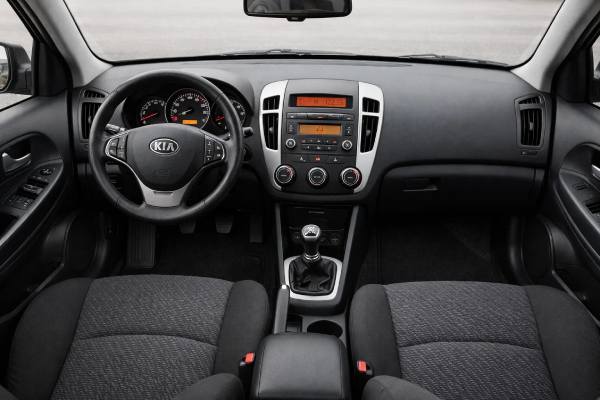
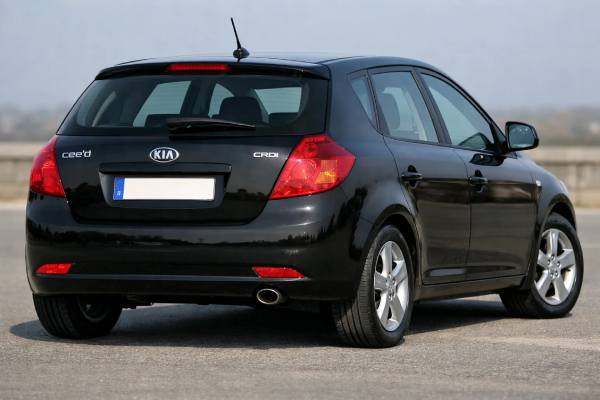
The 115 hp 1.6 CRDi Kia Cee’d (ED) is the “sweet spot” diesel in the 2007–2009 range: it keeps the long-distance efficiency and easy low-rpm pull of the 90 hp version, but adds noticeably better overtaking power and more relaxed motorway pace. In practice, it’s a very usable everyday hatchback for drivers who cover regular highway miles, commute on open roads, or simply want fewer downshifts when the car is loaded. The D4FB diesel is generally durable at the core, but it is still a modern common-rail turbo diesel, so its long-term reliability depends heavily on service quality and driving pattern. Short trips and stretched oil intervals accelerate soot-related issues (EGR and intake) and can stress DPF-equipped cars. Buy the cleanest example you can, verify its emissions configuration, and treat diesel maintenance as a routine—not an occasional event.
Owner Snapshot
- Stronger mid-range than the 90 hp diesel, making overtakes and motorway merges less stressful.
- Excellent touring economy when driven steadily and kept on correct diesel oil spec.
- Generally robust engine design, but EGR/intake soot and boost-hose leaks are common age issues.
- If equipped with a DPF, avoid repeated short trips and use low-ash oil to reduce regeneration problems.
- Replace engine oil and filter every 10,000–15,000 km or 12 months (whichever comes first).
Jump to sections
- Kia Cee’d ED 1.6 CRDi 115 overview
- Kia Cee’d ED D4FB 115 specs
- Kia Cee’d ED 115 trims and safety
- Reliability issues and service actions
- Maintenance plan and buyer’s guide
- Driving, performance, and economy
- How it compares to rival diesels
Kia Cee’d ED 1.6 CRDi 115 overview
Among early Cee’d (ED) engines, the 1.6 CRDi 115 hp diesel is usually the most balanced choice if you actually drive like a diesel owner. It keeps fuel consumption low on steady runs, yet it has enough torque to feel confident with passengers, luggage, or hills. Compared with the 90 hp tune, the 115 hp version typically delivers stronger in-gear pull and needs fewer downshifts when you want to pass. That matters on real roads: the car feels less “busy,” especially at 100–120 km/h.
Mechanically, this is a turbocharged common-rail diesel with a timing chain, and in many markets it uses a 6-speed manual gearbox on higher-output versions (though local variations exist). The drivetrain is simple in layout—front-wheel drive, open differential—so traction and stability depend mostly on tyre quality and suspension condition rather than clever electronics.
The big ownership message is that this engine is sensitive to the two things that ruin most used diesels: neglected oil changes and the wrong usage pattern. Short trips that never heat-soak the engine promote soot build-up in the EGR system and intake tract, and on DPF-equipped cars they increase regeneration frequency and fuel dilution risk. On the other hand, a car that has done regular longer runs with consistent servicing can feel impressively “sorted” even at higher mileage.
As a used buy, the best examples are not necessarily the lowest-mileage cars. Look for evidence of correct oil specification, fuel-filter changes, and a test drive that shows stable boost, clean idle, and smooth clutch take-up. If those basics check out, this Cee’d diesel can still be a very economical daily driver in 2026.
Kia Cee’d ED D4FB 115 specs
The tables below focus on the specs that typically matter for service decisions, ownership expectations, and comparing trims. Values vary by market, body style (hatch/wagon), transmission, wheel/tyre package, and emissions equipment, so use this as a baseline and verify by VIN when ordering parts or fluids.
Powertrain and efficiency
| Item | Specification (typical for 115 hp D4FB tune) |
|---|---|
| Code | D4FB |
| Engine layout and cylinders | Inline-4, DOHC, 16 valves (4 valves/cyl) |
| Bore × stroke | 77.2 × 84.5 mm (3.04 × 3.33 in) |
| Displacement | 1.6 L (1,582 cc) |
| Induction | Turbocharged, intercooler |
| Fuel system | Common-rail diesel direct injection |
| Compression ratio | Typically in the 16.0–17.3:1 range (variant dependent) |
| Max power | 115 hp (85 kW) @ ~4,000 rpm |
| Max torque | Commonly ~255 Nm (188 lb-ft) @ ~1,900 rpm |
| Timing drive | Chain |
| Rated efficiency | Often ~4.7–5.6 L/100 km (50–42 mpg US / 60–50 mpg UK) depending on test cycle and tyres |
| Real-world highway @ 120 km/h | Commonly ~5.8–6.6 L/100 km (41–36 mpg US / 49–43 mpg UK) |
Transmission and driveline
| Item | Typical configuration |
|---|---|
| Transmission | Manual (often 6-speed on 115 hp, market dependent) |
| Drive type | FWD |
| Differential | Open |
Chassis and dimensions
| Item | Typical hatchback range (verify by body/trim) |
|---|---|
| Suspension (front / rear) | MacPherson strut / multi-link or torsion beam depending on market/trim |
| Steering | Rack-and-pinion, power-assisted |
| Brakes | Front ventilated discs; rear discs on many trims (some markets rear drums) |
| Wheels/tyres (popular size) | 205/55 R16 common; 195/65 R15 also seen |
| Ground clearance | ~145–155 mm (~5.7–6.1 in) |
| Length / width / height | ~4,235 / 1,790 / 1,480 mm (166.7 / 70.5 / 58.3 in) |
| Wheelbase | ~2,650 mm (104.3 in) |
| Turning circle (kerb-to-kerb) | ~10.6 m (~34.8 ft) |
| Kerb weight | Typically ~1,300–1,400 kg (2,866–3,086 lb) depending on body and equipment |
| Fuel tank | ~53 L (14.0 US gal / 11.7 UK gal) |
| Cargo volume | Typically ~340 L seats up (hatch; method varies) |
Performance and capability
| Metric | Typical figure |
|---|---|
| 0–100 km/h (0–62 mph) | ~10.5–12.0 s (gearbox/body style dependent) |
| Top speed | ~185–195 km/h (115–121 mph) |
| Braking distance | Tyres and brake condition dominate more than model year; inspect rather than assume |
| Towing capacity | Market-dependent; commonly moderate (verify approval plate) |
Fluids and service capacities (verify by VIN)
| Item | Typical guidance |
|---|---|
| Engine oil | Low-ash diesel spec oil if DPF-equipped (often ACEA C3-type); common viscosity 5W-30 |
| Engine oil capacity | Often around ~5.3–5.7 L with filter (variant dependent) |
| Coolant | Long-life ethylene-glycol coolant; mix to climate (often 50/50) |
| Manual gearbox oil | Typically 75W-85/75W-90 depending on gearbox code (verify) |
| Brake fluid | DOT 4 |
| A/C refrigerant | Often R134a for this era; charge varies (check under-hood label) |
Key torque specs (critical fasteners, typical ranges; verify for your car)
- Wheel nuts: ~90–110 Nm (66–81 lb-ft)
- Oil drain plug: ~30–40 Nm (22–30 lb-ft)
Kia Cee’d ED 115 trims and safety
The 115 hp diesel is commonly found in mid-to-higher trims, but trim names don’t travel well across countries. Instead of relying on badges, focus on equipment that changes comfort, tyre cost, and safety fundamentals. In real ownership, the biggest “trim differences” are wheel size, brake package, stability control availability, and whether the car is fitted with a DPF.
Trims and options that matter most
- Wheel and tyre package:
15-inch tyres generally ride softer and cost less. 16-inch wheels sharpen turn-in and can improve braking feel, but they are more sensitive to alignment and can add road noise. - Rear brakes (disc vs drum):
Rear discs are common on better-equipped cars and can improve consistency under repeated braking, but they also add caliper slider maintenance. Rear drums are cheaper to maintain but can be more sensitive to corrosion if the car sits. - Cruise control and trip computer features:
Cruise is especially valuable on this diesel because it helps keep fuel consumption stable on long runs. - Climate control:
Automatic climate is convenient but not a “must.” The real question is whether the A/C system is healthy and the condenser/radiator stack is clean. - DPF and emissions hardware:
DPF availability varies by market and production date. A DPF is not automatically “bad,” but it changes ownership: you must use the correct oil spec and the car benefits from regular longer drives that allow regeneration.
Quick identifiers when viewing a car
- Check for an ESC indicator at key-on and a matching dash icon.
- Look at rear brakes through the wheel spokes: discs are easy to spot.
- Ask for the VIN and confirm equipment via parts catalog lookup or a dealer printout where possible.
Safety ratings and what they mean today
The Cee’d ED was engineered for European crash standards and achieved top-tier results under the Euro NCAP test regime of its time. That’s a meaningful advantage versus older cars, particularly in side-impact structure and curtain airbag availability. Still, be realistic: crash-test protocols evolve, and a 2007–2009 5-star score is not the same as a 2020s 5-star score.
Safety systems and driver assistance
For this generation, safety is mainly:
- Airbags (often front + side + curtain on many trims)
- ABS
- ESC (varies; prioritize it)
- Seatbelt pretensioners and load limiters
- ISOFIX/LATCH anchors for child seats
Modern ADAS features—automatic emergency braking, lane centering, adaptive cruise—are generally not part of the package. Your best “safety upgrade” is buying a car with ESC and keeping tyres, brakes, and suspension in top condition.
Reliability issues and service actions
The 115 hp D4FB Cee’d is usually reliable when serviced correctly, but it’s old enough that failures now cluster around age, soot, and wear items. The goal is to know which issues are common and cheap versus occasional and expensive, and to understand the symptoms before you buy.
Common (expect it on many cars)
- EGR valve and intake soot (common, low–medium):
Symptoms: flat spots, rough idle, smoke under load, poor economy.
Cause: soot + oil vapour build-up, worsened by short trips.
Fix: EGR and intake cleaning; address boost leaks; ensure correct oil spec and conservative intervals. - Boost hose and intercooler joint leaks (common, low):
Symptoms: inconsistent power, whooshing noise, oily residue near hose joints.
Cause: ageing rubber, loose clamps, heat cycles.
Fix: pressure test and replace weak hoses/clips. - Engine mount wear (common, low–medium):
Symptoms: vibration at idle, clunks when taking up drive.
Cause: diesel vibration + age.
Fix: replace mounts (especially the lower torque mount) and recheck driveline alignment.
Occasional (can become costly if ignored)
- Clutch and dual-mass flywheel wear (occasional, medium–high):
Symptoms: shudder moving off, rattling at idle, vibration on shutdown.
Cause: lugging in high gear, city driving, towing.
Fix: clutch kit; DMF replacement if noise/shudder is present. Test drive should reveal this clearly. - Turbo control and VGT sticking (occasional, medium):
Symptoms: limp mode, over/under-boost codes, power that comes and goes.
Cause: soot in VGT, vacuum leaks, tired solenoids/actuator.
Fix: diagnose the control system first; vacuum lines and solenoids are cheaper than a turbo. - Injector sealing or imbalance (occasional, medium–high):
Symptoms: rough idle, diesel knock, hard starting, fuel smell.
Cause: sealing wear, injector wear, fuel quality.
Fix: leak-back testing, seal replacement, or injector service.
DPF considerations (market-dependent)
If your car has a DPF, the risk isn’t the filter itself—it’s misuse:
- repeated short trips that interrupt regeneration
- incorrect oil (non-low-ash)
- ignored sensor faults
Symptoms: rising fuel consumption, frequent regen behavior, warning lights, reduced power.
Fix: correct diagnosis (pressure/temperature sensors), forced regen where appropriate, and changing habits that caused the problem.
Recalls, TSBs, and verification
Use the official Kia recall lookup with the VIN and request proof of completion. On older diesels, software updates can also improve drivability and sensor logic, so ask whether the ECU has had relevant updates during dealer servicing.
Maintenance plan and buyer’s guide
For the 115 hp diesel, maintenance isn’t about “doing everything early”; it’s about doing the right things consistently. The two most valuable habits are (1) conservative oil intervals with the correct spec and (2) driving that allows the engine and exhaust system to reach full operating temperature regularly.
Practical maintenance schedule (distance/time)
- Engine oil and filter: 10,000–15,000 km or 12 months
- City/short-trip cars should use the shorter interval.
- DPF-equipped cars should use correct low-SAPS oil.
- Fuel filter: 30,000–40,000 km (sooner if fuel quality is uncertain)
- Air filter: 20,000–30,000 km (inspect yearly)
- Cabin filter: 15,000–20,000 km or yearly
- Coolant: typically 5 years initially, then 2–3 years (confirm coolant type)
- Brake fluid: every 2 years
- Manual gearbox oil: consider 80,000–120,000 km for longevity and shift quality
- Brake inspection: every service; slider lubrication matters on rear-disc cars
- Tyres: rotate 10,000–12,000 km; align annually
- Timing chain: no routine interval; inspect by symptoms (cold-start rattle, timing correlation faults)
- Glow plugs: test if cold starts worsen; replace as needed, ideally before winter
- 12 V battery: test annually; typical lifespan 4–6 years
Buyer’s checklist (diesel-specific)
- Start it cold: it should fire quickly; prolonged cranking suggests glow plug, fuel pressure, or injector issues.
- Watch for smoke: a brief puff is not unusual; sustained smoke under load needs diagnosis.
- Check boost consistency: accelerate in 3rd/4th from ~1,500 rpm—power should build smoothly without surging or limp mode.
- Clutch and DMF: listen for rattles at idle and feel for shudder on take-off.
- Service evidence: oil invoices showing correct spec and sensible intervals; fuel-filter replacements are a good sign of careful ownership.
- DPF clues: ask about driving pattern; a car used mainly for short city trips is higher risk if DPF-equipped.
- Underbody inspection: check for oil/coolant leaks, corrosion at brake lines, and tired suspension bushings.
What to seek, what to avoid
Seek:
- Cars with a clear service history, steady long-distance use, and smooth driveline feel.
- Evidence of quality tyres and recent brake service (it often correlates with overall care).
Avoid:
- “Just serviced” cars with no paperwork, uneven tyres, and a clutch that feels inconsistent.
- Repeated DPF warning history without a clear fix (if equipped).
Driving, performance, and economy
The 115 hp diesel transforms how the Cee’d feels compared with the 90 hp version. It’s still not fast in a sporty sense, but it’s more decisive when you need to merge or pass. The key is torque delivery: the engine feels strongest in the mid-range, where you spend most of your time in real driving.
Ride, handling, and NVH
- Motorway stability: a strong suit. The car tracks confidently, and the diesel’s lower cruising rpm (especially with a 6-speed) helps cabin comfort.
- Steering and balance: predictable front-drive handling. If it feels twitchy, look for alignment issues or mismatched tyres.
- Noise: diesel clatter is most noticeable when cold; tyre noise often dominates at speed, especially on worn rear tyres.
Powertrain character
- Best driving technique: avoid lugging below ~1,500 rpm in high gears. Let it sit in the torque band and it will feel smoother and be easier on the DMF.
- Turbo response: generally strong once on boost; if there’s a delay or uneven pull, suspect boost leaks or control issues first.
Real-world efficiency
Expect good economy, with big swings based on route type:
- City: often 6.2–7.8 L/100 km (38–30 mpg US / 46–36 mpg UK) depending on traffic and trip length.
- Highway (100–120 km/h): commonly 5.6–6.6 L/100 km (42–36 mpg US / 50–43 mpg UK).
- Mixed: often ~5.0–6.3 L/100 km (47–37 mpg US / 56–45 mpg UK).
Cold weather and short trips can add 10–25% consumption. DPF regeneration (if fitted) can also temporarily raise fuel use.
Performance metrics (typical)
- 0–100 km/h: often ~10.5–12.0 s depending on gearing, tyres, and body style.
- In-gear pull: the reason to choose this engine—passing from 80–120 km/h is noticeably easier than the 90 hp version.
In short, the 115 hp diesel is the more “complete” diesel choice if you regularly drive outside the city and want both economy and usable pace.
How it compares to rival diesels
If you’re shopping this Cee’d, you’re likely cross-shopping other late-2000s diesel hatchbacks. The reality is that at this age, the “best” car is usually the one with the cleanest history and the fewest signs of neglect. Still, the Cee’d 1.6 CRDi 115 has a distinct place: it often delivers strong value, straightforward service access, and dependable touring economy when maintained correctly.
Volkswagen Golf 1.9 TDI / early 2.0 TDI
- Strengths: refined feel, strong parts ecosystem, easy resale.
- Trade-offs: some versions come with higher-risk expensive failures depending on engine code and maintenance. A good one is great; a neglected one is costly.
Ford Focus 1.6 TDCi
- Strengths: excellent chassis and steering; efficient on mixed routes.
- Trade-offs: needs correct oil and careful turbo-related maintenance; history matters as much as mileage.
Opel/Vauxhall Astra 1.7 CDTi
- Strengths: often durable and comfortable at speed.
- Trade-offs: EGR and intake soot issues are common; check boost behavior and smoke.
Renault Megane 1.5 dCi
- Strengths: often the cheapest to buy, very efficient.
- Trade-offs: maintenance quality varies widely; some examples are brilliant, some are headaches.
Where the 115 hp Cee’d tends to land
- Best for: drivers who want a value-focused diesel that’s easy to live with and doesn’t feel underpowered.
- Not ideal for: city-only driving, especially if the car has a DPF and rarely gets fully warmed through.
Verdict: If your driving pattern suits a diesel and you buy a well-maintained example, the 1.6 CRDi 115 Cee’d ED remains one of the most sensible “economy plus usability” used hatchbacks of its era.
References
- ED English 1.qxd 2007 (Owner’s Manual)
- Kia Recalls | Kia Europe 2026 (Recall Database)
- Kia cee’d wins 5-Star Euro NCAP safety rating 2007 (Safety Rating)
- Adult occupant protection Child restraints Pedestrian … 2007 (Safety Rating)
Disclaimer
This article is for informational purposes only and is not a substitute for professional diagnosis, inspection, or repair. Specifications, torque values, service intervals, and procedures vary by VIN, market, model year, and equipment; always verify details using the official Kia service documentation for your exact vehicle.
If this guide helped, please consider sharing it on Facebook, X (Twitter), or another platform to support our work.