
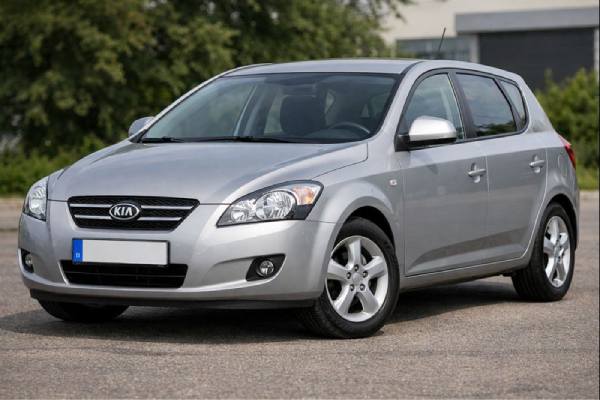
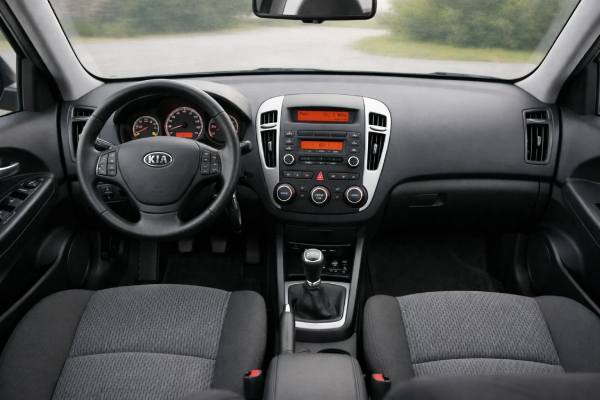
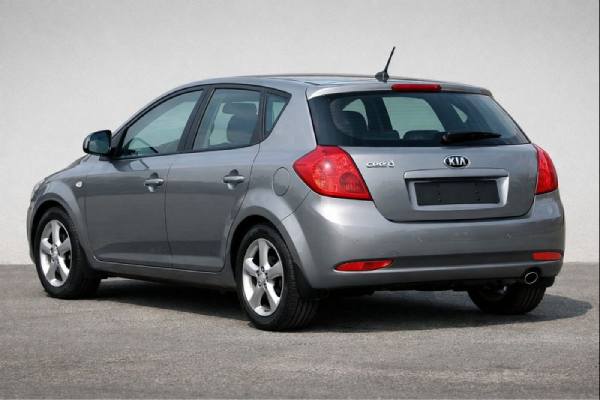
The 2007–2009 Kia Cee’d (ED) with the 1.6-liter G4FC petrol engine sits in a sweet spot of the first-generation lineup: enough power for relaxed motorway work, without the complexity (and parts cost) of turbocharging or direct injection. It’s a naturally aspirated, chain-driven, DOHC CVVT (variable valve timing) four-cylinder that rewards simple, routine care—especially clean oil, fresh filters, and a cooling system kept in good condition. As a used buy, the real story is rarely the headline horsepower. It’s how the car was serviced, whether recalls and service actions were completed, and how well the suspension, brakes, and clutch/gearbox have survived city use. This guide focuses on the exact 1.6 122 hp setup across 2007–2009, with practical ownership advice and the key data points you’ll want before buying or maintaining one.
Quick Specs and Notes
- Smooth, naturally aspirated power delivery that suits mixed city and highway use better than smaller engines.
- Multi-link rear suspension gives stable cornering and good bump control for the class.
- Watch for age-related wear: front suspension bushings, wheel bearings, and brake hardware can add up if neglected.
- Plan engine oil and filter service at 10,000 miles (16,000 km) or 12 months (whichever comes first).
- Brake fluid refresh every 2 years helps protect the ABS unit and keeps pedal feel consistent.
Jump to sections
- Kia Cee’d ED 1.6 in focus
- Kia Cee’d ED G4FC specifications
- Kia Cee’d ED equipment and safety
- Known faults and recalls
- Service schedule and buying checks
- Driving feel and real economy
- Rivals and best alternatives
Kia Cee’d ED 1.6 in focus
The 1.6-liter G4FC-powered Cee’d is the “do-most-things-well” version of the early ED range. It keeps the straightforward architecture enthusiasts like—multi-point fuel injection (MPI), no turbo, no high-pressure fuel pump—while adding enough torque to feel less strained than the 1.4 on hills and at motorway speeds. In everyday terms, it means fewer full-throttle moments, less downshifting, and a calmer cabin when you’re cruising.
A big part of the Cee’d ED appeal is chassis balance. The platform uses a MacPherson strut front and a multi-link rear setup, which—when bushings and dampers are healthy—delivers a composed ride over broken tarmac and better mid-corner stability than many torsion-beam rivals from the same era. Steering is rack-and-pinion with motor-driven assistance, and the car’s turning radius is tight enough to make urban parking relatively painless.
Ownership satisfaction depends on a few fundamentals:
- Service history matters more than mileage. These engines usually tolerate distance well if oil changes were consistent and the cooling system was not ignored.
- Consumables define “cheap” vs “expensive” years. A neglected example can need tyres, brakes, suspension arms, and a clutch close together—each item is normal wear, but stacked repairs quickly change the economics.
- Electrical and convenience features age differently by use. Cars used for short trips in wet climates often show faster wear in door locks, window regulators, and switchgear.
Where the 1.6 really earns its place is drivability with a full load. With five adults and luggage, the car still feels usable without constant rev chasing. It also tends to be more forgiving of small maintenance lapses than some later direct-injection petrol engines—though that is not a licence to stretch oil intervals or run old coolant.
If you’re shopping, treat the Cee’d ED as a “systems car.” You’re not buying an engine in isolation—you’re buying the state of the cooling system, suspension geometry, brake hardware condition, and the quality of past servicing. A well-kept 1.6 can be a durable, predictable daily driver; a poorly maintained one can feel tired long before the engine itself is truly worn.
Kia Cee’d ED G4FC specifications
Below are the most relevant technical figures for the 2007–2009 Cee’d ED 1.6 DOHC CVVT petrol (G4FC). Some values vary by transmission, tyre package, and market homologation; where that matters, you’ll see ranges.
Powertrain and efficiency
| Item | Specification |
|---|---|
| Engine code | G4FC |
| Layout and cylinders | Inline-4, DOHC CVVT, 4 valves/cyl (16V) |
| Displacement | 1.6 L (1,591 cc) |
| Bore × stroke | 77.0 × 85.44 mm (3.03 × 3.36 in) |
| Induction | Naturally aspirated (NA) |
| Fuel system | MPI (multi-point injection) |
| Compression ratio | 10.5:1 |
| Max power | 122 hp (89.7 kW) @ 6,200 rpm |
| Max torque | 154 Nm (114 lb-ft) @ 4,200 rpm |
| Timing drive | Chain |
| Fuel requirement | RON 95 petrol |
| Rated efficiency (typical) | ~6.9–7.1 L/100 km (≈34 mpg US / ≈41 mpg UK), depending on gearbox/tyres |
| Real-world highway @ 120 km/h | ~7.0–7.8 L/100 km (≈30–34 mpg US / ≈36–40 mpg UK), driven by wind, tyres, and load |
Transmission and driveline
| Item | Specification |
|---|---|
| Transmission | 5-speed manual (common); 4-speed automatic (market-dependent) |
| Drive type | FWD |
| Differential | Open |
Chassis and dimensions
| Item | Specification |
|---|---|
| Suspension (front / rear) | MacPherson strut / Multi-link (in-wheel type) |
| Steering | Rack and pinion, motor-driven power steering |
| Overall steering gear ratio | 13.2 |
| Steering wheel turns (lock-to-lock) | 2.69 turns (15–16 in tyres), 2.58 turns (17 in tyres) |
| Turning circle (kerb-to-kerb) | 10.34 m (33.9 ft) typical (turning radius 5.17 m) |
| Brakes (front / rear) | Ventilated disc 280 × 26 mm (11.0 × 1.0 in) / Solid disc 262 × 10 mm (10.3 × 0.4 in) |
| Parking brake | Drum-in-hat (DIH), Φ168 mm |
| Wheels/tyres (popular) | 205/55 R16 (also 195/65 R15; 225/45 R17 on some trims) |
| Ground clearance | 150 mm (5.9 in) |
| Length / width / height | 4,235 / 1,790 / 1,480 mm (166.7 / 70.5 / 58.3 in) |
| Wheelbase | 2,650 mm (104.3 in) |
| Fuel tank | 53 L (14.0 US gal / 11.7 UK gal) — steel |
| Cargo volume (VDA) | 340 L (12.0 ft³) seats up / 1,300 L (45.9 ft³) seats down |
Performance and capability (typical)
| Item | Typical value (varies by gearbox/tyres) |
|---|---|
| 0–100 km/h (0–62 mph) | ~10.4–11.4 s |
| Top speed | ~187–195 km/h (116–121 mph) |
| Towing capacity | Market-dependent; commonly ~1,000–1,200 kg braked / ~550 kg unbraked |
| Payload | Depends on trim and GVWR; confirm on VIN plate |
Fluids and service capacities (decision-useful)
| System | Specification (typical) |
|---|---|
| Engine oil | API/ACEA spec per market; commonly 5W-30 or 5W-40 meeting ACEA A3/B4 or manufacturer-approved equivalent |
| Engine oil capacity | 3.3 L (3.5 US qt) with filter |
| Manual gearbox oil | Typically ~2.0 L (verify by transmission code/market) |
| Automatic transmission fluid | ~6.8 L total fill (4-speed automatic; verify procedure and cooler draining method) |
| Coolant | Not stated in public product guide; verify by VIN/service manual and under-hood label |
| A/C refrigerant and oil | Not stated in public product guide; verify by under-hood label (varies by compressor and hose length) |
Safety and driver assistance (model era context)
| Item | Notes |
|---|---|
| Euro NCAP (period result) | 5-star overall era rating; adult/child/pedestrian were expressed as sub-scores/stars in 2007-era protocols rather than today’s four-percentage categories |
| ADAS | No modern AEB/ACC/LKA on this generation; stability/traction systems depend on trim/market |
| ABS/ESC | ABS common; ESC/ESP often trim- or market-dependent in early years |
Kia Cee’d ED equipment and safety
Trim structure varies across Europe, so the most helpful approach is to focus on what changes the way the car drives, costs to maintain, and protects occupants. For the 2007–2009 Cee’d ED 1.6 petrol, the biggest practical differences are typically transmission choice, wheel/tyre package, stability control availability, and convenience equipment that can become expensive when it ages (climate control modules, window regulators, central locking parts).
Trims and options you’ll actually notice
Common equipment patterns (names differ by country):
- Base and mid trims often run 15-inch wheels, simpler audio, manual climate, and fewer “nice-to-have” electric features. These can be the cheapest to keep long-term because there are fewer modules and motorized components to fail.
- Higher trims more often add 16- or 17-inch wheels, automatic climate control, upgraded audio, and extra comfort features. The driving feel can be slightly sharper on 17-inch tyres, but ride comfort and tyre cost usually worsen.
Quick identifiers when viewing a used car:
- Wheel size and tyre profile: 205/55 R16 is common; 225/45 R17 usually indicates a sportier appearance package.
- Climate control panel: automatic systems have a different control layout than basic heater controls.
- Stability control button/indicator: if the dashboard has ESP/ESC indicators and there is a disable button, that’s a meaningful safety and winter-driving advantage.
Year-to-year changes can be subtle, but always check:
- Head unit and steering-wheel controls (different suppliers and feature sets).
- Airbag and seatbelt warning strategies (minor wiring and module differences).
- Wheel and brake packages (affect replacement cost and braking feel).
Safety ratings and what they mean here
A key talking point for the Cee’d ED was strong crash performance for its time. In 2007-era Euro NCAP testing, results were typically presented as an overall star rating, with adult, child, and pedestrian protection expressed via sub-scores/stars under the older protocol. That matters because you cannot directly compare a 2007 score format to today’s four-category percentage ratings. Still, the core takeaway remains useful: the Cee’d was engineered to compete with the class leaders on occupant protection in its launch period.
Safety systems and “driver assistance” in practice
This generation predates modern camera/radar ADAS, so safety is mostly about structure, restraint systems, and stability/braking hardware:
- Airbags: many cars were equipped with six airbags (front, side, and curtain), but confirm by trim and market.
- Child-seat provisions: ISOFIX/LATCH is commonly present; always inspect anchor covers and ensure the seat base fits well (especially if rear cushions have been compressed over time).
- Brakes and stability: ABS is common; ESC/ESP is the feature to seek if you live in a wet, icy, or hilly area.
- Post-repair calibration: there’s no radar alignment, but correct wheel alignment and proper ABS sensor installation after hub/bearing work is critical to avoid warning lights and inconsistent ABS behavior.
If safety is a top priority, prioritize cars with ESC/ESP, good tyres (not just good tread), and evidence of correct brake servicing (fresh fluid, even pad wear, and no seized caliper sliders).
Known faults and recalls
Most Cee’d ED 1.6 problems are “normal ageing” rather than dramatic design failures. The most expensive ownership surprises usually come from stacked wear items—suspension, brakes, and neglected fluids—plus the occasional electrical gremlin. Below is a practical map of what to watch, organized by prevalence and typical cost severity.
Common (expect to see) — low to medium cost
- Front suspension wear (bushings, drop links, ball joints)
- Symptoms: clunks over bumps, vague steering on turn-in, uneven tyre wear.
- Likely cause: worn control-arm rear bushings, tired drop links, or ball joints with play.
- Remedy: replace worn components, then align the car. Delaying this can accelerate tyre wear and stress wheel bearings.
- Brake hardware and caliper slider issues
- Symptoms: pulling under braking, uneven pad wear, hot wheel after a drive, squeal.
- Likely cause: seized slider pins, corroded pad carriers, old brake fluid.
- Remedy: clean/lube or replace sliders and carriers, refresh fluid, inspect hoses.
- Wheel bearings (especially if tyres are large or alignment is off)
- Symptoms: humming that changes with speed and load direction.
- Remedy: hub/bearing replacement; ensure ABS sensor and tone ring are handled carefully.
Occasional — medium cost
- Clutch wear (manual cars) and dual-mass vs single-mass expectations
- Symptoms: high bite point, slipping under load, judder on take-off.
- Typical window: often shows up after heavy city use or poor driving habits rather than “just mileage.”
- Remedy: clutch kit replacement; inspect for oil leaks that contaminate the disc.
- Automatic transmission shift quality (4-speed automatic, where fitted)
- Symptoms: harsh shifts, delayed engagement, flare, or shudder.
- Root causes: old ATF, wrong fluid type, or valve-body wear in high-mileage units.
- Remedy: correct fluid service (proper specification), diagnosis before parts swapping.
- Cooling system ageing
- Symptoms: slow coolant loss, sweet smell, overheating in traffic, heater performance changes.
- Root causes: ageing hoses, radiator end tanks, thermostat sticking, water pump seepage.
- Remedy: pressure test, replace weak components, refill with the correct coolant mix.
Rare — higher cost if ignored
- Timing chain system noise or correlation faults
- Symptoms: persistent rattle at start-up, cam/crank correlation fault codes, rough running.
- Root causes: chain stretch, tensioner wear, guide wear—often made worse by long oil intervals.
- Remedy: confirm with diagnostic data; replace chain/tensioner/guides if out of spec.
- Electrical network issues from water ingress
- Symptoms: random warning lights, intermittent central locking/windows, damp footwell.
- Root causes: blocked drains, poor sealing around door membranes or cabin air intake areas.
- Remedy: fix the leak source first, then address connectors/modules.
Recalls, service actions, and how to verify them
Because recall scope depends on VIN and market, the most reliable method is always an official VIN check plus dealer history. Use a 17-digit VIN check tool and ask for paperwork showing completion. If you’re buying privately, it’s reasonable to request a printed dealer statement or service invoice line that confirms recall work was done.
Pre-purchase request list:
- Full service history (stamps plus invoices where possible).
- Evidence of brake fluid changes and coolant services (not just oil).
- Confirmation of recall completion by VIN.
- Proof of alignment/tyres if the car recently had suspension work.
In short: these cars reward preventative maintenance. A clean, regularly serviced example is usually far cheaper over two years than a “cheap” one with stacked deferred work.
Service schedule and buying checks
A practical maintenance plan for the Cee’d ED 1.6 is about keeping oil clean, preventing overheating, and avoiding the “silent killers” of older cars: neglected brake fluid, tired belts/hoses, and worn suspension that ruins tyres. Below is a sensible schedule that aligns well with how these cars age in real life. Always treat the official documentation for your VIN and market as the final authority.
Core maintenance schedule (distance/time)
Every 10,000 miles (16,000 km) or 12 months (whichever comes first)
- Engine oil and filter (use the correct spec for your market).
- Inspect for oil leaks (cam cover area, timing cover perimeter, sump area).
- Tyre rotation (if tyres are non-directional) and pressure check.
- Brake inspection: pad thickness, rotor condition, slider movement.
Every 20,000 miles (32,000 km) or 24 months
- Engine air filter (more often in dusty city driving).
- Cabin filter (often yearly if you use A/C heavily).
- Throttle body inspection/cleaning if idle quality degrades (don’t over-clean or disturb sensors unnecessarily).
- Inspect suspension bushings and ball joints; check wheel bearing play.
Every 2 years (regardless of mileage)
- Brake fluid replacement (DOT spec per cap/market).
- Coolant condition check; replace if degraded or unknown history.
- A/C performance check; clean condenser and check for leaks if cooling weakens.
Every 60,000 miles (96,000 km) or 6 years (typical planning point)
- Spark plugs (interval varies by plug type and market, but this is a safe planning window).
- Accessory/serpentine belt inspection and likely replacement if cracked or noisy.
- Consider preventive thermostat replacement if the cooling system has had issues.
Timing chain guidance (chain-driven engine)
- No fixed replacement interval like a belt, but do not ignore:
- start-up rattle that persists,
- oil pressure-related noise,
- or timing-correlation fault codes.
- Clean oil is the best “chain insurance.” Long oil intervals are what often turn a chain into a problem.
Fluids and capacities (decision-useful)
- Engine oil: 3.3 L with filter.
- Manual gearbox oil: plan around ~2.0 L (verify by transmission code).
- 4-speed automatic total fill: ~6.8 L (verify procedure/spec).
- Fuel: RON 95 petrol.
Buyer’s guide: what to inspect in 30 minutes
Under the hood (cold engine preferred)
- Coolant level and signs of crusty residue around hose joints and radiator edges.
- Oil cap and dipstick: avoid sludge and strong fuel smell.
- Listen for timing-area rattle at cold start that lasts more than a moment.
Test drive checks
- Straight-line tracking: car should not drift; steering wheel should be centered.
- Braking: no pulsing (warped rotors) and no pull (calipers/sliders).
- Gearbox: smooth engagement; no crunching; clutch bite not at the very top.
- Suspension: no knocks on potholes; no “float” after bumps.
Underside and body
- Look for corrosion hotspots: wheel arches, underbody seams, and subframe areas (especially if the car lived in salted-road climates).
- Check for wet carpets or musty smell (water ingress leads to electrical problems).
Long-term durability outlook
A well-maintained Cee’d ED 1.6 can be a long-lasting commuter because it avoids many later-era complexity traps (turbo DI fuel systems, particulate filters on petrol engines, etc.). The durability “make-or-break” is almost always care: clean oil, sound cooling system, and suspension kept tight so tyres and bearings don’t get punished.
Driving feel and real economy
On the road, the 1.6 CVVT Cee’d feels like a classic naturally aspirated hatchback: linear throttle response, predictable power build, and a preference for mid-to-upper revs when you want brisk overtakes. It won’t punch like a modern turbo, but it also doesn’t have turbo lag or the heat-related complexity that comes with boosted engines.
Ride, handling, and NVH
- Ride quality: The multi-link rear suspension is the star here. When dampers and bushings are healthy, it smooths out mid-corner bumps and prevents the rear from hopping on uneven surfaces.
- Handling balance: Neutral and confidence-building at normal speeds. The car tends to understeer progressively when pushed, which is predictable for most drivers.
- Steering feel: Light to medium effort, with decent accuracy for city work. Expect more “assistance feel” than road texture—normal for electric assist systems of this period.
- Cabin noise: At motorway speeds, tyre choice matters. 17-inch tyres usually add more road roar than 15–16-inch setups, even with the same brand.
Powertrain character
- Low-speed response: Good for urban traffic; the engine is happy pulling gently from low rpm, but strongest passing power comes with a downshift.
- Manual gearbox: Generally the better match for the engine’s character, keeping it in the rev band that feels lively.
- Automatic (where fitted): The 4-speed unit can feel dated—more noticeable rpm jumps and more frequent kickdown under load. It’s fine for relaxed driving, but it will usually cost some performance and efficiency.
Real-world efficiency (what owners typically see)
Factory-style combined figures for this setup often land around ~6.9–7.1 L/100 km, but real-world results depend on speed and trip length:
- City: ~8.0–9.5 L/100 km (≈25–29 mpg US / ≈30–35 mpg UK), especially with short trips and winter warm-up.
- Highway (100–120 km/h): ~7.0–7.8 L/100 km (≈30–34 mpg US / ≈36–40 mpg UK).
- Mixed driving: ~7.2–8.3 L/100 km (≈28–33 mpg US / ≈34–39 mpg UK).
Two ownership tips that genuinely move the needle:
- Tyres and alignment: a slightly off alignment can add fuel use and destroy tyres long before you notice steering pull.
- Cooling system health: an engine that runs too cool (thermostat stuck open) may feel fine but will often consume more fuel and wear faster.
Performance metrics that change the verdict
For most buyers, the key numbers are simple: this 1.6 is usually a ~10–11 second 0–100 km/h hatch with a top speed around ~190 km/h, which is enough for confident merging and long-distance cruising. More important than the stopwatch is how the car feels: smooth, predictable, and easy to drive—especially compared to smaller engines that must work harder.
Rivals and best alternatives
The Cee’d ED 1.6 lives in a crowded segment. The right comparison depends on what you value most: durability, parts pricing, driving feel, or rust resistance. Here’s how it typically stacks up against key era rivals.
Versus Volkswagen Golf (Mk5/Mk6 era petrol)
- Cee’d advantage: Often better value per condition level (more equipment for the money) and a simpler engine setup than some FSI/TSI variants.
- Golf advantage: Stronger interior materials on many trims, broad specialist support, and widely available parts.
- Verdict: If you want “set-and-forget” simplicity, the Cee’d MPI-style petrol can be easier long-term than complex turbo petrol Golfs—assuming the Cee’d is well maintained.
Versus Ford Focus (Mk2 petrol)
- Cee’d advantage: Competitive chassis comfort and stable motorway manners; often generous standard safety equipment for the time.
- Focus advantage: Steering feel and chassis engagement are often class-leading; huge used-market supply.
- Verdict: Choose the Focus for driving feel; choose the Cee’d when you want a balanced daily driver with strong value and a straightforward petrol engine.
Versus Opel/Vauxhall Astra (H era petrol)
- Cee’d advantage: Generally good chassis balance and an ownership reputation helped by the model’s European development focus.
- Astra advantage: Abundant parts and many body/trim variations; some engines are very robust if maintained.
- Verdict: Both can be solid; buy on condition and rust status. The Cee’d is often the calmer “all-rounder.”
Versus Toyota Auris (1st gen petrol)
- Cee’d advantage: Often more planted ride/handling feel thanks to suspension tuning and rear layout; sometimes more equipment for the money.
- Auris advantage: Very strong long-term reliability reputation and typically low drama ownership.
- Verdict: If your priority is minimal surprises, Auris is hard to beat. If you want a slightly more “European” drive without turbo complexity, the Cee’d is a strong alternative.
Who should choose the Cee’d ED 1.6?
Pick this Cee’d if you want:
- A naturally aspirated petrol hatch that’s easy to live with.
- A chassis that feels stable and confidence-inspiring on mixed roads.
- A car where long-term cost is mainly about wear items and maintenance discipline, not exotic failure modes.
Consider a rival if you prioritize:
- The very best steering feel (Focus).
- The most conservative reliability reputation (Auris).
- Specific interior/brand preferences (Golf/Astra).
The bottom line: a well-kept Cee’d ED 1.6 is often a smarter buy than a “prestige badge” rival in poorer condition. Condition, service evidence, tyres/brakes/suspension health, and recall completion matter more than the logo on the bonnet.
References
- cee’d product Guide 2007 (Product Guide)
- Kia Car Owners Manual | Kia UK 2026 (Owner’s Manual Portal)
- 7.2 Kia Service Intervals V25.12.xlsx 2026 (Service Intervals)
- Kia Recalls | Kia Europe 2026 (Recall Database)
- Kia cee’d wins 5-Star Euro NCAP safety rating – Kia Slovakia s.r.o. 2007 (Safety Rating)
Disclaimer
This article is for informational purposes only and is not a substitute for professional inspection, diagnosis, or repair. Specifications, torque values, service intervals, and procedures can vary by VIN, market, and equipment. Always verify details using official Kia service information for your specific vehicle and follow correct safety practices when working on a car.
If you found this guide useful, please consider sharing it on Facebook, X (Twitter), or your preferred forum to help others find reliable ownership information.