
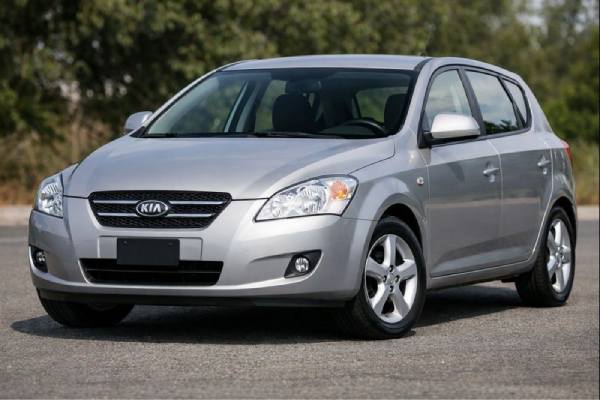
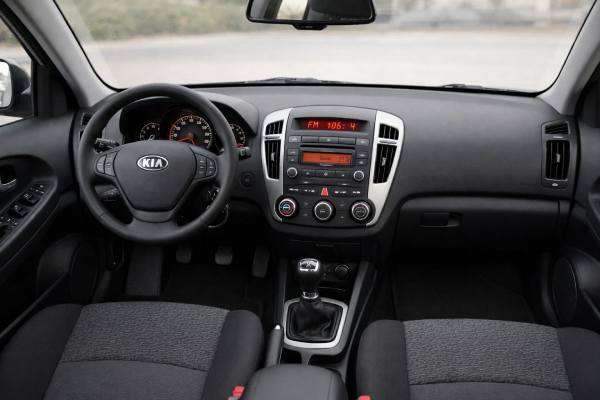

The 90 hp 1.6 CRDi version of the Kia Cee’d (ED) targets drivers who want a simple, torque-rich commuter rather than hot-hatch pace. The D4FB diesel is most appreciated for its mid-range pull, relaxed cruising, and strong fuel economy—especially on long motorway runs. It also tends to tolerate high mileage well when the service history is consistent and the car hasn’t lived on short trips that never fully warm the engine.
Where owners get caught out is not usually the basic engine block, but the “supporting cast”: intake and emissions hardware (EGR and, on some markets, a DPF), clutch and dual-mass flywheel wear, and diesel fuel-system sensitivity to poor-quality fuel. If you buy with eyes open—and maintain it like a diesel—this Cee’d can be a very cost-effective used car.
At a Glance
- Strong low-rpm torque makes it easy to drive in traffic and on hills, even with passengers.
- Excellent long-distance efficiency; happiest on steady motorway runs.
- Generally durable core engine, but budget for EGR/intake cleaning and diesel fuel-system care.
- Change engine oil and filter every 10,000–15,000 km or 12 months (whichever comes first).
- Best buys have proof of regular fuel-filter changes and smooth clutch take-up (no shudder).
On this page
- Kia Cee’d ED 1.6 CRDi basics
- Kia Cee’d ED D4FB data
- Kia Cee’d ED diesel trims and safety
- Common failures, recalls, and fixes
- Maintenance schedule and buying checklist
- Real driving: torque and mpg
- Rival diesels worth considering
Kia Cee’d ED 1.6 CRDi basics
The 2007–2009 Kia Cee’d (ED) in 1.6 CRDi 90 hp form is the “workhorse” spec in the range. It trades outright performance for lower running costs, longer touring range, and a calmer driving style that suits mixed city and highway use. In real ownership terms, its biggest advantage is how little effort it needs to maintain speed once rolling—diesel torque arrives early, so you upshift sooner and cruise at lower rpm than the petrol versions.
This version typically came with front-wheel drive and a manual gearbox, most often a 5-speed on lower-output diesels in many markets (some regions offered 6-speed depending on year and trim). The drivetrain is straightforward, which is good news for used buyers: fewer complex options, fewer expensive modules, and generally predictable wear patterns.
From an engineering perspective, the D4FB is part of Hyundai-Kia’s small diesel family: cast-iron block for strength, aluminium head for heat management, common-rail injection, and turbocharging (often variable-geometry on many 1.6 CRDi applications). The “diesel ownership rules” apply: it prefers longer journeys, clean fuel, and regular oil changes with the correct low-ash specification if the car is equipped with a particulate filter.
As a used purchase today, the Cee’d ED diesel is best approached as a condition-and-history car. A well-maintained example can feel tight and economical even at higher mileage. A neglected one can become a string of small-but-annoying repairs—boost leaks, sticky EGR valves, tired engine mounts, and clutch vibration. The good news is that most issues announce themselves clearly during a test drive and inspection, so a careful buyer can avoid the costly examples.
Advantages that tend to stand out in this exact variant
- Low fuel consumption on steady runs and solid range from a full tank.
- Torque delivery suits real traffic and hilly routes better than small petrol engines.
- Good crash structure reputation for its era, plus strong standard safety basics.
Kia Cee’d ED D4FB data
Below are practical, “what you actually need” specifications for the 1.6 CRDi 90 hp Cee’d ED. Values can vary slightly by market, body style (3-door / 5-door / SW), wheel size, and emissions configuration. Use these as a solid baseline, then verify by VIN and trim plate when ordering parts or fluids.
Powertrain and efficiency
| Item | Specification (typical for 90 hp D4FB tune) |
|---|---|
| Code | D4FB |
| Engine layout and cylinders | Inline-4, DOHC, 16 valves (4 valves/cyl) |
| Bore × stroke | 77.2 × 84.5 mm (3.04 × 3.33 in) |
| Displacement | 1.6 L (1,582 cc) |
| Induction | Turbocharged (often VGT), intercooler |
| Fuel system | Common-rail diesel direct injection |
| Compression ratio | Typically in the 16.0–17.3:1 range (generation/calibration dependent) |
| Max power | 90 hp (66 kW) @ ~4,000 rpm |
| Max torque | Commonly ~235 Nm (173 lb-ft) @ ~1,750–2,500 rpm |
| Timing drive | Chain |
| Rated efficiency | Often ~4.5–5.5 L/100 km (52–43 mpg US / 63–51 mpg UK) depending on tyres and test cycle |
| Real-world highway @ 120 km/h | Commonly ~6.0–6.8 L/100 km (39–35 mpg US / 47–42 mpg UK) |
Transmission and driveline
| Item | Specification (common) |
|---|---|
| Transmission | Manual (often 5-speed on 90 hp; some markets 6-speed) |
| Drive type | FWD |
| Differential | Open |
Chassis and dimensions
| Item | Typical hatchback values (check body style) |
|---|---|
| Suspension (front / rear) | MacPherson strut / multi-link (market-dependent; some trims use torsion beam) |
| Steering | Rack-and-pinion, power-assisted |
| Brakes | Front ventilated discs; rear discs or drums depending on trim |
| Wheels/tyres (popular size) | Often 195/65 R15 or 205/55 R16 |
| Ground clearance | ~145–155 mm (~5.7–6.1 in) depending on tyres/suspension |
| Length / width / height | ~4,235 / 1,790 / 1,480 mm (166.7 / 70.5 / 58.3 in) |
| Wheelbase | ~2,650 mm (104.3 in) |
| Turning circle (kerb-to-kerb) | ~10.6 m (~34.8 ft) |
| Kerb weight | Commonly ~1,250–1,350 kg (2,756–2,976 lb) depending on body/trim |
| Fuel tank | ~53 L (14.0 US gal / 11.7 UK gal) |
| Cargo volume | Typically ~340 L seats up / ~1,300+ L seats down (method varies) |
Performance and capability
| Metric | Typical for 90 hp diesel hatch |
|---|---|
| 0–100 km/h (0–62 mph) | ~12–14 s (traction, tyres, gearing, and test method matter) |
| Top speed | ~175–185 km/h (109–115 mph) |
| Towing capacity | Market-dependent; commonly modest (often ~1,200–1,500 kg braked where rated) |
| Payload | Usually ~450–550 kg depending on GVWR |
Fluids and service capacities
These are decision-making numbers; always confirm with VIN/engine label and the correct service manual for your market.
| Fluid / item | Typical guidance |
|---|---|
| Engine oil | Diesel spec oil (often ACEA C3 for DPF cars), common viscosity 5W-30 |
| Engine oil capacity | ~5.3–5.7 L (with filter; varies by sump/market) |
| Coolant | Ethylene-glycol long-life coolant, mixed to climate (often 50/50) |
| Coolant capacity | ~6.5–7.0 L (system-dependent) |
| Manual gearbox oil | Typically 75W-85 or 75W-90 gear oil (confirm exact spec) |
| Brake fluid | DOT 4 |
| A/C refrigerant | Often R134a on this era (charge varies by system) |
Key torque specs (critical fasteners, typical ranges)
- Wheel nuts: commonly ~90–110 Nm (66–81 lb-ft)
- Engine oil drain plug: commonly ~30–40 Nm (22–30 lb-ft)
- If you’re doing brakes: always follow the caliper carrier bolt spec for your exact axle and brake package (it varies).
Kia Cee’d ED diesel trims and safety
Because the Cee’d ED was sold across many European markets, trim naming varies more than the hardware. Instead of chasing trim badges alone, it’s smarter to identify what the car physically has: wheel size, rear brake type (disc vs drum), number of airbags, presence of stability control, and whether it has a diesel particulate filter. Those details affect both ownership costs and how the car feels day to day.
Trims and options (what typically changes)
Most markets offered a core ladder of “entry / mid / high” equipment. Common differences you’ll see:
- Wheels and tyres: Base cars often run 15-inch wheels (comfort bias, cheaper tyres). Mid/high trims commonly use 16-inch alloys (sharper steering response, slightly higher tyre cost).
- Rear brakes: Some entry trims use rear drums; higher trims more often have rear discs. Rear discs can improve pedal consistency but add caliper service cost.
- Cabin equipment: Climate control vs manual A/C, heated mirrors, cruise control, trip computer features, and audio upgrades vary widely.
- Convenience options: Parking sensors, automatic lights/wipers, and steering-wheel controls appear more often on mid/high trims.
Quick identifiers during inspection
- Stability control: Look for an ESC button/indicator and confirm it self-tests on the dash at key-on.
- Airbag count: Many Cee’d ED cars were sold with multiple airbags; verify by steering-wheel and seat labels plus A-pillar/roof curtain markings.
- DPF presence: Some markets/years have DPF; signs include DPF-related dash symbols, specific exhaust hardware, and service history that mentions low-ash oil (ACEA C3-type).
Safety ratings and structure (what to know)
The Cee’d ED is well-regarded for its era in crash protection. It earned a 5-star Euro NCAP result under the test regime used at the time, with strong adult occupant protection and respectable child protection performance. Keep in mind that older Euro NCAP scores aren’t directly comparable to modern cars because test procedures and rating requirements have changed substantially.
Safety systems and driver assistance
On 2007–2009 cars, “ADAS” as we think of it today is generally not part of the picture. Instead, safety is built around:
- Airbags and seatbelts: Front airbags plus side/curtain airbags on many trims, pretensioners, and load limiters.
- ABS and stability systems: ABS is common; ESC availability can vary by market and trim—prioritize cars that have it.
- Child-seat provisions: ISOFIX/LATCH points are typically present; confirm the covers and anchor locations and check for damage from repeated seat installation.
If you’re comparing used examples, the single biggest “safety option” difference is ESC. Everything else being equal, choose the car with stability control—even if it costs a little more—because it can prevent the crash in the first place.
Common failures, recalls, and fixes
The D4FB 1.6 CRDi itself is not usually the problem; the ownership story is mostly about diesel peripherals and wear parts. Below is a practical way to think about issues: how often they show up, how expensive they get, and what symptoms you can spot quickly.
Common (plan for it)
- EGR valve and intake contamination (low–medium cost):
Symptoms: hesitation, uneven idle, smoky acceleration, poor economy, occasional fault lights.
Root cause: soot and oil vapour build-up, especially with short-trip driving.
Remedy: EGR cleaning/replacement; intake cleaning; ensure correct oil spec and regular “hot” runs. - Boost leaks from hoses/intercooler joints (low cost):
Symptoms: reduced power, whooshing noises, oily mist around hose joints, inconsistent boost.
Root cause: ageing rubber hoses, loose clamps, split elbows.
Remedy: pressure test, replace weak hoses/clips. - Engine mounts and vibration (low–medium cost):
Symptoms: harsh idle in gear, vibration through steering wheel, clunks on take-up.
Root cause: mount wear amplified by diesel vibration.
Remedy: replace mounts in matched quality; check lower torque mount.
Occasional (depends on driving style and mileage)
- Clutch and dual-mass flywheel wear (medium–high cost):
Symptoms: shudder when moving off, rattling at idle, clutch slip under load, vibration on shutdown.
Root cause: high torque at low rpm, city use, towing, poor driving habits.
Remedy: clutch kit + DMF if needed; avoid lugging the engine after repair. - Turbo control issues (medium cost):
Symptoms: limp mode, inconsistent power, over/under-boost codes.
Root cause: sticky VGT mechanism, vacuum leaks, tired actuator/solenoid.
Remedy: diagnose control system before condemning the turbo; repair vacuum lines and actuators first. - Diesel injectors and sealing (medium–high cost):
Symptoms: hard starting, diesel knock, fuel smell, rising oil level (serious), smoky idle.
Root cause: injector wear, seal failure, fuel quality.
Remedy: leak-back test, replace seals/injector as required; frequent fuel filter changes reduce risk.
Rare (but expensive if ignored)
- DPF-related trouble (market-dependent, high cost if neglected):
Symptoms: frequent regeneration attempts, poor fuel economy, warning lights, reduced power.
Root cause: repeated short trips, wrong oil, failed sensors.
Remedy: correct diagnosis (pressure sensors, temperature sensors), forced regen, or replacement if damaged.
Recalls, service actions, and how to verify
Recalls are VIN-specific. The only reliable approach is to run the VIN through the official Kia recall checker and confirm completion through dealer history or paperwork. If a seller can’t show proof, treat it as “unknown” and price the car accordingly. Also check for software updates related to driveability or sensor faults—diesels often benefit from calibration improvements over time.
Pre-purchase checks to request
- Service invoices showing regular oil changes (not stretched intervals).
- Evidence of fuel filter replacement at sensible intervals.
- Proof of any recall work completed.
- A test drive that includes a fully warmed engine, steady 120 km/h cruising, and a couple of hard accelerations to check boost consistency.
Maintenance schedule and buying checklist
A diesel Cee’d can be inexpensive to run, but only if maintenance is treated as preventive rather than reactive. Use the schedule below as a practical baseline, then tighten intervals if the car does short trips, cold starts, or stop-start city driving.
Practical maintenance schedule (distance/time)
- Engine oil and filter: every 10,000–15,000 km or 12 months.
- If DPF-equipped, use the correct low-SAPS diesel oil spec (commonly ACEA C3-type) and don’t stretch intervals.
- Air filter: every 20,000–30,000 km (inspect annually; dusty climates need more frequent changes).
- Cabin filter: every 15,000–20,000 km or yearly for HVAC performance.
- Fuel filter: every 30,000–40,000 km (or sooner if fuel quality is questionable).
- Coolant: typically 5 years then every 2–3 years (confirm the coolant type already in the system).
- Brake fluid: every 2 years regardless of mileage.
- Gearbox oil (manual): inspect for leaks; change around 80,000–120,000 km for long-term synchro and bearing health.
- Brakes (pads/rotors): inspect every service; replace based on thickness and corrosion condition.
- Tyres: rotate every 10,000–12,000 km; align annually or after suspension work.
- Timing chain: no routine replacement interval; listen and inspect at higher mileage (rattle on cold start, correlation faults, guide/tensioner wear).
- Battery (12 V): test annually; typical replacement window 4–6 years depending on climate.
Buyer’s inspection checklist (what actually saves you money)
- Cold start: should fire quickly with minimal smoke; prolonged cranking suggests glow plug, compression, injector, or fuel pressure issues.
- Idle quality: mild diesel vibration is normal; harsh shaking can mean mounts, injector imbalance, or air leaks.
- Boost under load: find a safe uphill section—power should build smoothly without surging or limp mode.
- Clutch take-up: any judder or rattling at idle can point to DMF wear.
- Cooling system: check for stable temperature, clean expansion tank, and no pressure build-up anomalies.
- Underside and corrosion hotspots: focus on sills, rear subframe areas, brake lines, and suspension mounting points (regional climate matters).
- Electrics: confirm all windows, central locking, HVAC fan speeds, and instrument cluster warning lights behave correctly at key-on.
Long-term durability outlook
If you do mixed driving with regular longer trips, keep oil changes conservative, and don’t ignore small boost or EGR symptoms, the D4FB Cee’d ED can be a dependable high-mileage car. The difference between a “great diesel” and a “problem diesel” is usually service discipline and usage pattern, not luck.
Real driving: torque and mpg
This Cee’d diesel feels most confident from low to mid rpm. In normal traffic you can short-shift and let torque do the work, which reduces noise and makes the car feel calmer than many small petrol alternatives. The engine is not sporty—past the midrange it runs out of urgency—yet it’s effective for everyday driving because it doesn’t require constant gear changes.
Ride, handling, and NVH
- Ride: generally composed at speed, with the biggest difference coming from wheel size. 15-inch tyres usually ride best; 16-inch packages sharpen steering but can add impact harshness over potholes.
- Handling: predictable front-drive balance with safe understeer. Quality tyres matter more than most owners expect—cheap tyres can make the car feel nervous in the wet.
- NVH (noise, vibration, harshness): diesel clatter is noticeable when cold, then settles. At motorway speeds, tyre noise often dominates, especially on worn rear tyres.
Powertrain character
- Throttle response: strong for a small diesel once boost is established; avoid full throttle below ~1,500 rpm to reduce lugging and protect the DMF.
- Gearbox feel: typically light and easy, though older high-mileage cars can feel notchy if gearbox oil has never been refreshed.
- Best driving habit: keep it in the torque band rather than revving it out—this is where the engine feels smoothest and most economical.
Real-world fuel economy (what owners typically see)
Fuel economy depends heavily on route type and DPF configuration, but the pattern is consistent:
- City: often 6.0–7.5 L/100 km (39–31 mpg US / 47–38 mpg UK), worse with short trips and cold weather.
- Highway (100–120 km/h): commonly 5.5–6.8 L/100 km (43–35 mpg US / 51–42 mpg UK).
- Mixed: often ~5.0–6.2 L/100 km (47–38 mpg US / 57–46 mpg UK).
Cold-weather delta: short winter trips can add 10–25% consumption because the engine spends more time warming up and, on some cars, regeneration events can increase fuel use.
Selective performance metrics that matter
- 0–100 km/h: it’s adequate, not quick; plan overtakes rather than relying on top-end power.
- In-gear pull: the key strength—passing from 80–120 km/h feels more confident than a small petrol with similar peak horsepower.
Rival diesels worth considering
In the late-2000s C-segment, many rivals offered strong diesels. The Cee’d ED 1.6 CRDi 90’s competitive edge is usually value-for-money and straightforward ownership when maintained properly. Where rivals may beat it is in either cabin refinement or a broader spread of drivetrain options.
Volkswagen Golf 1.9 TDI / 2.0 TDI (same era)
- Why consider it: strong diesel reputation, wide parts availability, many specialist workshops.
- Watch-outs: some variants carry expensive injector/DMF/turbo stories if maintenance was skipped; trim complexity can raise repair costs.
Ford Focus 1.6 TDCi
- Why consider it: excellent steering and chassis balance; often very good real-world economy.
- Watch-outs: service history is everything; pay attention to turbo oil-feed health and correct oil usage.
Opel/Vauxhall Astra 1.7 CDTi
- Why consider it: often robust, long-legged motorway car; good used pricing.
- Watch-outs: EGR and intake soot issues are common across the class; check for consistent boost and clean running.
Renault Megane 1.5 dCi
- Why consider it: very efficient and often cheaper to buy.
- Watch-outs: depends heavily on maintenance quality; verify service intervals and listen carefully for drivetrain noise.
How the Cee’d diesel fits among them
Choose the Cee’d ED 1.6 CRDi 90 if you want:
- A sensible, torque-focused commuter that rewards conservative servicing
- Good safety fundamentals for its time
- A used car that is often priced attractively compared with the “default picks”
Choose a rival if you prioritize:
- The most refined cabin feel (often Golf)
- The sharpest handling (often Focus)
- The absolute lowest purchase price (varies by local market)
References
- cee’d product Guide 2007 (Product Guide)
- ED English 1.qxd 2007 (Owner’s Manual)
- Kia Recalls | Kia Europe 2026 (Recall Database)
- Kia cee’d wins 5-Star Euro NCAP safety rating 2007 (Safety Rating)
- Adult occupant protection Child restraints Pedestrian … 2007 (Safety Rating)
Disclaimer
This article is for informational purposes only and is not a substitute for professional diagnosis, inspection, or repair. Specifications, torque values, service intervals, and procedures can vary by VIN, market, model year, and installed equipment; always verify details using the official Kia service documentation for your exact vehicle.
If this guide helped you, please consider sharing it on Facebook, X (Twitter), or your favorite forum/community to support our work.