
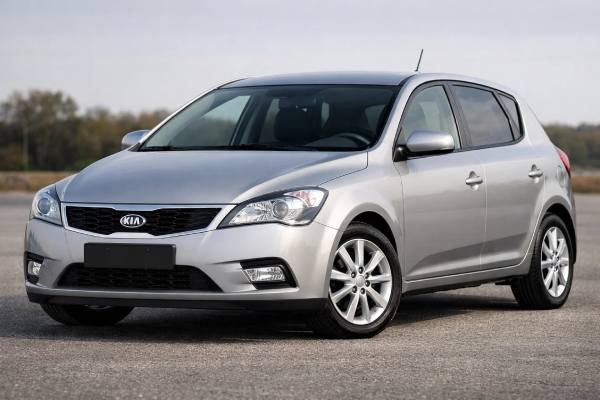
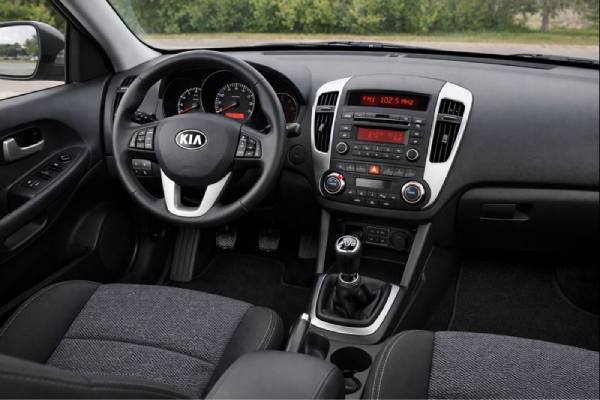
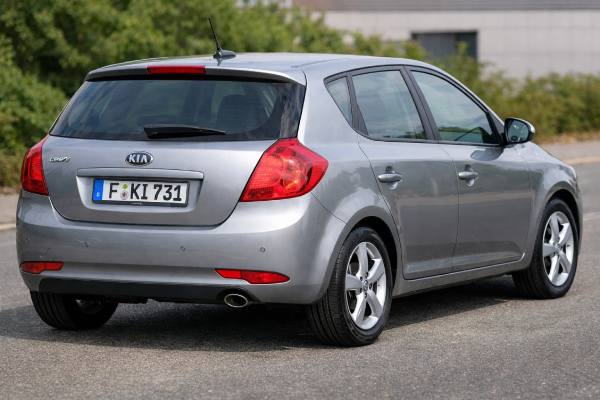
The facelift 2009–2012 Kia Cee’d with the 1.6-liter diesel in 128 hp tune is the “long-legged” version of the ED range: still built around efficiency, but with noticeably stronger mid-range pull and easier motorway pace than the lower-output CRDi options. For owners, the appeal is simple—low fuel use, relaxed overtakes, and a drivetrain that suits steady commuting and intercity travel.
The main ownership question is not whether the engine can cover high mileage (many do), but whether the car’s service history and usage pattern match a modern diesel’s needs. Regular full warm-ups and longer runs help the EGR and (where fitted) DPF system stay healthy, while stop-start urban life can turn a good car into a warning-light magnet. Buy carefully, service it conservatively, and this 128 hp Cee’d can still be a very rational, comfortable daily driver with strong value per kilometer.
Quick Specs and Notes
- Stronger torque delivery makes motorway merges and 80–120 km/h passing less stressful than lower-output diesels.
- Excellent long-run economy when tyres, thermostat, and boost system are healthy.
- Generally straightforward to service compared with many contemporaries, with good parts availability.
- Short-trip use increases the risk of EGR/DPF soot issues and frequent regenerations (where fitted).
- Plan engine oil and filter service every 15,000 km (10,000 mi) or 12 months for longevity-focused ownership.
Quick navigation
- Kia Cee’d 128 hp diesel focus
- Kia Cee’d 1.6 CRDi data
- Kia Cee’d trims and safety gear
- Reliability and trouble spots
- Maintenance schedule and buyer tips
- On-road performance and economy
- Rivals and ownership value
Kia Cee’d 128 hp diesel focus
The facelift Kia Cee’d (ED) sits in the sweet spot of compact ownership: big enough to feel stable and comfortable at speed, small enough to stay easy in cities. In 1.6-liter 128 hp diesel form, it leans into what this platform does best—quiet, steady long-distance travel with strong fuel economy—while adding the extra shove that makes daily driving feel less effortful.
What you notice first is flexibility. The 128 hp CRDi doesn’t need to be worked hard to keep pace, and that matters in real traffic. With a healthy turbo and airtight charge-air plumbing, it pulls cleanly in the mid-range, so overtakes require fewer downshifts and less planning. That improvement can also be kinder to the drivetrain: instead of lugging the engine at very low rpm in a high gear, you can run a slightly higher rpm band where combustion is cleaner and vibrations are lower.
From an engineering and ownership viewpoint, this car is best understood as a “systems” package. The mechanical core is usually durable—diesel bottom ends and cooling systems are typically robust when oil changes are kept consistent. The weak points are usually peripheral: airflow management (EGR and intake deposits), emissions aftertreatment (DPF on many markets/specs), and age-related wear in mounts, suspension bushings, and braking hardware.
It’s also a car where usage history matters more than mileage. A 220,000 km example that has lived on motorways, warmed properly, and received regular oil and fuel-filter changes can be a better bet than a 140,000 km car that did mostly cold starts and short trips. Diesels dislike repeated cold running: soot rises, the oil can dilute during regeneration events (where fitted), and EGR/DPF components see more stress.
Advantages remain strong in 2026 used-car reality. The Cee’d is generally easy for independent garages to service, parts are widely available, and the chassis tuning is forgiving on imperfect roads. The trade-off is that you must buy with discipline. A seller who can show consistent maintenance, recent brake fluid and coolant attention, and sensible tyre choices is effectively proving the car was treated as a long-term tool—not a disposable commuter.
If your weekly routine includes longer drives, this 128 hp diesel is one of the more satisfying versions of the ED range. If your routine is mostly short urban hops, it can still work—but you should expect more frequent soot-related maintenance and be honest about whether a petrol alternative would be a simpler fit.
Kia Cee’d 1.6 CRDi data
The 128 hp 1.6 CRDi specification varies slightly by market (emissions level, gearbox code, body style), so the tables below reflect typical values for the 2009–2012 facelift range. Use them as a practical reference, then verify the exact figures for your VIN and registration market.
Powertrain and efficiency
| Item | Specification (typical) |
|---|---|
| Code | 1.6 CRDi (commonly D4FB family, market dependent) |
| Engine layout and cylinders | Inline-4, transverse; DOHC; 4 valves/cyl (16V) |
| Bore × stroke | ~77.2 × 84.5 mm (3.04 × 3.33 in) |
| Displacement | 1.6 L (~1,582 cc) |
| Induction | Turbocharged, intercooled (often VGT by market) |
| Fuel system | Common-rail direct injection |
| Compression ratio | Typically high-teens:1 (varies by emissions version) |
| Max power | 128 hp (94 kW) @ ~4,000 rpm |
| Max torque | ~260 Nm (192 lb-ft) @ ~1,900–2,750 rpm |
| Timing drive | Chain |
| Rated efficiency (combined) | ~4.8–5.6 L/100 km (49–42 mpg US / 59–50 mpg UK) |
| Real-world highway @ 120 km/h | ~5.8–6.8 L/100 km (41–35 mpg US / 49–42 mpg UK) |
Transmission and driveline
| Item | Specification (typical) |
|---|---|
| Transmission | Commonly 6-speed manual on higher outputs; other variants exist by market |
| Drive type | FWD |
| Differential | Open |
Chassis and dimensions
| Item | Specification (typical hatchback reference) |
|---|---|
| Suspension (front/rear) | MacPherson strut / multi-link (common for this generation) |
| Steering | Power-assisted rack and pinion (system varies by year/market) |
| Brakes | Front ventilated discs / rear discs (trim dependent) |
| Wheels and tyres (popular) | 205/55 R16; 225/45 R17 on sportier trims |
| Ground clearance | ~145–155 mm (5.7–6.1 in), market dependent |
| Length / width / height | ~4,235 / 1,790 / 1,480 mm (166.7 / 70.5 / 58.3 in) |
| Wheelbase | ~2,650 mm (104.3 in) |
| Turning circle (kerb-to-kerb) | ~10.4–10.6 m (34–35 ft) |
| Kerb weight | ~1,360–1,520 kg (2,998–3,351 lb) depending on body/equipment |
| GVWR | commonly ~1,870–1,980 kg (4,123–4,365 lb), verify by VIN plate |
| Fuel tank | ~53 L (14.0 US gal / 11.7 UK gal) |
| Cargo volume | Hatch typically ~340 L seats up; estates higher (method varies) |
Performance and capability
| Item | Specification (typical) |
|---|---|
| 0–100 km/h (0–62 mph) | ~10.5–11.5 s (body/gearbox dependent) |
| Top speed | ~190–200 km/h (118–124 mph) |
| Braking distance | Tyre- and condition-dependent; evaluate on test drive |
| Towing capacity | Often ~1,400–1,500 kg braked (verify by VIN/market) |
| Payload | Typically ~450–550 kg (verify by VIN plate) |
Fluids and service capacities
| Item | Typical guidance (verify by VIN) |
|---|---|
| Engine oil | Often ACEA C3 for DPF-equipped cars; common viscosity 5W-30; capacity typically ~5.3 L (5.6 US qt) with filter |
| Coolant | Long-life ethylene glycol-based; common 50/50 mix; capacity varies by radiator spec |
| Manual gearbox | Fluid spec and quantity vary by code; confirm before servicing |
| A/C refrigerant | Type and charge vary by market; check under-hood label |
| Key torque specs | Wheel lug nuts commonly 88–107 Nm (65–79 lb-ft) |
Safety and driver assistance
| Item | What to expect |
|---|---|
| Crash ratings | Euro NCAP rating exists for the model generation; interpret by protocol year |
| Core systems | ABS common; stability control often fitted (trim/market dependent) |
| ADAS | Modern AEB/ACC/lane-centering typically not available on this generation |
Kia Cee’d trims and safety gear
For the 2009–2012 facelift Cee’d, “trim” is less about a universal badge and more about what the car actually has. Names and packages differ widely by country, and used listings often misstate equipment. The most reliable approach is to focus on functional differences—wheels/tyres, gearbox, climate equipment, and safety hardware—and verify them in person.
Trims and options that change ownership costs
- Wheel size and suspension load: Many 128 hp cars sit in mid-to-high trims that commonly wear 16- or 17-inch wheels. The 17-inch setup can improve steering response but usually increases tyre costs and road noise, and it can accelerate wear in front control-arm bushes on rough roads. If comfort and durability matter most, a 16-inch car with quality tyres is often the smarter daily.
- Transmission pairing: Higher-output diesels are frequently paired with a 6-speed manual, which suits motorway driving and keeps revs calm at cruise. Verify by driving, not by brochure memory: count gears and note rpm at 120 km/h.
- Cruise control: This is a genuinely valuable feature on a torquey diesel. It reduces driver fatigue and helps keep consumption stable on long trips.
- Climate control and HVAC health: Automatic climate control is common on higher trims, but condition matters more than presence. Check that temperature changes are quick, the A/C gets cold, and the airflow direction changes cleanly without clicking (blend-door or actuator issues can appear with age).
Safety ratings and what they mean today
The Cee’d’s Euro NCAP performance for its era was strong, and that’s still relevant: structure, restraint design, and crash energy management don’t become obsolete overnight. What does change is test protocol. A 5-star score from the late 2000s is not directly comparable to a 5-star score in the mid-2020s. Use the rating as a generation benchmark, then focus on the items that determine safety in an older used car: tyres, brakes, headlights, and correct airbag system function.
Safety systems and driver assistance
Typical equipment on this generation includes:
- Front airbags, and often side and curtain airbags on many trims.
- ABS widely fitted; stability control (ESC/ESP) often present but not universal across all markets and trims.
- ISOFIX/LATCH mounting points typically on the rear outboard seats.
What you generally should not expect is modern ADAS (automatic emergency braking, adaptive cruise, lane-centering). In practice, that can be an advantage: fewer sensors means fewer costly recalibrations after a bumper repair. The best “driver assistance” upgrade you can make on a car of this era is condition-led: quality tyres, fresh brake fluid, and clear headlamp lenses.
Finally, because the car is now old enough that accident repairs are common, inspect for signs of poor bodywork: uneven panel gaps, mismatched paint texture, and headlights with different manufacturing dates. Safety equipment only helps when it’s intact and correctly repaired.
Reliability and trouble spots
The 128 hp 1.6 diesel can be a dependable engine when maintained, but it is not tolerant of neglect. Most “reliability” complaints trace back to soot management, temperature control, or driveline wear from low-rpm lugging. The guide below maps issues by prevalence and cost tier, with symptom → cause → remedy.
Common issues (low to medium cost)
- EGR valve and intake deposits
Symptoms: hesitation, rough idle, reduced boost feel, occasional limp mode.
Likely cause: soot buildup accelerated by short trips, low operating temperature, and extended oil intervals.
Remedy: diagnose with scan data; cleaning may help early, but sticky EGR mechanisms may need replacement. Prevention is regular warm running and conservative service intervals. - Boost leaks (hoses, clamps, intercooler joints)
Symptoms: flat acceleration, hissing under load, oily residue near hose connections.
Likely cause: ageing rubber and loosened clamps, sometimes minor intercooler seepage.
Remedy: pressure test the charge-air system and fix leaks before chasing sensors. - Glow plug and cold-start faults
Symptoms: extended cranking in winter, smoke on start, warning lights.
Likely cause: worn glow plugs or a controller/relay issue.
Remedy: replace correctly and early; seized glow plugs can become labor-intensive.
Occasional (medium to high cost)
- DPF soot loading (where fitted)
Symptoms: DPF warning, frequent regeneration behavior, higher fuel use, limp mode.
Likely cause: repeated short trips, thermostat stuck open (engine runs cool), injector imbalance increasing soot, or sensor issues.
Remedy: scan for differential pressure and temperature behavior; fix root cause before forced regeneration or DPF replacement. - Clutch and dual-mass flywheel wear
Symptoms: vibration at idle, rattling, slipping in high gear, harsh engagement.
Likely cause: stop-start traffic, towing, repeated low-rpm acceleration in high gears.
Remedy: evaluate as a system (clutch kit and DMF if needed). Also inspect engine and gearbox mounts—tired mounts can mimic DMF issues. - Injector sealing blow-by
Symptoms: chuffing sound, diesel smell, tar-like buildup around injectors.
Likely cause: leaking copper washer/seal.
Remedy: reseal promptly. Delayed repairs can make injectors difficult to remove and raise costs.
Rare but serious (high cost if ignored)
- Turbo control faults (vacuum, actuator, vane sticking)
Symptoms: intermittent limp mode, inconsistent boost, overboost/underboost codes.
Remedy: check vacuum hoses, solenoids, and actuator movement before condemning the turbocharger itself. - Timing chain wear (condition-based)
Symptoms: start-up rattle, correlation faults on scan, unusual mechanical noise.
Remedy: treat as condition-based; frequent oil changes and correct oil spec are the best prevention.
Recalls, TSBs, and how to verify completion
Recall coverage and campaigns vary by VIN and country. Do not rely on forum lists. Use an official VIN check and ask for dealer documentation showing completion dates. When a seller can’t prove recall work was done, assume you may need to book it and factor the inconvenience into price negotiations. This is especially important for safety-related campaigns and any wiring or restraint-system updates.
Maintenance schedule and buyer tips
This engine rewards conservative maintenance. A diesel that is serviced “just on time” can still run well, but it is more likely to build deposits and suffer soot-related faults as mileage rises. A diesel serviced a little early often feels smoother, regenerates less aggressively (where applicable), and tends to keep its turbo and injectors happier.
Practical maintenance schedule
- Engine oil and filter: 15,000 km (10,000 mi) or 12 months. If the car does frequent short trips, reduce to 10,000–12,000 km. Use the correct low-ash oil for DPF-equipped cars (commonly ACEA C3) and avoid mixing random specs.
- Air filter: inspect at each service; replace typically 30,000 km, sooner in dusty conditions.
- Cabin filter: 15,000–30,000 km, depending on environment and HVAC use.
- Fuel filter: a sensible interval is 30,000–40,000 km; water contamination and poor fuel do more damage than mileage alone.
- Brake fluid: every 2 years, regardless of distance.
- Coolant: follow the correct long-life coolant interval, then repeat consistently (commonly 3–5 years depending on coolant type).
- Manual gearbox oil: often described as long-life; a preventive change around 120,000–160,000 km can support shift quality and bearing longevity.
- Accessory belt and pulleys: inspect for cracking/noise; replace on condition.
- Timing chain: no routine replacement interval; listen for noise and review scan data for correlation faults at higher mileage.
Buyer’s guide: inspection checklist
- Temperature behavior (very important): On a proper test drive, the engine should reach and hold normal operating temperature. A diesel that runs cool tends to soot up faster and (where fitted) can stress the DPF system.
- Service evidence: Look for documented oil services, fuel filter replacement, and any cooling system attention. Long gaps are a red flag on modern diesels.
- Idle quality and smells: Some diesel clatter is normal, but uneven idle, strong diesel smell, or excessive smoke needs diagnostics.
- Boost delivery: Acceleration should be smooth and consistent. A sudden flat spot can indicate a boost leak, sticky turbo control, or airflow/EGR issues.
- Clutch/DMF feel: Test for slip by accelerating in a higher gear from low rpm. Listen for rattles at idle with the clutch engaged and disengaged.
- Brakes and tyres: Uneven tyre wear suggests alignment or bushing wear. A pulsing pedal suggests warped discs or worn bushings.
- Underbody and corrosion points: Inspect subframes, brake lines, and suspension mounts—especially in salted winter climates.
- Electronics and warning lamps: Confirm ABS/ESC/airbag lights self-test and turn off properly. Any persistent warning light should be treated as a real cost, not a “minor sensor.”
Best-use advice for long-term durability
If you want the diesel benefits without diesel headaches, adopt two habits:
- Give it at least one longer, fully warmed run each week.
- Avoid low-rpm lugging in high gears—downshift and let it work in its comfortable torque band.
Those two behaviors alone can reduce soot-related issues and keep the drivetrain smoother as the car ages.
On-road performance and economy
The 128 hp diesel is not a hot hatch drivetrain, but it is a confident real-world package. The Cee’d’s chassis is tuned for stability and predictability, and the stronger diesel output adds the effortless feel that many owners want from a daily driver—especially on motorways.
Ride, handling, and NVH
- Ride comfort: On 16-inch tyres, the car typically rides with a controlled, slightly firm European feel. On 17-inch wheels it can feel sharper, but more sensitive to potholes and road joints. If the ride feels crashy or noisy, suspect worn dampers, top mounts, or bushings rather than “this is how they all are.”
- Straight-line stability: One of the Cee’d’s strengths. It tends to track cleanly at speed, which suits long-distance use. Crosswinds and heavy trucks should not push it around excessively when suspension and tyres are healthy.
- Steering and balance: Steering feel is usually light-to-moderate, with safe understeer at the limit. If the wheel feels vague on center, start with tyre quality and alignment, then inspect front control-arm bushes and ball joints.
- Cabin noise: Expect typical diesel sound when cold, then calmer cruising once warm. Tyres make a bigger difference than many owners expect; swapping from a noisy budget tyre to a quality touring tyre can change the character of the car.
Powertrain character and everyday pace
This diesel delivers its best performance in the mid-range. It feels strongest once the turbo is fully on song, and it rewards early upshifts without falling flat. The key is to avoid lugging: pressing hard at very low rpm in a high gear can increase vibration and soot. For brisk overtakes, a quick downshift is often the smoothest and cleanest solution.
Real-world passing ability is where the 128 hp tune earns its keep. Compared with lower-output versions, it tends to feel less “busy” and more confident at motorway speeds. You are not just gaining peak power; you are gaining the ease of maintaining speed on grades and the ability to accelerate without a long run-up.
Real-world fuel economy expectations
Consumption depends heavily on temperature, tyres, and driving profile, but typical patterns are:
- Short-trip city use: ~6.2–7.8 L/100 km (38–30 mpg US / 46–36 mpg UK).
- Mixed driving: ~5.1–6.4 L/100 km (46–37 mpg US / 55–44 mpg UK).
- Motorway at 120 km/h: ~5.8–6.8 L/100 km (41–35 mpg US / 49–42 mpg UK).
If fuel economy suddenly worsens, look for: underinflated tyres, a dragging brake caliper, a thermostat that keeps the engine too cool, boost leaks, or frequent regenerations (DPF-equipped cars). A scan tool that can read live temperatures and DPF/airflow data is often worth more than guessing.
Load and towing notes
Where towing is approved for your VIN and market, this engine generally copes well with moderate loads thanks to torque. The practical limits are cooling health, clutch condition, and tyre/brake quality. If you plan to tow regularly, prioritize a car with documented cooling system service and a clutch/DMF that feels smooth and quiet under load.
Rivals and ownership value
A 2009–2012 compact diesel buyer is usually chasing three things: low fuel use, relaxed motorway driving, and manageable repair costs. The Cee’d 1.6 128 hp can deliver all three, but it competes in a field full of strong options. The smartest comparison is not “which model is best,” but “which specific example is best maintained.”
How the Cee’d compares to common rivals
- Volkswagen Golf Mk6 (1.6 TDI / lower-output 2.0 TDI): Often feels more premium in materials and refinement, but complexity and repair pricing can be higher depending on engine family and emissions hardware. Choose it if cabin feel is a priority and you have access to good specialist support.
- Ford Focus (late Mk2 / early Mk3) 1.6 TDCi: Commonly the handling benchmark. It can be a brilliant drive, but the same diesel truths apply: service history matters, and soot-related components punish short-trip use.
- Toyota Auris D-4D: Frequently stronger resale and a conservative ownership reputation, but it can cost more upfront for the same condition and mileage.
- Renault Mégane 1.5 dCi: Often very efficient and attractively priced, but oil-change discipline is critical. A well-serviced one can be great; a neglected one can be expensive.
- Hyundai i30 (FD) 1.6 CRDi: Mechanically close cousin. The deciding factor is usually condition, rust exposure, and documentation rather than fundamental design differences.
Where the Cee’d 128 hp diesel shines
- Value and simplicity: It tends to offer a lot of usable car for the money, and many repairs are straightforward for independent workshops.
- Motorway comfort: Stable chassis plus strong mid-range torque makes it a calm long-distance tool.
- Predictable ownership when used correctly: When it gets regular long runs and conservative servicing, it often behaves like a dependable appliance.
When a petrol rival is the smarter pick
If your driving is mostly short urban trips, the best rival may be a petrol model—either a petrol Cee’d or a petrol competitor. The diesel advantage only remains an advantage when the car is regularly warmed fully. If your routine includes motorway or intercity use, the 128 hp diesel remains one of the more satisfying and economical ways to run an older compact.
Ultimately, the winning move is a disciplined purchase: prioritize service history, correct temperature behavior, and clean driveline feel over trim badges or mileage alone. Do that, and the facelift Cee’d 1.6 128 hp diesel can still be a strong, sensible ownership choice.
References
- Kia Recalls | Kia Europe 2026 (Recall Database)
- Check if a vehicle, part or accessory has been recalled – GOV.UK 2026 (Recall Database)
- Kia Car Owners Manual | Kia UK 2026 (Owner’s Manual)
- Adult occupant protection Child restraints Pedestrian … 2007 (Safety Rating)
Disclaimer
This article is for informational purposes only and is not a substitute for professional inspection, diagnosis, or repair. Specifications, torque values, fluid capacities, and service intervals can vary by VIN, market, model year, and equipment. Always verify details against the correct official documentation for your specific vehicle and consult a qualified technician when needed.
If you found this guide useful, please consider sharing it on Facebook, X/Twitter, or your preferred community channel to support our work.