
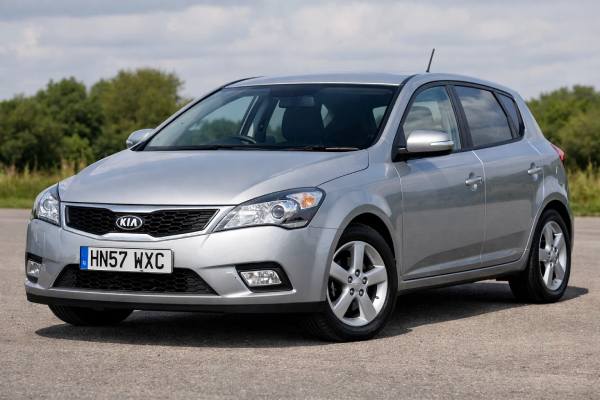

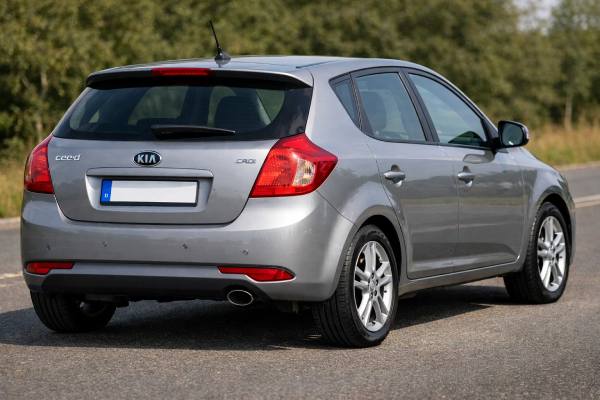
The 2009–2012 facelift Kia Cee’d (ED) with the 2.0-liter G4GC petrol is a straightforward, naturally aspirated hatchback built around durability and predictable running costs. Its biggest ownership strengths come from the “simple done well” engineering: multi-point fuel injection (not direct injection), a conventional automatic option, and a suspension setup that balances comfort with stable motorway behavior. With 143 hp, it is quick enough to feel relaxed at highway speeds without depending on turbo boost, while still returning sensible economy when driven smoothly.
The trade-off is that this powertrain is old-school in the places that matter for maintenance. The timing belt is a scheduled item, and age-related rubber and cooling-system upkeep matters more than chasing the newest technology. If you buy one with clean service history and keep it on a tight maintenance rhythm, the facelift 2.0 can be one of the most dependable petrol C-segment daily drivers of its era.
Owner Snapshot
- Strong, linear petrol power with no turbo complexity; easy to drive in traffic and on motorways.
- Simple multi-point injection setup is generally tolerant of fuel quality and short trips.
- Budget for timing-belt service if there is no proof it was done (belt, tensioners, and water pump).
- Replace engine oil and filter every 15,000 km (9,000 mi) or 12 months (sooner for heavy city use).
- Expect best results with regular cooling-system care and a clean throttle/idle system as mileage rises.
Guide contents
- Kia Cee’d facelift deep dive
- Kia Cee’d 2.0 specs table
- Kia Cee’d trims and safety tech
- Reliability and known faults
- Maintenance plan and buying tips
- Road feel and fuel use
- Rivals and value comparison
Kia Cee’d facelift deep dive
The facelift Cee’d (roughly model years 2009–2012) is best understood as a refinement of the original ED recipe rather than a redesign. You get the same fundamental platform layout—front MacPherson struts, a composed rear multi-link setup on many variants, and a cabin focused on practicality—while the facelift mainly improves perceived quality, minor NVH (noise, vibration, harshness) tuning, and equipment packaging depending on market.
With the G4GC 2.0 petrol, the character is very “analogue” in a good way. Power delivery is clean and progressive, with peak power high in the rev range, so it rewards a driver who uses the upper half of the tachometer. Around town, it behaves smoothly and predictably, and on the motorway it has enough headroom to overtake without stress. Because it is naturally aspirated and uses multi-point injection, there are fewer modern “gotchas” like turbo heat management or intake-valve carbon buildup typical of direct-injection engines.
From an ownership standpoint, the most important design detail is the timing belt. This engine is not “fit and forget” in the way a timing chain can be (even chains need monitoring), so your buying decision should treat belt history as non-negotiable. If documentation is missing, plan to do a full belt service immediately and price the car accordingly.
The rest of the car is conventional, and that works in your favor long-term. Electronics are simpler than later models, and parts availability is generally strong because the Cee’d shares solutions with other Hyundai-Kia products of the era. What tends to decide whether one feels “bulletproof” or “tired” is age-related wear: suspension bushings, engine mounts, cooling hoses, and the quality of past servicing. Buy the cleanest history you can, then keep the maintenance schedule consistent, and the facelift 2.0 can still be a very rational daily driver today.
Kia Cee’d 2.0 specs table
Below are practical, owner-focused specifications for the facelift-era Cee’d with the G4GC 2.0 petrol (143 hp). Numbers can vary by body style (3-door, 5-door, wagon), transmission, wheel package, and market emissions calibration, so treat them as a tight reference band.
Powertrain and efficiency
| Item | Specification |
|---|---|
| Code | G4GC |
| Engine layout and cylinders | Inline-4 (I-4), transverse; DOHC; 4 valves/cyl |
| Bore × stroke | 82.0 × 93.5 mm (3.23 × 3.68 in) |
| Displacement | 2.0 L (1,975 cc) |
| Induction | Naturally aspirated |
| Fuel system | MPFI (multi-point fuel injection) |
| Compression ratio | 10.1:1 |
| Max power | 143 hp (105 kW) @ 6,000 rpm |
| Max torque | 186 Nm (137 lb-ft) @ 4,600 rpm |
| Timing drive | Belt |
| Rated efficiency (combined) | ~7.1 L/100 km (33.1 mpg US / 39.8 mpg UK) |
| Real-world highway @ 120 km/h (75 mph) | typically ~7.5–8.2 L/100 km (varies with tyres, load, wind) |
Transmission and driveline
| Item | Specification |
|---|---|
| Transmission | 5-speed manual (common); 4-speed automatic (market-dependent) |
| Drive type | FWD |
| Differential | Open |
Chassis and dimensions (5-door hatchback reference)
| Item | Specification |
|---|---|
| Suspension (front/rear) | MacPherson strut / multi-link (market/trim dependent) |
| Steering | Rack and pinion; power-assisted |
| Brakes (front/rear) | Disc / disc; common rotor sizes ~280 mm (11.0 in) front, ~262 mm (10.3 in) rear |
| Wheels and tyres (popular) | 205/55 R16 or 225/45 R17 |
| Ground clearance | ~150 mm (5.9 in), approx. (varies by tyres and load) |
| Length / width / height | 4,235 / 1,790 / 1,480 mm (166.7 / 70.5 / 58.3 in) |
| Wheelbase | 2,650 mm (104.3 in) |
| Turning circle (kerb-to-kerb) | ~10.6 m (34.8 ft), typical |
| Kerb (curb) weight | roughly ~1,340–1,410 kg (2,954–3,108 lb), by equipment |
| GVWR | around ~1,770 kg (3,902 lb), typical |
| Fuel tank | 53 L (14.0 US gal / 11.7 UK gal) |
| Cargo volume | ~340 L (12.0 ft³) seats up / ~1,300 L (45.9 ft³) seats down (method varies) |
Performance and capability
| Item | Specification |
|---|---|
| 0–100 km/h (0–62 mph) | ~10.4 s (manual typical) |
| Top speed | ~205 km/h (127 mph) manual; lower for 4AT in many markets |
| Towing capacity | market- and VIN-dependent; commonly up to ~1,200–1,400 kg braked / ~600 kg unbraked (verify locally) |
| Payload | varies by trim; check door-jamb label |
Fluids and service capacities (common reference values)
| Item | Specification |
|---|---|
| Engine oil | API SJ/SL or better; commonly SAE 5W-20 or 5W-30; ~4.0 L (4.2 US qt) drain and refill (2.0 petrol) |
| Coolant | Ethylene glycol-based for aluminum radiator; ~6.2–6.3 L (6.6–6.7 US qt) |
| Manual transaxle | API GL-4; commonly SAE 75W-85; ~2.0 L (2.1 US qt) |
| Automatic transaxle | SP-III type ATF; ~6.6–6.8 L (6.9–7.2 US qt) total fill (service fill may be less) |
| Brake/clutch fluid | DOT-3 or DOT-4; ~0.7–0.8 L (0.7–0.8 US qt) |
| Power steering | PSF-III; ~0.8 L (0.8 US qt) |
| Key torque specs | Wheel lug nuts: 88–107 Nm (65–79 lb-ft) |
Safety and driver assistance (era-typical)
| Item | Specification |
|---|---|
| Crash ratings | Euro NCAP: 5-star rating under the older regime (model-year publication 2007; broadly applicable to the range) |
| IIHS | Not typically applicable for this model/market |
| ADAS suite | Pre-AEB era in most trims: ABS and stability control common; modern AEB/ACC/LKA generally not available |
Kia Cee’d trims and safety tech
Trim names vary significantly by country, but the facelift Cee’d usually follows a familiar ladder: a base trim with the essentials, mid-level trims adding comfort and convenience, and top trims combining larger wheels, upgraded audio, and more cabin features. The 2.0 petrol is most often found in mid-to-upper trims because it was positioned as the “smooth petrol” alternative to smaller engines and diesels. When shopping, focus less on the badge and more on the mechanical and safety equipment fitted to the specific car.
Practical trim identifiers that matter:
- Transmission choice: the 5-speed manual is common; the 4-speed automatic exists in many markets and changes the driving feel and economy. Confirm by the shift gate and the VIN/option list.
- Wheel and brake packages: larger wheels (often 16–17 in) usually come with upgraded tyre sizes; check for even tyre wear and bent rims.
- Cabin feature tells: climate control panel design (manual vs automatic), steering-wheel buttons (audio/cruise), and seat fabric/leather patterns can quickly signal where the car sits in the range.
- Headlights and fog lights: many higher trims add fog lights and different headlamp internals; make sure lens clarity is good and aim is correct.
Safety equipment and structure:
This generation typically provides a strong baseline for its era: front airbags, side torso airbags, and full-length curtain airbags are commonly present, and the body structure earned a high crash-test rating under the older Euro NCAP protocol. Check that the passenger airbag on/off function (if fitted) works correctly and that all airbag warning lights behave normally at startup (light on briefly, then off).
ABS, stability control, and braking systems:
ABS is generally standard. Electronic stability control (ESC/ESP) became increasingly common as the model run progressed, but it can still be market- and trim-dependent. Look for an ESC button (often with a skidding-car icon) and verify it functions without warning lights. If the car has persistent ABS/ESC lights, budget for diagnostics—wheel speed sensors and wiring are typical culprits, but you want proof it is a simple fix.
Driver assistance (ADAS):
Do not expect modern ADAS like autonomous emergency braking, adaptive cruise control, or lane-keep assist. Some cars have cruise control, rear parking sensors, and basic trip-computer functions, but that’s about the limit. This matters after repairs: there are fewer radar/camera calibrations to worry about, but you still want clean braking performance, correct wheel alignment, and tyres that match in size and quality across the axle to keep ABS/ESC happy.
Reliability and known faults
Overall, the facelift Cee’d 2.0 petrol is a dependable package when maintained, but it is now old enough that condition matters more than reputation. The good news is that most problems are conventional—wear, rubber aging, and neglected servicing—rather than exotic electronics. Below is a practical way to think about issues by prevalence and cost tier.
Common (low to medium cost)
- Ignition coils and spark-related misfires
Symptoms: rough idle, hesitation under load, flashing MIL (check engine light).
Likely cause: aging coil packs, worn plugs, moisture intrusion.
Remedy: replace plugs on schedule; swap suspect coil(s); inspect plug wells and wiring. - Throttle body and idle control deposits
Symptoms: unstable idle, stalling when coming to a stop, sluggish response off-idle.
Likely cause: carbon/oil film in the throttle body and intake tract.
Remedy: careful throttle-body cleaning; check for vacuum leaks; confirm no intake boots are cracked. - Suspension bushings, drop links, and top mounts
Symptoms: knocking over bumps, vague steering, tyre feathering.
Likely cause: worn rubber and ball joints from age and poor roads.
Remedy: refresh links/bushings as sets; align after work; inspect rear multi-link bushes if fitted.
Occasional (medium cost)
- Cooling system leaks and thermostat aging
Symptoms: slow coolant loss, heater performance changes, temperature fluctuations.
Likely cause: aging hoses, radiator seams, thermostat sticking.
Remedy: pressure test; replace weak components proactively; use correct coolant and mix. - Automatic transmission shift quality (4AT)
Symptoms: lazy kickdown, flare between gears, harsh engagement when hot.
Likely cause: old ATF, adaptive behavior, worn solenoids in higher-mileage units.
Remedy: correct SP-III fluid service (avoid “universal” fluids); diagnose before condemning the gearbox.
Rare but high impact (high cost if ignored)
- Timing belt neglect on the G4GC
Symptoms: sometimes none until failure; may show chirps, tensioner noise, or visible belt cracking.
Likely cause: overdue belt/tensioner/idler, or a water pump starting to fail.
Remedy: replace belt, tensioners, idlers, and strongly consider the water pump at the same time. - Corrosion hotspots (age and climate dependent)
Symptoms: bubbling paint, rust on seams, underbody scale, subframe corrosion.
Likely cause: winter salt exposure and neglected underbody washing.
Remedy: inspect thoroughly on a lift; prioritize structural areas; treat early with proper corrosion protection.
Recalls, service actions, and verification
Because recall campaigns vary by country and VIN range, the most reliable approach is always to run an official VIN or registration check through manufacturer and government recall portals, and then confirm completion with dealer records. On older cars, owners sometimes assume “it would have been done,” but paperwork is what counts. If the seller can provide a stamped booklet plus invoices showing major items (belt kit, coolant service, brake fluid, transmission fluid), you can treat the car as lower risk. If not, plan a “baseline service” budget and make your offer accordingly.
Maintenance plan and buying tips
If you want the facelift Cee’d 2.0 to feel tight and reliable, maintenance has to be proactive. The car tolerates normal use well, but deferred service stacks up quickly with age. The schedule below is a practical blend of typical manufacturer intervals and what works best for long-term durability.
Practical maintenance schedule (distance/time, whichever comes first)
- Engine oil and filter: every 15,000 km (9,000 mi) or 12 months; for heavy city use, short trips, or very cold climates, aim for 7,500–10,000 km.
- Air filter: inspect every service; replace about 30,000 km (sooner in dusty areas).
- Cabin filter: 15,000–30,000 km depending on air quality and HVAC use.
- Spark plugs (2.0 petrol): commonly around 30,000 km for standard plugs; if upgraded plugs are fitted, verify type and adjust interval accordingly.
- Timing belt (G4GC): treat as a critical item—follow the official interval for inspection and replacement; if history is unknown, replace immediately. Always include tensioners/idlers; consider the water pump “while you’re in there.”
- Coolant: replace at the specified long interval, then at shorter repeat intervals thereafter; do not mix incompatible coolant types.
- Brake fluid: every 2 years (moisture absorption is the enemy).
- Manual gearbox oil: often long-life, but a drain and refill around 100,000 km is a sensible longevity move.
- Automatic transmission fluid (4AT): do not treat it as “lifetime” if you want smooth shifting—service intervals vary, but many owners see best results with 45,000–60,000 km changes using the correct SP-III type fluid.
- Tyres and alignment: rotate every 10,000–12,000 km; align if you see uneven wear or after suspension work.
- 12 V battery: test annually after year 4–5; many last 5–7 years depending on climate.
Fluids and specs that matter when buying
- Use the correct oil grade and quality standard, and keep the level correct.
- For automatics, insist on correct-spec fluid; incorrect fluid can cause shift complaints that look like “gearbox failure.”
- Lug nut torque matters on cars that see frequent wheel swaps; over-torquing can warp brake rotors and damage studs.
Buyer’s guide: what to check before you commit
- Timing belt proof: invoice with date, mileage, and parts list (belt, tensioner, idlers; water pump ideally).
- Cold start behavior: listen for belt-area noise, accessory belt squeal, and uneven idle.
- Cooling system health: stable temperature, no coolant smell, clean expansion tank, and no oily residue.
- Undercarriage and rust: rear suspension mounts, sills, subframes, and brake lines in salty climates.
- Steering and suspension: clunks, wandering, and tyre wear patterns.
- Electrics: windows, central locking, HVAC fan speeds, and instrument warning lights.
- Road test braking: straight stops, no pedal pulsation, and no ABS/ESC lights.
Long-term outlook: A well-kept facelift 2.0 is usually a “keep it serviced and it keeps going” car. The most expensive ownership surprises tend to come from neglected timing-belt history, corrosion, and buyers underestimating how much rubber-and-fluid renewal an older hatchback needs.
Road feel and fuel use
In daily driving, the facelift Cee’d 2.0 feels solid and mature for its class. The chassis is tuned for stability first, with a calm motorway demeanor that makes it a good long-distance tool. Ride quality depends heavily on wheel size: 15–16 inch setups tend to feel more compliant and quieter over broken pavement, while 17-inch packages look sharper but can add impact harshness and increase tyre cost.
Ride and handling:
The front end turns in predictably, and the rear suspension helps the car stay composed mid-corner rather than bouncing or skipping. Steering feel is typically light-to-moderate, aimed at everyday ease rather than sporty feedback. If the car feels vague, it is often not “how they drive,” but worn tyres, tired dampers, or bushings that have softened with age.
NVH and cabin comfort:
Expect some road noise on coarse asphalt, especially with wider tyres. Wind noise is generally reasonable, but door seals and mirror area turbulence can become more noticeable on older examples. If a car feels unusually loud, check tyre brand/model and age—cheap, hard-compound tyres can transform cabin noise.
Powertrain character:
The G4GC’s strength is its linear response and simple behavior. There is no turbo surge; you get smooth pull that builds with rpm. In manual form, it encourages clean shifts and occasional downshifts for brisk overtakes. The 4-speed automatic is relaxed and durable when maintained, but it is not “modern quick”: kickdown is slower, and it may hold gears longer on hills.
Real-world efficiency:
- City driving: typically higher consumption because this is a 2.0 NA petrol; short trips and cold starts can push it into double digits (L/100 km).
- Highway 100–120 km/h: usually where it shines; steady-speed cruising can be quite reasonable for the era.
- Mixed use: owners who drive smoothly and keep tyres properly inflated tend to land close to the official combined figure, while aggressive driving and heavy loads quickly raise consumption.
What changes the result most: tyre choice, alignment, and maintenance quality. A clean air filter, healthy plugs, correct oil viscosity, and properly functioning thermostat all support consistent economy. If fuel use is noticeably worse than expected, start by checking for dragging brakes, underinflated tyres, and fault codes related to oxygen sensors or coolant temperature.
Rivals and value comparison
In the 2009–2012 window, the C-segment was fiercely competitive. The facelift Cee’d 2.0’s value story is not that it beats every rival in one headline metric, but that it often delivers the lowest stress per kilometer when you buy a good one and maintain it correctly.
Versus Volkswagen Golf (Mk6):
The Golf tends to feel more premium inside and may offer more advanced transmissions and engines, but complexity and repair costs can be higher depending on the exact drivetrain. If you want a simpler petrol experience with fewer high-cost technology risks, the Cee’d 2.0 can be the calmer choice.
Versus Ford Focus (late Mk2 / early Mk3):
The Focus is often the handling benchmark, with sharper steering and chassis balance. The Kia counters with a generally robust, straightforward powertrain and a practical cabin. If you prioritize driving feel, the Focus may win; if you prioritize predictable ownership and simple mechanicals, the Kia is very competitive.
Versus Toyota Auris (E150):
Toyota’s advantage is a reputation for durability and strong resale, especially with certain petrol engines. The Kia can match the “easy to live with” brief, but your decision may come down to price and condition. If the Kia is significantly cheaper in similar condition, it can be the better value—just don’t compromise on timing-belt history.
Versus Honda Civic (Mk8):
The Civic offers clever packaging and, in some trims, a sportier feel. The Cee’d tends to be more conventional and sometimes cheaper to maintain in everyday shops. If you like the Civic’s design and driver position, it is a compelling alternative, but the Kia’s simplicity remains a strong argument.
Versus Hyundai i30 (FD):
This is the closest cousin. The comparison becomes about equipment, servicing history, rust condition, and which one has been cared for. Buy the best-maintained example rather than chasing small spec differences.
Bottom line: The facelift Cee’d 2.0 is a strong “ownership logic” car. It may not be the newest-feeling option today, but it is often one of the most honest: predictable, repairable, and comfortable enough to use daily. The best rival is usually the one with the cleanest history at the right price—so let condition and documentation decide.
References
- ED English 1.qxd 2007 (Owner’s Manual)
- Kia cee’d wins 5-Star Euro NCAP safety rating 2007 (Safety Rating)
- Kia Recalls 2026 (Recall Database)
- Check if a vehicle, part or accessory has been recalled 2026 (Recall Database)
Disclaimer
This article is for informational purposes only and is not a substitute for professional inspection, diagnosis, or repair. Specifications, torque values, fluid capacities, and maintenance intervals can vary by VIN, market, model year, and fitted equipment. Always verify procedures and data using official service documentation for your exact vehicle and consult a qualified technician when needed.
If this guide helped, please consider sharing it on Facebook, X (Twitter), or your favorite forum to support our work.