
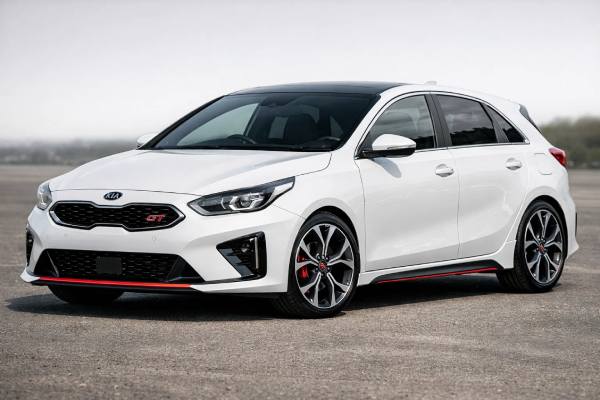
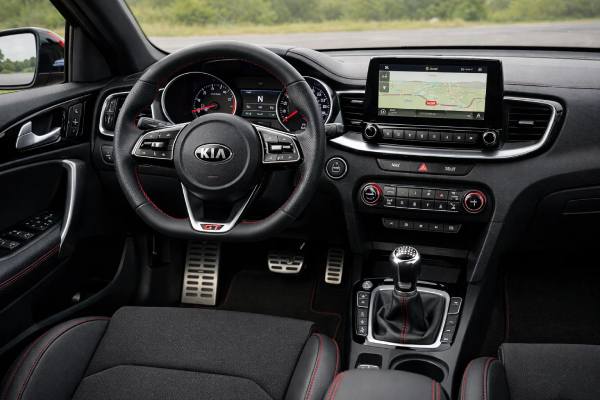
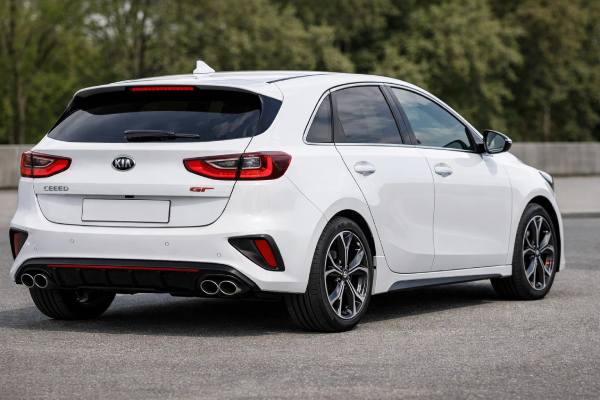
The Kia Ceed GT (CD) is the enthusiast version of Kia’s compact hatch: a practical daily driver built around a stronger 1.6 turbo petrol and chassis upgrades that make it feel more tied down than regular Ceed trims. In 2018–2021 form, the GT’s value comes from its balance—strong mid-range torque for real roads, modern safety tech, and running costs that stay reasonable if you keep up with fluids and ignition service. The main ownership “story” is heat and pressure management: a direct-injection turbo engine rewards good oil, fresh plugs, and correct warm-up habits, while the dual-clutch option depends on smooth driving and on-time fluid work. If you want one car that can commute quietly, carry people comfortably, and still feel eager on a back road, the Ceed GT is a well-judged package—provided you buy with service history and stay disciplined about maintenance.
Fast Facts
- Strong real-world pull from low to mid rpm, especially for highway passing and uphill driving.
- Chassis and brake upgrades make it more confident than standard Ceed trims without becoming harsh.
- Good safety baseline for its class, with modern driver-assistance features widely available.
- Direct-injection turbo ownership favors shorter oil intervals and high-quality fuel to reduce deposits.
- Plan on engine oil and filter every 10,000–15,000 km or 12 months (whichever comes first), depending on usage and climate.
Jump to sections
- Kia Ceed GT CD ownership picture
- Kia Ceed GT CD specs and measurements
- Kia Ceed GT CD equipment and safety tech
- Reliability weak points and fixes
- Maintenance plan and buying tips
- Driving feel and real-world efficiency
- Rivals and smart alternatives
Kia Ceed GT CD ownership picture
Think of the Ceed GT as a “complete” hot hatch rather than an extreme one. It takes the regular Ceed’s everyday strengths—usable rear seats, a sensible boot, calm road manners—and layers on the pieces that matter when you drive with intent: a more powerful 1.6 turbo petrol, firmer body control, and brakes that cope better with repeated hard stops. For most owners, that translates into a car that feels relaxed in traffic but responds immediately when you ask for more.
The Gamma II 1.6 T-GDi is a direct-injection turbo engine. Direct injection improves efficiency and response, but it also changes what “good ownership” looks like. This engine type runs higher cylinder pressures and can build carbon on intake valves over time because fuel does not wash the valves. That does not mean it is fragile; it means routine habits matter: consistent oil quality, correct spark plugs, and avoiding constant short trips where the engine never gets properly hot.
The GT badge also brings practical choices you should decide early:
- Transmission: many markets offered a 6-speed manual and a 7-speed dual-clutch (DCT). The manual is simpler long-term. The DCT can be excellent, but it is more sensitive to heat, stop-start creeping, and skipped fluid service.
- Wheels and tyres: GT trims often run larger wheels and stickier tyres. That improves grip but can increase tyre cost and road noise. Check for uneven wear that signals alignment or worn bushings.
- Insurance and parts: compared with standard Ceed trims, some GT-specific parts (brakes, trim, wheels) cost more. Budget for that upfront.
What the Ceed GT does especially well is “usable performance.” The turbo’s torque means you do not have to rev it hard to make progress, and the car stays composed on imperfect roads—important if you drive in mixed conditions rather than on smooth track surfaces. In the used market, the best examples are usually the ones owned by drivers who treated it like a daily car: warm-up done properly, oil changed on time, and tyres kept matched and aligned.
Kia Ceed GT CD specs and measurements
Below are the core specs that most affect ownership: engine output and torque curve, gearing and driveline, size and weight, and the service capacities that influence running costs. Figures can vary by market, model year, wheel size, and transmission, so treat these as typical for 2018–2021 European-spec Ceed GT.
Powertrain and efficiency
| Item | Specification |
|---|---|
| Code | Gamma II T-GDi (market-dependent engine code) |
| Engine layout and cylinders | Inline-4, turbocharged, DOHC, 16 valves |
| Displacement | 1.6 L (1,591 cc) |
| Induction | Turbocharged |
| Fuel system | Gasoline direct injection (GDI) |
| Max power | 201 hp (150 kW) @ rpm (market-dependent) |
| Max torque | ~265 Nm (~195 lb-ft) @ rpm (market-dependent) |
| Timing drive | Timing chain (typical for this family) |
| Rated efficiency | Varies by market and test cycle (WLTP/older NEDC) |
| Real-world highway at 120 km/h | Typically 6.5–7.5 L/100 km depending on tyres, wind, and load |
Transmission and driveline
| Item | Specification |
|---|---|
| Transmission | 6-speed manual or 7-speed DCT (market-dependent) |
| Drive type | FWD |
| Differential | Open (traction managed via brake-based systems) |
Chassis and dimensions
| Item | Specification |
|---|---|
| Suspension (front/rear) | MacPherson strut / multi-link |
| Steering | Electric power steering (EPS) |
| Brakes | Ventilated front discs, rear discs (sizes vary by market) |
| Wheels and tyres (common) | 18-inch wheels with performance-oriented tyres (market-dependent) |
| Length / Width / Height | Compact hatch dimensions vary slightly by trim and rails |
| Wheelbase | Around 2,650 mm (typical CD platform) |
| Turning circle | About 10.6–11.0 m (trim dependent) |
| Kerb weight | Typically mid-1,300 kg range (manual lighter than DCT) |
| Fuel tank | Typically ~50 L |
Performance and capability
| Metric | Typical figure |
|---|---|
| 0–100 km/h (0–62 mph) | ~7.2–7.6 s (transmission and tyres dependent) |
| Top speed | ~230 km/h (143 mph) |
| Braking 100–0 km/h | Strong for class when tyres and pads are fresh; varies by test |
| Towing capacity | Often available, but varies widely by market homologation |
| Payload | Trim dependent; check door-jamb label for your car |
Fluids and service capacities (typical guidance)
| System | Specification (typical) |
|---|---|
| Engine oil | Full-synthetic meeting manufacturer spec; common grades 0W-30/5W-30 (market dependent) |
| Coolant | Manufacturer long-life coolant; mix per label (often 50/50) |
| DCT fluid (if equipped) | Use only the specified OEM fluid; interval matters |
| A/C refrigerant | Usually R-1234yf or R-134a depending on market/year; check under-hood label |
Key torque specs (common “decision” fasteners)
| Fastener | Typical range |
|---|---|
| Wheel nuts/bolts | Commonly 100–120 Nm (check owner manual for your market) |
| Spark plugs | Torque varies by plug type; follow service data exactly |
| Oil drain plug | Commonly 25–35 Nm (verify for your engine and sump) |
If you want to compare a listing quickly, focus on three numbers: torque, kerb weight, and tyre size. Torque and gearing define how quick it feels in daily driving, weight influences brake and tyre wear, and tyre size changes comfort, noise, and cost more than most people expect.
Kia Ceed GT CD equipment and safety tech
The Ceed GT’s equipment story depends heavily on market. Many countries sold the GT as a high trim with most comfort features standard, while others used option packs. When you shop used, it helps to think in three buckets: cabin tech, chassis hardware, and safety systems.
Trims and options (what actually changes)
Common functional differences you may see across 2018–2021 cars:
- Infotainment tier: base audio vs premium-branded systems, larger screen sizes, and navigation. Look for factory integration (steering controls, camera quality, and OEM microphone performance) rather than just screen size.
- Seats: GT seats often have stronger bolstering and different materials. Check bolsters for wear; heavy wear can hint at high entry/exit cycles and hard use.
- Lighting: LED headlamps may be standard or part of a pack. Lighting performance affects real safety and resale more than many “luxury” items.
- Climate and convenience: heated seats and wheel, dual-zone climate, and keyless entry vary widely.
Quick identifiers that help confirm it is a true GT:
- GT-specific bumpers and grille treatment, sporty exhaust finishers, and larger brakes behind the wheels in many markets.
- GT badging and sport seat design (market-specific).
- VIN decoding and build sheet from a dealer is the cleanest confirmation.
Safety ratings (what the numbers mean)
For this generation, the Ceed family achieved a strong Euro NCAP result under the test protocol of its time. Euro NCAP scores are split into:
- Adult occupant protection
- Child occupant protection
- Vulnerable road users (pedestrians and cyclists)
- Safety assist (driver assistance and active safety features)
Even when the body structure scores well, the final outcome depends on whether the tested car had key ADAS systems. That matters because some used cars may lack features that improved the rating.
Safety systems and ADAS (standard vs optional patterns)
Typical systems you may see on Ceed GT-era cars:
- AEB (autonomous emergency braking): often includes vehicle detection; some versions include pedestrian and cyclist detection.
- Lane keeping support: lane keeping assist (LKA) or lane following/lane positioning support on better-equipped cars.
- Adaptive cruise control (ACC): common on higher trims or option packs; verify it functions smoothly during a test drive.
- Blind-spot monitoring (BSD) and rear cross-traffic alert (RCTA): often linked to higher equipment lines.
- Traffic sign recognition: camera-based, may be paired with speed limiter logic.
Two practical service notes:
- Camera and radar calibration: windscreen replacement, bumper repair, wheel alignment changes, or suspension work can require ADAS calibration. Ask for proof if the car has had front-end repairs.
- Battery health matters: a weak 12 V battery can create “ghost” faults in modern driver-assistance and infotainment systems. A clean battery test is a real value point when buying used.
For family use, also check:
- ISOFIX/child-seat anchor condition and rear seatbelt retraction.
- Tyre brand and matching pair condition, because stability systems assume consistent grip left-to-right.
Reliability weak points and fixes
Overall, the Ceed GT’s reliability is usually good when it is maintained properly, but the running gear is more stressed than a base model. The smartest way to understand risk is to separate issues by how often they appear and how expensive they are if ignored.
Common (higher frequency) issues
- Ignition coil and spark plug wear (low to medium cost)
Symptoms: misfire under load, rough idle, flashing engine light, reduced power.
Likely cause: high cylinder pressure and heat; worn plugs or weak coils.
Remedy: replace plugs at the correct interval and heat range; replace coils as needed (often best in sets if multiple fail). - Direct-injection intake deposits (medium cost over time)
Symptoms: gradual power loss, hesitant cold response, uneven idle in severe cases.
Likely cause: carbon buildup on intake valves from DI design and short-trip driving.
Remedy: reduce short-trip use when possible, use quality fuel, keep oil fresh; walnut blasting is the “hard reset” if deposits become significant. - Front suspension wear (low to medium cost)
Symptoms: clunks over bumps, vague steering, uneven tyre wear.
Likely cause: bushings and links wear faster with bigger wheels and sporty tyres.
Remedy: inspect drop links, control arm bushings, and alignment; replace in pairs and align afterward.
Occasional (vehicle-dependent) issues
- Turbo control noises or boost irregularity (medium cost)
Symptoms: rattling at certain rpm, inconsistent boost, limp mode.
Likely cause: wastegate linkage wear, boost control solenoid issues, vacuum leaks.
Remedy: smoke test intake, check actuator movement, replace worn components; avoid “parts cannon” guessing. - DCT low-speed shudder or hesitation (medium to high cost if ignored)
Symptoms: judder in stop-start traffic, slipping feel when pulling away, harsh engagement.
Likely cause: clutch wear, overheating from creeping, adaptation drift, or old fluid (where serviceable).
Remedy: verify software updates, perform correct adaptation procedure, service fluid per schedule, and change driving style (avoid creeping on throttle). - Cooling system seepage (medium cost)
Symptoms: slow coolant loss, sweet smell, residue near hoses or radiator.
Likely cause: clamp fatigue, hose aging, or minor radiator seep.
Remedy: pressure test, replace weak hoses/clamps early to prevent overheating events.
Rare but high-impact risks
- Oil neglect leading to timing chain and turbo wear (high cost)
Symptoms: timing rattle on cold start, delayed boost response, higher oil consumption.
Likely cause: extended oil intervals and low-quality oil increase wear and deposits.
Remedy: shorten oil intervals, use correct spec oil, and investigate noise early.
Software, updates, and service actions
Modern cars often “fix” drivability issues with software:
- Engine ECU updates can improve cold-start behavior, knock control, and boost response.
- Transmission updates (especially DCT) can improve low-speed smoothness and reduce clutch heat.
- ADAS updates can address camera faults and warning sensitivity.
Recalls, TSBs, and how to verify
Rather than relying on rumors, use two checks:
- Official recall checker and dealer record: confirm outstanding recall work is completed.
- Service history: look for documented updates and fluid services, not just stamps.
Pre-purchase checks worth requesting on a Ceed GT:
- Cold start from fully cold: listen for rattles and confirm stable idle.
- Full-throttle pull in a higher gear: check for clean boost without surging or misfires.
- DCT-only: repeated low-speed pull-aways and a hill start to detect shudder.
- Evidence of correct tyre matching and recent alignment.
Maintenance plan and buying tips
A Ceed GT that feels “tight” at 150,000 km usually got two things: consistent fluids and correct ignition service. Below is a practical schedule that fits how turbo DI engines age in the real world.
Core maintenance schedule (distance and time)
- Engine oil and filter: every 10,000–15,000 km or 12 months
Short-trip city driving, very cold winters, or frequent hard driving justify the shorter end. Use the exact manufacturer specification, not just the viscosity printed on the bottle. - Engine air filter: inspect every 15,000–30,000 km, replace as needed
Dusty regions and high-pollen seasons load filters faster than mileage suggests. - Cabin air filter: every 15,000–30,000 km or annually
A clogged cabin filter increases blower noise and reduces defrost performance. - Spark plugs: typically 60,000 km (often earlier on high-boost engines)
Use the correct plug type and heat range. A turbo DI engine can misfire simply from plugs that are “almost” acceptable. - Brake fluid: every 2 years
Sportier driving heats fluid more, and fresh fluid keeps pedal feel consistent. - Coolant: follow the long-life interval in the service documentation
Do not mix coolant types; keep the correct concentration. - Transmission fluid:
- Manual: change on schedule or around 60,000–100,000 km if you want a smoother long-term shift.
- DCT: follow the exact service schedule for your market; if serviceable, fluid condition is critical.
- Tyres: rotate every 8,000–12,000 km, align at least yearly or after suspension work
Bigger wheels punish alignment neglect quickly. - 12 V battery: test yearly after year 4; plan replacement often around 4–6 years depending on climate and usage
Many “electrical gremlins” disappear with a strong battery.
Fluid specs, capacities, and “buying” torque values
Because specifications vary by VIN and market, the safest approach is to verify under-hood labels and official service data. Still, use these practical rules when evaluating a car:
- If the seller cannot name the oil spec used, assume it was not cared for.
- If DCT service is undocumented, price in a fluid service and adaptation check.
- Wheel fasteners should be torqued correctly; over-torquing can warp brake discs and damage hubs.
Buyer’s guide: what to check in 30 minutes
- Tyres and alignment: uneven inner-edge wear suggests alignment or bush wear.
- Brakes: feel for steering shake under braking (warped discs) and check pad thickness.
- Boost and ignition: accelerate hard once warmed; any misfire is a negotiation point.
- Cooling system: check coolant level consistency and look for dried residue.
- DCT behavior (if equipped): smooth pull-away, no shudder, no delayed engagement.
- Electronics: test camera, parking sensors, ACC (if fitted), and lane features.
Best “sweet spot” examples tend to be:
- Cars with full service records, sensible tyre choices, and no tuning.
- Owners who changed oil more often than required and kept receipts.
Long-term durability outlook: if you treat the engine like a modern turbo DI—clean oil, correct plugs, and proper warm-up—the drivetrain can remain strong well into higher mileage. Neglect shows earlier than on a non-turbo engine, so history matters more than the odometer.
Driving feel and real-world-efficiency
On the road, the Ceed GT’s personality is defined more by torque and chassis control than by headline horsepower. The engine has useful pull in the middle of the rev range, so it feels quick in real traffic without constant downshifts. Compared with regular Ceed trims, the GT typically feels more planted through long bends and more stable under braking, with steering that is a touch heavier and more direct.
Ride, handling, and NVH
- Ride quality: firmer than standard models, but usually not punishing. Sharp-edged bumps are the main trade-off on larger wheels.
- Body control: noticeably better in quick direction changes; less float over crests.
- Steering: EPS steering is accurate, though feedback can be filtered compared with older hydraulic systems.
- Highway noise: tyre choice dominates; performance tyres can add a steady hum at 100–120 km/h.
Powertrain character
- Throttle response: generally crisp once rolling, with mild turbo lag if you request full boost from very low rpm.
- Mid-range torque: the “sweet spot” for passing; it pulls strongly in higher gears.
- Manual vs DCT feel:
- Manual: more engaging and predictable; clutch feel varies with wear.
- DCT: quick shifts at speed; in stop-start traffic it can feel less natural if you creep and “feather” the throttle.
A driving habit that improves both feel and lifespan: avoid holding the car on the throttle on hills (especially DCT). Use the brake, let the car engage cleanly, and avoid repeated micro-slips.
Real-world fuel use
Expect consumption to reflect how often you use boost:
- City: typically 8.5–10.5 L/100 km
- Mixed driving: typically 7.5–9.0 L/100 km
- Highway (100–120 km/h): typically 6.5–7.5 L/100 km
Cold weather can add a noticeable penalty because:
- the engine warms up slower on short trips,
- winter tyres increase rolling resistance,
- cabin heating and defrost loads increase.
Performance metrics that matter day-to-day
Rather than focusing only on 0–100 km/h, pay attention to passing strength:
- 80–120 km/h acceleration in a higher gear is where the turbo torque makes the GT feel effortless.
- Braking confidence depends heavily on tyre quality and brake fluid condition; fresh fluid often restores a firm pedal.
The result is a car that feels “fast enough” in nearly every real situation, without demanding the compromises of a stiffer, louder track-focused hatch. If you value a mature ride and consistent performance more than dramatic exhaust theatrics, the Ceed GT’s tuning makes sense.
Rivals and smart alternatives
The Ceed GT sits in a competitive space: warm-to-hot hatches that balance speed with daily usability. Your best alternative depends on what you value most—steering feel, transmission type, running costs, or cabin practicality.
If you want sharper handling and a more aggressive hot-hatch feel
- Hyundai i30 N (early years): more intense chassis and stronger track credibility, but often higher tyre and brake wear. Ride can be firmer, and used examples may have seen harder driving.
- Honda Civic (turbo variants): strong reliability reputation and efficient packaging, though exact trims and outputs vary widely by market.
If you want similar pace with a premium badge
- Volkswagen Golf GTI: polished, fast, and easy to live with; purchase price and option complexity can be higher. DSG service history matters as much as Kia DCT history.
- Audi A3 2.0 TFSI variants: refined and capable, but long-term parts costs can be higher, and options vary massively.
If you want value-first performance
- Ford Focus ST-Line and warm trims: can be fun and good value, but make sure you compare engine outputs directly; some trims look sporty without matching GT-level performance.
- SEAT Leon FR and Cupra-lite trims: often offer strong engines and good chassis tuning at competitive prices, with similar turbo DI maintenance considerations.
Why the Ceed GT still makes sense
The Ceed GT’s strongest argument is the “middle ground”:
- It offers real performance without demanding extreme compromises.
- The cabin and practicality remain suitable for daily life.
- The ownership experience can be predictable if serviced correctly, with good access to parts and straightforward routine maintenance.
When comparing used examples across brands, apply the same rule: the best buy is the car with the clearest service history and the least evidence of shortcuts. In this segment, condition beats badge. A carefully maintained Ceed GT can be a smarter long-term choice than a more prestigious rival that has skipped fluids or lived on cheap tyres.
References
- new-kia-ceed-gt-specification.pdf 2020 (Specification)
- Kia Car Owners Manual | Kia UK 2026 (Owner’s Manual Portal)
- Kia Ceed – 2019 – Euro NCAP 2019 (Safety Rating)
- Check if a vehicle, part or accessory has been recalled 2026 (Recall Database)
Disclaimer
This article is for informational purposes only and is not a substitute for professional inspection, diagnosis, or repair. Specifications, torque values, service intervals, and procedures vary by VIN, market, model year, and equipment. Always verify details using the official owner’s manual and manufacturer service documentation for your specific vehicle.
If this guide helped you, please consider sharing it on Facebook, X (Twitter), or your favorite forum to support our work.