
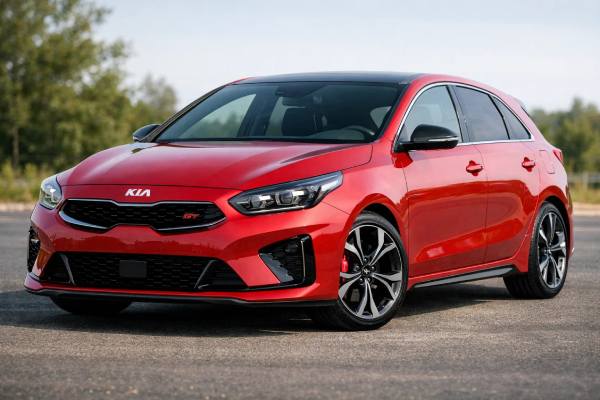
The 2021–2026 Kia Ceed GT (CD facelift) is the “fast Ceed” for drivers who want daily practicality without stepping up to a full hot hatch. Its 1.6 T-GDi turbo engine focuses on mid-range torque and smooth drivability rather than peak power theatrics, and the chassis tuning is noticeably firmer than standard Ceeds. The big ownership story is balance: it’s quick enough for confident overtakes, comfortable enough for commuting, and usually cheaper to run than higher-output rivals—provided you keep up with oil quality, cooling health, and the extra wear that comes with performance tyres and stronger brakes.
If you’re shopping used, the best examples are the ones with consistent servicing and clean evidence of correct tyre sizes, alignment, and software updates. Treat it as a sporty daily first, and it tends to reward you with dependable performance and a well-rounded feature set.
What to Know
- Strong mid-range pull makes it easy to drive quickly without constant downshifts.
- Practical cabin and hatchback cargo space remain close to the standard Ceed.
- Factory brake and tyre sizes cost more than base models, so budget accordingly.
- Change engine oil every 10,000–15,000 km (6,000–9,000 mi) or 12 months (whichever comes first).
- If equipped with the 7-DCT, keep an eye on low-speed smoothness and service history.
Guide contents
- Kia Ceed GT facelift essentials
- Kia Ceed GT 204 technical specs
- Kia Ceed GT trims and safety tech
- Common faults and fixes
- Maintenance plan and buying tips
- On-road performance and economy
- GT rivals and alternatives
Kia Ceed GT facelift essentials
The Ceed GT sits at the top of the Ceed hatch range (in most European markets), pairing a turbocharged 1.6-litre petrol engine with a firmer suspension tune, stronger brakes, and sportier interior details. In facelift form (from 2021), the GT’s role became even clearer: it’s designed to feel special on a back road, but it still behaves like a normal car in traffic and on long motorway runs.
What makes the GT different
- Engine and calibration: The 1.6 T-GDi’s tune prioritizes usable torque. That matters more than the headline power figure because it improves passing performance and reduces the need to “wring it out” in everyday driving.
- Chassis hardware: Expect a lower, firmer ride than non-GT trims, plus wider tyres on larger wheels. This increases grip but also makes tyre quality, alignment, and correct pressures more important for stability and even wear.
- Brakes and thermal margin: The GT typically uses larger discs and performance-oriented pad compounds compared with standard trims. The upside is better repeated braking; the downside is that pads and rotors can cost more and may generate more dust.
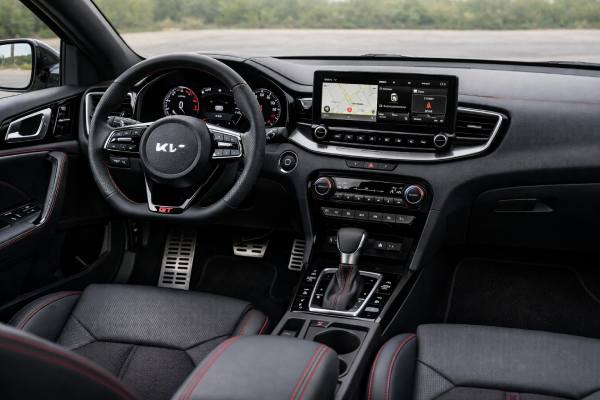
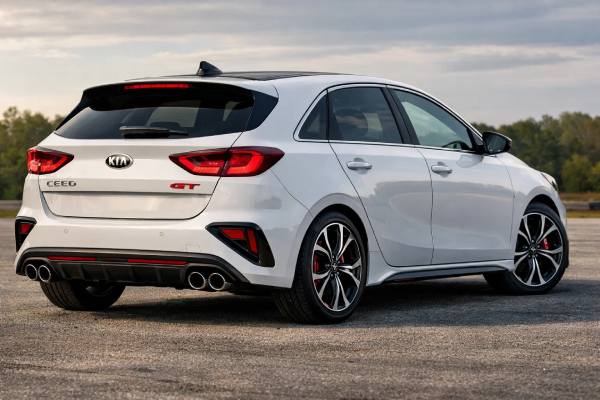
- Exterior and cabin cues: GT bumpers, twin-exhaust styling (market dependent), sport seats, and GT-specific trim help identify it quickly. On the used market, these details matter because some “GT-Line” cars look similar but are mechanically different.
Who it fits best
The Ceed GT works well for drivers who want one car to do everything: commute, weekend trips, and the occasional spirited drive. It’s also a sensible choice for buyers who want a sporty hatch without moving into higher insurance groups or the fuel appetite of more powerful competitors. If your driving is mostly short urban trips, be aware that turbo engines and direct injection prefer reaching full operating temperature regularly; it’s better for oil condition, condensation control, and long-term intake cleanliness.
Ownership theme: keep it healthy, not “fragile”
The Ceed GT doesn’t require exotic maintenance, but it does respond to basics done well: high-quality oil, correct spark plugs, clean intake air filtration, and timely coolant service. Also remember that performance tyres and bigger brakes are “consumables” that shape your running costs more than the engine itself. If you accept that and budget realistically, it’s a very livable performance daily.
Kia Ceed GT 204 technical specs
Specs can vary slightly by country, emissions certification, wheel design, and gearbox choice. The tables below reflect the typical Ceed GT (CD facelift) configuration with the 1.6 T-GDi.
Powertrain and efficiency
| Item | Specification |
|---|---|
| Engine family | Gamma II T-GDi |
| Engine layout | Inline-4, DOHC, 16-valve |
| Displacement | 1.6 L (≈1,591 cc) |
| Induction | Turbocharged |
| Fuel system | Direct injection (DI) |
| Max power | 204 hp (152 kW) @ rpm (market dependent) |
| Max torque | ≈265 Nm (≈195 lb-ft) @ rpm (market dependent) |
| Timing drive | Chain (typical for this engine family) |
| Rated efficiency | Varies by gearbox and market (WLTP) |
| Real-world highway @ 120 km/h | Typically improves notably vs city driving; depends heavily on tyres and temperature |
Transmission and driveline
| Item | Specification |
|---|---|
| Transmission | 6-speed manual or 7-speed dual-clutch (7-DCT), market dependent |
| Drive type | FWD |
| Differential | Open (traction aided by brake-based stability/traction systems) |
Chassis and dimensions
| Item | Specification |
|---|---|
| Suspension (front/rear) | MacPherson strut / multi-link (typical GT configuration) |
| Steering | Electric power steering |
| Brakes (front/rear) | Ventilated discs / discs (sizes vary by market) |
| Wheels/tyres (common) | 225/40 R18 |
| Length / Width / Height | ≈4,320 / 1,800 / 1,440–1,450 mm |
| Wheelbase | ≈2,650 mm |
| Turning circle (kerb-to-kerb) | ≈10.6 m (varies by tyre) |
| Kerb (curb) weight | Typically ≈1,350–1,450 kg (gearbox/equipment dependent) |
| Fuel tank | Commonly ≈50 L |
| Cargo volume | Typically ≈395 L seats up (VDA); ≈1,300 L seats down (approx.) |
Performance and capability
| Item | Typical figure |
|---|---|
| 0–100 km/h (0–62 mph) | ≈7.4–7.7 s (gearbox dependent) |
| Top speed | ≈230 km/h (≈143 mph), market dependent |
| Braking 100–0 km/h | Depends strongly on tyres and pad condition |
| Towing capacity | Market dependent (often offered, but check your VIN plate and handbook) |
| Payload | Depends on trim and axle rating; verify on door jamb/plate |
Fluids and service capacities (owner-focused)
Exact capacities and specs can vary by build and gearbox, so use these as decision-level guidance and verify against official documentation for your VIN.
| System | Typical spec to verify | Notes |
|---|---|---|
| Engine oil | Full-synthetic, commonly 5W-30 / 0W-30 (market spec) | Use the correct ACEA/API approval for your region |
| Coolant | Long-life OAT (region spec) | Maintain correct mix ratio; don’t mix types |
| Manual gearbox oil | MTF specification per handbook | Usually not frequent, but age/mileage matters |
| 7-DCT fluid | DCT fluid per Kia spec | History matters more than “lifetime fill” claims |
| A/C refrigerant | Usually R-1234yf or R-134a (market dependent) | Check under-hood label |
Safety and driver assistance (headline)
| Item | Notes |
|---|---|
| Crash ratings | Ceed range commonly carries a strong Euro NCAP result (test year/version dependent) |
| ADAS | AEB, lane support, driver attention alerts, and ACC often appear depending on pack/year |
Kia Ceed GT trims and safety tech
Ceed GT naming can be confusing because “GT-Line” is mostly an appearance and comfort package, while “GT” is the performance model. When you’re buying—especially used—make sure the paperwork, engine output, and wheel/brake setup match what the badge suggests.
Typical GT equipment highlights
- Performance hardware: 18-inch wheels with wider tyres, sport suspension calibration, and larger brakes versus regular trims.
- Cabin: Sport seats with stronger bolsters, GT trim accents, and often a more aggressive steering wheel design.
- Infotainment: Depending on year and market, you’ll see a larger central display, navigation capability, smartphone mirroring, and an upgraded audio option.
- Lighting: LED headlamps are common in higher trims, but confirm exact headlight type because it affects both night performance and replacement cost.
Options and packs that matter in real life
- Adaptive cruise control (ACC): Great for motorway commuting, but it adds radar hardware that must be correctly aimed after front-end repairs.
- AEB and lane support: These systems rely on camera/radar calibration. Windshield replacement, bumper work, or wheel alignment can require recalibration for correct function.
- Heated seats/steering wheel and winter pack: Useful because performance tyres can be less confidence-inspiring in cold weather; comfort features help make winter driving more tolerable.
- Sunroof (if offered): Adds light but increases the importance of drain maintenance and wind-noise checks.
Crash ratings and what they mean
Euro NCAP ratings depend on the exact test year and protocol version. A “5-star” result is meaningful, but the details matter: adult occupant protection, child occupant protection, vulnerable road users (pedestrians/cyclists), and safety assist all contribute. When comparing cars, try to compare ratings from similar test years so you’re not judging a newer protocol against an older one.
Airbags, child seats, and practical safety checks
Most Ceed GT models provide a comprehensive airbag set (front, side, and curtain), plus ISOFIX/LATCH points for child seats. When inspecting a used car:
- Confirm the airbag warning light behaves normally (on at start, then off).
- Check seat belts for smooth retraction and signs of locking issues.
- Ensure tyres are a matching set and correctly rated; uneven tyres can confuse stability systems and degrade wet braking.
Common faults and fixes
No used performance daily is “issue-free,” but the Ceed GT’s problems are usually manageable when caught early. The key is to separate noise-and-nuisance items from expensive failures, and then inspect accordingly.
Engine and turbo system
Common (low to medium cost):
- Ignition coil or spark plug wear
- Symptoms: Misfire under load, rough idle, flashing engine light.
- Likely cause: Plug gap growth, coil weakness, heat cycling.
- Remedy: Replace plugs with correct heat range and spec; replace coils as needed and check for oil in plug wells.
Occasional (medium cost):
- Wastegate or boost control irregularities
- Symptoms: Inconsistent boost, limp mode, underboost/overboost codes.
- Likely cause: Sticky actuator, vacuum/boost leak, sensor drift.
- Remedy: Pressure-smoke test intake plumbing, inspect actuator operation, verify MAP/boost sensor readings.
Occasional (medium cost, long-term):
- Direct injection intake valve deposits
- Symptoms: Gradual loss of smoothness, cold-start stumble, reduced efficiency.
- Likely cause: DI engines don’t wash intake valves with fuel.
- Remedy: Use quality fuel, avoid endless short trips, and consider professional cleaning if symptoms appear.
Cooling and lubrication risks
Turbo engines rely on stable oil temperature and proper coolant flow. Watch for:
- Coolant smell or slow loss (hose clamps, radiator end tanks, water pump seepage).
- Oil sweating around seals (not always urgent, but track it).
- Overheating history is a red flag: repeated heat events can shorten turbo and gasket life.
7-DCT (if equipped) and drivability
Common (nuisance to medium):
- Low-speed shudder or hesitation can be influenced by clutch wear, adaptation state, or software calibration.
- Remedy: Verify software updates, check for stored codes, and assess in stop-start traffic on a warm drivetrain.
Manual gearbox cars:
- Expect normal clutch wear if driven hard. A high bite point or slip under load suggests a clutch job may be coming.
Chassis, brakes, and electronics
- Front suspension knocks often trace to anti-roll bar links or bushings (usually medium cost).
- Brake vibration is commonly pad material transfer or warped-feel rotors from repeated hot stops.
- Infotainment glitches are typically software-related; confirm updates and test all functions (Bluetooth, nav, camera).
Recalls and service actions
Recall coverage varies by market. The practical approach is the same everywhere: run the VIN through the official recall checker for your country and ask the seller for proof of completion. If they can’t provide it, treat it as a negotiation point and plan a dealer confirmation.
Maintenance plan and buying tips
A sporty turbo hatch stays reliable when maintenance is treated as prevention, not an emergency response. The Ceed GT’s schedule isn’t exotic, but the consequences of neglect are larger than with a low-output engine.
Practical maintenance schedule
- Engine oil and filter: Every 10,000–15,000 km (6,000–9,000 mi) or 12 months. If you do short trips, hot weather, or spirited driving, stay toward the shorter end.
- Engine air filter: Inspect every service; replace about 20,000–30,000 km depending on dust and climate.
- Cabin filter: Every 15,000–30,000 km or annually if allergies/dust are an issue.
- Spark plugs: Often around 60,000 km (some markets differ). Use the correct plug type and heat range.
- Coolant: Typically long-life; commonly 5–10 years depending on spec—verify your market standard and don’t mix chemistries.
- Brake fluid: Every 2 years regardless of mileage.
- Pads/rotors: Inspect every service; performance driving can double wear rate.
- Tyre rotation and alignment: Rotate every 10,000–12,000 km (if tyre type allows) and align at least annually or after pothole impacts.
Transmission and driveline notes
- 6-MT: Check for clean shift feel and no clutch slip under full-load acceleration in a higher gear.
- 7-DCT: Prioritize documented service history and smooth behaviour in slow traffic. If a seller claims “no service needed ever,” treat that cautiously—fluid condition and correct calibration matter to longevity.
Fluids and torque values (decision-level)
Exact values vary by VIN, but these are useful when discussing service with a shop:
- Wheel nuts/bolts: commonly in the ~90–120 Nm range (verify for your wheels).
- Oil choice: use the manufacturer-approved specification for your region; modern turbo DI engines benefit from strong detergent packages and correct viscosity at temperature.
- Coolant: use the specified long-life coolant, correct mix ratio, and proper bleeding procedure to avoid hot spots.
Used-buyer inspection checklist
- Cold start: listen for uneven idle, excessive ticking, or smoke.
- Warm drive: confirm stable temperature, consistent boost, and smooth power delivery.
- Transmission behaviour: DCT smoothness in stop-start traffic; manual clutch bite and slip test.
- Brakes: check for vibration, pulling, and uneven pad wear.
- Tyres: match brand/model across the axle at minimum; mismatched tyres can upset stability and wet grip.
- Underside: look for bent jacking points, exhaust damage, and oil/coolant seepage.
- Paperwork: verify service intervals, recall checks, and tyre replacements—performance tyres are a hidden running cost.
Best ownership strategy
If you want the car to feel “as designed,” keep tyres fresh, alignments correct, and fluids on time. That’s the difference between a sharp, confidence-inspiring GT and one that feels nervous, noisy, or inconsistent.
On-road performance and economy
The Ceed GT’s performance is more about usable pace than dramatic numbers. It’s quick enough to feel special, yet it stays controllable and predictable—especially in mixed weather.
Powertrain character
The 1.6 T-GDi typically delivers strong torque low in the rev range, which makes the car feel responsive in everyday driving. Turbo lag is usually modest, but you can still feel a short delay if you demand full boost from very low rpm in a tall gear. Manual cars reward clean throttle-and-shift coordination; DCT cars tend to feel faster point-to-point because they avoid boost drop between shifts.
Drive modes (where fitted) usually adjust throttle mapping and shift strategy (for DCT). In sportier settings, you’ll often see more eager downshifts and steadier boost response, which helps for overtakes but can increase fuel use.
Ride, handling, and NVH
- Ride: Firm, especially on 18-inch wheels with low-profile tyres. Sharp edges (potholes, expansion joints) are more noticeable than in standard trims.
- Handling: Stable and confidence-inspiring at speed, with good front-end bite when tyres are healthy. As with many FWD performance cars, you can provoke understeer if you enter too hot or apply throttle too early on a tight corner.
- Steering: Typically accurate rather than talkative. The car feels composed, but steering feel depends heavily on tyre choice and alignment.
- Noise: Road noise is the main factor—low-profile tyres transmit more texture. Motorway cruising is still comfortable for most drivers.
Real-world efficiency
Fuel economy depends on gearbox, tyres, traffic, and temperature. As a general rule:
- City driving: Turbo engines can be thirsty in stop-start traffic because you’re repeatedly accelerating mass on wider tyres.
- Motorway (100–120 km/h): Often the most efficient zone if you drive smoothly; wind and tyre drag dominate.
- Mixed driving: Expect a clear penalty if you use boost frequently.
Cold weather can reduce efficiency and make the car feel slightly less responsive until oil and coolant are fully warm. If most of your driving is short trips, plan for higher consumption and be extra disciplined about oil change intervals.
Braking and confidence
The GT’s brake system is designed for stronger repeated stops than a base Ceed, but it still needs correct pads, healthy fluid, and good tyres to perform at its best. If you feel a pulsing pedal or steering shake under braking, it may be pad deposits or heat stress rather than “bad brakes,” but you should diagnose it properly before replacing parts.
GT rivals and alternatives
The Ceed GT competes in a space where buyers want speed they can use every day. It’s not always the fastest option, but it often scores well for value, comfort, and ownership simplicity.
Closest rivals by mission
- Volkswagen Golf GTI: Often sharper power delivery and a deeper aftermarket ecosystem. Typically more expensive to buy and maintain, but very polished.
- Ford Focus ST: More visceral and playful handling. Running costs can be higher, and tyre/brake wear can be quicker if driven hard.
- Hyundai i30 N / i30 N Line (depending on market): The i30 N is more hardcore and track-capable; the N Line is closer in spirit to the Ceed GT as a fast daily.
- CUPRA Leon (higher trims): Strong performance options and modern tech, but can be pricier and more complex depending on drivetrain.
Where the Ceed GT tends to win
- Daily usability: The cabin, infotainment usability, and driving manners are “normal car” friendly.
- Predictable ownership: When maintained well, it’s typically less dramatic than more extreme hot hatches.
- Value: In many markets, the price-to-performance ratio is strong, especially used.
Where rivals may suit you better
- If you want maximum chassis excitement (track days, aggressive diff behaviour, adjustable damping), a more dedicated hot hatch may fit better.
- If you want higher peak power or AWD, you’ll likely shop a different segment.
- If you prioritize the latest ADAS and lighting tech, check year-by-year equipment carefully; some rivals moved faster on standardizing advanced features.
Choosing the best match
Pick the Ceed GT if you want a sporty hatch that behaves like a well-engineered daily and you’re willing to maintain it like a performance car (fluids, tyres, brakes) without turning it into a project. Choose a more extreme rival if your priority is excitement first and comfort second.
References
- New Kia Ceed Specification 2021 (Technical Specifications)
- brochure-ceed-my23-eng.pdf 2023 (Technical Specifications)
- Euro NCAP | The European New Car Assessment Programme 2026 (Safety Rating Database) ([Euro NCAP][1])
Disclaimer
This article is for informational purposes only and is not a substitute for professional diagnosis, inspection, or repair. Specifications, torque values, fluid types, capacities, service intervals, and procedures vary by VIN, market, model year, and installed equipment. Always verify details using your official owner’s manual and service documentation for your exact vehicle.
If you found this guide useful, please consider sharing it on Facebook, X (Twitter), or your favourite forum to help support our work.