


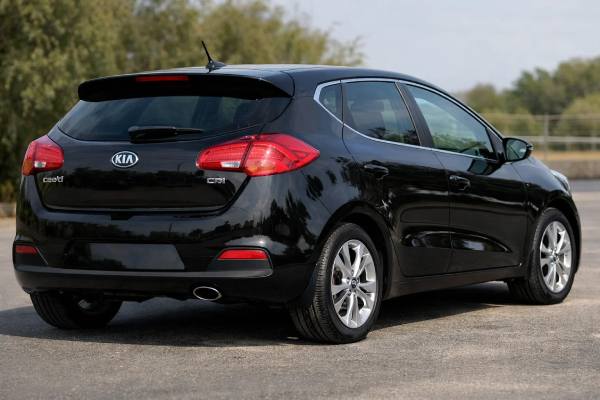
The 2012–2015 Kia Cee’d (JD) with the 1.6 U II CRDi 110 hp diesel is a classic “European commute” spec: strong mid-range pull, long-legged gearing, and low fuel use when driven at steady speeds. The engine’s common-rail injection and variable-geometry turbocharger make it feel more flexible than the modest horsepower number suggests, especially in real traffic. In ownership terms, this version rewards drivers who do regular longer runs—because modern diesel hardware (EGR and a DPF on many markets) dislikes repeated cold starts and short trips.
As a used buy, the Cee’d JD also benefits from a simple front-drive layout, sensible parts pricing in many EU markets, and a cabin and chassis tuned for everyday comfort rather than sharp “hot hatch” responses. The key to a happy ownership experience is choosing the right service history and matching the car’s diesel strengths to your driving pattern.
Owner Snapshot
- Strong low-rpm torque makes it relaxed in traffic and easy on inclines with passengers.
- Very efficient on steady motorway runs when the DPF can regenerate properly.
- Straightforward FWD layout keeps tyre and driveline costs predictable.
- Short-trip use can accelerate EGR/DPF problems and raise maintenance cost.
- Plan engine oil and filter service about every 10,000–15,000 km or 12 months (whichever comes first), depending on use.
Jump to sections
- Kia Cee’d JD diesel profile
- Kia Cee’d JD 1.6 CRDi specifications
- Kia Cee’d JD trims, options, and safety
- Reliability and common diesel issues
- Maintenance plan and buyer’s checklist
- Real-world driving and economy
- Rivals and alternatives
Kia Cee’d JD diesel profile
In the JD generation, the Cee’d sits in the core European C-segment: practical size outside, usable space inside, and predictable running costs when maintained. The 1.6 U II CRDi 110 hp variant is aimed at drivers who value torque and economy over peak power. What makes it “feel” stronger than expected is the way a small turbo-diesel delivers its work: instead of building power high in the rev range, it concentrates usable shove in the mid-band—exactly where you spend most of your time on normal roads.
Mechanically, this is a front-wheel-drive hatch/estate platform with simple packaging and widely familiar service needs. The diesel engine uses high-pressure common-rail injection, a variable-geometry turbocharger (VGT), and emissions systems that may include a diesel particulate filter (DPF) depending on market and model year. That last detail matters for ownership: a DPF needs heat and time to regenerate, so the best match is mixed driving with regular longer trips. If you drive mainly short urban distances, the petrol versions tend to be more forgiving.
Chassis tuning is “everyday European”: stable at speed, calm over broken pavement, and easy to place in traffic. It is not a sports car, but it behaves honestly—important for a used buyer. The main wear-and-tear pattern is typical: tyres, brakes, suspension links and bushings, and (on manual cars) clutch and dual-mass flywheel wear depending on driving style.
What owners tend to like most:
- Low fuel use on steady roads.
- Long-range cruising comfort (especially with the right tyres).
- Strong pulling power at low rpm for its class.
What to watch:
- A diesel that has lived a short-trip life may carry hidden costs in intake, EGR, turbo control hardware, or DPF condition.
- A high-mile motorway car can be a better bet than a low-mile city car, if service records are clean and fluids were changed on time.
Kia Cee’d JD 1.6 CRDi specifications
Below is a practical spec sheet for the 2012–2015 Cee’d (JD) with the 1.6 U II CRDi around 110 hp (81 kW). Exact figures can vary by market (emissions calibration, gearing, body style, and tyre size), so treat these as the “most common” European configuration.
Powertrain and efficiency
| Item | Specification |
|---|---|
| Code | U II CRDi (commonly referenced as 1.6 U2 family) |
| Engine layout and cylinders | Inline-4, turbo-diesel, DOHC, 4 cylinders, 4 valves/cyl |
| Bore × stroke | 77.2 × 84.5 mm (3.04 × 3.33 in) |
| Displacement | 1.6 L (1582 cc) |
| Induction | Turbocharged (VGT), intercooler |
| Fuel system | Common-rail direct injection |
| Compression ratio | Typically ~17:1 (varies by calibration) |
| Max power | 110 hp (81 kW) @ ~4000 rpm |
| Max torque | Commonly ~260 Nm (192 lb-ft) @ ~1900–2750 rpm (market-dependent) |
| Timing drive | Chain (typical for this engine family) |
| Rated efficiency | Often ~4.0–5.0 L/100 km combined (EU cycle varies by year/tyres/body) |
| Real-world highway @ 120 km/h | Commonly ~5.0–6.0 L/100 km depending on gearing, wind, and tyres |
Transmission and driveline
| Item | Specification |
|---|---|
| Transmission | Commonly 6-speed manual; some markets offer 6-speed automatic |
| Drive type | FWD |
| Differential | Open |
Chassis and dimensions (typical JD range)
Because the Cee’d line includes 5-door hatch and Sportswagon/estate, dimensions vary. These are typical EU-market ranges.
| Item | Typical specification |
|---|---|
| Suspension (front/rear) | MacPherson strut / multi-link (common JD layout) |
| Steering | Electric power steering (EPS) |
| Brakes | Disc front and rear (spec varies by trim); typical front ~280–300 mm, rear ~262–284 mm |
| Wheels/tyres (popular) | Common: 205/55 R16 or 225/45 R17 (trim dependent) |
| Ground clearance | Typically ~140–150 mm (5.5–5.9 in), market dependent |
| Length / width / height | Hatch ~4310 / 1780 / 1470 mm (approx.); estate longer |
| Wheelbase | ~2650 mm (104.3 in) |
| Turning circle (kerb-to-kerb) | Typically ~10.6–10.8 m (34.8–35.4 ft) |
| Kerb weight | Often ~1250–1400 kg (2756–3086 lb), depends on body/gearbox/trim |
| Fuel tank | Commonly ~53 L (14.0 US gal / 11.7 UK gal) |
| Cargo volume | Hatch typically ~380 L seats up (VDA-style) and higher seats down; estate higher |
Performance and capability (typical)
| Metric | Typical value |
|---|---|
| 0–100 km/h (0–62 mph) | ~11–12 s (gearbox/body/tyres affect) |
| Top speed | ~185–195 km/h (115–121 mph) |
| Braking distance | Highly tyre-dependent; expect typical C-segment performance when maintained |
| Towing capacity | Market dependent; often ~1200–1500 kg braked, ~500–750 kg unbraked (verify VIN plate) |
| Payload | Typically ~450–600 kg depending on spec |
Fluids and service capacities (decision-grade)
Always verify for your exact VIN/gearbox, but these are common ballparks:
| Fluid | Typical spec and notes |
|---|---|
| Engine oil | Often ACEA C3 low-SAPS for DPF-equipped cars; viscosity commonly 5W-30 (climate-dependent) |
| Engine oil capacity | ~5.0–5.5 L (5.3–5.8 US qt) with filter (varies by sump) |
| Coolant | Ethylene-glycol OAT/HOAT type per Kia spec; common mix 50/50 |
| Coolant capacity | ~6–7 L (6.3–7.4 US qt), varies |
| Manual transmission oil | Typically 75W-85 GL-4 (verify spec) |
| A/C refrigerant | Usually R-134a for this era; charge varies by body/market |
| Key torque specs (typical) | Wheel nuts often ~90–110 Nm (66–81 lb-ft); drain plug commonly ~25–35 Nm (18–26 lb-ft) (verify) |
Safety and driver assistance (core items)
| Item | Notes |
|---|---|
| Crash ratings | Euro NCAP rating exists for the Cee’d family; equipment level and protocol version matter |
| ADAS suite | This era typically focuses on ESC, ABS, and basic support systems; advanced AEB/ACC is limited/market-dependent |
Kia Cee’d JD trims, options, and safety
Trim naming differs across Europe (and can change mid-cycle), but the underlying structure is consistent: a base grade, one or two mid grades, and a higher grade with comfort and tech packs. When you’re shopping, focus less on the badge and more on the hardware that changes ownership cost and daily usability.
Trims and options that matter most
Transmission choice (and what it implies)
- 6-speed manual: Usually the simplest and cheapest to maintain, but clutch life depends heavily on use. Many cars use a dual-mass flywheel (DMF) for refinement; it improves smoothness but raises replacement cost if it wears.
- 6-speed automatic (where fitted): Better for stop-start traffic, but you should prioritize cars with evidence of fluid service (even if the original schedule implies “long life”).
Wheel and tyre packages
- Smaller wheels (often 16-inch with 205/55) typically ride better, cost less, and are more forgiving on rough roads.
- Larger wheels (often 17-inch with 225/45) can feel sharper but increase tyre cost and can expose suspension wear sooner.
Cold-weather and comfort packs
- Heated seats/steering wheel, stronger cabin heating, and better lighting can meaningfully improve day-to-day satisfaction, especially in colder climates.
- Parking sensors and a reversing camera reduce low-speed damage risk—useful on a car now well into used-car life.
Infotainment and electrical features
- Higher trims bring larger screens, navigation, and upgraded audio. These systems are usually reliable, but check for dead pixels, weak Bluetooth performance, and steering-wheel control issues.
Quick identifiers when viewing a car
- Tyre size on the sidewall tells you a lot about trim intent and likely ride comfort.
- Rear suspension on many JD variants is multi-link; visually checking for uneven tyre wear helps identify alignment or bushing issues.
- Instrument cluster and steering wheel buttons often reveal whether the car has cruise control, trip computer depth, and phone integration.
Safety ratings and what they mean in practice
The Cee’d family was engineered for strong structural safety for its class and era, and Euro NCAP testing exists for the model line under the protocol of the time. When interpreting ratings, keep two realities in mind:
- Protocol changes over time. A 5-star result under older rules does not equal a modern 5-star in absolute difficulty.
- Trim equipment matters. The presence of ESC, seatbelt reminders (front and rear), and correctly functioning airbags and pretensioners is what protects you in real life.
Safety systems and ADAS availability (2012–2015 reality)
For most 2012–2015 C-segment diesels, the safety “core” is:
- ABS and ESC (Electronic Stability Control) with traction control.
- Multiple airbags (front, side, and curtain on many trims).
- ISOFIX/LATCH child-seat points on rear outboard seats (common).
- Tyre-pressure monitoring may be direct or indirect depending on market.
True “modern ADAS” features—autonomous emergency braking (AEB), adaptive cruise control (ACC), lane centering—are not typically widespread on early JD years. If a seller claims these features, verify on a test drive and by checking the windshield camera/radar hardware and menu options.
Reliability and common diesel issues
The 1.6 CRDi 110 can be a durable engine when used as a diesel likes to be used: warmed fully, driven under steady load regularly, and serviced with correct low-ash oil where required. Most expensive surprises come from emissions hardware stress, neglected fluids, or stop-start city life.
Below is a practical “prevalence × cost tier” map, followed by symptom-led guidance.
Issues map (typical for small modern diesels)
Common (low to medium cost)
- EGR soot buildup: Especially with short trips and low-load driving.
- Boost hoses and clamps: Small leaks cause limp mode or under-boost codes.
- Thermostat stuck open / slow warm-up: Hurts economy and increases soot loading.
- Glow plugs or control module faults: More common as mileage rises.
Occasional (medium cost)
- DPF loading / failed regenerations: Often a usage pattern issue, sometimes compounded by sensors.
- MAF/MAP sensor contamination: Leads to poor response and odd fuel trims.
- Injector correction drift: Can cause rough idle or harder starts; sometimes solvable with fuel system service, sometimes not.
Rare (high cost)
- Turbocharger actuator or turbo failure: Usually linked to oil quality/intervals, intake restrictions, or repeated over/under-boost events.
- DMF and clutch replacement (manual): Not rare overall, but “high cost” when it hits—especially if driving was heavy city stop-start.
Symptom → likely cause → what to do
- Hesitation, weak pull, or limp mode under load
Likely: boost leak, sticky VGT actuator, vacuum/solenoid issue, or sensor mismatch.
Do: smoke-test intake plumbing, inspect intercooler hoses, check actuator movement, scan for under/over-boost codes. - Frequent DPF warning, rising oil level, or repeated forced regens
Likely: short-trip use, faulty exhaust temperature/pressure sensors, EGR issues, or injector over-fuelling.
Do: read soot load values with a capable scan tool, check sensor plausibility, confirm thermostat allows full operating temperature, and change oil if fuel dilution occurred. - Rough idle and diesel knock when cold
Likely: injector correction out of range, glow plug issues, or air in fuel lines.
Do: check injector balance/corrections, confirm glow plug system health, inspect fuel filter housing for leaks. - Clutch judder, rattling at idle, or vibration when pulling away (manual)
Likely: DMF wear or clutch contamination.
Do: assess engagement feel and noises; plan DMF+clutch as a combined job if symptoms are clear.
Software updates and calibration notes
On many modern diesels, a surprising number of “mechanical” complaints are improved by correct ECU updates (driveability, regen logic, sensor thresholds). Because update history is rarely written in a service book, the practical approach is:
- Ask for dealer printouts when possible.
- If the car shows recurring emissions-related faults, budget for a diagnostic session that includes checking for outstanding updates.
Recalls, TSBs, and how to verify
Without relying on trim-by-trim recall lists, the safest buyer method is always VIN-based verification:
- Check recall completion via an official VIN portal (and keep documentation).
- Cross-check with government recall databases if the car was originally sold in a region that supports them.
A used diesel that has had all recall and service actions completed is often the best value—even if its mileage is higher—because it reduces the “unknown unknowns.”
Maintenance plan and buyer’s checklist
A practical maintenance plan for the Cee’d JD 1.6 CRDi should do two things: protect the turbo and timing system with clean oil, and keep emissions hardware healthy by preventing soot overload and fuel dilution. The schedule below is deliberately “real world,” not optimistic.
Core maintenance schedule (distance/time)
Every 10,000–15,000 km / 12 months
- Engine oil and filter (use the correct low-SAPS spec if DPF-equipped).
- Inspect air intake hoses, intercooler joints, and vacuum lines for leaks.
- Scan for stored codes even if no warning light is on.
Every 20,000–30,000 km / 2 years
- Cabin air filter.
- Engine air filter (sooner in dusty areas).
- Brake inspection: pad thickness, slider lubrication, rotor condition.
Every 30,000–60,000 km (market and fuel-quality dependent)
- Fuel filter (critical for injector life; many diesels suffer when this is ignored).
Every 2 years
- Brake fluid change (helps ABS/ESC reliability and pedal feel).
- Full underbody inspection for corrosion and brake line condition (especially in salted-road regions).
Every 60,000–120,000 km (usage dependent)
- Manual gearbox oil service (a “cheap insurance” change even if not emphasized in marketing schedules).
- Coolant: follow the official interval, but do not ignore age—coolant protects the water pump and EGR cooler passages.
Spark plugs
- Not applicable (diesel uses glow plugs). Check glow plugs and controller as needed.
Timing components
- Typically a chain; inspect for abnormal noise on cold start and for timing correlation faults. Replace only if symptoms/out-of-spec appear.
12 V battery
- Test annually after year 5; many batteries last 5–7 years depending on climate and short-trip use.
Fluids and specs (ownership-grade guidance)
- Engine oil: Use the exact Kia-approved spec for your VIN and emissions equipment. DPF-equipped cars generally require low-ash oil (commonly ACEA C3) to prevent DPF ash loading.
- Coolant: Use the correct OAT/HOAT chemistry; mixing types can shorten life and cause deposits.
- Transmission fluid: Manual and automatic fluids are not interchangeable; service with the correct product, not “universal ATF.”
Buyer’s inspection checklist (diesel-focused)
1) Evidence of the right kind of use
- Prefer cars with regular longer trips (motorway mileage) over “school-run only” profiles.
- A low-mileage diesel can be riskier than a higher-mile one if it did mostly cold starts.
2) Emissions system health
- Check for DPF/EGR-related warning history.
- Ask if it has had forced regenerations; repeated forced regens can signal an underlying issue.
3) Cold start behavior
- Start from cold if possible. Look for excessive smoke, uneven idle, or loud knocking beyond the first moments.
4) Turbo and boost integrity
- On a test drive, apply moderate throttle in a higher gear and watch for smooth, linear pull.
- Listen for siren noises, fluttering, or hissing (possible boost leaks).
5) Clutch/DMF (manual)
- Check for judder when pulling away, rattles at idle, and vibration under load changes.
6) Chassis and tyre wear
- Uneven tyre wear can indicate alignment issues, worn bushings, or accident repair.
- Rear multi-link bushings can wear; listen for knocks over sharp bumps.
Best years and options to seek (practical take)
For 2012–2015, the best “value” examples are usually:
- Mid trims with 16-inch tyres, good service history, and documented recall completion.
- Cars owned by drivers who did regular longer runs.
Consider avoiding:
- Diesels with repeated short-trip usage and no evidence of preventive maintenance.
- Cars with modified exhaust/emissions equipment (a legal and reliability risk).
Real-world driving and economy
The 1.6 CRDi 110’s character is defined by torque delivery and gearing. It generally feels calm rather than fast: you make progress by using the mid-range, not by chasing revs. That suits daily driving, especially when the car is loaded with passengers or luggage.
Ride, handling, and NVH (noise and vibration)
- Ride: With smaller wheels, the Cee’d typically filters broken pavement well for its class. Larger wheels sharpen impacts and can make the rear feel busier on rough surfaces.
- Handling: Neutral and predictable. It leans a little in corners but stays composed. The goal is stability and confidence, not aggressive rotation.
- Steering: Light at low speed with decent self-centering. Feedback is modest (typical EPS), but accuracy is usually good.
- Braking feel: Straightforward and easy to modulate when the system is healthy. If the pedal feels inconsistent, check for old brake fluid or sticky caliper sliders.
- Cabin noise: Diesel clatter is most noticeable at cold start and idle. At cruise, wind and tyre noise often dominate, especially on wider tyres.
Powertrain character
- Throttle response: Best described as “elastic.” There’s usually a brief moment before boost builds, then a strong, usable surge.
- In-gear flexibility: This is where the engine shines. It’s comfortable in higher gears at modest speeds and does not demand frequent downshifts.
- Manual gearbox behavior: Typically well matched to the torque curve. If it feels notchy or vague, it may be age, linkage wear, or old fluid.
- Automatic gearbox behavior (if equipped): Usually smooth when healthy, but a neglected fluid can cause hesitation or rough shifts.
Real-world efficiency (what owners commonly see)
Actual fuel use depends heavily on speed and temperature:
- City (short trips): Often ~6.0–8.0 L/100 km (39–29 mpg US / 47–35 mpg UK), with higher figures in winter.
- Highway 100–120 km/h: Often ~5.0–6.0 L/100 km (47–39 mpg US / 56–47 mpg UK).
- Mixed driving: Often ~5.0–6.5 L/100 km (47–36 mpg US / 56–43 mpg UK).
Cold-weather delta: Expect noticeably higher consumption and more frequent regen events in winter. If you mostly do short winter trips, the diesel advantage can shrink dramatically.
Load and towing notes
When towing (where rated), torque helps the car feel capable at moderate loads, but keep expectations realistic:
- Plan for a meaningful consumption increase under load.
- Pay attention to cooling system health and oil service discipline.
- Use the correct tyre pressures and consider more frequent brake inspections.
Rivals and alternatives
The Cee’d JD 1.6 CRDi 110 competes with other mainstream European diesels of the era. The smartest comparison is not “which is best,” but “which fits your driving pattern and maintenance tolerance.”
Volkswagen Golf 1.6 TDI (105/110)
Why choose it: Strong resale, very wide service knowledge base, good long-distance refinement.
Why choose the Kia instead: Often better value used, sometimes simpler ownership experience when you prioritize documentation over badge.
Ford Focus 1.6 TDCi (around 115)
Why choose it: Typically the most engaging steering and chassis feel in this group.
Why choose the Kia instead: Cee’d often feels more “set-and-forget” if you want calm daily driving and straightforward parts sourcing.
Peugeot 308 / Citroën C4 1.6 HDi (around 110–115)
Why choose it: Smooth diesel character and strong economy potential.
Why choose the Kia instead: If you prefer a more conservative electrical/infotainment ecosystem and a platform that’s easy to evaluate as a used car.
Opel/Vauxhall Astra diesel (1.7 CDTI or 1.6 CDTI depending on year)
Why choose it: Good motorway composure and often strong seats/ergonomics.
Why choose the Kia instead: Many buyers find the Kia’s overall “ownership risk” easier to manage if the service history is complete.
Renault Mégane 1.5 dCi (around 110)
Why choose it: Excellent economy and often a very comfortable ride.
Why choose the Kia instead: If you want more mid-range torque feel and a drivetrain that’s less sensitive to neglected maintenance.
Bottom line
Pick the Cee’d JD 1.6 CRDi 110 if:
- You drive enough longer trips to keep diesel emissions hardware healthy.
- You want a calm, practical daily car with strong mid-range and good fuel use.
- You’re willing to buy based on condition and records, not just mileage.
If most of your driving is short and urban, a petrol variant (or a different powertrain strategy entirely) can be the lower-stress choice over years of ownership.
References
- Kia Car Owners Manual | Kia UK 2026 (Owner’s Manual Portal)
- Kia Recalls | Kia Europe 2026 (Recall Database)
- Check for Recalls: Vehicle, Car Seat, Tire, Equipment | NHTSA 2026 (Recall Database)
- Engine Oil Grades and Capacities 2026 (Service Document)
- Kia C’eed – Crash Test 2012 2012 (Safety Rating Media)
Disclaimer
This article is for informational purposes only and is not a substitute for professional inspection, diagnosis, or repair. Specifications, torque values, service intervals, and procedures vary by VIN, market, model year, and equipment; always verify details using your vehicle’s official owner’s manual and service documentation.
If you found this guide useful, please consider sharing it on Facebook, X (Twitter), or your favorite forum to help others find it.