
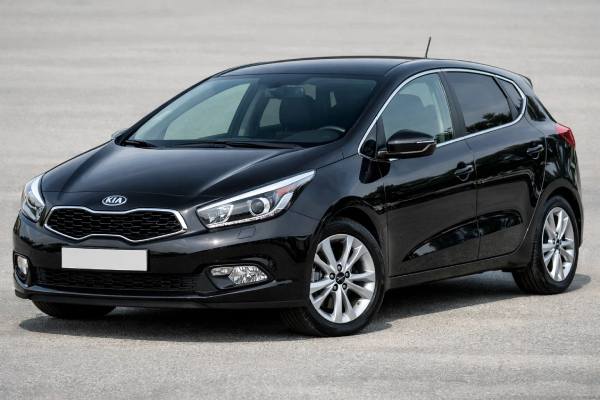
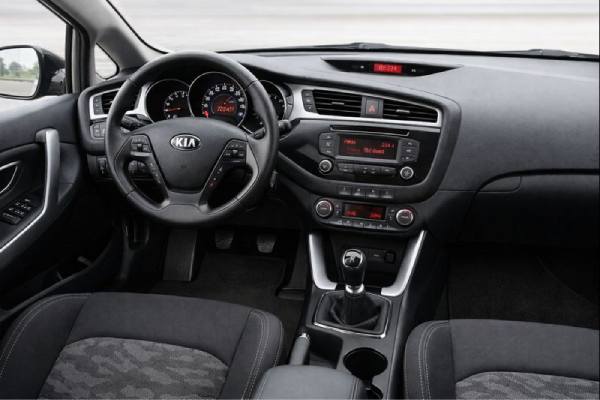

The 2012–2015 Kia Cee’d (JD) with the 1.6 CRDi 128 hp diesel sits in a sweet spot for drivers who want low running costs without giving up a solid, grown-up feel on the road. This engine is tuned for usable mid-range pull, so it feels stronger in everyday driving than its power number suggests—especially on the motorway and with passengers on board. The JD platform also brought a more rigid body and improved refinement over the previous generation, which matters if you do long commutes.
Ownership satisfaction depends on how the car was used. These diesels like steady operating temperatures and longer runs; short, cold trips are harder on the emissions hardware. Buy well, service it on time with the correct low-ash oil, and the Cee’d can be a durable, economical hatchback with predictable maintenance.
Essential Insights
- Strong mid-range torque makes motorway and hill driving relaxed for a 1.6 diesel.
- Cabin and ride feel “bigger-car” stable at speed, especially on 16–17 inch wheels.
- Long-life servicing works best with frequent long drives; repeated short trips raise DPF and EGR risk.
- Plan a brake fluid change every 2 years to protect ABS and calipers.
- A typical oil service interval is 15,000 km (or 12 months), depending on market schedule and duty cycle.
Jump to sections
- Kia Cee’d JD diesel big picture
- Kia Cee’d JD 1.6 CRDi specs and capacities
- Kia Cee’d JD equipment and safety features
- Common faults and service campaigns
- Maintenance plan and smart buying checks
- Driving feel and real-world economy
- How the Cee’d JD diesel compares
Kia Cee’d JD diesel big picture
This version of the Cee’d is a straightforward formula: a practical C-segment hatch (or Sportswagon in some markets) paired with Hyundai-Kia’s U II 1.6 common-rail diesel in a higher-output tune (128 hp). In day-to-day use, the defining trait is torque delivery. The engine is happiest between roughly 1,800 and 3,000 rpm, where it pulls cleanly in higher gears and makes overtakes feel calm rather than frantic. If you drive mostly on A-roads or motorways, that character is exactly what you want.
The JD chassis is also part of the appeal. Compared with many budget-focused hatchbacks, it tends to feel planted and predictable at speed. Steering is light, but the car tracks straight, and crosswinds don’t upset it as much as you might expect. The suspension tuning varies by wheel size and trim, yet the best-balanced setups are usually mid-spec wheels with sensible tyre sidewalls—good for ride comfort and less prone to rim damage.
From an ownership standpoint, the “diesel bargain” depends on usage pattern. These cars reward drivers who regularly let the engine reach full temperature and keep it there—think 20–30 minutes of steady driving. That routine helps the diesel particulate filter (DPF) complete regenerations and reduces EGR soot buildup. If the car lived in city-only duty, you should expect extra maintenance decisions: more frequent oil changes, periodic intake/EGR cleaning, and careful attention to warning lights.
Advantages worth calling out for this exact configuration:
- Efficient long-distance tool: fuel consumption can be genuinely low on steady runs.
- Useful load flexibility: hatch practicality and, on wagons, strong cargo volume for the class.
- Simple driveline choices: most are 6-speed manuals; automatics exist in some markets, but manuals dominate and are easier to assess.
The downside is not mysterious: modern diesels have more emissions hardware, and neglect gets expensive. A well-documented service history matters more than mileage alone. A higher-mile, motorway-driven Cee’d can be a safer buy than a low-mile, stop-start city car.
Kia Cee’d JD 1.6 CRDi specs and capacities
Specs vary slightly by market, body style (hatch vs wagon), wheel and tyre package, and gearbox. Use the tables below as a practical baseline for the 2012–2015 Cee’d (JD) 1.6 CRDi 128 hp.
Powertrain and efficiency
| Item | Specification |
|---|---|
| Code | U II CRDi 1.6 (market-specific engine code variants) |
| Engine layout and cylinders | I-4, DOHC, 16-valve |
| Displacement | 1.6 L (≈1,582 cc) |
| Induction | Turbocharged (VGT in many markets) |
| Fuel system | Common-rail direct injection (CRDi) |
| Max power | 128 hp (≈94 kW) @ ~4,000 rpm* |
| Max torque | typically ~260 Nm (≈192 lb-ft) @ ~1,900–2,750 rpm* |
| Timing drive | market/version dependent—verify by VIN/service data |
| Rated efficiency | commonly ~4.0–4.7 L/100 km (≈50–59 mpg US / 60–71 mpg UK)* |
| Real-world highway @ 120 km/h | often ~5.5–6.5 L/100 km (≈36–43 mpg US / 43–51 mpg UK) |
*Published figures differ by homologation cycle, model year, and transmission.
Transmission and driveline
| Item | Specification |
|---|---|
| Transmission | commonly 6-speed manual; some markets offered automatics |
| Drive type | FWD |
| Differential | Open |
Chassis and dimensions (typical hatchback)
| Item | Specification |
|---|---|
| Suspension (front/rear) | MacPherson strut / multi-link (market dependent) |
| Steering | Electric power steering (EPS); ratio varies by rack |
| Brakes | Ventilated front discs / rear discs or drums (trim dependent) |
| Wheels and tyres (popular) | 205/55 R16 or 225/45 R17 |
| Ground clearance | typically ~135–150 mm (varies by trim) |
| Length / width / height | ~4,310 / 1,780 / 1,470 mm |
| Wheelbase | ~2,650 mm |
| Turning circle (kerb-to-kerb) | ~10.6–10.8 m |
| Kerb weight | roughly ~1,320–1,450 kg (trim/gearbox dependent) |
| Fuel tank | typically ~53 L |
| Cargo volume | body-style dependent; hatch commonly ~380 L seats up (VDA-style reporting varies) |
Performance and capability (typical)
| Metric | Typical value* |
|---|---|
| 0–100 km/h (0–62 mph) | ~10–11 s |
| Top speed | ~190–200 km/h |
| Braking distance (100–0 km/h) | tyre/trim dependent; commonly high-30s to low-40s m |
| Towing capacity | market dependent—verify by VIN; often ~1,200–1,500 kg braked* |
| Payload | trim dependent; commonly ~450–550 kg* |
Fluids and service capacities (decision-useful baseline)
| Item | Specification (verify by VIN) |
|---|---|
| Engine oil | ACEA C2/C3 low-SAPS; common grade 5W-30 |
| Engine oil capacity | typically ~5.0–5.5 L with filter |
| Coolant | OAT long-life coolant; 50/50 mix typical |
| Brake fluid | DOT 4 |
| Manual gearbox oil | GL-4 75W-85 (common) |
| A/C refrigerant | R134a in most markets/years (confirm under-hood label) |
Safety and driver assistance (era-correct)
| Item | Typical for 2012–2015 JD |
|---|---|
| Crash ratings | Euro NCAP 5-star for the model line (test protocol year matters) |
| Core safety systems | ABS, ESC, traction control, hill-start assist (market/trim dependent) |
| ADAS suite | limited by modern standards; some late trims added alerts (availability varies) |
Kia Cee’d JD equipment and safety features
Trims differ widely by country, but most markets offered a clear ladder from basic fleet-focused versions to feature-heavy “comfort” grades. When shopping, focus less on the badge and more on the functional equipment that affects ownership: wheels and tyres, lighting, infotainment age, and winter packs.
Trims and options that matter
Common trim patterns (names vary) typically included:
- Entry grades: durable cloth seats, manual A/C, smaller wheels (often 15–16 inch), simpler audio. These can be excellent used buys because they avoid expensive extras and ride more comfortably.
- Mid grades: better infotainment, upgraded seat fabrics, parking sensors/camera in many markets, and often the “best compromise” wheel size (16 inch).
- High grades: larger wheels (17 inch), panoramic roof in some markets, HID/LED running lights on certain years, and more convenience tech.
Mechanical or functional differences to look for:
- Wheel size: 17-inch setups sharpen response but can make the ride busier and increase tyre cost. If you value comfort and durability, 16-inch wheels are often ideal.
- Rear brakes: some trims use rear discs; others may have drums depending on market. Discs are easier to inspect visually; drums can last well but hide wear.
- Infotainment tier: older nav units can be slow and expensive to update; a simpler head unit may be preferable if you plan aftermarket upgrades.
Quick identifiers when viewing a used car
- Badge and tailpipe: “CRDi” badge and diesel-specific exhaust note; check for excessive smoke or strong diesel smell after warm-up.
- Interior clues: steering wheel controls and cluster display type often track trim level more reliably than external badges.
- Build date vs model year: early vs late 2015 cars can differ in infotainment and minor equipment; check the door-jamb label and VIN decoders used in your region.
Safety ratings and systems (what you actually get)
The JD Cee’d earned strong mainstream safety credentials for its era, with a robust passenger cell and a typical set of stability and braking systems. Most cars include:
- Front, side, and curtain airbags (airbag count and rear side coverage can vary by market).
- ISOFIX/LATCH outer rear seats in most European specifications—check for plastic guides and labels.
- ABS + ESC with traction control, plus brake assist logic that helps deliver full braking under panic stops.
Driver assistance on 2012–2015 cars is mostly not the modern camera-and-radar suite. Expect the fundamentals rather than automatic emergency braking. If a seller claims AEB or adaptive cruise, treat it as a “verify by VIN and option code” item, not an assumption.
Service note: wheel alignment, tyre condition, and correct brake components matter for real-world safety more than any brochure feature. A well-maintained base-trim car can stop and handle better than a neglected high-trim example on mismatched tyres.
Common faults and service campaigns
Think of this diesel Cee’d as two systems: a durable basic engine and driveline, plus emissions and boost-control hardware that needs correct use and maintenance. Below is a practical map of problems by prevalence and cost tier.
Common (higher prevalence)
- DPF loading and failed regenerations (medium to high cost if ignored)
Symptoms: DPF light, limp mode, frequent fan running after shutdown, rising fuel consumption, oil level creeping up.
Likely cause: short trips, interrupted regens, wrong oil (non-low-SAPS), exhaust leaks, or a failing DPF pressure sensor.
Remedy: forced regen and root-cause diagnosis; replace sensors if readings are wrong; in severe cases, DPF removal for professional cleaning or replacement. - EGR valve and intake soot (medium cost)
Symptoms: hesitation, uneven idle, reduced power, fault codes, rough cold running.
Likely cause: soot accumulation from low-load driving, sometimes worsened by failing thermostats that keep the engine too cool.
Remedy: clean/replace EGR components and ensure the cooling system reaches correct temperature. - Turbo boost leaks and vacuum control issues (low to medium cost)
Symptoms: weak acceleration, overboost/underboost codes, whistle/hiss, limp mode.
Likely cause: split intercooler hoses, loose clamps, vacuum solenoid issues, sticky VGT actuator.
Remedy: smoke test/pressure test intake, replace hoses, check actuator movement and vacuum supply.
Occasional (depends on use and mileage)
- Clutch and dual-mass flywheel wear (medium to high cost)
Symptoms: vibration at idle, rattling when engaging, slipping under load, shudder on take-off.
Cause: high-torque diesel load, city driving, towing, poor driving habits.
Remedy: clutch + DMF replacement as a set; inspect rear main seal while there. - Injector sealing and fuel system sensitivity (medium cost)
Symptoms: hard starting, diesel smell, ticking noise, rough idle.
Cause: sealing washer leaks or injector issues (quality of fuel matters).
Remedy: replace seals, correct torque procedures, and clean seating surfaces.
Rare but expensive
- Cooling system neglect leading to overheating (high cost)
Symptoms: temperature spikes, coolant loss, heater weak, repeated fan runs.
Cause: leaking radiator, thermostat issues, neglected coolant.
Remedy: pressure test, fix leaks, refill with correct coolant mix, bleed properly.
Recalls, TSBs, and verification
Campaigns vary by country and VIN. The correct approach is procedural:
- Run an official recall check for the registration/VIN in your market.
- Ask for proof of completion (dealer printout or invoices).
- If the car has intermittent warning lights, request a scan report before purchase—some issues are solved by software updates or revised sensors rather than parts swapping.
A final reality check: many “diesel problems” are really “duty-cycle problems.” A car used for steady longer runs often avoids the expensive cluster of DPF/EGR/boost complaints.
Maintenance plan and smart buying checks
A good maintenance plan for the 1.6 CRDi is less about exotic parts and more about consistent basics, correct fluids, and catching emissions issues early. Use the schedule below as a practical template, then align it with your market’s official service book.
Practical maintenance schedule (distance/time)
- Engine oil and filter: every 10,000–15,000 km or 12 months (short-trip cars should lean to 10,000 km). Use the correct low-ash ACEA spec oil to protect the DPF.
- Air filter: inspect every 15,000 km; replace every 30,000 km (more often in dusty areas).
- Cabin filter: every 15,000–30,000 km or yearly for air quality.
- Fuel filter (diesel): often every 30,000–60,000 km; earlier if poor fuel quality or cold-start issues appear.
- Brake fluid: every 2 years regardless of mileage.
- Coolant: typically 5 years / 100,000–200,000 km depending on coolant type; confirm the exact interval in the service book.
- Manual gearbox oil: not always listed as routine, but a preventive change around 100,000–150,000 km can improve shift feel and longevity.
- Timing components: verify the timing drive type by VIN and follow the correct inspection/interval guidance.
- Serpentine belt and accessories: inspect at each service; replace at signs of cracking/noise.
- Tyres: rotate every 10,000–15,000 km; alignment check yearly or after pothole hits.
- 12 V battery: test annually after year 4; replacement window often 4–6 years depending on climate.
Fluids and torque values (decision-useful)
Because VIN variation is real, treat capacities and torque values as “verify before wrenching.” Still, these rules help:
- Use low-SAPS oil that matches the engine’s DPF needs.
- Avoid “universal coolant.” Use the correct OAT-type coolant and proper mix.
- If doing brake work, stick to quality parts and bleed correctly—ABS modules dislike air and contaminated fluid.
Buyer’s guide: what to inspect before purchase
Paperwork and history
- Full service history with oil spec noted (or invoices listing oil type).
- Evidence of recall completion where applicable.
- Any record of DPF/EGR work—done properly, it can be a positive.
Mechanical checks
- Cold start: should fire promptly without heavy smoke.
- Warm idle: listen for DMF rattle and feel for vibration.
- Test drive: in 3rd/4th gear from ~1,500 rpm, it should pull smoothly without flat spots or limp mode.
- Cooling: ensure the cabin heater gets properly hot; weak heat can hint at thermostat issues.
Emissions health
- Ask whether the car does regular long runs.
- Check oil level and smell: strong diesel smell or rising level can suggest incomplete regenerations.
A well-chosen Cee’d diesel can be an excellent value, but a neglected one can turn “cheap” into “expensive” quickly. Buy the history, not just the mileage.
Driving feel and real-world economy
The best way to describe the 1.6 CRDi 128 in the JD Cee’d is “quiet competence.” It’s not a hot hatch, but it’s strong where it counts: rolling acceleration, motorway merges, and maintaining speed on grades. The torque curve means you don’t need to rev it hard; short-shifting at 2,200–2,800 rpm often feels fastest and keeps noise down.
Ride, handling, and NVH
- Ride: On 16-inch wheels, the Cee’d usually rides with a controlled, slightly firm European feel—good body control without being harsh. Move to 17-inch wheels and the car can feel busier over sharp edges.
- Handling: Neutral and safe. The front end grips well, and the rear follows predictably. It isn’t playful, but it’s trustworthy on wet roads.
- Steering: Light and easy in town, less talkative on back roads. It’s tuned for stability and comfort rather than feedback.
- Braking: Solid pedal feel if maintained; cheap pads can make the braking feel grabby or noisy.
Powertrain character
- Throttle response: Strong once the turbo is in its stride; below ~1,500 rpm it can feel flat, so downshifts matter in town.
- Gearbox behavior: The 6-speed manual suits the engine well. A clean clutch take-up and smooth engagement are signs of a healthy drivetrain. If the car has an automatic in your market, pay attention to shift quality and service history, as fluid condition matters.
Real-world efficiency
Expect economy to track usage pattern more than driving style:
- City (stop-start): often ~6.5–8.0 L/100 km (≈29–36 mpg US / 35–43 mpg UK), with higher numbers in winter.
- Motorway 100–120 km/h: often ~5.5–6.5 L/100 km (≈36–43 mpg US / 43–51 mpg UK).
- Mixed driving: commonly ~5.5–7.0 L/100 km (≈34–43 mpg US / 40–51 mpg UK).
Cold weather can add meaningful consumption and increase DPF regen frequency. Short winter trips are the hardest scenario: the engine runs richer while warming up, soot load rises faster, and the car may attempt regens more often.
Practical performance metrics that change the verdict
- If the car feels noticeably weak above 2,000 rpm, suspect boost leaks, a sticky actuator, or a sensor issue—not “just how diesels are.”
- If it repeatedly tries to regen (fan running after shutdown, harsher idle), treat it as an inspection priority before buying.
Driven as intended, this Cee’d is a relaxed long-distance hatch with fuel numbers that still make sense today.
How the Cee’d JD diesel compares
In the 2012–2015 diesel hatchback landscape, the Cee’d 1.6 CRDi 128 competes with some very strong names. Your best choice depends on what you value: refinement, parts cost, handling, or emissions-system tolerance for short trips.
Versus VW Golf 7 1.6 TDI
- Golf strengths: typically more polished interior materials, strong resale, wide specialist support.
- Cee’d advantage: often better value used, simpler “honest” feel, and sometimes cheaper suspension and brake parts.
- What decides it: condition and history. A neglected Golf can be as expensive as a neglected Kia, just with pricier branding.
Versus Ford Focus 1.6 TDCi (late Mk3)
- Focus strengths: steering feel and chassis balance are often class-leading.
- Cee’d strengths: calmer motorway ride, usually less sporty but more relaxed.
- What to watch: both can suffer emissions and turbo plumbing issues if used for short trips. Buy the one with the cleaner, more consistent service record.
Versus Opel/Vauxhall Astra J 1.6 CDTI
- Astra strengths: strong torque and often very good motorway economy.
- Cee’d strengths: generally straightforward ownership and a less “heavy” driving feel.
- What decides it: local parts pricing and whether the Astra’s specific engine variant has known high-cost issues in your region.
Versus Peugeot 308 1.6 HDi / BlueHDi
- Peugeot strengths: efficiency and, in some versions, excellent ride comfort.
- Cee’d strengths: predictable handling and often simpler trim-level logic for used buyers.
- What to watch: emissions systems and additive-related service needs on some French diesels can add complexity depending on generation.
A practical verdict
Choose the Cee’d JD 1.6 CRDi 128 if you want:
- A stable, comfortable diesel hatch for regular longer drives
- Sensible ownership costs when maintained correctly
- A straightforward, no-drama driving experience
Consider a petrol or a newer diesel strategy if your life is mostly short urban trips. In that scenario, the “diesel savings” often disappear into DPF/EGR attention.
References
- Check if a vehicle, part or accessory has been recalled 2026 (Recall Database)
- Latest Safety Ratings 2026 (Safety Rating)
- Kia Cee’d II (JD) 1.6 CRDi (128 Hp) specifications 2026 (Specifications)
Disclaimer
This article is for informational purposes only and is not a substitute for professional inspection, diagnosis, or repair. Specifications, torque values, service intervals, and procedures vary by VIN, market, model year, and equipment. Always verify details using official service documentation and labels on the vehicle before purchasing parts or performing work.
If you found this guide useful, consider sharing it on Facebook, X/Twitter, or your favorite forum to help others and support our work.