
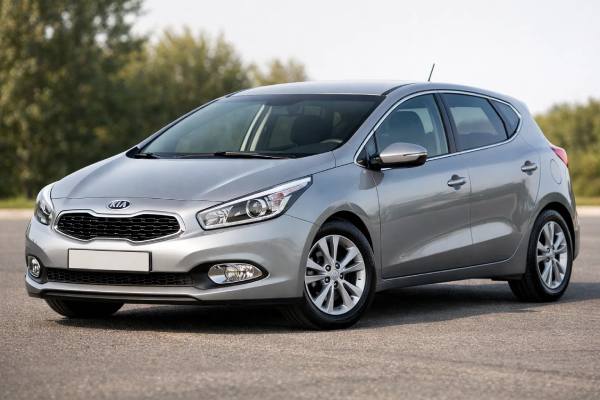
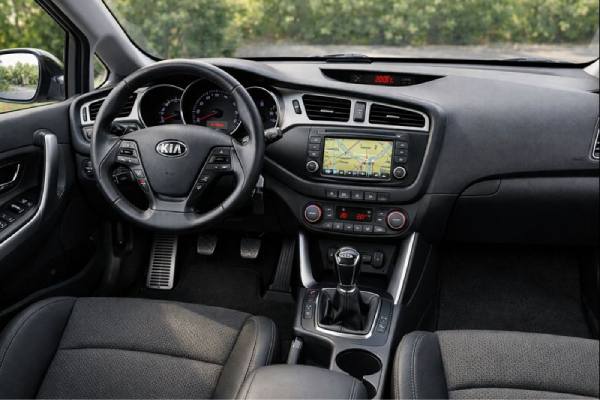
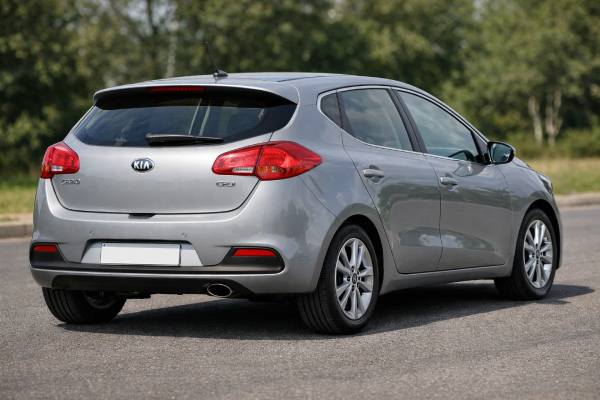
The 2012–2015 Kia Cee’d (JD) with the 1.6 Gamma GDi (135 hp) sits in a sweet spot of the range: noticeably stronger than the 1.4/1.6 MPi cars, but still simple enough to live with as a daily driver. Its direct-injection petrol engine gives the Cee’d a more eager mid-range and better passing response, especially when paired with the 6-speed manual. The JD platform also brings a composed chassis, predictable front-wheel-drive manners, and a cabin that tends to age well if it’s been kept dry and serviced on time.
Where owners need to be realistic is the “GDi tax”: direct injection can raise the stakes on oil quality, short-trip use, and intake-valve deposits over higher mileage. Buy one with clear service records, keep the maintenance tight, and this is a practical, quietly capable compact that works well for mixed commuting and longer motorway runs.
What to Know
- Stronger real-world response than MPi versions, especially from 2,500–5,500 rpm.
- Typically efficient on steady motorway cruising when tyres and alignment are correct.
- Balanced chassis: stable at speed, easy to place in corners, and forgiving in the wet.
- Short-trip use can accelerate intake-valve carbon buildup; plan occasional longer runs.
- Change engine oil and filter every 10,000 km (6,200 mi) or 12 months for conservative ownership.
Navigate this guide
- Kia Cee’d JD 1.6 GDi essentials
- Kia Cee’d JD 1.6 GDi data tables
- Kia Cee’d JD trims and safety tech
- Reliability risks and fixes
- Maintenance plan and buyer tips
- On-road feel and economy
- Rival matchups and value
Kia Cee’d JD 1.6 GDi essentials
Think of the 1.6 GDi Cee’d (JD) as the “quiet upgrader” in the lineup. It doesn’t shout the way hot hatches do, but it solves a common complaint about smaller petrol compacts from this era: you don’t need to plan every overtake. With 135 hp and a free-revving character, it feels more relaxed on motorways and less strained when the car is loaded with passengers or luggage.
The core engineering difference versus MPi versions is direct injection (GDi). Fuel is sprayed straight into the combustion chamber at high pressure, which helps mixture control and efficiency. It also enables a higher compression ratio than older port-injected designs, improving torque and response. The trade-off is that fuel no longer washes the back of the intake valves. Over time—especially with lots of short trips and extended idling—oil vapors from the PCV (crankcase ventilation) system can contribute to carbon deposits on those valves. Not every car suffers badly, but it’s a known ownership pattern to plan for rather than ignore.
On the road, the JD chassis is the bigger story than many expect. It has good straight-line stability and a predictable front end, and it generally avoids the “nervous” steering feel that some rivals had on poor surfaces. The suspension tune is usually comfort-leaning on smaller wheel packages, then becomes firmer (and sometimes noisier) on larger wheels with low-profile tyres.
For buyers today, the best examples are the boring ones: unmodified, serviced on schedule, and driven regularly enough to get fully warm. A 1.6 GDi with clean oil habits and sensible usage can be a durable, low-drama car. A neglected one can become an expensive lesson in catch-up maintenance—mostly because direct-injection engines are less forgiving when maintenance is treated as optional.
Advantages that stand out:
- Usable performance without turbo complexity (no turbo heat management, no intercooler plumbing, fewer boost-related failure modes).
- Competent safety baseline for its class and era.
- Practical packaging: hatchback utility, sensible running costs, and easy day-to-day manners.
The key is buying the condition, not the badge. When this powertrain is healthy, it feels smoother and more willing than the MPi cars. When it’s not, the symptoms can masquerade as “just an older car” until the repair bill arrives.
Kia Cee’d JD 1.6 GDi data tables
Below are commonly listed specifications for the 2012–2015 Cee’d (JD) with the 1.6 Gamma GDi (often referenced as G4FD). Treat them as a practical baseline: exact figures can vary by market, gearbox, wheel/tyre package, and homologation version.
Powertrain and efficiency
| Item | Specification |
|---|---|
| Engine code | Gamma GDi (commonly G4FD) |
| Layout | Inline-4, transverse |
| Valvetrain | DOHC, 16 valves (4 valves/cyl) |
| Induction | Naturally aspirated |
| Fuel system | Gasoline direct injection (GDi) |
| Displacement | 1.6 L (1,591 cc) |
| Bore × stroke | 77.0 × 85.4 mm (3.03 × 3.36 in) |
| Compression ratio | ~11.0:1 (varies by version) |
| Max power | 135 hp (99 kW) @ ~6,300 rpm |
| Max torque | ~164–165 Nm (121–122 lb-ft) @ ~4,850 rpm |
| Timing drive | Chain |
| Rated combined economy (typical) | ~6.0–6.5 L/100 km (39.2–36.2 mpg US / 47.1–43.5 mpg UK) |
| Real-world highway @ 120 km/h | ~6.8–7.3 L/100 km (34.6–32.2 mpg US / 41.5–38.7 mpg UK) |
Transmission and driveline
| Item | Specification |
|---|---|
| Drive type | FWD |
| Common gearboxes | 6-speed manual; 6-speed automatic in some markets |
| Differential | Open (traction control via brakes) |
Chassis and dimensions
| Item | Specification |
|---|---|
| Front suspension | MacPherson strut |
| Rear suspension | Multi-link |
| Steering | Electric power steering (EPS); ratio varies by rack |
| Brakes (typical) | Front ventilated discs ~280–300 mm (11.0–11.8 in); rear discs ~262 mm (10.3 in) on many trims |
| Popular tyre sizes | 195/65 R15, 205/55 R16, 225/45 R17 (market/trim dependent) |
| Length / width / height (typical hatch) | ~4,310 / 1,780 / 1,470 mm (~169.7 / 70.1 / 57.9 in) |
| Wheelbase | ~2,650 mm (~104.3 in) |
| Turning circle | ~10.6–10.9 m (34.8–35.8 ft) depending on wheels |
| Kerb weight | ~1,250–1,350 kg (2,756–2,976 lb) depending on spec |
| Fuel tank | ~53 L (14.0 US gal / 11.7 UK gal) |
| Cargo volume (typical hatch) | ~380 L seats up / ~1,300+ L seats down (method varies) |
Performance and capability
| Item | Specification |
|---|---|
| 0–100 km/h (0–62 mph) | ~9.8–10.5 s (gearbox/spec dependent) |
| Top speed | ~195 km/h (121 mph) |
| Towing (if rated) | Market dependent; confirm by VIN plate and handbook |
| Payload | Spec dependent; check door-jamb label |
Fluids and key service capacities (typical guidance)
| Item | Specification |
|---|---|
| Engine oil spec | Use the viscosity and approvals listed for your market; many European specs call for ACEA/API categories appropriate to the engine |
| Engine oil viscosity | Commonly 5W-30 in moderate climates (confirm by handbook) |
| Engine oil capacity | ~3.6 L (3.8 US qt) with filter (confirm by engine version) |
| Coolant | Ethylene glycol long-life coolant; typical 50/50 mix unless climate specifies otherwise |
| Coolant capacity | ~5.5–6.5 L (5.8–6.9 US qt) depending on system |
| A/C refrigerant | Often R134a on this era; charge varies by equipment |
| A/C charge | Commonly ~450–550 g (~15.9–19.4 oz); verify under-bonnet label |
Safety and driver assistance
| Item | Specification |
|---|---|
| Euro NCAP (2012 test basis) | 5 stars; Adult 89%, Child 88%, Pedestrian 61%, Safety Assist 86% |
| Core safety systems | ESC, ABS, brake assist; tyre pressure monitoring on many trims |
| ADAS | Mostly limited on 2012–2015 cars; features depend on market/trim |
If you want maximum confidence, match the above against your VIN’s option codes and the vehicle’s tyre placard, then use those values for service decisions (oil quantity, tyre sizes, load ratings, and brake parts).
Kia Cee’d JD trims and safety tech
Trim structure varies widely across Europe and export markets, so it helps to think in “equipment layers” rather than a single trim name. Most 1.6 GDi cars were positioned above the entry models, which means you often find better comfort and convenience equipment than on a basic 1.4 petrol—even if the badge naming differs.
Trims and options that change ownership
Common differentiators you’ll see in listings and on the car itself:
- Wheel and tyre packages (15/16/17 inch): Larger wheels sharpen turn-in but typically increase road noise and reduce ride comfort over broken surfaces. They also raise tyre replacement cost.
- Infotainment generation: Early systems can feel dated but remain functional; higher trims may include better Bluetooth integration, navigation, and upgraded speakers.
- Climate control: Manual A/C vs dual-zone automatic changes daily comfort and can affect demisting performance.
- Lighting: Projector or xenon-style lamps (market dependent) improve night driving but can be pricier to restore if lenses haze or levelling systems fail.
- Parking aids: Rear sensors and camera are meaningful quality-of-life upgrades on a compact hatch with thick rear pillars.
Quick identifiers when viewing a car:
- Look at the steering wheel controls (phone/audio/cruise) to gauge equipment level fast.
- Check the instrument cluster: trip computer features and display type often correlate with trim.
- Inspect front fog lights, mirror indicators, and rear camera lens presence as external trim clues.
- Ask for a photo of the tyre placard and VIN plate—it helps confirm factory wheel sizes and weight ratings.
Year-to-year changes (what actually matters)
For 2012–2015, changes tend to be incremental: infotainment updates, wheel designs, minor interior revisions, and packaging shifts. From a buyer’s perspective, the meaningful differences are:
- Whether the specific car has ESC (commonly standard), and whether it has TPMS.
- Whether it has ISG/stop-start (some GDi variants) and how smoothly it works.
- Whether the car has had software updates that improve idle stability, throttle response, or fault handling after sensor replacement.
Safety ratings and real-world safety equipment
The JD Cee’d scored strongly for adult and child occupant protection in its Euro NCAP era, and it typically includes:
- Front, side, and curtain airbags on many trims (confirm airbag labels and the vehicle’s equipment list).
- ISOFIX/LATCH points for child seats (usually outer rear seats).
- ESC and traction control that work well for everyday grip management.
ADAS in the modern sense (AEB, lane centering, adaptive cruise) is usually limited or absent on 2012–2015 examples. Some cars may offer:
- Cruise control (not adaptive).
- Parking sensors/camera.
- Hill-start assist paired with ESC.
One practical note: after windshield replacement, alignment, or front bumper work, verify that any sensors (parking, TPMS) are operating correctly. Even without advanced ADAS, small calibration errors can become persistent warning lights that owners chase for months.
Reliability risks and fixes
Overall reliability can be good, but the 1.6 GDi’s ownership pattern is less tolerant of neglect than the MPi engines. The most expensive problems usually come from “small symptoms” that were ignored—misfires, lean codes, rough idle, or chronic oil overrun.
Below is a practical map of issues by prevalence and severity. Mileage bands are general guidance; age, short-trip use, and service quality matter as much as odometer numbers.
Common (low to medium cost)
- Ignition coils and spark plugs (often 80,000–140,000 km / 50k–87k mi)
Symptoms: misfire under load, flashing MIL, rough idle, poor fuel economy.
Likely causes: worn plugs (wrong heat range/gap), weak coil, moisture intrusion.
Remedy: fit correct spec plugs (often iridium), replace coil(s) as needed, inspect coil boots and sealing. - PCV valve and crankcase ventilation oil mist (age-related)
Symptoms: oil consumption trends upward, oily intake tract, occasional idle instability.
Likely causes: PCV valve sticking, hardened hoses, higher blow-by with short trips.
Remedy: replace PCV valve at sensible intervals, inspect hoses, keep oil changes tight. - Intake valve deposits (direct-injection pattern, often 80,000–160,000 km / 50k–100k mi)
Symptoms: hesitant cold start, rough idle when cold, gradual loss of response, misfires that come and go.
Likely causes: carbon buildup on intake valves (fuel does not wash valves on GDi).
Remedy: confirm with inspection where possible; cleaning methods range from chemical approaches to mechanical cleaning (most effective). Also reduce short-trip frequency where practical.
Occasional (medium cost)
- High-pressure fuel system sensitivity (pump/injector performance)
Symptoms: extended crank, stumble on tip-in, lean running codes, intermittent hesitation.
Likely causes: injector spray pattern issues, pressure control faults, fuel quality sensitivity.
Remedy: proper diagnosis first (fuel pressure data, trims); avoid “parts darts.” Use quality fuel, keep filters and tank condition in mind, and replace components only when confirmed. - Cooling system wear (thermostat, radiator cap, hoses)
Symptoms: slow warm-up, temperature fluctuation, heater performance changes, coolant smell.
Likely causes: thermostat aging, small leaks at hose joints, cap pressure loss.
Remedy: pressure test, replace weak components early—overheating is far more expensive than preventative cooling work. - Accessory belt and tensioner noise (age-related)
Symptoms: chirp/squeal at cold start, rattly belt drive, visible belt cracking.
Likely causes: worn belt, tensioner bearing, misalignment.
Remedy: replace belt and inspect pulleys/tensioner; it’s cheap insurance.
Rare but higher cost
- Timing chain system wear (usually high mileage and poor oil history)
Symptoms: rattling on cold start, correlation/timing codes, rough running that persists.
Likely causes: stretched chain, tired tensioner or guides, oil sludge history.
Remedy: measure and confirm; replace chain set when out of spec or symptomatic. Frequent oil changes are your best prevention. - Catalyst damage after prolonged misfire
Symptoms: loss of power, sulfur smell, overheating catalyst, repeated efficiency codes.
Likely causes: driving too long with misfire dumping fuel into the exhaust.
Remedy: fix misfire immediately; if damage occurred, replace catalyst as required.
Recalls, service actions, and software
Because recall scope depends on VIN and market, verification is part of the buying process:
- Run the VIN through an official recall checker for your region.
- Ask the seller for dealer invoices showing campaign completion.
- Scan for warning lights and stored codes even if the dash looks “clean.”
Software updates can matter on direct-injection engines, especially after sensor replacement or drivability complaints. If a car has persistent hesitation or idle issues, a dealer-level scan to confirm calibration status can save time and money.
Maintenance plan and buyer tips
A 1.6 GDi Cee’d rewards conservative maintenance. The goal is to protect three expensive systems: the timing chain (oil quality), the combustion process (ignition health), and the intake path (deposit control). Below is a practical schedule that fits mixed driving. If your usage is mostly short trips in cold weather, tighten the intervals.
Core maintenance schedule (practical ownership)
- Engine oil and filter: every 10,000 km (6,200 mi) or 12 months
If mostly city/short trips: consider 7,500 km (4,700 mi). Use the exact viscosity and approvals listed for your market handbook. - Engine air filter: inspect every 15,000 km; replace every 30,000 km (18,600 mi) (sooner in dusty areas).
- Cabin filter: every 15,000–30,000 km or yearly if you suffer misting/odors.
- Spark plugs: typically 60,000–100,000 km (37k–62k mi) depending on plug type and spec; use correct plugs for the engine.
- Coolant: often long-life; a conservative approach is 5 years / 100,000 km, then follow the fluid condition and handbook interval.
- Brake fluid: every 2 years, regardless of mileage.
- Brake pads/rotors: inspect every service; replace based on thickness and condition, not just noise.
- Gearbox oil (manual): inspect for leaks; consider replacement around 100,000–150,000 km if shift quality degrades or as preventative care.
- Automatic transmission fluid (if equipped): service interval varies by market; many owners choose 60,000–90,000 km for longevity.
- Tyre rotation: every 10,000–12,000 km; alignment check yearly or after kerb strikes.
- 12 V battery: test annually after year 4; many batteries last 4–6 years depending on climate and stop-start use.
GDi-specific upkeep that pays off
- Avoid chronic short-trip operation where possible. A weekly longer run that fully warms the oil and exhaust can reduce deposit growth.
- PCV valve checks: inexpensive, often ignored, and relevant to intake deposits.
- Respond fast to misfires: coil/plugs are cheaper than catalysts.
- Fuel system hygiene: use consistent, reputable fuel; “miracle cleaners” rarely fix a mechanical problem.
Essential torque values (decision-grade guidance)
These can vary by exact engine and fastener type; verify against service documentation:
- Wheel nuts: commonly 88–108 Nm (65–80 lb-ft)
- Engine oil drain plug: often 35–45 Nm (26–33 lb-ft)
- Spark plugs: often 15–25 Nm (11–18 lb-ft) (engine-specific)
Buyer’s checklist (what to inspect before purchase)
- Cold start behavior: should settle quickly; persistent shaking or hunting suggests deposits, ignition issues, or air leaks.
- Service history quality: look for consistent oil changes with proper spec oil, not just “some service stamps.”
- Scan for codes: even a cheap scan tool can reveal pending misfires or fuel trim issues.
- Cooling system condition: check for dried coolant marks, sweet smell, and correct operating temperature.
- Tyres and alignment: uneven wear hints at suspension bushings, alignment neglect, or accident repair.
- Cabin dampness: lift mats in front and rear; damp carpets can lead to electrical gremlins and mold.
- Braking feel: a long pedal can be old fluid; vibration can be warped discs or suspension wear.
Long-term outlook: maintained examples can be durable and pleasant well past 200,000 km. The cars that disappoint are usually the ones that were run on extended oil intervals, driven mostly on short trips, and then sold when symptoms started.
On-road feel and economy
The 135 hp 1.6 GDi changes the Cee’d’s personality more than the numbers suggest. It’s not a sports car, but it feels less “busy” in everyday driving because you can hold a gear longer and rely on cleaner mid-range pull. The engine’s best work happens once it’s warm and spinning—expect the most responsive feel from roughly 2,500 rpm upward, with a smooth run to the upper rev range.
Ride, handling, and NVH
- Ride comfort: On 15–16 inch wheels, the car usually has a settled, compliant ride over typical city surfaces. With 17s and lower-profile tyres, impacts become sharper, and tyre roar becomes more noticeable on coarse asphalt.
- Handling balance: The chassis is predictable and confidence-inspiring. Push hard and it will understeer safely, but it stays composed if the suspension is healthy and tyres match across the axle.
- Steering feel: EPS is light and easy in town. Feedback is not “classic hydraulic,” but it’s accurate enough for daily use.
- Highway stability: A strong point. The car tracks well, and crosswind behavior is generally calm for the class.
Powertrain character
The naturally aspirated GDi avoids turbo lag and feels linear, but it still benefits from deliberate throttle application. In a 6-speed manual, it rewards early downshifts for overtakes. In an automatic, it can feel more relaxed in traffic but may downshift more readily on inclines.
Stop-start (where fitted) is typically unobtrusive when the battery is strong and the engine is healthy. Weak batteries or rough idle issues make stop-start feel clumsy—many “annoying stop-start” complaints are actually maintenance complaints in disguise.
Real-world economy (what owners often see)
Driving style and tyre choice matter a lot. As a realistic guide:
- City: ~7.5–9.0 L/100 km (31.4–26.1 mpg US / 37.7–31.4 mpg UK)
- Highway 100–120 km/h: ~6.8–7.3 L/100 km (34.6–32.2 mpg US / 41.5–38.7 mpg UK)
- Mixed: ~6.8–8.0 L/100 km (34.6–29.4 mpg US / 41.5–35.3 mpg UK)
Cold weather can add a meaningful penalty, especially if trips are short enough that the engine rarely reaches full operating temperature.
Performance metrics that matter day to day
- 0–100 km/h: often around 10 seconds in typical trim, quicker when lightly loaded and well-driven.
- Passing response: improved versus MPi variants; still benefits from a downshift rather than lugging in a high gear.
- Braking consistency: generally solid with good pads and fresh fluid; a soft pedal is often old brake fluid rather than a hardware fault.
For most owners, the “win” is not chasing lap times—it’s the sense that the car is calmer at speed and less strained when you ask it to do normal family-car tasks.
Rival matchups and value
To judge the Cee’d JD 1.6 GDi fairly, compare it to other naturally aspirated or mild-performance petrol compacts from 2012–2015. Its strongest argument is balance: respectable power, a stable chassis, and ownership costs that can stay sensible if you maintain it properly.
Against VW Golf 1.6 (MPI/FSI era overlap) and similar
- Cee’d advantages: often better standard equipment for the money, straightforward drivetrain feel, and a chassis that’s easy to live with.
- Golf advantages: typically stronger resale, broader specialist support, and sometimes a more refined cabin feel depending on trim.
- Decision point: if you value equipment and a composed ride at a lower purchase price, the Cee’d can be the smarter buy—provided you’re attentive to GDi maintenance.
Against Ford Focus 1.6 Ti-VCT
- Cee’d advantages: calmer motorway stability and often a quieter “everyday” demeanor on conservative wheel sizes.
- Focus advantages: sharper steering feel and a more playful chassis when pushed.
- Decision point: pick Focus for driving engagement; pick Cee’d for a more relaxed daily rhythm and often better value-per-feature.
Against Opel/Vauxhall Astra 1.6 (NA)
- Cee’d advantages: the GDi’s response can feel more energetic, and the overall platform tends to feel modern and tidy in how it rides and brakes.
- Astra advantages: depending on engine and year, parts availability and local familiarity can be a plus.
- Decision point: the Cee’d’s value shines when the car has strong history and you want a well-rounded daily without chasing a premium badge.
Against Japanese rivals (Civic 1.8, Auris 1.6)
- Cee’d advantages: often more equipment for the price and a “European” highway feel in the steering and suspension tuning.
- Japanese advantages: some port-injected engines can be more tolerant of short-trip use and may have fewer intake deposit concerns.
- Decision point: if your driving is mostly short trips, a port-injected rival may be simpler long-term; if you do regular longer journeys, the Cee’d GDi can be an excellent blend of performance and practicality.
Value verdict (who it suits)
Best fit:
- Drivers doing mixed routes with regular longer trips
- Buyers who want NA petrol responsiveness without turbo ownership complexity
- Owners willing to follow a tighter maintenance rhythm than “minimum required”
Not ideal:
- Pure short-trip, cold-climate city use with infrequent longer runs
- Buyers who won’t scan for codes or verify recall completion
- Anyone expecting modern ADAS features as standard
If you buy a clean, well-maintained example, the 1.6 GDi Cee’d is a satisfying “quietly competent” car: it does the basics well, feels stable on the motorway, and gives you enough performance to stay out of trouble without pushing you into higher running costs.
References
- Kia Recalls | Kia Europe 2026 (Recall Database)
- Check for Recalls: Vehicle, Car Seat, Tire, Equipment | NHTSA 2026 (Recall Database)
- euroncap_kia_ceed_2012_5stars.pdf 2012 (Safety Rating)
- OWNER’S MANUAL QUICK REFERENCE GUIDE 2016 (Owner’s Manual)
- Engine Oil Grades and Capacities 2023 (Service Guide)
Disclaimer
This article is for informational purposes only and is not a substitute for professional diagnosis, inspection, or repair. Specifications, torque values, service intervals, and procedures can vary by VIN, market, engine version, and installed equipment. Always verify details using your vehicle’s official owner’s literature and service documentation before purchasing parts or performing maintenance.
If this guide helped, please consider sharing it on Facebook, X (Twitter), or your favorite forum to support our work.